
Risk Stratification of Chest Pain Best Practices Susan
Risk Stratification of Chest Pain: Best Practices Susan P. Torrey, MD, FAAEM, FACEP Associate Professor of Emergency Medicine UMass Medical School – Baystate Medical Center

I have no disclosures, however… www. Torrey. EKG. com
Current practice varies • Up to 6% of ED visits are chest pain related • Of these <25% will have ACS • The ability to identify low-risk patients in ED – Reduce length of stay in ED – Reduce hospitalizations and cost – Improve patient statisfaction • Guidelines recommend utility of risk stratification tool T R TIMI A E H GRA CE
Clinical case • 58 -year-old man with left anterior chest pain x 1 hr, no radiation, no associated symptoms • PMH: HTN, hyperlipidemia, s/p cholecystectomy • EKG: sinus rhythm, normal axis and intervals, no LVH, no acute ischemia or infarct patterns • Routine labs, including troponin, are normal What is appropriate disposition?
Chest pain in the emergency room: value of the HEART score Six AJ, et al. Neth Heart J 16: 191 -196, 2008 • 120 pts with chest pain followed for endpoints – Acute MI – PCI – CABG – Death • Followup – 423 ± 106 days • 29 pts reached endpoint – all within 3 months
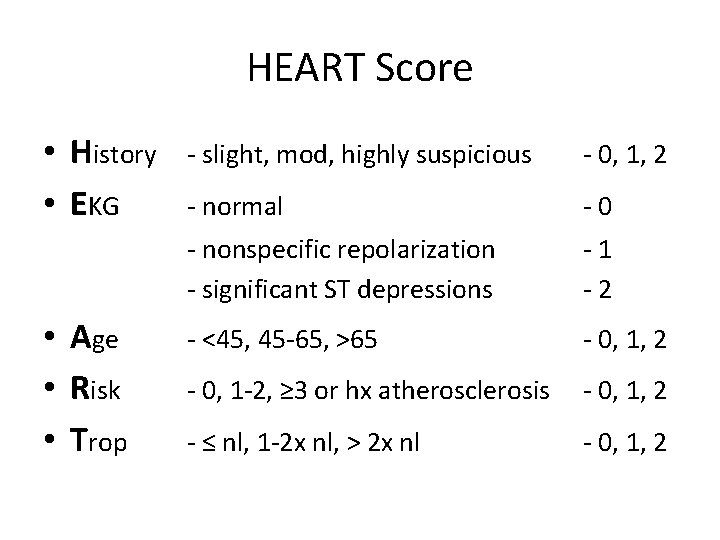
HEART Score • History • EKG • Age • Risk • Trop - slight, mod, highly suspicious - 0, 1, 2 - normal -0 - nonspecific repolarization - significant ST depressions -1 -2 - <45, 45 -65, >65 - 0, 1, 2 - 0, 1 -2, ≥ 3 or hx atherosclerosis - 0, 1, 2 - ≤ nl, 1 -2 x nl, > 2 x nl - 0, 1, 2
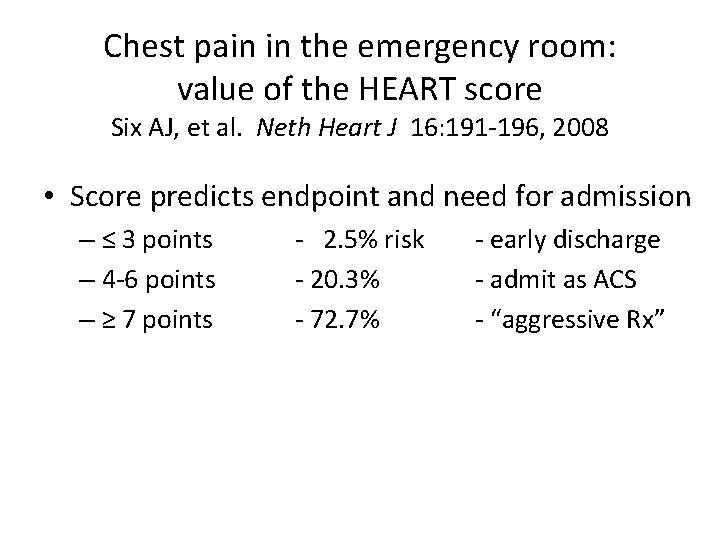
Chest pain in the emergency room: value of the HEART score Six AJ, et al. Neth Heart J 16: 191 -196, 2008 • Score predicts endpoint and need for admission – ≤ 3 points – 4 -6 points – ≥ 7 points - 2. 5% risk - 20. 3% - 72. 7% - early discharge - admit as ACS - “aggressive Rx”
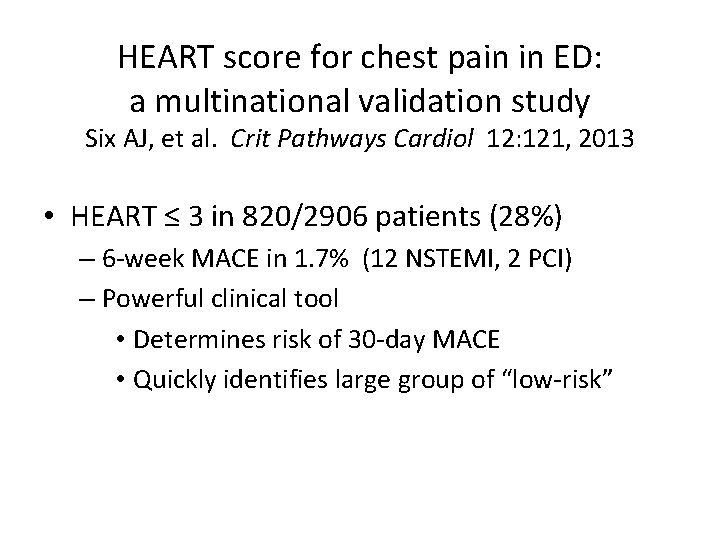
HEART score for chest pain in ED: a multinational validation study Six AJ, et al. Crit Pathways Cardiol 12: 121, 2013 • HEART ≤ 3 in 820/2906 patients (28%) – 6 -week MACE in 1. 7% (12 NSTEMI, 2 PCI) – Powerful clinical tool • Determines risk of 30 -day MACE • Quickly identifies large group of “low-risk”
Prospective validation of HEART score Backus BE, Six AJ, et al. Int J Card 168: 2153, 2013 • HEART
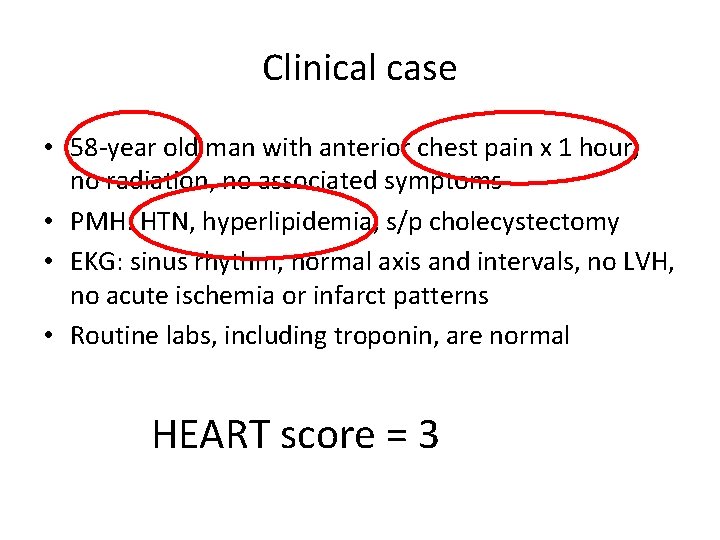
Clinical case • 58 -year old man with anterior chest pain x 1 hour, no radiation, no associated symptoms • PMH: HTN, hyperlipidemia, s/p cholecystectomy • EKG: sinus rhythm, normal axis and intervals, no LVH, no acute ischemia or infarct patterns • Routine labs, including troponin, are normal HEART score = 3
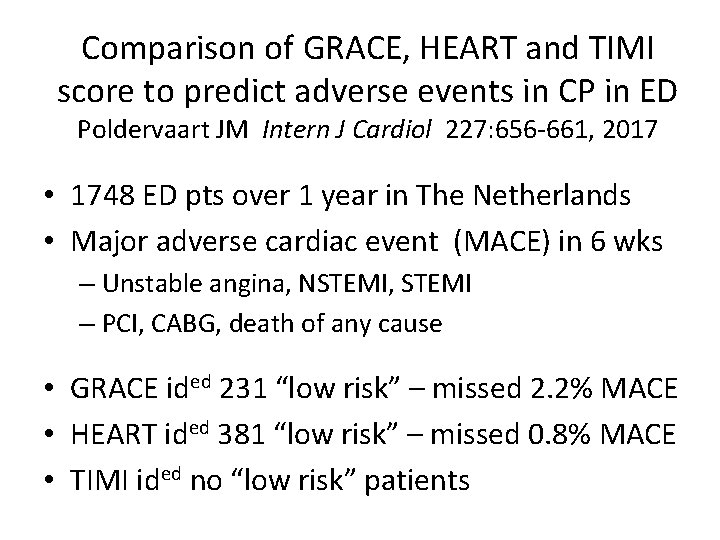
Comparison of GRACE, HEART and TIMI score to predict adverse events in CP in ED Poldervaart JM Intern J Cardiol 227: 656 -661, 2017 • 1748 ED pts over 1 year in The Netherlands • Major adverse cardiac event (MACE) in 6 wks – Unstable angina, NSTEMI, STEMI – PCI, CABG, death of any cause • GRACE ided 231 “low risk” – missed 2. 2% MACE • HEART ided 381 “low risk” – missed 0. 8% MACE • TIMI ided no “low risk” patients

Comparison of GRACE, HEART and TIMI score to predict adverse events in CP in ED Poldervaart JM Intern J Cardiol 227: 656 -661, 2017 95% sensitivity low-risk % low-risk MACE 98% sensitivity low-risk % low-risk MACE GRACE HEART TIMI ≤ 72 19 3. 6 ≤ 3 40 2. 0 0 25 3. 2 ≤ 66 13 2. 2 ≤ 2 21 0. 8 -
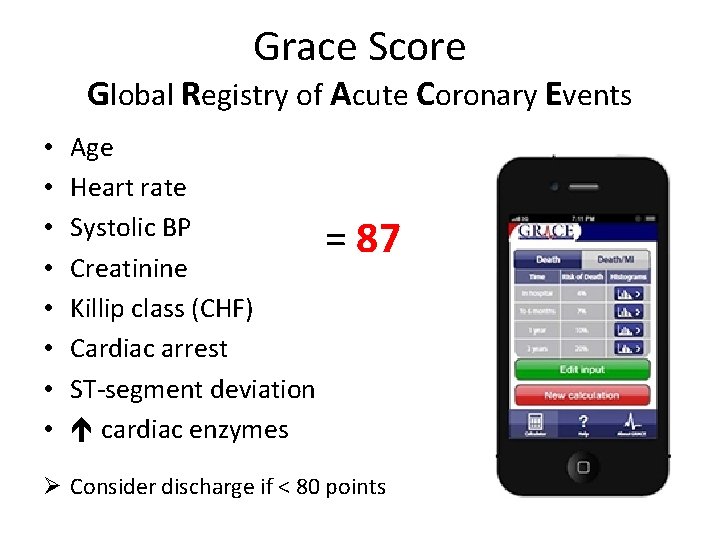
Grace Score Global Registry of Acute Coronary Events • • Age Heart rate Systolic BP = Creatinine Killip class (CHF) Cardiac arrest ST-segment deviation cardiac enzymes 87 Ø Consider discharge if < 80 points
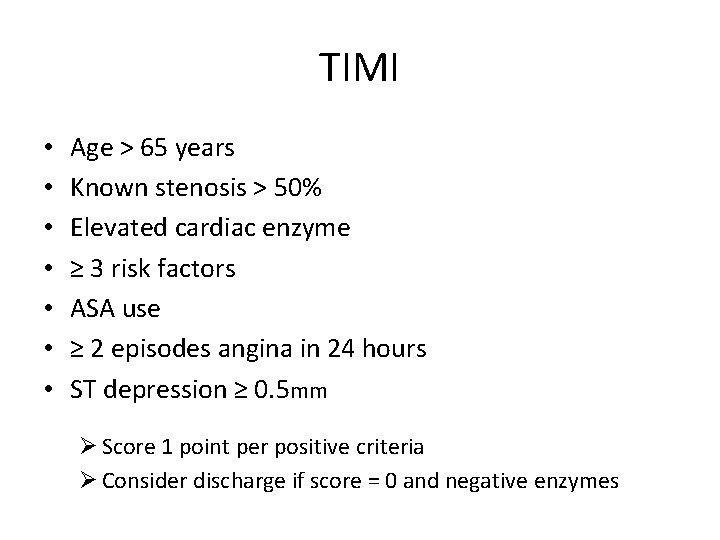
TIMI • • Age > 65 years Known stenosis > 50% Elevated cardiac enzyme ≥ 3 risk factors ASA use ≥ 2 episodes angina in 24 hours ST depression ≥ 0. 5 mm Ø Score 1 point per positive criteria Ø Consider discharge if score = 0 and negative enzymes
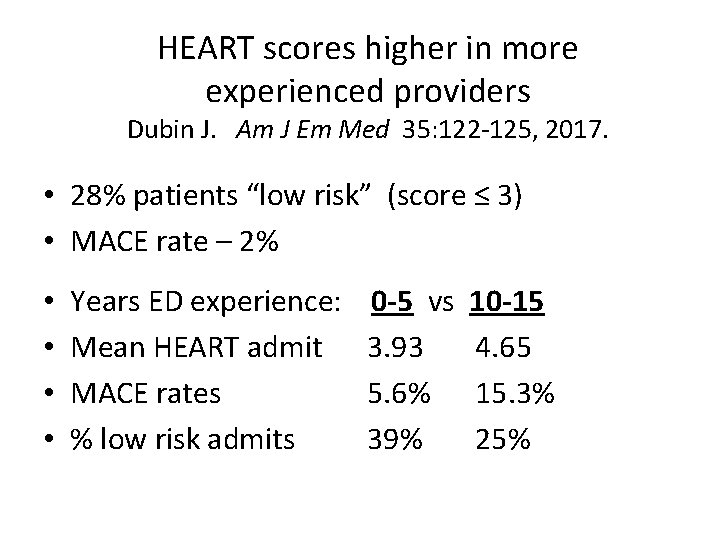
HEART scores higher in more experienced providers Dubin J. Am J Em Med 35: 122 -125, 2017. • 28% patients “low risk” (score ≤ 3) • MACE rate – 2% • • Years ED experience: Mean HEART admit MACE rates % low risk admits 0 -5 vs 3. 93 5. 6% 39% 10 -15 4. 65 15. 3% 25%
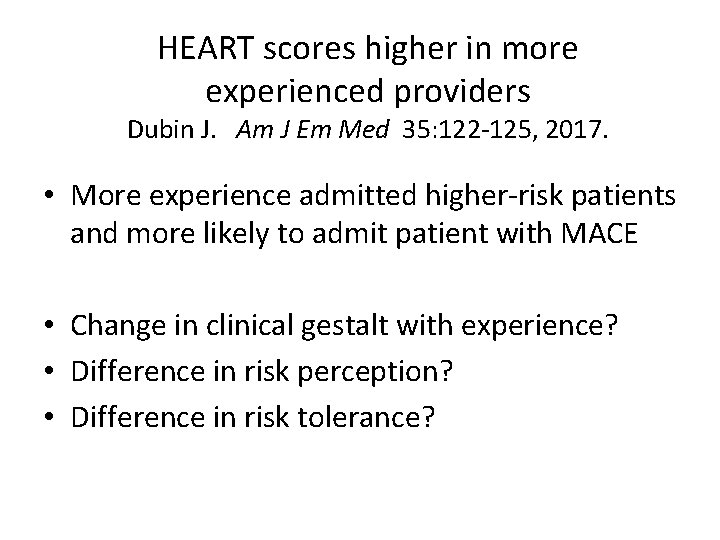
HEART scores higher in more experienced providers Dubin J. Am J Em Med 35: 122 -125, 2017. • More experience admitted higher-risk patients and more likely to admit patient with MACE • Change in clinical gestalt with experience? • Difference in risk perception? • Difference in risk tolerance?
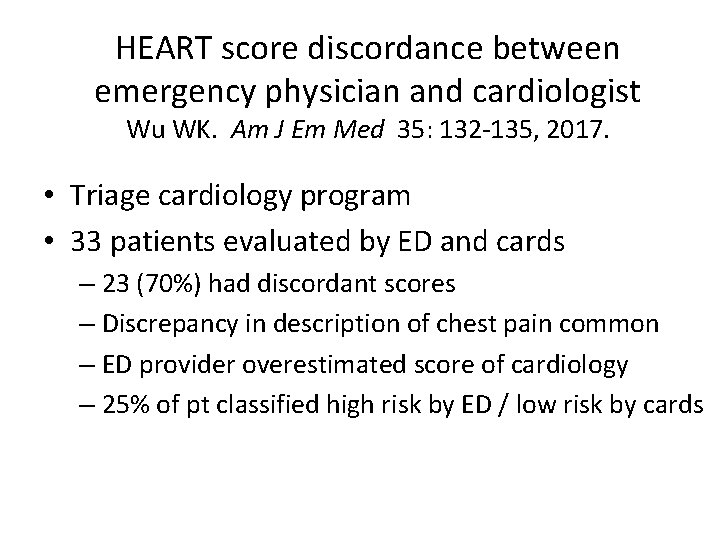
HEART score discordance between emergency physician and cardiologist Wu WK. Am J Em Med 35: 132 -135, 2017. • Triage cardiology program • 33 patients evaluated by ED and cards – 23 (70%) had discordant scores – Discrepancy in description of chest pain common – ED provider overestimated score of cardiology – 25% of pt classified high risk by ED / low risk by cards
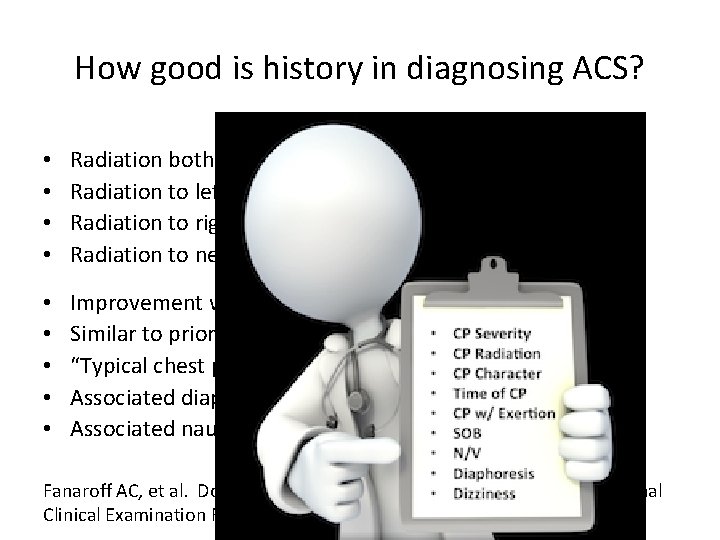
How good is history in diagnosing ACS? • • Radiation both arms Radiation to left arm Radiation to right arm Radiation to neck/jaw • • • Improvement with NTG Similar to prior ischemia “Typical chest pain” Associated diaphoresis Associated nausea %sens 11 40 5 24 %spec 96 69 96 84 71 47 68 26 22 35 79 66 80 80 Fanaroff AC, et al. Does this patient with chest pain have ACS? The Rational Clinical Examination Review. JAMA 314: 1955. 2015
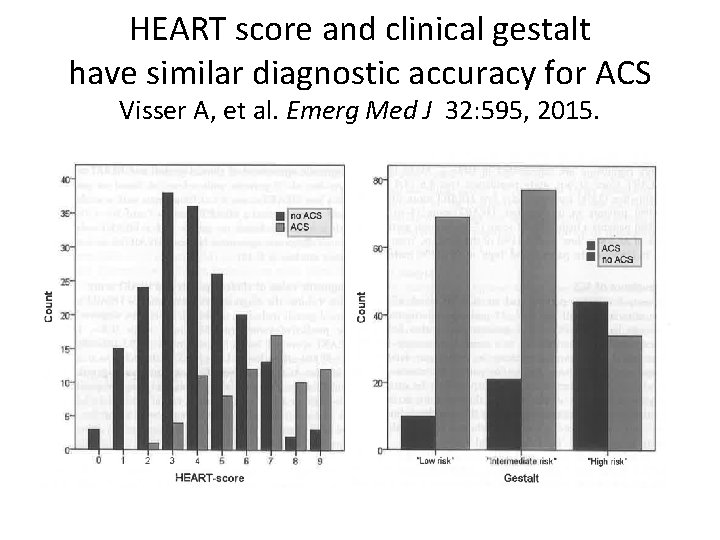
HEART score and clinical gestalt have similar diagnostic accuracy for ACS Visser A, et al. Emerg Med J 32: 595, 2015.
- Slides: 19