
Risk of Infection from a contaminated sharps injury
- Slides: 2
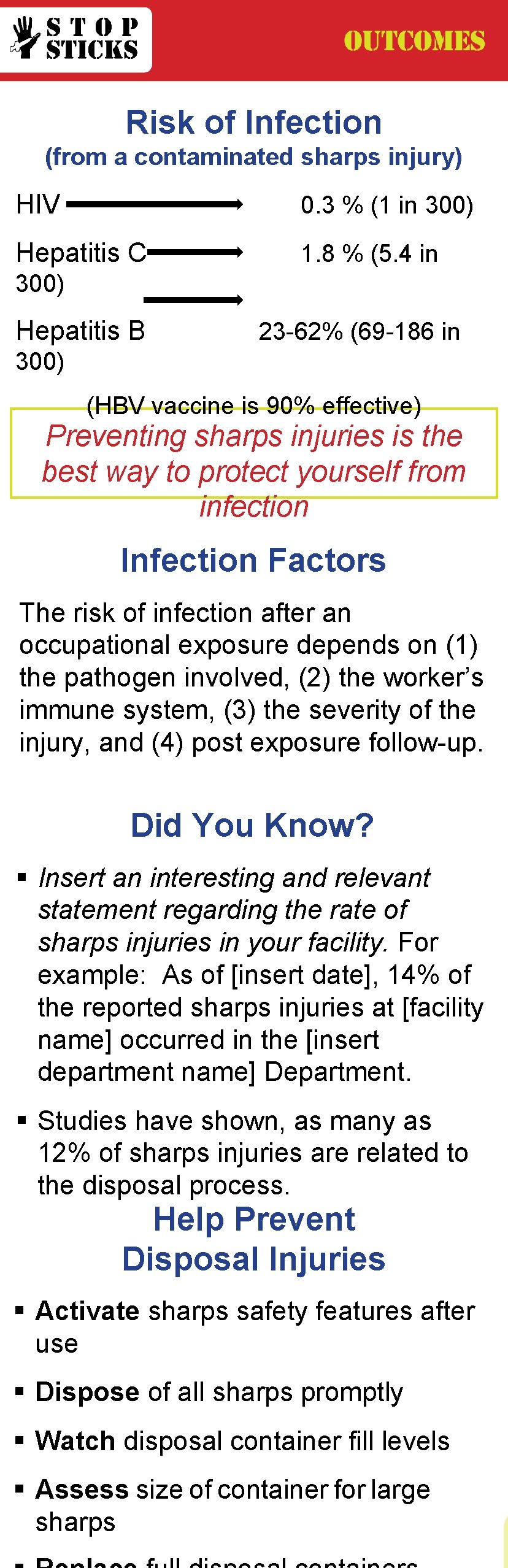
Risk of Infection (from a contaminated sharps injury) HIV 0. 3 % (1 in 300) Hepatitis C 1. 8 % (5. 4 in 300) Hepatitis B 23 -62% (69 -186 in 300) (HBV vaccine is 90% effective) Preventing sharps injuries is the best way to protect yourself from infection Infection Factors The risk of infection after an occupational exposure depends on (1) the pathogen involved, (2) the worker’s immune system, (3) the severity of the injury, and (4) post exposure follow-up. Did You Know? § Insert an interesting and relevant statement regarding the rate of sharps injuries in your facility. For example: As of [insert date], 14% of the reported sharps injuries at [facility name] occurred in the [insert department name] Department. § Studies have shown, as many as 12% of sharps injuries are related to the disposal process. Help Prevent Disposal Injuries § Activate sharps safety features after use § Dispose of all sharps promptly § Watch disposal container fill levels § Assess size of container for large sharps
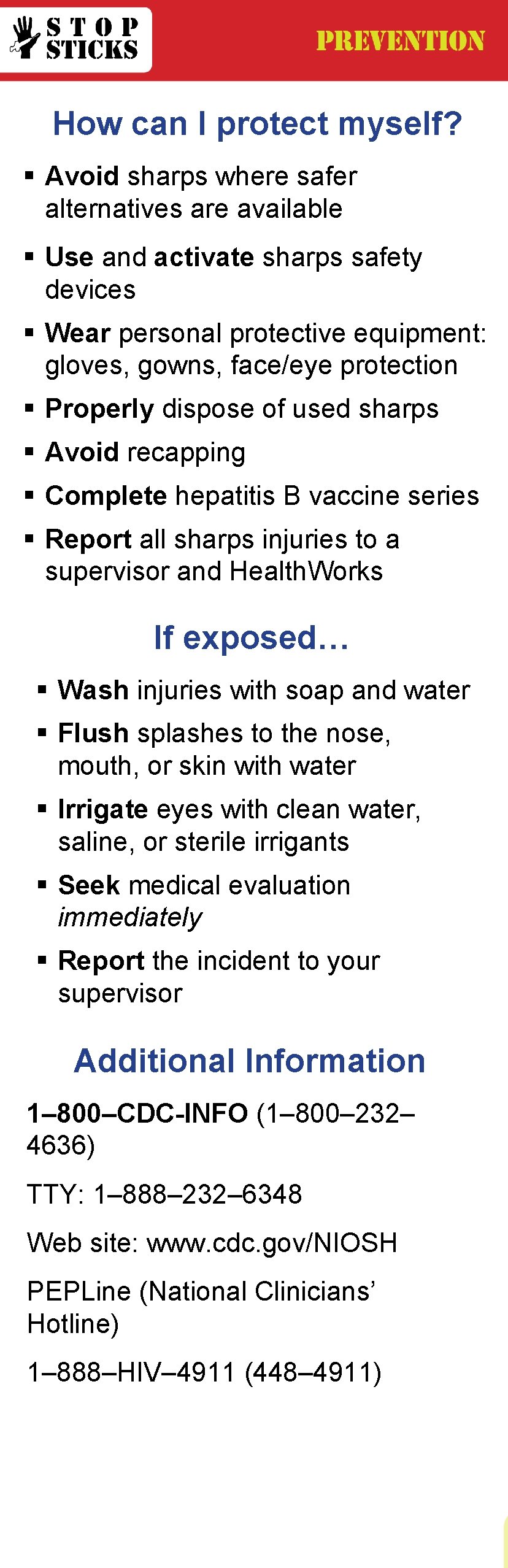
How can I protect myself? § Avoid sharps where safer alternatives are available § Use and activate sharps safety devices § Wear personal protective equipment: gloves, gowns, face/eye protection § Properly dispose of used sharps § Avoid recapping § Complete hepatitis B vaccine series § Report all sharps injuries to a supervisor and Health. Works If exposed… § Wash injuries with soap and water § Flush splashes to the nose, mouth, or skin with water § Irrigate eyes with clean water, saline, or sterile irrigants § Seek medical evaluation immediately § Report the incident to your supervisor Additional Information 1– 800–CDC-INFO (1– 800– 232– 4636) TTY: 1– 888– 232– 6348 Web site: www. cdc. gov/NIOSH PEPLine (National Clinicians’ Hotline) 1– 888–HIV– 4911 (448– 4911)