
Risk normalisation 2018 April release Agenda Review of

- Slides: 16
Risk normalisation 2018 April release
Agenda • Review of the falling objects theme • ‘Why’ the risk normalisation theme • concept of risk normalisation and the objectives of theme • Introduce theme design, framework & materials available • Timeframes and actions • Questions 2 © Rio Tinto 2017
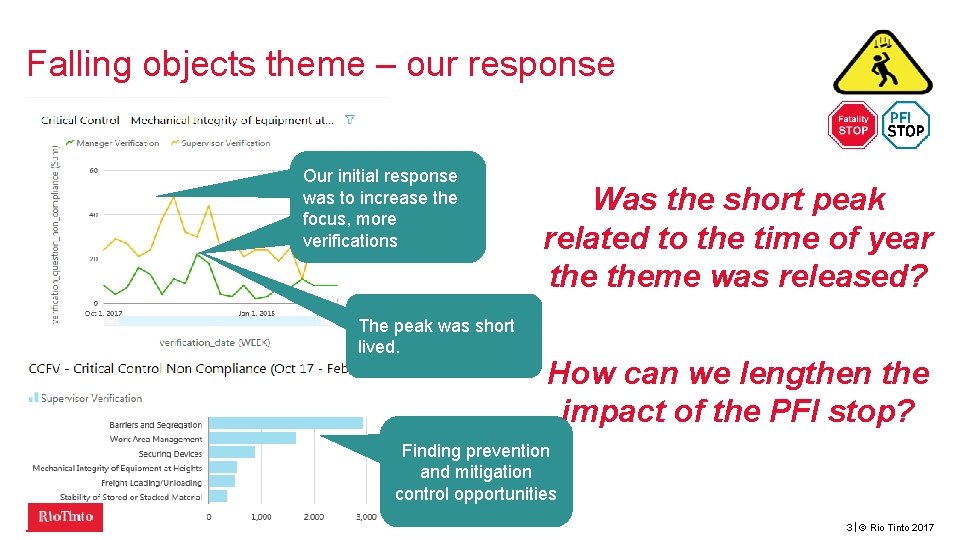
Falling objects theme – our response An increase in falling Our initial response object was to CRM increase the verifications focus, more after PFI stop release verifications The peak was short lived. Was the short peak related to the time of year theme was released? How can we lengthen the impact of the PFI stop? Finding prevention and mitigation control opportunities 3 © Rio Tinto 2017
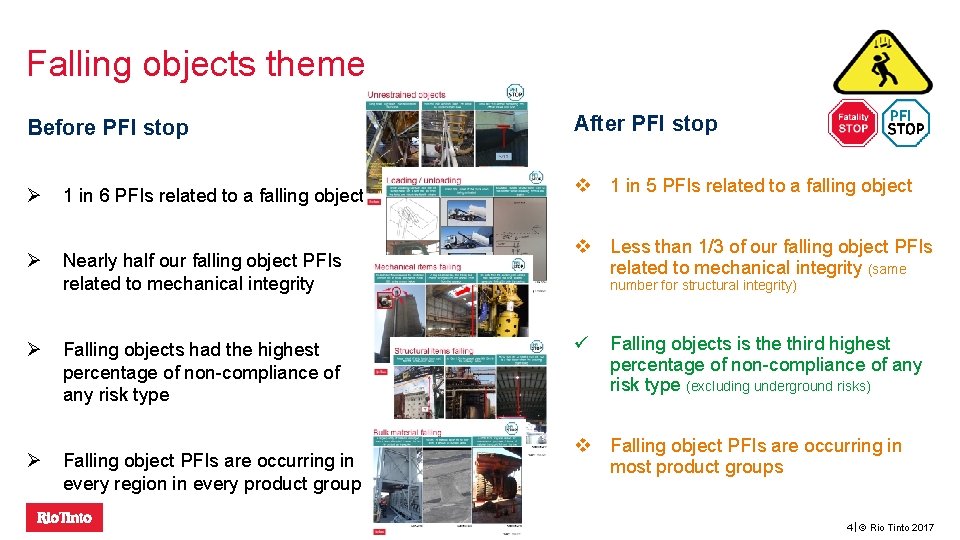
Falling objects theme Before PFI stop After PFI stop Ø 1 in 6 PFIs related to a falling object v 1 in 5 PFIs related to a falling object Ø Nearly half our falling object PFIs related to mechanical integrity Ø Falling objects had the highest percentage of non-compliance of any risk type Ø Falling object PFIs are occurring in every region in every product group v Less than 1/3 of our falling object PFIs related to mechanical integrity (same number for structural integrity) ü Falling objects is the third highest percentage of non-compliance of any risk type (excluding underground risks) v Falling object PFIs are occurring in most product groups 4 © Rio Tinto 2017
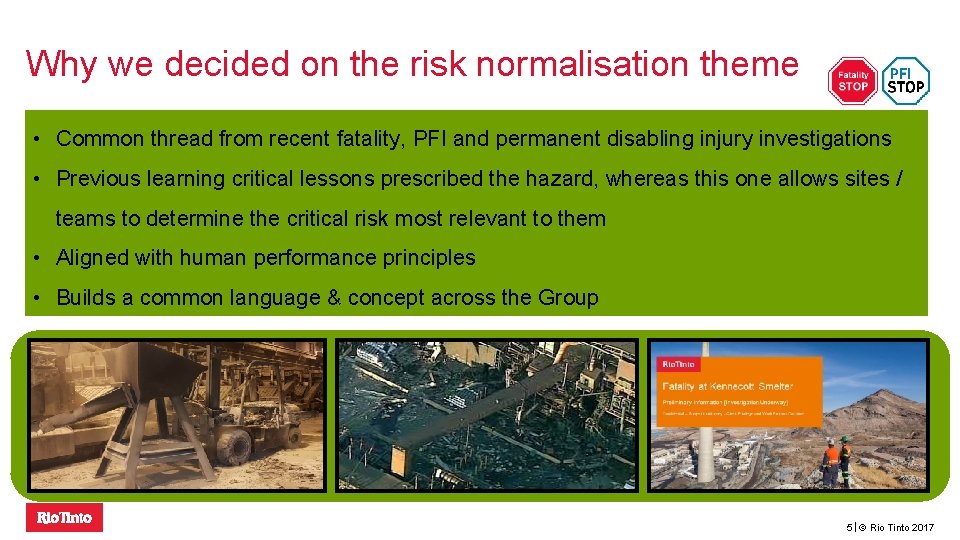
Why we decided on the risk normalisation theme • Common thread from recent fatality, PFI and permanent disabling injury investigations • Previous learning critical lessons prescribed the hazard, whereas this one allows sites / teams to determine the critical risk most relevant to them • Aligned with human performance principles • Builds a common language & concept across the Group 5 © Rio Tinto 2017
What is risk normalisation? What is it? When does it happen? What is the result? How can I influence the outcome? Risk normalisation: • is a psychological process; • is a natural human reaction which happens to everyone; • happens when we are very familiar with something; • results in us reducing our sense of unease with a risk; • may lead to a drift in the way we do things over time; and • leaves clues for us when it is happening. 6 © Rio Tinto 2017
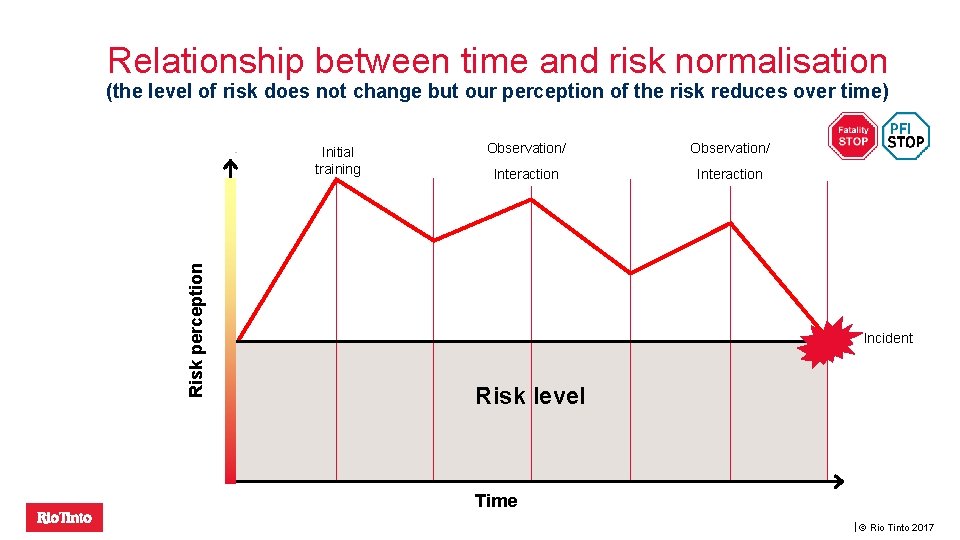
Relationship between time and risk normalisation (the level of risk does not change but our perception of the risk reduces over time) Risk perception Initial training Observation/ Interaction Incident Risk level Time © Rio Tinto 2017
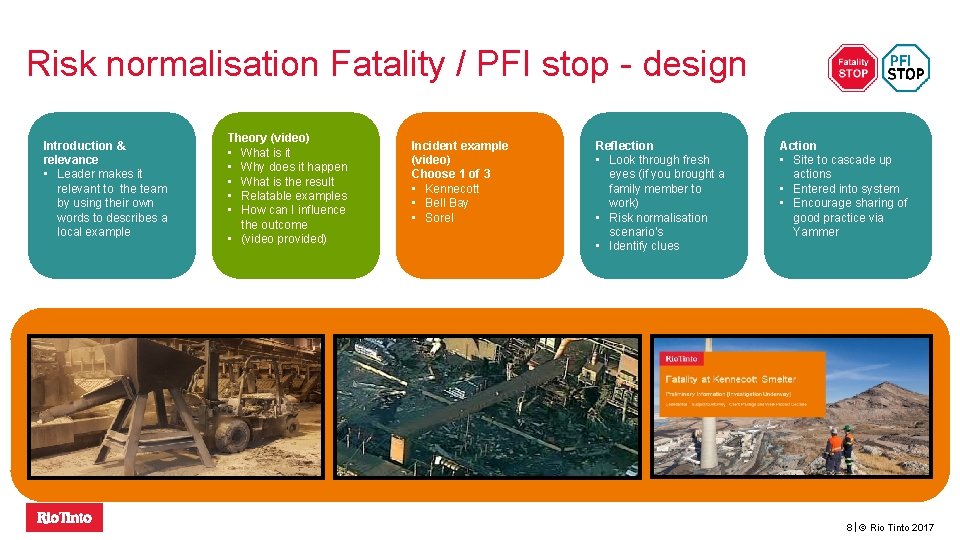
Risk normalisation Fatality / PFI stop - design Introduction & relevance • Leader makes it relevant to the team by using their own words to describes a local example Theory (video) • What is it • Why does it happen • What is the result • Relatable examples • How can I influence the outcome • (video provided) Incident example (video) Choose 1 of 3 • Kennecott • Bell Bay • Sorel Reflection • Look through fresh eyes (if you brought a family member to work) • Risk normalisation scenario’s • Identify clues Action • Site to cascade up actions • Entered into system • Encourage sharing of good practice via Yammer 8 © Rio Tinto 2017
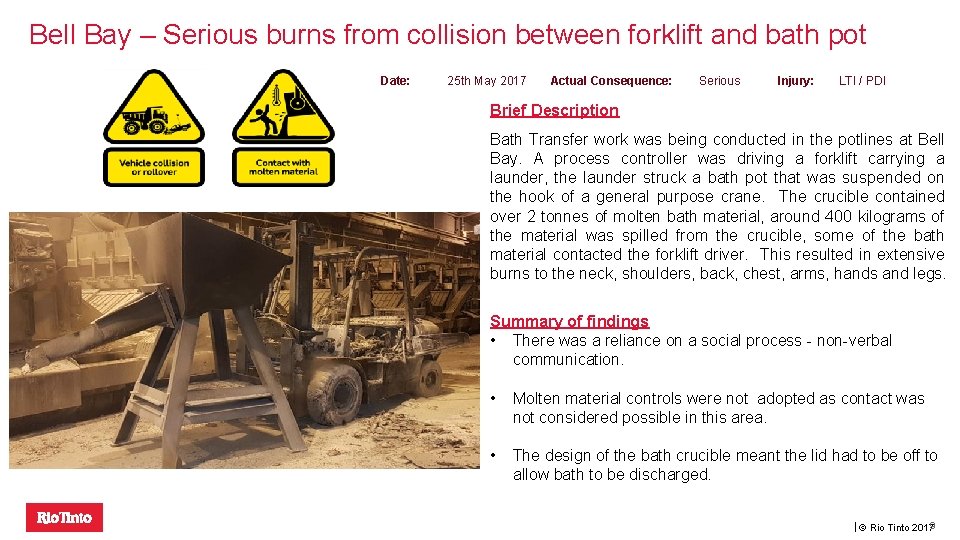
Bell Bay – Serious burns from collision between forklift and bath pot Date: 25 th May 2017 Actual Consequence: Serious Injury: LTI / PDI Brief Description Bath Transfer work was being conducted in the potlines at Bell Bay. A process controller was driving a forklift carrying a launder, the launder struck a bath pot that was suspended on the hook of a general purpose crane. The crucible contained over 2 tonnes of molten bath material, around 400 kilograms of the material was spilled from the crucible, some of the bath material contacted the forklift driver. This resulted in extensive burns to the neck, shoulders, back, chest, arms, hands and legs. Summary of findings • There was a reliance on a social process - non-verbal communication. • Molten material controls were not adopted as contact was not considered possible in this area. • The design of the bath crucible meant the lid had to be off to allow bath to be discharged. © Rio Tinto 20179
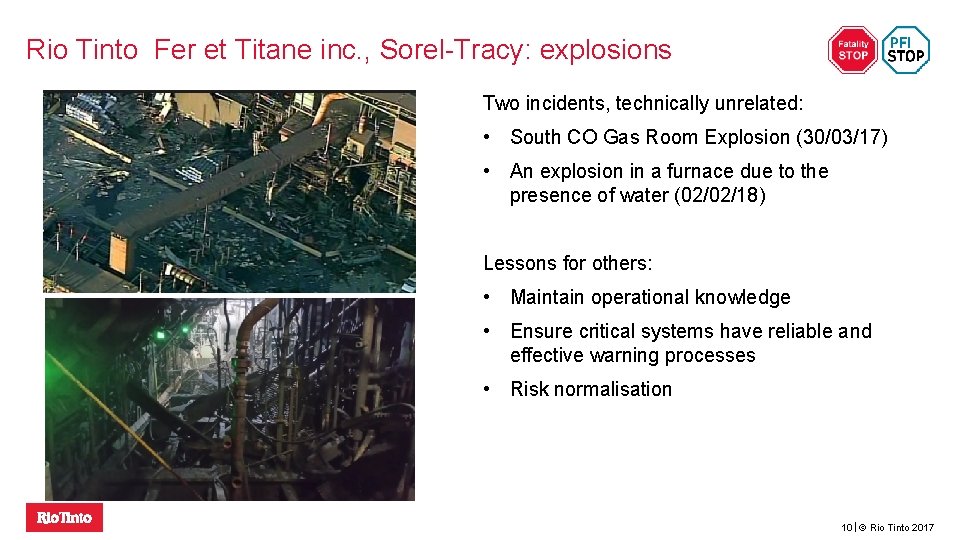
Rio Tinto Fer et Titane inc. , Sorel-Tracy: explosions Two incidents, technically unrelated: • South CO Gas Room Explosion (30/03/17) • An explosion in a furnace due to the presence of water (02/02/18) Lessons for others: • Maintain operational knowledge • Ensure critical systems have reliable and effective warning processes • Risk normalisation 10 © Rio Tinto 2017
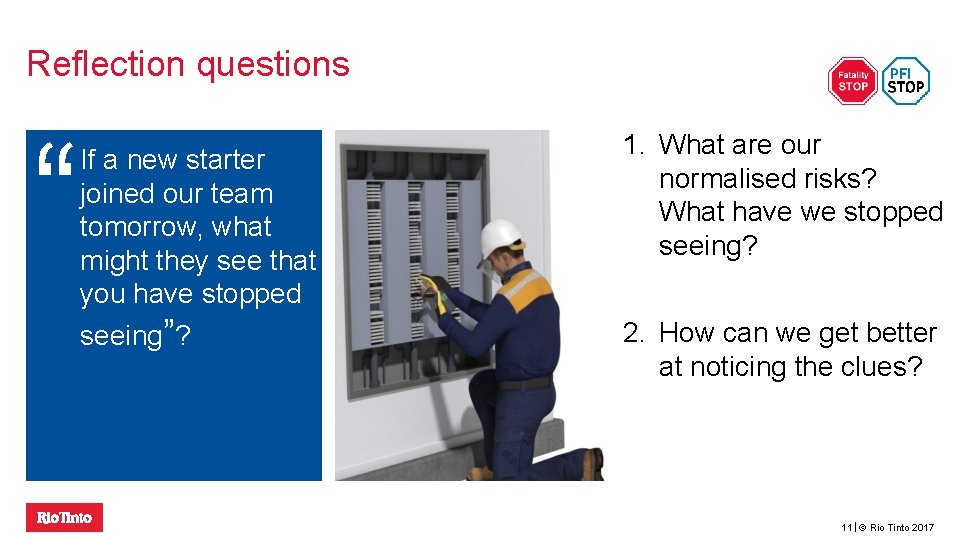
Reflection questions If a new starter joined our team tomorrow, what might they see that you have stopped seeing”? 1. What are our normalised risks? What have we stopped seeing? 2. How can we get better at noticing the clues? 11 © Rio Tinto 2017 ”
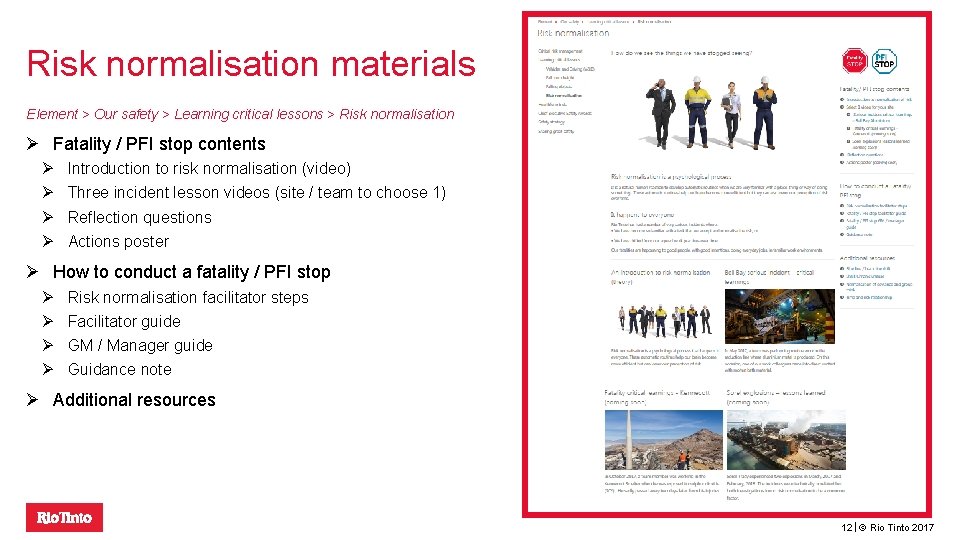
Risk normalisation materials Element > Our safety > Learning critical lessons > Risk normalisation Ø Fatality / PFI stop contents Ø Ø Introduction to risk normalisation (video) Three incident lesson videos (site / team to choose 1) Reflection questions Actions poster Ø How to conduct a fatality / PFI stop Ø Ø Risk normalisation facilitator steps Facilitator guide GM / Manager guide Guidance note Ø Additional resources 12 © Rio Tinto 2017
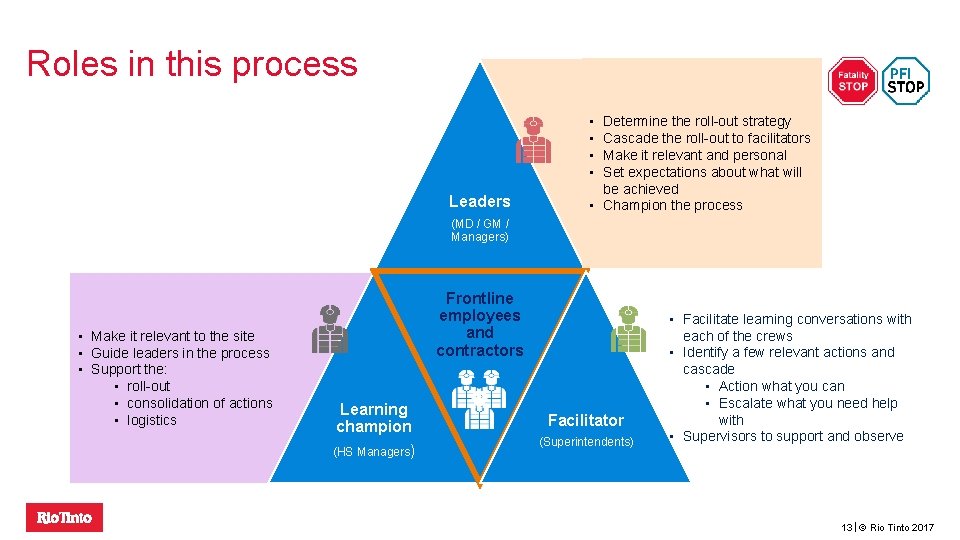
Roles in this process • • Leaders Determine the roll-out strategy Cascade the roll-out to facilitators Make it relevant and personal Set expectations about what will be achieved • Champion the process (MD / GM / Managers) • Make it relevant to the site • Guide leaders in the process • Support the: • roll-out • consolidation of actions • logistics Frontline employees and contractors Learning champion (HS Managers) Facilitator (Superintendents) • Facilitate learning conversations with each of the crews • Identify a few relevant actions and cascade • Action what you can • Escalate what you need help with • Supervisors to support and observe 13 © Rio Tinto 2017
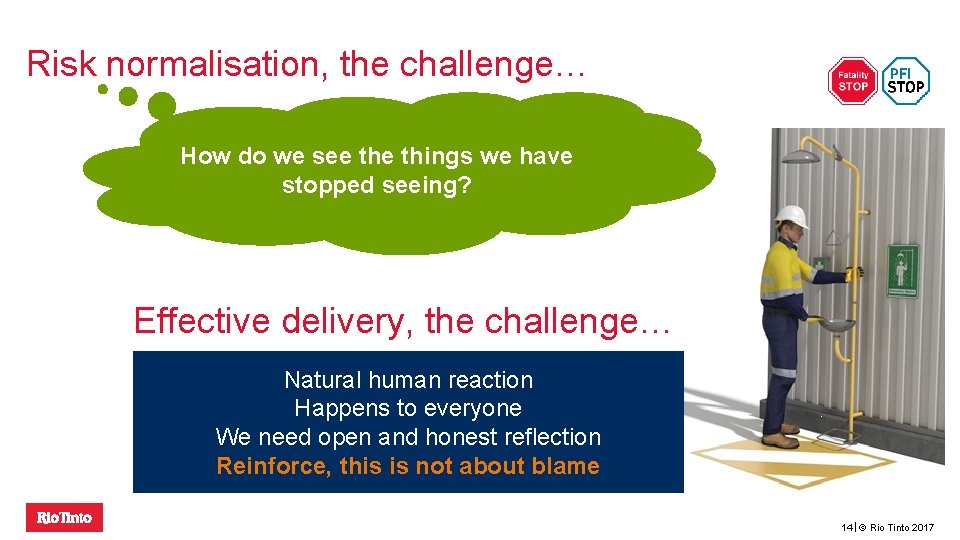
Risk normalisation, the challenge… How do we see things we have stopped seeing? Effective delivery, the challenge… Natural human reaction Happens to everyone We need open and honest reflection Reinforce, this is not about blame 14 © Rio Tinto 2017
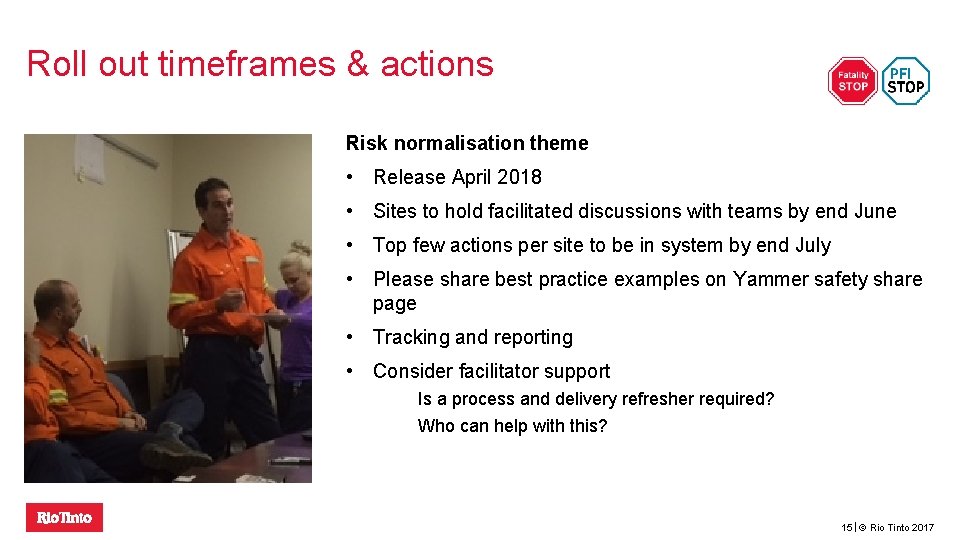
Roll out timeframes & actions Risk normalisation theme • Release April 2018 • Sites to hold facilitated discussions with teams by end June • Top few actions per site to be in system by end July • Please share best practice examples on Yammer safety share page • Tracking and reporting • Consider facilitator support Is a process and delivery refresher required? Who can help with this? 15 © Rio Tinto 2017 ”
? © Rio Tinto 2017