
Risk MAP Program The Vision for Risk MAP
- Slides: 19
Risk MAP Program
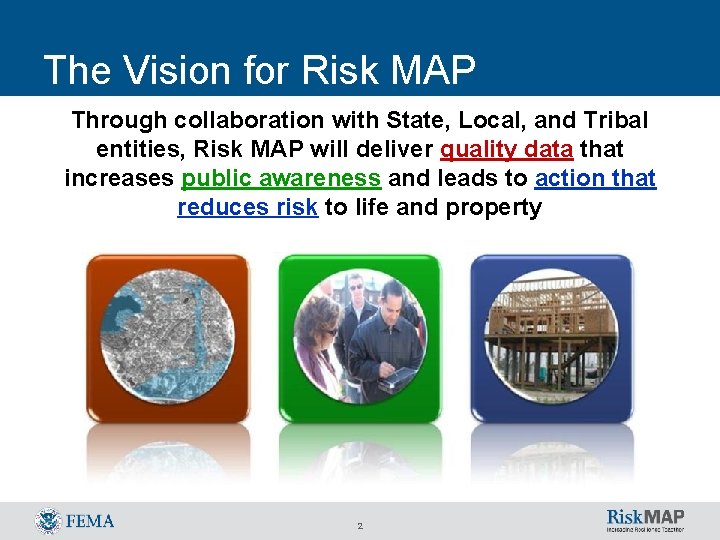
The Vision for Risk MAP Through collaboration with State, Local, and Tribal entities, Risk MAP will deliver quality data that increases public awareness and leads to action that reduces risk to life and property 2
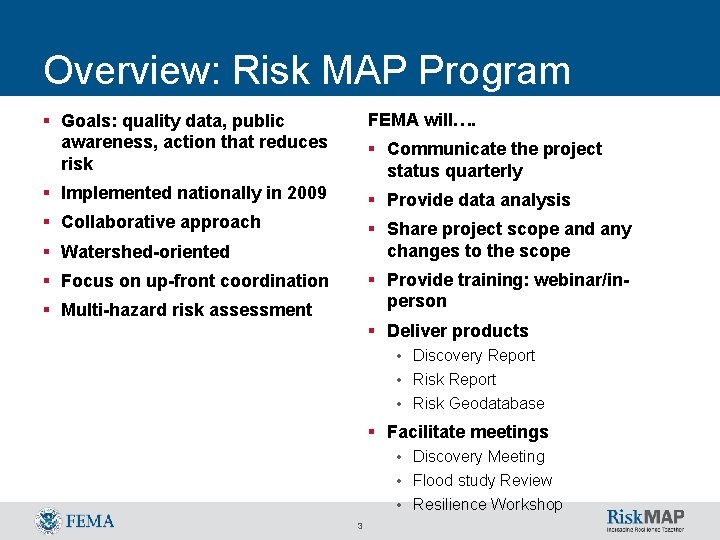
Overview: Risk MAP Program FEMA will…. § Goals: quality data, public awareness, action that reduces risk § Communicate the project status quarterly § Implemented nationally in 2009 § Provide data analysis § Collaborative approach § Share project scope and any changes to the scope § Watershed-oriented § Provide training: webinar/in- § Focus on up-front coordination person § Multi-hazard risk assessment § Deliver products • Discovery Report • Risk Geodatabase § Facilitate meetings • Discovery Meeting • Flood study Review • Resilience Workshop 3
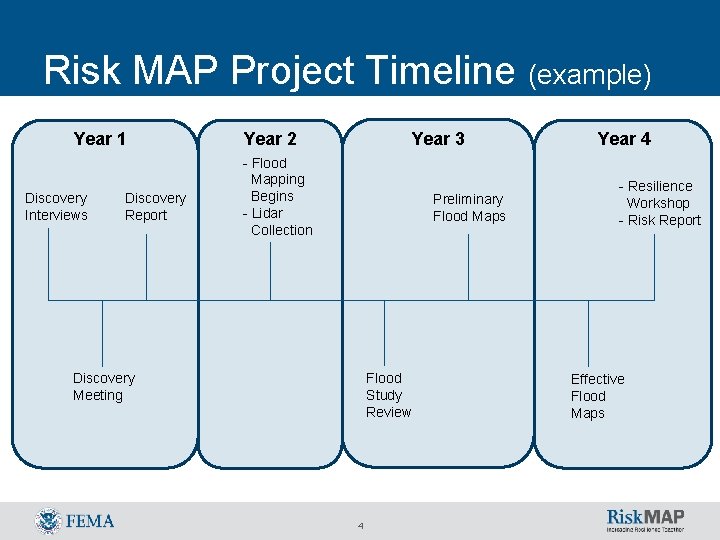
Risk MAP Project Timeline (example) Year 1 Discovery Interviews Discovery Report Year 2 Year 3 - Flood Mapping Begins - Lidar Collection Preliminary Flood Maps Discovery Meeting Flood Study Review 4 Year 4 - Resilience Workshop - Risk Report Effective Flood Maps
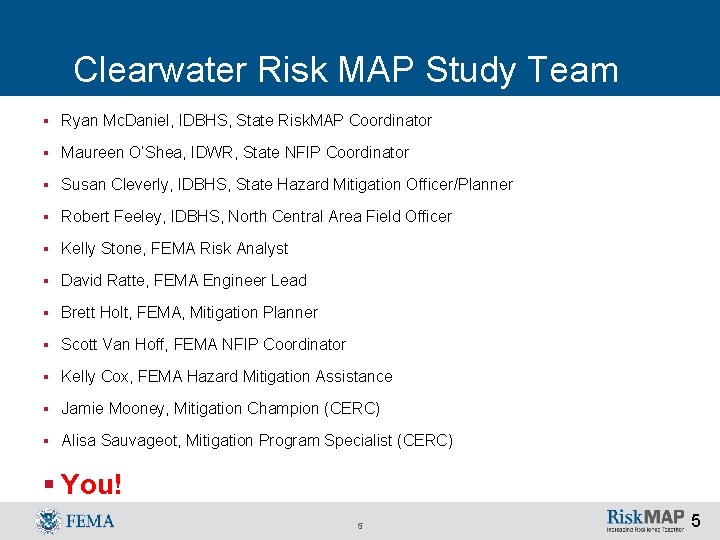
Clearwater Risk MAP Study Team § Ryan Mc. Daniel, IDBHS, State Risk. MAP Coordinator § Maureen O’Shea, IDWR, State NFIP Coordinator § Susan Cleverly, IDBHS, State Hazard Mitigation Officer/Planner § Robert Feeley, IDBHS, North Central Area Field Officer § Kelly Stone, FEMA Risk Analyst § David Ratte, FEMA Engineer Lead § Brett Holt, FEMA, Mitigation Planner § Scott Van Hoff, FEMA NFIP Coordinator § Kelly Cox, FEMA Hazard Mitigation Assistance § Jamie Mooney, Mitigation Champion (CERC) § Alisa Sauvageot, Mitigation Program Specialist (CERC) § You! 5 5
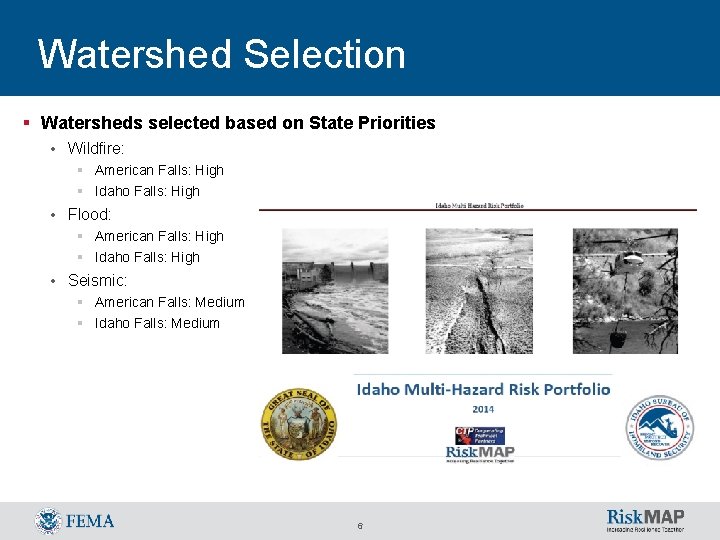
Watershed Selection § Watersheds selected based on State Priorities • Wildfire: § American Falls: High § Idaho Falls: High • Flood: § American Falls: High § Idaho Falls: High • Seismic: § American Falls: Medium § Idaho Falls: Medium 6
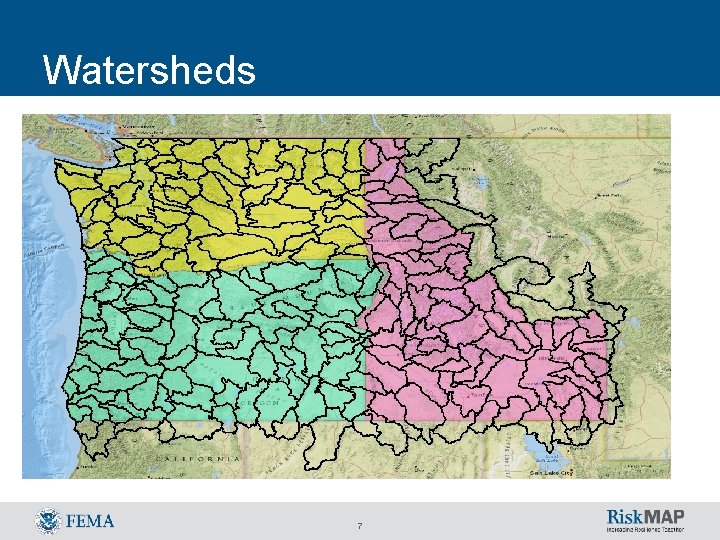
Watersheds 7
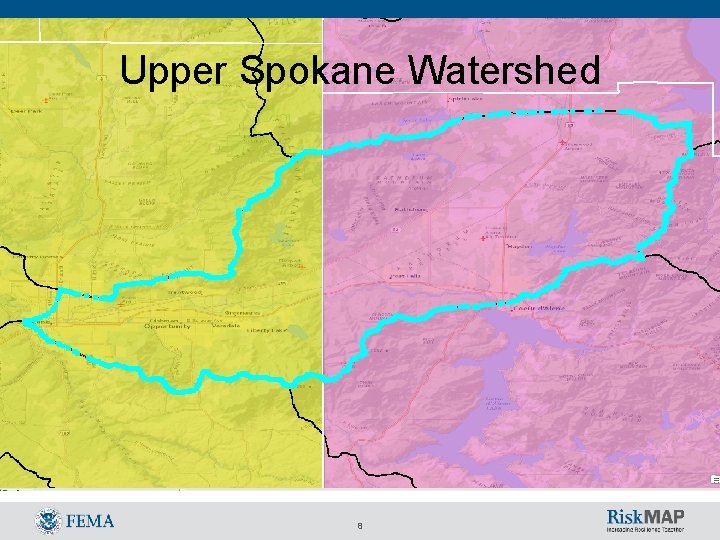
Upper Spokane Watershed 8
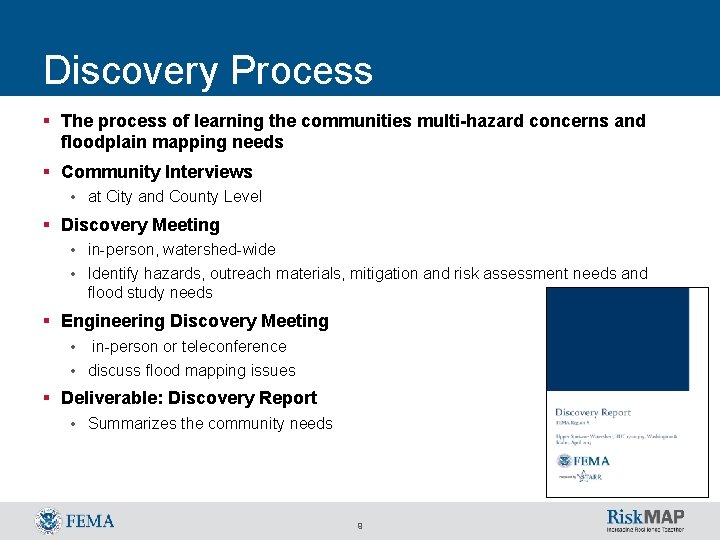
Discovery Process § The process of learning the communities multi-hazard concerns and floodplain mapping needs § Community Interviews • at City and County Level § Discovery Meeting • in-person, watershed-wide • Identify hazards, outreach materials, mitigation and risk assessment needs and flood study needs § Engineering Discovery Meeting • in-person or teleconference • discuss flood mapping issues § Deliverable: Discovery Report • Summarizes the community needs 9
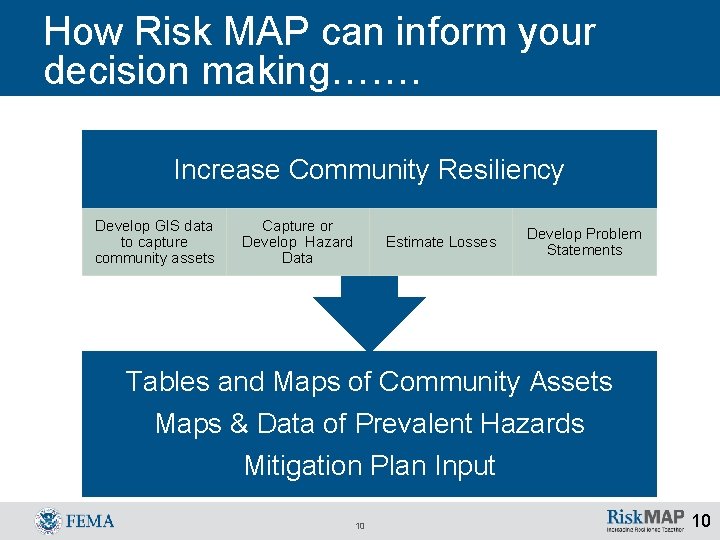
How Risk MAP can inform your decision making……. Increase Community Resiliency Develop GIS data to capture community assets Capture or Develop Hazard Data Estimate Losses Develop Problem Statements Tables and Maps of Community Assets Maps & Data of Prevalent Hazards Mitigation Plan Input 10 10
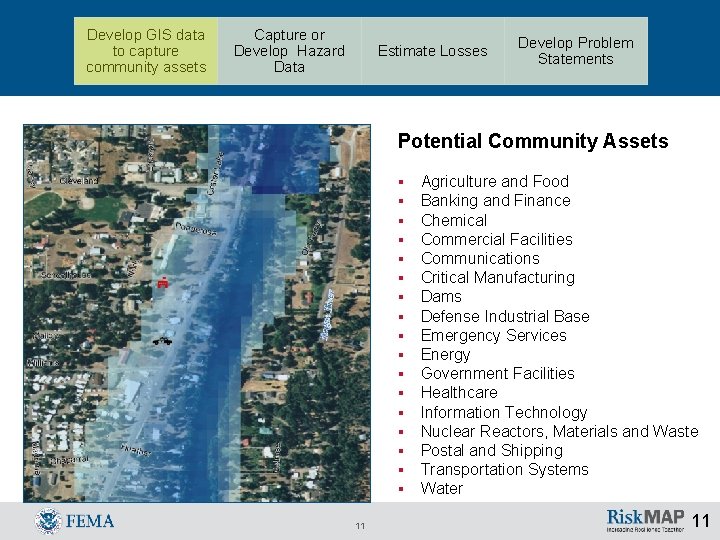
Develop GIS data to capture community assets Capture or Develop Hazard Data Estimate Losses Develop Problem Statements Potential Community Assets § § § § § 11 Agriculture and Food Banking and Finance Chemical Commercial Facilities Communications Critical Manufacturing Dams Defense Industrial Base Emergency Services Energy Government Facilities Healthcare Information Technology Nuclear Reactors, Materials and Waste Postal and Shipping Transportation Systems Water 11
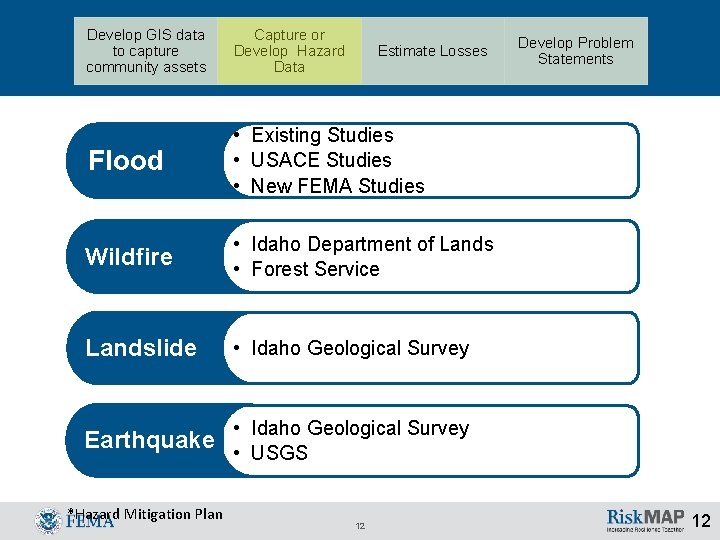
Develop GIS data to capture community assets Capture or Develop Hazard Data Flood • Existing Studies • USACE Studies • New FEMA Studies Wildfire • Idaho Department of Lands • Forest Service Landslide • Idaho Geological Survey Estimate Losses Develop Problem Statements • Idaho Geological Survey Earthquake • USGS *Hazard Mitigation Plan 12 12
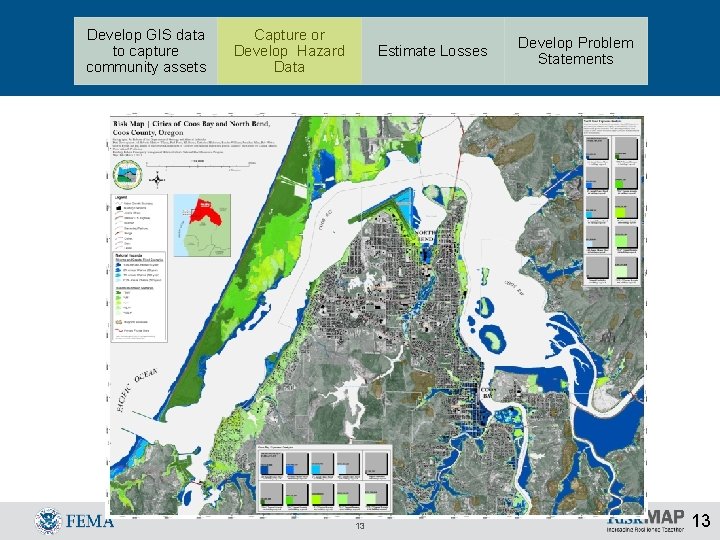
Develop GIS data to capture community assets Capture or Develop Hazard Data Estimate Losses 13 Develop Problem Statements 13
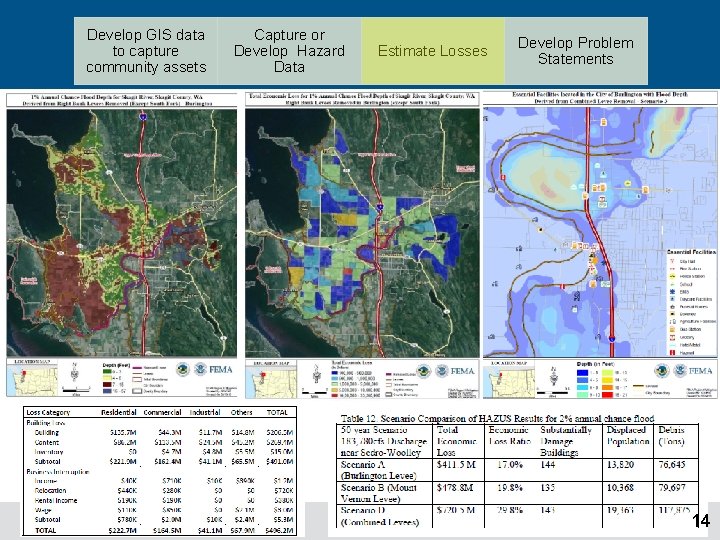
Develop GIS data to capture community assets Capture or Develop Hazard Data Estimate Losses 14 Develop Problem Statements 14
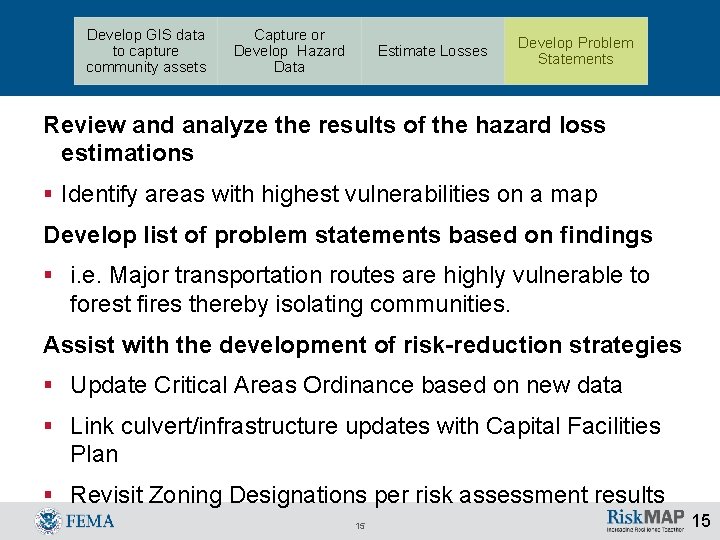
Develop GIS data to capture community assets Capture or Develop Hazard Data Estimate Losses Develop Problem Statements Review and analyze the results of the hazard loss estimations § Identify areas with highest vulnerabilities on a map Develop list of problem statements based on findings § i. e. Major transportation routes are highly vulnerable to forest fires thereby isolating communities. Assist with the development of risk-reduction strategies § Update Critical Areas Ordinance based on new data § Link culvert/infrastructure updates with Capital Facilities Plan § Revisit Zoning Designations per risk assessment results 15 15
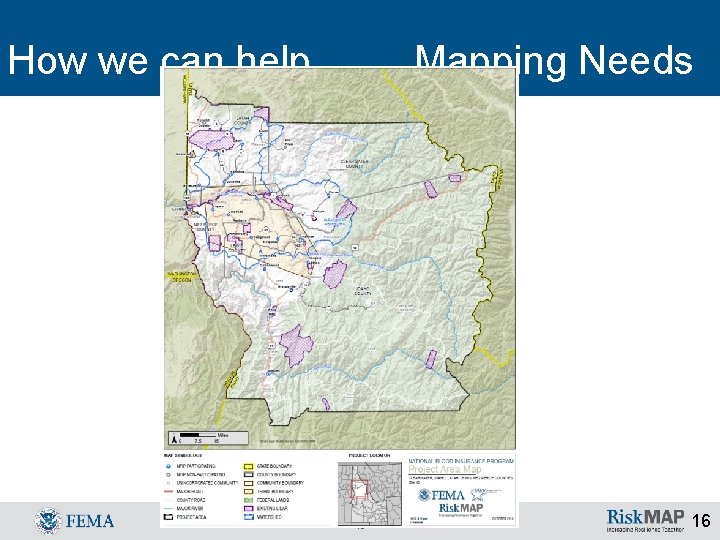
How we can help……. Mapping Needs 16 16
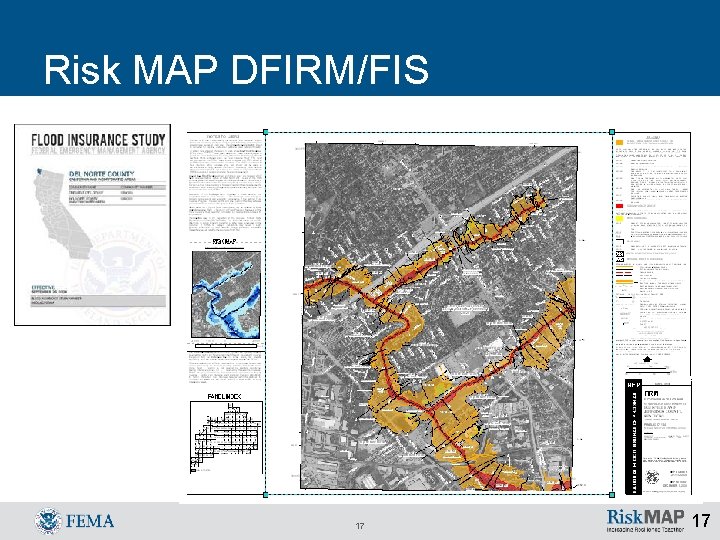
Risk MAP DFIRM/FIS 17 17
How we can help……. ……… Technical Support & Training § NFIP Training and Technical Support § Outreach Support § Hazus Training and Technical Support § Hazard Mitigation Planning Support § …other training needs? 18 18
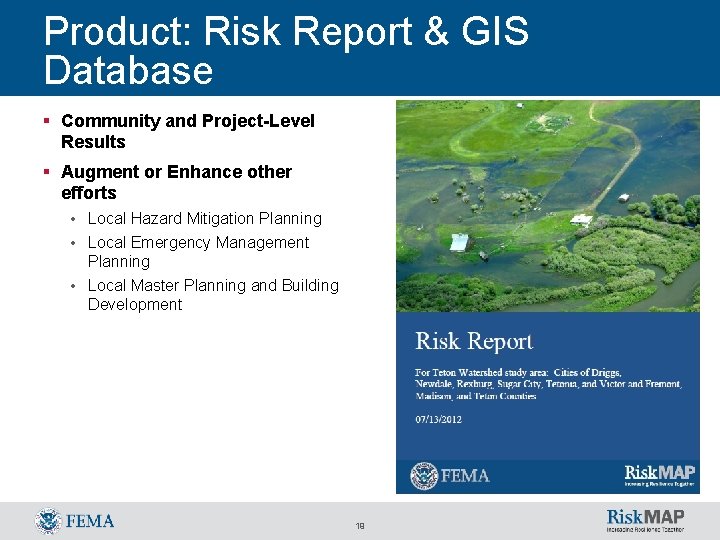
Product: Risk Report & GIS Database § Community and Project-Level Results § Augment or Enhance other efforts • Local Hazard Mitigation Planning • Local Emergency Management Planning • Local Master Planning and Building Development 19