
Risk Management RM Dr Asmaa Mohamed Wahba Slide
Risk Management (RM) Dr. Asmaa Mohamed Wahba Slide 1 from 17
Definition of Risk Management: � Risk Management is a scientific method to identify the risks to which the individual or the project is exposed, analyze them, measure them, select and implement the most appropriate treatment procedures to deal with them, and then to monitor the results of risk management decisions and make the necessary adjustments. Slide 2 from 17
Steps of Risk Management: � In the literature there are many methods to present the 1. Risks Identification. 2. Risk Analysis. 3. Risk Measurement and Evaluation. Risk Assessment steps of risk management. we will mention the following. 4. Select and Implementing the appropriate RM control procedure. 5. Monitoring the result and reviewing the feedback. Slide 3 from 17
1. Risks Identification: ØThe process of Risks Identification for any project is considered the most important and hardest step in risk management. ØIt is the step in which the risk manager determines and encloses the risks that the organization may face. ØThere is no one tool to go about it. There are many tools that can be used for Risk identification, risk manager can use more or all of Risk identification tools to effectively identify the risks. ØSome of risk management tools are mentioned as follow: Slide 4 from 17
1. Risks Identification Tools: ØPast Experience: the analogy is performed to identify potential risks, usually from similar projects. o Shortage: There may be some potential Risks that have not occurred before or have occurred but have not been recorded. ØInterviewing: interviewing with project tem and Experts, asking them about their point of view of the potential risks. o. Shortage: It depends on the performance of Interviewer, the experience of project tem or experts and the efficiency of the questions. ØBrainstorming: Brainstorming is done with a group of people who focus on identification of risk for the project. o. Shortage: It depends on the qualification of the participants Slide 5 from 17
1. Risks Identification: (Continued) ØQuestionnaires. Is the group of questions that listed to collect the information about the opinion of the respondents about the potential risks. o. Shortage: The accuracy of the collected information may be reduced in case if the respondents filling out the questionnaires with a carelessness or in case if the respondents misunderstand the questions. ØRisk Register document : is a document that is regularly updated throughout the life cycle of the project. It becomes a part of project documents. In addition it can be used as a historical records that are used for future projects. ØShortage: Limited to the risks that already have been exposed by the project. Slide 6 from 17
1. Risks Identification: (Continued) ØSWOT Analysis (Strength, Weakness, Opportunities And Threats): Strengths and weaknesses are identified for the project and thus, risks are determined. ØShortage: SWOT analysis may be subjective if it depended on the opinion of persons who performed the SWOT analysis rather than depending on formal data. Ø Checklist of risks. There are several prepared risk checklists that can be used to identify the potential Risks. ØShortage: Serious attention should be taken to exploring items that do not appear on the checklist. Slide 7 from 17
2. Risks Analysis: ØThis stage provides details about the risks that were identified in the previous step. This details is about: o Determine the loss. o Perils. o Hazards. o. Identify the currently control strategies of RM. Slide 8 from 17
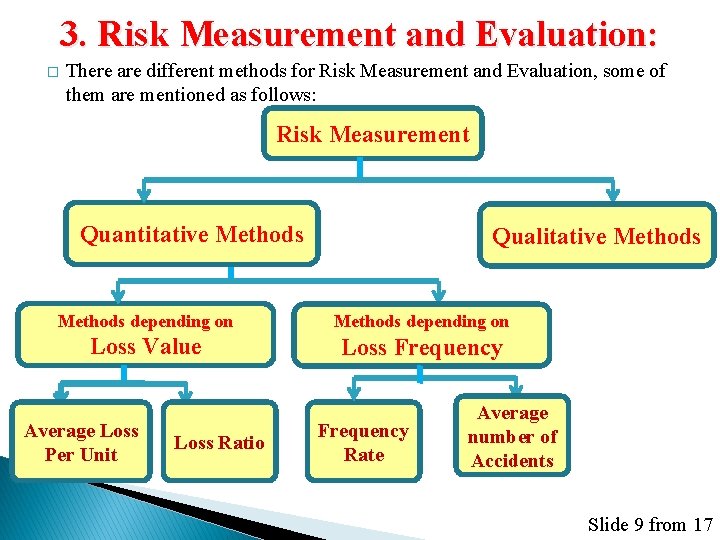
3. Risk Measurement and Evaluation: � There are different methods for Risk Measurement and Evaluation, some of them are mentioned as follows: Risk Measurement Quantitative Methods Qualitative Methods depending on Loss Value Loss Frequency Average Loss Per Unit Loss Ratio Frequency Rate Average number of Accidents Slide 9 from 17
Quantitative Methods: �Quantitative methods require a historical data to measure the risk. Slide 10 from 17
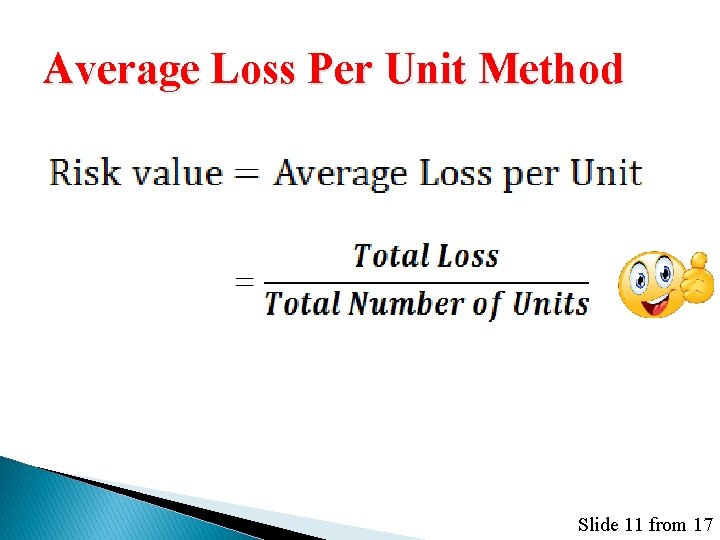
Average Loss Per Unit Method Slide 11 from 17
Average Loss Per Unit Method (continued) � Example 1: A study conducted to measure the degree of Risk due to fire that can be exposed to houses in one of the villages of Sadat City, which included 10, 000 houses, A data were collected about the previous fire accidents in this village in the previous year, the study found that total loss was 600, 000 Pound. Compute the Risk value. Slide 12 from 17
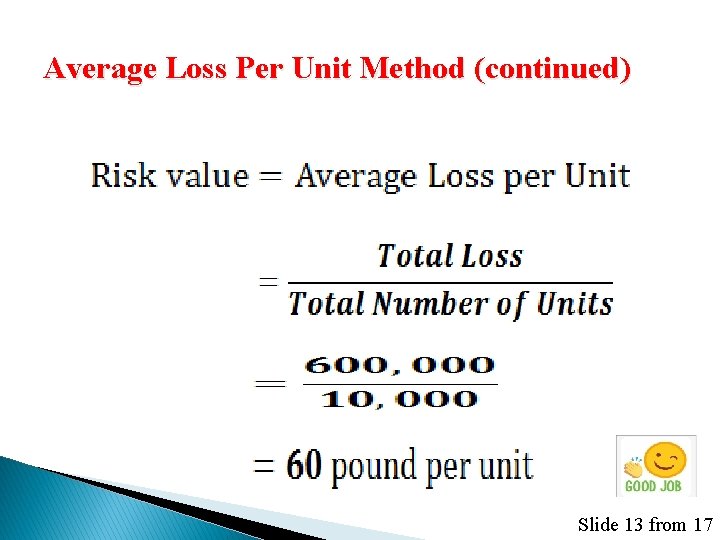
Average Loss Per Unit Method (continued) Slide 13 from 17
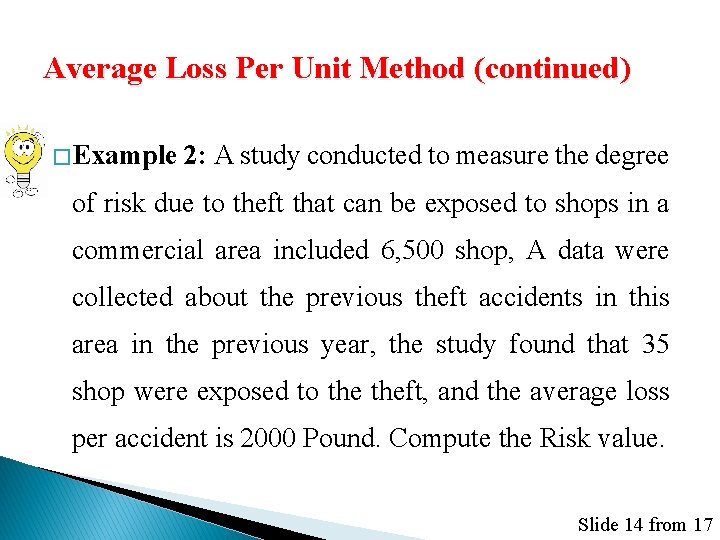
Average Loss Per Unit Method (continued) � Example 2: A study conducted to measure the degree of risk due to theft that can be exposed to shops in a commercial area included 6, 500 shop, A data were collected about the previous theft accidents in this area in the previous year, the study found that 35 shop were exposed to theft, and the average loss per accident is 2000 Pound. Compute the Risk value. Slide 14 from 17
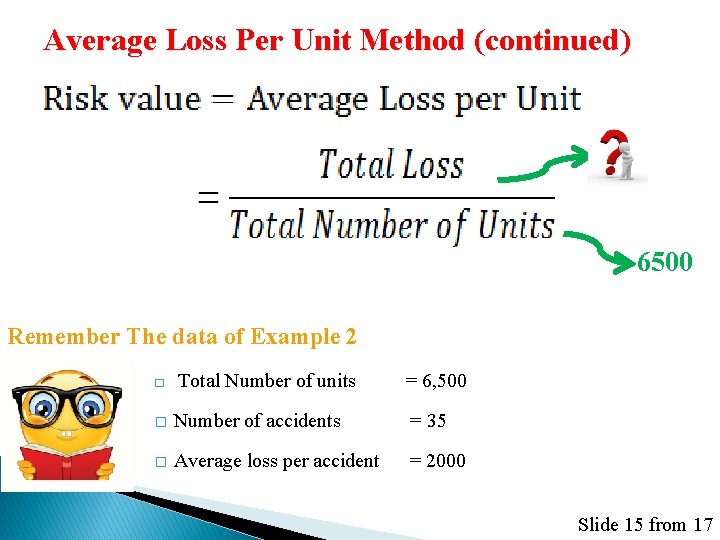
Average Loss Per Unit Method (continued) 6500 Remember The data of Example 2 Total Number of units = 6, 500 � Number of accidents = 35 � Average loss per accident = 2000 � Slide 15 from 17
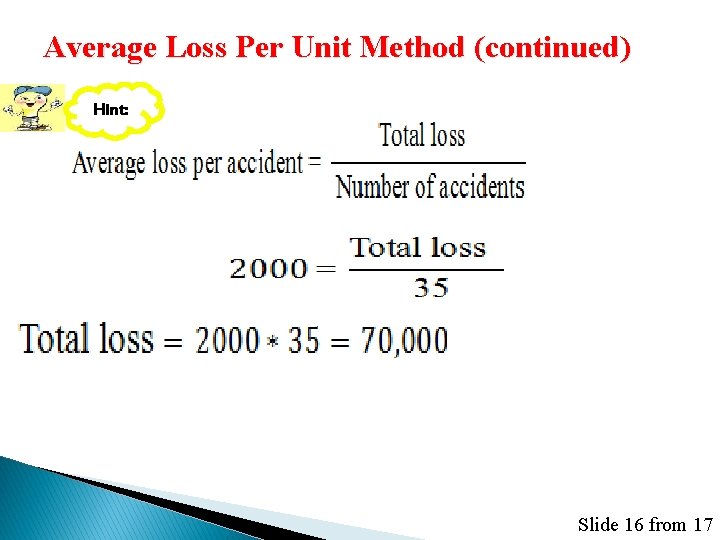
Average Loss Per Unit Method (continued) Hint: Slide 16 from 17
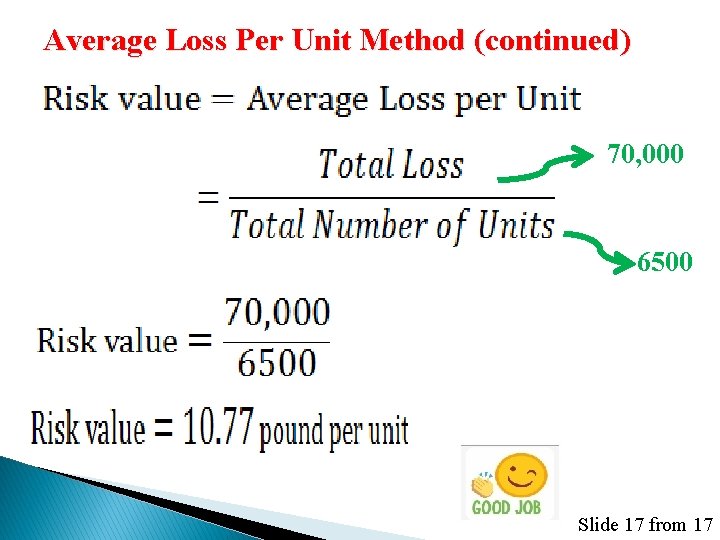
Average Loss Per Unit Method (continued) 70, 000 6500 Slide 17 from 17
- Slides: 17