
Risk Management Information System A Spatial Planning Tool




- Slides: 20
Risk Management Information System A Spatial Planning Tool for Chemical Disaster Management International Conference on Environmental Knowledge for Disaster Risk Reduction Vigyan Bhavan, New Delhi May 10, 2011 SENES Consultants India
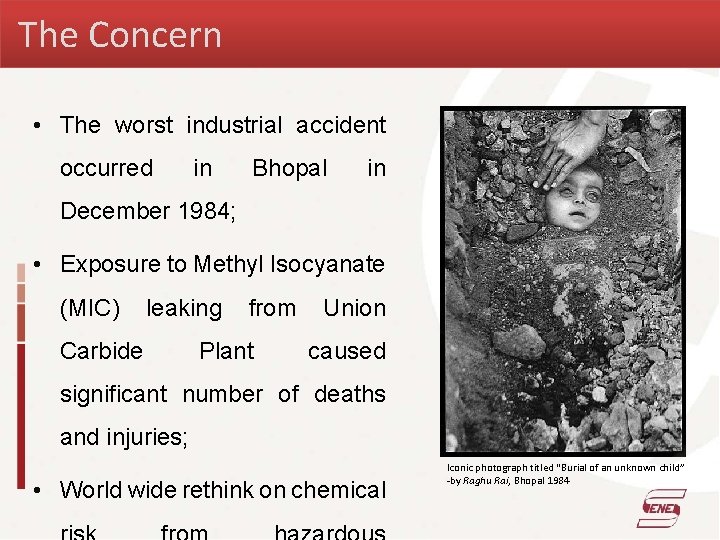
The Concern • The worst industrial accident occurred in Bhopal in December 1984; • Exposure to Methyl Isocyanate (MIC) leaking Carbide from Plant Union caused significant number of deaths and injuries; • World wide rethink on chemical Iconic photograph titled “Burial of an unknown child” -by Raghu Rai, Bhopal 1984
The Concern • No information available from Union Carbide on the nature of hazards present within premises; • People unaware on how to react to be able to minimize exposure to MIC; • Hospitals & medical professionals did not know what gas was released and how to treat victims; • There was no immediate notification of the accident to the Administration; • There was no Emergency Response Plan & the Administration could not respond to accident on time;
Presentation Flow • Key issues in managing chemical risk; • Need for GIS-enabled integrated information systems and modelling tools; • The Risk Management Information System (RMIS);
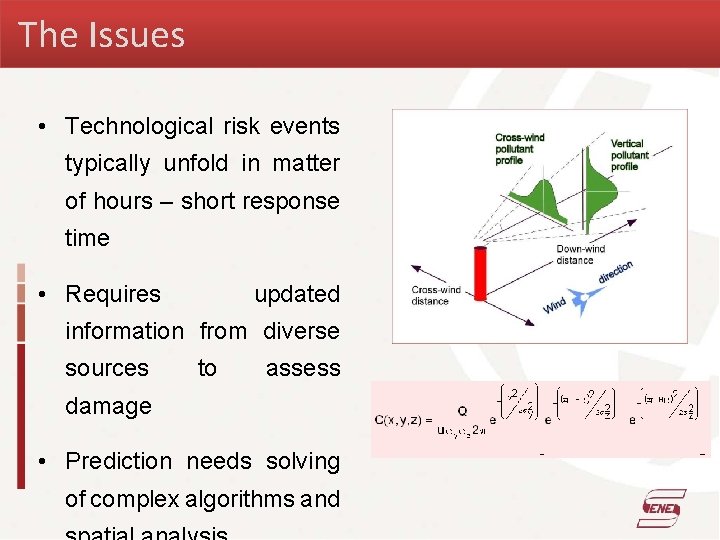
The Issues • Technological risk events typically unfold in matter of hours – short response time • Requires updated information from diverse sources to assess damage • Prediction needs solving of complex algorithms and
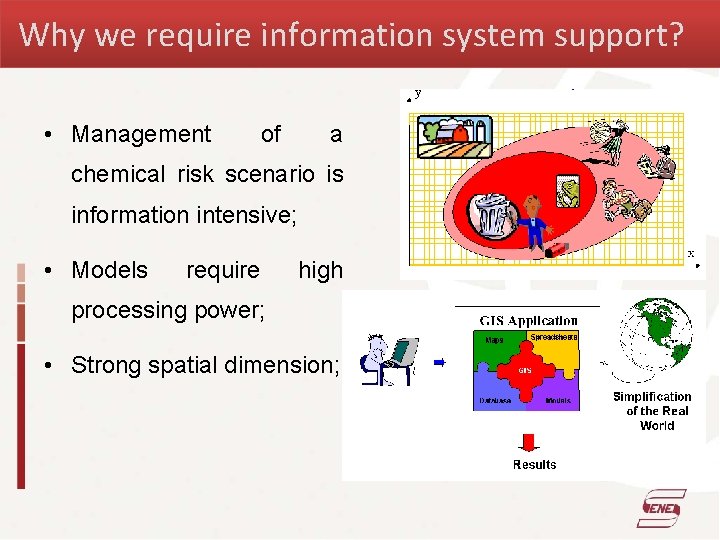
Why we require information system support? • Management of a chemical risk scenario is information intensive; • Models require high processing power; • Strong spatial dimension;
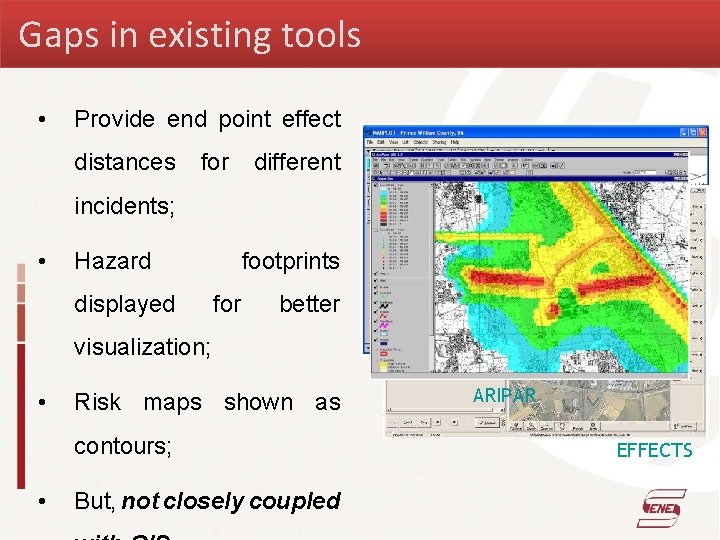
Gaps in existing tools • Provide end point effect distances for different incidents; • Hazard displayed footprints for better visualization; • Risk maps shown as contours; • But, not closely coupled ALOHA /MARPLOT ARIPAR EFFECTS
Risk Management Information System (RMIS) Key Features: • Aggregate information on industries, chemicals, hazards, vulnerability, emergency responders in a single database; • Provides for spatial analysis and better understanding of chemical risks; • Transparent mechanism for sharing risk related information; • Integrated with QRA based consequence analysis
RMIS – Key Benefits • High scale of Maps – better representation of hazards and vulnerabilities; • Hazard Data and Maps can be updated / managed in a distributed manner or centrally; • [ Active ] Modeling of accident scenarios – MCLS or any quantity of chemical; • Live Meteorology Information while the risk event is unfolding;
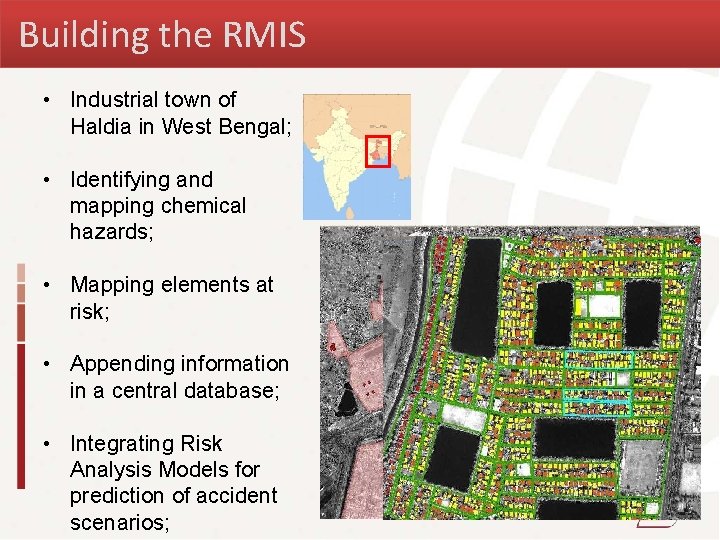
Building the RMIS • Industrial town of Haldia in West Bengal; • Identifying and mapping chemical hazards; • Mapping elements at risk; • Appending information in a central database; • Integrating Risk Analysis Models for prediction of accident scenarios;
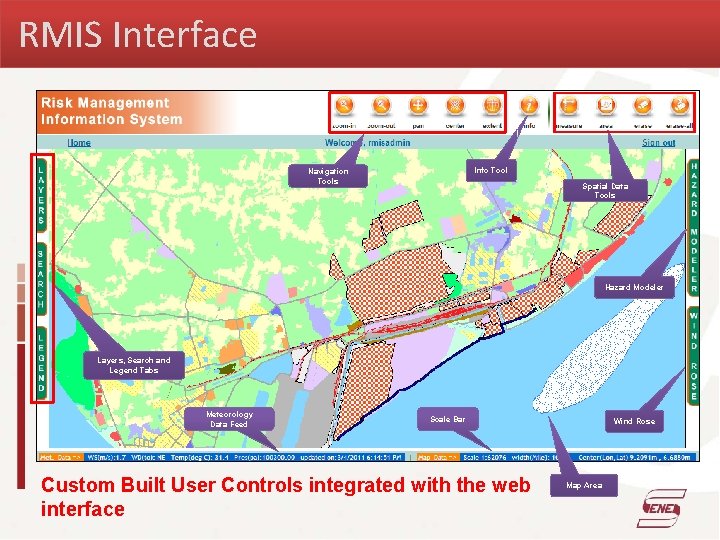
RMIS Interface Info Tool Navigation Tools Spatial Data Tools Hazard Modeler Layers, Search and Legend Tabs Meteorology Data Feed Scale Bar Custom Built User Controls integrated with the web interface Wind Rose Map Area
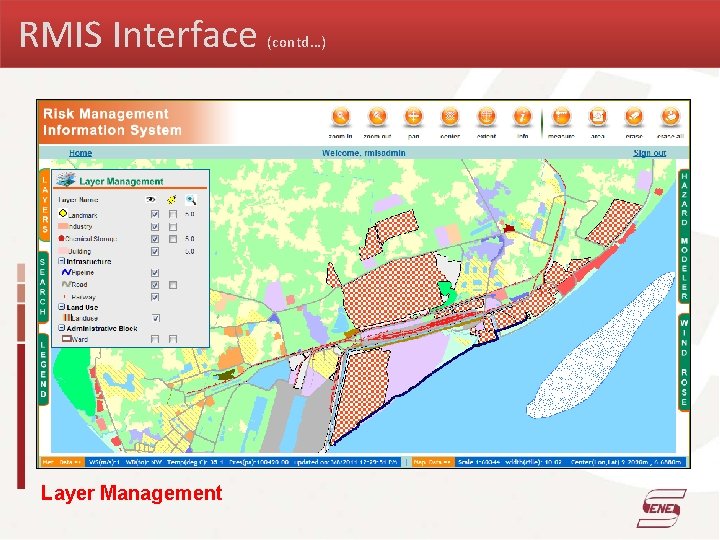
RMIS Interface Layer Management (contd…)
RMIS Interface – Search Function Search by Chemical Nature & Quantity Search Results
RMIS Interface – Meteorology Daily and Seasonal Wind Patterns
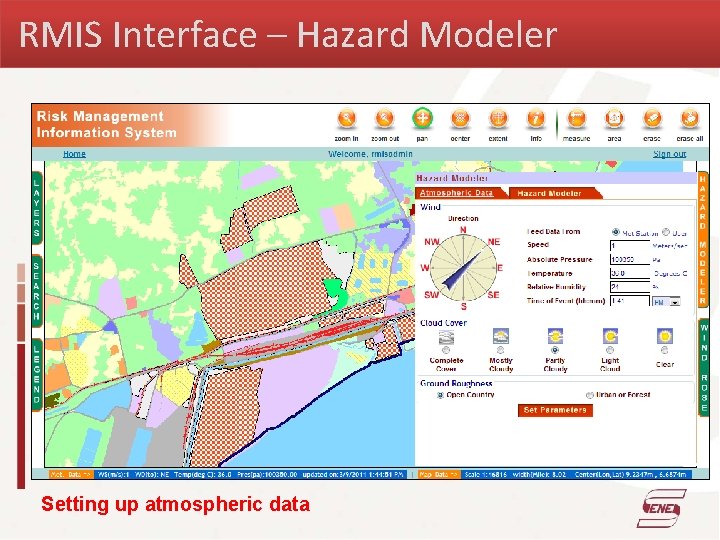
RMIS Interface – Hazard Modeler Setting up atmospheric data
RMIS Interface – Hazard Modeler (contd…) Preparing the hazard model
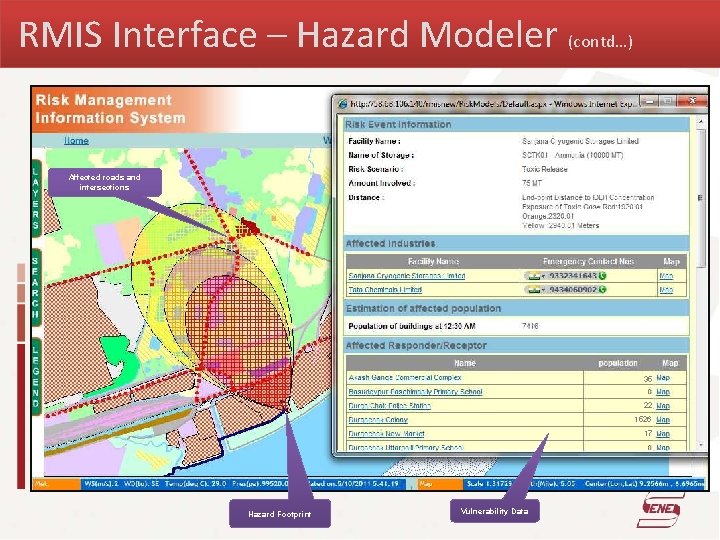
RMIS Interface – Hazard Modeler (contd…) Affected roads and intersections 35 22 1526 17 Hazard Footprint Vulnerability Data
Conclusion • The RMIS has been developed as a versatile and integrated information system that can assist decision makers to effectively plan for and manage a chemical risk event • It will help in reducing the odds of another Bhopal!
Nilanjan Paul Email: npaul@senesindia. com Debanjan Bandyopadhyay Email: debanjan@senesindia. com