
Risk Assessment to Adaptation Planning Implementation and Evaluation

- Slides: 31
Risk Assessment to Adaptation Planning, Implementation and Evaluation Presidential Plaza Hotel, Beijing Friday, 05 th March 2009 Roger B Street Technical Director
Why Risk Assessment ? Faced with an uncertain future • Risk-based approach to managing in the context of these changes (climate and other drivers) – a rationale approach Risk assessment • Used to identify risks – necessary but insufficient • Used to concentrate efforts (investments, policies and programmes) on those risks deemed priorities • Adaptation assessment – identifying “appropriate” adaptation options and strategies and evaluating them in terms of criteria such as availability, benefits, effectiveness, efficiency and feasibility.
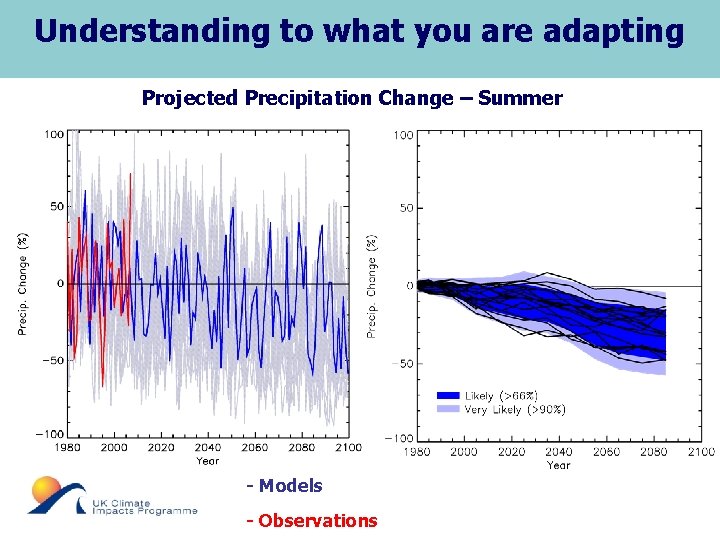
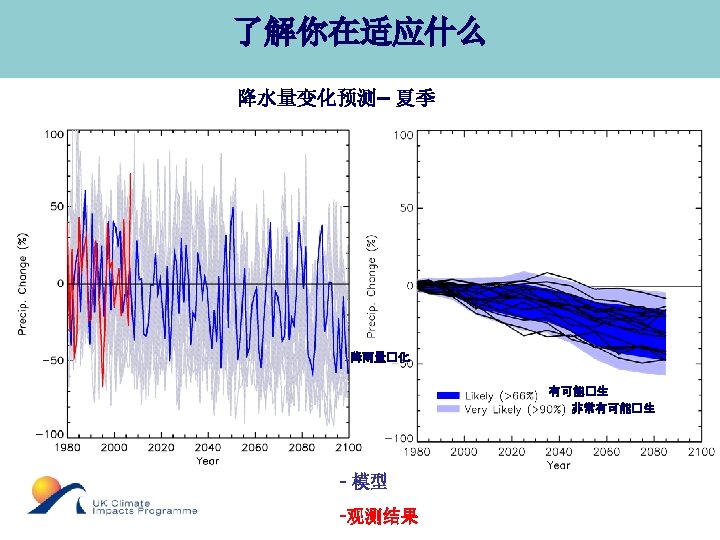
Understanding to what you are adapting Projected Precipitation Change – Summer • Year-to-year summertime variability - Models - Observations • 30 -year summer mean
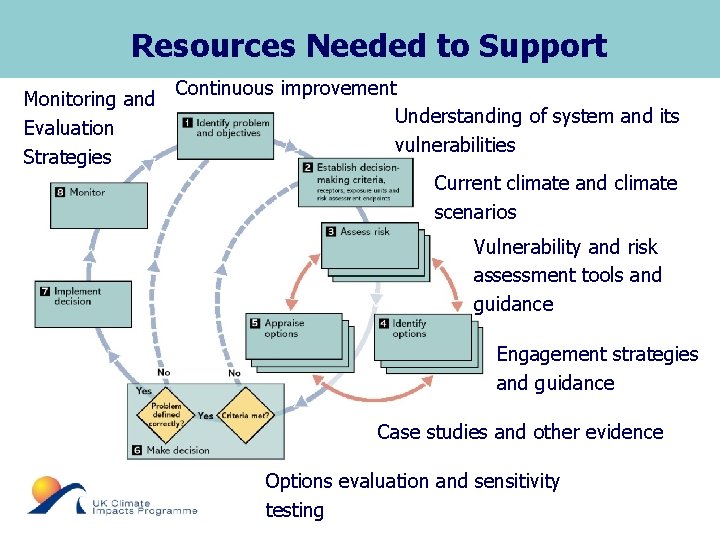
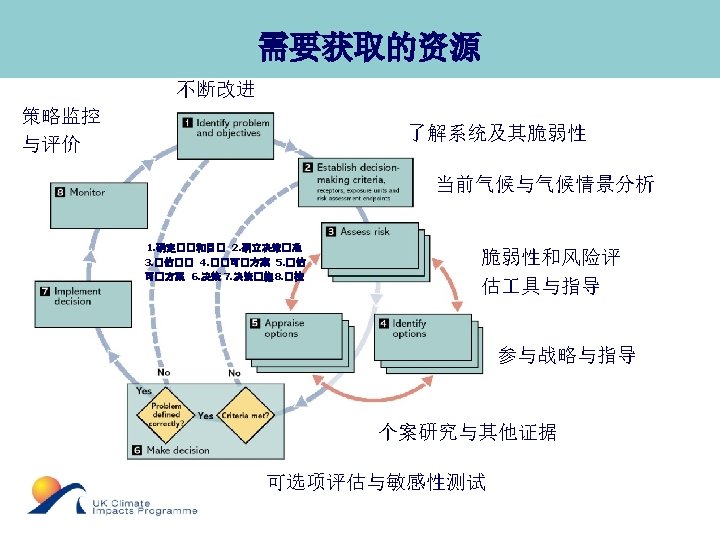
Resources Needed to Support Monitoring and Evaluation Strategies Continuous improvement Understanding of system and its vulnerabilities Current climate and climate scenarios Vulnerability and risk assessment tools and guidance Engagement strategies and guidance Case studies and other evidence Options evaluation and sensitivity testing
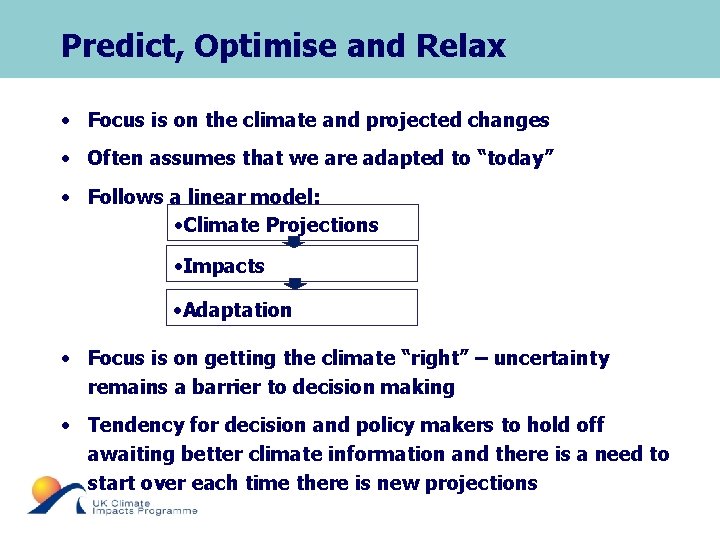
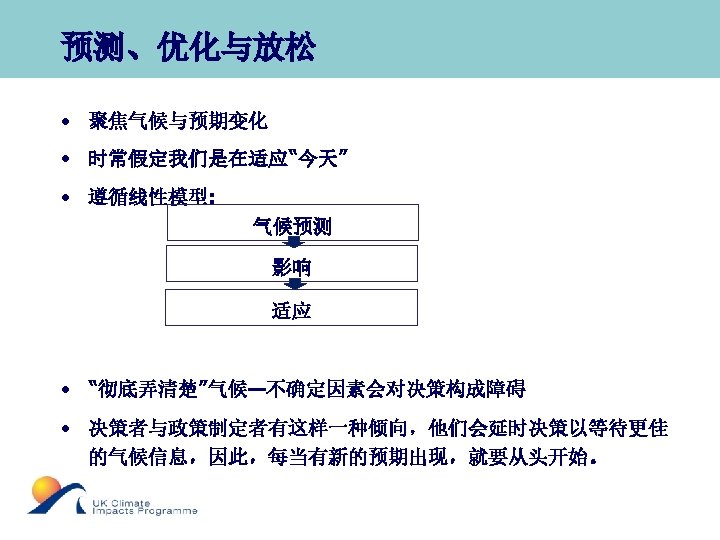
Predict, Optimise and Relax • Focus is on the climate and projected changes • Often assumes that we are adapted to “today” • Follows a linear model: • Climate Projections • Impacts • Adaptation • Focus is on getting the climate “right” – uncertainty remains a barrier to decision making • Tendency for decision and policy makers to hold off awaiting better climate information and there is a need to start over each time there is new projections
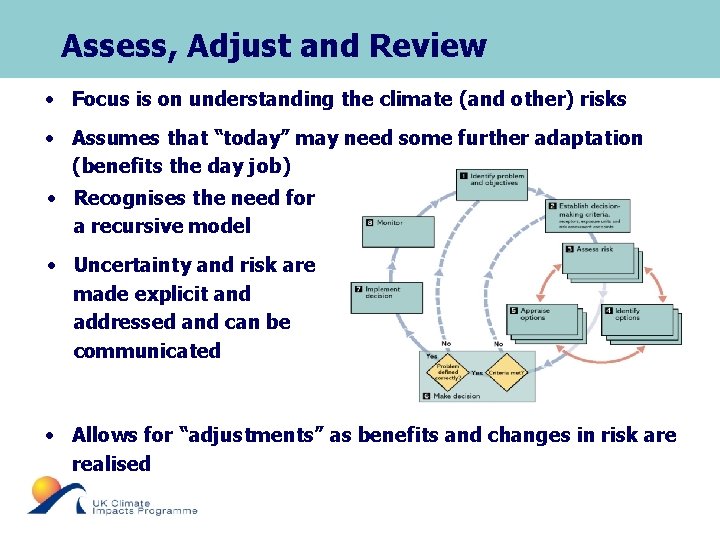
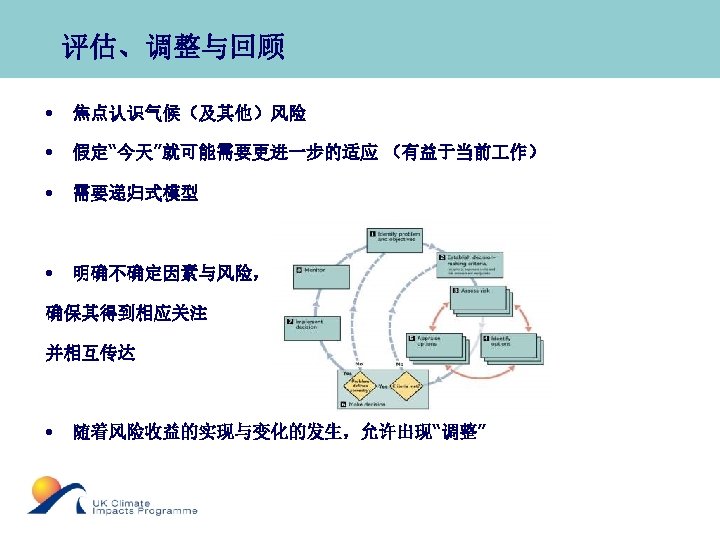
Assess, Adjust and Review • Focus is on understanding the climate (and other) risks • Assumes that “today” may need some further adaptation (benefits the day job) • Recognises the need for a recursive model • Uncertainty and risk are made explicit and addressed and can be communicated • Allows for “adjustments” as benefits and changes in risk are realised
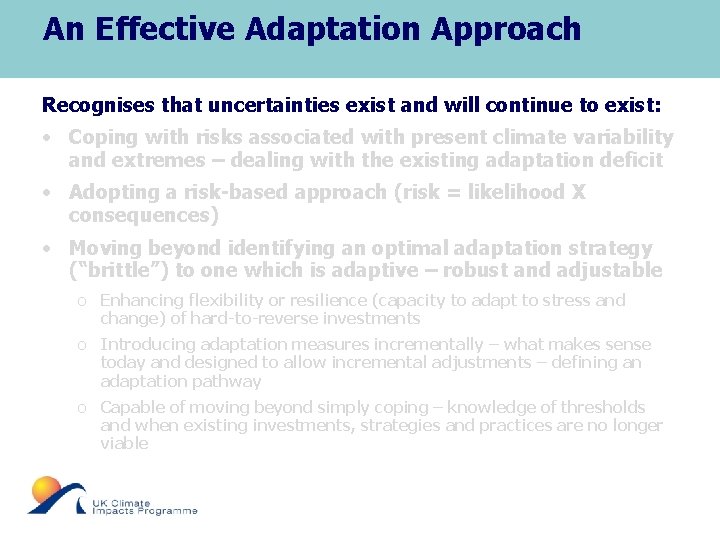
An Effective Adaptation Approach Recognises that uncertainties exist and will continue to exist: • Coping with risks associated with present climate variability and extremes – dealing with the existing adaptation deficit • Adopting a risk-based approach (risk = likelihood X consequences) • Moving beyond identifying an optimal adaptation strategy (“brittle”) to one which is adaptive – robust and adjustable o Enhancing flexibility or resilience (capacity to adapt to stress and change) of hard-to-reverse investments o Introducing adaptation measures incrementally – what makes sense today and designed to allow incremental adjustments – defining an adaptation pathway o Capable of moving beyond simply coping – knowledge of thresholds and when existing investments, strategies and practices are no longer viable
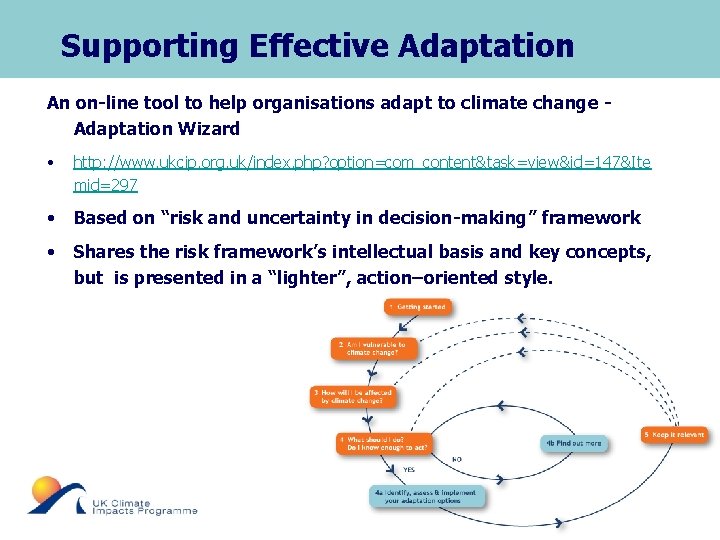
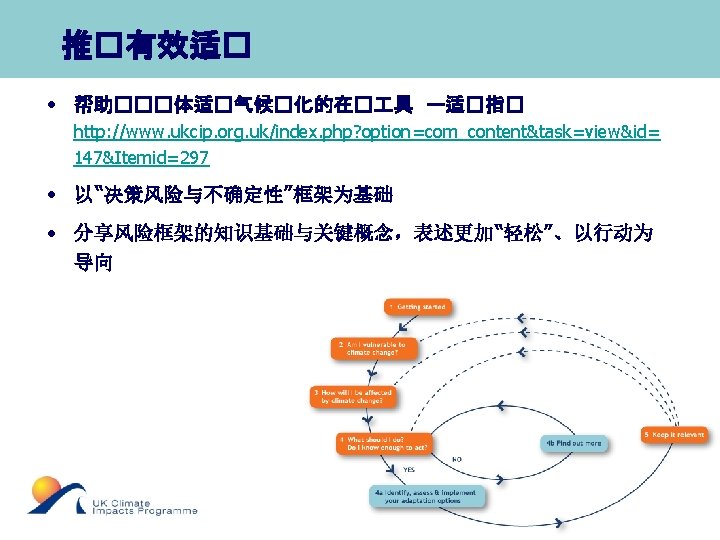
Supporting Effective Adaptation An on-line tool to help organisations adapt to climate change Adaptation Wizard • http: //www. ukcip. org. uk/index. php? option=com_content&task=view&id=147&Ite mid=297 • Based on “risk and uncertainty in decision-making” framework • Shares the risk framework’s intellectual basis and key concepts, but is presented in a “lighter”, action–oriented style.
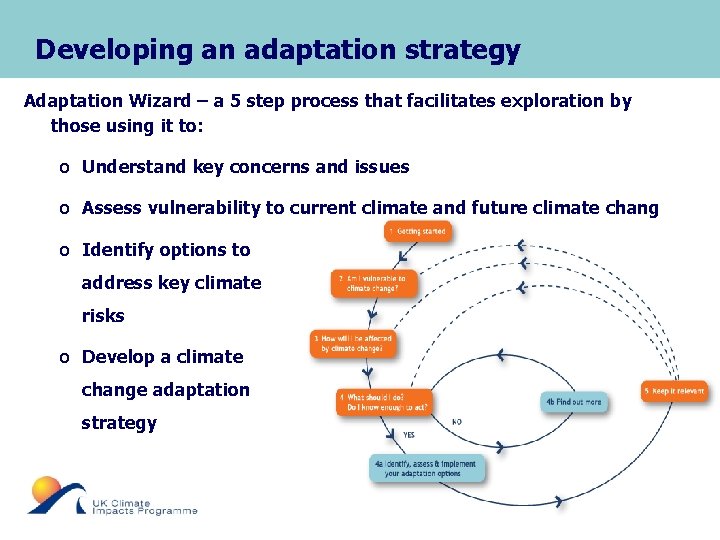
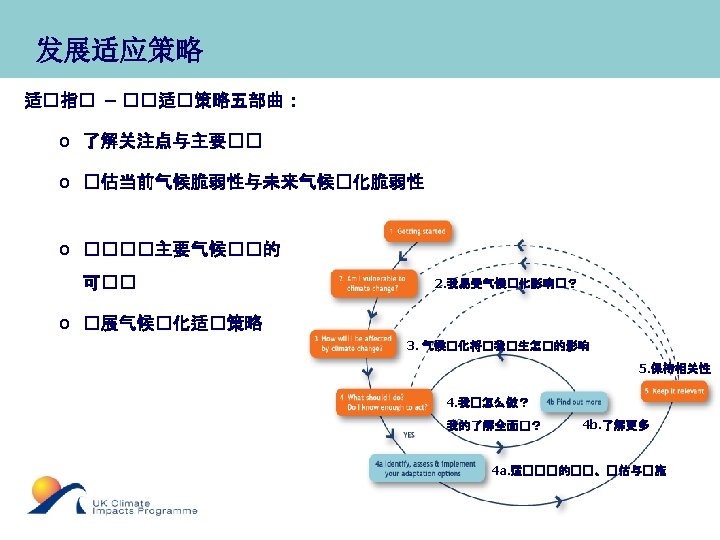
Developing an adaptation strategy Adaptation Wizard – a 5 step process that facilitates exploration by those using it to: o Understand key concerns and issues o Assess vulnerability to current climate and future climate chang o Identify options to address key climate risks o Develop a climate change adaptation strategy
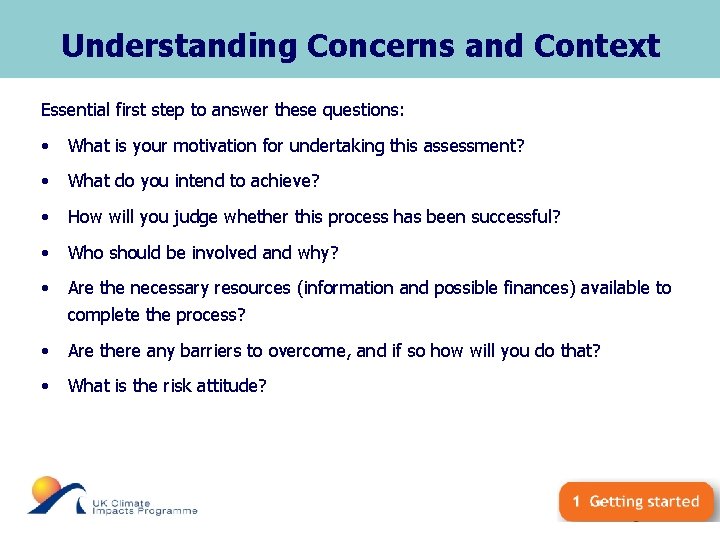
Understanding Concerns and Context Essential first step to answer these questions: • What is your motivation for undertaking this assessment? • What do you intend to achieve? • How will you judge whether this process has been successful? • Who should be involved and why? • Are the necessary resources (information and possible finances) available to complete the process? • Are there any barriers to overcome, and if so how will you do that? • What is the risk attitude?
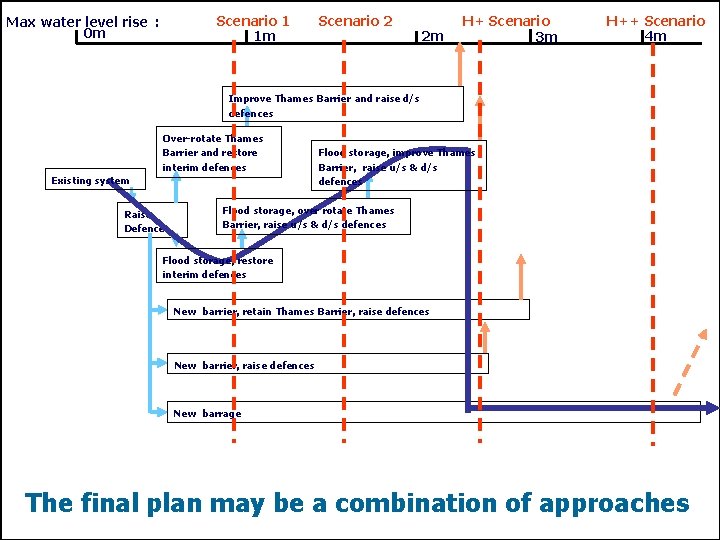
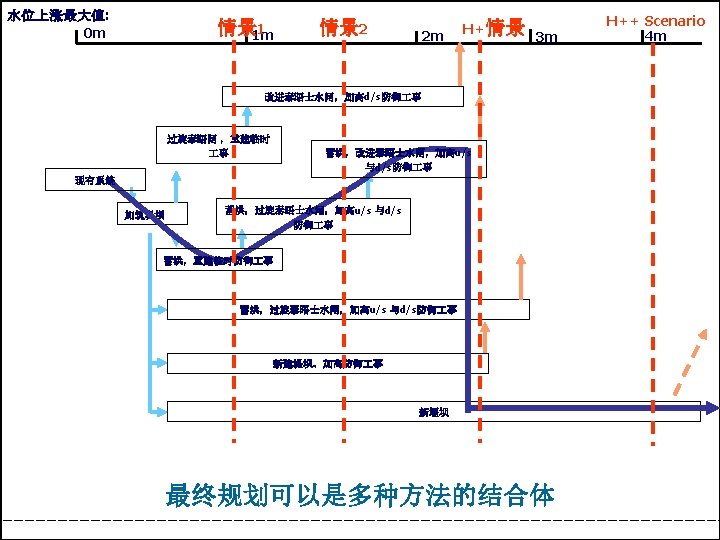
Scenario 1 1 m Max water level rise : 0 m Scenario 2 2 m H+ Scenario 3 m H++ Scenario 4 m Improve Thames Barrier and raise d/s defences Over-rotate Thames Barrier and restore interim defences Existing system Raise Defences Flood storage, improve Thames Barrier, raise u/s & d/s defences Flood storage, over rotate Thames Barrier, raise u/s & d/s defences Flood storage, restore interim defences New barrier, retain Thames Barrier, raise defences New barrage The final plan may be a combination of approaches
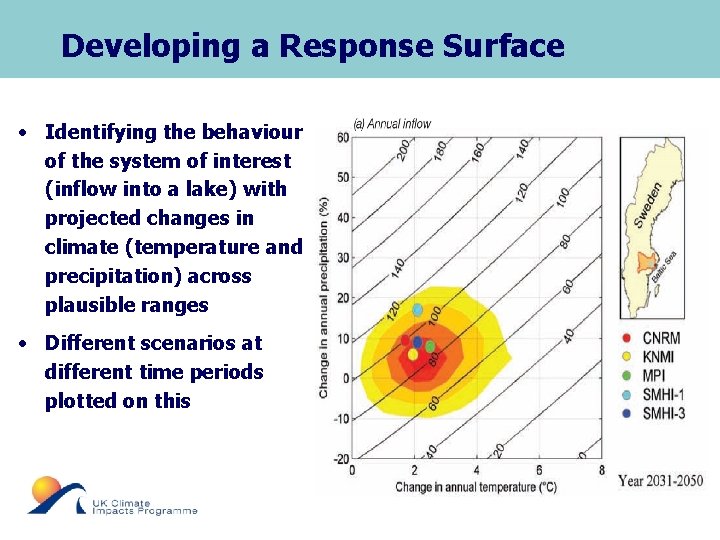
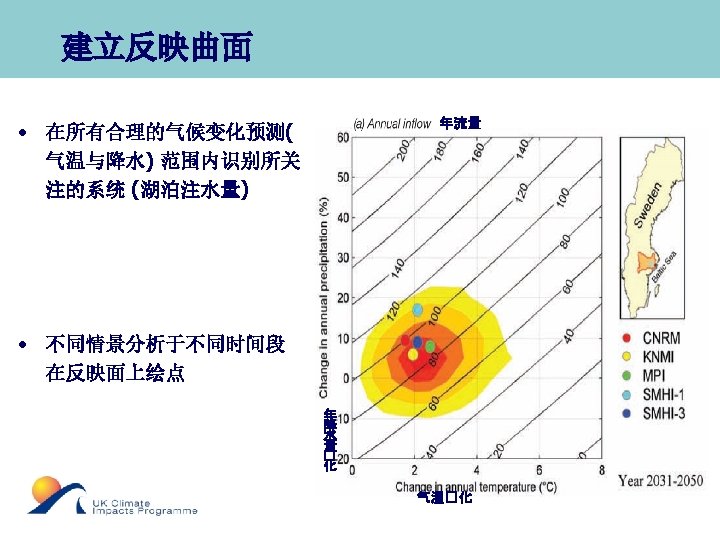
Developing a Response Surface • Identifying the behaviour of the system of interest (inflow into a lake) with projected changes in climate (temperature and precipitation) across plausible ranges • Different scenarios at different time periods plotted on this
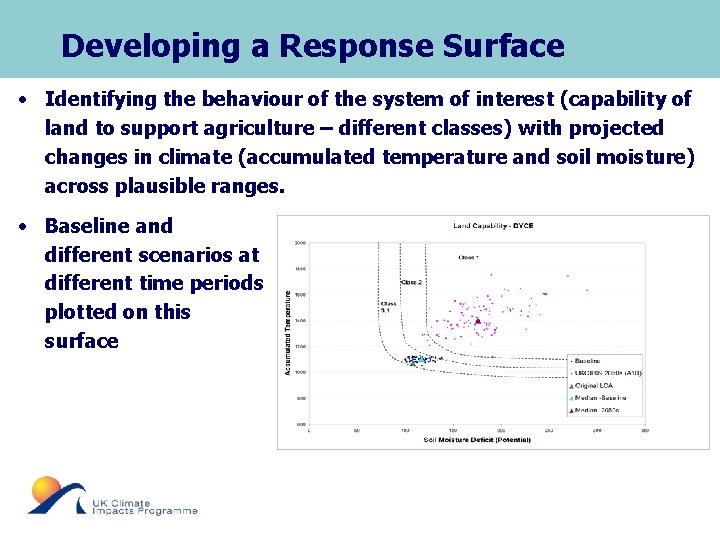
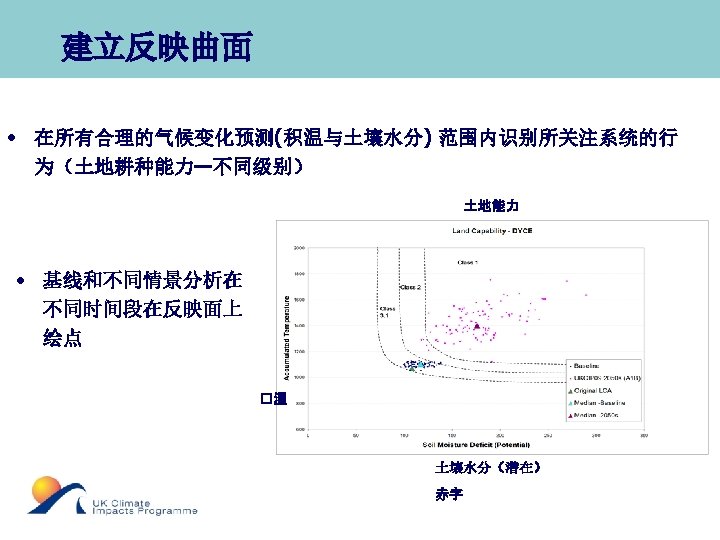
Developing a Response Surface • Identifying the behaviour of the system of interest (capability of land to support agriculture – different classes) with projected changes in climate (accumulated temperature and soil moisture) across plausible ranges. • Baseline and different scenarios at different time periods plotted on this surface
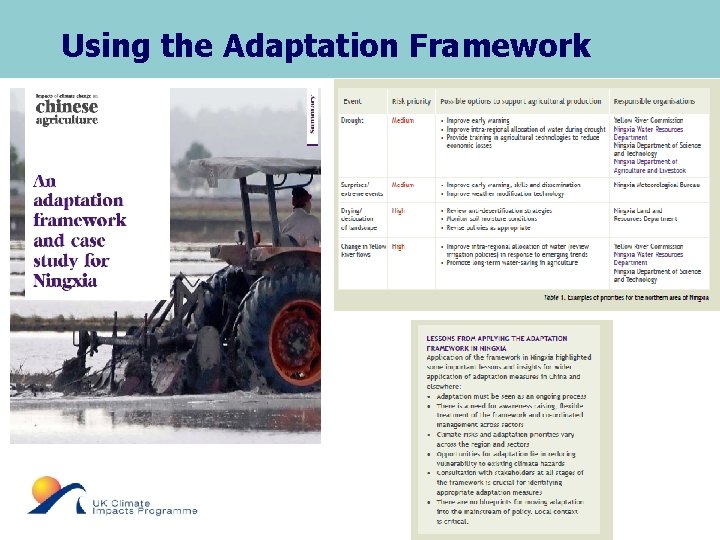
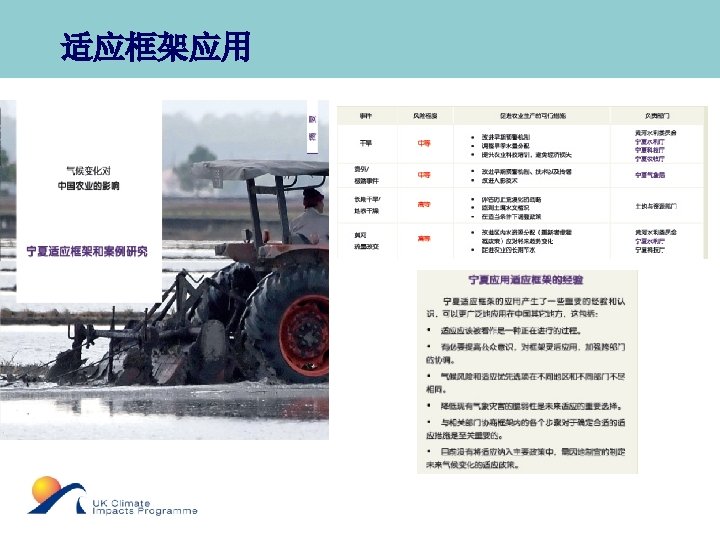
Using the Adaptation Framework
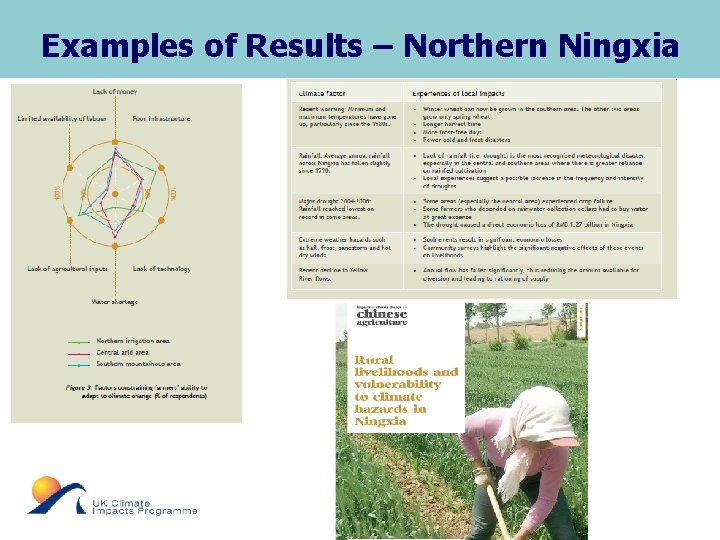
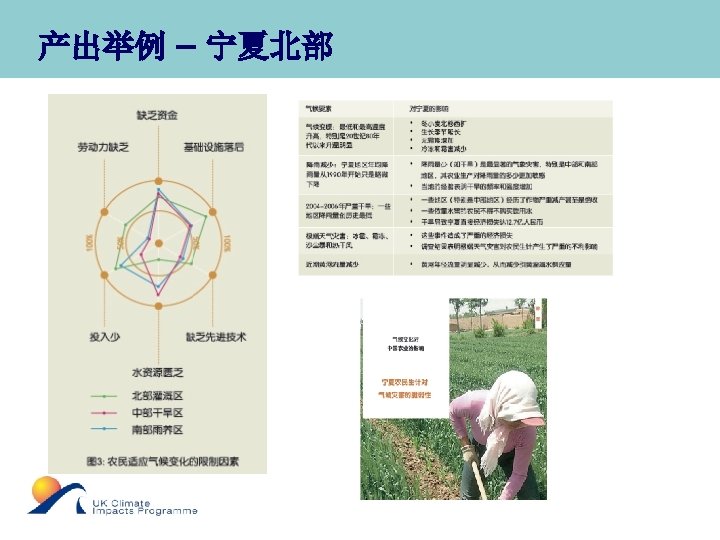
Examples of Results – Northern Ningxia
www. ukcip. org. uk