
Risk Assessment for Chemical Disasters A Presentation by
Risk Assessment for Chemical Disasters A Presentation by P. S. Dutt Scientist and Head, BDU NEERI, Nagpur National Training Course on Chemical Disaster Management, NIDM, New Delhi August 16 -20, 2010
Chemical Hazard: Characteristics § Manmade and technological disasters § Prevention and control is possible – At design, operations and post operations § Chemical hazards and emergencies – Manufacture, storage, transportation , handling, waste management § Chemicals in environment vs chemicals and development Aim is to enhance intrinsic safety of chemical plant design & operations
Hazards and consequences § Hazards (Fires, explosions and toxic releases) – – Flammability Reactivity Toxicity Corrosivity § Causes – – – Design Operations Human error § Consequences – – Loss of life and injury Loss to Plant & Machinery Onsite and offsite Environmental damage
Past Accidents § Flixborough, UK (June 1, 1974) Due to a rupture of bypass assembly, about 80 tonnes of hot liquid cyclohexane (at 155 o C and 8 bar pressure) escaped at sonic velocity forming thick clouds as big as football pitch which exploded within a minute of the rupture. The intensity of explosion was equivalent to 30 tonnes of TNT. It wrecked the total works and main office block and damaged property within a radius of 5 km. 28 persons working in the control room were killed and more than 100 persons were injured including those in off-site area. § Bhopal, India (December 2, 1984) Due to a leak of toxic MIC gas, more than 2500 persons died and several thousand injured. In the long term, about 16, 000 people died as a result of exposure to the gas. More than 5 lakh claims for injuries and losses were recorded.
Past Accidents § Visakhapatnam, India (September 14, 1997) Due to a leak from a flange of a pipeline while unloading LPG from a tanker to refinery LPG sphere, a vapour cloud was formed in the early hours which led to the explosion of LPG sphere at 6. 40 AM. As a result of this explosion, 5 LPG spheres in the tank farm (of 7 LPG spheres), 3 petroleum product tanks of the refinery and 11 petroleum product storage tanks in the adjoining marketing terminal were caught fire. Three buildings of the refinery including control room were collapsed. The pressure wave damage was widespread and extended up to Air Port Control Tower. About 1 lakh people were panic stricken. The fire was extinguished after two days.
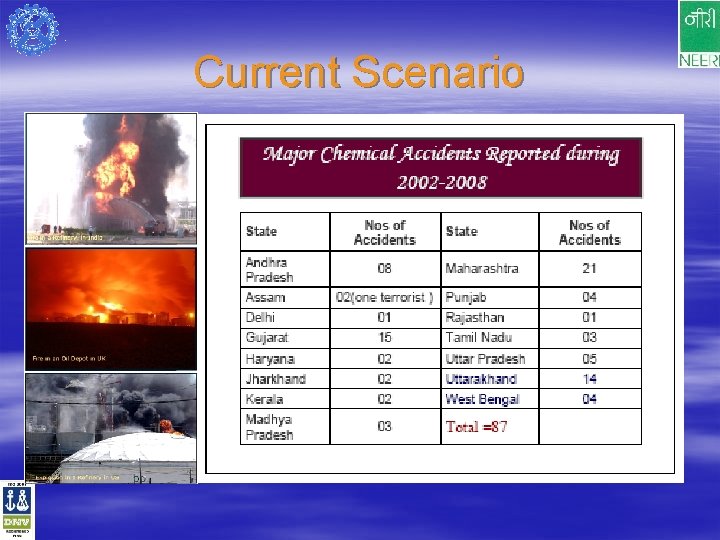
Current Scenario
Purpose of Models § To represent facts and reality objectively § To analyse logically and systematically all relevant facts § To build confidence by presenting quantitative assessment and accuracy § To provide meaningful insights under varying scenarios in accordance with considered view of human/public perception § To serve as handy tools for effective decision making
Characteristics of Models § § § Several assumptions Scientific – deterministic/probabilistic/fuzzy Empirical – facts and event driven Accurate data and information driven Uncertainty Range of models for specific needs – Modelling systems and softwares – Location specific models – GIS based – Expert systems – Online and offline systems
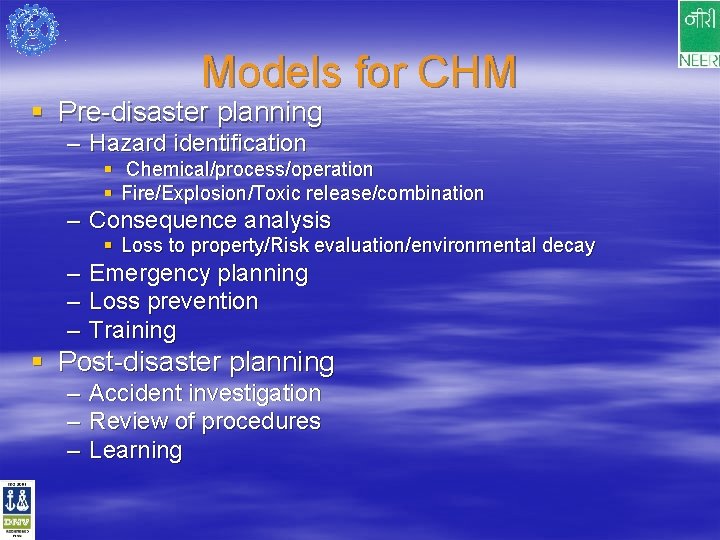
Models for CHM § Pre-disaster planning – Hazard identification § § Chemical/process/operation Fire/Explosion/Toxic release/combination – Consequence analysis § Loss to property/Risk evaluation/environmental decay – Emergency planning – Loss prevention – Training § Post-disaster planning – Accident investigation – Review of procedures – Learning
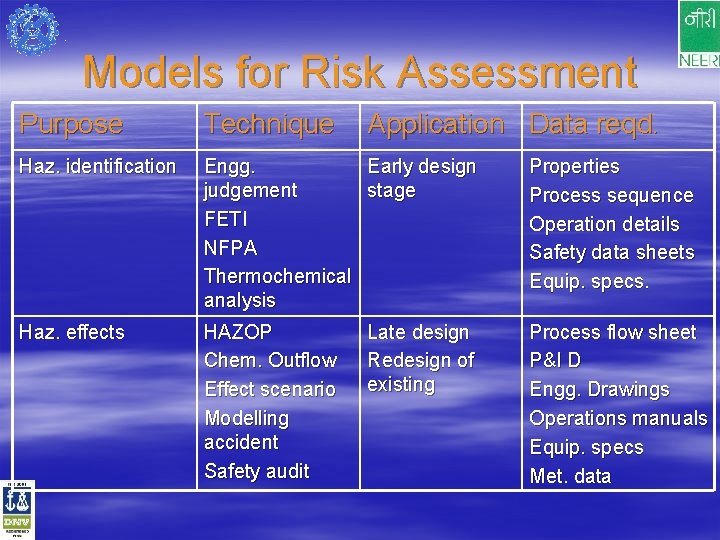
Models for Risk Assessment Purpose Technique Application Data reqd. Haz. identification Engg. Early design judgement stage FETI NFPA Thermochemical analysis Properties Process sequence Operation details Safety data sheets Equip. specs. Haz. effects HAZOP Chem. Outflow Effect scenario Modelling accident Safety audit Process flow sheet P&I D Engg. Drawings Operations manuals Equip. specs Met. data Late design Redesign of existing
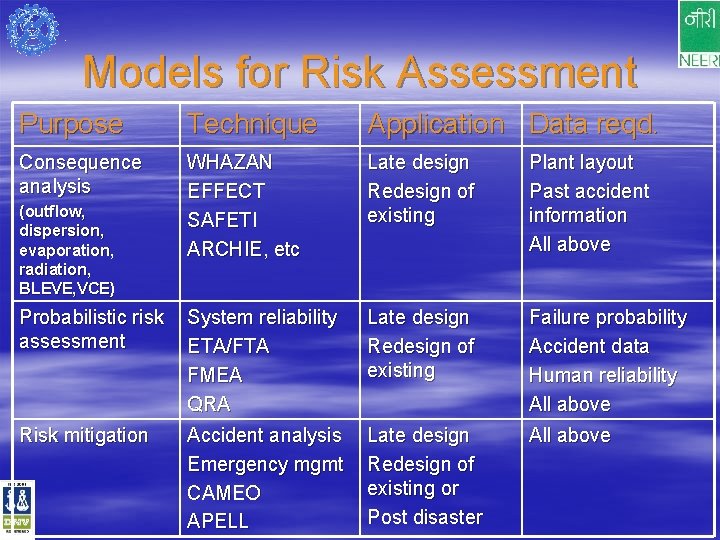
Models for Risk Assessment Purpose Technique Application Data reqd. Consequence analysis WHAZAN EFFECT SAFETI ARCHIE, etc Late design Redesign of existing Plant layout Past accident information All above Probabilistic risk assessment System reliability ETA/FTA FMEA QRA Late design Redesign of existing Failure probability Accident data Human reliability All above Risk mitigation Accident analysis Emergency mgmt CAMEO APELL Late design Redesign of existing or Post disaster All above (outflow, dispersion, evaporation, radiation, BLEVE, VCE)
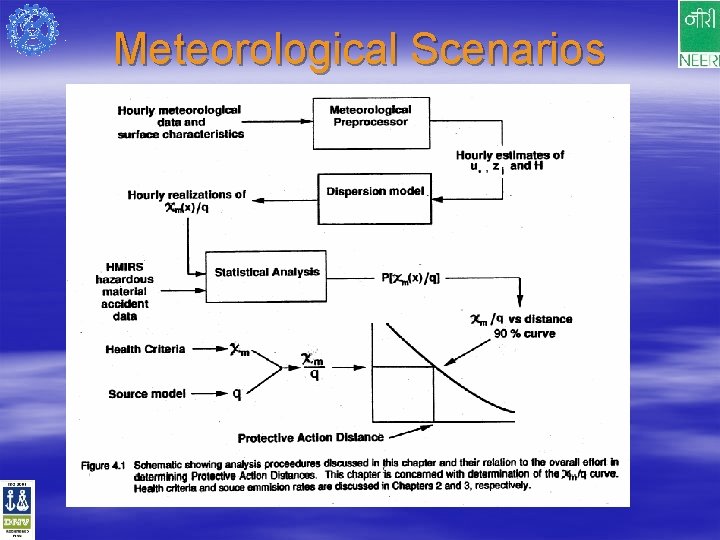
Meteorological Scenarios
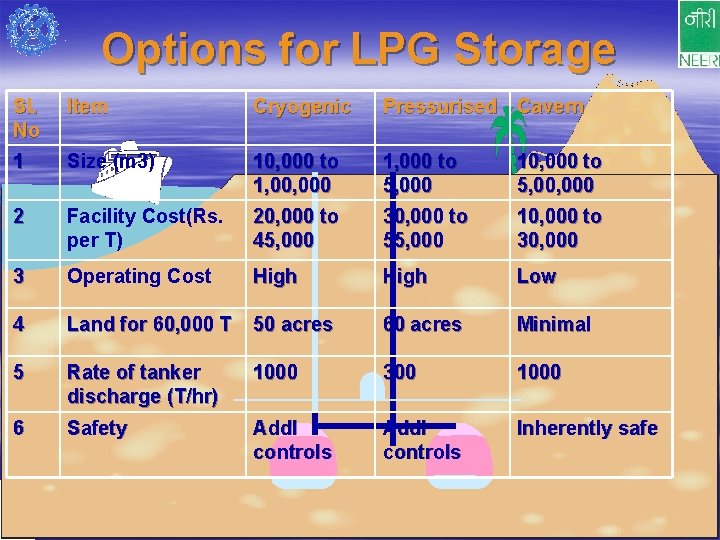
Options for LPG Storage Sl. No Item Cryogenic Pressurised Cavern 1 Size (m 3) 10, 000 to 1, 000 to 5, 000 10, 000 to 5, 000 2 Facility Cost(Rs. per T) 20, 000 to 45, 000 30, 000 to 55, 000 10, 000 to 30, 000 3 Operating Cost High Low 4 Land for 60, 000 T 50 acres 60 acres Minimal 5 Rate of tanker discharge (T/hr) 1000 300 1000 6 Safety Addl controls Inherently safe
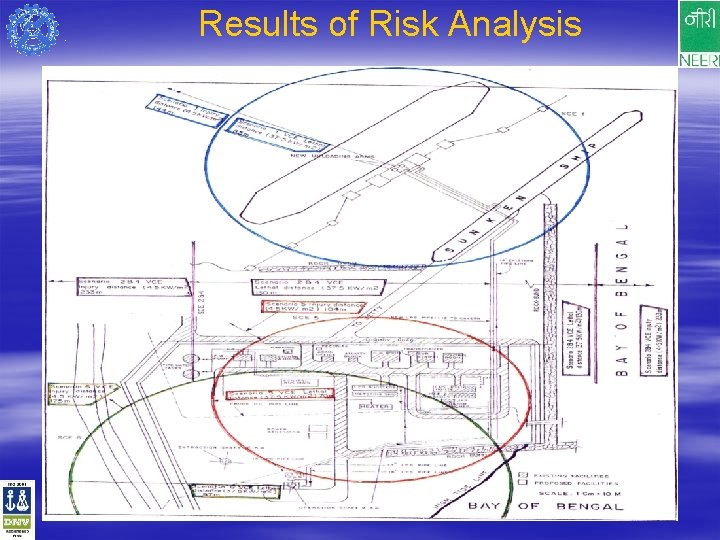
Results of Risk Analysis
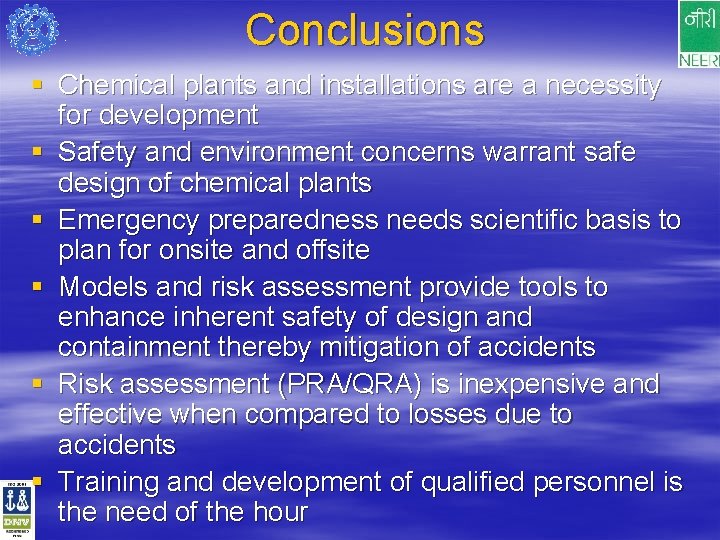
Conclusions § Chemical plants and installations are a necessity for development § Safety and environment concerns warrant safe design of chemical plants § Emergency preparedness needs scientific basis to plan for onsite and offsite § Models and risk assessment provide tools to enhance inherent safety of design and containment thereby mitigation of accidents § Risk assessment (PRA/QRA) is inexpensive and effective when compared to losses due to accidents § Training and development of qualified personnel is the need of the hour

Thank You
- Slides: 16