
Risk Assessment An Asset Based Approach Content based

Risk Assessment: An Asset -Based Approach Content based on material provided by Bob Freitag, CFM UW and William John Siembieda, Ph. D. , AICP DRAFT
2 Purpose • The purpose of this module is explore a risk assessment and identification approach that builds on a community's assets, and encourages outcomes that embrace future visions with less focus on past conditions • It demonstrates the workshop approach used to begin the process, that can be implemented in communities as basis for disaster risk reduction initiatives

3 Learning Objectives 1. Differentiate between vulnerability-based and assetbased risk assessment processes 2. Describe a process for asset-based risk assessment 3. Apply the asset-based approach in a hypothetical community workshop

4 Vulnerability-Based Approach to Hazard Mitigation & Pre-disaster Recovery Planning • Anticipated impact of hazard event on built environment • Estimated damage in dollars for impacted inventories • Focus on removal or “hardening” at-risk buildings or structures • Often ignores importance of natural and social sources of adaptive capacities

5 Asset-Based Approach • Identifies built, natural, and social assets that contribute to human wellbeing (HWB) before introducing hazard scenarios that affect HWB • By premising planning discussions on a more holistic set of assets, communities can balance physical recovery goals with qualities that help them to adapt to future change
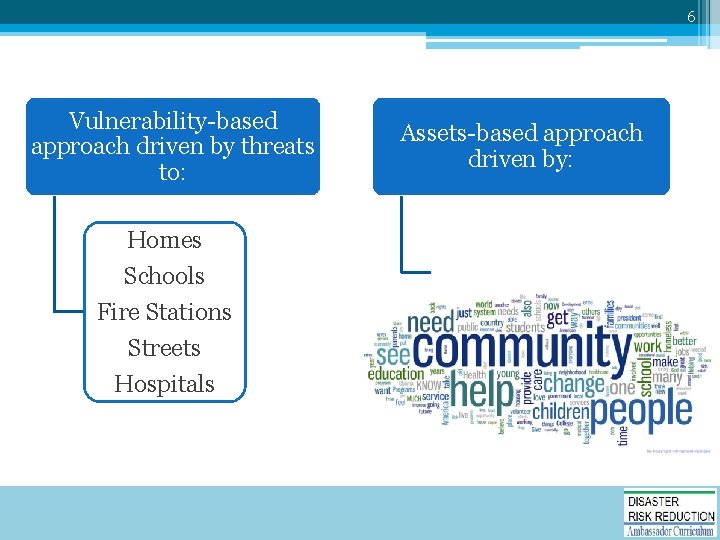
6 Vulnerability-based approach driven by threats to: Homes Schools Fire Stations Streets Hospitals Assets-based approach driven by:
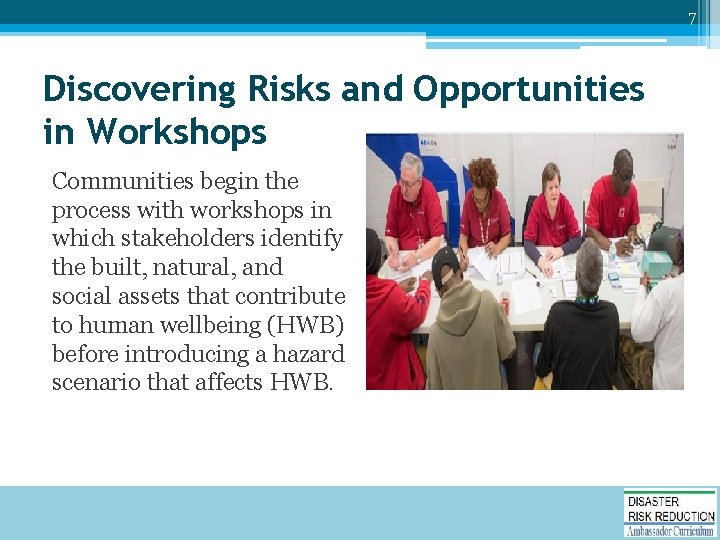
7 Discovering Risks and Opportunities in Workshops Communities begin the process with workshops in which stakeholders identify the built, natural, and social assets that contribute to human wellbeing (HWB) before introducing a hazard scenario that affects HWB.
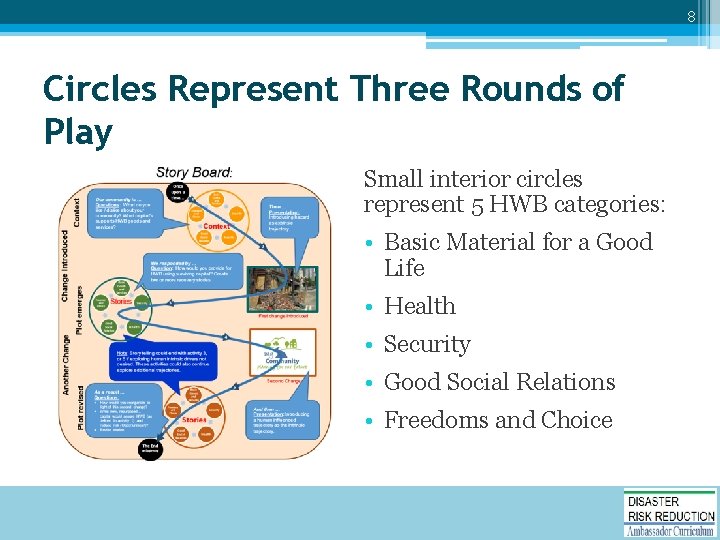
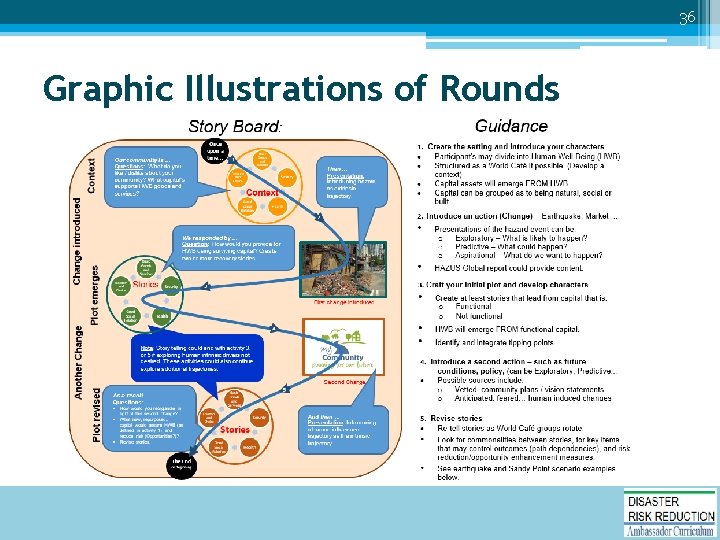
8 Circles Represent Three Rounds of Play Small interior circles represent 5 HWB categories: • Basic Material for a Good Life • Health • Security • Good Social Relations • Freedoms and Choice
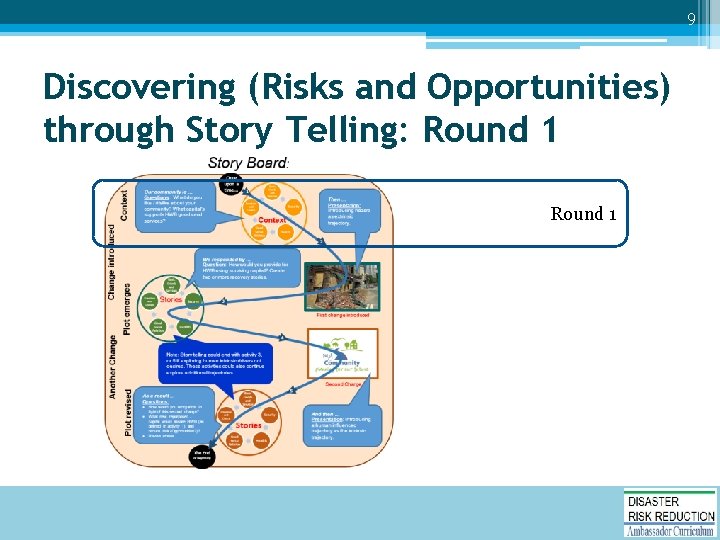
9 Discovering (Risks and Opportunities) through Story Telling: Round 1
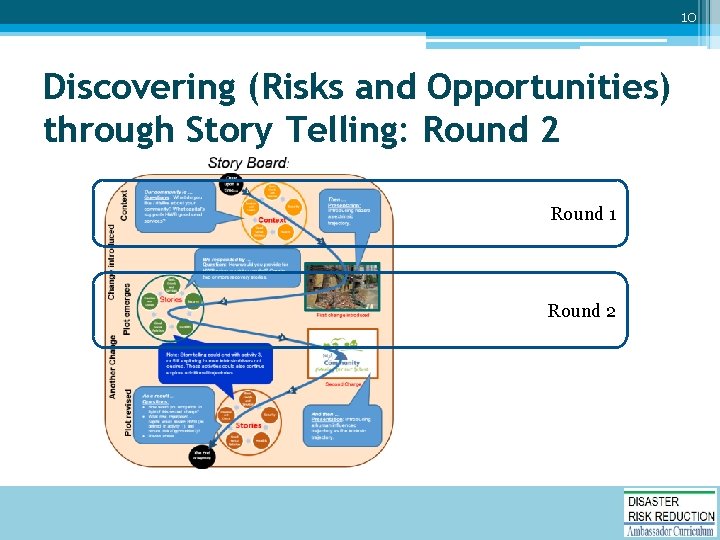
10 Discovering (Risks and Opportunities) through Story Telling: Round 2 Round 1 Round 2

11 Discovering (Risks and Opportunities) through Story Telling: Round 3 Round 1 Round 2 Round 3
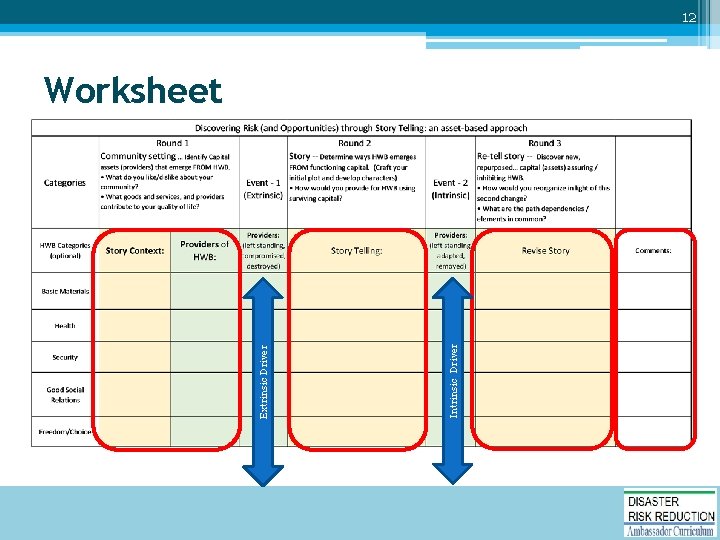
Intrinsic Driver Extrinsic Driver 12 Worksheet
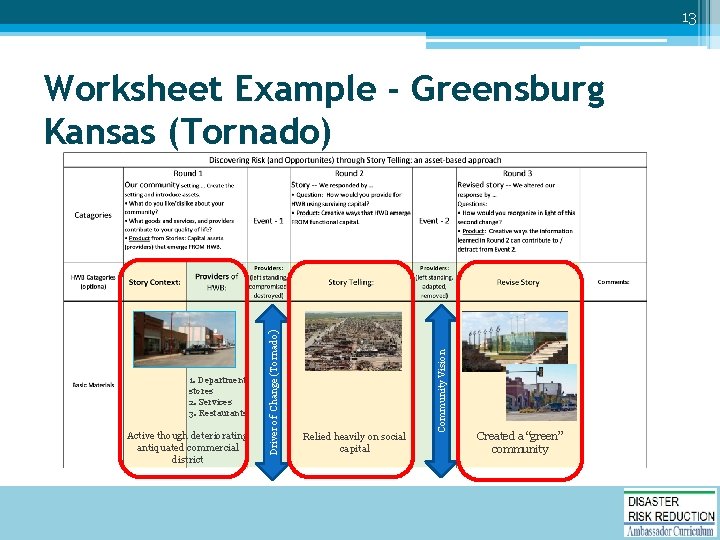
13 Active though deteriorating antiquated commercial district Relied heavily on social capital Community Vision 1. Department stores 2. Services 3. Restaurants Driver of Change (Tornado) Worksheet Example - Greensburg Kansas (Tornado) Created a “green” community
14 Instructions for Our workshop • Participants divide into teams according to HWB category • For this demonstration a case study community will be introduced. • There will be three rounds of play – with different questions to answer in each round of play • Teams report out after each round
15 Schedule for Our workshop Workshop Element Minutes Form Teams 2 Community Description 10 Round 1 - Context 10 Disaster Scenario 5 Round 2 - Story 10 Vision 5 Round 3 – Revised Story 13 55
16 Form Teams by Human Well Being (HWB) Categories • Basic Material for a Good Life – secure and maintain adequate livelihoods, income and assets, enough food at all times, furniture, clothing, access to goods • Health – being strong, feeling well, having a healthy physical environment, access to medical assistance • Security – secure access to natural and other resources, safety of person and possessions, shelter, living in a predictable and controllable environment with security from natural and human-made disasters
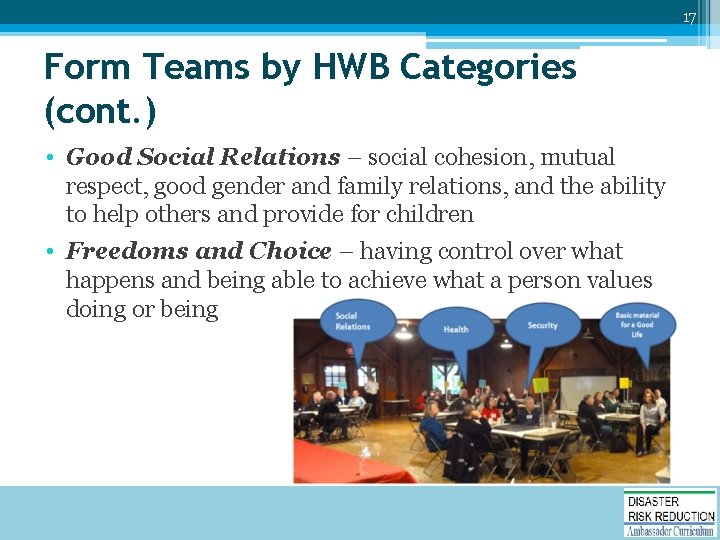
17 Form Teams by HWB Categories (cont. ) • Good Social Relations – social cohesion, mutual respect, good gender and family relations, and the ability to help others and provide for children • Freedoms and Choice – having control over what happens and being able to achieve what a person values doing or being
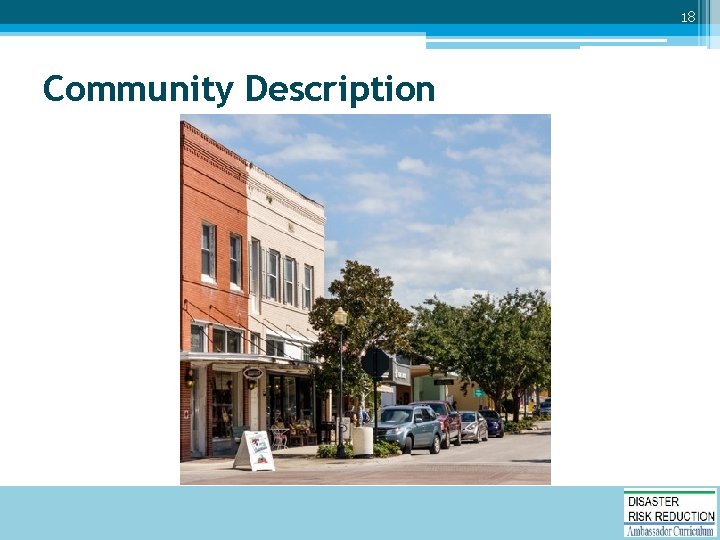
18 Community Description
19 Round 1 - Context Identify Community Assets • • • What do you like / dislike about your community? What goods and services define the community? - use verbs like “meet, ” “obtain”, etc. (This provides a baseline) Identify the providers of these goods and services - use nouns (Available capital pre-event) Groups report A Hazard event will be introduced after Round 1
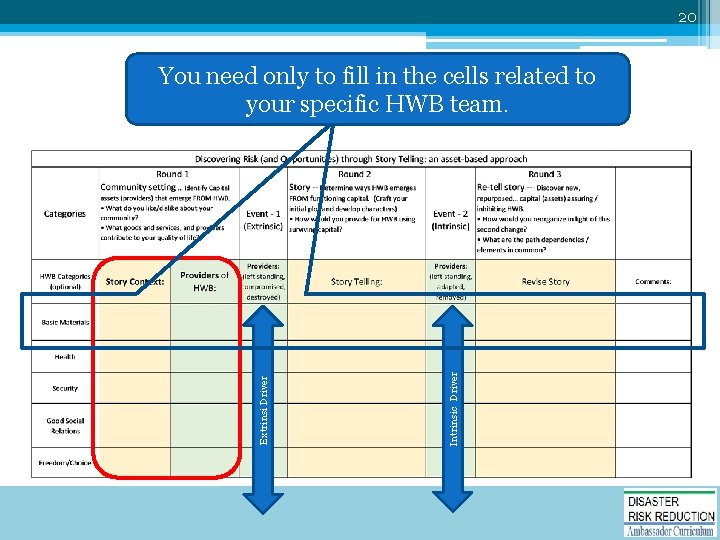
20 Intrinsic Driver Extrinsi Driver You need only to fill in the cells related to Worksheet – Round 1 HWB team. your specific

21 Hazard Scenario • Severe Storms and Tornados ripped across Weatherton
22 Round 2 – Story Changes in Post-Event Assets • • • Create your story Introduce ways HWB emerges FROM functioning capital. (Craft your initial plot and develop characters) How would you provide for HWB using surviving capital Groups report Vision statement presented after Round 2
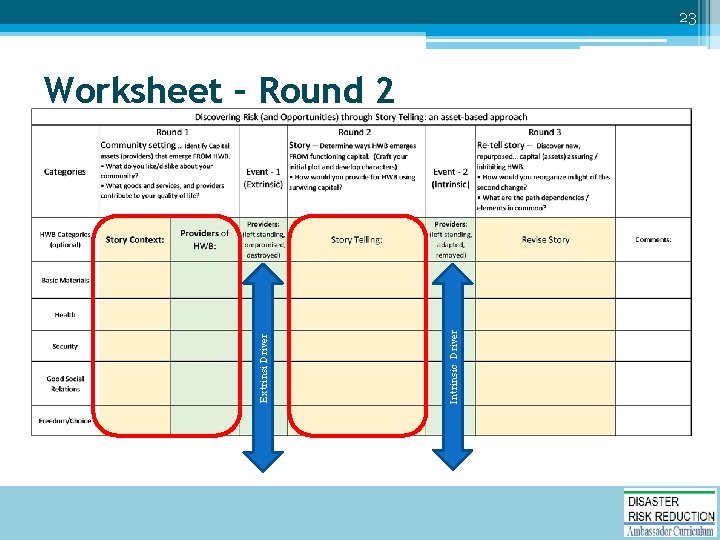
Intrinsic Driver Extrinsi Driver 23 Worksheet – Round 2
24 Community Vision Statement Partner with the whole community to restore community functions, rebuild lives, revitalize impacted areas as needed and achieve self-sufficiency, sustainability, quality of life and resilience for Weatherton residents and businesses, in the long-term.
25 Round 3 – Revise Story Re-visioning: Participants asked to: • • • Thinking of goods and services defining community (Round 1) and post-event providers of HWB (Round 2) Revise story developed in Round 2 - discover new, repurposed… capital (assets) assuring / inhibiting HWB. How would you revise story in light of this second change? Can you introduce longer term risk reduction measures into your revised stories? Are there any path dependencies / elements in common?
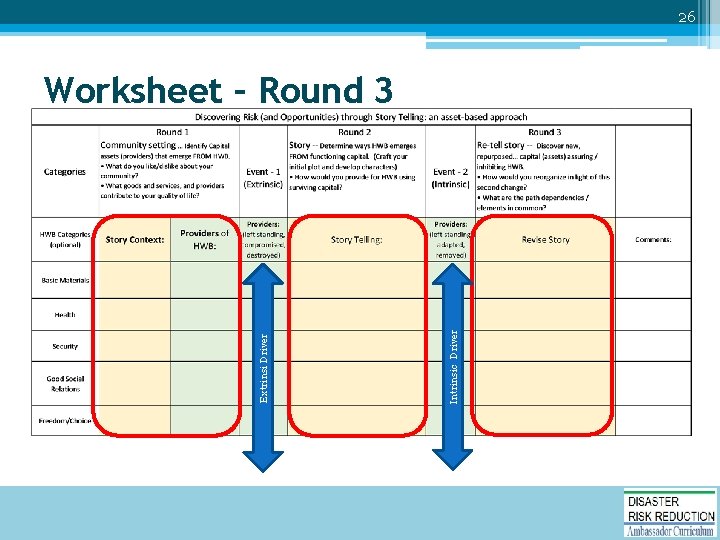
Intrinsic Driver Extrinsi Driver 26 Worksheet – Round 3
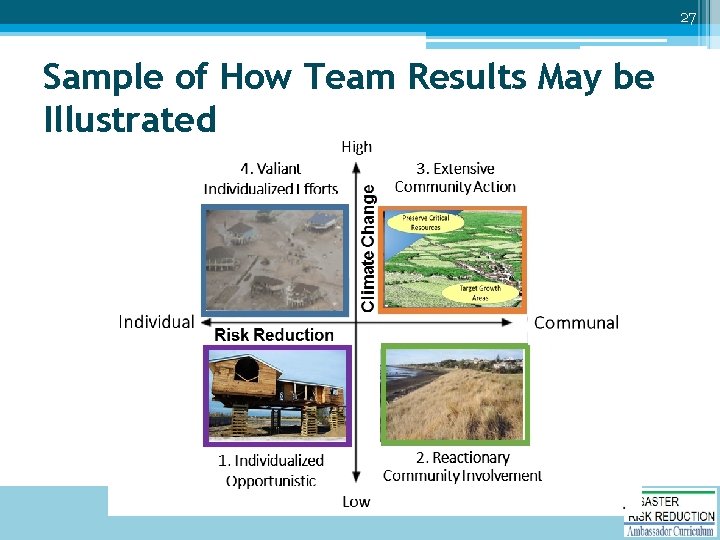
27 Sample of How Team Results May be Illustrated
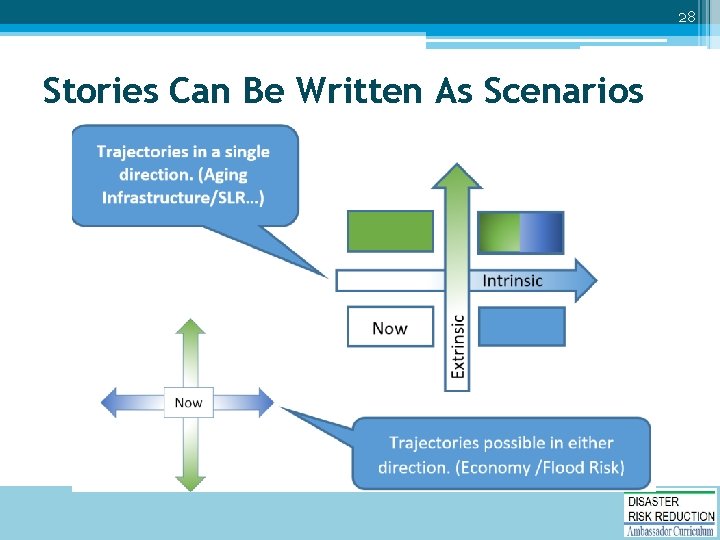
28 Stories Can Be Written As Scenarios
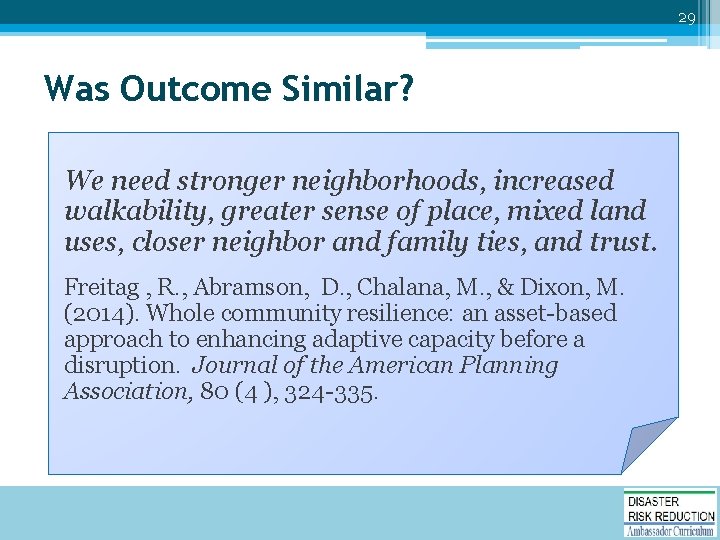
29 Was Outcome Similar? We need stronger neighborhoods, increased walkability, greater sense of place, mixed land uses, closer neighbor and family ties, and trust. Freitag , R. , Abramson, D. , Chalana, M. , & Dixon, M. (2014). Whole community resilience: an asset-based approach to enhancing adaptive capacity before a disruption. Journal of the American Planning Association, 80 (4 ), 324 -335.
30 Conducting a Similar workshop with Your Community • Instructors should read the Journal of the American Planning Association Volume 80, No. 4 Autumn 2014, Article: “Whole Community Resilience: An Asset-Based Approach to Enhancing Adaptive Capacity Before a Disruption” • The session would extend over a 4 – 6 hour time period • Story Rounds would be approx. 60 minutes each, including reporting and could include more than one day of play • Round One “providers” have been color coded to make relationships more apparent
31 Conducting a Similar workshop with Your Community (cont. ) • Each story round would benefit from team members rotating, building on each team’s individual effort • Follow-up: The result of the play would be written and become the seed of more rigorous science-based research Wrld. Café

32 Review of Key Learning Objectives 1. Describe the differences between a risk assessment process that builds on community assets, and vulnerability-based risk assessment 2. Describe a community in terms of Human Well-Being categories 3. Using a Worksheet titled: “Discovering Risk and Opportunities: asset-based approach” checklist, initiate asset-based risk assessment in your community
33 Thank You for Your Participation! • Questions and/or comments • Contact information Natural Hazard Mitigation Association P. O. Box 170984 Boston, MA 02117 Email: nathazma@gmail. com www. nhma. info
34 Supporting Material • Worksheet • Graphic Illustrations of Rounds
35 Worksheet
36 Graphic Illustrations of Rounds
- Slides: 36