
Rise of the factory system Most profound movement
- Slides: 39
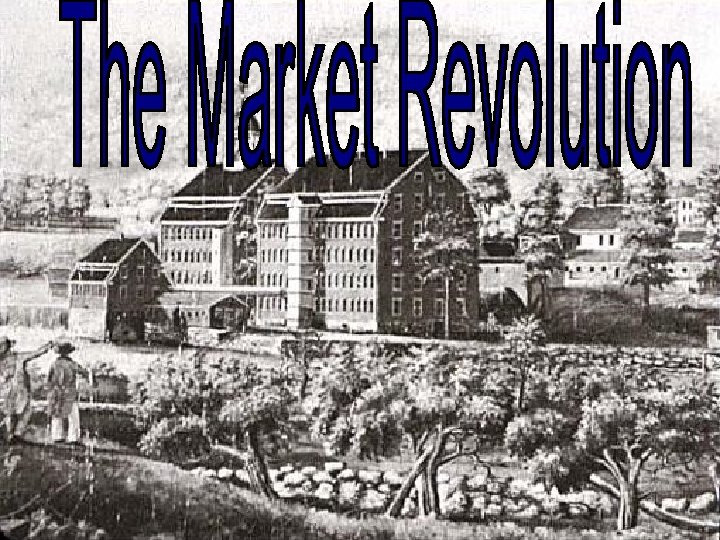
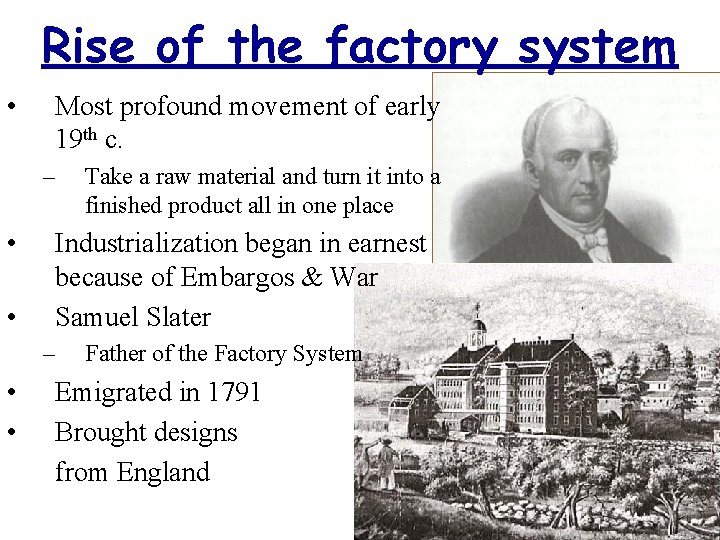
Rise of the factory system • Most profound movement of early 19 th c. – • • Industrialization began in earnest because of Embargos & War Samuel Slater – • • Take a raw material and turn it into a finished product all in one place Father of the Factory System Emigrated in 1791 Brought designs from England
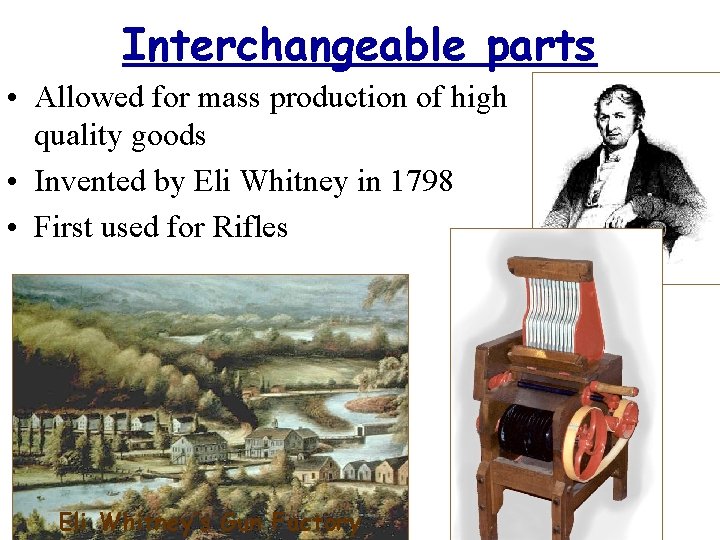
Interchangeable parts • Allowed for mass production of high quality goods • Invented by Eli Whitney in 1798 • First used for Rifles Eli Whitney’s Gun Factory
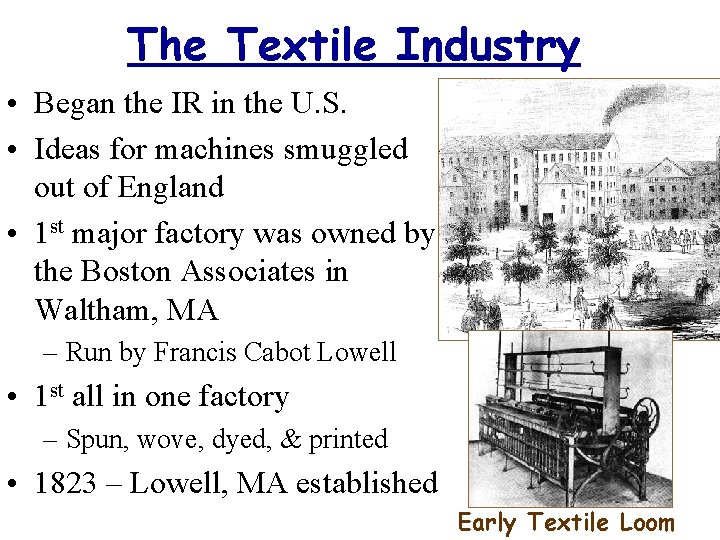
The Textile Industry • Began the IR in the U. S. • Ideas for machines smuggled out of England • 1 st major factory was owned by the Boston Associates in Waltham, MA – Run by Francis Cabot Lowell • 1 st all in one factory – Spun, wove, dyed, & printed • 1823 – Lowell, MA established Early Textile Loom
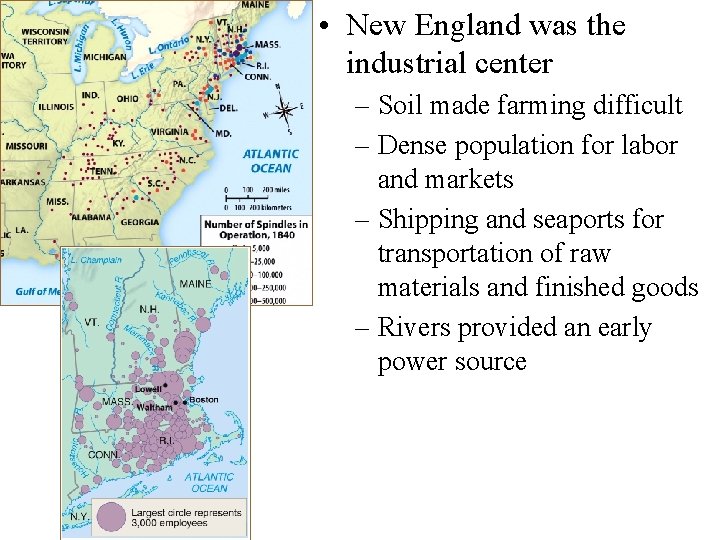
• New England was the industrial center – Soil made farming difficult – Dense population for labor and markets – Shipping and seaports for transportation of raw materials and finished goods – Rivers provided an early power source
Resourcefulness & Experimentation • Americans were willing to try anything • They were first copiers, then innovators – Stole England’s ideas, then developed their own • 1800 41 patents were approved • 1860 4, 357 patents were approved
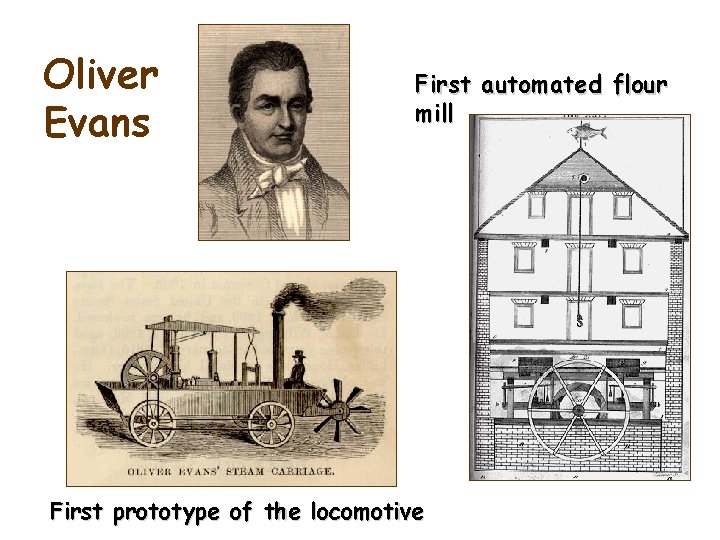
Oliver Evans First automated flour mill First prototype of the locomotive
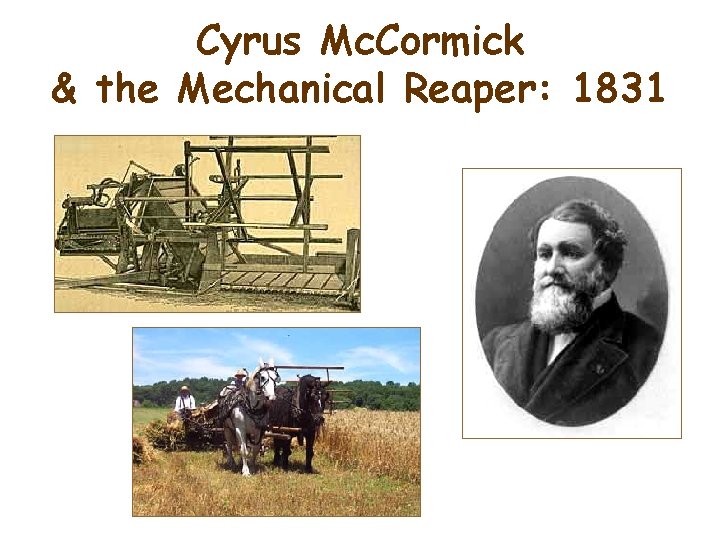
Cyrus Mc. Cormick & the Mechanical Reaper: 1831
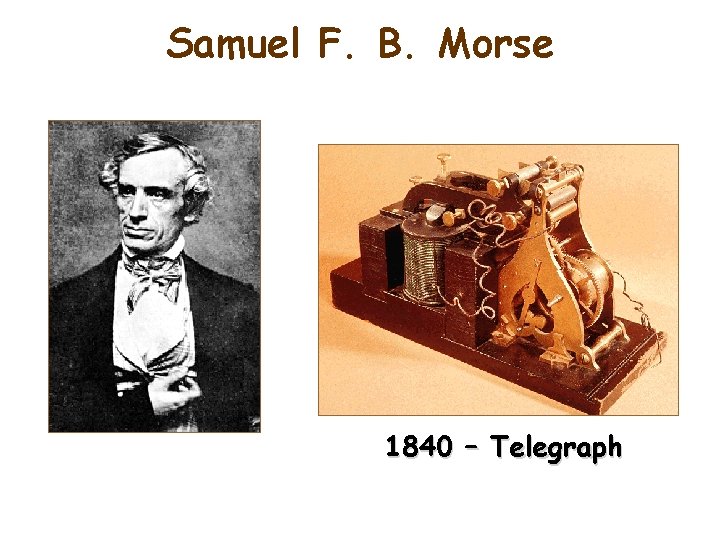
Samuel F. B. Morse 1840 – Telegraph
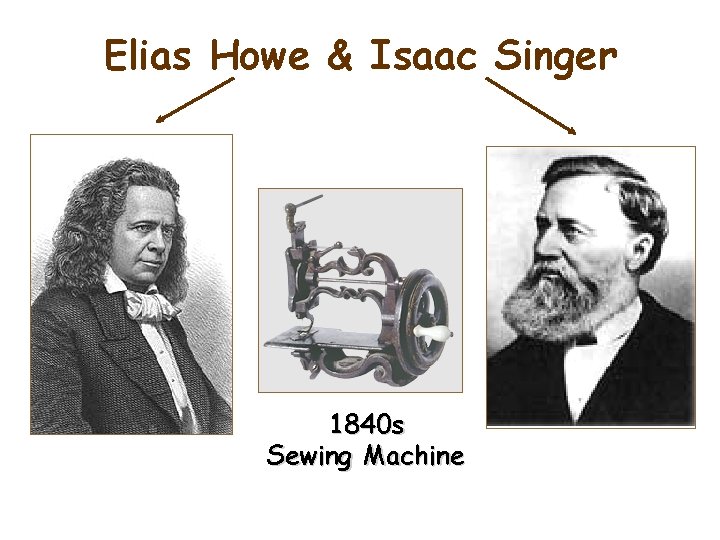
Elias Howe & Isaac Singer 1840 s Sewing Machine
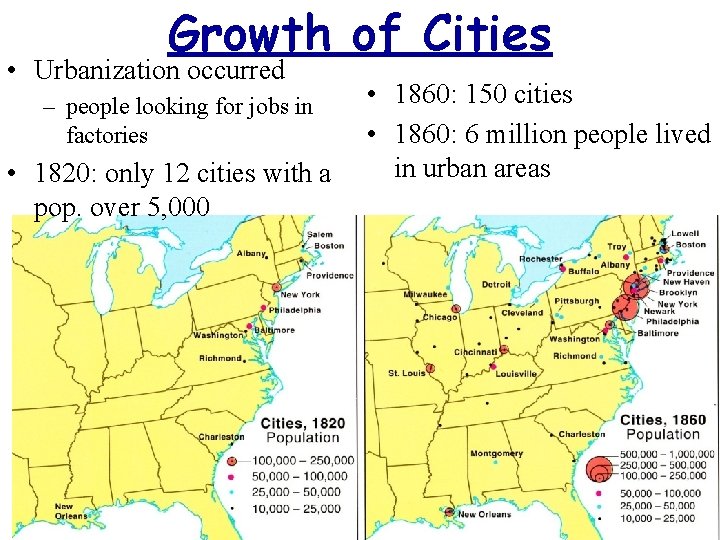
Growth of Cities • Urbanization occurred – people looking for jobs in factories • 1820: only 12 cities with a pop. over 5, 000 • 1860: 150 cities • 1860: 6 million people lived in urban areas
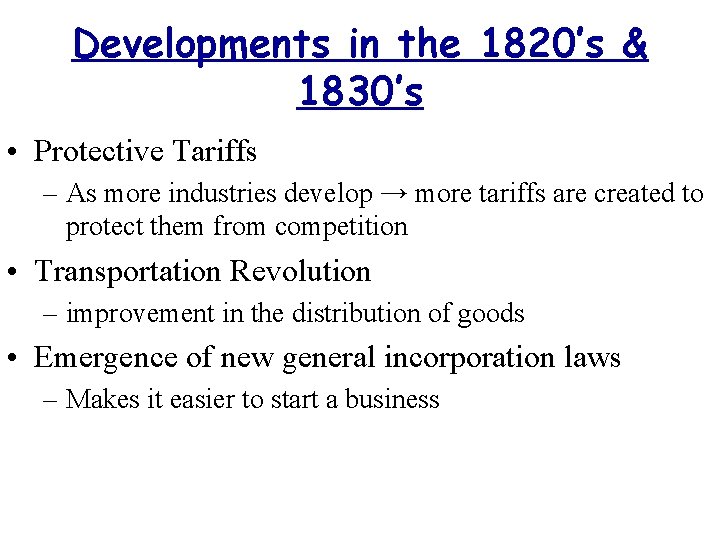
Developments in the 1820’s & 1830’s • Protective Tariffs – As more industries develop → more tariffs are created to protect them from competition • Transportation Revolution – improvement in the distribution of goods • Emergence of new general incorporation laws – Makes it easier to start a business
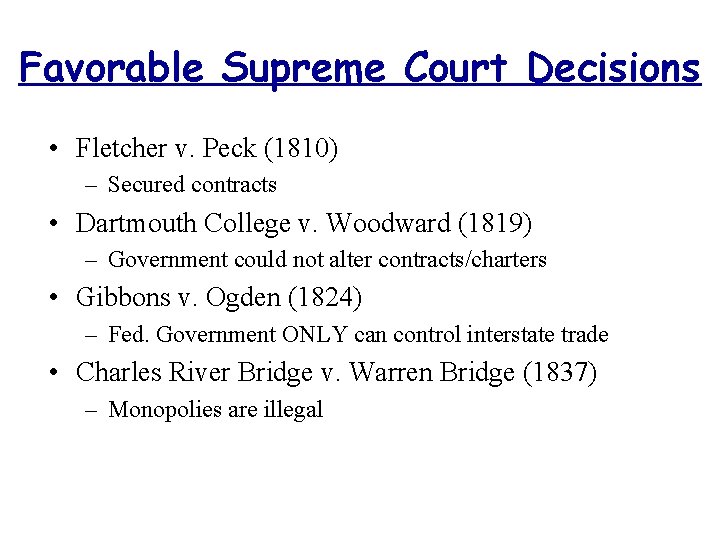
Favorable Supreme Court Decisions • Fletcher v. Peck (1810) – Secured contracts • Dartmouth College v. Woodward (1819) – Government could not alter contracts/charters • Gibbons v. Ogden (1824) – Fed. Government ONLY can control interstate trade • Charles River Bridge v. Warren Bridge (1837) – Monopolies are illegal
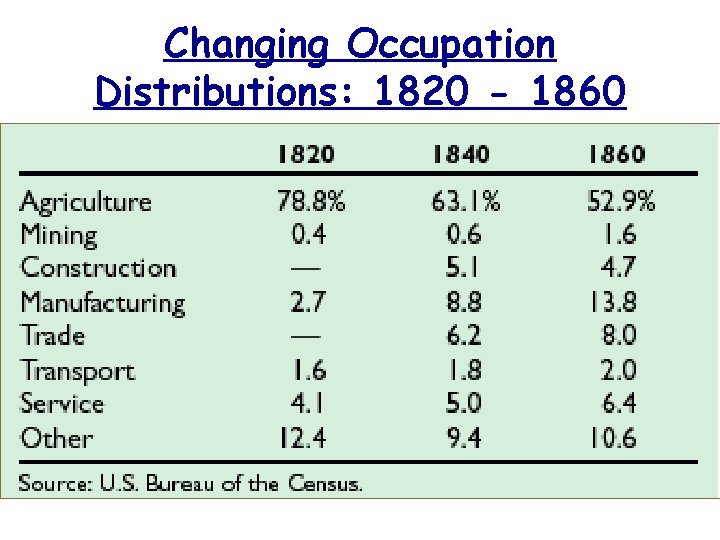
Changing Occupation Distributions: 1820 - 1860
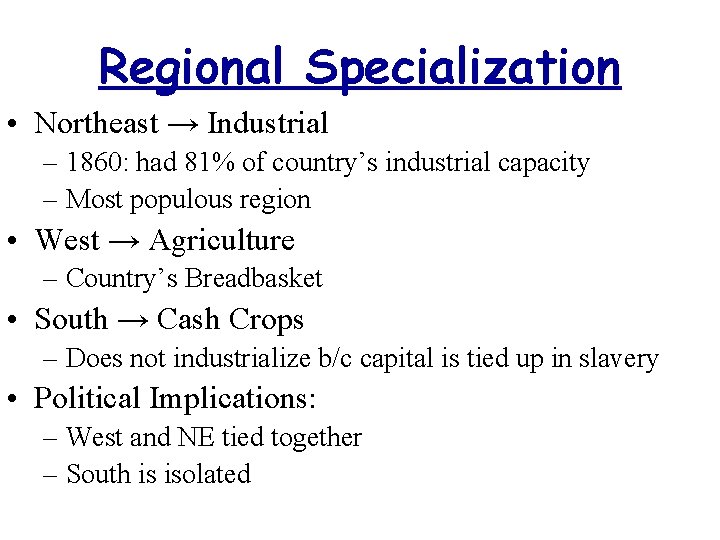
Regional Specialization • Northeast → Industrial – 1860: had 81% of country’s industrial capacity – Most populous region • West → Agriculture – Country’s Breadbasket • South → Cash Crops – Does not industrialize b/c capital is tied up in slavery • Political Implications: – West and NE tied together – South is isolated
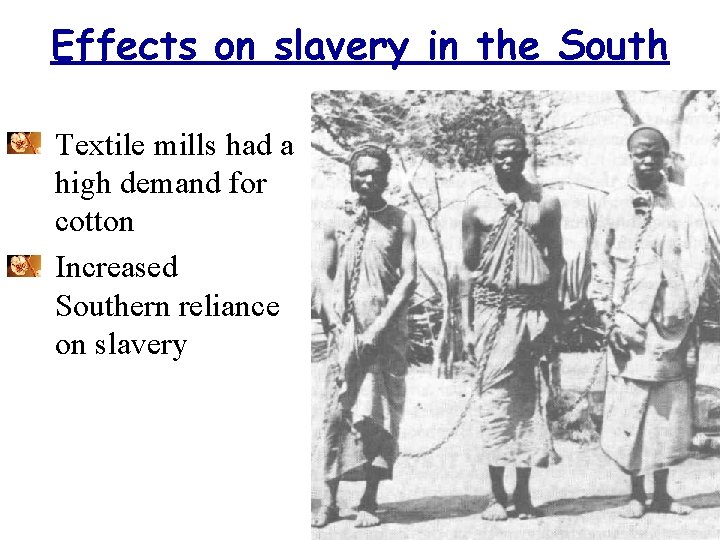
Effects on slavery in the South Textile mills had a high demand for cotton Increased Southern reliance on slavery
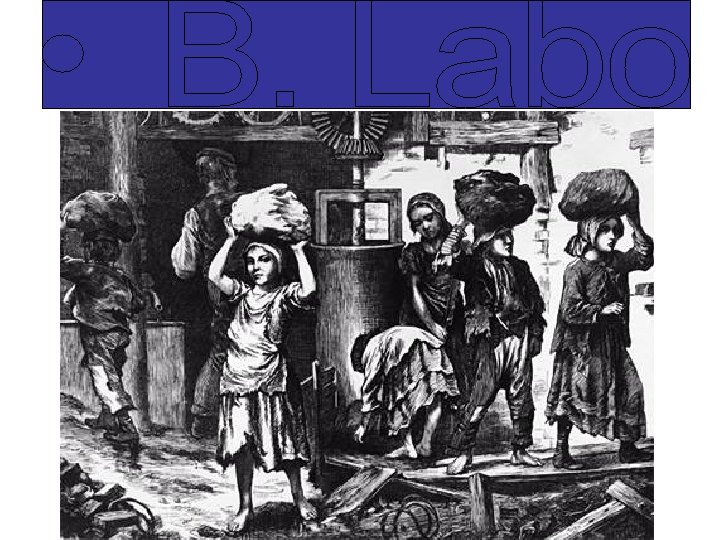
Factory Workers Wages: paid per hour not on the product they produced By 1860 40% of the population were “wage slaves” Working conditions were atrocious: – Low wages, few breaks & long hours – Poor lighting & ventilation, unsanitary conditions – Dangerous machinery – Exploitation of child workers
Labor Unions are against the law – Seen as conspiracies – Dozens of strikes erupted during the 1830’s & 1840’s – Most lost – Union membership grew to 300, 000 by 1830 – Panics will hurt union numbers Commonwealth v. Hunt (1842): MA Supreme Court – Ruled that unions are not conspiracies – Union influence very limited until after the Civil War
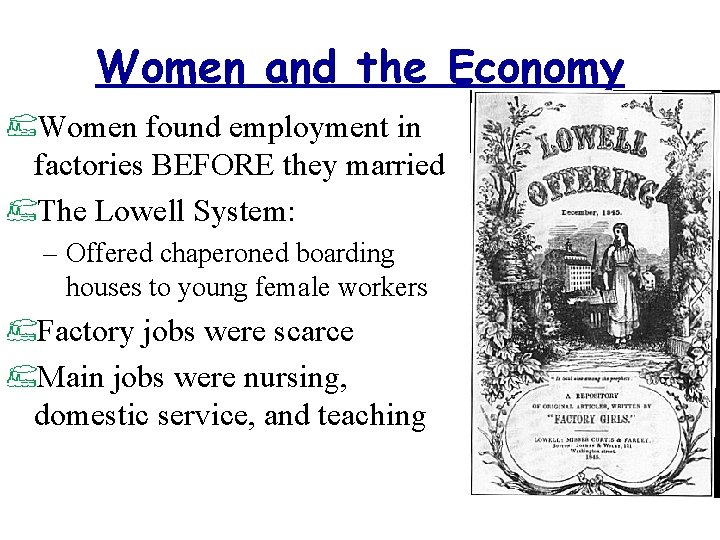
Women and the Economy Women found employment in factories BEFORE they married The Lowell System: – Offered chaperoned boarding houses to young female workers Factory jobs were scarce Main jobs were nursing, domestic service, and teaching
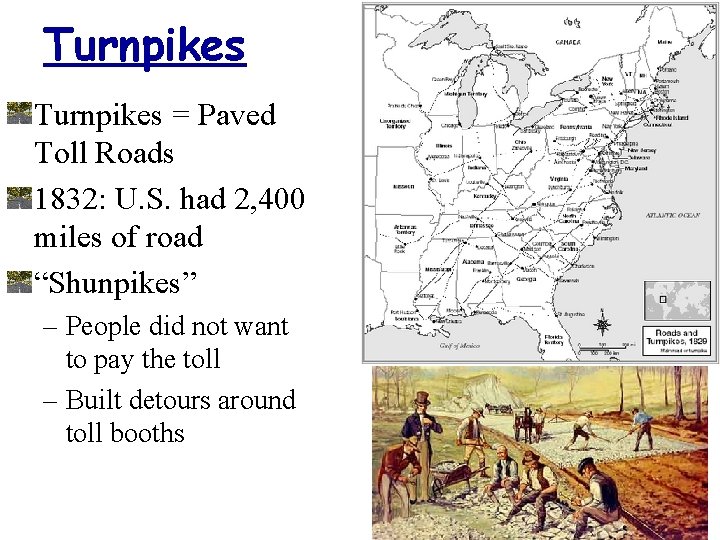
Turnpikes = Paved Toll Roads 1832: U. S. had 2, 400 miles of road “Shunpikes” – People did not want to pay the toll – Built detours around toll booths
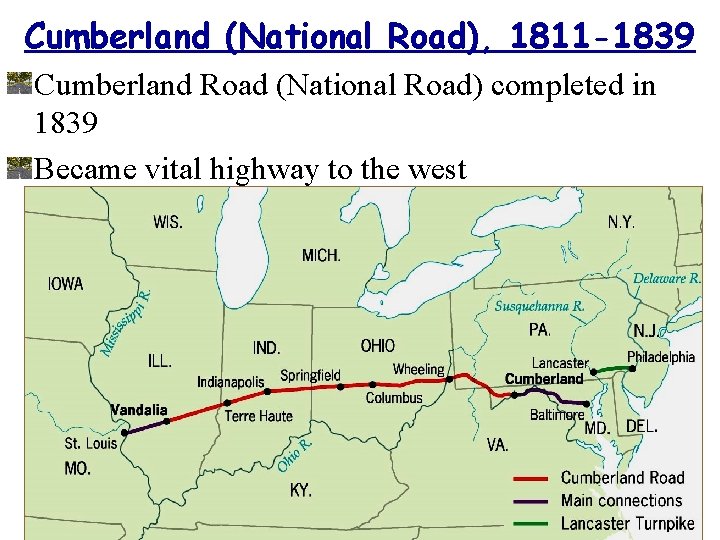
Cumberland (National Road), 1811 -1839 Cumberland Road (National Road) completed in 1839 Became vital highway to the west
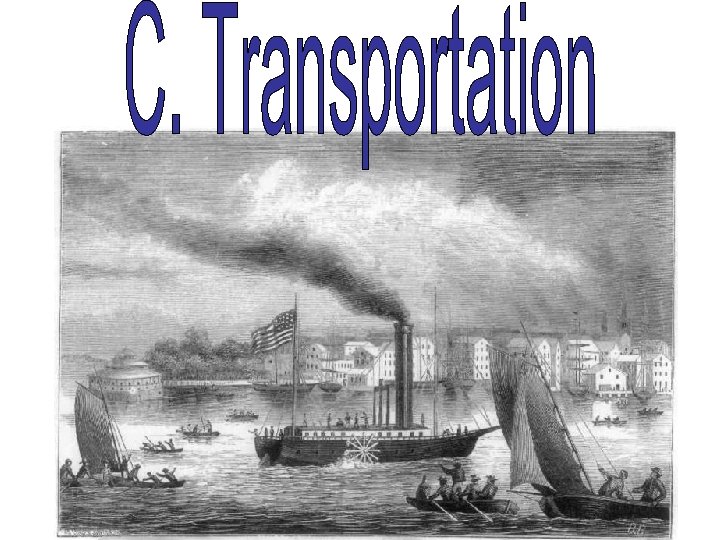
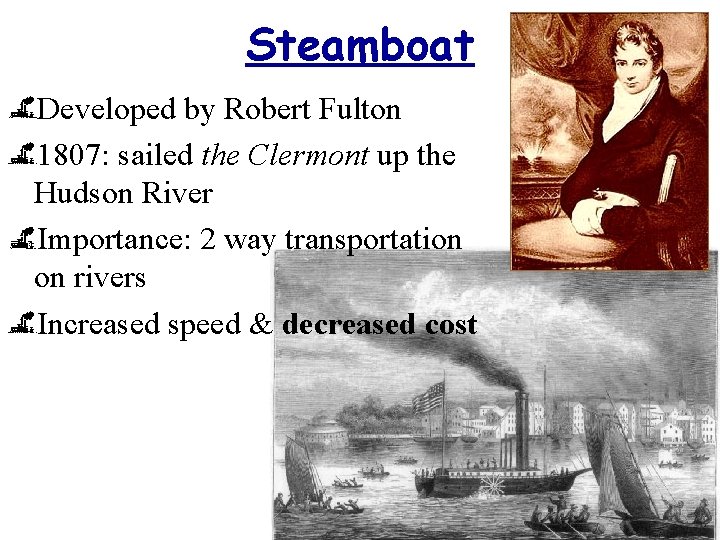
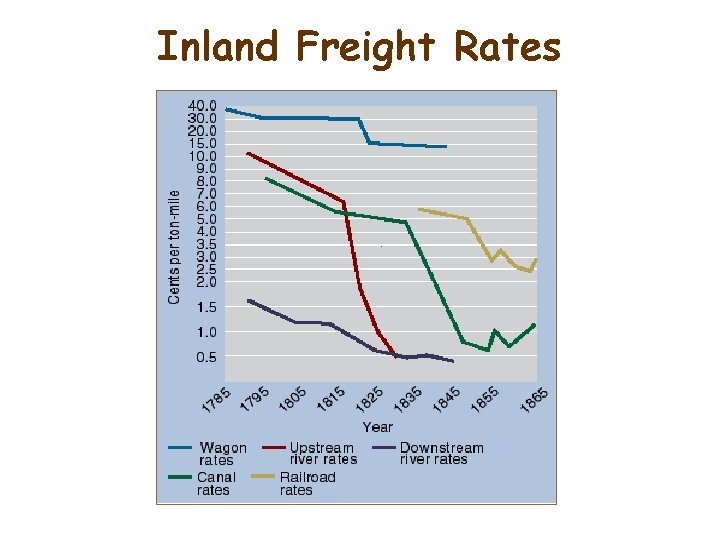
Steamboat Developed by Robert Fulton 1807: sailed the Clermont up the Hudson River Importance: 2 way transportation on rivers Increased speed & decreased cost
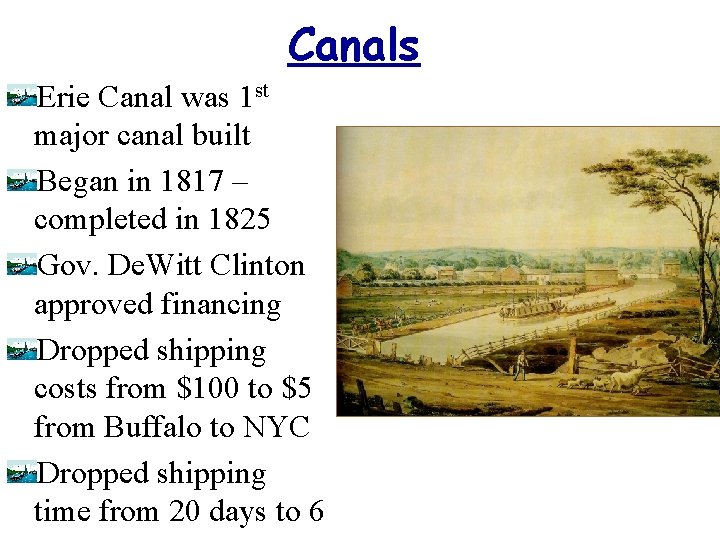
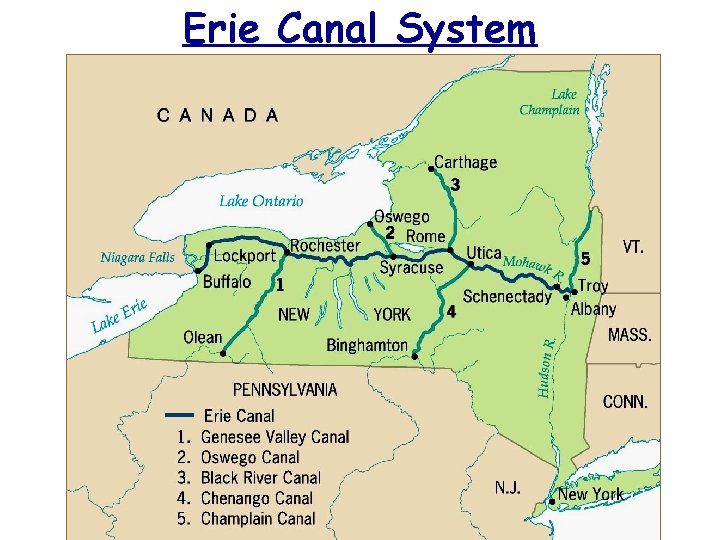
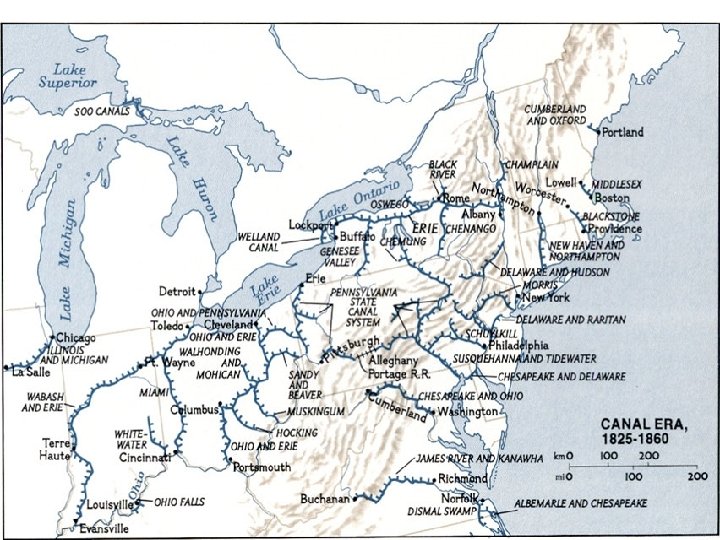
Canals Erie Canal was 1 st major canal built Began in 1817 – completed in 1825 Gov. De. Witt Clinton approved financing Dropped shipping costs from $100 to $5 from Buffalo to NYC Dropped shipping time from 20 days to 6
Erie Canal System
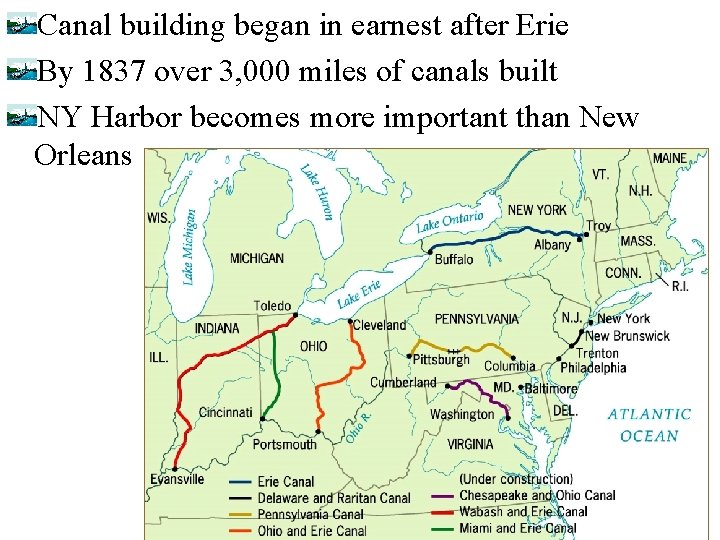
Canal building began in earnest after Erie By 1837 over 3, 000 miles of canals built NY Harbor becomes more important than New Orleans
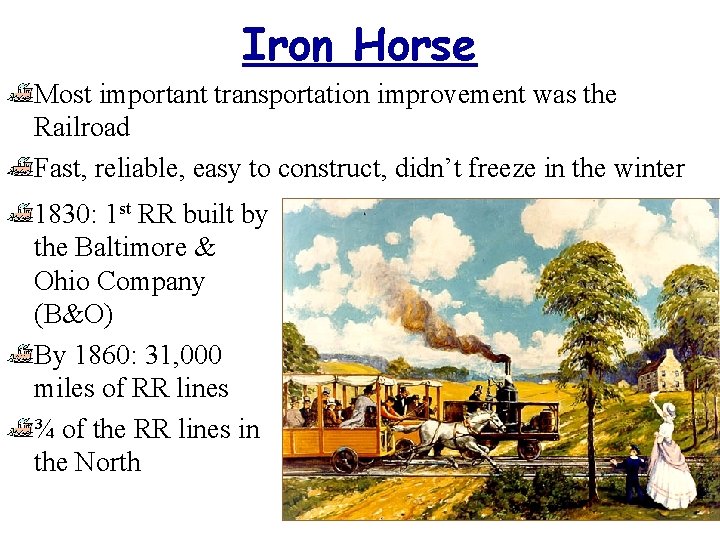
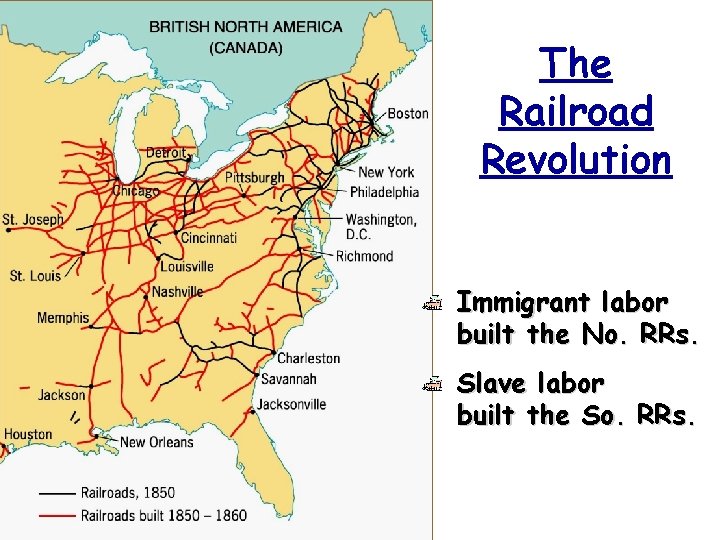
Iron Horse Most important transportation improvement was the Railroad Fast, reliable, easy to construct, didn’t freeze in the winter 1830: 1 st RR built by the Baltimore & Ohio Company (B&O) By 1860: 31, 000 miles of RR lines ¾ of the RR lines in the North
The Railroad Revolution Immigrant labor built the No. RRs. Slave labor built the So. RRs.
Inland Freight Rates
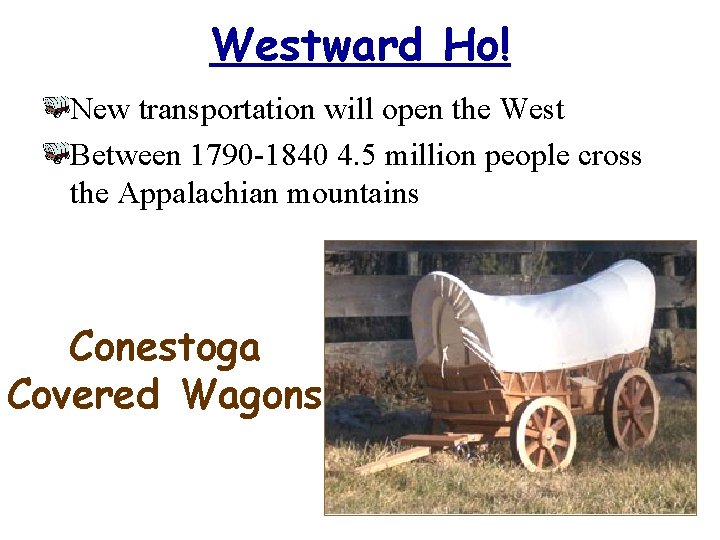
Westward Ho! New transportation will open the West Between 1790 -1840 4. 5 million people cross the Appalachian mountains Conestoga Covered Wagons
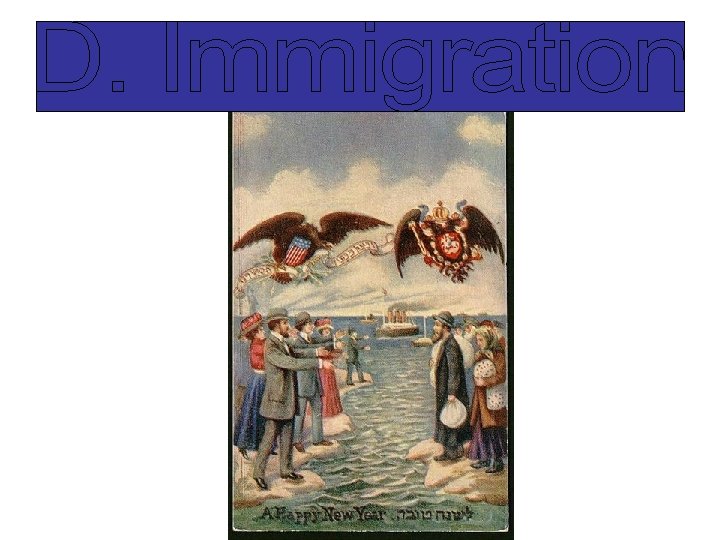
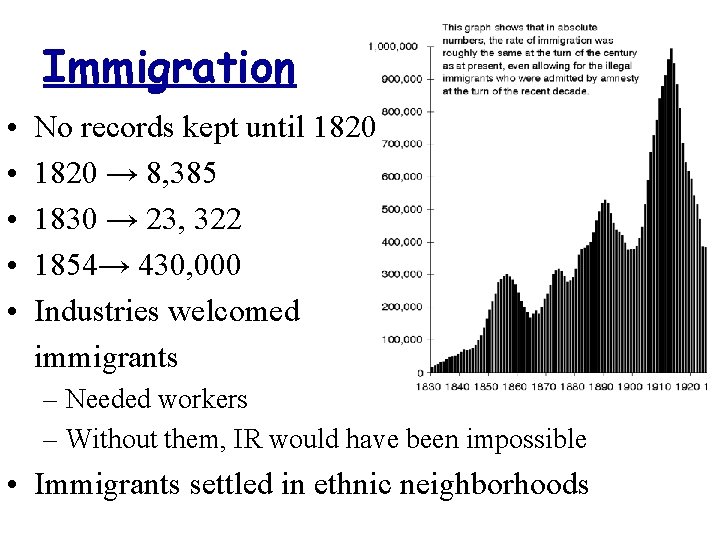
Immigration • • • No records kept until 1820 → 8, 385 1830 → 23, 322 1854→ 430, 000 Industries welcomed immigrants – Needed workers – Without them, IR would have been impossible • Immigrants settled in ethnic neighborhoods
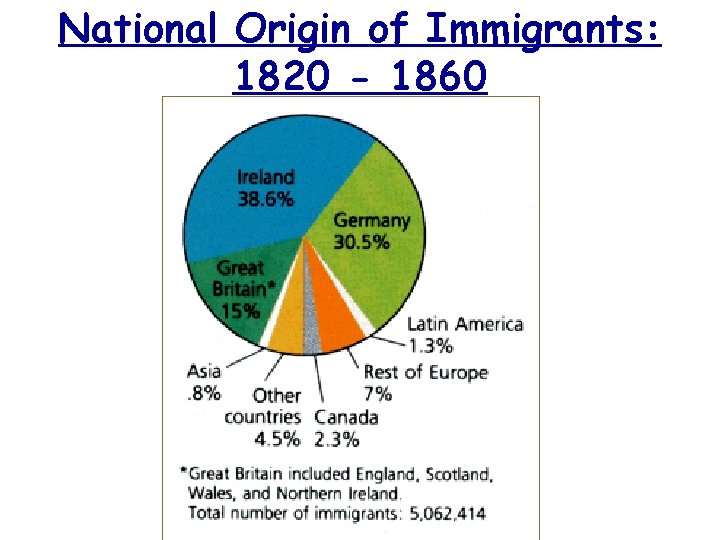
National Origin of Immigrants: 1820 - 1860
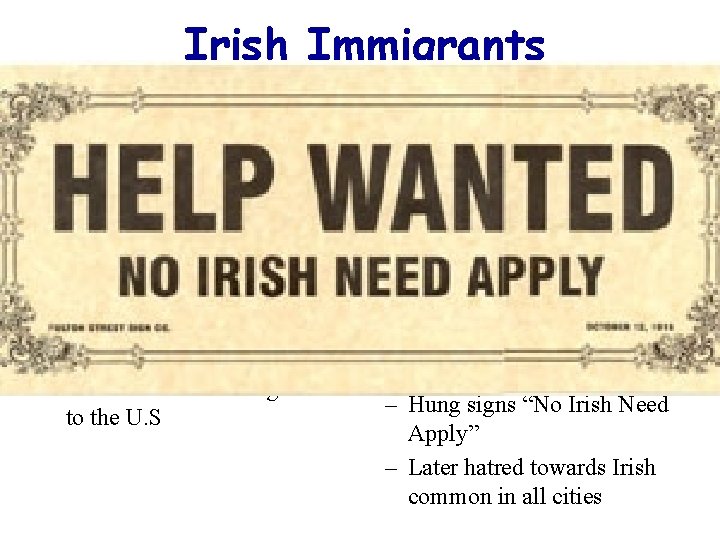
Irish Immigrants • Large numbers began to immigrate in the 1840’s • Arrived in NYC, Boston, Philadelphia, & Baltimore – To settle Canada, Britain • Destitute: stayed in cities offered a reduced passage because they could not move (100 shillings → 5 shillings) west – Irish took advantage of it, • In Boston – ran into problems but hated the British so came to the U. S. • 1845 -1849: Potato Famine – Over 1. 5 million emigrated to the U. S – Highly educated, Puritan Bostonians did not like the illiterate Irish Catholic peasants – Hung signs “No Irish Need Apply” – Later hatred towards Irish common in all cities
German Immigrants • Large numbers began to emigrate in the early 1850’s because of political & economic instability • Weren’t as poor as the Irish • Settled mainly in the West in German enclaves
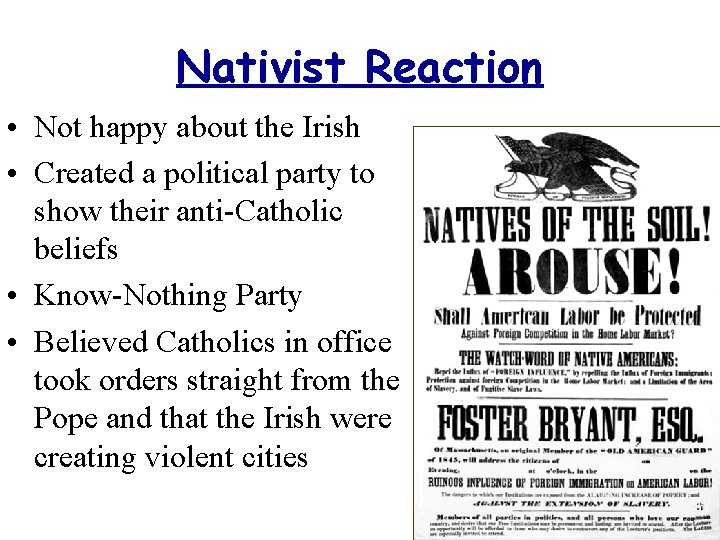
Nativist Reaction • Not happy about the Irish • Created a political party to show their anti-Catholic beliefs • Know-Nothing Party • Believed Catholics in office took orders straight from the Pope and that the Irish were creating violent cities