
Rise of Industrial America Late 1800s Early 1900s



- Slides: 19
Rise of Industrial America Late 1800’s- Early 1900’s
REVOLTION A sudden, dramatic, complete or marked change in something
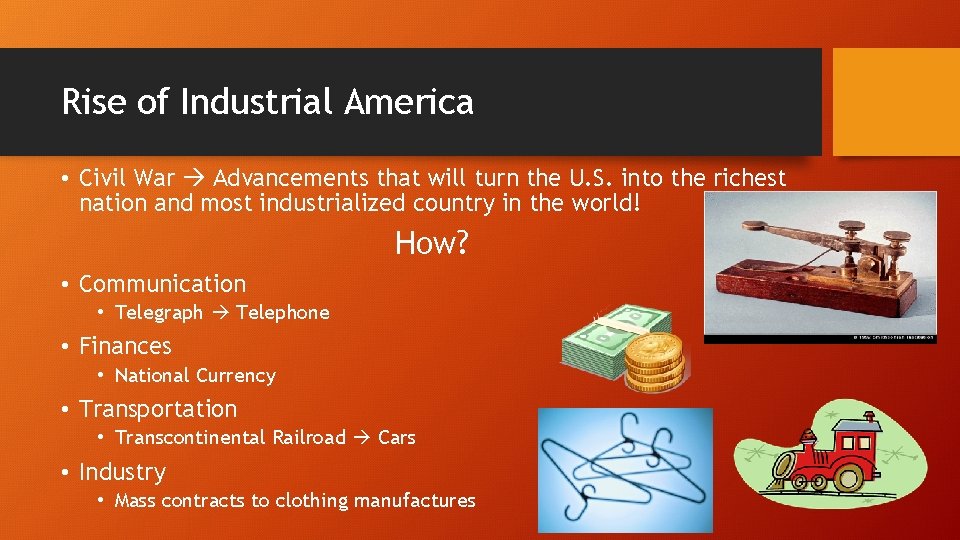
Rise of Industrial America • Civil War Advancements that will turn the U. S. into the richest nation and most industrialized country in the world! How? • Communication • Telegraph Telephone • Finances • National Currency • Transportation • Transcontinental Railroad Cars • Industry • Mass contracts to clothing manufactures
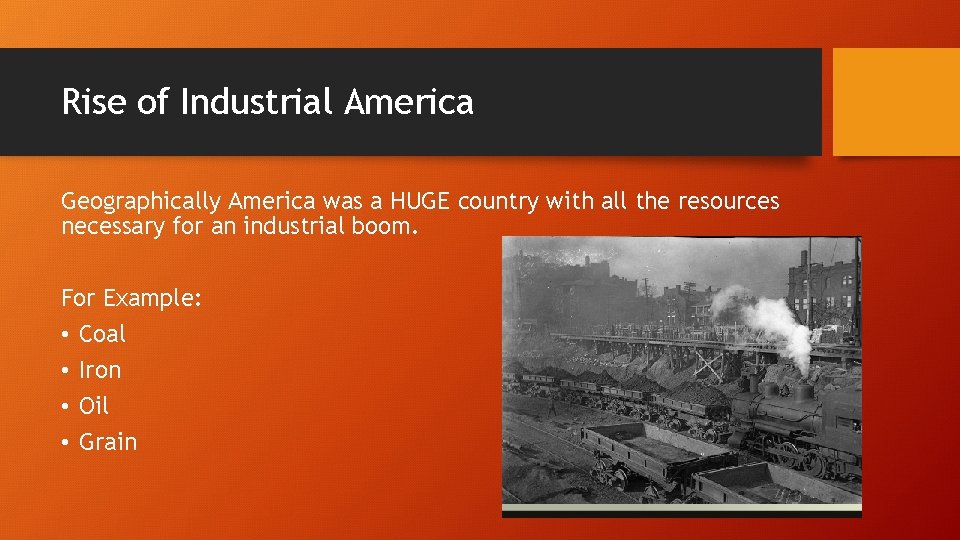
Rise of Industrial America Geographically America was a HUGE country with all the resources necessary for an industrial boom. For Example: • Coal • Iron • Oil • Grain
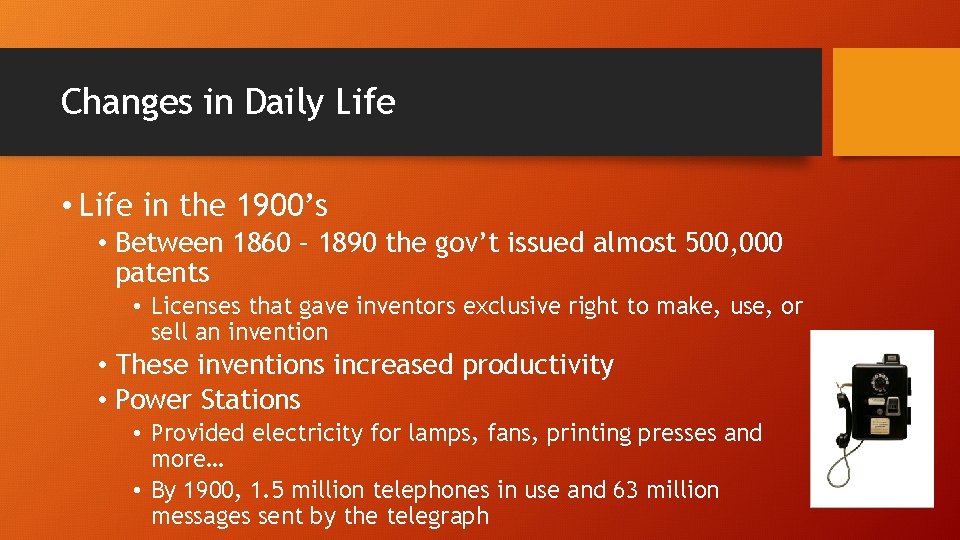
Changes in Daily Life • Life in the 1900’s • Between 1860 – 1890 the gov’t issued almost 500, 000 patents • Licenses that gave inventors exclusive right to make, use, or sell an invention • These inventions increased productivity • Power Stations • Provided electricity for lamps, fans, printing presses and more… • By 1900, 1. 5 million telephones in use and 63 million messages sent by the telegraph
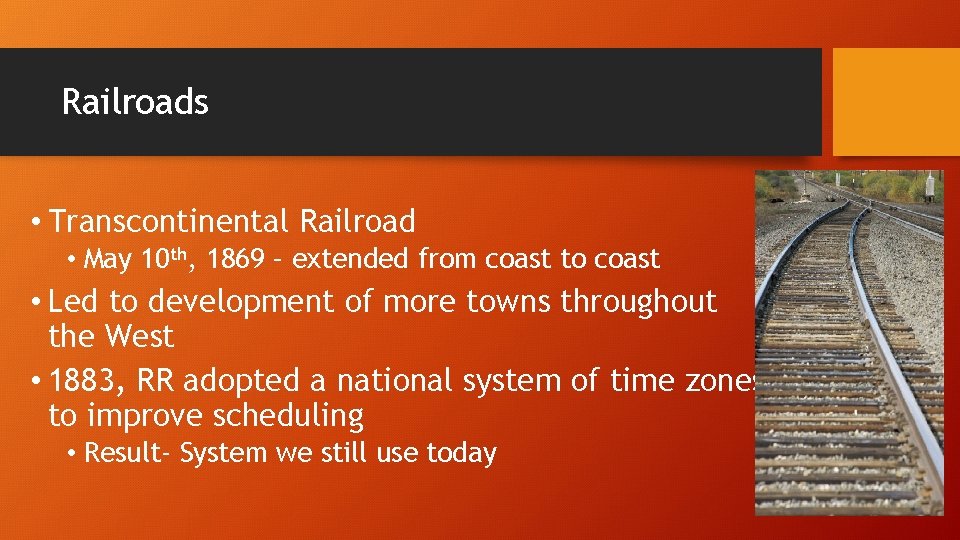
Railroads • Transcontinental Railroad • May 10 th, 1869 – extended from coast to coast • Led to development of more towns throughout the West • 1883, RR adopted a national system of time zones to improve scheduling • Result- System we still use today
Railroads • Played key role in revolutionizing business & industry by: • Faster, more practical means of transporting goods. • Lowered cost of production. • Created national markets. • Model for big business. • Encouraged innovation in other industries.
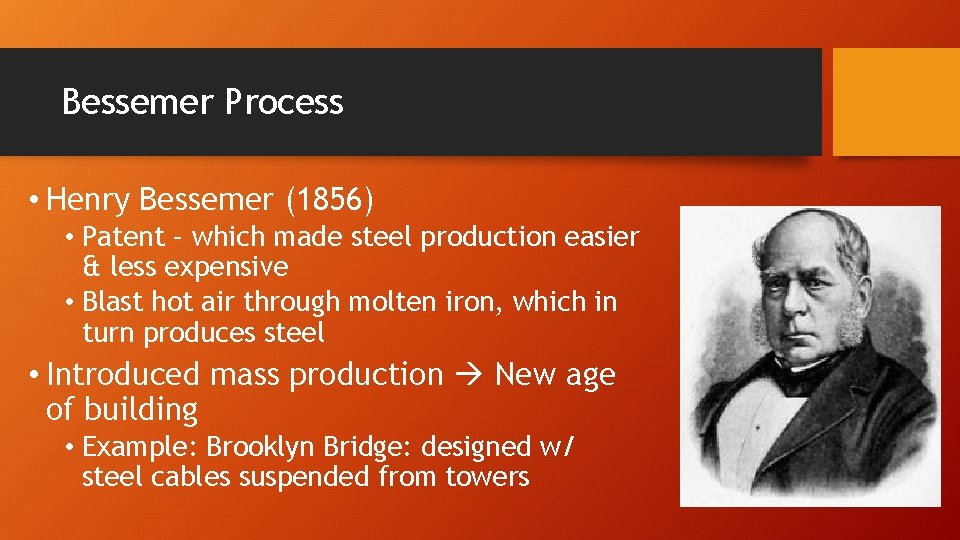
Bessemer Process • Henry Bessemer (1856) • Patent – which made steel production easier & less expensive • Blast hot air through molten iron, which in turn produces steel • Introduced mass production New age of building • Example: Brooklyn Bridge: designed w/ steel cables suspended from towers
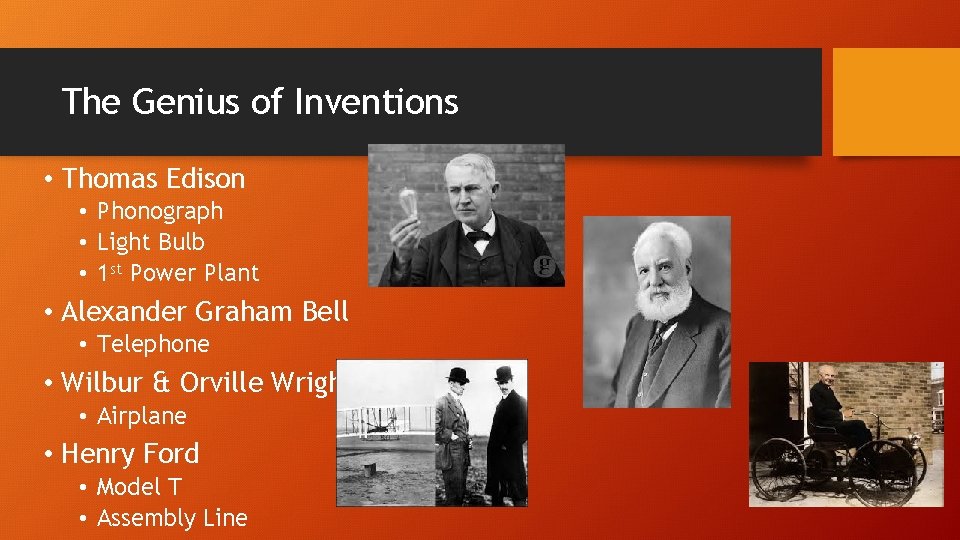
The Genius of Inventions • Thomas Edison • Phonograph • Light Bulb • 1 st Power Plant • Alexander Graham Bell • Telephone • Wilbur & Orville Wright • Airplane • Henry Ford • Model T • Assembly Line
Robber Barons • Business leaders who built their fortunes by stealing from the public • Drained the country of natural resources • Persuaded public officials to push laws in their favor • Ruthlessly drove their competitors to ruin • Paid workers meager wages & forced them to work under dangerous & unhealthy conditions.
Captains of Industry • Business leaders served nation in positive way. • Increased supply of goods & expanded markets. • Created jobs that enabled Americans to buy new goods & raise their standard of living. • Created museums, libraries, & universities.
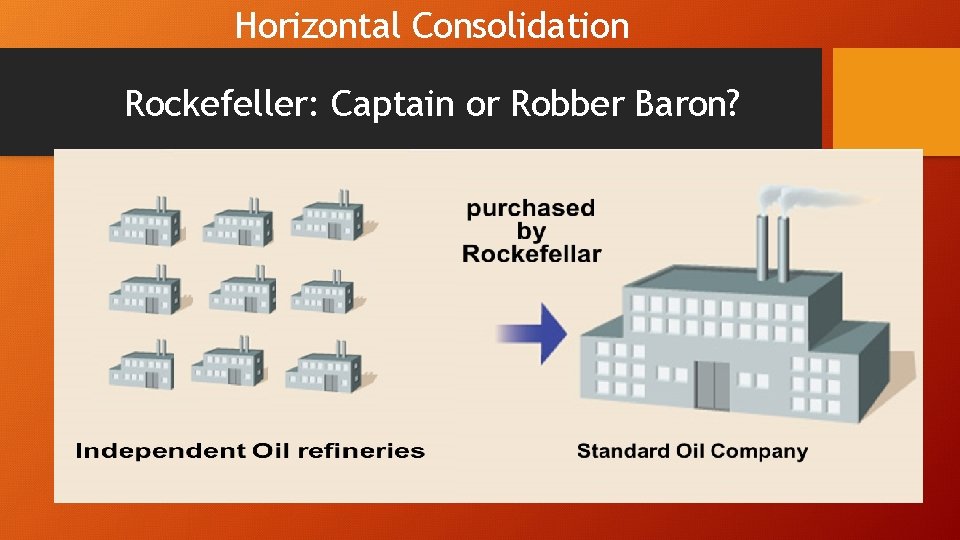
Horizontal Consolidation Rockefeller: Captain or Robber Baron?
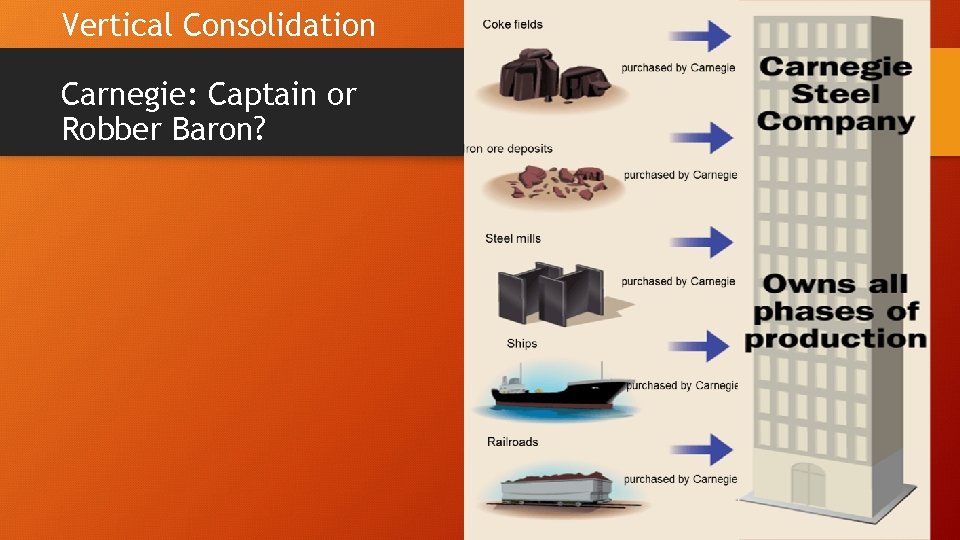
Vertical Consolidation Carnegie: Captain or Robber Baron?
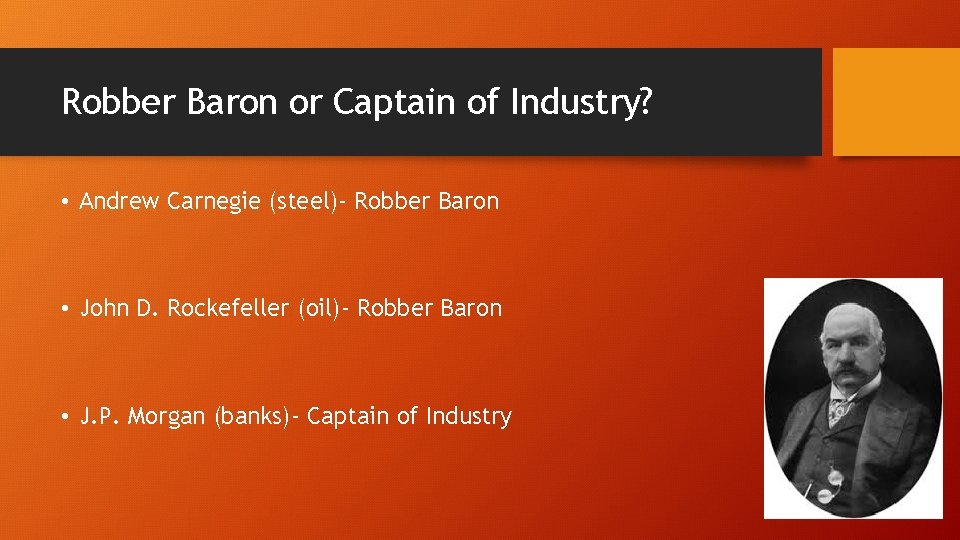
Robber Baron or Captain of Industry? • Andrew Carnegie (steel)- Robber Baron • John D. Rockefeller (oil)- Robber Baron • J. P. Morgan (banks)- Captain of Industry
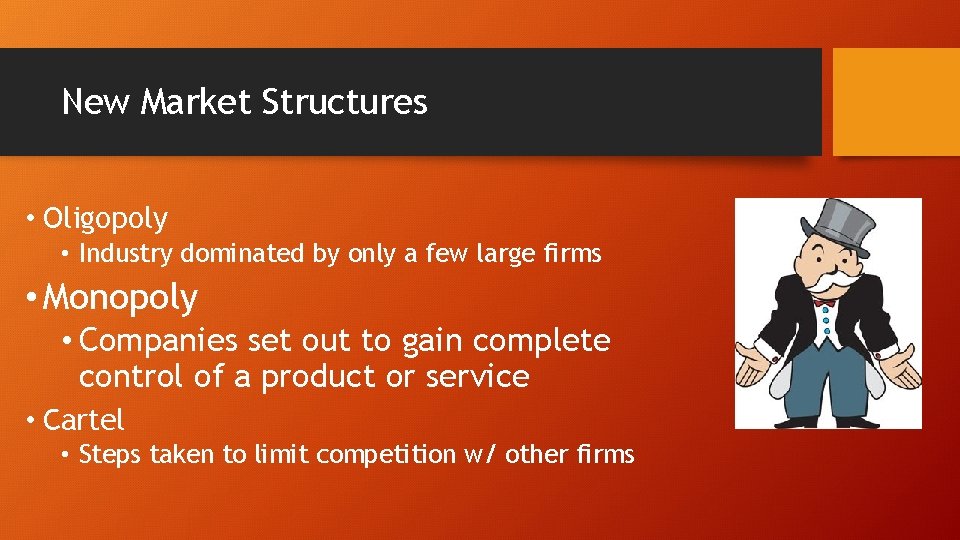
New Market Structures • Oligopoly • Industry dominated by only a few large firms • Monopoly • Companies set out to gain complete control of a product or service • Cartel • Steps taken to limit competition w/ other firms
Social Darwinism • Charles Darwin – “natural selection, ” which only the fittest survived. (animal life) • Social Darwinism apply that theory to society as a whole. • Society & gov’t should NOT interfere w/ relations between workers & employers • Those who were most “fit” in business would succeed & become rich and weed out the unfit. • Americans believed gov’t should stay out of private businesses • Therefore – gov’t neither taxed nor regulated companies
American Outrage – Government Response • Americans began to be skeptical of these Big Businesses demanding gov’t action. • Gov’t officials did not want to interfere because of the country’s rising levels of wealth • Sherman Antitrust Act (1890) • Limit amount of control a business could have over an industry • Law- vague, used to help Big Businesses in court against labor unions.
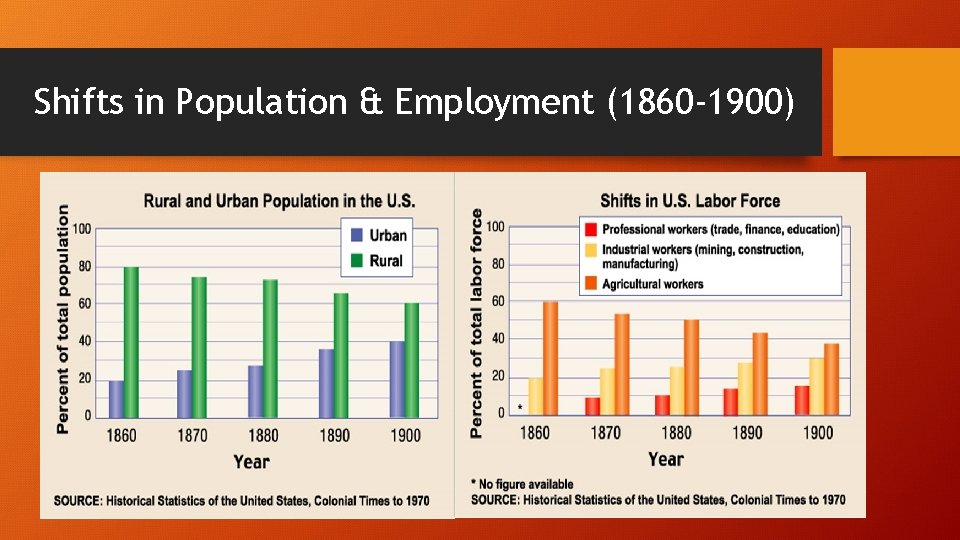
Shifts in Population & Employment (1860 -1900)
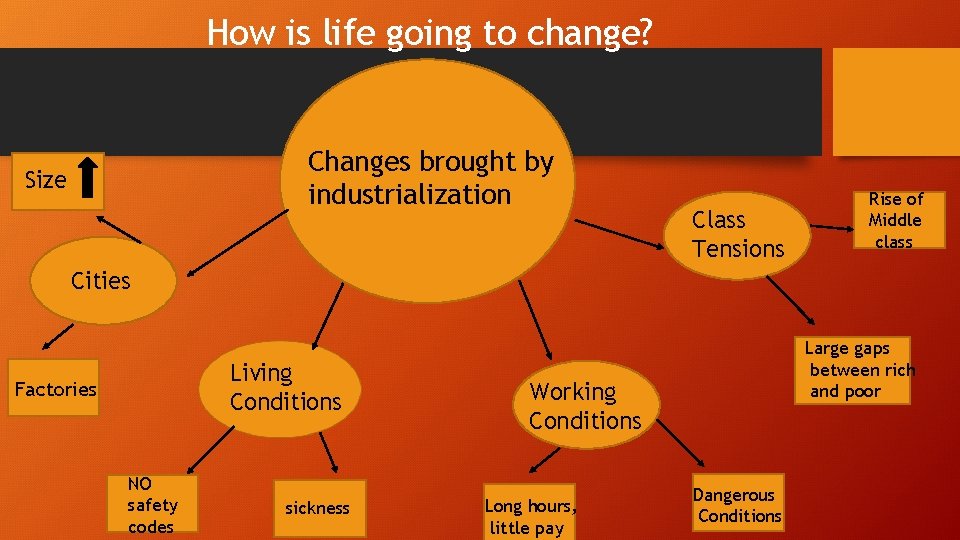
How is life going to change? Changes brought by industrialization Size Class Tensions Rise of Middle class Cities Living Conditions Factories NO safety codes sickness Large gaps between rich and poor Working Conditions Long hours, little pay Dangerous Conditions