
Rise of Greek Civilization Athens and Sparta Geography
- Slides: 12
Rise of Greek Civilization/ Athens and Sparta
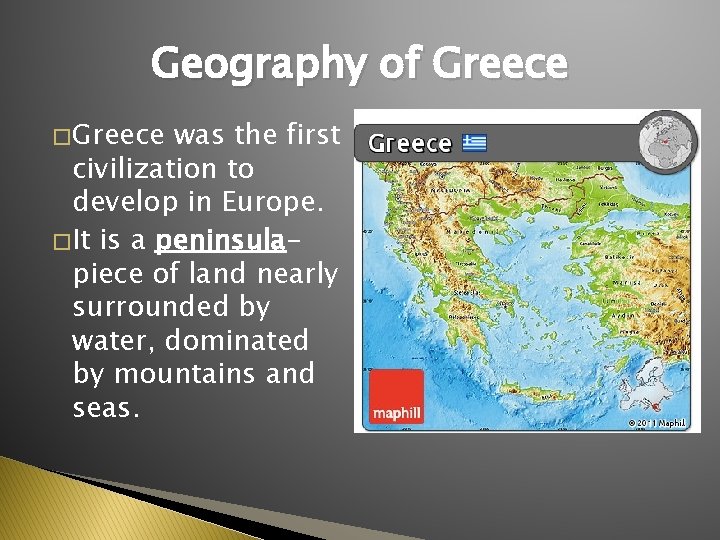
Geography of Greece � Greece was the first civilization to develop in Europe. � It is a peninsulapiece of land nearly surrounded by water, dominated by mountains and seas.
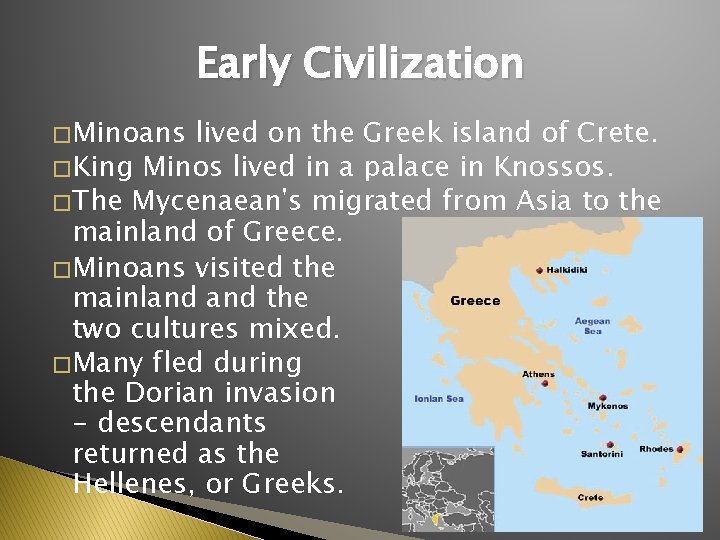
Early Civilization � Minoans lived on the Greek island of Crete. � King Minos lived in a palace in Knossos. � The Mycenaean's migrated from Asia to the mainland of Greece. � Minoans visited the mainland the two cultures mixed. � Many fled during the Dorian invasion - descendants returned as the Hellenes, or Greeks.
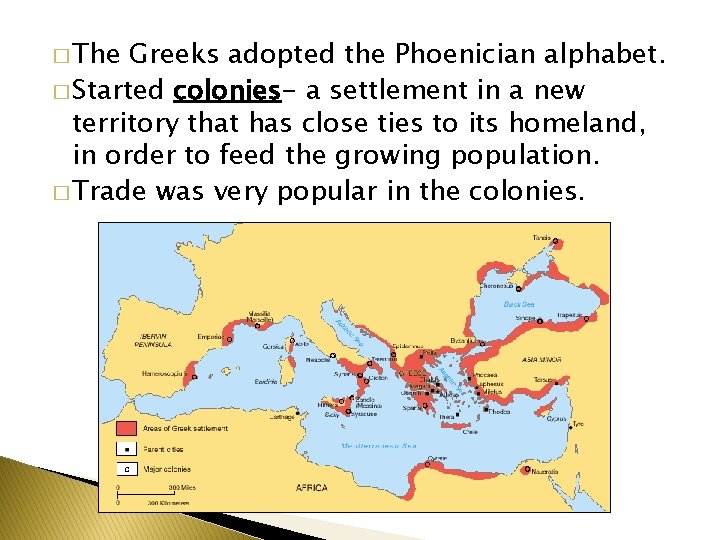
� The Greeks adopted the Phoenician alphabet. � Started colonies- a settlement in a new territory that has close ties to its homeland, in order to feed the growing population. � Trade was very popular in the colonies.
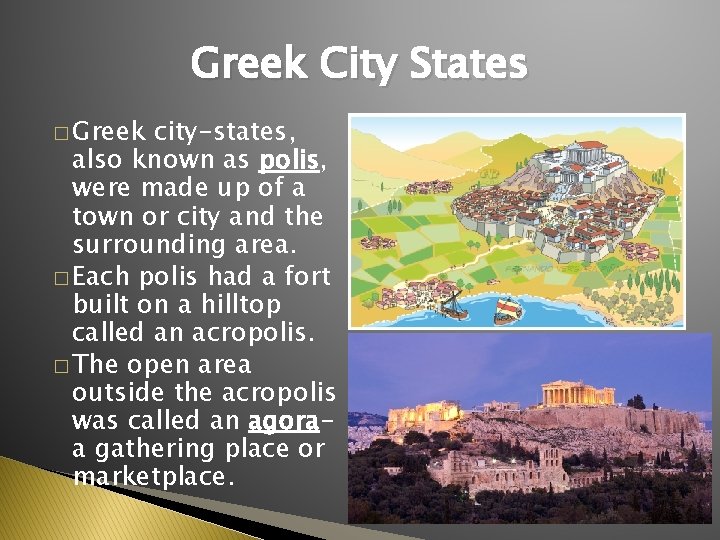
Greek City States � Greek city-states, also known as polis, were made up of a town or city and the surrounding area. � Each polis had a fort built on a hilltop called an acropolis. � The open area outside the acropolis was called an agoraa gathering place or marketplace.
Citizenship � Greek citizens were members of a political community with rights and responsibilities. � Rights: Male citizens could vote, hold office, own property, and defend themselves in court. � Responsibilities: Fight for their polis. � Free, land owning men could be citizens. � Women and children could be citizens but had no rights.
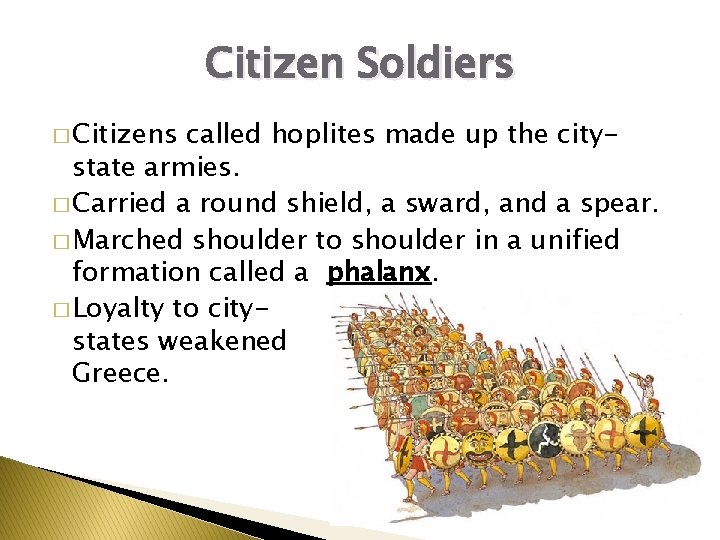
Citizen Soldiers � Citizens called hoplites made up the citystate armies. � Carried a round shield, a sward, and a spear. � Marched shoulder to shoulder in a unified formation called a phalanx. � Loyalty to citystates weakened Greece.
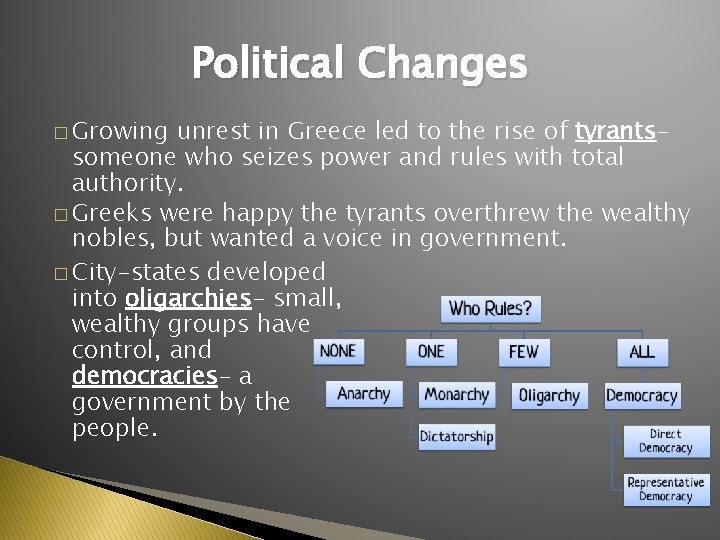
Political Changes � Growing unrest in Greece led to the rise of tyrantssomeone who seizes power and rules with total authority. � Greeks were happy the tyrants overthrew the wealthy nobles, but wanted a voice in government. � City-states developed into oligarchies- small, wealthy groups have control, and democracies- a government by the people.
Sparta � Spartans were decedents of the Dorians. � Instead of setting up colonies, Sparta invaded neighboring city states and enslaved their people (helots). � Sparta became a military state after they crushed a helot uprising and wanted to prevent future revolts. � Believed in disciplined, loyal, and obedient citizens. � Boys went to military school at 7 to learn to read, write, and use weapons. � Went to the army at 20. � Women had more freedom: job was to raise strong Spartan warriors.
� Sparta’s government was an oligarchy-a small, wealthy group with control. � King, the assembly (citizens over age 30) and the council of elders. � Strict government discouraged free thinking and new ideas (scared to loose the helots). � Did not welcome foreign visitors/ citizens were not allowed to leave. � Discouraged the study of literature and arts. � Resisted change (heavy gold bars instead of coins). Remained a poor farming society.
Athens � Founded by decedents of the Mycenaean's. � Boys were educated in math, the arts, and sports. Boys 18+ were expected to be active in public affairs. � Girls educated at home by mothers. � Athenians lived under a tyrant-someone who seizes absolute power and rules with total authority, named Peisistruatus. � After his death, Athens moved towards a democracy.
� Male citizens were able to participate in the assembly and vote on laws. � Preferred a lottery system over an election. � Council members could only serve 2 - 1 year terms. � Women, enslaved people, and foreign born were not allowed to be citizens.