
Riparian Buffers And Their Role In Coastal Georgia
Riparian Buffers And Their Role In Coastal Georgia By Jackie Jackson & Bethany Jewell Water Resource Planners
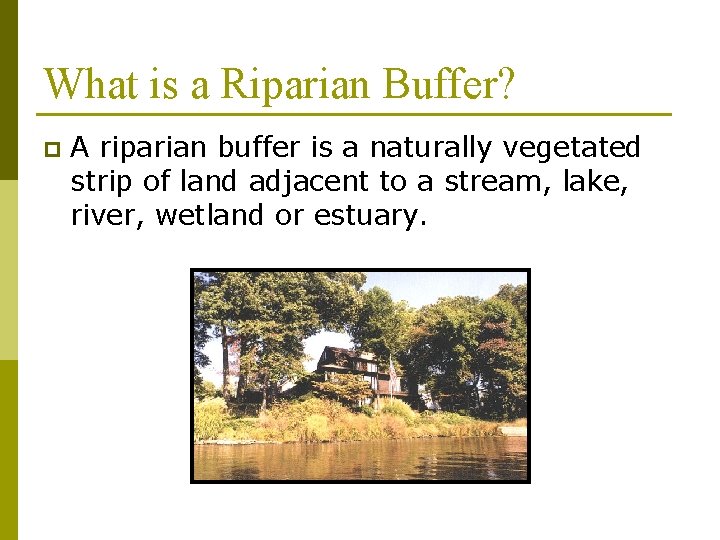
What is a Riparian Buffer? p A riparian buffer is a naturally vegetated strip of land adjacent to a stream, lake, river, wetland or estuary.

Natural Functions of a Riparian Buffer p Stormwater Filtration n p Captures sediments, pesticides, nitrogen and phosphorus before reaching waterway Flood Control n n n Reduce stormwater velocity Keeps Development from immediate banks Natural absorption processes (if marsh or wetland buffer)
The Results of Loss p Stormwater not managed by the natural filtration methods of marshes can attribute to the closure of beaches and shellfish beds. p Fish and wildlife habitat degraded by erosion and sediment. p Surface heating occurs due to loss of shade. p Wildlife species suffer. Wider buffers protect amphibians, colonial water birds, and coastal fish spawning and nursery areas. p Human Impacts…
Buffers Save Money p Property damage lessened p Less investment stormwater management p Cost less than turf p Native vegetation requires less water
What are the Benefits to a Buffer? Minimize stormwater pollution p Reduce erosion p Maintain natural temperature of waterways p Reduce noise pollution p Reduce flooding and flood damage p Preserve natural habitats p Save money p Scenic value p

Natural Buffer in Chatham County Vernonburg Area Courtesy of The Georgia Land Trust
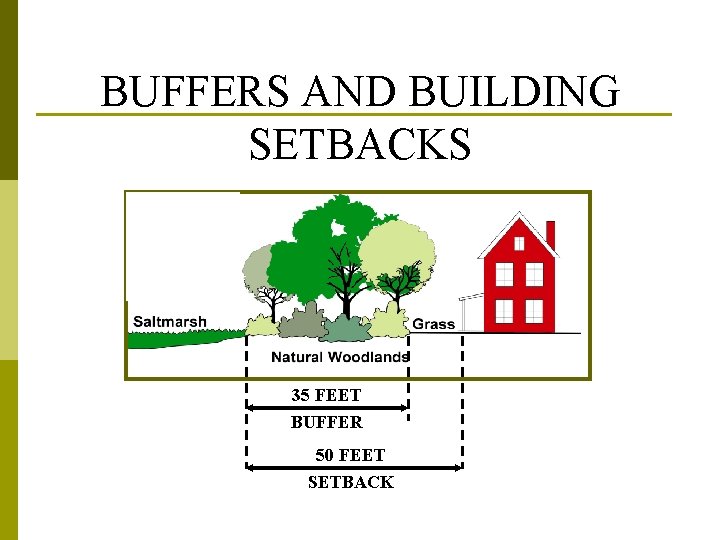
BUFFERS AND BUILDING SETBACKS 35 FEET BUFFER 50 FEET SETBACK
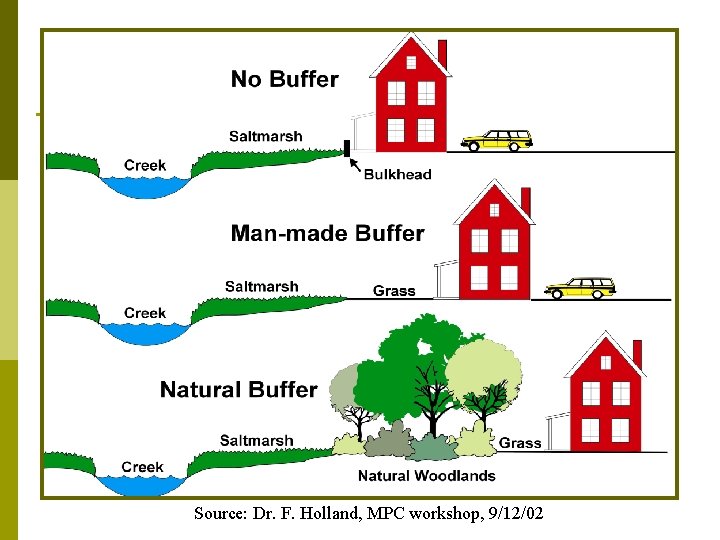
Source: Dr. F. Holland, MPC workshop, 9/12/02
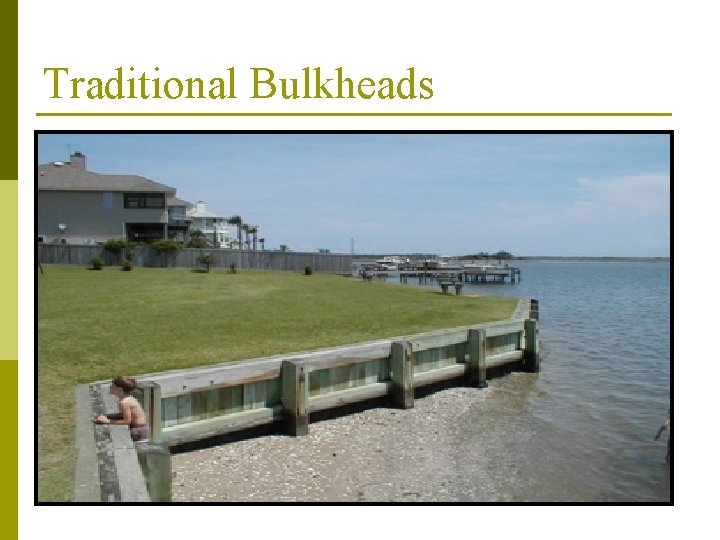
Traditional Bulkheads
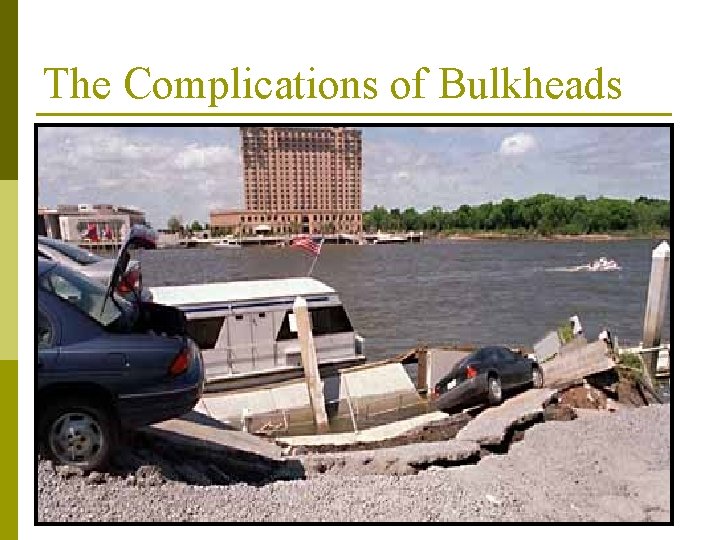
The Complications of Bulkheads
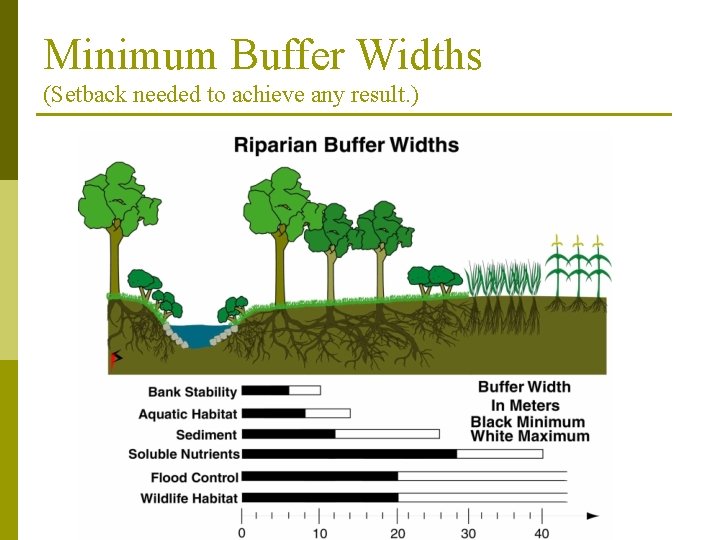
Minimum Buffer Widths (Setback needed to achieve any result. )
The Setback Research p The current buffer size of 25 ft only removes half of the stormwater sediment load and is considered of poor habitat value (Desbonnet et al. , 1994). p Buffers smaller than 33 ft are “functionally ineffective” (Watershed Protection Techniques, 1997).
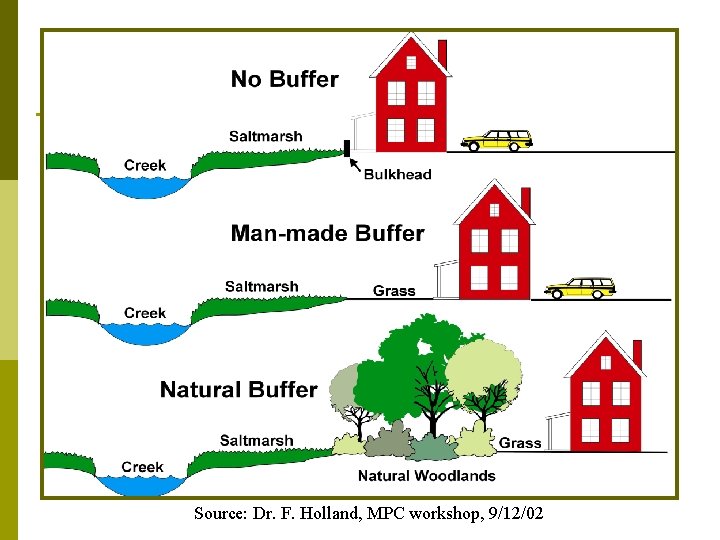
Source: Dr. F. Holland, MPC workshop, 9/12/02
Options for Developers p Green Growth Guidelines p Low Impact Development
Green Growth Guidelines p Prepared by Georgia DNR Coastal Division p Strategies for development that protect the natural resources of our coast
Low Impact Development p Utilized in the Green Growth Guidelines p LID blends engineered and natural systems p LID focus is on multiple systems and integrated solutions p It also can provide alternatives to buffers
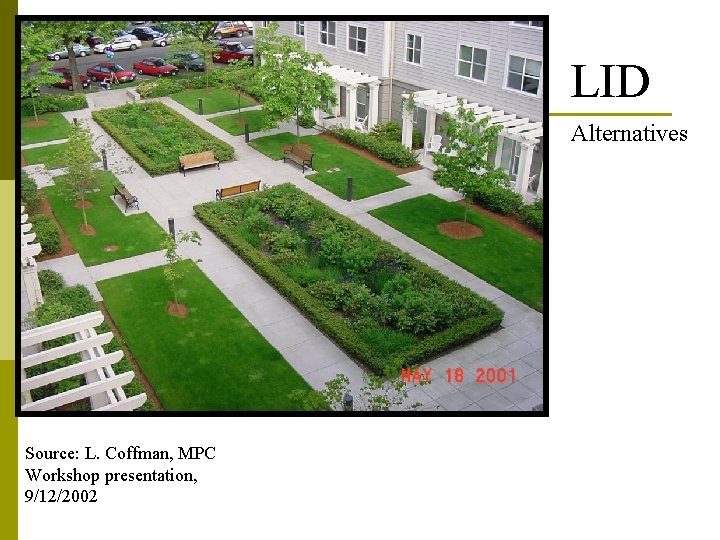
LID Alternatives Source: L. Coffman, MPC Workshop presentation, 9/12/2002
Questions?
- Slides: 19