
Riparian Area and Upper Watershed Condition Relationship to
- Slides: 15
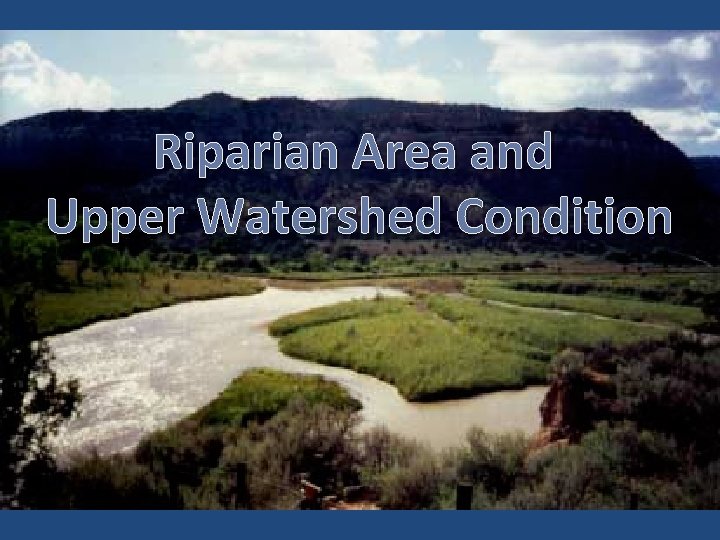
Riparian Area and Upper Watershed Condition
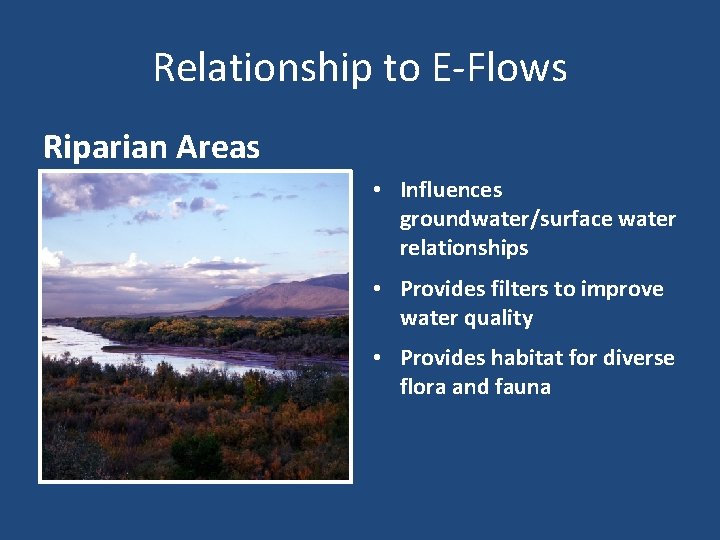
Relationship to E-Flows Riparian Areas • Influences groundwater/surface water relationships • Provides filters to improve water quality • Provides habitat for diverse flora and fauna
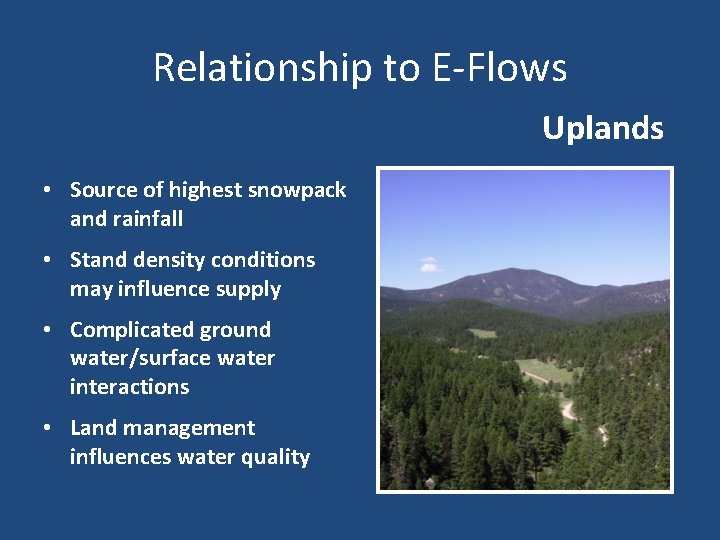
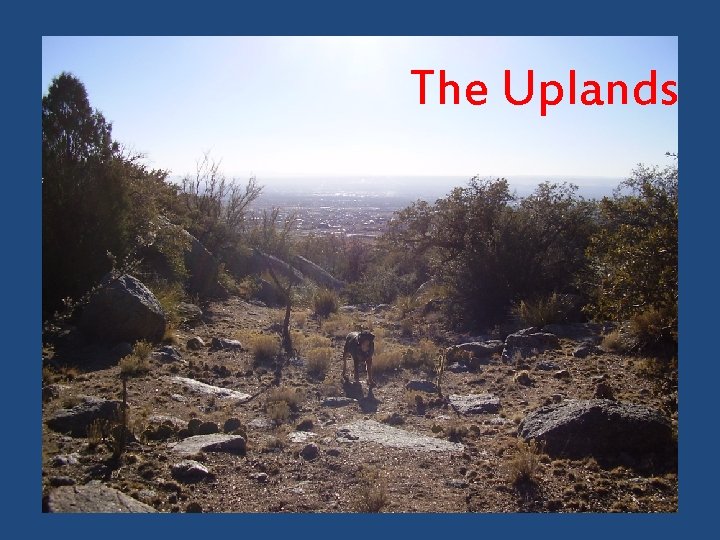
Relationship to E-Flows Uplands • Source of highest snowpack and rainfall • Stand density conditions may influence supply • Complicated ground water/surface water interactions • Land management influences water quality
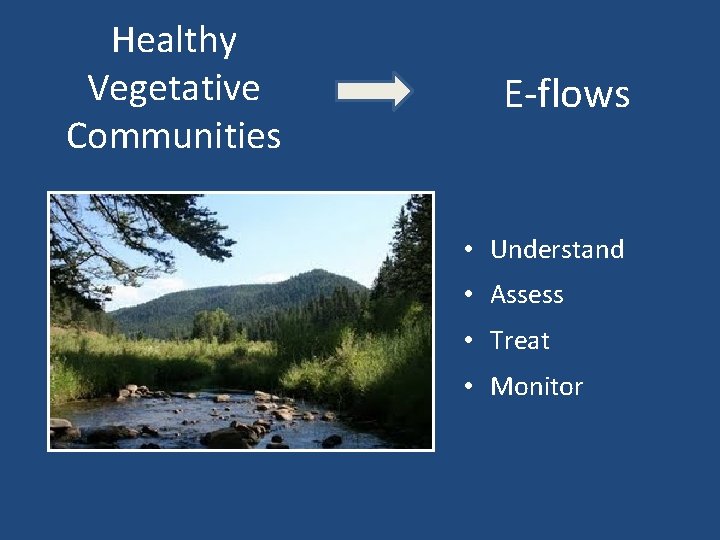
Healthy Vegetative Communities E-flows • Understand • Assess • Treat • Monitor
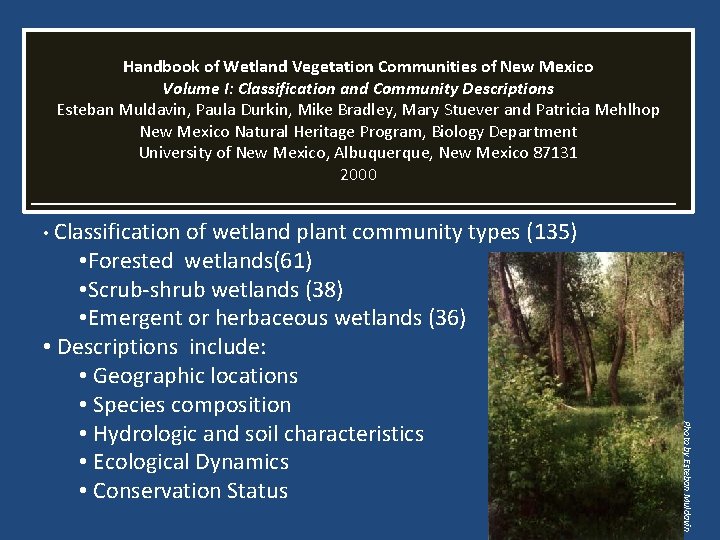
Handbook of Wetland Vegetation Communities of New Mexico Volume I: Classification and Community Descriptions Esteban Muldavin, Paula Durkin, Mike Bradley, Mary Stuever and Patricia Mehlhop New Mexico Natural Heritage Program, Biology Department University of New Mexico, Albuquerque, New Mexico 87131 2000 ____________________________________ • Classification of wetland plant community types (135) Photo by Esteban Muldavin • Forested wetlands(61) • Scrub-shrub wetlands (38) • Emergent or herbaceous wetlands (36) • Descriptions include: • Geographic locations • Species composition • Hydrologic and soil characteristics • Ecological Dynamics • Conservation Status
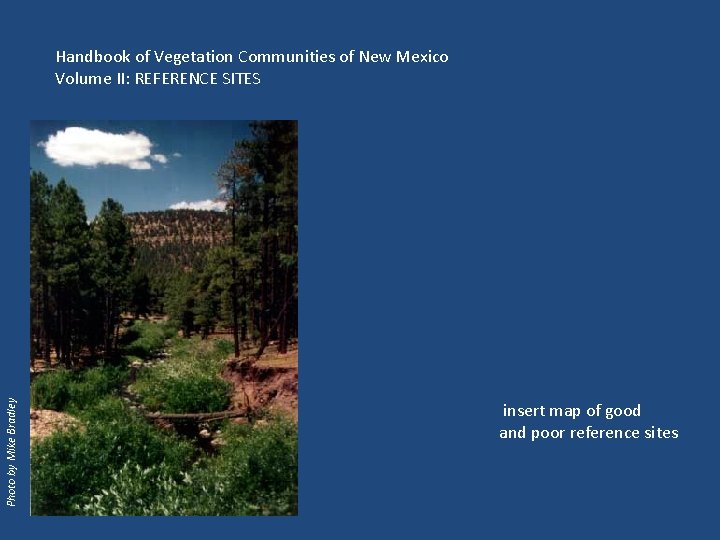
Photo by Mike Bradley Handbook of Vegetation Communities of New Mexico Volume II: REFERENCE SITES insert map of good and poor reference sites
The Uplands
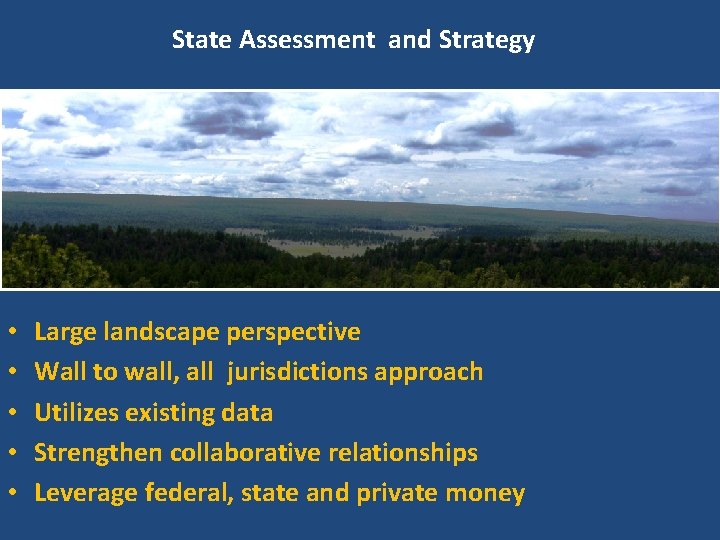
State Assessment and Strategy • • • Large landscape perspective Wall to wall, all jurisdictions approach Utilizes existing data Strengthen collaborative relationships Leverage federal, state and private money
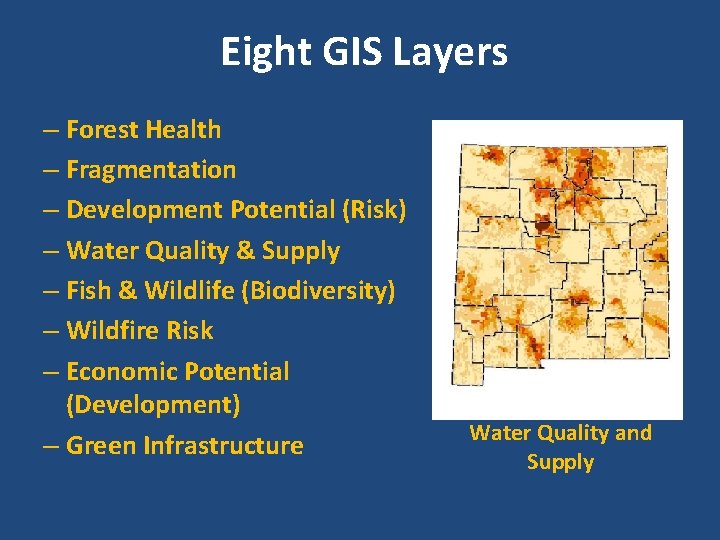
Eight GIS Layers – Forest Health – Fragmentation – Development Potential (Risk) – Water Quality & Supply – Fish & Wildlife (Biodiversity) – Wildfire Risk – Economic Potential (Development) – Green Infrastructure Water Quality and Supply
Model Content Models developed using multi -agency technical teams Gathered existing databases Identified data gaps Best judgment/professional knowledge on how to use
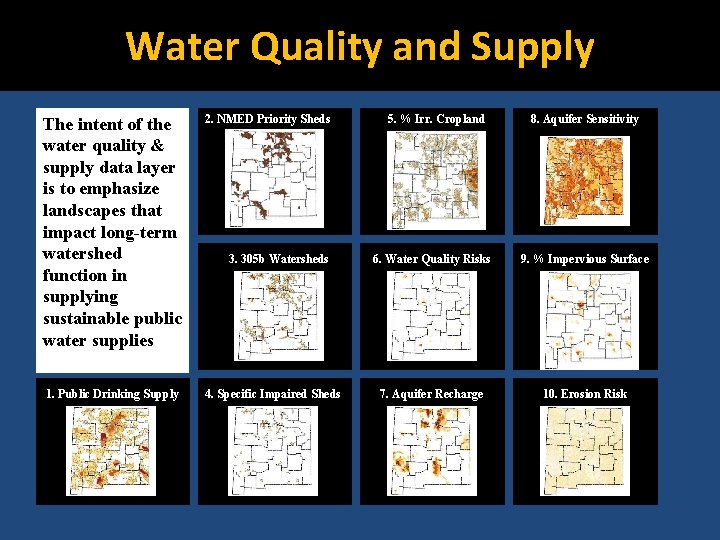
Water Quality and Supply The intent of the water quality & supply data layer is to emphasize landscapes that impact long-term watershed function in supplying sustainable public water supplies 2. NMED Priority Sheds 1. Public Drinking Supply 4. Specific Impaired Sheds 3. 305 b Watersheds 5. % Irr. Cropland 8. Aquifer Sensitivity 6. Water Quality Risks 9. % Impervious Surface 7. Aquifer Recharge 10. Erosion Risk
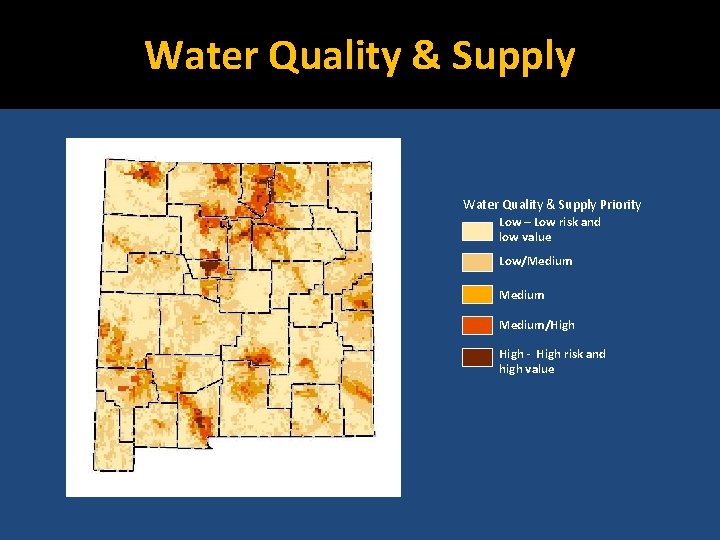
Water Quality & Supply Priority Low – Low risk and low value Low/Medium/High - High risk and high value
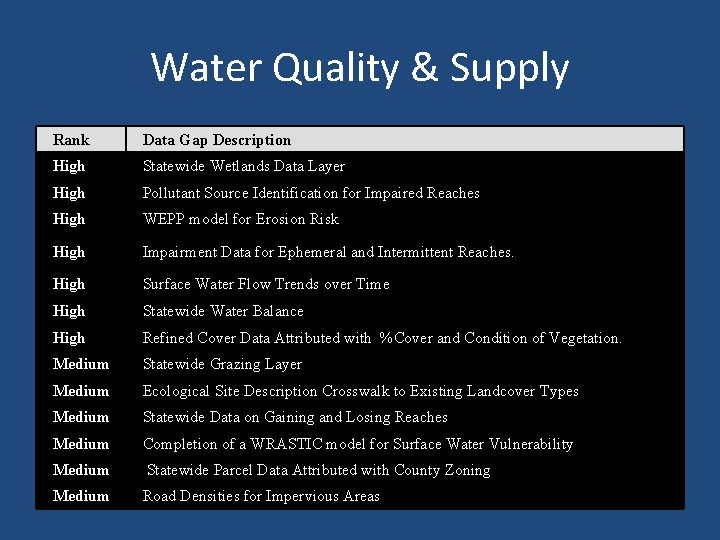
Water Quality & Supply Rank Data Gap Description High Statewide Wetlands Data Layer High Pollutant Source Identification for Impaired Reaches High WEPP model for Erosion Risk High Impairment Data for Ephemeral and Intermittent Reaches. High Surface Water Flow Trends over Time High Statewide Water Balance High Refined Cover Data Attributed with %Cover and Condition of Vegetation. Medium Statewide Grazing Layer Medium Ecological Site Description Crosswalk to Existing Landcover Types Medium Statewide Data on Gaining and Losing Reaches Medium Completion of a WRASTIC model for Surface Water Vulnerability Medium Statewide Parcel Data Attributed with County Zoning Medium Road Densities for Impervious Areas
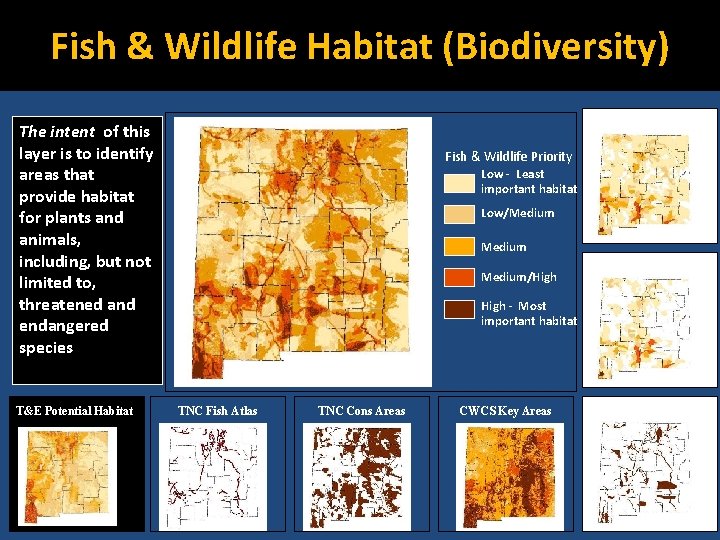
Fish & Wildlife Habitat (Biodiversity) Wildlife Occurrence The intent of this layer is to identify areas that provide habitat for plants and animals, including, but not limited to, threatened and endangered species T&E Potential Habitat Fish & Wildlife Priority Low - Least important habitat Low/Medium/High Rare Plant Occurrence High - Most important habitat TNC Fish Atlas TNC Cons Areas CWCS Key Areas WGA Corridors
Strategy and Response Plan Insert public benefit of forests map