
RIGHT TO INFORMATION AND PARLIAMENTARY ACCESSIBILITY ACCOUNTABILITY TRANSPARENCY
RIGHT TO INFORMATION AND PARLIAMENTARY ACCESSIBILITY, ACCOUNTABILITY & TRANSPARENCY THE KENYAN PARLIAMENT 9/25/2020
Outline 1. 2. 3. 4. 5. 6. 7. 8. 9. 10. Brief Background……. ……………… Problem Statement………. ………… Justifications …………………. . Objectives of the study…………. . …. The Right to Information…. . . ……. … Research Methodology…………. …. Research Findings………………. …. Challenges……………… Summary………………. . Recommendations…………………. . 9/25/2020
BACKGROUND q Parliament -a major governance institution = voice q Parliament’s accessibility so far: - Live broadcasts - Open committee sessions - Hansard reports available, - Re- launched website q Despite the progress, - lack of information - Poor communication systems hamper effective participation in governance and legislative processes 9/25/2020
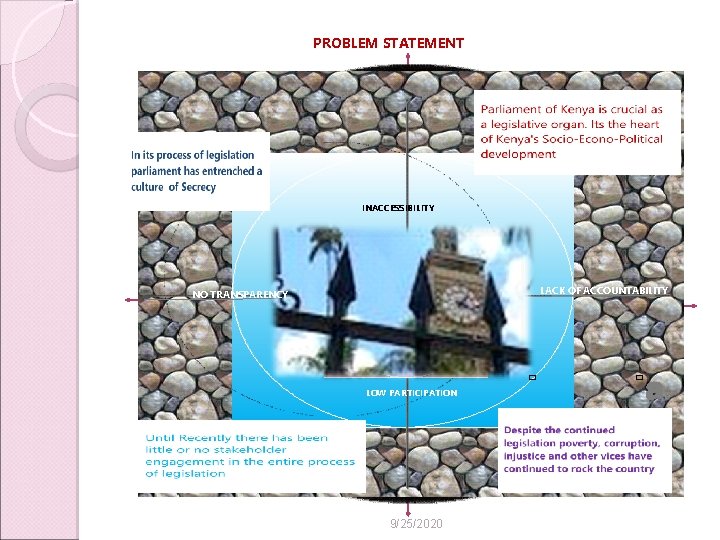
PROBLEM STATEMENT INACCESSIBILITY LACK OF ACCOUNTABILITY NO TRANSPARENCY LOW PARTICIPATION . 9/25/2020
OBJECTIVES To strengthen and empower citizens on (RTI) to leverage their participation and engagement with parliament and their respective MPs. To enhance ATI both as a measure of consolidating participatory democracy and enhancing citizen’s ability to hold institutions of governance accountable and transparent. To build, through applied research, a body of knowledge on parliament’s accessibility, effective dialogue and participation To develop a common understanding on ATI/RTI and strengthen their respective 9/25/2020 networks.
JUSTIFICATION Public bodies do not hold information on their own behalf but on behalf of the public as a whole. Duties demand accountability Openness and sharing of critical information - Allows citizens participation - Enhances better governance and transparency Democracy is enhanced through voting Electorates are key. Key ingredients in a successful development strategy are ownership and participation 9/25/2020
LEGAL FRAMEWORK FOR THE RIGHT TO INFORMATION (RTI) IN KENYA q Constitution -Article 35 (RTI), Article 118 and 119 (petitions) q Standing order No. 31 - custody of Journals and records q Standing order No. 180 -Public access to meetings of select committees q The Anti-corruption And Economic Crimes Act 2003 - The Anti-corruption And Economic Crimes (Amnesty And Restitution) Regulations, 2011 The Public Audit Act Chapter 412 A [(Revised Edition 2009 (2003)] q Public Officers Ethics Act 2003 q 9/25/2020
KEY CONCEPTS Accessibility Accountability Transparency Participation NB The research lay more emphasis on accessibility as it informs the other variables and concepts above 9/25/2020
PROACTIVENESS q Effective access to meaningful information is the first step in empowering citizens to exercise a degree of control over public institutions in accordance to the new constitution and ensure transparency & accountability in-between elections q. The right to know is the basis for stakeholder involvement in the decision making processes that affect their lives, their community and the development of their country. q. Citizens have a duty to seek information proactively not for information sake but to use it to improve their engagement with Parliament as an institution and the legislators. q. Further, parliament has a corresponding duty to proactively publicize the information generated to all the citizens and develop avenues for feedback from the citizens. 9/25/2020
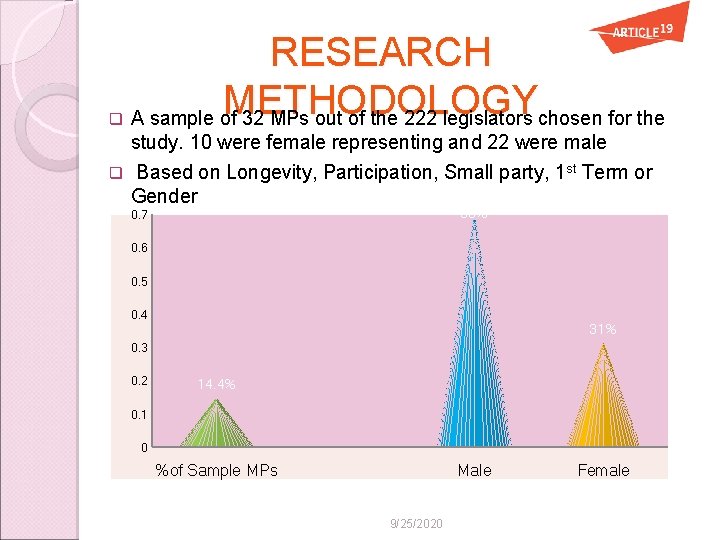
RESEARCH METHODOLOGY q A sample of 32 MPs out of the 222 legislators chosen for the study. 10 were female representing and 22 were male q Based on Longevity, Participation, Small party, 1 st Term or Gender 69% 0. 7 0. 6 0. 5 0. 4 31% 0. 3 0. 2 14. 4% 0. 1 0 %of Sample MPs Male 9/25/2020 Female
METHODOLOGY 96 persons from the sampled constituencies were trained on the provisions of Right and Access to information as guaranteed by the Kenyan constitution and UDHR and mandated them to engage with parliament and their area MP on the research areas stipulated above q 32 research assistants were engaged to field-in questionnaires to the sample population of 1120 respondents. Each research assistant interviewed at least 35 respondents from at least three locations in the constituency to form a representative sample. q Since youth form a majority of the voters in the country, the research targeted a three to two (3: 2) representative ratio of the youth to the old. q 9/25/2020

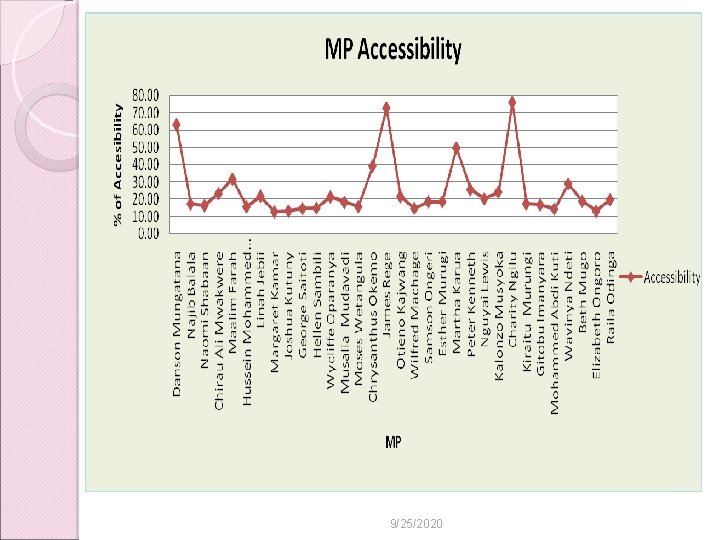
KEY FINDINGS ACCESSIBILITY - MP’s whose constituents have their contacts tend to be more accessible - As an organization, parliament is largely inaccessible to a majority of Kenyans: It’s processes un-interactive and its members significantly absent from their constituents needs and issues. ACCOUNTABILITY - Parliament’s budget is unavailable to the general public scrutiny; little done to enhance accountability of taxpayer’s resources – KACC 2008/2009 xiv- 12 cases not acted upon to date; Audit Reports 2007 -8 TRANSPARENCY - Parliamentary processes and procedures are ambiguous to a majority of Kenyans; openness on key decisions made lacking PARTICIPATION - There is little or insignificant stakeholder engagement and public participation in parliamentary affairs and governance 9/25/2020
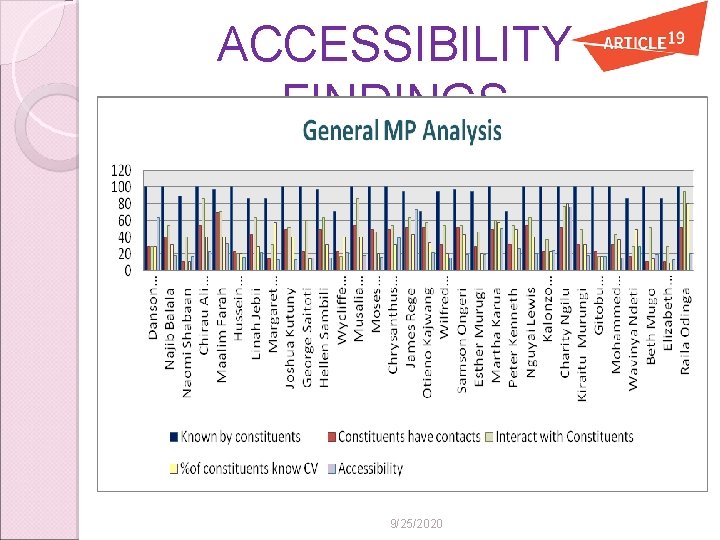
ACCESSIBILITY FINDINGS 9/25/2020
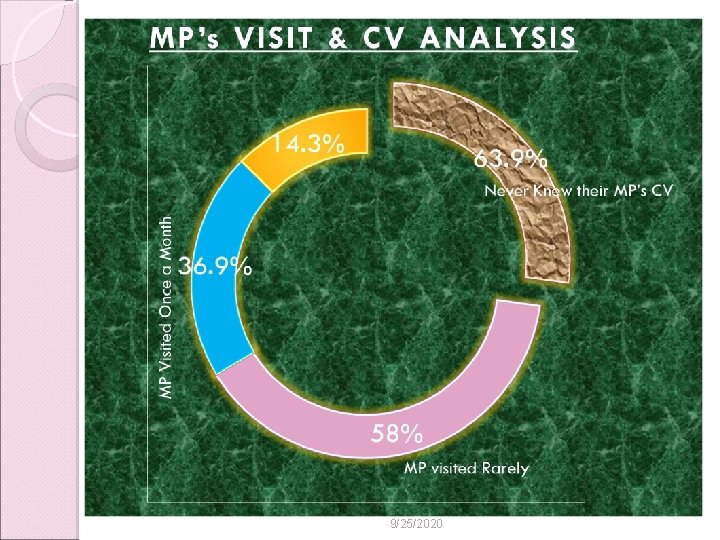
Despite 94. 4 % knowing their area MP, only 36. 8% had their MP’s contacts and 35. 5 % knew how their MP could be contacted. About 63% neither had the MPs contacts nor knew how to contact him. About 26 % interacted with their MP officially while 37 % interacted with their MP informally for personal favors, official undertakings or communal good services. 9/25/2020
9/25/2020
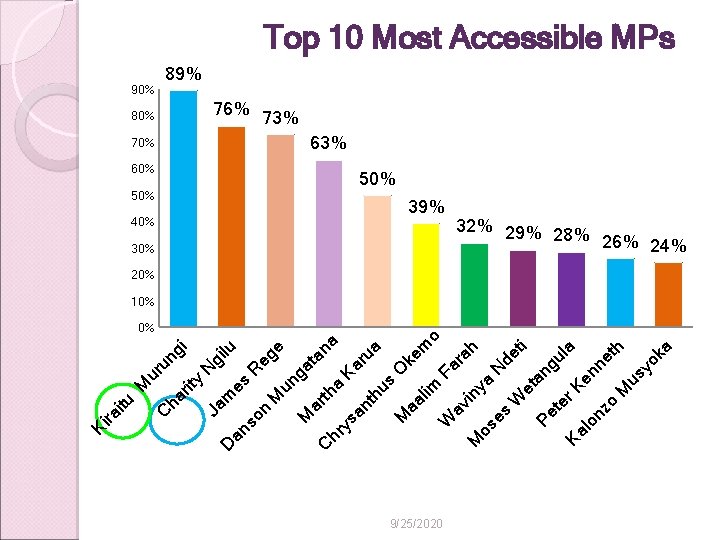
M N gi D 80% l an es u so R eg n M un e ga M ta ar na C t ha hr ys Ka an ru th a us O M ke aa m lim o W Fa av ra in h M ya os N es de W ti et an Pe gu te la r. K Ka en lo nz ne o th M us yo ka Ja m ng i ur u 90% ity ha r C itu ra Ki Top 10 Most Accessible MPs 89% 76% 73% 70% 63% 60% 50% 40% 39% 30% 9/25/2020 32% 29% 28% 26% 24% 20% 10% 0%
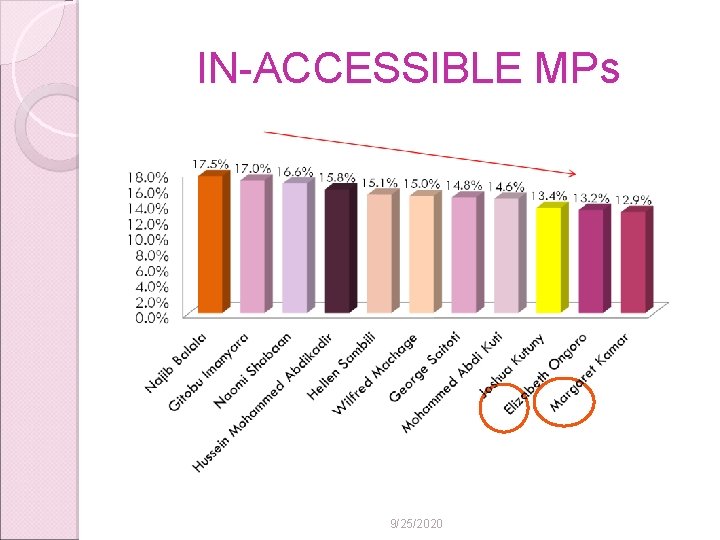
IN-ACCESSIBLE MPs 9/25/2020
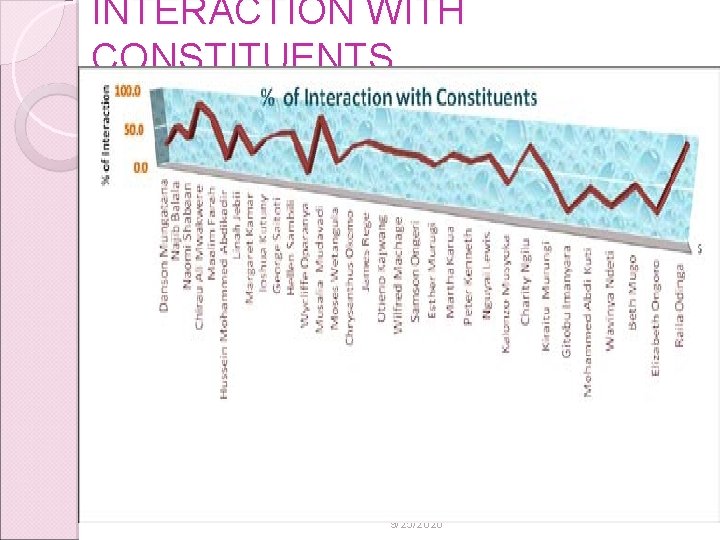
INTERACTION WITH CONSTITUENTS 9/25/2020
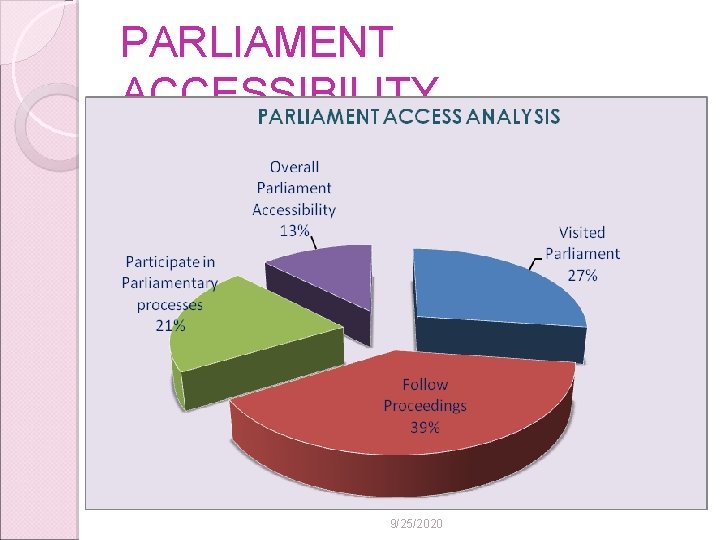
PARLIAMENT ACCESSIBILITY 9/25/2020
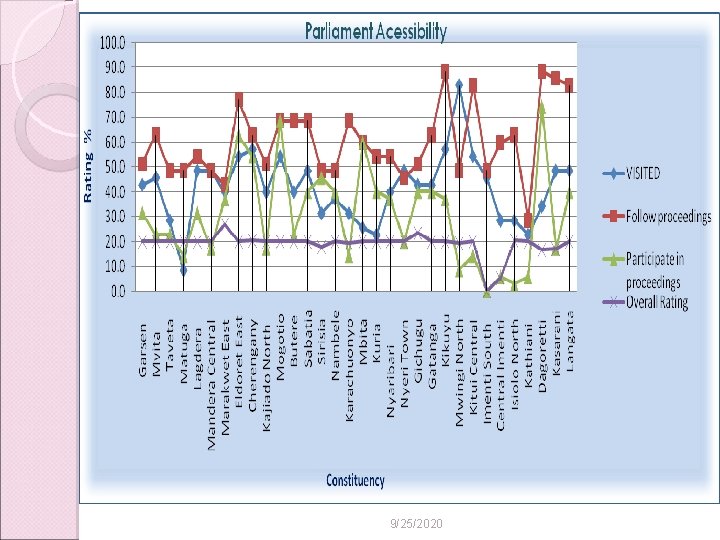
9/25/2020
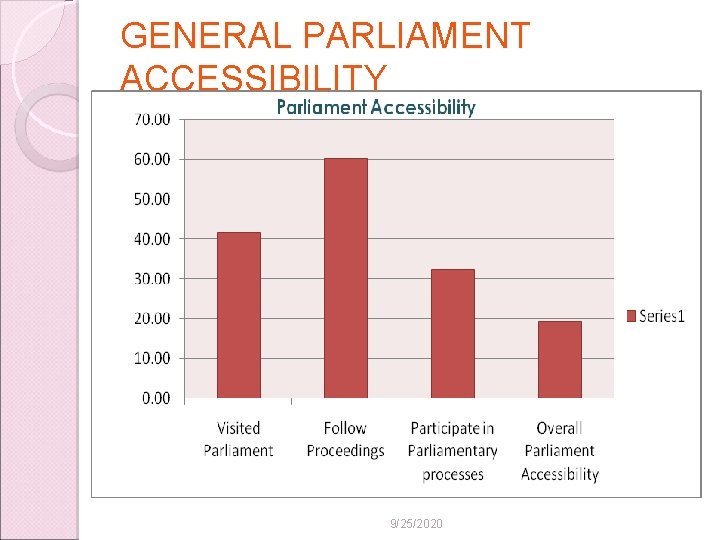
GENERAL PARLIAMENT ACCESSIBILITY 9/25/2020
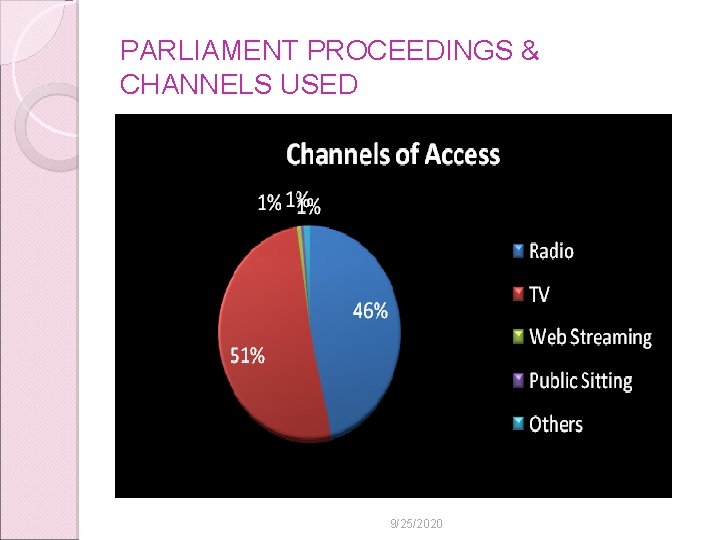
PARLIAMENT PROCEEDINGS & CHANNELS USED 9/25/2020
9/25/2020
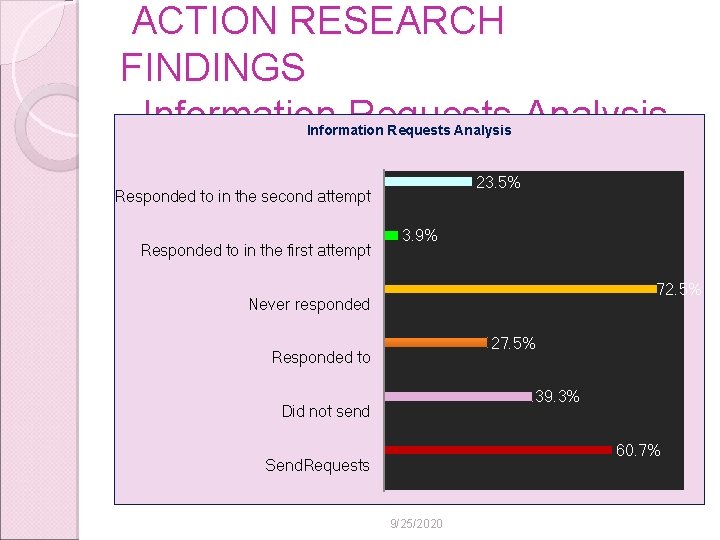
ACTION RESEARCH FINDINGS Information Requests Analysis 23. 5% Responded to in the second attempt Responded to in the first attempt 3. 9% 72. 5% Never responded 27. 5% Responded to 39. 3% Did not send 60. 7% Send. Requests 9/25/2020
Information Requests Out of the questions asked, only 12 percent were responded to within the 10 -working days timeframe, about 4 per cent on the second attempt while the rest received mute response. An estimated 63 percent of the questions fielded to the Speaker, Clerk, Hansard Editor and the Director of research in parliament went un-responded to. 9/25/2020
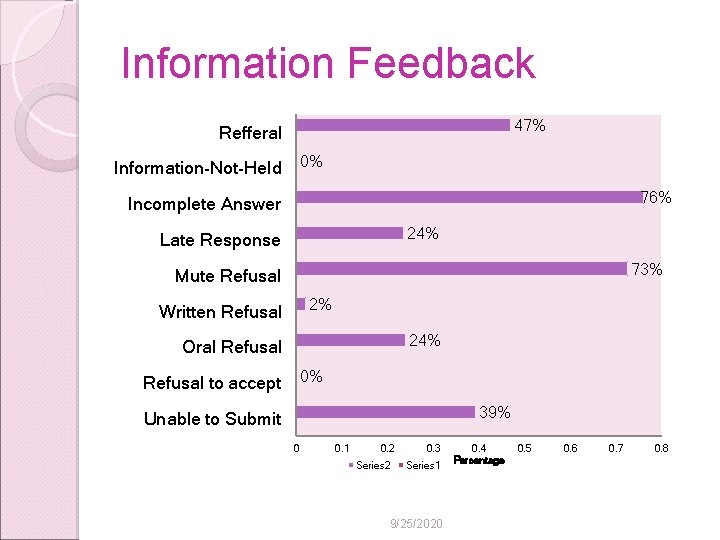
Information Feedback 47% Refferal 0% Information-Not-Held 76% Incomplete Answer 24% Late Response 73% Mute Refusal 2% Written Refusal 24% Oral Refusal 0% Refusal to accept 39% Unable to Submit 0 0. 1 0. 2 Series 2 0. 3 Series 1 9/25/2020 0. 4 Percentage 0. 5 0. 6 0. 7 0. 8
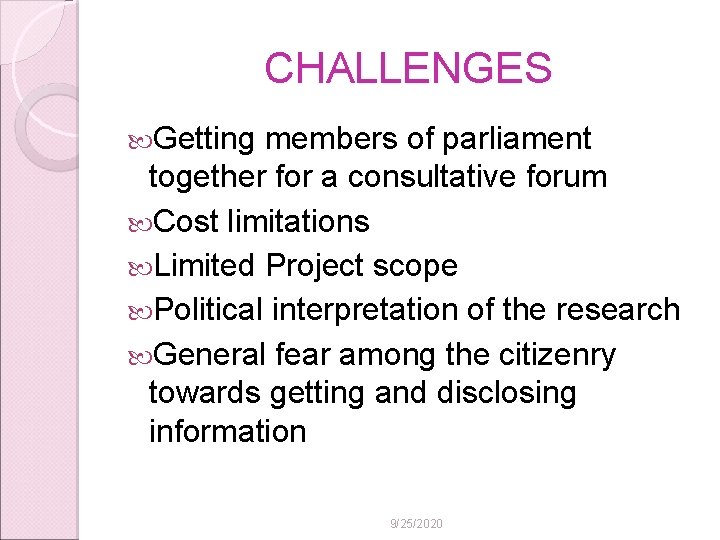
CHALLENGES Getting members of parliament together for a consultative forum Cost limitations Limited Project scope Political interpretation of the research General fear among the citizenry towards getting and disclosing information 9/25/2020
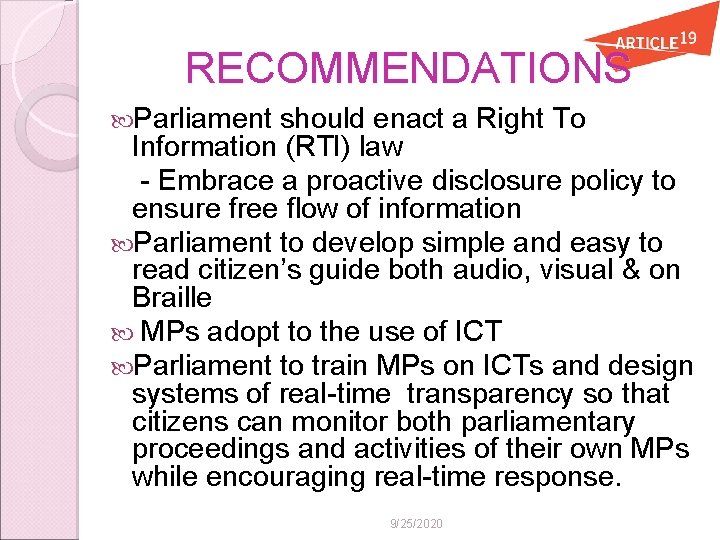
RECOMMENDATIONS Parliament should enact a Right To Information (RTI) law - Embrace a proactive disclosure policy to ensure free flow of information Parliament to develop simple and easy to read citizen’s guide both audio, visual & on Braille MPs adopt to the use of ICT Parliament to train MPs on ICTs and design systems of real-time transparency so that citizens can monitor both parliamentary proceedings and activities of their own MPs while encouraging real-time response. 9/25/2020
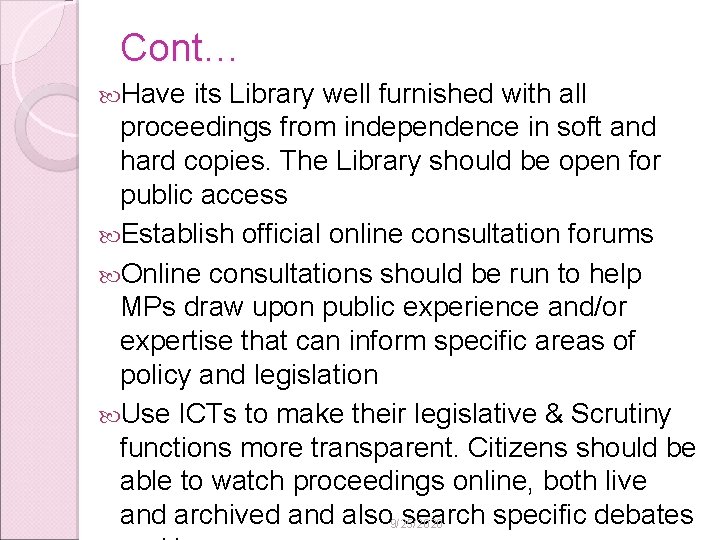
Cont… Have its Library well furnished with all proceedings from independence in soft and hard copies. The Library should be open for public access Establish official online consultation forums Online consultations should be run to help MPs draw upon public experience and/or expertise that can inform specific areas of policy and legislation Use ICTs to make their legislative & Scrutiny functions more transparent. Citizens should be able to watch proceedings online, both live and archived and also 9/25/2020 search specific debates
CONCLUSION q 21 st Century is an Information Era q Transparent and accessible information systems - a basis for sustainable development that is bottom-up. q As it is, citizens continue to struggle with key barriers such as: -General lack of resources - Inadequate capacities - Culture of secrecy within public bodies - Distrust of civil society organizations and media - politics of patronage. 9/25/2020
Conclusion: Q&A 9/25/2020
- Slides: 31