
Right Prisms Geometry Mr Bower Power net Example

Right Prisms Geometry Mr. Bower. Power. net
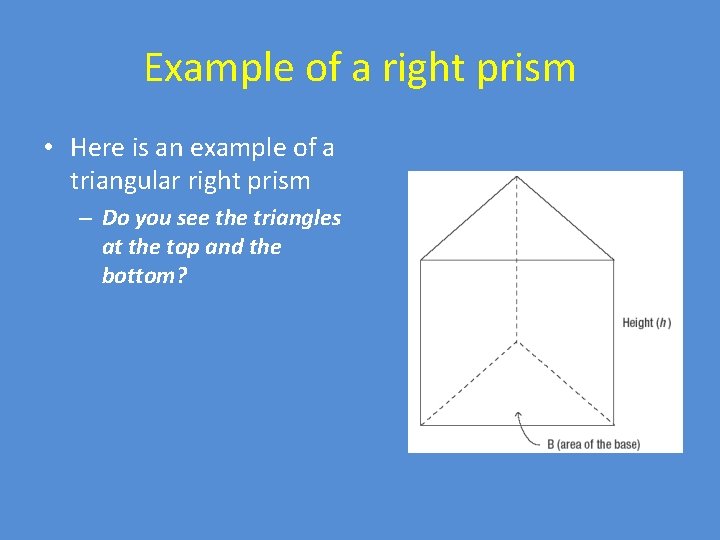
Example of a right prism • Here is an example of a triangular right prism – Do you see the triangles at the top and the bottom?
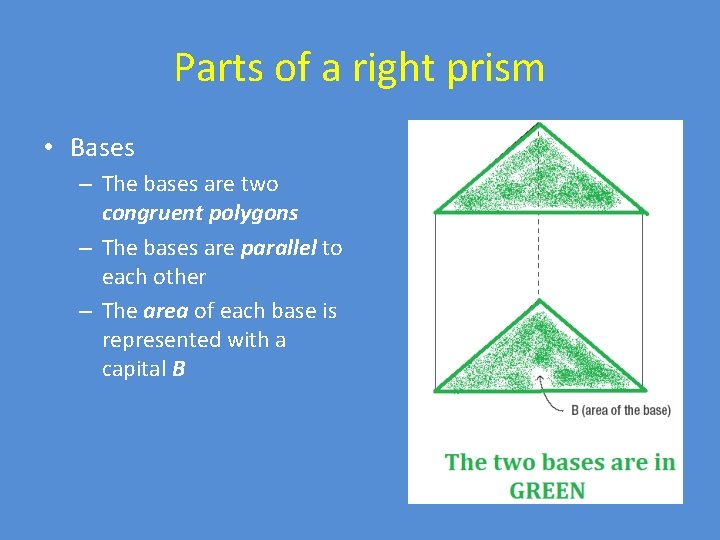
Parts of a right prism • Bases – The bases are two congruent polygons – The bases are parallel to each other – The area of each base is represented with a capital B
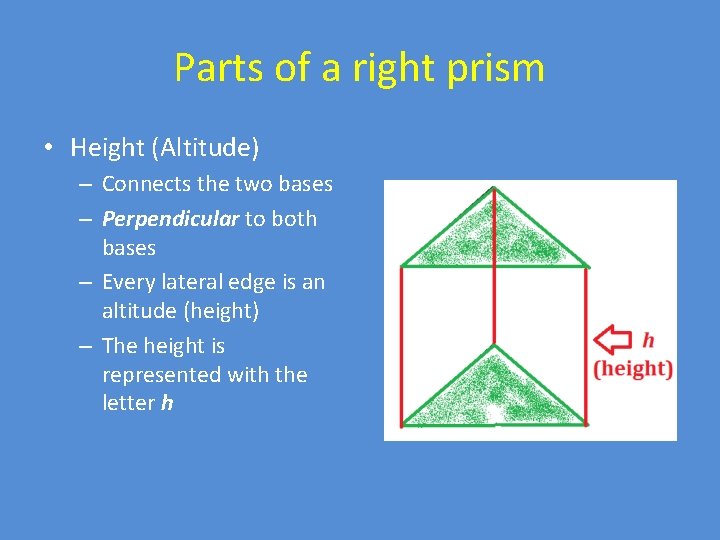
Parts of a right prism • Height (Altitude) – Connects the two bases – Perpendicular to both bases – Every lateral edge is an altitude (height) – The height is represented with the letter h

Parts of a right prism • Lateral Faces – The lateral faces are rectangles – Will be the “walls” if the prism is stood on one of its bases

Parts of a right prism • Lateral Faces – The lateral faces are rectangles – Will be the “walls” if the prism is stood on one of its bases
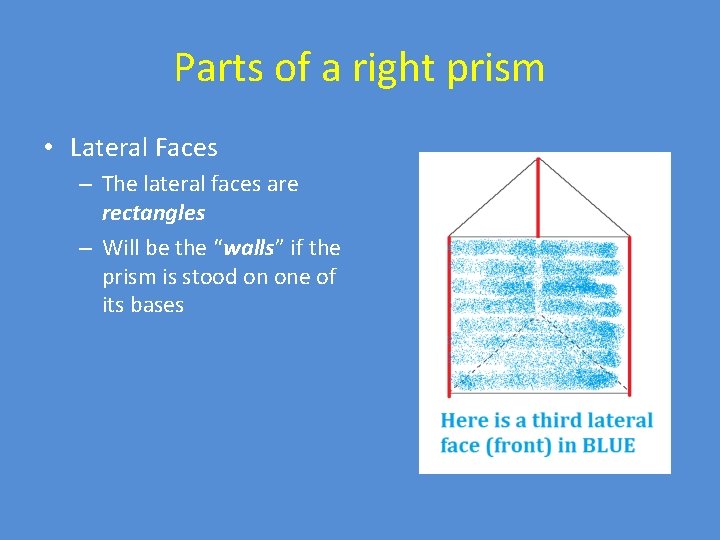
Parts of a right prism • Lateral Faces – The lateral faces are rectangles – Will be the “walls” if the prism is stood on one of its bases
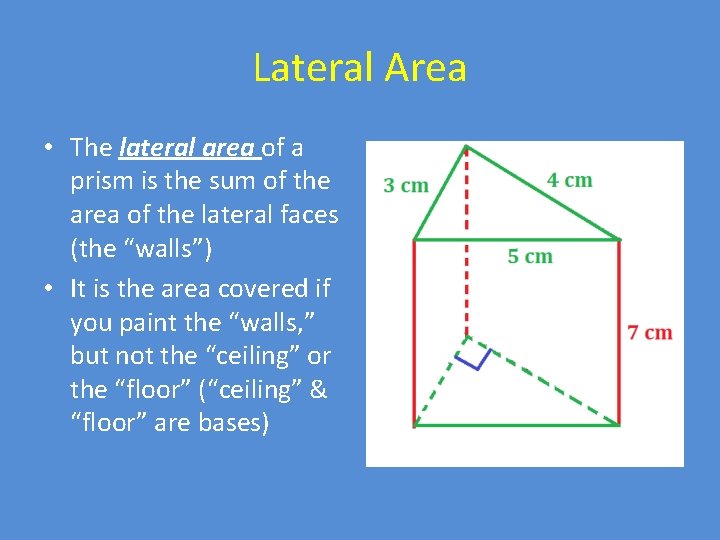
Lateral Area • The lateral area of a prism is the sum of the area of the lateral faces (the “walls”) • It is the area covered if you paint the “walls, ” but not the “ceiling” or the “floor” (“ceiling” & “floor” are bases)
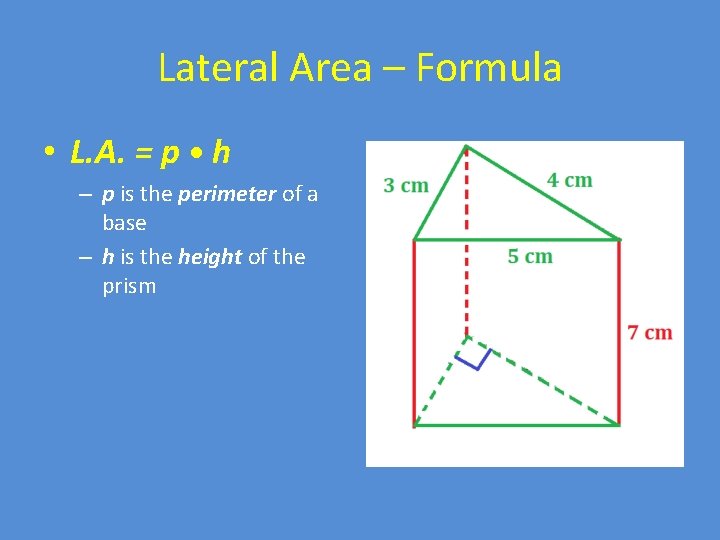
Lateral Area – Formula • L. A. = p • h – p is the perimeter of a base – h is the height of the prism
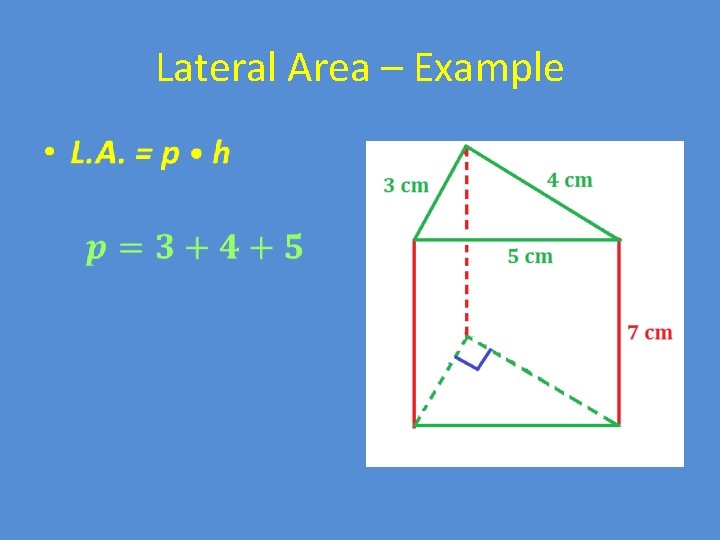
Lateral Area – Example •
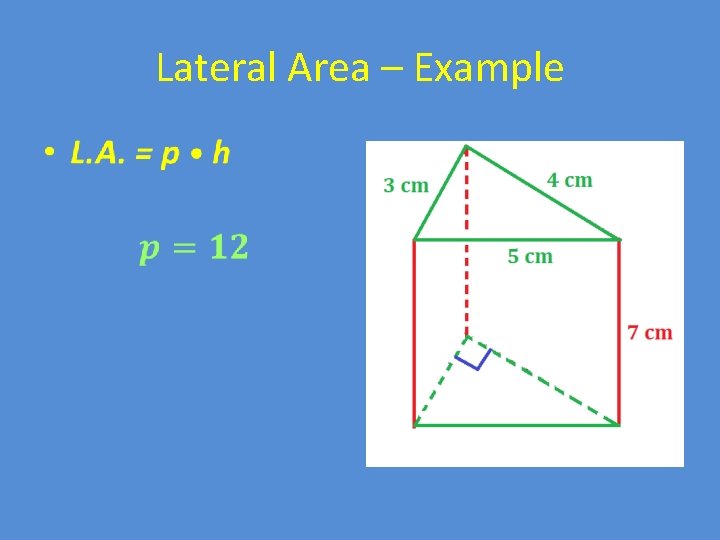
Lateral Area – Example •
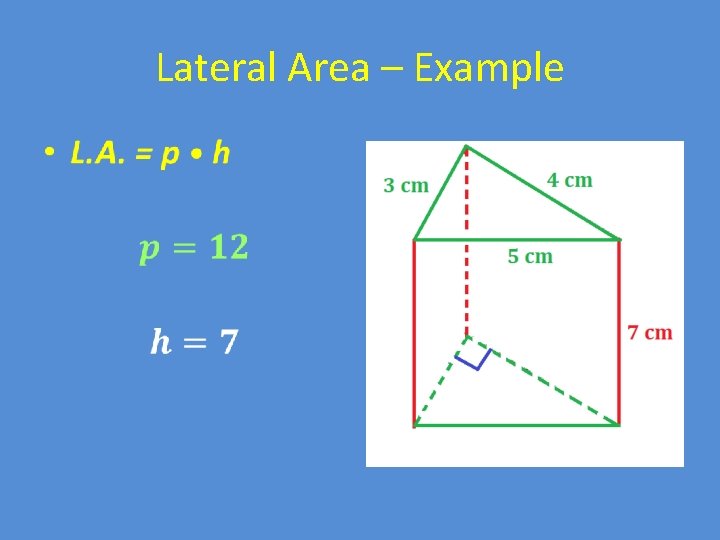
Lateral Area – Example •

Lateral Area – Example • L. A. = p • h L. A. = 12 • 7
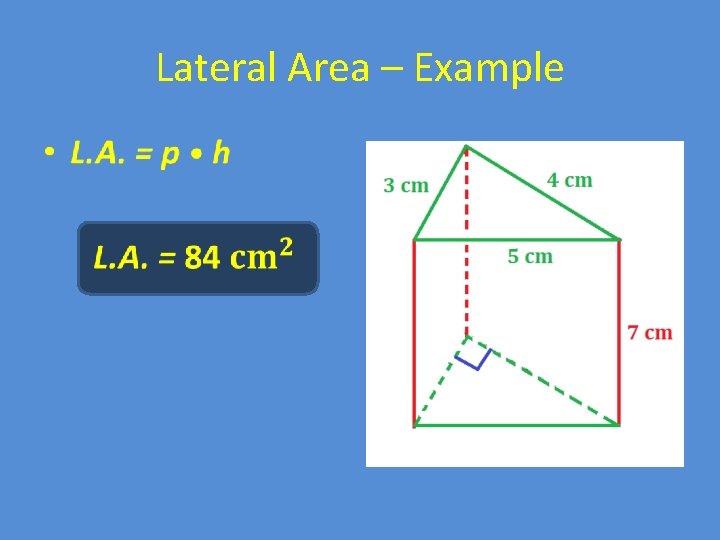
Lateral Area – Example •
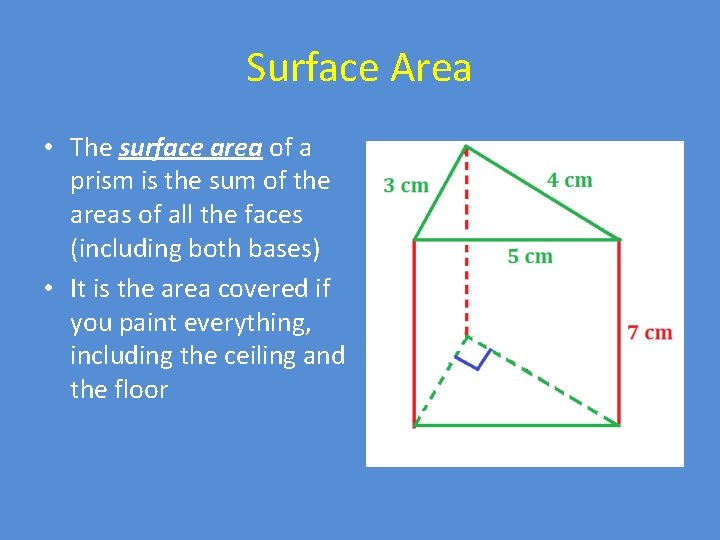
Surface Area • The surface area of a prism is the sum of the areas of all the faces (including both bases) • It is the area covered if you paint everything, including the ceiling and the floor
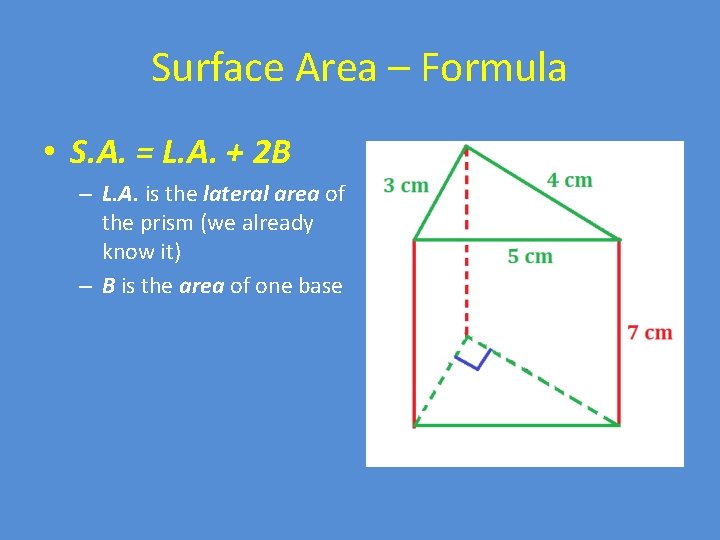
Surface Area – Formula • S. A. = L. A. + 2 B – L. A. is the lateral area of the prism (we already know it) – B is the area of one base
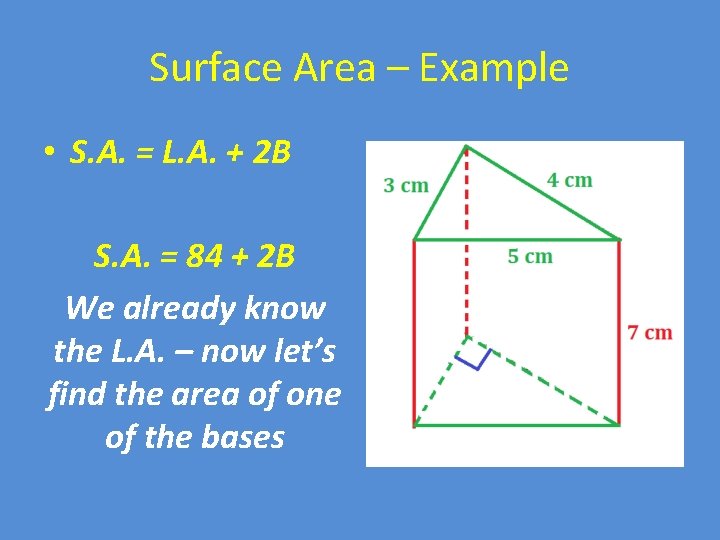
Surface Area – Example • S. A. = L. A. + 2 B S. A. = 84 + 2 B We already know the L. A. – now let’s find the area of one of the bases
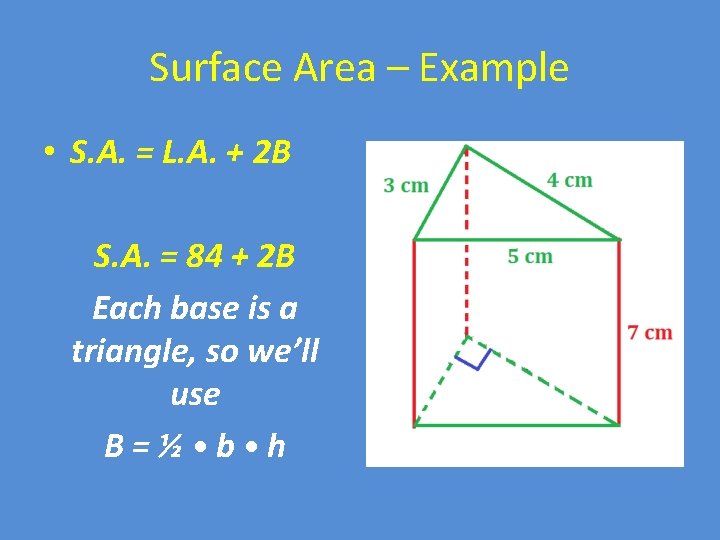
Surface Area – Example • S. A. = L. A. + 2 B S. A. = 84 + 2 B Each base is a triangle, so we’ll use B=½ • b • h
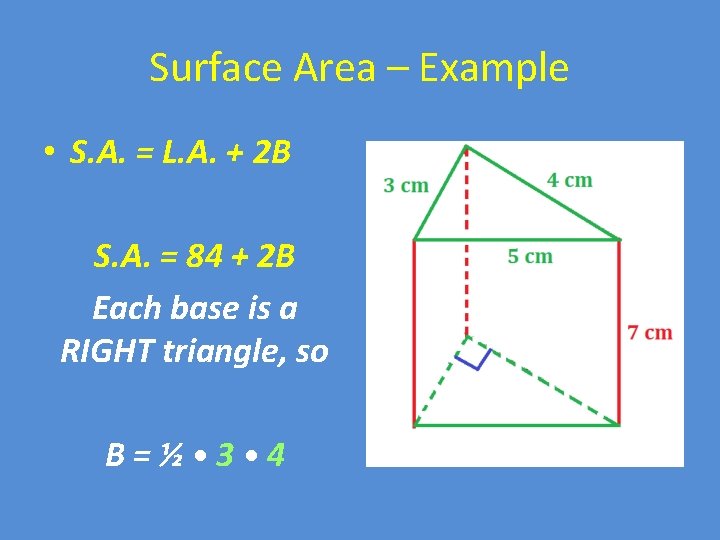
Surface Area – Example • S. A. = L. A. + 2 B S. A. = 84 + 2 B Each base is a RIGHT triangle, so B=½ • 3 • 4
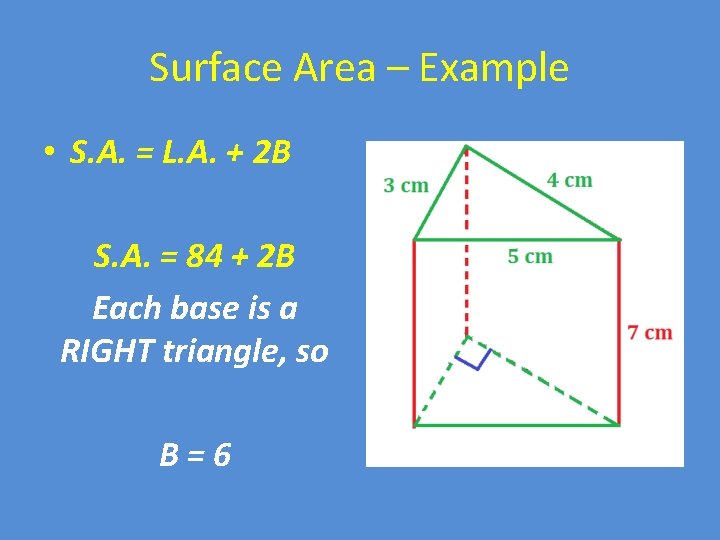
Surface Area – Example • S. A. = L. A. + 2 B S. A. = 84 + 2 B Each base is a RIGHT triangle, so B=6
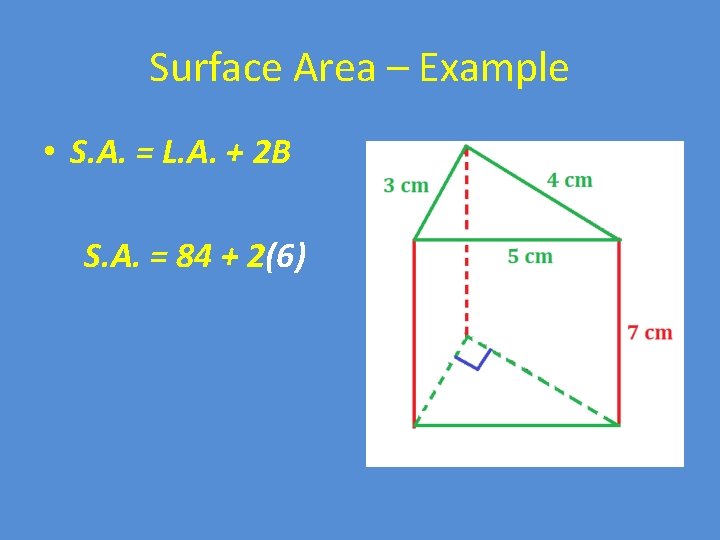
Surface Area – Example • S. A. = L. A. + 2 B S. A. = 84 + 2(6)
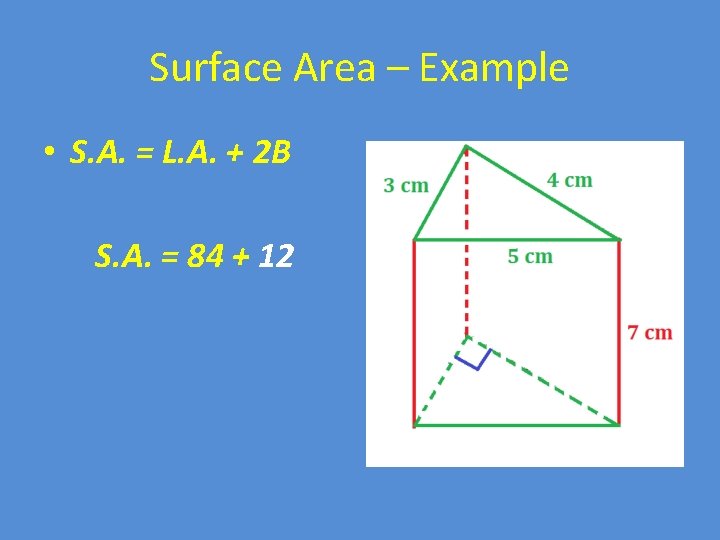
Surface Area – Example • S. A. = L. A. + 2 B S. A. = 84 + 12
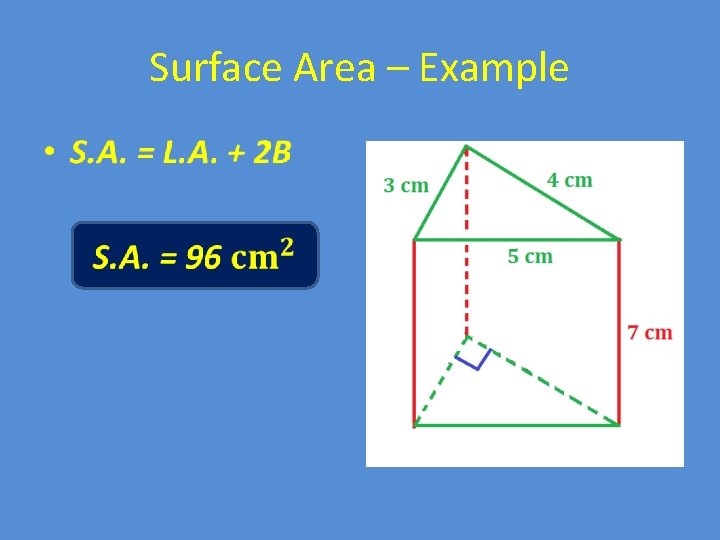
Surface Area – Example •
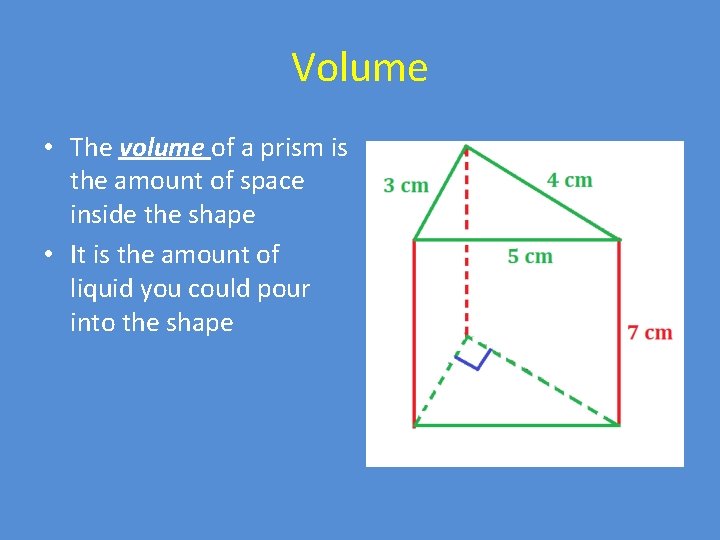
Volume • The volume of a prism is the amount of space inside the shape • It is the amount of liquid you could pour into the shape
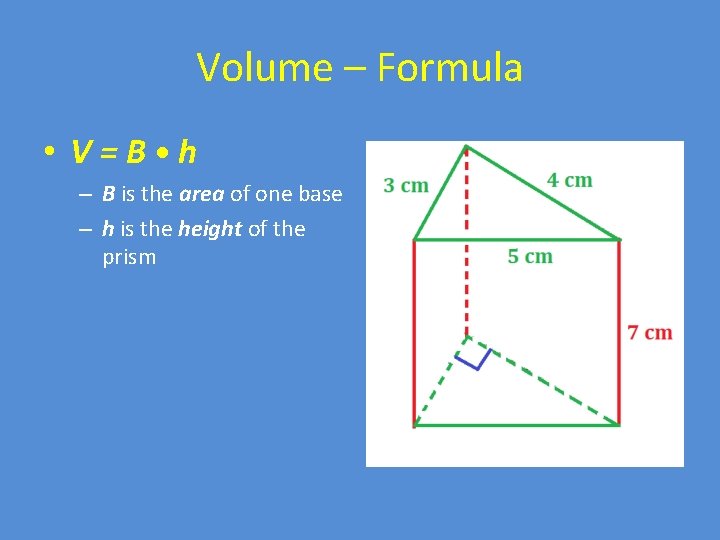
Volume – Formula • V=B • h – B is the area of one base – h is the height of the prism
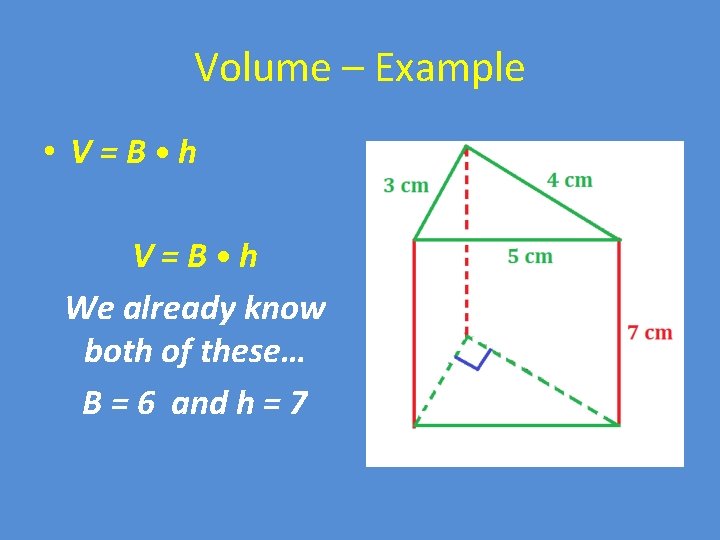
Volume – Example • V=B • h We already know both of these… B = 6 and h = 7
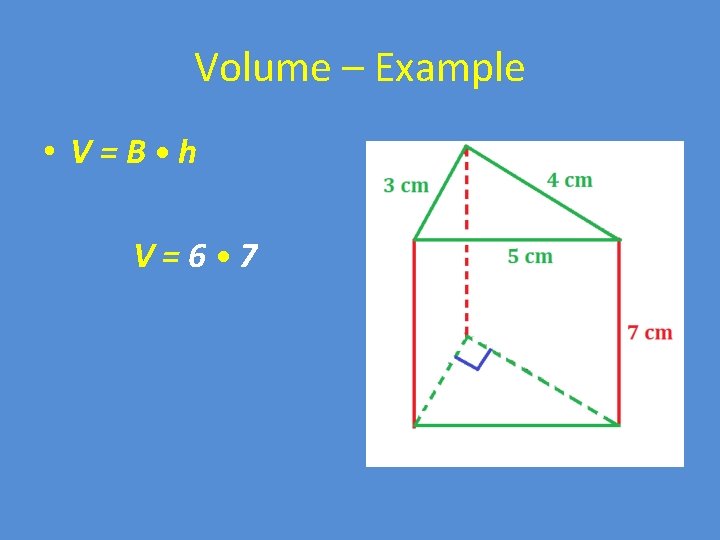
Volume – Example • V=B • h V=6 • 7
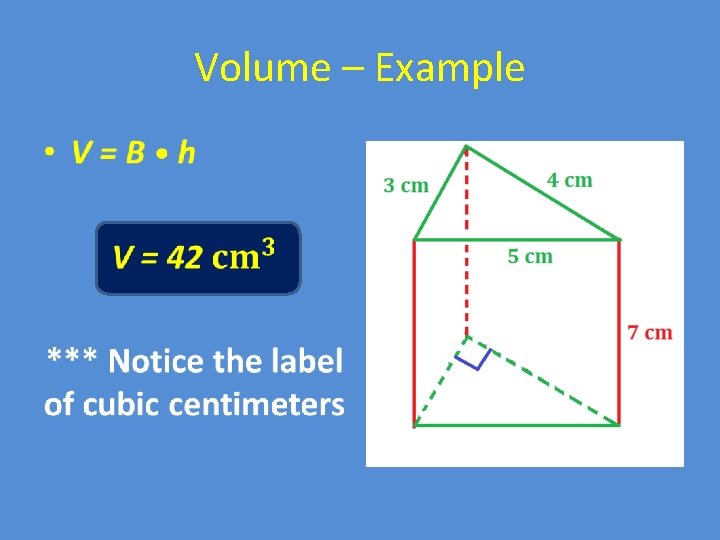
Volume – Example •
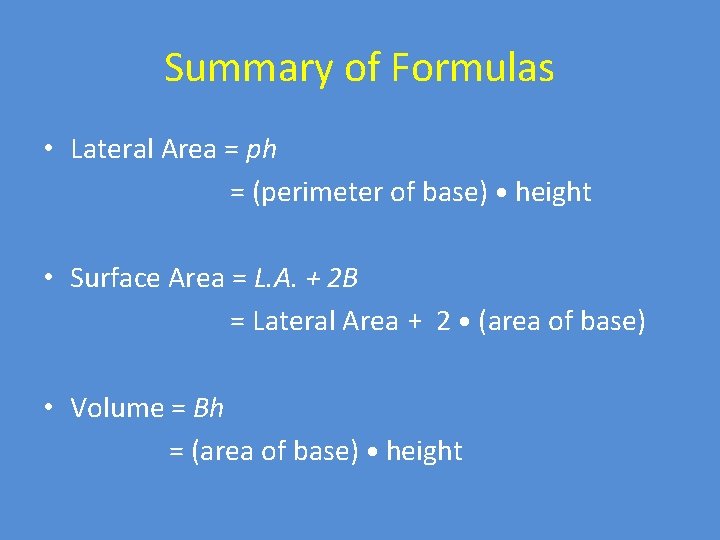
Summary of Formulas • Lateral Area = ph = (perimeter of base) • height • Surface Area = L. A. + 2 B = Lateral Area + 2 • (area of base) • Volume = Bh = (area of base) • height

Bower. Power. net
- Slides: 30