
RIFT VALLEY FEVER 1 Introduction is an acute
- Slides: 30
RIFT VALLEY FEVER 1
Introduction is an acute viral disease, insectborne, of domestic ruminant and RVF humans Characterized clinically by fever and death in lambs and calves. Abortion in pregnant females Necrotic hepatitis 3
Etiology Phlebovirus Bunyaviridae RNA 4
Ø The virus belongs to the Bunyavirus family Ø This is a family of enveloped negative single stranded RNA viruses Ø All Bunyaviruses have an outer lipid envelope with two glycoproteins—G(N) and G(C)—required for cell entry Ø They deliver their genome into the host-cell cytoplasm by fusing their envelope with an endosomal membrane Ø The virus' G(C) protein has a class II membrane fusion protein architecture similar to that found in flaviviruses and alphaviruses. This structural similarity suggests that there may be a common origin for these viral families 5
Susceptible animals Lambs and kids Sheep, cattle and buffaloes Humans Camels ? ? ? ? 6
Ø Sources of infections transmission: Ø Insect born Ø and mode of Mechanical and biological trans Ø Aerosols Ø To and skin abrasions …minor way human: via insects or blood 7
Factors influencing susceptibility Young age Seasonal 8
E. VALUE High mortalities Zoonotic troubles 9
ØRift Valley fever (RVF) is a viral zoonosis that primarily affects animals but also has the capacity to infect humans. Infection cause severe disease in both animals and humans. The disease also results in significant economic losses due to death and abortion among RVF-infected livestock. 10
ØRVF virus is a member of the Phlebovirus genus, one of the five genera in the family Bunyaviridae. The virus was first identified in 1931 during an investigation into an epidemic among sheep on a farm in the Rift Valley of Kenya. 11
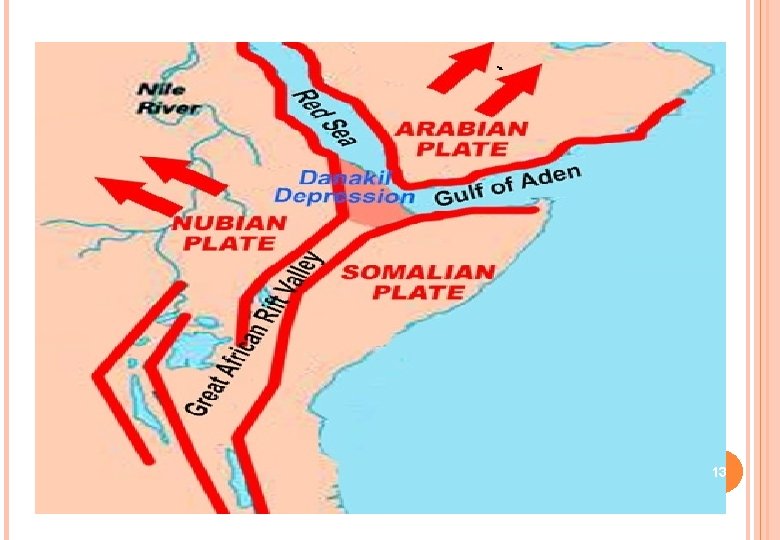
ØSince then, outbreaks have been reported in sub-Saharan and North Africa. In 1997 -98, a major outbreak occurred in Kenya, Somalia and Tanzania and in September 2000, RVF cases were confirmed in Saudi Arabia and Yemen, marking the first reported occurrence of the disease outside the African continent and raising concerns that it could extend to other parts of 12
13
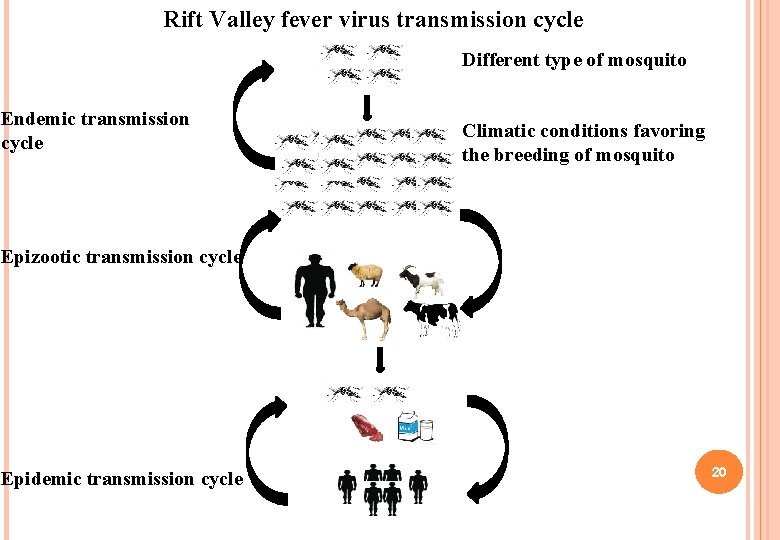
§ RVFV belongs to the genus Phlebovirus of the family Bunyaviridae § It is transmitted in an enzootic cycle among wildlife and mosquitoes. Wild and domestic animals are infected and serve as amplification hosts to create more infected mosquitoes. 14
RVFV may be transmitted to other mosquito species which serve as bridging vectors to other wild and domestic animals and to humans which may cause further amplification of the transmission cycle 15
RVFV is one of the most aggressive migrating arbovirus. During the late 1980 s a new extension of the geographic range of RVFV into western Africa was detected. 16
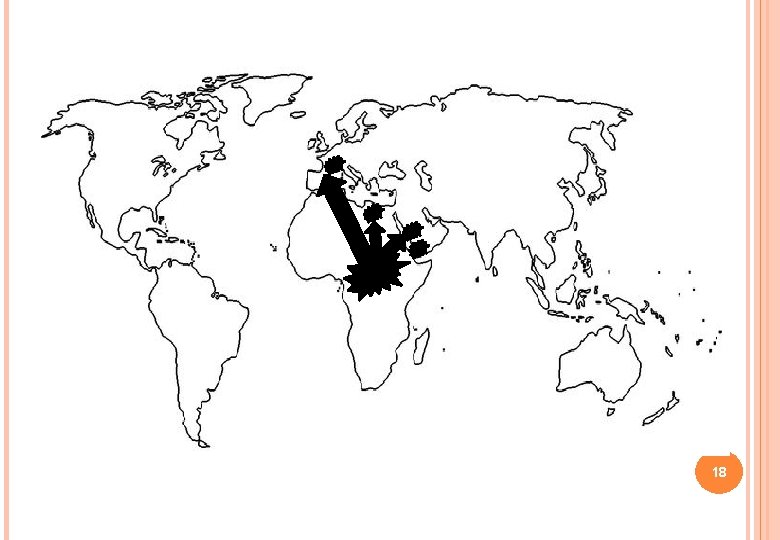
In 2000, RVFV caused an epizootic and epidemic in Saudi- Arabia and Yemen, the first time that RVF was detected outside of Africa. In 2010, one case of RVF was diagnosed retrospectively in Germany in an ill woman, who had returned from Africa 17
18
q The routes of dispersal detected so far seem to be in parallel with the great migration routes of camels. q Viremic, but non-symptomatic infected camels transported the virus to Egypt and possibly also to the Arabian Peninsula. q Humans may serve as amplifying hosts, the introduction of RVFV by viremic humans seems possible. q Few data exist on the vector competence of European mosquito species for RVFV. Initial results on the dissemination rates in some infected mosquito 19 species tested; suggest that most of these may serve as vectors
Rift Valley fever virus transmission cycle Different type of mosquito Endemic transmission cycle Climatic conditions favoring the breeding of mosquito Epizootic transmission cycle Epidemic transmission cycle 20
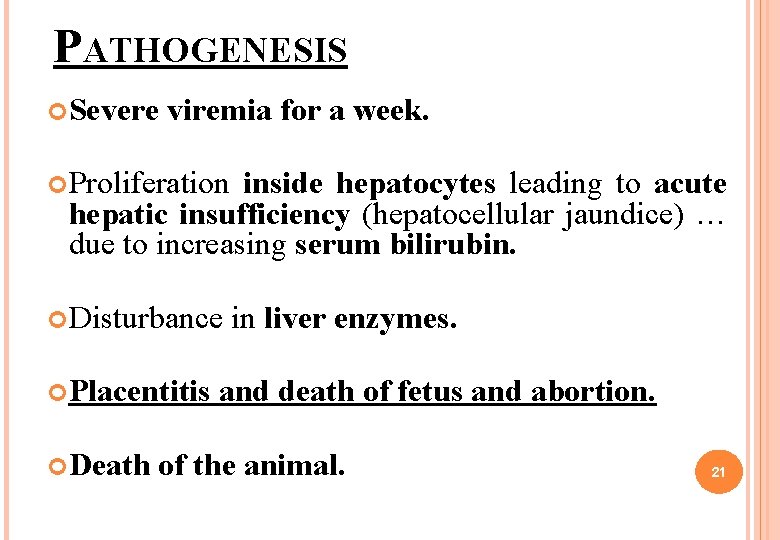
PATHOGENESIS Severe viremia for a week. Proliferation inside hepatocytes leading to acute hepatic insufficiency (hepatocellular jaundice) … due to increasing serum bilirubin. Disturbance Placentitis Death in liver enzymes. and death of fetus and abortion. of the animal. 21
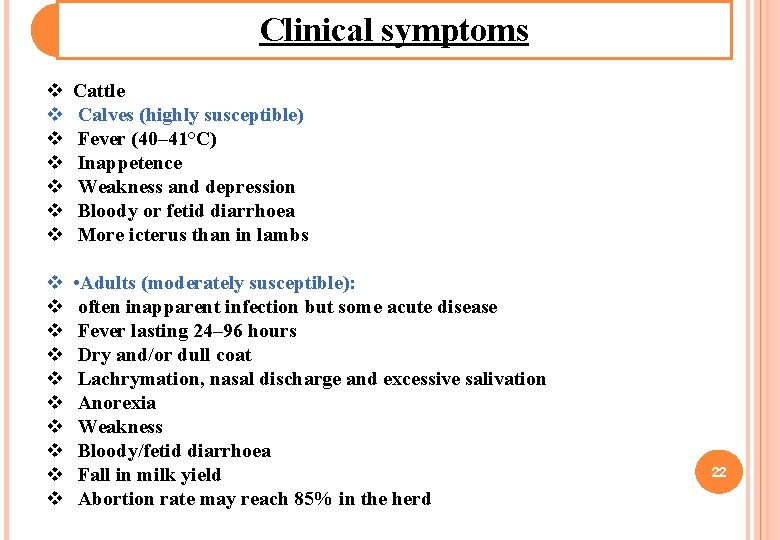
Clinical symptoms v v v v Cattle Calves (highly susceptible) Fever (40– 41°C) Inappetence Weakness and depression Bloody or fetid diarrhoea More icterus than in lambs v v v v v • Adults (moderately susceptible): often inapparent infection but some acute disease Fever lasting 24– 96 hours Dry and/or dull coat Lachrymation, nasal discharge and excessive salivation Anorexia Weakness Bloody/fetid diarrhoea Fall in milk yield Abortion rate may reach 85% in the herd 22
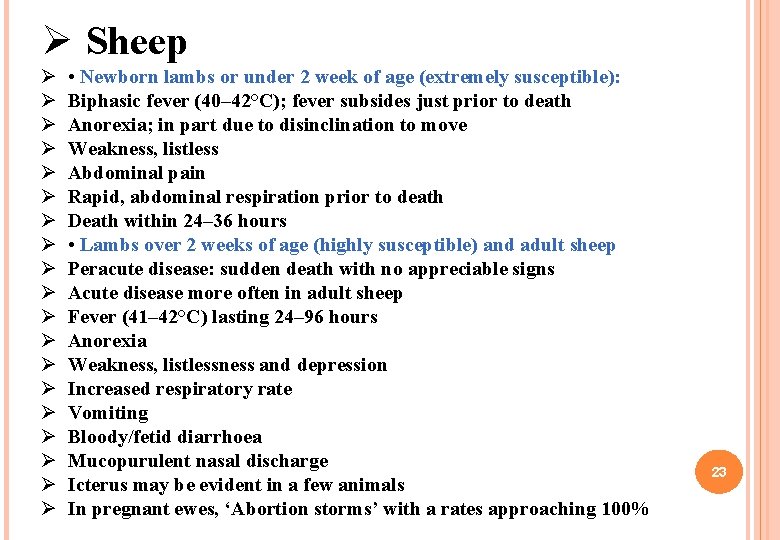
Ø Sheep Ø Ø Ø Ø Ø • Newborn lambs or under 2 week of age (extremely susceptible): Biphasic fever (40– 42°C); fever subsides just prior to death Anorexia; in part due to disinclination to move Weakness, listless Abdominal pain Rapid, abdominal respiration prior to death Death within 24– 36 hours • Lambs over 2 weeks of age (highly susceptible) and adult sheep Peracute disease: sudden death with no appreciable signs Acute disease more often in adult sheep Fever (41– 42°C) lasting 24– 96 hours Anorexia Weakness, listlessness and depression Increased respiratory rate Vomiting Bloody/fetid diarrhoea Mucopurulent nasal discharge Icterus may be evident in a few animals In pregnant ewes, ‘Abortion storms’ with a rates approaching 100% 23
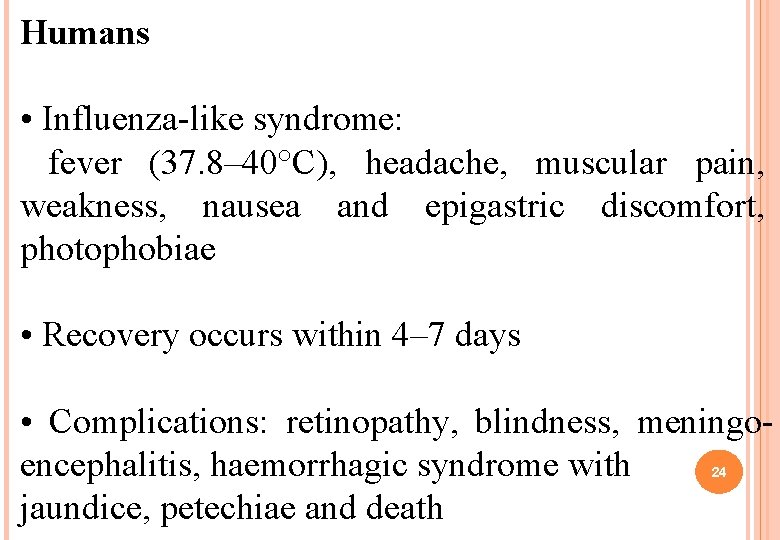
Humans • Influenza-like syndrome: fever (37. 8– 40°C), headache, muscular pain, weakness, nausea and epigastric discomfort, photophobiae • Recovery occurs within 4– 7 days • Complications: retinopathy, blindness, meningoencephalitis, haemorrhagic syndrome with jaundice, petechiae and death 24
Diagnosis Case history Clinical Viral signs isolation and identification PM 25
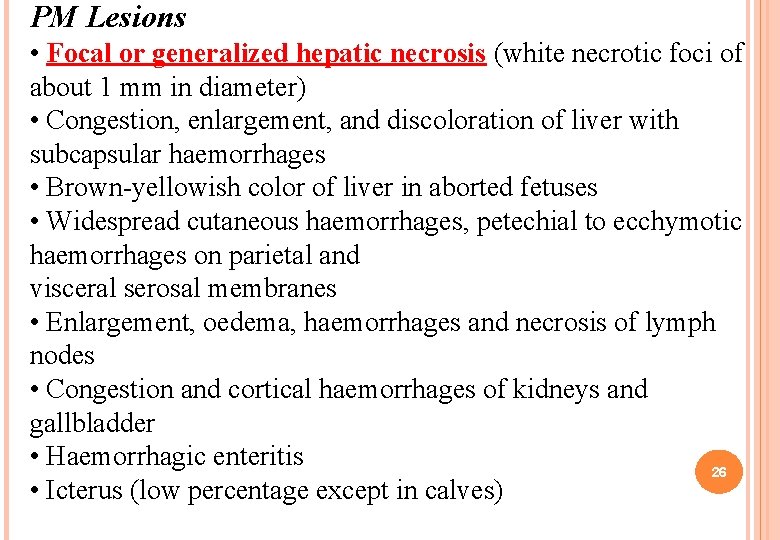
PM Lesions • Focal or generalized hepatic necrosis (white necrotic foci of about 1 mm in diameter) • Congestion, enlargement, and discoloration of liver with subcapsular haemorrhages • Brown-yellowish color of liver in aborted fetuses • Widespread cutaneous haemorrhages, petechial to ecchymotic haemorrhages on parietal and visceral serosal membranes • Enlargement, oedema, haemorrhages and necrosis of lymph nodes • Congestion and cortical haemorrhages of kidneys and gallbladder • Haemorrhagic enteritis 26 • Icterus (low percentage except in calves)
Treatment There is no specific treatment. Broad spectrum antibiotics Anti-inflammatory Supportive treatment 27
Prevention and control Solid immunity after recovery lasts for 3 years. Live attenuated vaccine 28
Servac Rift valley fever gel inactivated vaccine Type of vaccine: servac gel inactivated vaccine (ZH 501) i. Host: sheep, goat and cattle Packing unit: bottle 100 ml or 50 ml or 25 ml. Dosage: sheep, goat: 1 ml S/C or I/M. Cattle: 2 ml S/C or I/M. first dose: at 3 -4 month parallel to decline of maternal immunity. Second dose: after 2 -3 weeks from first dose. Revaccination every 6 month. The pregnant animals vaccinated by two doses within 2 weeks interval month before parturation. Method of use: S/C Storage: at 4 -8 ºC (no freezing). Adverse effect: no effects. Recommendations: shaking well directly before vaccination and vaccine injected slowly. Never exposure to direct sunlight or heat. Vaccination taken to healthy animal only. Unused dissolved vaccine , empty vials, needles must be disposed hygienically. No vaccination taken before slaughtering by 21 day. Animals from unvaccinated animals should be vaccinated at 3 -4 weeks age. 29
Servac Rift valley fever oil inactivated vaccine Type of vaccine: servac oil inactivated vaccine (ZH 501) i. Host: sheep, goat and cattle Packing unit: bottle 100 ml or 50 ml or 25 ml. Dosage: sheep, goat: 1 ml S/C or I/M. Cattle: 2 ml S/C or I/M. first dose: at 3 -4 month parallel to decline of maternal immunity. Second dose: after 2 -3 weeks from first dose. Revaccination every year. The pregnant animals vaccinated by two doses within 2 weeks interval month before parturation. Method of use: S/C Storage: at 4 -8 ºC (no freezing). Adverse effect: no effects. Recommendations: shaking well directly before vaccination and vaccine injected slowly. Never exposure to direct sunlight or heat. Vaccination taken to healthy animal only. Unused dissolved vaccine , empty vials, needles must be disposed hygienically. No vaccination taken before slaughtering by 21 day. Animals from unvaccinated animals should be vaccinated at 3 -4 weeks age 30