
Riding the Hub The MMT Adaptive Secondary Douglas
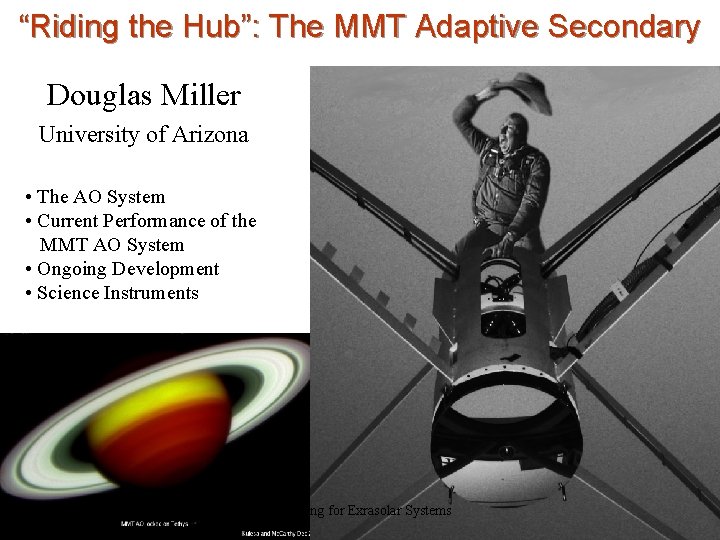
“Riding the Hub”: The MMT Adaptive Secondary Douglas Miller University of Arizona • The AO System • Current Performance of the MMT AO System • Ongoing Development • Science Instruments Searching for Exrasolar Systems
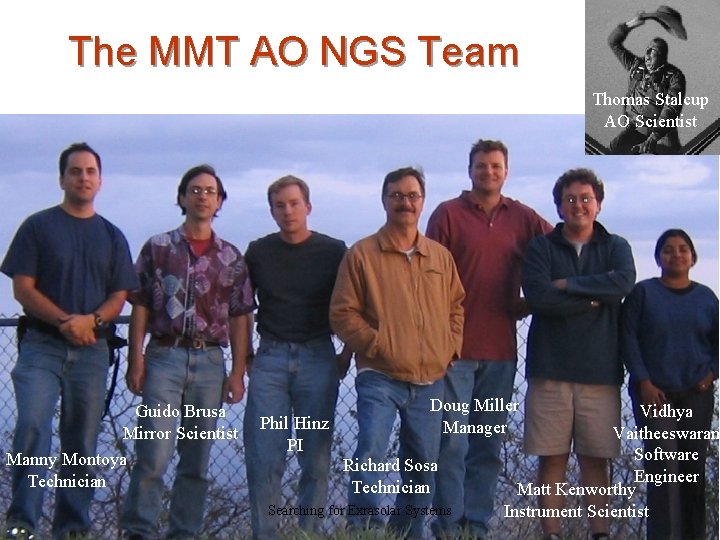
The MMT AO NGS Team Thomas Stalcup AO Scientist Guido Brusa Mirror Scientist Manny Montoya Technician Phil Hinz PI Doug Miller Manager Richard Sosa Technician Searching for Exrasolar Systems Vidhya Vaitheeswaran Software Engineer Matt Kenworthy Instrument Scientist
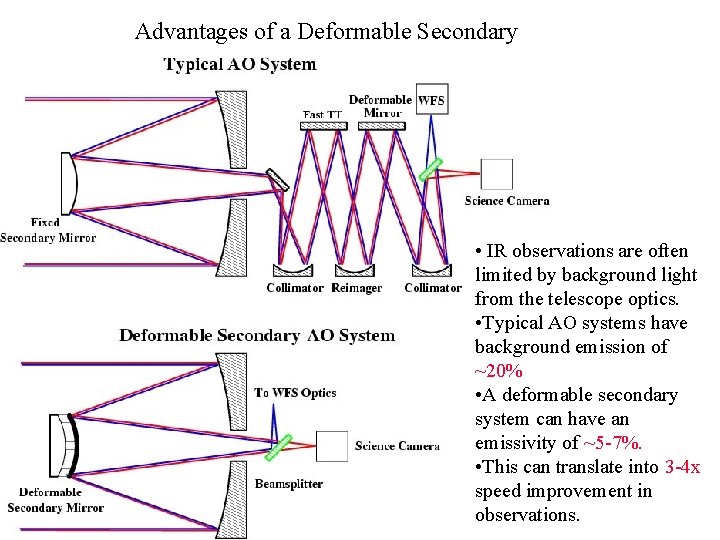
Advantages of a Deformable Secondary • IR observations are often limited by background light from the telescope optics. • Typical AO systems have background emission of ~20% • A deformable secondary system can have an emissivity of ~5 -7%. • This can translate into 3 -4 x speed improvement in observations.
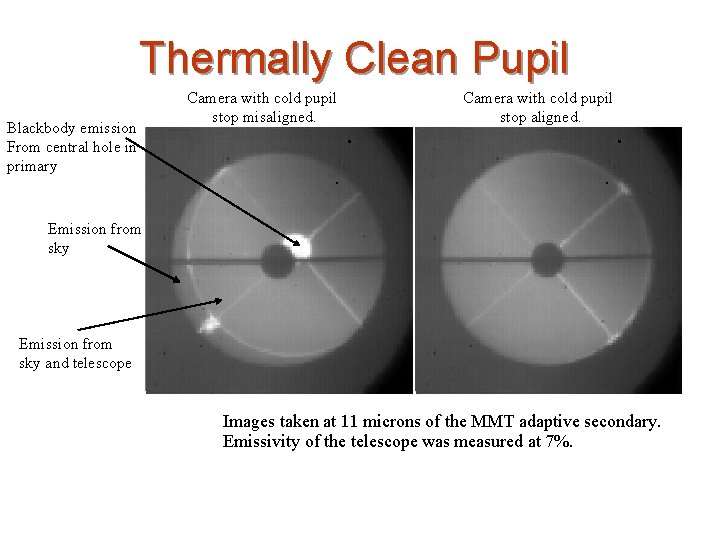
Thermally Clean Pupil Blackbody emission From central hole in primary Camera with cold pupil stop misaligned. Camera with cold pupil stop aligned. Emission from sky and telescope Images taken at 11 microns of the MMT adaptive secondary. Emissivity of the telescope was measured at 7%.
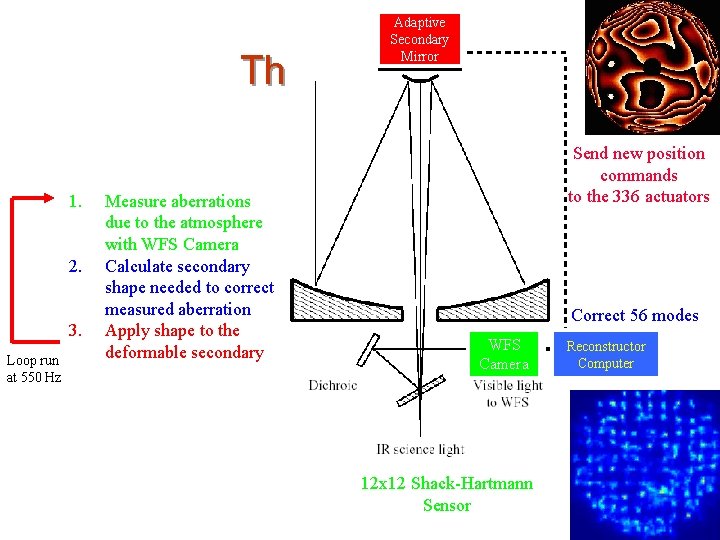
Adaptive Secondary Mirror The MMT AO System 1. 2. 3. Loop run at 550 Hz Measure aberrations due to the atmosphere with WFS Camera Calculate secondary shape needed to correct measured aberration Apply shape to the deformable secondary Send new position commands to the 336 actuators Correct 56 modes WFS Camera 12 x 12 Shack-Hartmann Sensor Reconstructor Computer
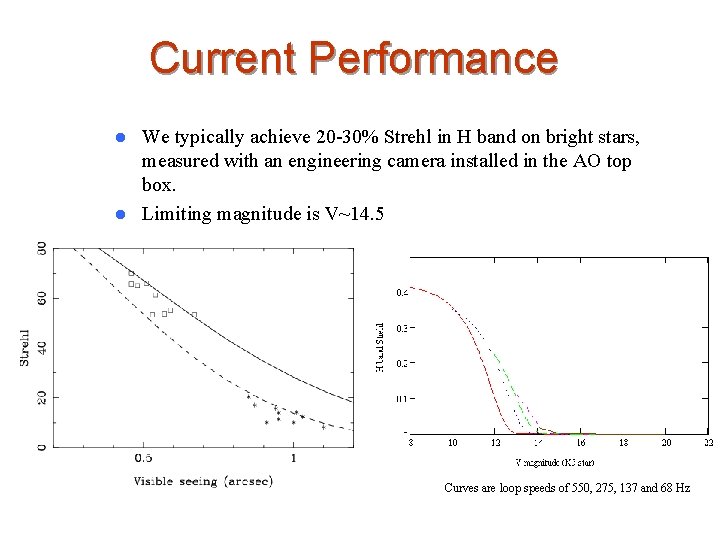
Current Performance We typically achieve 20 -30% Strehl in H band on bright stars, measured with an engineering camera installed in the AO top box. l Limiting magnitude is V~14. 5 l Curves are loop speeds of 550, 275, 137 and 68 Hz
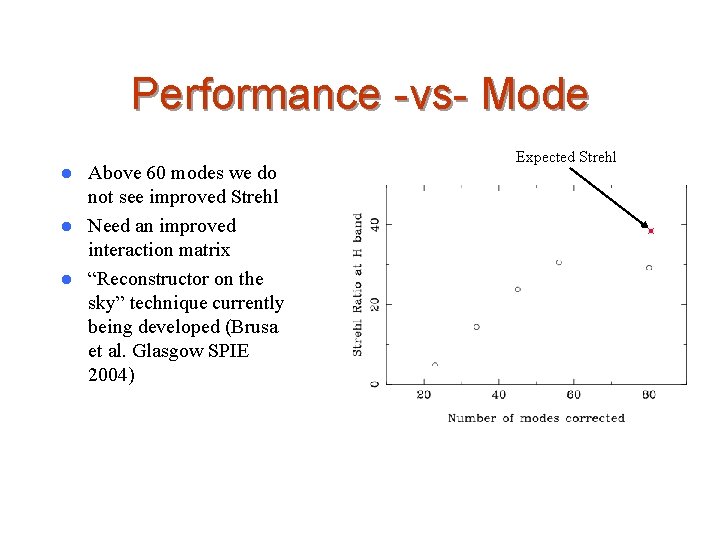
Performance -vs- Mode Above 60 modes we do not see improved Strehl l Need an improved interaction matrix l “Reconstructor on the sky” technique currently being developed (Brusa et al. Glasgow SPIE 2004) l Expected Strehl
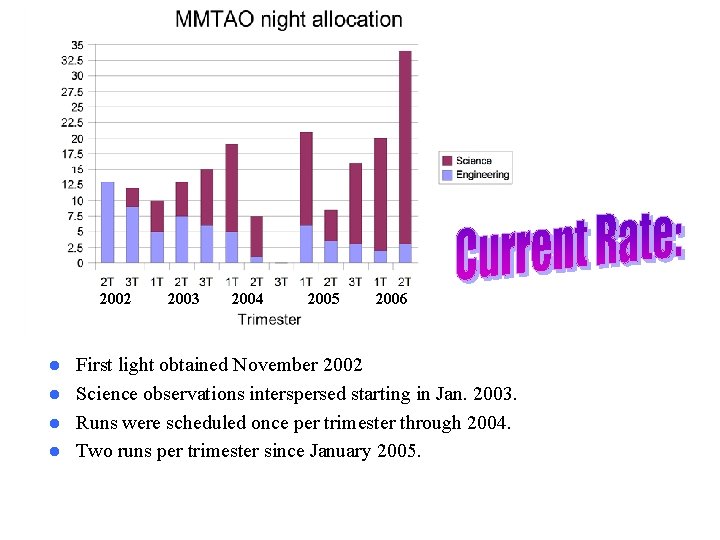
2002 2003 2004 2005 2006 First light obtained November 2002 l Science observations interspersed starting in Jan. 2003. l Runs were scheduled once per trimester through 2004. l Two runs per trimester since January 2005. l
Ongoing Development Transition of AO System to Facility Instrument l Calibration Stand l PC-based Reconstructor Computer l Rayleigh Laser Guide Stars (Stalcup, Baranec and Lloyd. Hart talks later today) l
Facility Instrument l MMT staff will perform normal NGS AO operation ü • • • Installation of DM and NGS topbox Operation of AO system for observers Routine system maintenance Software maintenance Transition complete by early 2007 (hopefully) l AO Team will continue development and improvements l
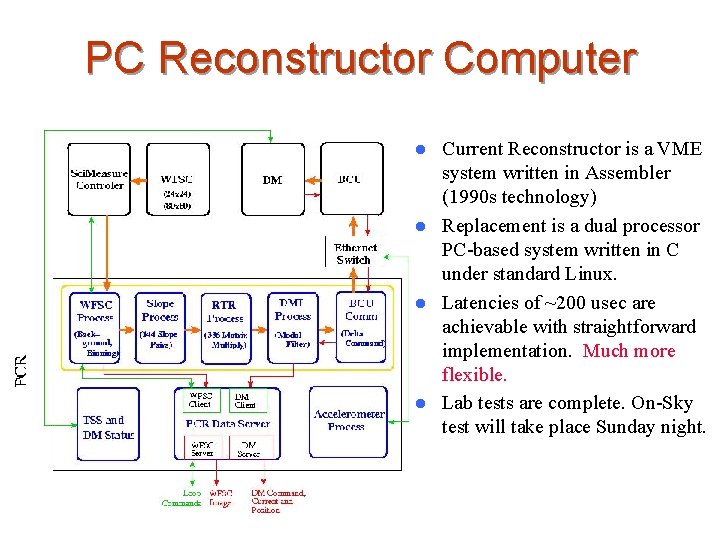
PC Reconstructor Computer Current Reconstructor is a VME system written in Assembler (1990 s technology) l Replacement is a dual processor PC-based system written in C under standard Linux. l Latencies of ~200 usec are achievable with straightforward implementation. Much more flexible. l Lab tests are complete. On-Sky test will take place Sunday night. l
PC Reconstructor Computer Speed up AO loop (~1 k. Hz) l Input accelerometer information into the AO loop to compensate for the 20 Hz vibration l Chop with AO secondary l Test new algorithms l
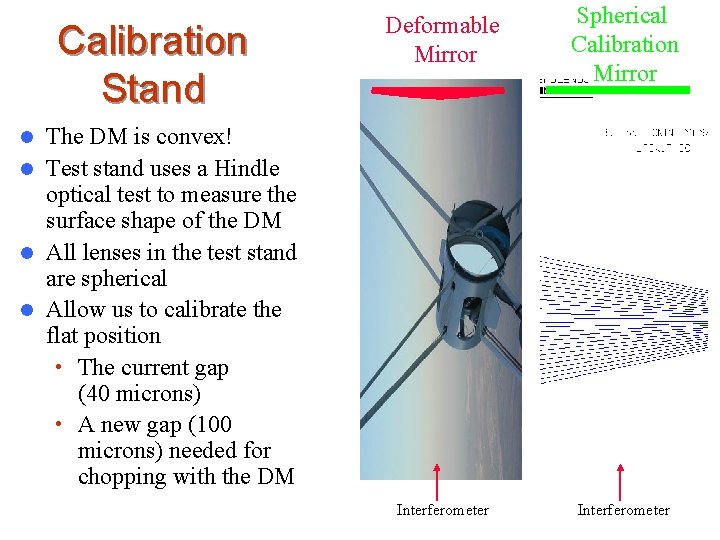
Calibration Stand Deformable Mirror Spherical Calibration Mirror Interferometer The DM is convex! l Test stand uses a Hindle optical test to measure the surface shape of the DM l All lenses in the test stand are spherical l Allow us to calibrate the flat position • The current gap (40 microns) • A new gap (100 microns) needed for chopping with the DM l
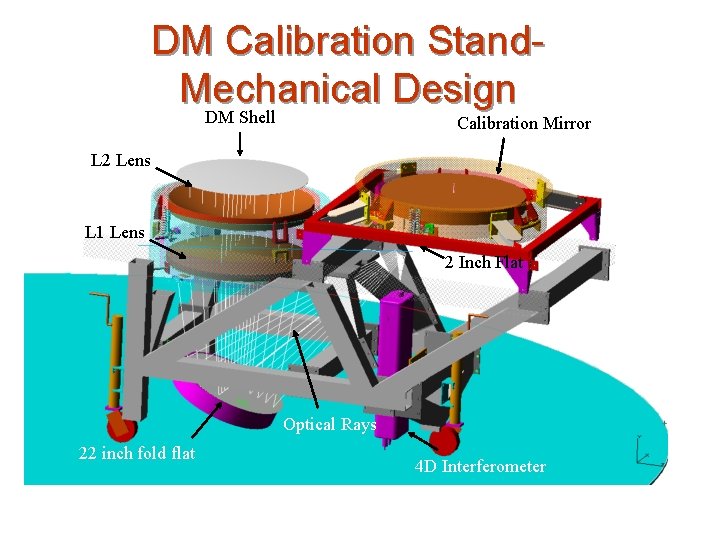
DM Calibration Stand. Mechanical Design DM Shell Calibration Mirror L 2 Lens L 1 Lens 2 Inch Flat Optical Rays 22 inch fold flat 4 D Interferometer

Calibration Stand
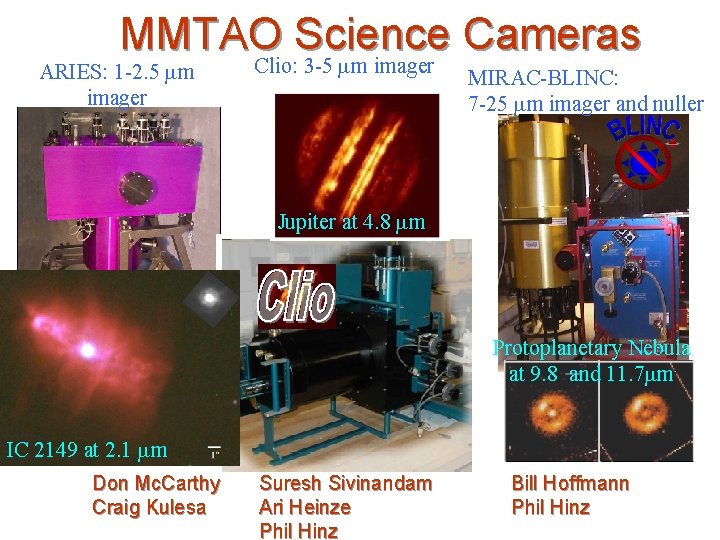
MMTAO Science Cameras Clio: 3 -5 m imager ARIES: 1 -2. 5 m imager MIRAC-BLINC: 7 -25 m imager and nuller Jupiter at 4. 8 m Protoplanetary Nebula at 9. 8 and 11. 7 m IC 2149 at 2. 1 m Don Mc. Carthy Craig Kulesa Suresh Sivinandam Ari Heinze Phil Hinz Bill Hoffmann Phil Hinz
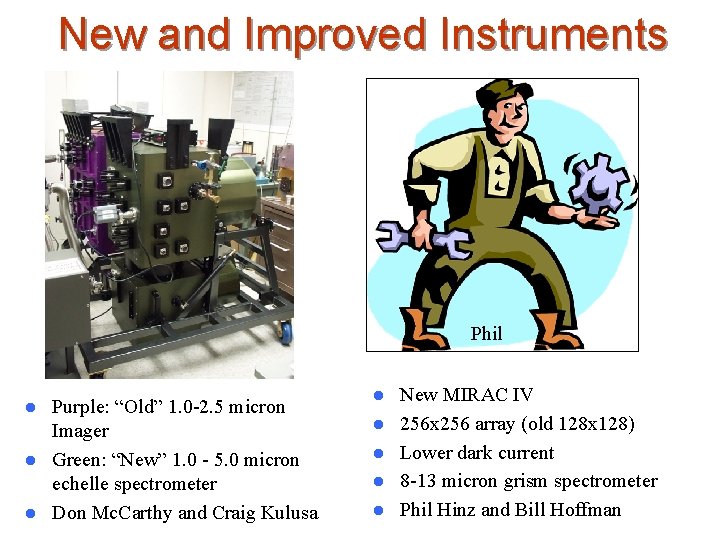
New and Improved Instruments Phil Purple: “Old” 1. 0 -2. 5 micron Imager l Green: “New” 1. 0 - 5. 0 micron echelle spectrometer l Don Mc. Carthy and Craig Kulusa l l l New MIRAC IV 256 x 256 array (old 128 x 128) Lower dark current 8 -13 micron grism spectrometer Phil Hinz and Bill Hoffman
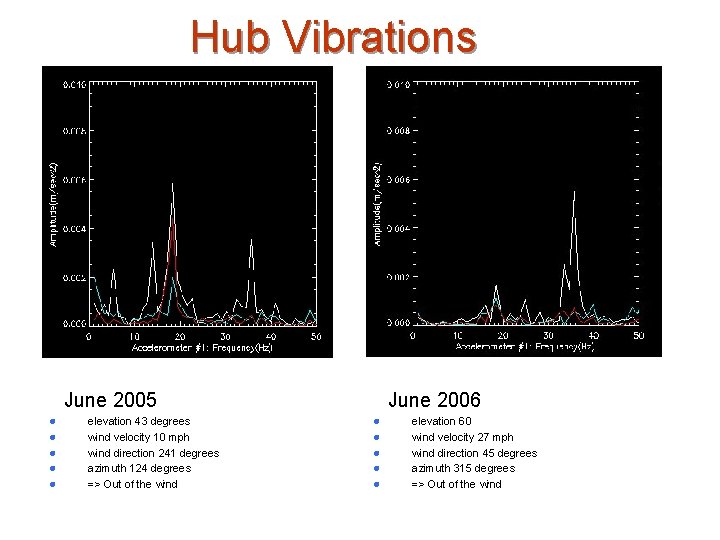
Hub Vibrations June 2005 l l l elevation 43 degrees wind velocity 10 mph wind direction 241 degrees azimuth 124 degrees => Out of the wind June 2006 l l l elevation 60 wind velocity 27 mph wind direction 45 degrees azimuth 315 degrees => Out of the wind
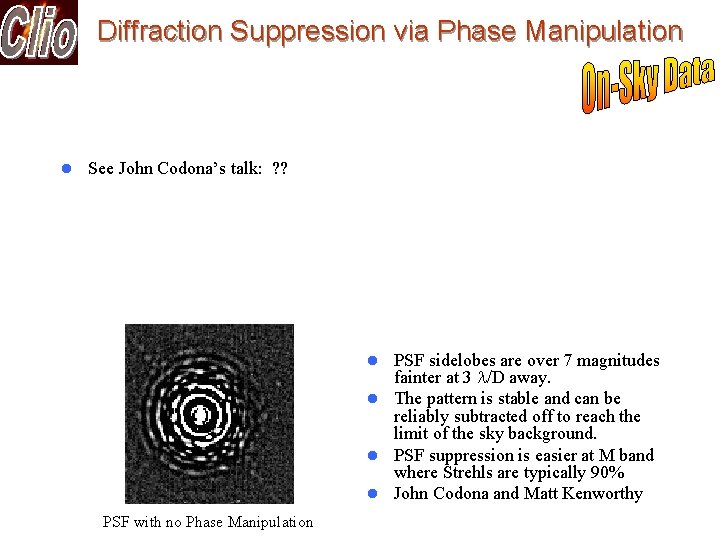
Diffraction Suppression via Phase Manipulation l See John Codona’s talk: ? ? PSF sidelobes are over 7 magnitudes fainter at 3 l/D away. l The pattern is stable and can be reliably subtracted off to reach the limit of the sky background. l PSF suppression is easier at M band where Strehls are typically 90% l John Codona and Matt Kenworthy l PSF with no Phase Manipulation

You too can “Ride the Hub” at http: //www. mmtao. org
- Slides: 20