
Richtlinien fr empirische Arbeiten Proseminar Empirische Musikpsychologie Richard
Richtlinien für empirische Arbeiten Proseminar Empirische Musikpsychologie Richard Parncutt, Uni Graz
Gliederung n Gleich für Referat und Arbeit: ¨ Einleitung ¨ Methode ¨ Ergebnisse ¨ Schlussfolgerungen n Referat: Jeder Teil beginnt mit einer Folie mit Titel und Namen des/der Referent/in
Titel und Abstract n Titel: ¨ möglichst n aufschlussreich in 5 -10 Wörtern Abstract (für schriftliche Arbeit): ¨ möglichst präzise und aufschlussreich ¨ evtl. ein Satz pro Teil der Arbeit
Einleitung n Allgemeine Fragestellung ¨ Was mit dem Titel gemeint ist ¨ Warum interessant/relevant n Literatur ¨ Hauptquelle, andere ¨ Inhalte, Methoden n Quellen Ihr Ansatz ¨ Ihre genaue Fragestellung ¨ ggf. Allgemeines zu Ihrer Methode
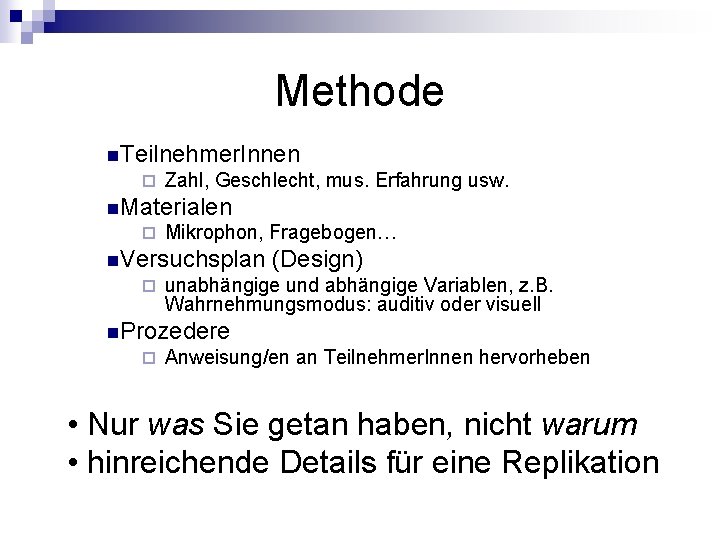
Methode n. Teilnehmer. Innen ¨ Zahl, Geschlecht, mus. Erfahrung usw. n. Materialen ¨ Mikrophon, Fragebogen… n. Versuchsplan ¨ (Design) unabhängige und abhängige Variablen, z. B. Wahrnehmungsmodus: auditiv oder visuell n. Prozedere ¨ Anweisung/en an Teilnehmer. Innen hervorheben • Nur was Sie getan haben, nicht warum • hinreichende Details für eine Replikation
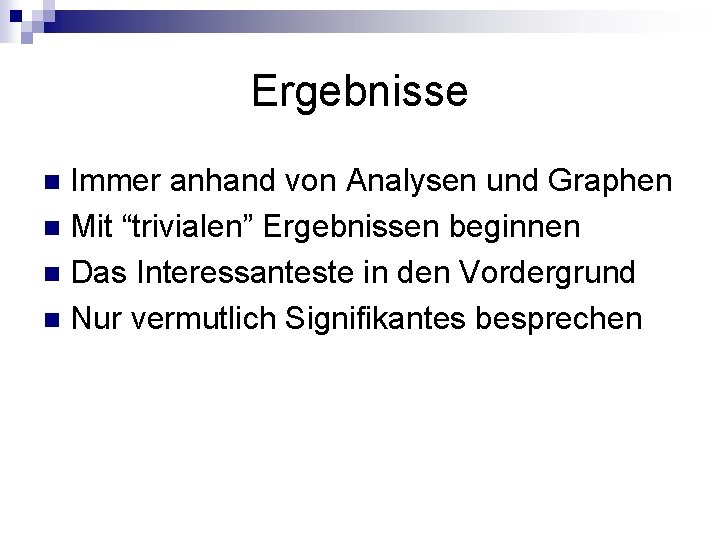
Ergebnisse Immer anhand von Analysen und Graphen n Mit “trivialen” Ergebnissen beginnen n Das Interessanteste in den Vordergrund n Nur vermutlich Signifikantes besprechen n
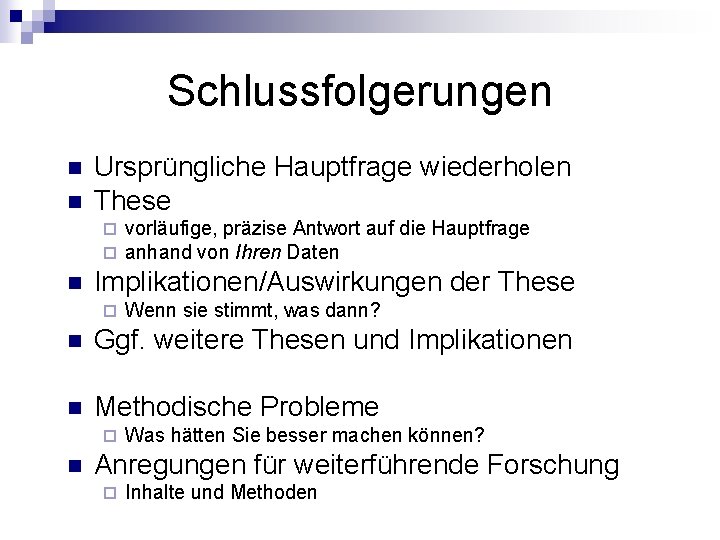
Schlussfolgerungen n n Ursprüngliche Hauptfrage wiederholen These ¨ ¨ n vorläufige, präzise Antwort auf die Hauptfrage anhand von Ihren Daten Implikationen/Auswirkungen der These ¨ Wenn sie stimmt, was dann? n Ggf. weitere Thesen und Implikationen n Methodische Probleme ¨ n Was hätten Sie besser machen können? Anregungen für weiterführende Forschung ¨ Inhalte und Methoden
Weiterführende Literatur In meinem Handapparat: Leong & Austin: Psychology research handbook Sternberg: Psychologist’s companion Suchen Sie auch deutschsprachige Bücher!

Richtlinien für empirische Arbeiten Für Seminararbeiten im Masterstudium Musikologie Graz Schwerpunkt „Musikpsychologie und Akustik“ Richard Parncutt, Uni Graz, February 2013
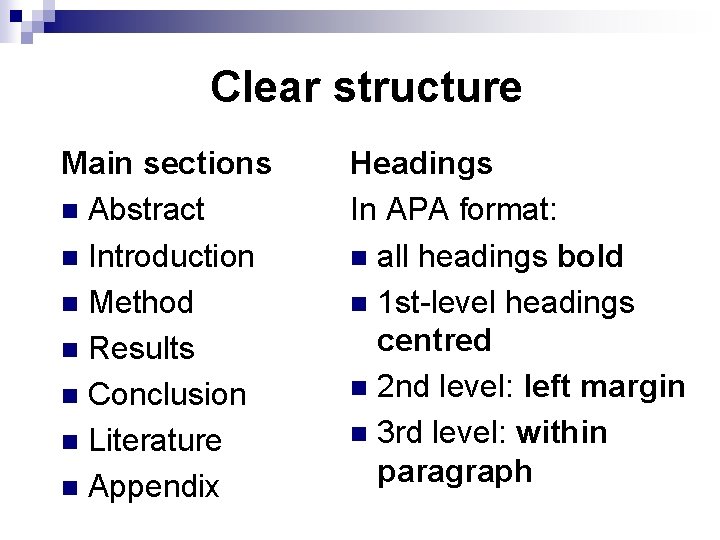
Clear structure Main sections n Abstract n Introduction n Method n Results n Conclusion n Literature n Appendix Headings In APA format: n all headings bold n 1 st-level headings centred n 2 nd level: left margin n 3 rd level: within paragraph
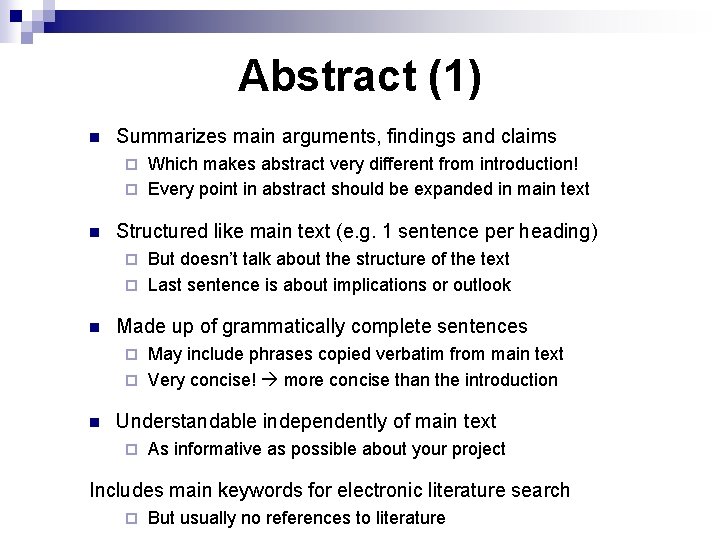
Abstract (1) n Summarizes main arguments, findings and claims Which makes abstract very different from introduction! ¨ Every point in abstract should be expanded in main text ¨ n Structured like main text (e. g. 1 sentence per heading) But doesn’t talk about the structure of the text ¨ Last sentence is about implications or outlook ¨ n Made up of grammatically complete sentences May include phrases copied verbatim from main text ¨ Very concise! more concise than the introduction ¨ n Understandable independently of main text ¨ As informative as possible about your project Includes main keywords for electronic literature search ¨ But usually no references to literature
Abstract (2) Half a page (100 words) in English n Half a page (100 words) in German n It is ok to use quite different linguistic structures in the two versions, as long as the general meaning is about the same
Method Standard subheadings, beginning with “Participants” n Enough detail for an expert to replicate your experiment and probably get the same results n
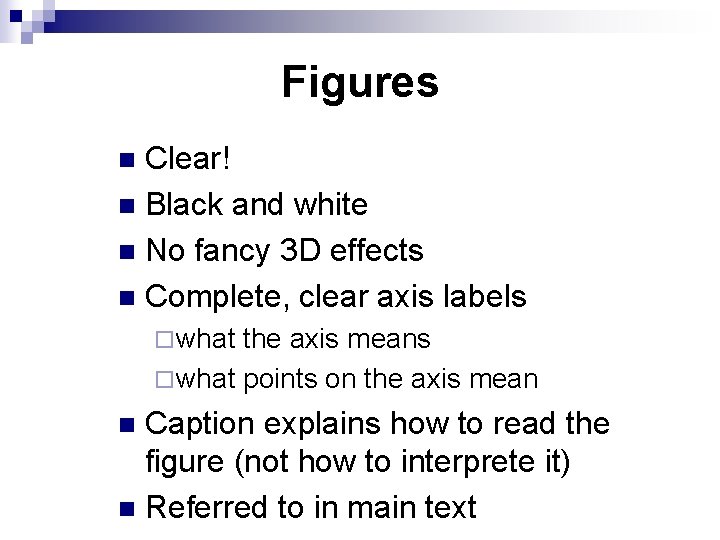
Figures Clear! n Black and white n No fancy 3 D effects n Complete, clear axis labels n ¨ what the axis means ¨ what points on the axis mean Caption explains how to read the figure (not how to interprete it) n Referred to in main text n
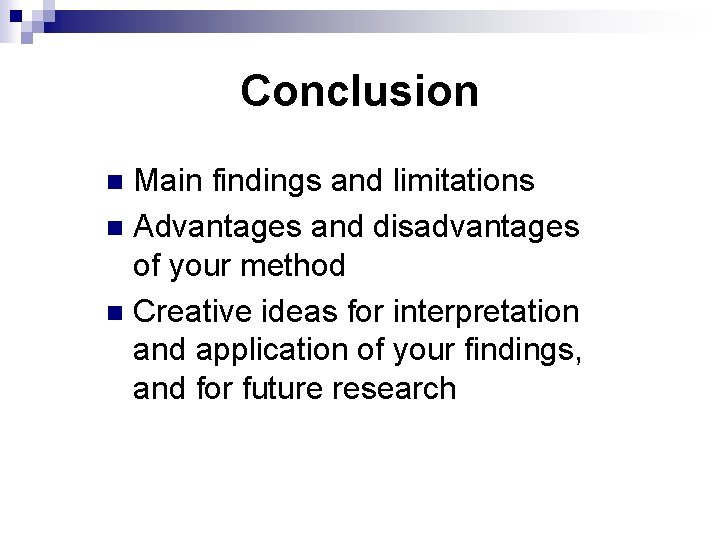
Conclusion Main findings and limitations n Advantages and disadvantages of your method n Creative ideas for interpretation and application of your findings, and for future research n
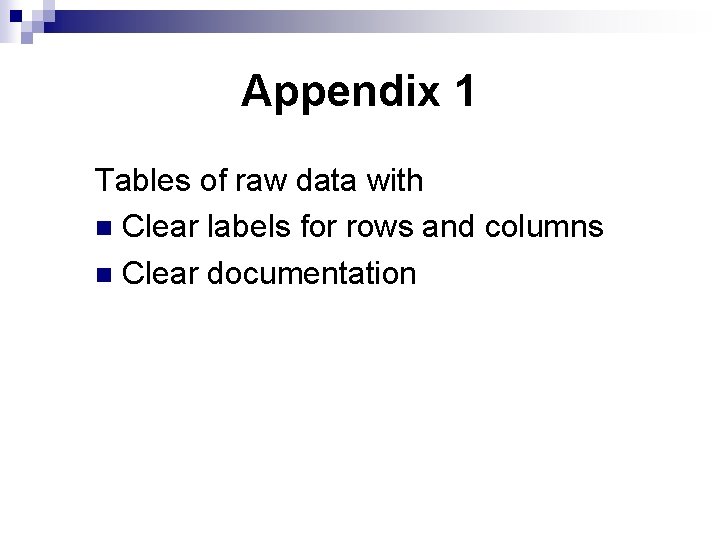
Appendix 1 Tables of raw data with n Clear labels for rows and columns n Clear documentation
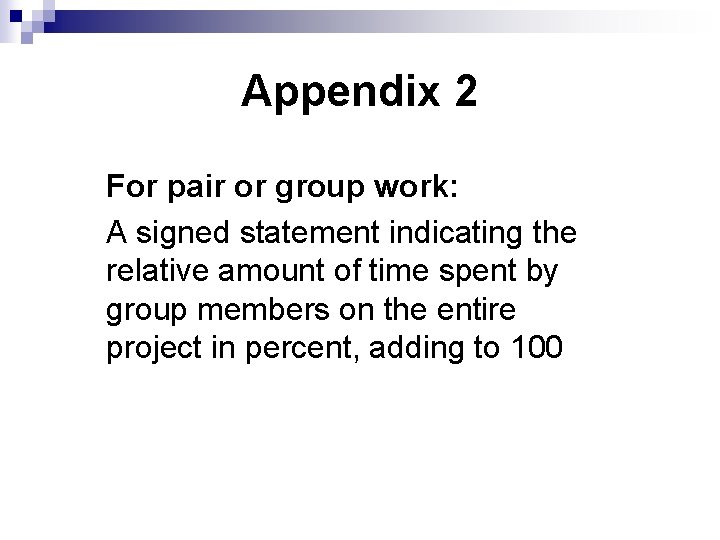
Appendix 2 For pair or group work: A signed statement indicating the relative amount of time spent by group members on the entire project in percent, adding to 100
- Slides: 17