
Richard Gregory 1963 Inappropriate Scaling Theory Explanation of
- Slides: 14
Richard Gregory (1963) Inappropriate Scaling Theory Explanation of the Mueller-Lyer Illusion
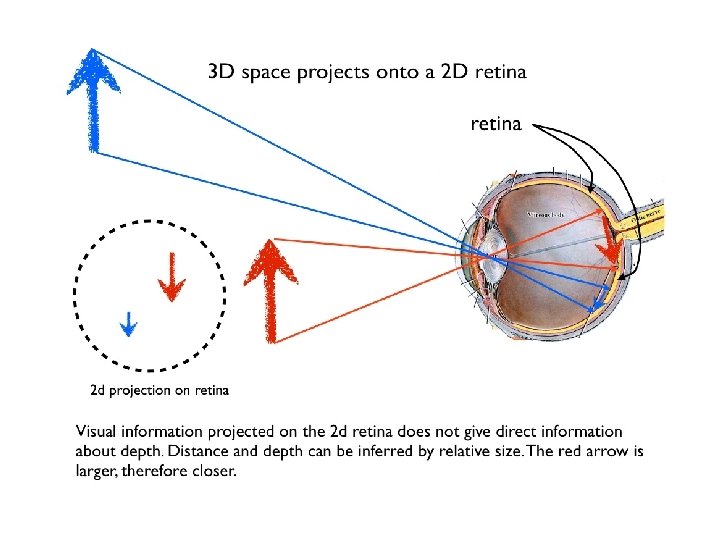
Inappropriate Scaling Theory • The M-L Effect is a By-product of Issues Related to Depth Perception • The Size of the Retinal Image is controlled by – Size of the Object • Smaller Object = Smaller Retinal Image – Distance from Observer to Object • Greater Distance = Smaller Retinal Image
Inappropriate Scaling Theory • The Visual System Must Decide Whether – Object is Small and Close – Object is Big and Distant • The Visual System uses 2 Sources of Info – Binocular Cues • Amount & Type of Disparity (Crossed vs. Uncrossed) – Monocular Cues • Pictorial Cues (ex: Closeness to Horizon Line)
Inappropriate Scaling Theory • Line Drawings/Photographs are Odd Mix of 2 D and 3 D Information – They are Located on Flat Surface (2 D) – They may contain 3 D Cues indicating Depth
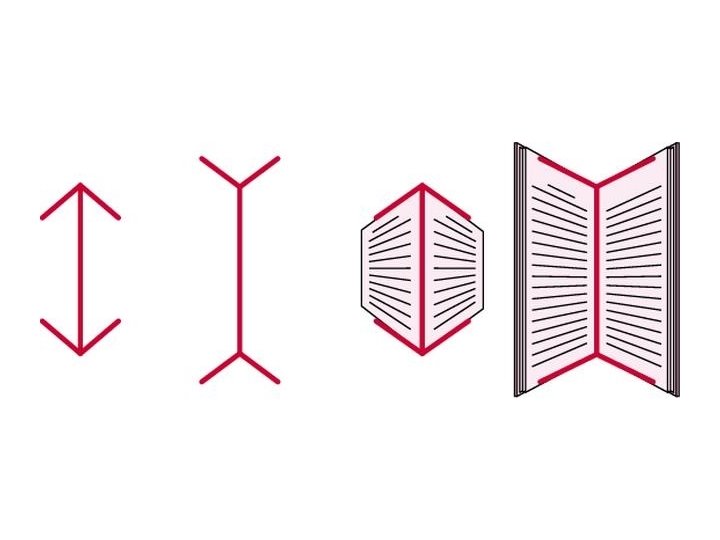
Inappropriate Scaling Theory • Gregory’s theory is some illusions are due to our responding to 3 D info in the image and using that information Inappropriately to rescale the sizes of portions of the display • His analysis of the Mueller-Lyer Illusion
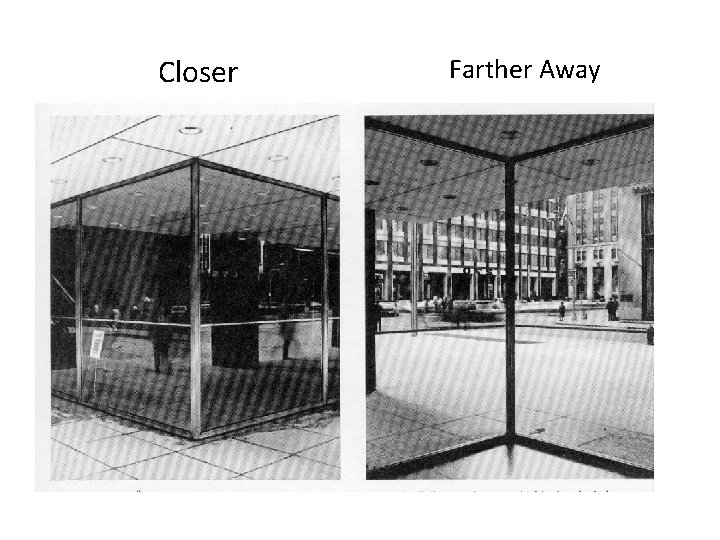
Closer Farther Away
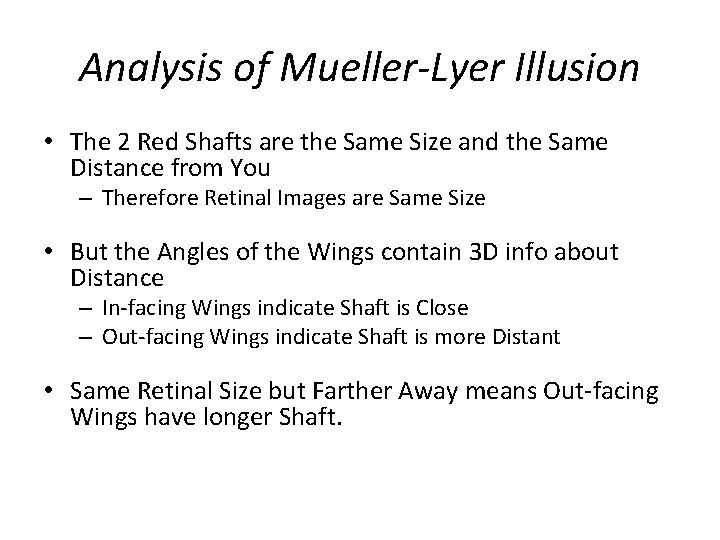
Analysis of Mueller-Lyer Illusion • The 2 Red Shafts are the Same Size and the Same Distance from You – Therefore Retinal Images are Same Size • But the Angles of the Wings contain 3 D info about Distance – In-facing Wings indicate Shaft is Close – Out-facing Wings indicate Shaft is more Distant • Same Retinal Size but Farther Away means Out-facing Wings have longer Shaft.
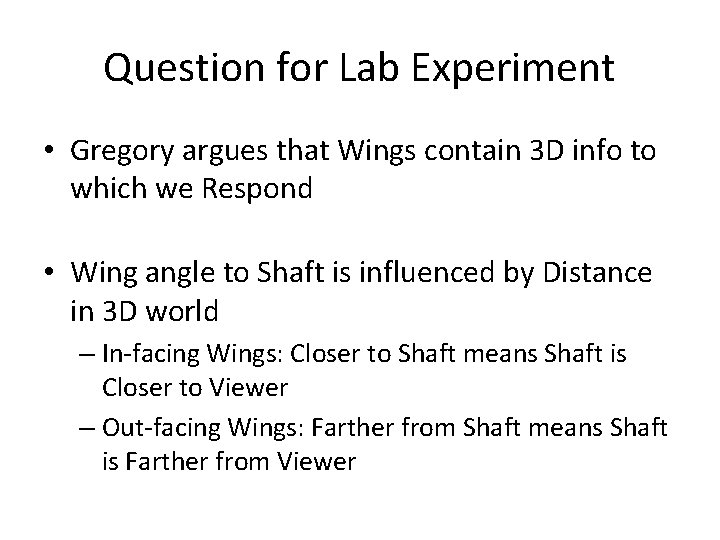
Question for Lab Experiment • Gregory argues that Wings contain 3 D info to which we Respond • Wing angle to Shaft is influenced by Distance in 3 D world – In-facing Wings: Closer to Shaft means Shaft is Closer to Viewer – Out-facing Wings: Farther from Shaft means Shaft is Farther from Viewer
Question for Lab Experiment • Experiment will Manipulate Wing Angle • Question is Whether Manipulation of Wing Angle will produce Changes in Shaft Length as Predicted by Gregory
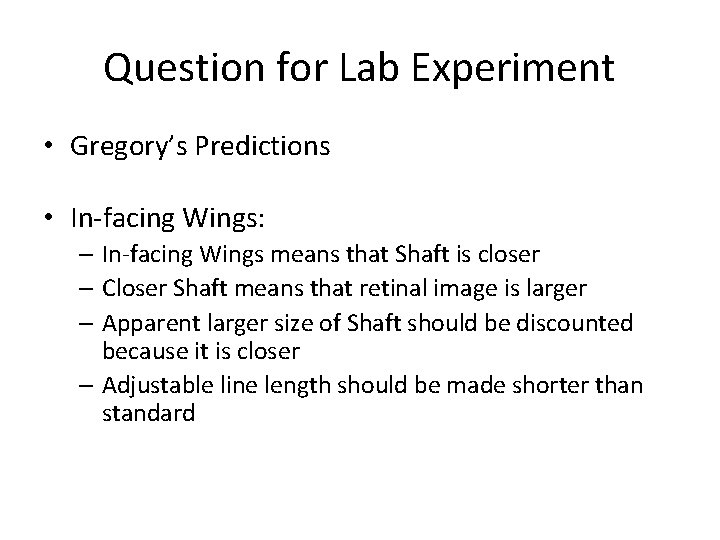
Question for Lab Experiment • Gregory’s Predictions • In-facing Wings: – In-facing Wings means that Shaft is closer – Closer Shaft means that retinal image is larger – Apparent larger size of Shaft should be discounted because it is closer – Adjustable line length should be made shorter than standard
Question for Lab Experiment • Gregory’s Predictions • Out-facing Wings: – Out-facing Wings means that Shaft is farther away – Far-away Shaft means that retinal image is Smaller – Apparent smaller size of Shaft should be discounted because it is farther-away – Adjustable line length should be made longer than standard
Question for Lab Experiment • Gregory’s Predictions • Most extreme angles produce strongest distance Cues – Should see gradual change in Size and Sign (+/-) of illusion as you go from one extreme to other.