
Rice Production Course Land Preparation By JF Rickman
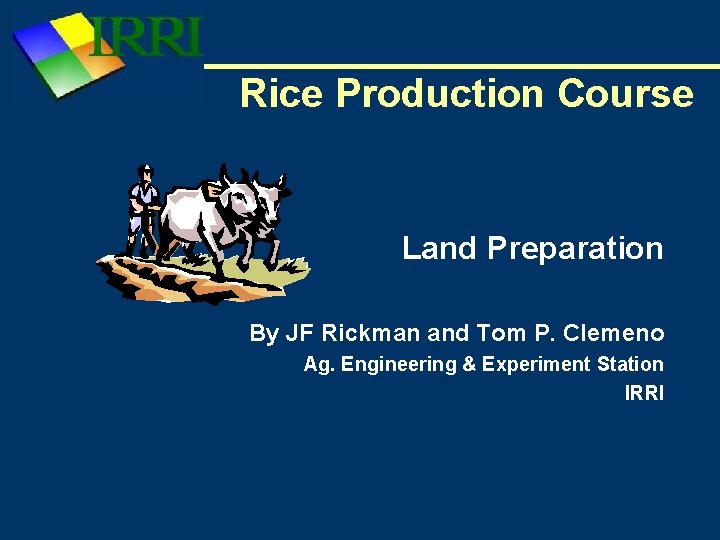
Rice Production Course Land Preparation By JF Rickman and Tom P. Clemeno Ag. Engineering & Experiment Station IRRI
Learning Objectives • • • Clarify the need for plowing Describe primary tillage and its implementation Describe secondary tillage and its implementation Clarify the need for puddling Present different plowing patterns IRRI: Rice Production Course
Can anyone explain the use of plowing? IRRI: Rice Production Course
Why plow? • • • Create seedbed Kill weeds/pest Incorporate fertilizer Water control (in/out) Change clod size Incorporate residues IRRI: Rice Production Course
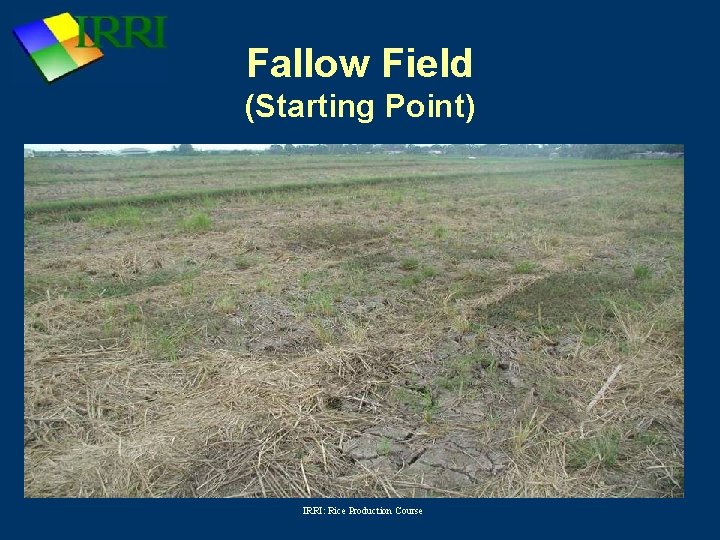
Fallow Field (Starting Point) IRRI: Rice Production Course
What is primary tillage and what should be achieved? IRRI: Rice Production Course
Primary Tillage • • First working after harvest Most aggressive Cuts and shatters soil Burying crop residues Highest power requirement Leaves rough surface Done either wet or dry IRRI: Rice Production Course
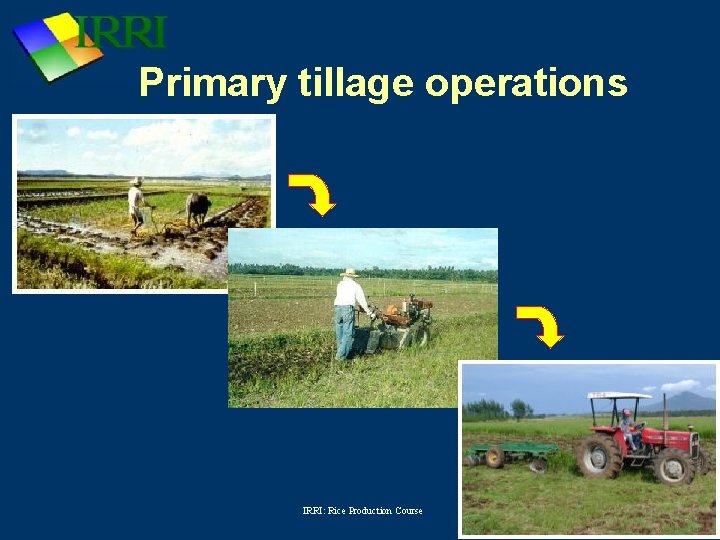
Primary tillage operations IRRI: Rice Production Course
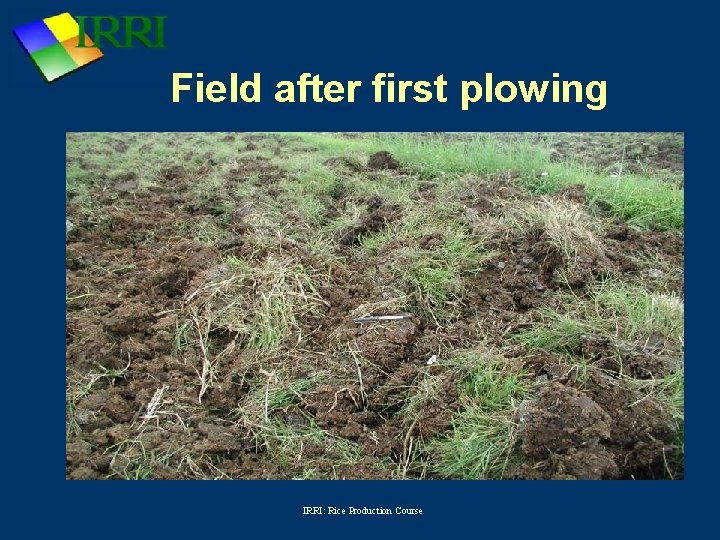
Field after first plowing IRRI: Rice Production Course
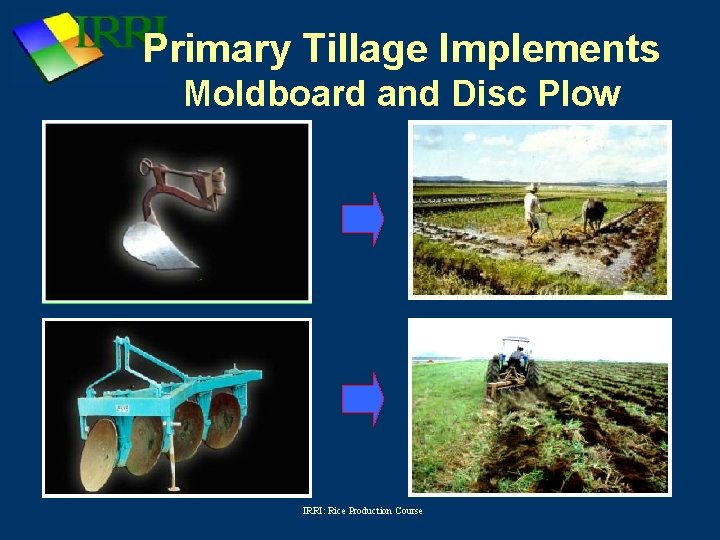
Primary Tillage Implements Moldboard and Disc Plow IRRI: Rice Production Course
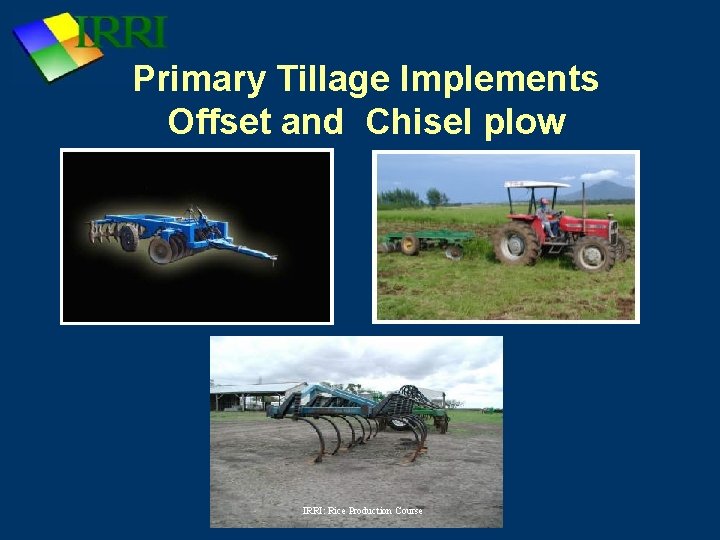
Primary Tillage Implements Offset and Chisel plow IRRI: Rice Production Course
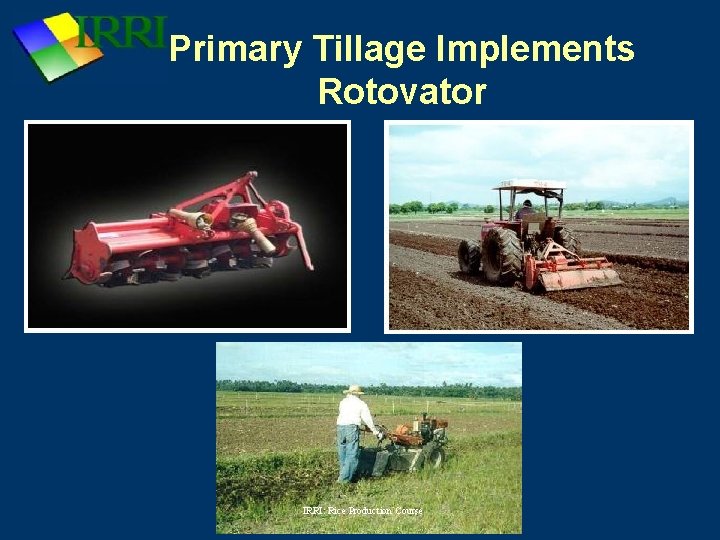
Primary Tillage Implements Rotovator IRRI: Rice Production Course
What is secondary tillage and what is to be achieved ? IRRI: Rice Production Course
Secondary tillage • Follow primary tillage • Normally shallower working depth • Provide additional soil pulverization/puddling • Level soil surface • Control weeds IRRI: Rice Production Course
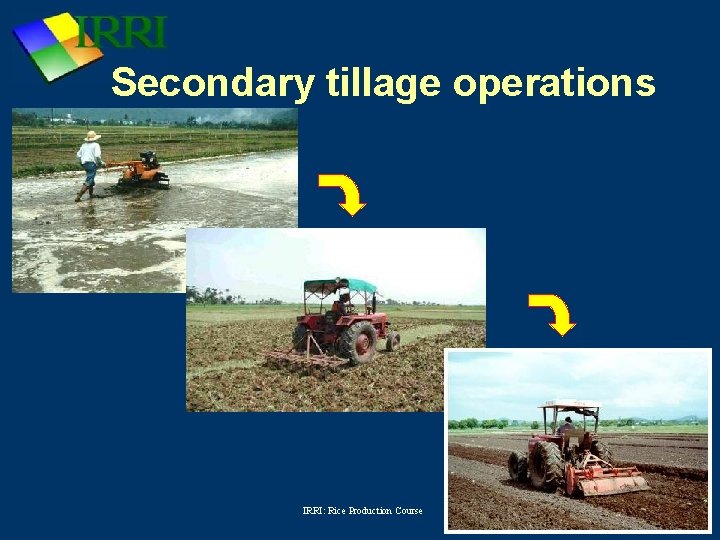
Secondary tillage operations IRRI: Rice Production Course
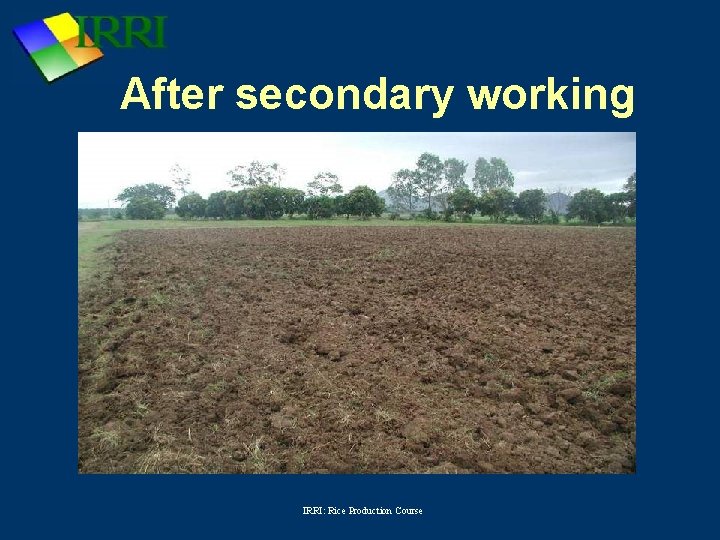
After secondary working IRRI: Rice Production Course
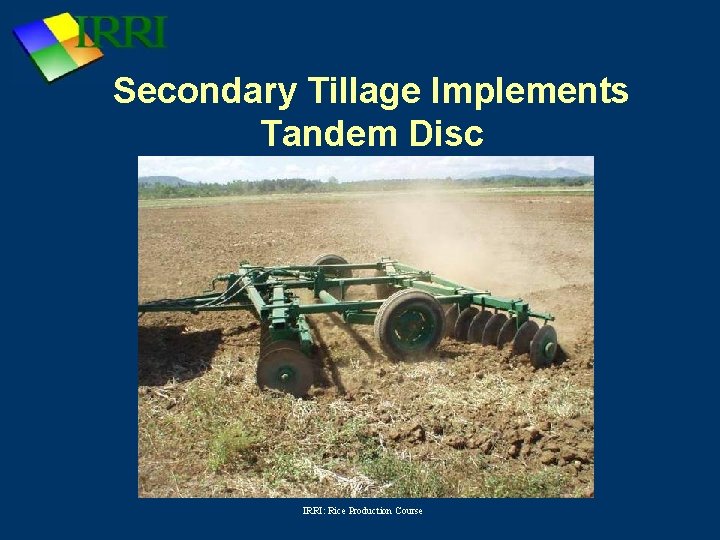
Secondary Tillage Implements Tandem Disc IRRI: Rice Production Course
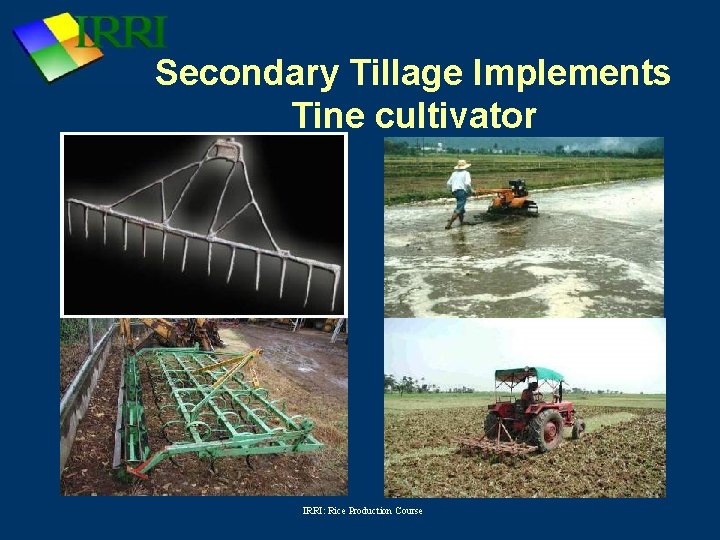
Secondary Tillage Implements Tine cultivator IRRI: Rice Production Course
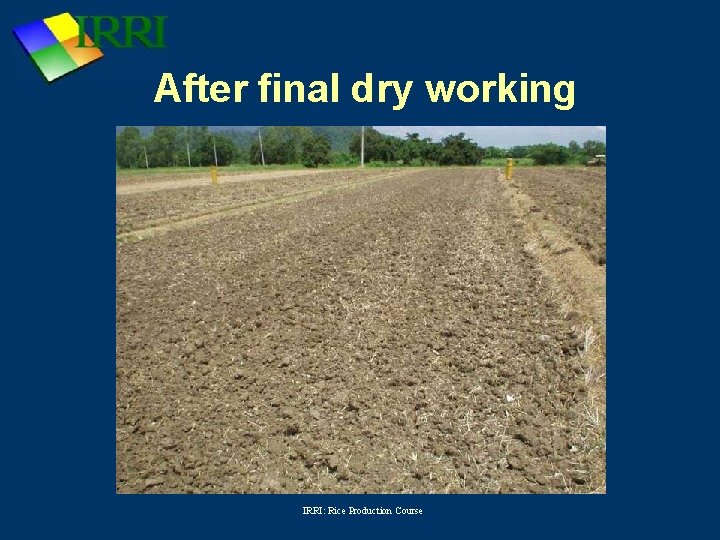
After final dry working IRRI: Rice Production Course
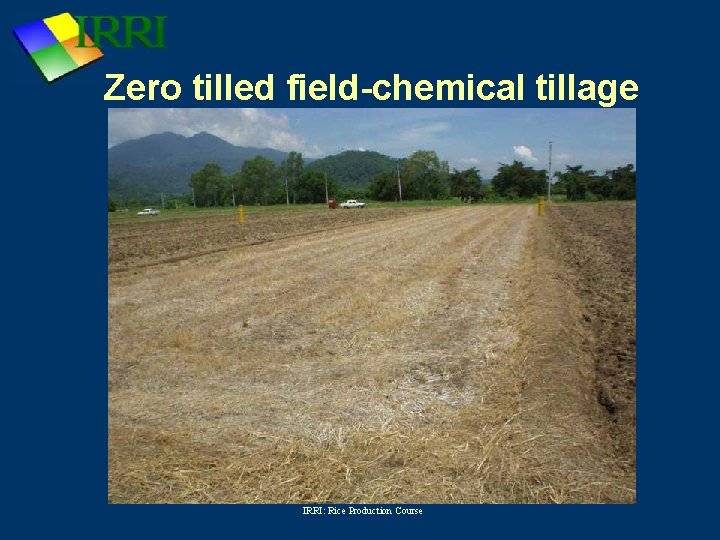
Zero tilled field-chemical tillage IRRI: Rice Production Course
Can anyone explain “puddling”? Why do farmers puddle the soil? IRRI: Rice Production Course
Puddling • Create hard pan to reduce deep water percolation • Kill emerging weeds prior to planting • Level fields • Softens soil for transplanting IRRI: Rice Production Course
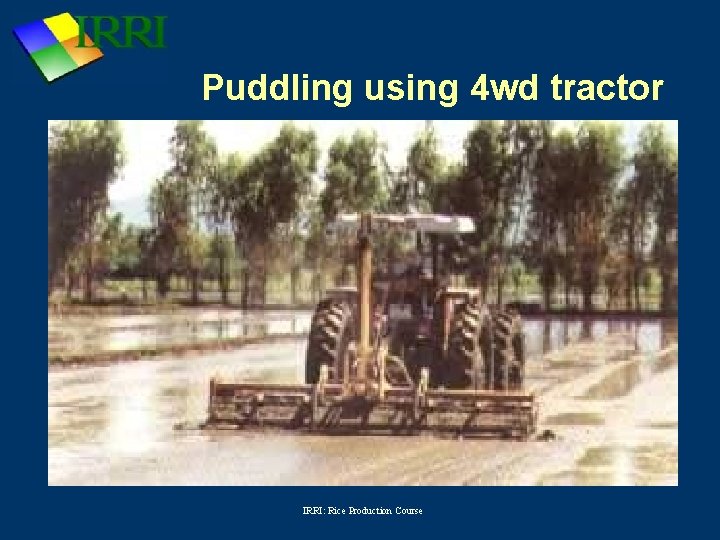
Puddling using 4 wd tractor IRRI: Rice Production Course
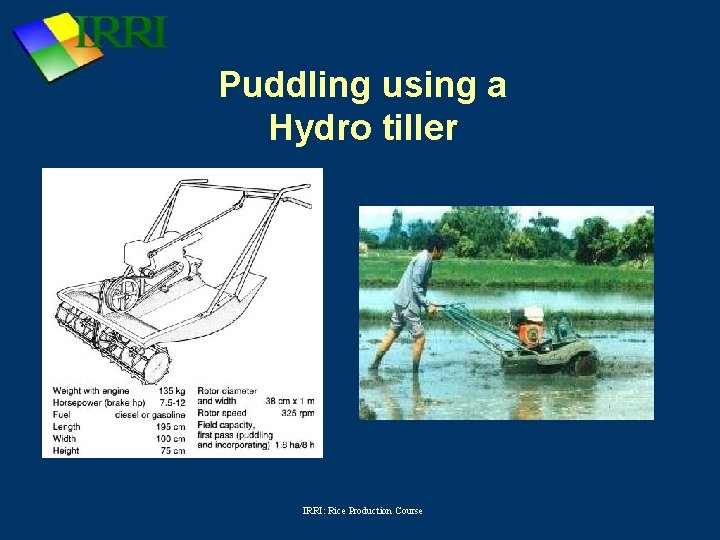
Puddling using a Hydro tiller IRRI: Rice Production Course
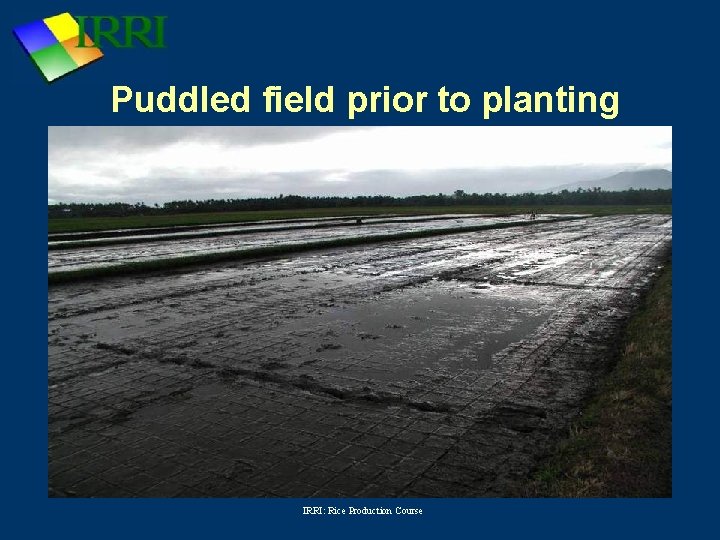
Puddled field prior to planting IRRI: Rice Production Course
Why do we use different plowing patterns? IRRI: Rice Production Course
Plowing patterns • Determined by implement (one-way plow can only throws soil in one direction) • Determined by desired field levelness-headland most level • Determined by field shape-long narrow fields • Determines efficiency (headland pattern most efficient) IRRI: Rice Production Course
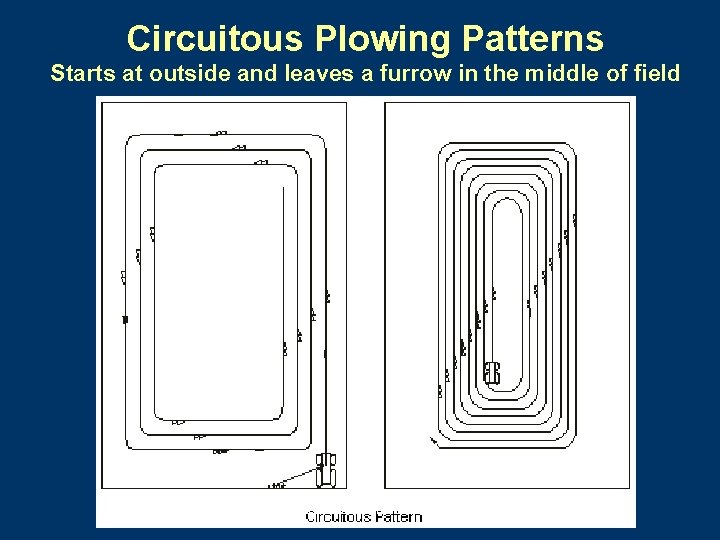
Circuitous Plowing Patterns Starts at outside and leaves a furrow in the middle of field IRRI: Rice Production Course

Headland Pattern Starts at one end and leaves flat even field IRRI: Rice Production Course
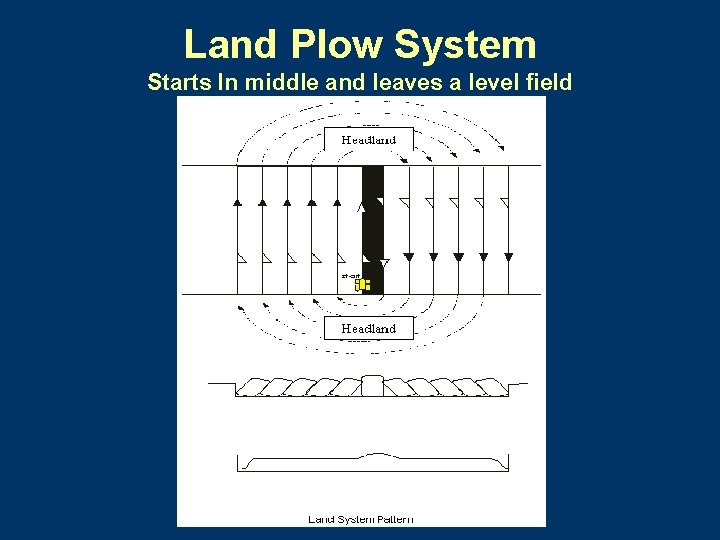
Land Plow System Starts In middle and leaves a level field IRRI: Rice Production Course
Conclusion Poorly prepared fields will cause management problems through the following crop. Symptoms include: – Poor plant establishment – Excessive pest / weed burdens – Uneven crop growth and maturity – Poor water use efficiency “You reap what you sow” IRRI: Rice Production Course
Questions or Comments? IRRI: Rice Production Course
- Slides: 32