
RIC Writing Describing Bubbles FVWL Regional Improvement Collaborative
RIC Writing: Describing Bubbles FVWL Regional Improvement Collaborative Adapted from Stephen Graham Understanding How Texts Work Webinars (Dec. 2020)
Explicit Teaching A central message is the importance of explicitly teaching writing and a gradual release of responsibility – moving from modelling to shared and interactive to independent writing. Modelling → Shared & Interactive → Independent To learners → With learners → By learners
Text Types Stephen Graham highlights: • 3 broad areas of writing (persuasive; informative; imaginative). • 9 specific text types within the three broad areas (discussion; response; exposition; report; procedure; explanation; recount; description; narrative). • It is not recommended to teach all 9 text types in one academic year! • Rather, comprehensive coverage of 3 text types per year is advised – with a suggested five or six weeks spent teaching each text type. Adapted from Stephen Graham Understanding How Texts Work Webinars (Dec. 2020)
Text Type Purposes Discussion: to examine issues from more than one perspective. Response: to respond to a visual, written or performed work. Exposition: to persuade by arguing one side of an issue. Report: to classify and/or describe. Procedure: to instruct someone on how to do something. Explanation: to explain how or why something happens. Recount: to retell a series of events. Description: (often embedded within other text types) to describe the characteristics or features of a person, object or event. • Narrative: to entertain, amuse or instruct. • • • Adapted from Explicitly Teaching Writing (Graham & Small, nelsonprimary. com. au/pd: 2019)
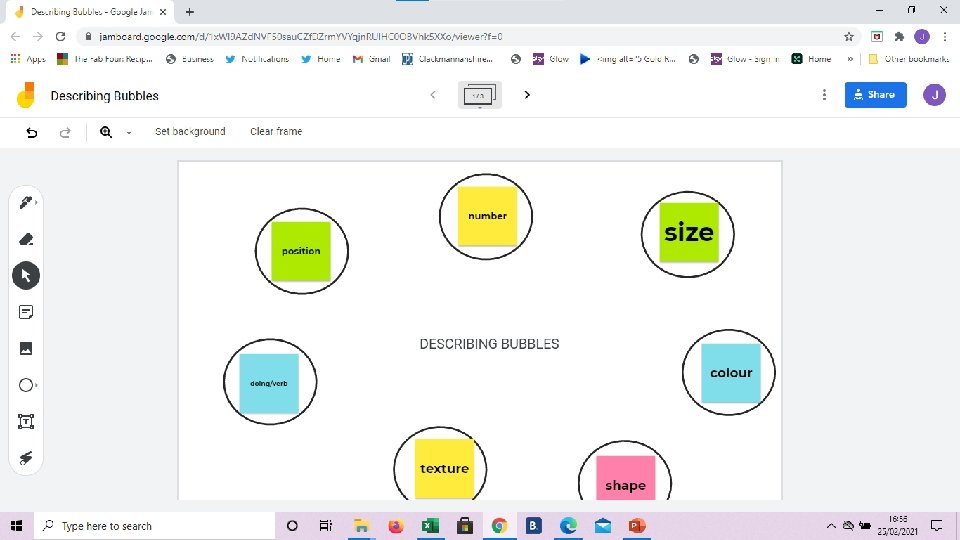
Describing Bubbles • A tool that can be used for many writing tasks and for various text types. • Useful to have in poster form/on the whiteboard so that it can be referred to often. • Supports learners to develop sentences and paragraphs.
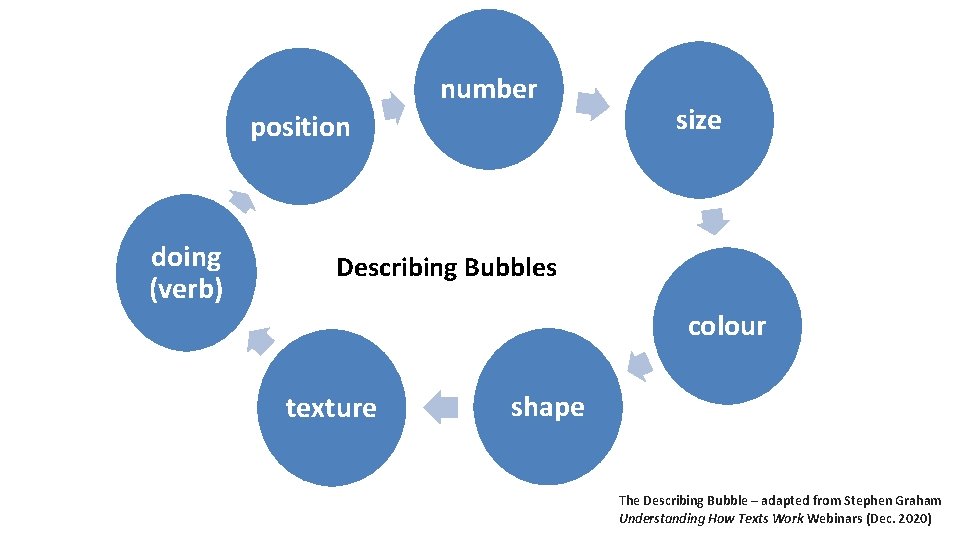
number position doing (verb) size Describing Bubbles colour texture shape The Describing Bubble – adapted from Stephen Graham Understanding How Texts Work Webinars (Dec. 2020)
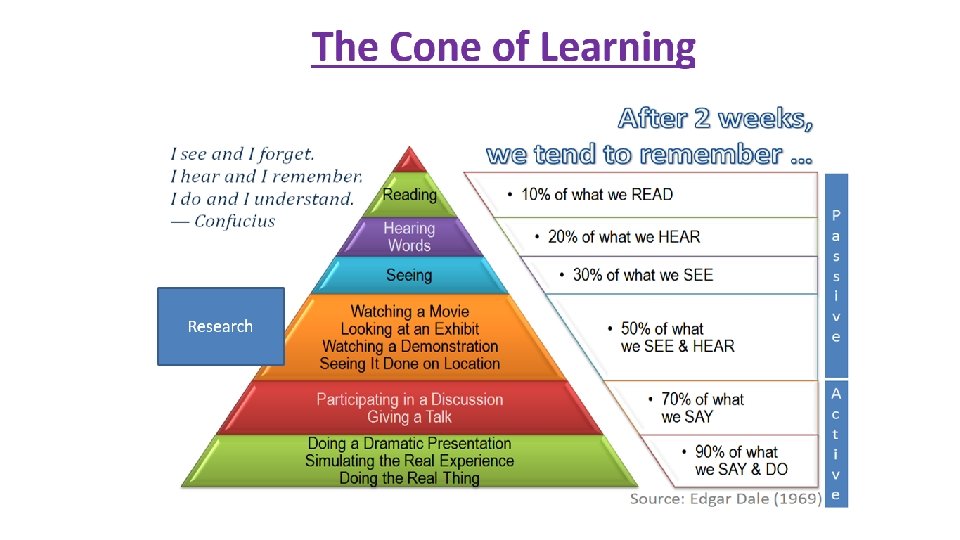
If you can say it, you can write it. Model it first of all. • • Here is… a number sentence about me: I am twenty-one years old. a size sentence about me: I am the same height as Mrs. Jones the Headteacher. a colour sentence about me: I have blue eyes. a shape sentence about me: I have a round face. a texture sentence about me: I am wearing a soft jumper. a doing (verb) sentence about me: I am talking to my class. a position sentence about me: I am sitting on the floor. • This can also be done as a guessing game: “I have blue eyes. Point to the correct bubble. ”
If you can say it, you can write it. Next, make it shared and interactive. For example, ask pupils for sentences about themselves – or they can do this in pairs. • • Tell me a number sentence about yourself: I am seven years old. Tell me a size sentence about yourself: I am the same height as my younger brother. Tell me a colour sentence: I have blue eyes. Tell me a shape sentence: I have a round face. Tell me a texture sentence: I have a soft jumper. Tell me a doing (verb) sentence about yourself: I like dancing. Tell me a position sentence about yourself: I am sitting on the floor.
If you can say it, you can write it. Ask pupils to try all the bubbles for themselves – or they can practise in pairs. • • Number: I am seven years old. Size: I am the same height as my younger brother. Colour: I have blue eyes. Shape: I… Texture: I… Doing/Verb: I like dancing. Position: I… • Now they have a paragraph!
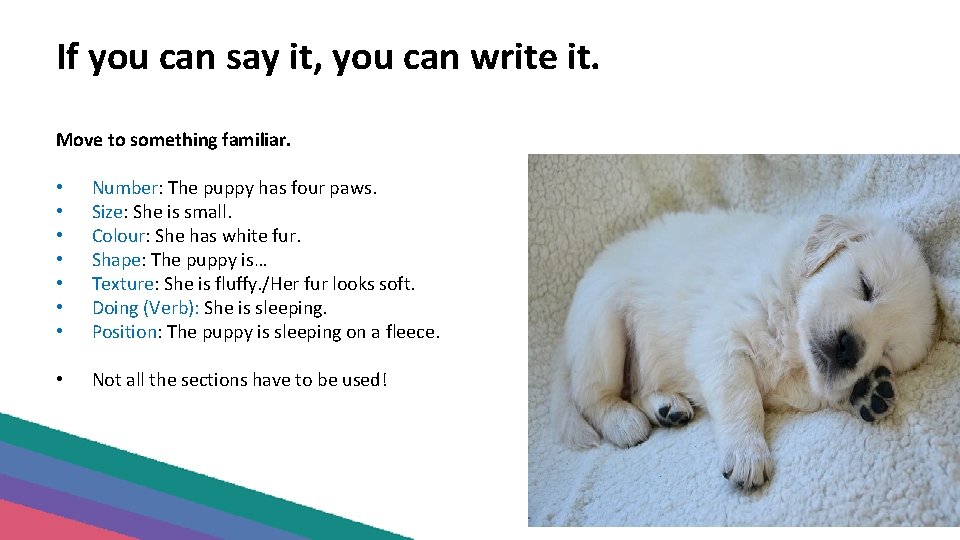
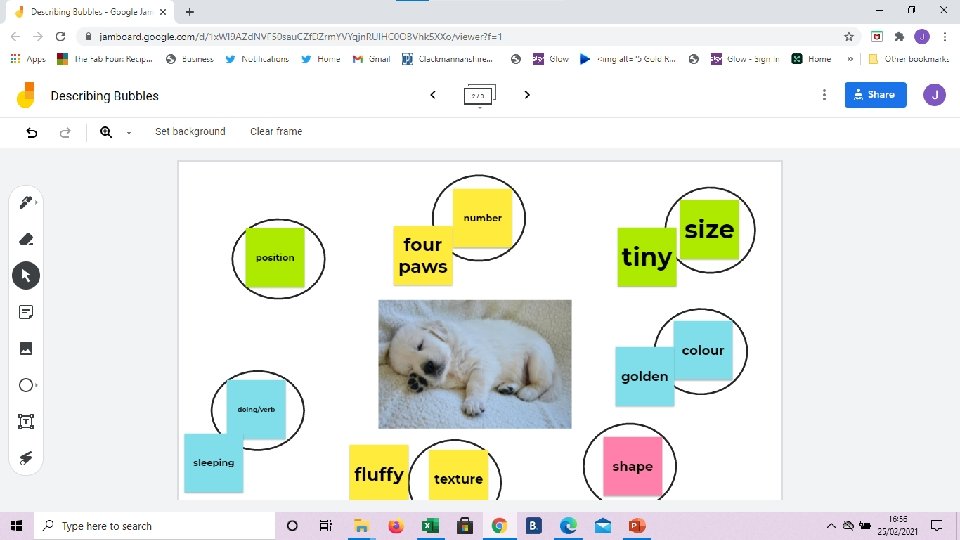
If you can say it, you can write it. Move to something familiar. • • Number: The puppy has four paws. Size: She is small. Colour: She has white fur. Shape: The puppy is… Texture: She is fluffy. /Her fur looks soft. Doing (Verb): She is sleeping. Position: The puppy is sleeping on a fleece. • Not all the sections have to be used!
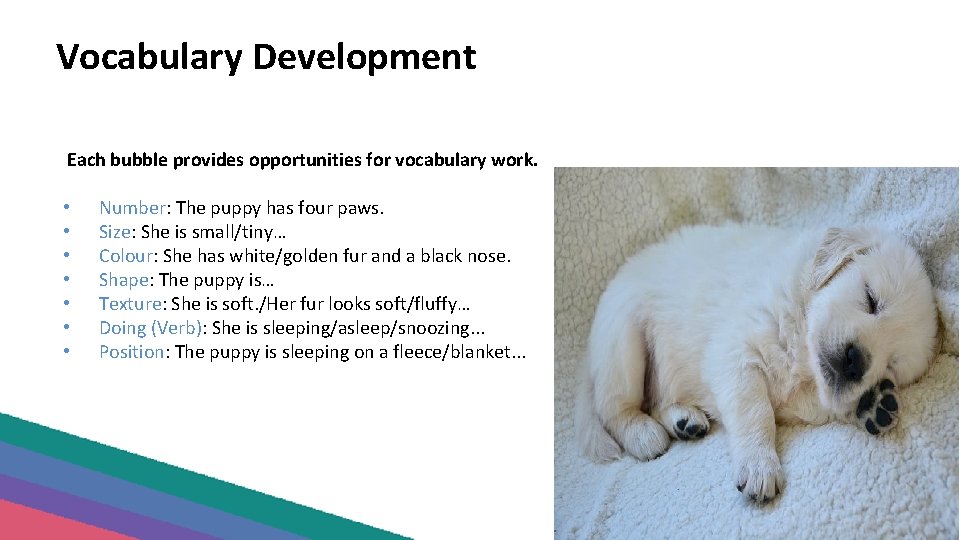
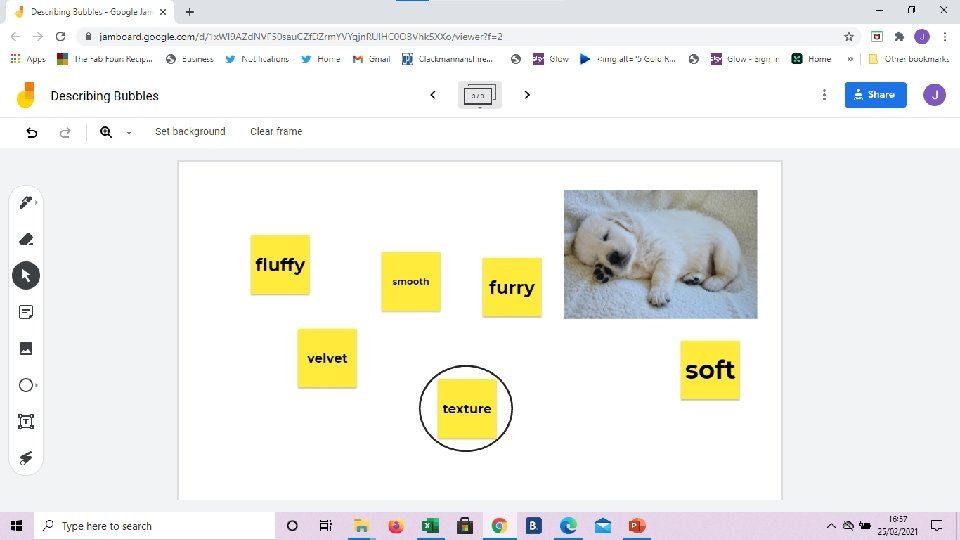
Vocabulary Development Each bubble provides opportunities for vocabulary work. • • Number: The puppy has four paws. Size: She is small/tiny… Colour: She has white/golden fur and a black nose. Shape: The puppy is… Texture: She is soft. /Her fur looks soft/fluffy… Doing (Verb): She is sleeping/asleep/snoozing. . . Position: The puppy is sleeping on a fleece/blanket. . .
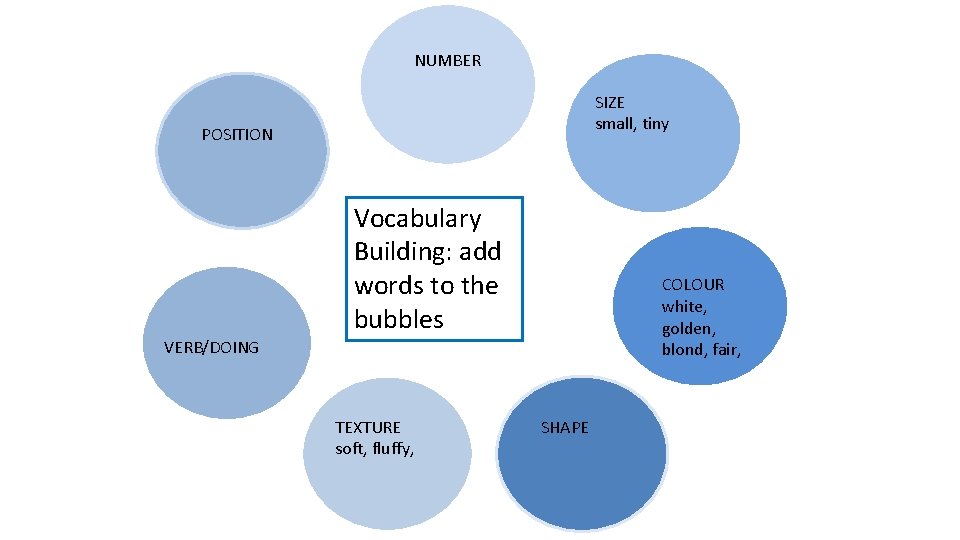
NUMBER SIZE small, tiny POSITION Vocabulary Building: add words to the bubbles number VERB/DOING TEXTURE soft, fluffy, SHAPE COLOUR white, golden, blond, fair,
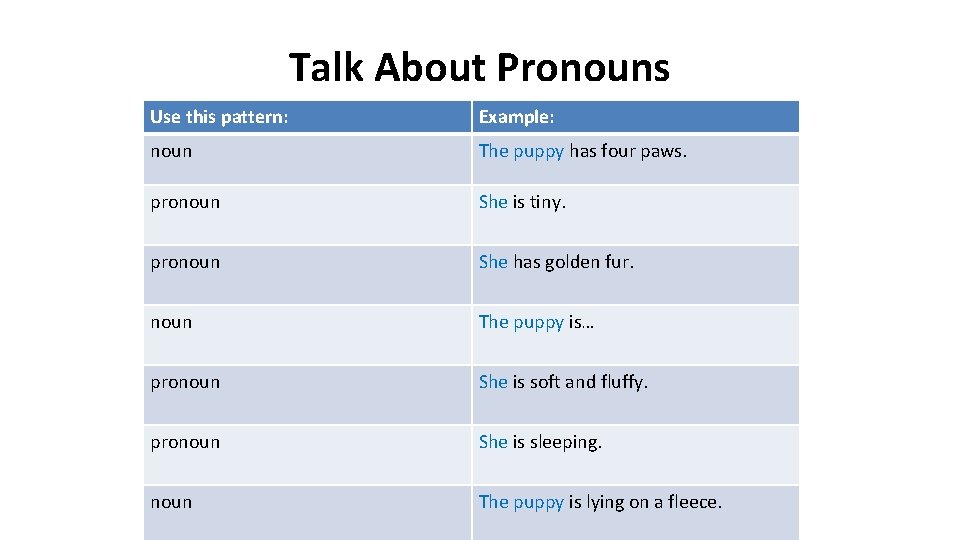
Talk About Pronouns Use this pattern: Example: noun The puppy has four paws. pronoun She is tiny. pronoun She has golden fur. noun The puppy is… pronoun She is soft and fluffy. pronoun She is sleeping. noun The puppy is lying on a fleece.
Try Lots of Fun Tasks • Modelling → shared and interactive → independent writing. • Use pictures of animals, book characters, places etc. • Challenge learners to use as many of the bubbles as possible for each picture.
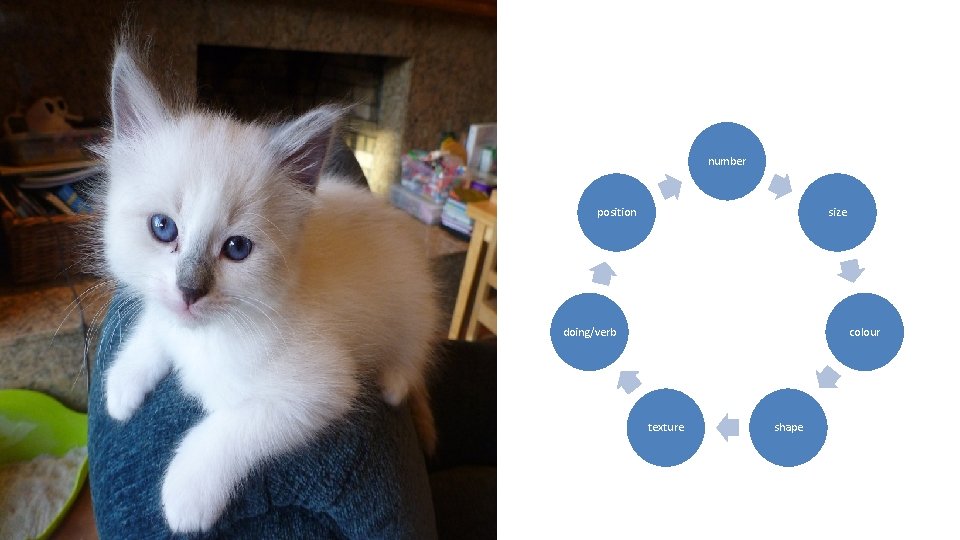
number position size doing/verb colour texture shape
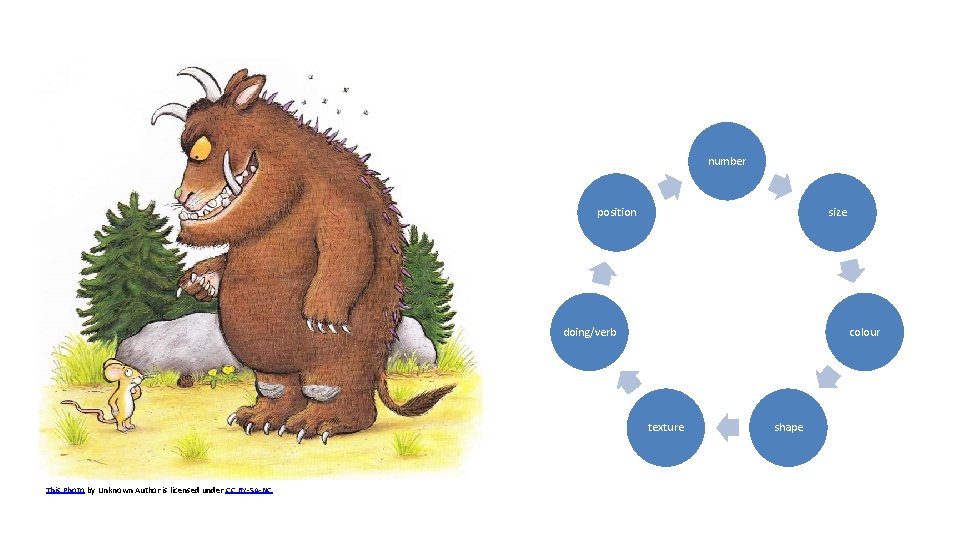
number position size doing/verb colour texture This Photo by Unknown Author is licensed under CC BY-SA-NC shape
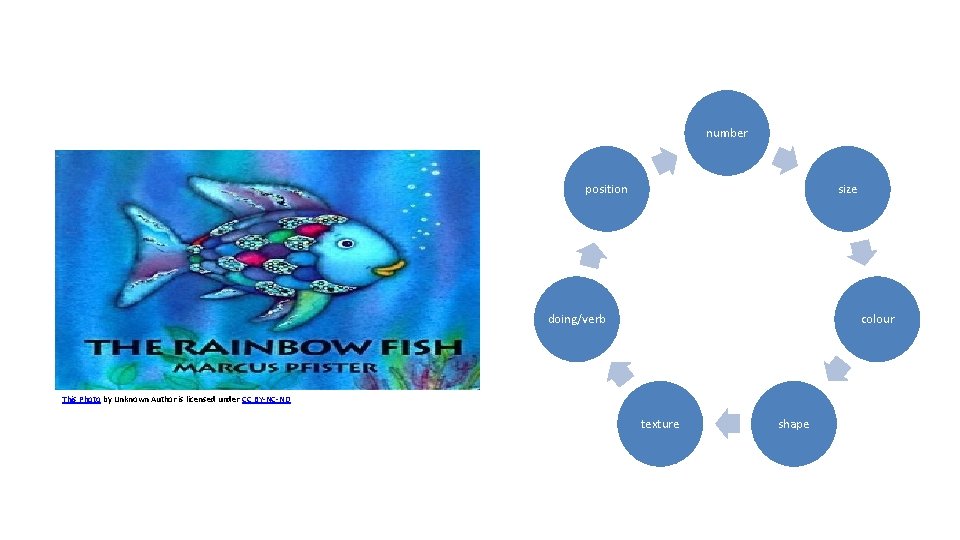
number position size doing/verb colour This Photo by Unknown Author is licensed under CC BY-NC-ND texture shape
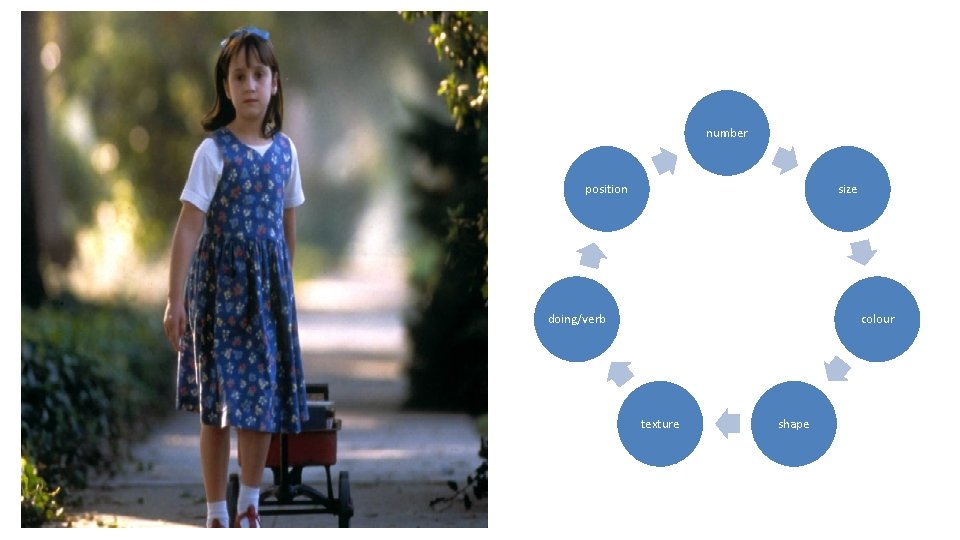
number position size doing/verb colour texture shape
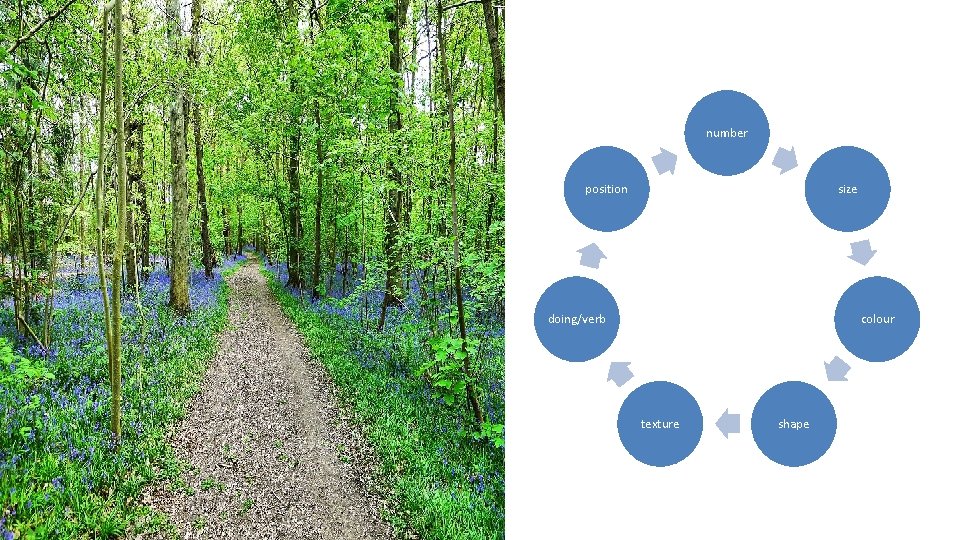
number position size doing/verb colour texture shape
Remote Learning? Try Jamboard. • Jamboard is an online, interactive whiteboard tool designed for collaboration. • It is free and easy to use. • Here is an example for the describing bubble(s): Jamboard
Metacognition • Metacognition is an important part of the writing process. • Metacognition = awareness of one’s thinking processes. • Teachers lead by sharing how the describing bubble helped to write a paragraph. • Pupils talk about their thinking and how they used the describing bubble.
EEF • Evidence suggests the use of ‘metacognitive strategies’ – which get pupils to think about their own learning - can be worth the equivalent of an additional +7 months’ progress when used well. • The potential impact of these approaches is very high, particularly for disadvantaged pupils.
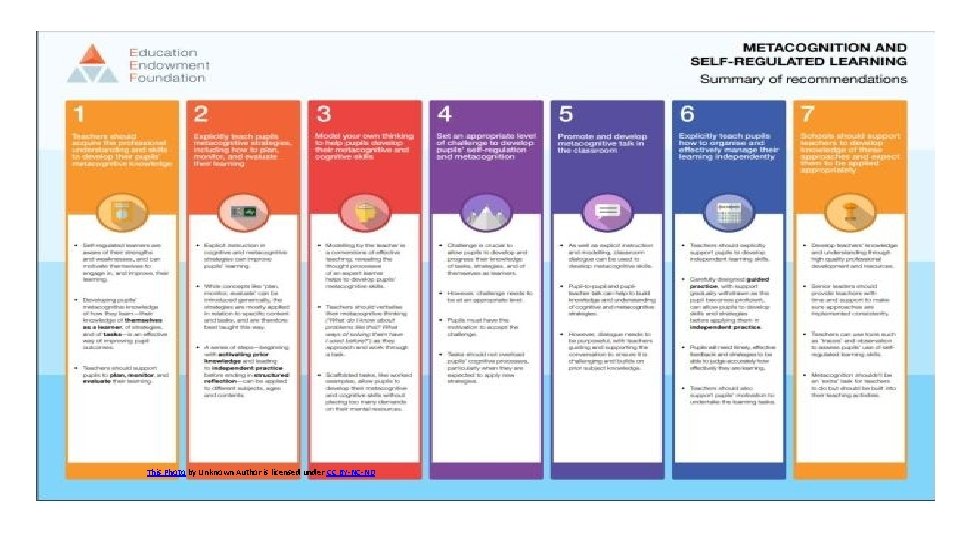
This Photo by Unknown Author is licensed under CC BY-NC-ND
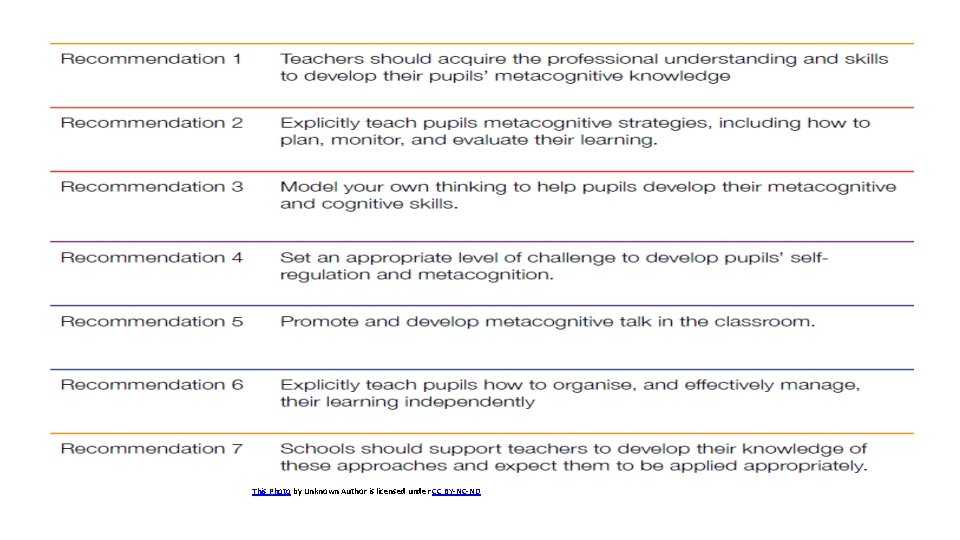
This Photo by Unknown Author is licensed under CC BY-NC-ND

Support Dr Janet Adam RIC Literacy Lead: CLjadam@glow. sch. uk Twitter: @fvwlriclit Blog: https: //blogs. glowscotland. org. uk/glo wblogs/fvwlric/literacy/
- Slides: 29