
Riboswitches the oldest regulatory system Mikhail Gelfand Research
Riboswitches: the oldest regulatory system? Mikhail Gelfand Research and Training Center on Bioinformatics Institute for Information Transmission Problems Russian Academy of Sciences BITS Annual Meeting. Milan, March 2005
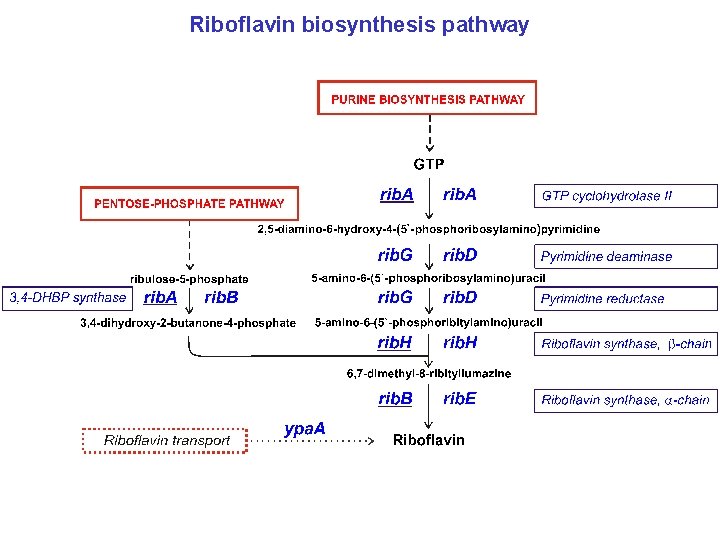
Riboflavin biosynthesis pathway
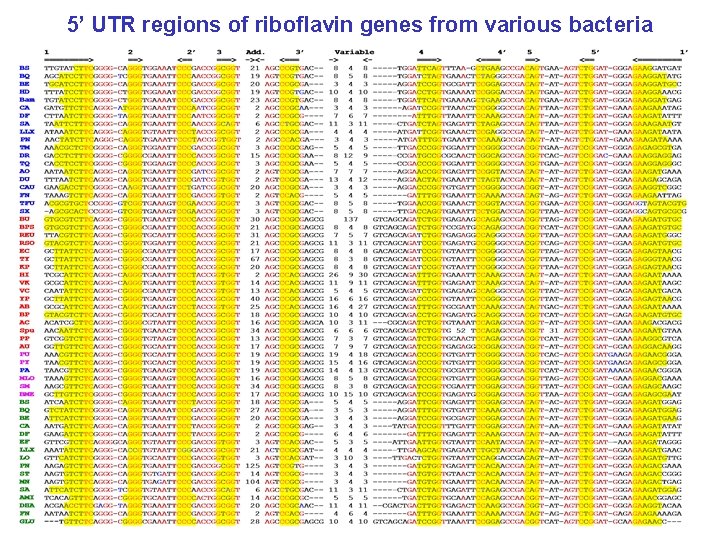
5’ UTR regions of riboflavin genes from various bacteria
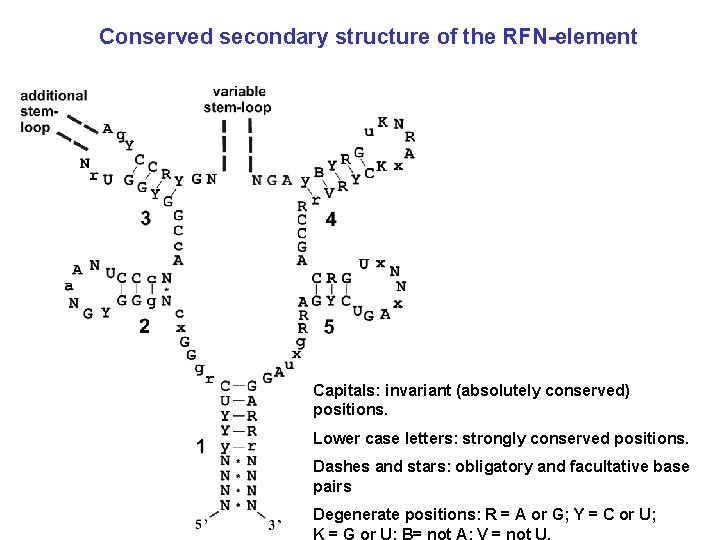
Conserved secondary structure of the RFN-element Capitals: invariant (absolutely conserved) positions. Lower case letters: strongly conserved positions. Dashes and stars: obligatory and facultative base pairs Degenerate positions: R = A or G; Y = C or U; K = G or U; B= not A; V = not U.
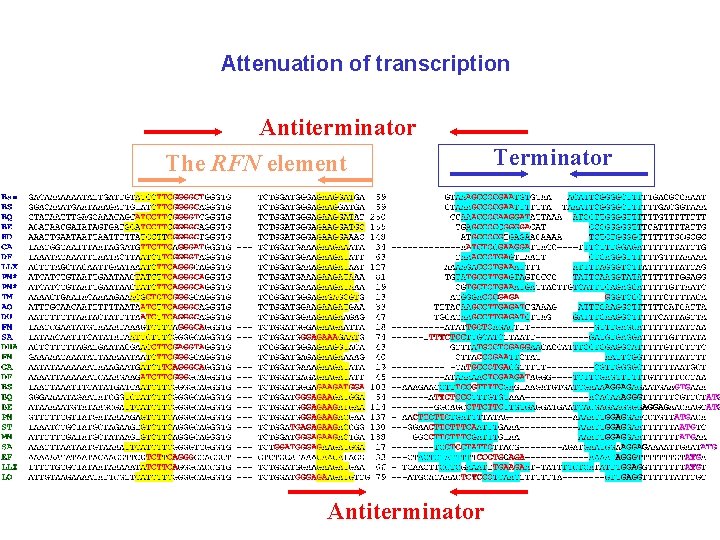
Attenuation of transcription Antiterminator The RFN element Antiterminator Terminator
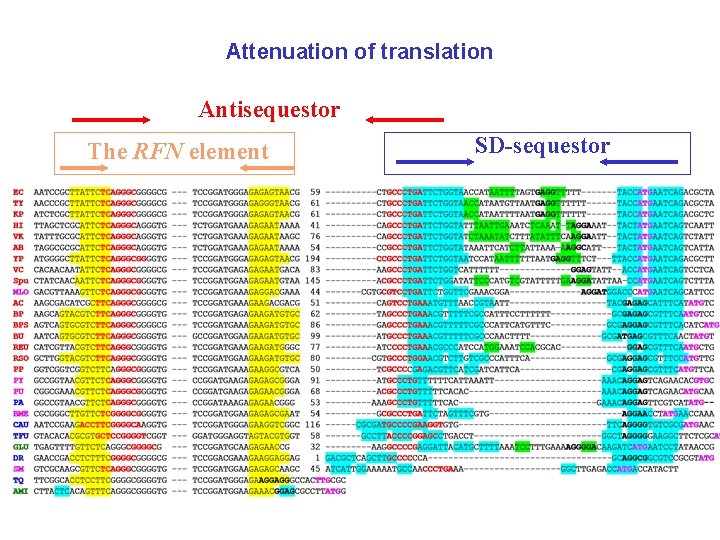
Attenuation of translation Antisequestor The RFN element SD-sequestor
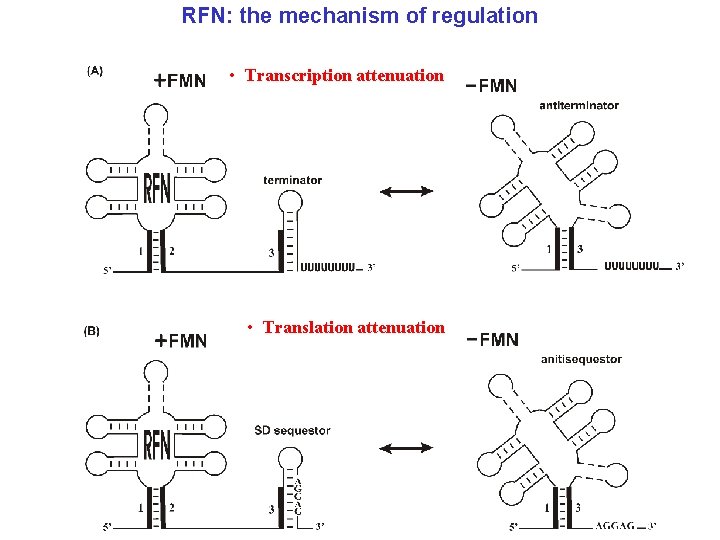
RFN: the mechanism of regulation • Transcription attenuation • Translation attenuation
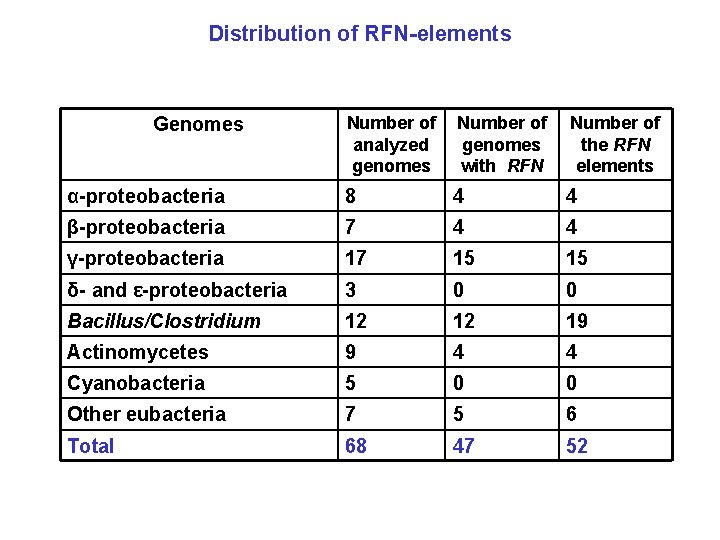
Distribution of RFN-elements Number of analyzed genomes Number of genomes with RFN Number of the RFN elements α-proteobacteria 8 4 4 β-proteobacteria 7 4 4 γ-proteobacteria 17 15 15 δ- and ε-proteobacteria 3 0 0 Bacillus/Clostridium 12 12 19 Actinomycetes 9 4 4 Cyanobacteria 5 0 0 Other eubacteria 7 5 6 Total 68 47 52 Genomes
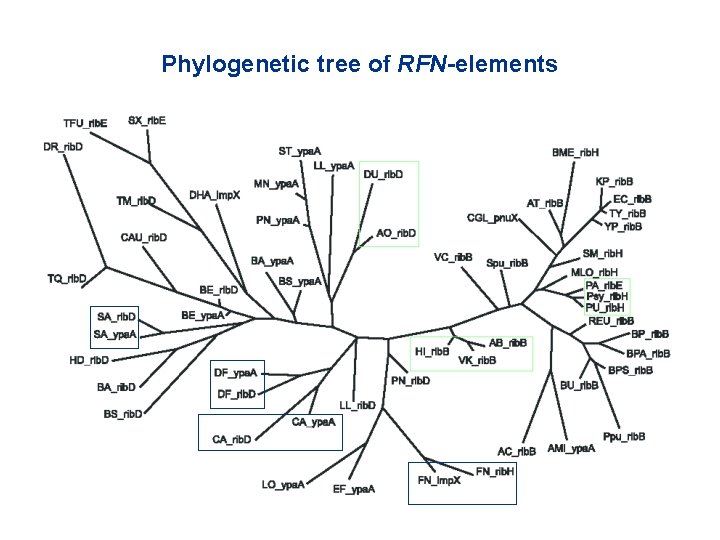
Phylogenetic tree of RFN-elements
Ypa. A: riboflavin transporter in Gram-positive bacteria • 5 predicted transmembrane segments => a transporter • Upstream RFN element (likely co-regulation with riboflavin genes) => transport of riboflaving or a precursor • S. pyogenes, E. faecalis, Listeria sp. : ypa. A, no riboflavin pathway => transport of riboflavin Prediction: Ypa. A is riboflavin transporter (Gelfand et al. , 1999) Verification: • Ypa. A transports flavines (riboflavin, FMN, FAD) (by genetic analysis, Kreneva et al. , 2000) • ypa. A is regulated by riboflavin (by microarray expression study, Lee et al. , 2001) • … via attenuation of transcription (and to some extent inhibition of translaition) (Winkler et al. , 2003)
More predicted (riboflavin) transporters imp. X from Fusobacterium and Desulfitobacterium – no similarity with any known protein; no homologs in other complete genomes – 9 predicted TMS – single RFN-regulated gene pnu. X from Actinomycetes (Corynebacterium, Streptomyces, Thermomonospora) – no orthologs in other genomes – 6 predicted TMS – either a single gene or a part of the riboflavin operon – regulated by RFN – similar to the nicotinamide mononucleotide transporter Pnu. C from E. coli
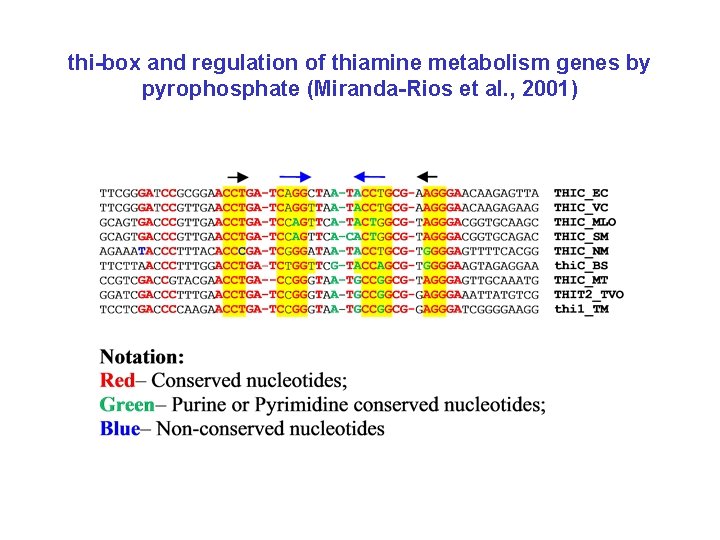
thi-box and regulation of thiamine metabolism genes by pyrophosphate (Miranda-Rios et al. , 2001)
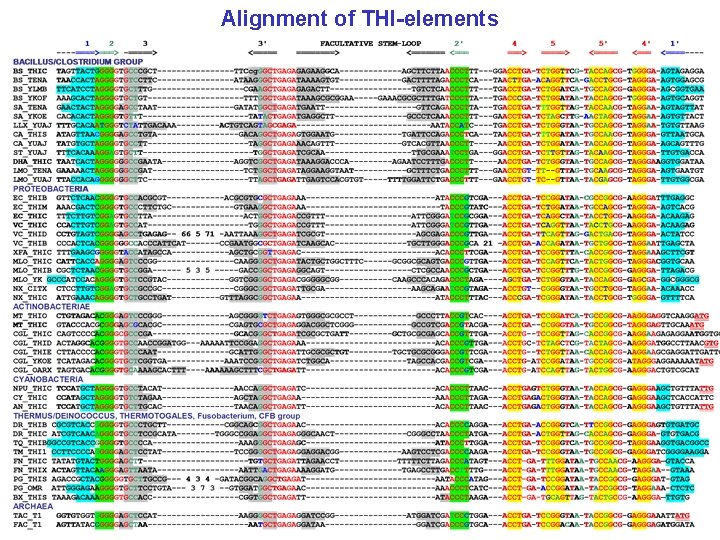
Alignment of THI-elements
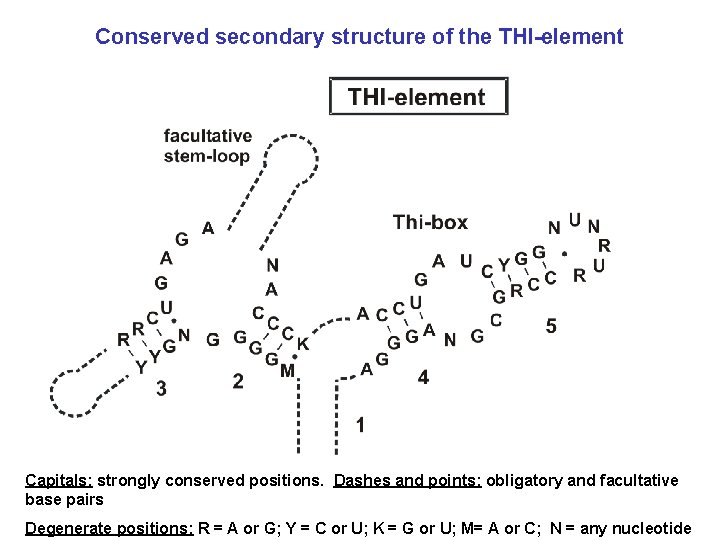
Conserved secondary structure of the THI-element Capitals: strongly conserved positions. Dashes and points: obligatory and facultative base pairs Degenerate positions: R = A or G; Y = C or U; K = G or U; M= A or C; N = any nucleotide
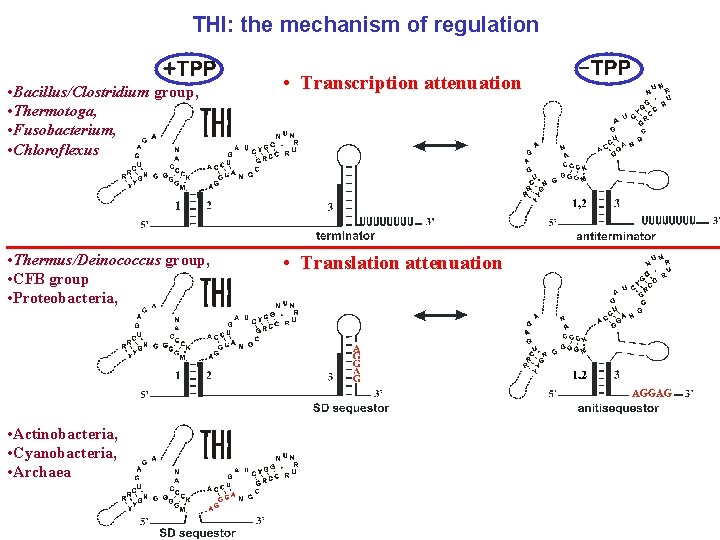
THI: the mechanism of regulation • Bacillus/Clostridium group, • Thermotoga, • Fusobacterium, • Chloroflexus • Thermus/Deinococcus group, • CFB group • Proteobacteria, • Actinobacteria, • Cyanobacteria, • Archaea • Transcription attenuation • Translation attenuation
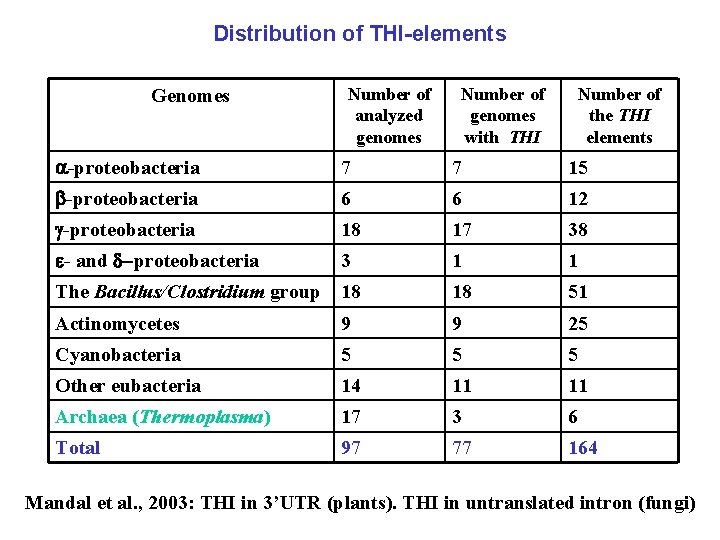
Distribution of THI-elements Genomes Number of analyzed genomes Number of genomes with THI Number of the THI elements a-proteobacteria 7 7 15 b-proteobacteria 6 6 12 g-proteobacteria 18 17 38 e- and d-proteobacteria 3 1 1 The Bacillus/Clostridium group 18 18 51 Actinomycetes 9 9 25 Cyanobacteria 5 5 5 Other eubacteria 14 11 11 Archaea (Thermoplasma) 17 3 6 Total 97 77 164 Mandal et al. , 2003: THI in 3’UTR (plants). THI in untranslated intron (fungi)

Predicted THI-regulated genes: transporters yua. J: predicted thiamin transporter (possibly H+-dependent) • • • Found only in the Bacillus/Clostridium group; Occurs in genomes without the thiamin pathway (Streptococci); Has 6 predicted transmembrane segments (TMS); Regulated by THI-elements in all cases with only one exception (E. faecalis); In B. cereus, the thiamin uptake is coupled to proton movement (Arch Microbiol, 1977). thi. X-thi. Y-thi. Z and yko. F-yko. E-yko. D-yko. C: predicted ATP-dependent HMP transporters • • • Found in some Proteobacteria and Firmicutes; Not found in genomes without the thiamin pathway; Always co-occur with thi. D and thi. E; In Pasteurellae, Brucella and some Gram-positive cocci, they are present without thi. C; Regulated by THI-elements in all cases with only one exception (T. maritima); Putative substrate-binding protein Thi. Y is homologous to Thi 12 from yeast, known to be involved in the biosynthesis of HMP
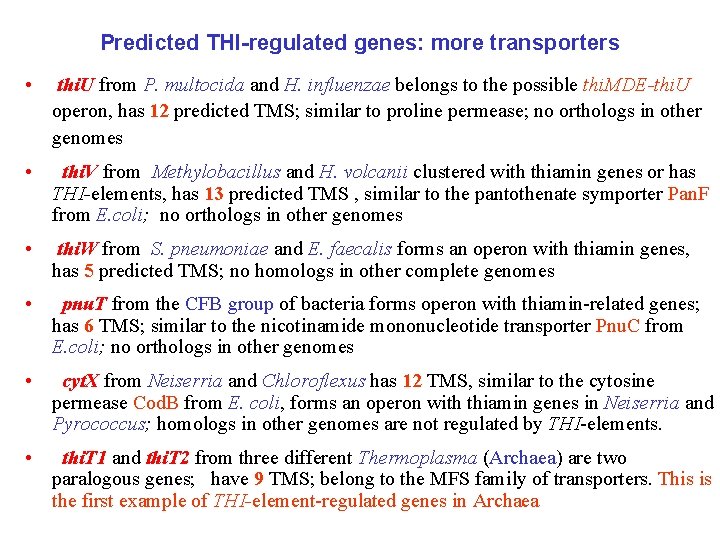
Predicted THI-regulated genes: more transporters • thi. U from P. multocida and H. influenzae belongs to the possible thi. MDE-thi. U operon, has 12 predicted TMS; similar to proline permease; no orthologs in other genomes • thi. V from Methylobacillus and H. volcanii clustered with thiamin genes or has THI-elements, has 13 predicted TMS , similar to the pantothenate symporter Pan. F from E. coli; no orthologs in other genomes • thi. W from S. pneumoniae and E. faecalis forms an operon with thiamin genes, has 5 predicted TMS; no homologs in other complete genomes • pnu. T from the CFB group of bacteria forms operon with thiamin-related genes; has 6 TMS; similar to the nicotinamide mononucleotide transporter Pnu. C from E. coli; no orthologs in other genomes • cyt. X from Neiserria and Chloroflexus has 12 TMS, similar to the cytosine permease Cod. B from E. coli, forms an operon with thiamin genes in Neiserria and Pyrococcus; homologs in other genomes are not regulated by THI-elements. • thi. T 1 and thi. T 2 from three different Thermoplasma (Archaea) are two paralogous genes; have 9 TMS; belong to the MFS family of transporters. This is the first example of THI-element-regulated genes in Archaea
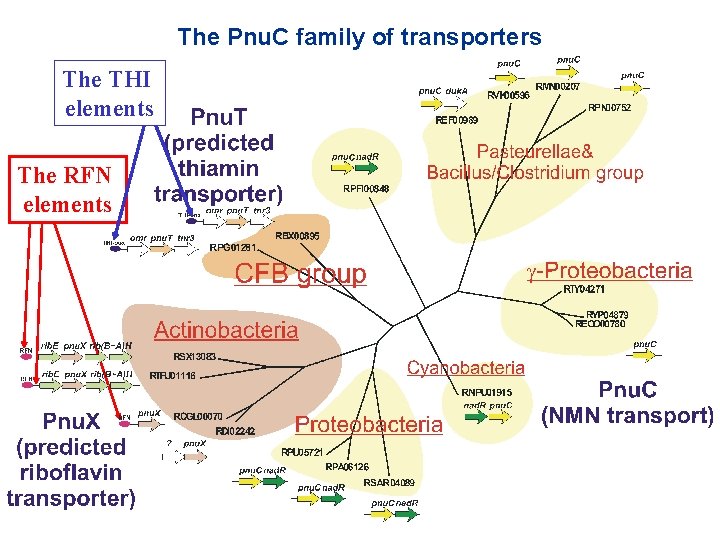
The Pnu. C family of transporters The THI elements The RFN elements
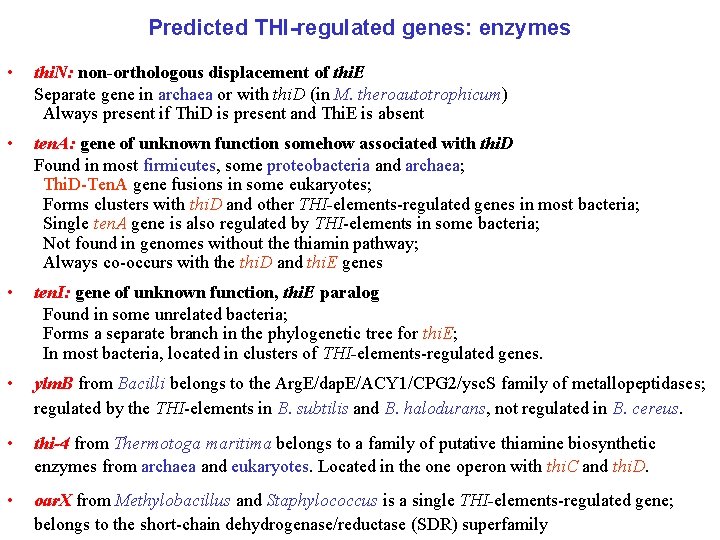
Predicted THI-regulated genes: enzymes • thi. N: non-orthologous displacement of thi. E Separate gene in archaea or with thi. D (in M. theroautotrophicum) Always present if Thi. D is present and Thi. E is absent • ten. A: gene of unknown function somehow associated with thi. D Found in most firmicutes, some proteobacteria and archaea; Thi. D-Ten. A gene fusions in some eukaryotes; Forms clusters with thi. D and other THI-elements-regulated genes in most bacteria; Single ten. A gene is also regulated by THI-elements in some bacteria; Not found in genomes without the thiamin pathway; Always co-occurs with the thi. D and thi. E genes • ten. I: gene of unknown function, thi. E paralog Found in some unrelated bacteria; Forms a separate branch in the phylogenetic tree for thi. E; In most bacteria, located in clusters of THI-elements-regulated genes. • ylm. B from Bacilli belongs to the Arg. E/dap. E/ACY 1/CPG 2/ysc. S family of metallopeptidases; regulated by the THI-elements in B. subtilis and B. halodurans, not regulated in B. cereus. • thi-4 from Thermotoga maritima belongs to a family of putative thiamine biosynthetic enzymes from archaea and eukaryotes. Located in the one operon with thi. C and thi. D. • oar. X from Methylobacillus and Staphylococcus is a single THI-elements-regulated gene; belongs to the short-chain dehydrogenase/reductase (SDR) superfamily
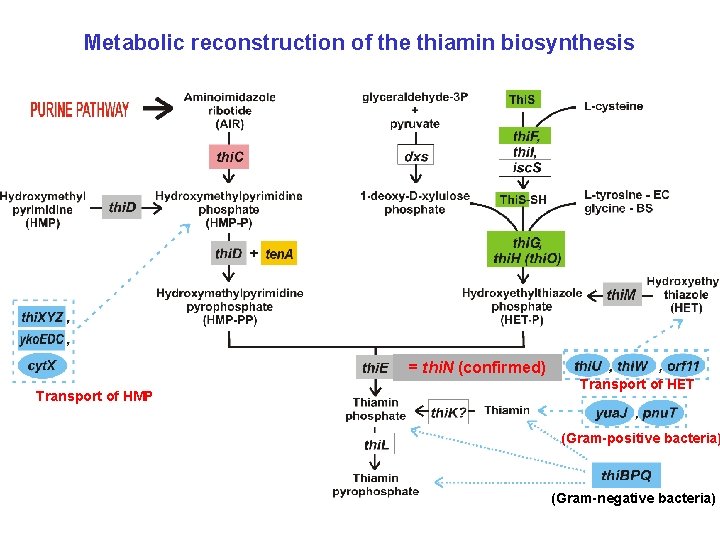
Metabolic reconstruction of the thiamin biosynthesis = thi. N (confirmed) Transport of HMP Transport of HET (Gram-positive bacteria) (Gram-negative bacteria)
THI-elements in delta-proteobacteria: co-operative binding? • Tandem arrangement of THI-elements upstream of the main thiamine operon thi. SGHFE 1 in Desulfovibrio spp. • Tandem arrangement of glycine riboswitches in B. subtilis and V. cholerae (Mandal et al. , 2004): – co-operative binding of the cofactor (glycine) – rapid activation/repression – same arrangement in all glycine riboswitches
B 12 -box and regulation of cobalamin metabolism genes by pyrophosphate (Nou & Kadner, 2000; Ravnum & Andersson, 2001; Nahvi et al. , 2002) • Long m. RNA leader is essential for regulation of btu. B by vitamin B 12. • Involvement of highly conserved B 12 -box r. AGYCMGg. Aga. CCk. GCcd in regulation of the cobalamin biosynthetic genes (E. coli, S. typhimurium) • Post-transcriptional regulation: RBS-sequestering hairpin is essential for regulation of the btu. B and cbi. A • Ado-CBL is an effector molecule involved in the regulation of the cobalamin biosynthesis genes
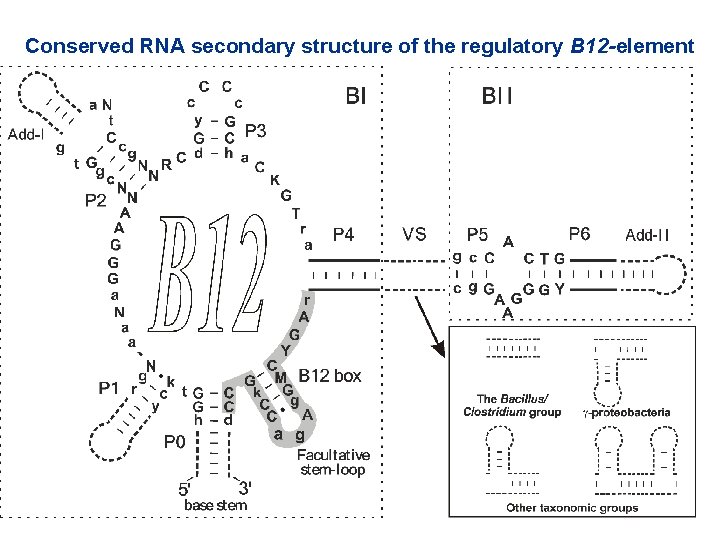
Conserved RNA secondary structure of the regulatory B 12 -element

The predicted mechanism of the B 12 -mediated regulation of cobalamin genes
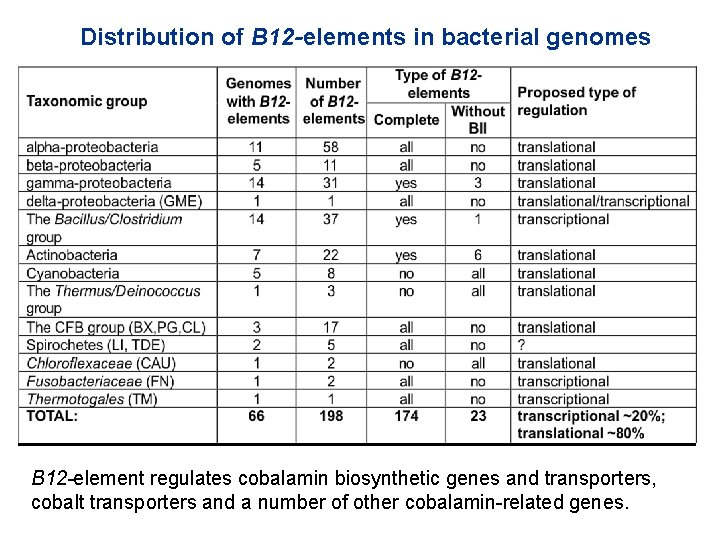
Distribution of B 12 -elements in bacterial genomes B 12 -element regulates cobalamin biosynthetic genes and transporters, cobalt transporters and a number of other cobalamin-related genes.
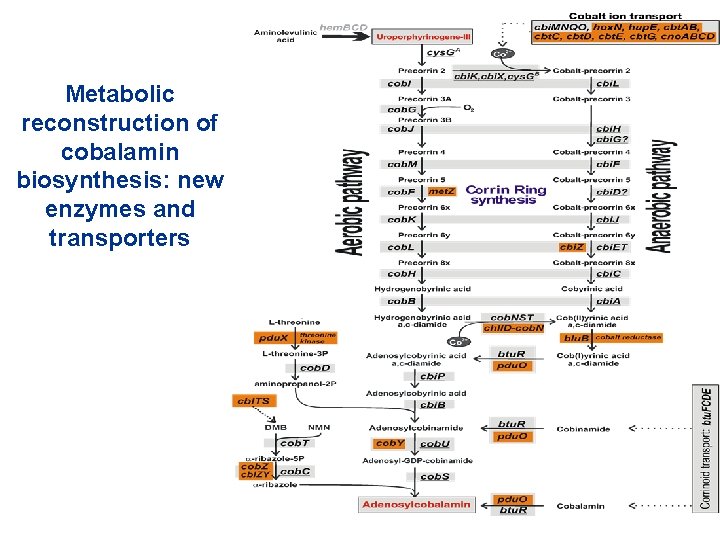
Metabolic reconstruction of cobalamin biosynthesis: new enzymes and transporters
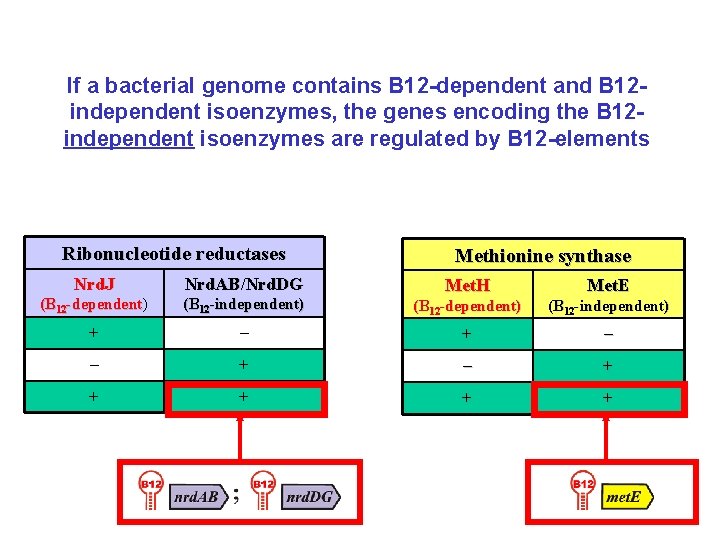
If a bacterial genome contains B 12 -dependent and B 12 independent isoenzymes, the genes encoding the B 12 independent isoenzymes are regulated by B 12 -elements Ribonucleotide reductases Nrd. J Nrd. AB/Nrd. DG (B 12 -dependent) -dependent Methionine synthase (B 12 -independent) Met. H Met. E (B 12 -dependent) (B 12 -independent) + – – + + +
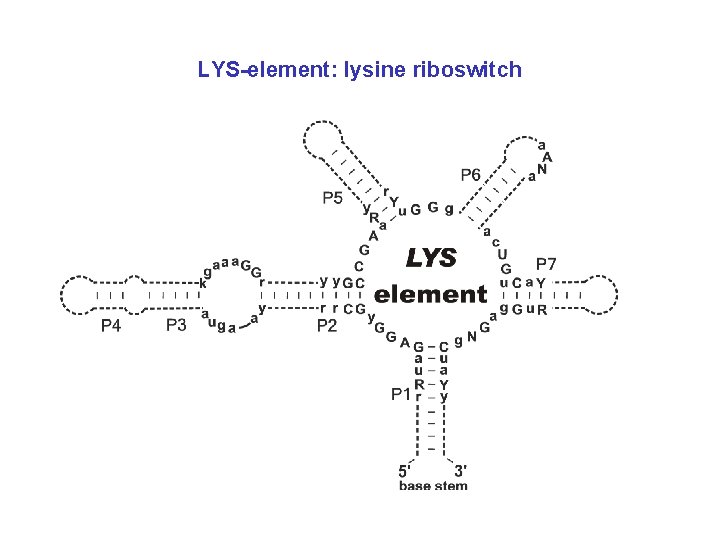
LYS-element: lysine riboswitch
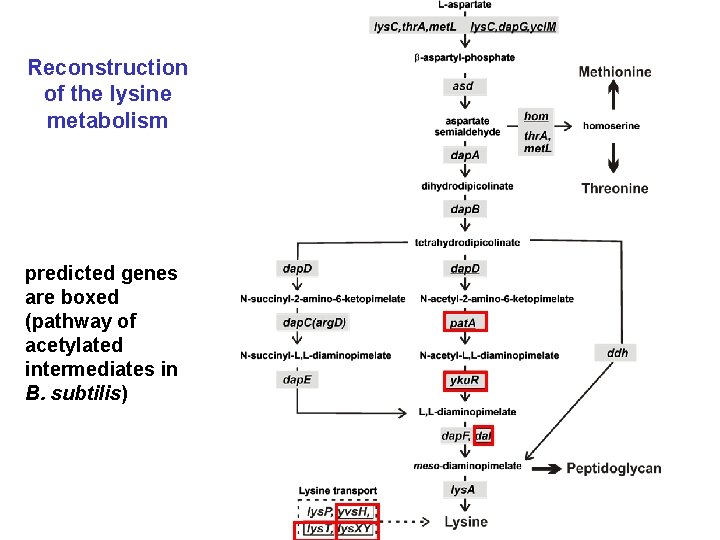
Reconstruction of the lysine metabolism predicted genes are boxed (pathway of acetylated intermediates in B. subtilis)
Regulation of lysine catabolism: the first example of an activating riboswitch • LYS-elements upstream of psp. Fkam. ADEato. DA operon in Thermoanaerobacter tengcongensis; kam. ADElys. E operon in Fusobacterium nucleatum – lysine catablism pathway – LYS element overlaps candidate terminator => acts as activator • similar architecture of activating adenine riboswitch upstream of purine efflux pump ydh. L (pbu. E) in B. subtilis (Mandal and Breaker, 2004)
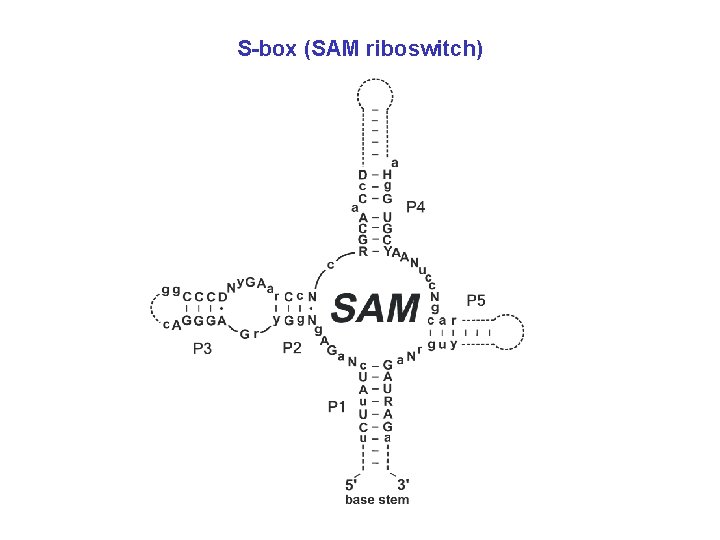
S-box (SAM riboswitch)
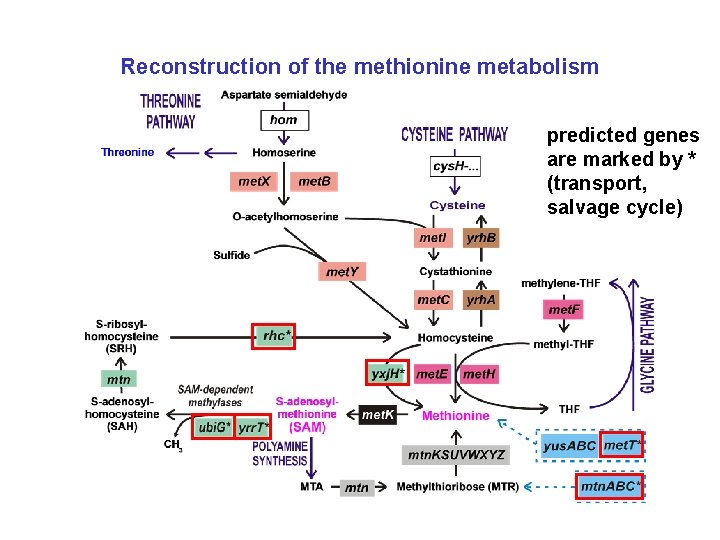
Reconstruction of the methionine metabolism predicted genes are marked by * (transport, salvage cycle)
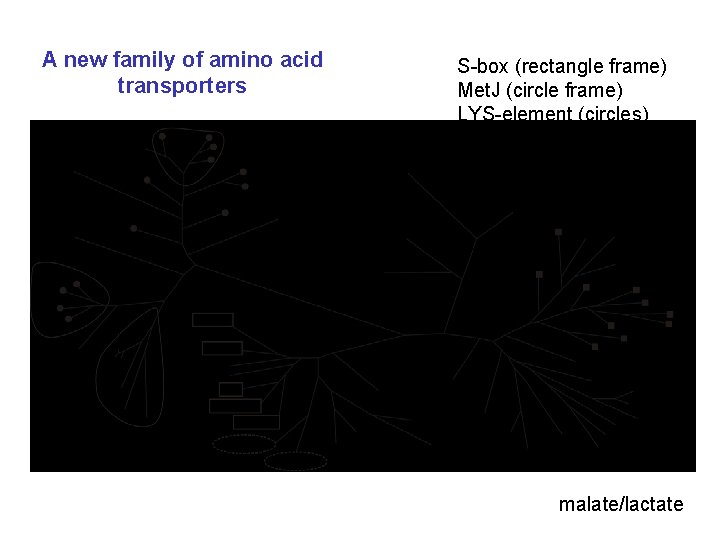
A new family of amino acid transporters S-box (rectangle frame) Met. J (circle frame) LYS-element (circles) Tyr-T-box (rectangles) malate/lactate
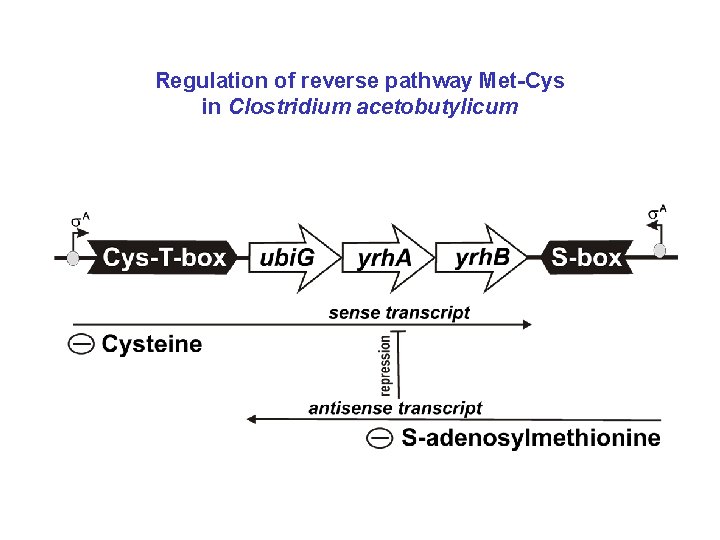
Regulation of reverse pathway Met-Cys in Clostridium acetobutylicum
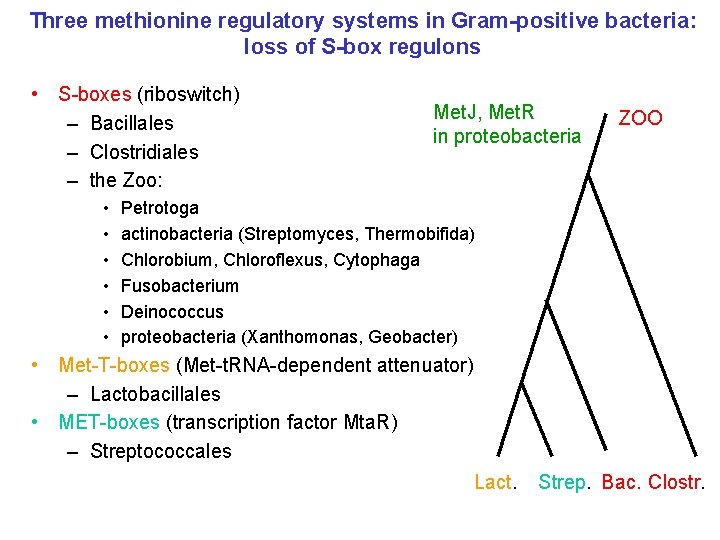
Three methionine regulatory systems in Gram-positive bacteria: loss of S-box regulons • S-boxes (riboswitch) – Bacillales – Clostridiales – the Zoo: • • • Met. J, Met. R in proteobacteria ZOO Petrotoga actinobacteria (Streptomyces, Thermobifida) Chlorobium, Chloroflexus, Cytophaga Fusobacterium Deinococcus proteobacteria (Xanthomonas, Geobacter) • Met-T-boxes (Met-t. RNA-dependent attenuator) – Lactobacillales • MET-boxes (transcription factor Mta. R) – Streptococcales Lact. Strep. Bac. Clostr.
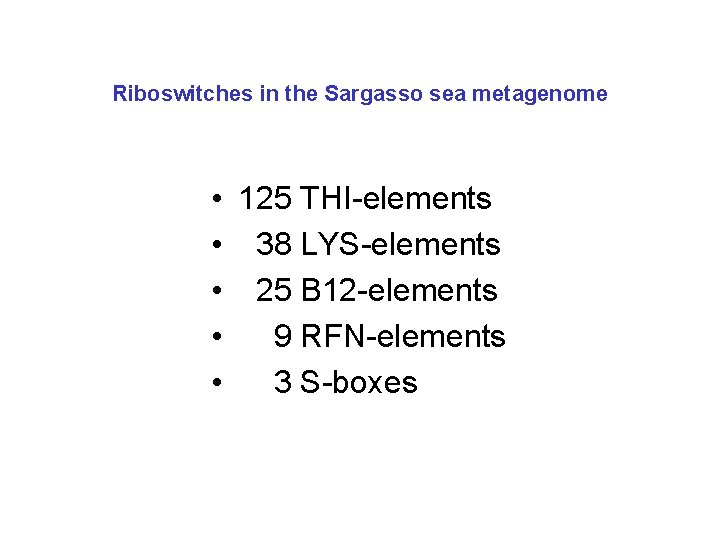
Riboswitches in the Sargasso sea metagenome • 125 THI-elements • 38 LYS-elements • 25 B 12 -elements • 9 RFN-elements • 3 S-boxes
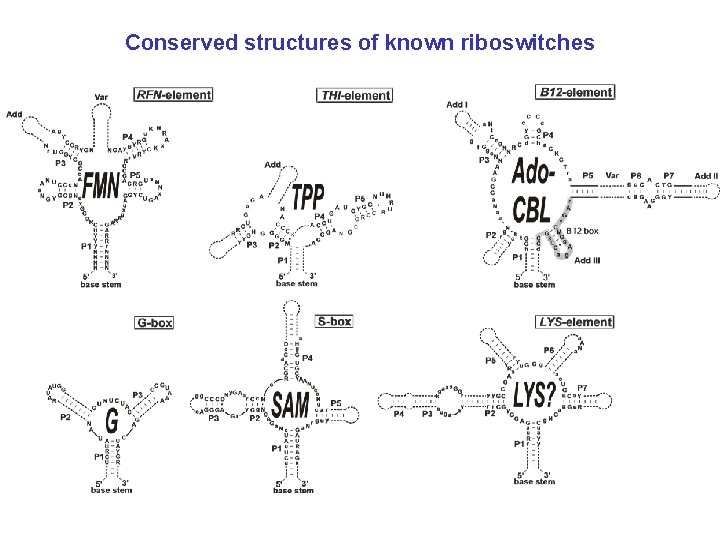
Conserved structures of known riboswitches
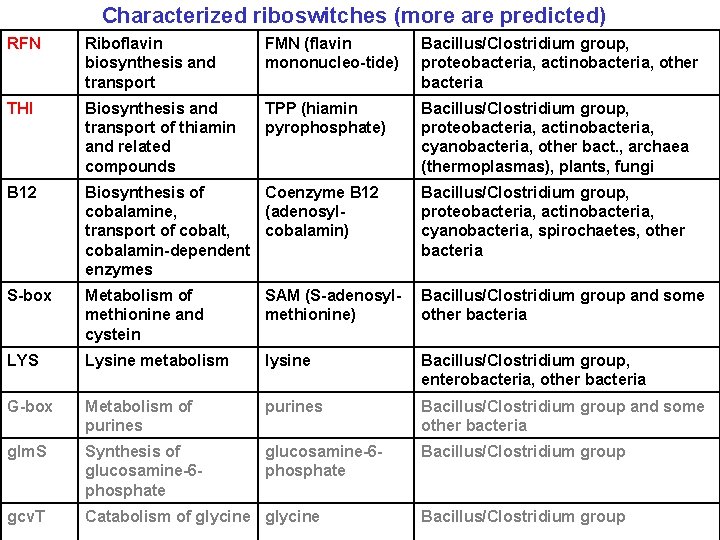
Characterized riboswitches (more are predicted) RFN Riboflavin biosynthesis and transport FMN (flavin mononucleo-tide) Bacillus/Clostridium group, proteobacteria, actinobacteria, other bacteria THI Biosynthesis and transport of thiamin and related compounds TPP (hiamin pyrophosphate) Bacillus/Clostridium group, proteobacteria, actinobacteria, cyanobacteria, other bact. , archaea (thermoplasmas), plants, fungi B 12 Biosynthesis of Coenzyme B 12 cobalamine, (adenosyltransport of cobalt, cobalamin) cobalamin-dependent enzymes Bacillus/Clostridium group, proteobacteria, actinobacteria, cyanobacteria, spirochaetes, other bacteria S-box Metabolism of methionine and cystein SAM (S-adenosylmethionine) Bacillus/Clostridium group and some other bacteria LYS Lysine metabolism lysine Bacillus/Clostridium group, enterobacteria, other bacteria G-box Metabolism of purines Bacillus/Clostridium group and some other bacteria glm. S Synthesis of glucosamine-6 phosphate Bacillus/Clostridium group gcv. T Catabolism of glycine Bacillus/Clostridium group
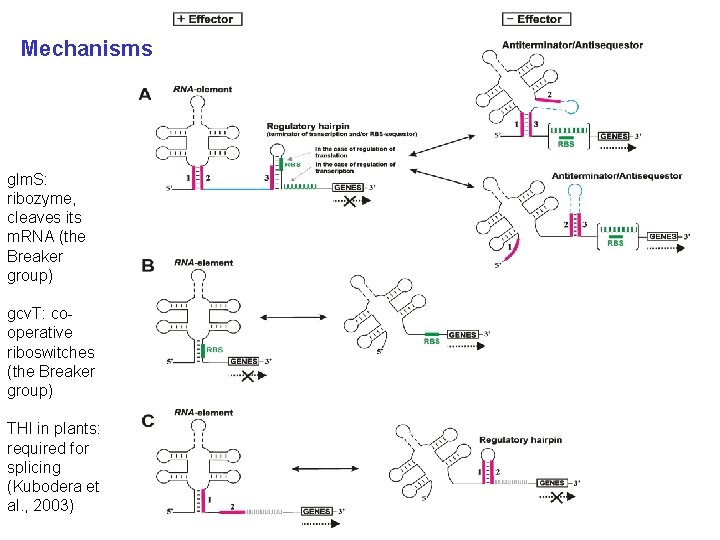
Mechanisms glm. S: ribozyme, cleaves its m. RNA (the Breaker group) gcv. T: cooperative riboswitches (the Breaker group) THI in plants: required for splicing (Kubodera et al. , 2003)
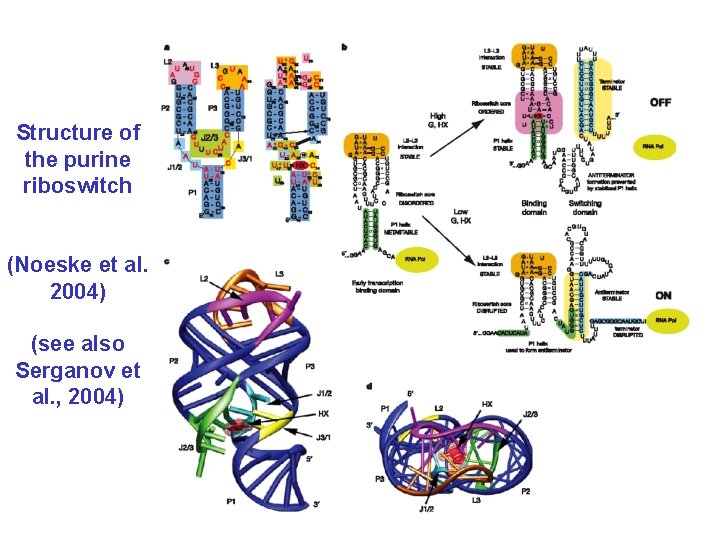
Structure of the purine riboswitch (Noeske et al. 2004) (see also Serganov et al. , 2004)
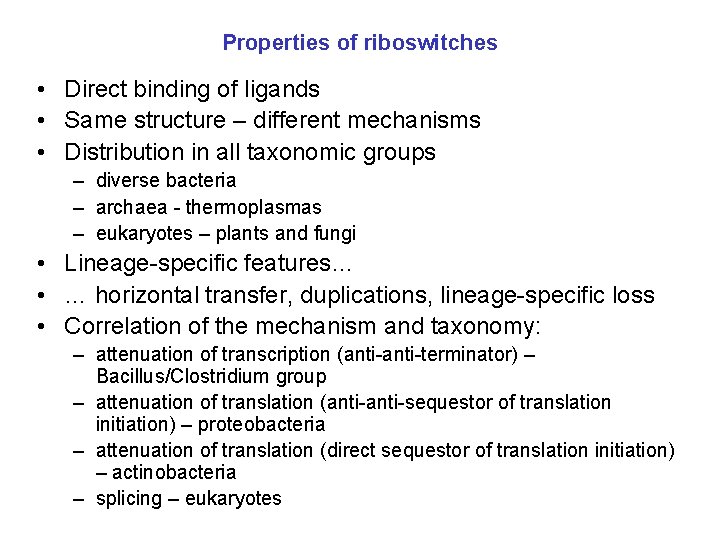
Properties of riboswitches • Direct binding of ligands • Same structure – different mechanisms • Distribution in all taxonomic groups – diverse bacteria – archaea - thermoplasmas – eukaryotes – plants and fungi • Lineage-specific features… • … horizontal transfer, duplications, lineage-specific loss • Correlation of the mechanism and taxonomy: – attenuation of transcription (anti-terminator) – Bacillus/Clostridium group – attenuation of translation (anti-sequestor of translation initiation) – proteobacteria – attenuation of translation (direct sequestor of translation initiation) – actinobacteria – splicing – eukaryotes
• Andrei Mironov – software genome analysis, conserved RNA patterns • Alexei Vitreschak – analysis of RNA structures • Dmitry Rodionov – metabolic reconstruction • Support: – – Howard Hughes Medical Institute INTAS Russian Fund of Basic Research Russian Academy of Sciences
- Slides: 43