
Rhythmic disturbance in motor speech disorders Anja Lowit
Rhythmic disturbance in motor speech disorders Anja Lowit Strathclyde University Glasgow, UK
Prosody – more than the icing on the cake? Linguistic functions: • informational • grammatical/syntactic • lexical • textual • discourse • illocutionary Non- /paralinguistic functions: • attitudinal • indexical Therapeutic Function
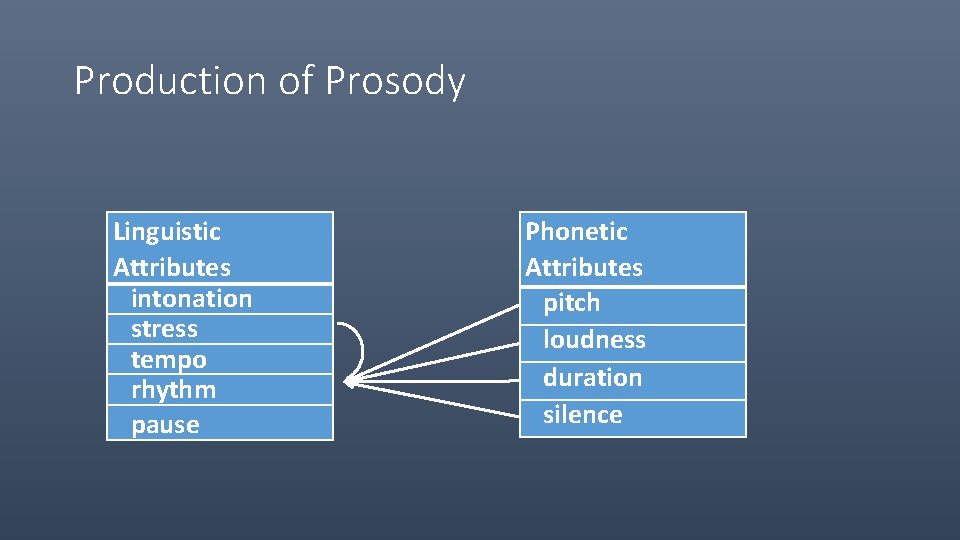
Production of Prosody Linguistic Attributes intonation stress tempo rhythm pause Phonetic Attributes pitch loudness duration silence
Rhythm - Definition “a strong, regular repeated pattern of movement or sound” “the measured flow of words and phrases in verse or prose as determined by the relation of long and short or stressed and unstressed syllables”
Rhythm • Language differ according to their rhythmic patterns • There are three main categories: - Stress-timed (e. g. English) - Syllable timed (e. g. French) - Mora-timed (e. g. Japanese)
• European languages fall into the first two categories • The difference between stress- and syllable-timing can be represented as a continuum, rather than distinct categories • English is a stress-timed language and lexical stress is therefore crucial in the production of rhythm.
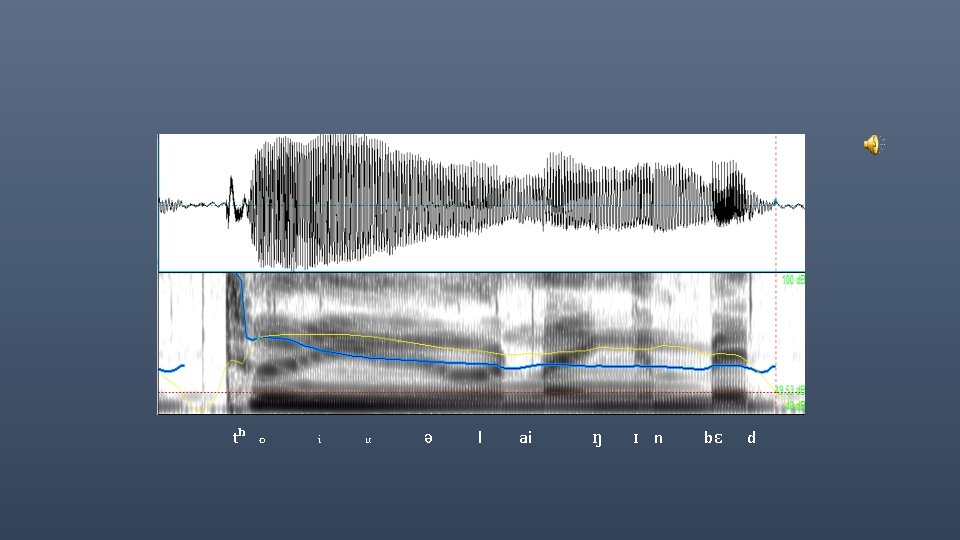
Stress-timing • rhythmic unit = foot (one stressed syllables + all unstressed syllables until next stressed one): │ Lisa is │ coming │ home to│ night │ • tendency to equalise duration of each foot= isochrony (equal timing) • to achieve this, unstressed syllables are reduced by means of: • vowel reduction, c. f. tonight [tʰənɑɪt] • elision, c. f. Lisa is => Lisa’s
Stress • In order to maintain a regular rhythm, accurate placement of lexical stress is very important │ Lisa is │ coming │ home to│ night │ • Lexical stress minimal pairs in English: e. g. object vs. object
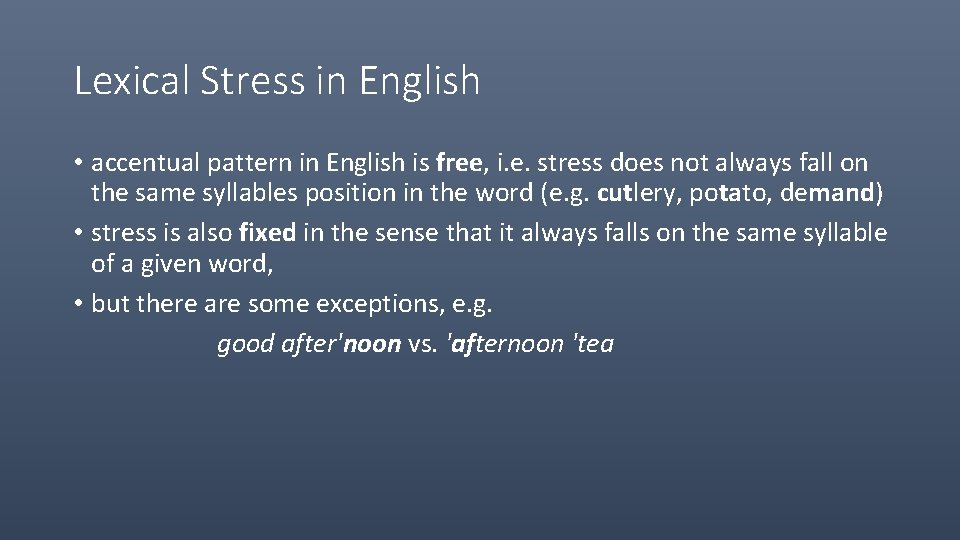
Lexical Stress in English • accentual pattern in English is free, i. e. stress does not always fall on the same syllables position in the word (e. g. cutlery, potato, demand) • stress is also fixed in the sense that it always falls on the same syllable of a given word, • but there are some exceptions, e. g. good after'noon vs. 'afternoon 'tea
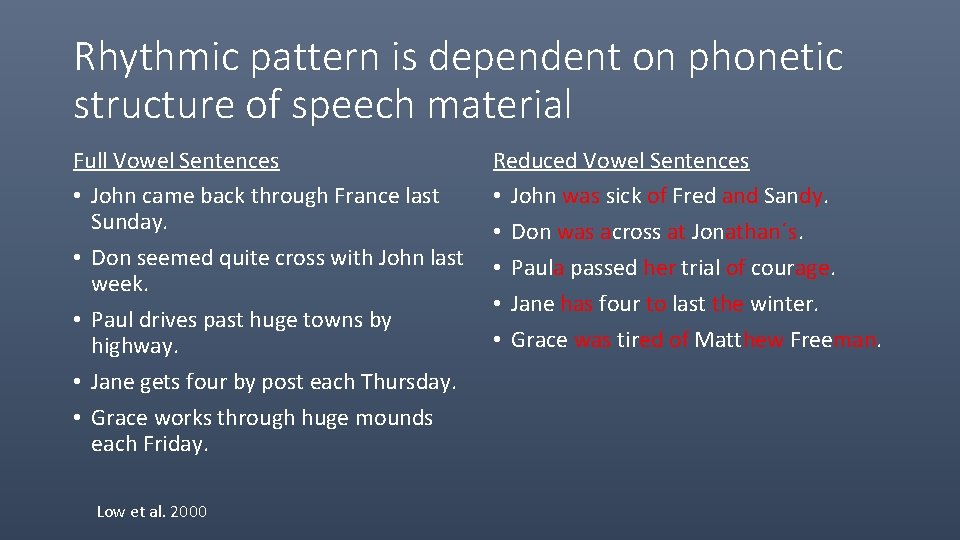
Rhythmic pattern is dependent on phonetic structure of speech material Full Vowel Sentences • John came back through France last Sunday. • Don seemed quite cross with John last week. • Paul drives past huge towns by highway. • Jane gets four by post each Thursday. • Grace works through huge mounds each Friday. Low et al. 2000 Reduced Vowel Sentences • John was sick of Fred and Sandy. • Don was across at Jonathan´s. • Paula passed her trial of courage. • Jane has four to last the winter. • Grace was tired of Matthew Freeman.
Summary • Rhythm is a complex phenomenon that is closely related to lexical stress and thus multiple phonetic parameters • Rhythmic structure differs from language to language • In addition, rhythm can vary within languages depending on the phonetic make-up of the message, i. e. it is task-dependent
Why is rhythm important? • Speech perception: signals word boundaries important for speech segmentation => disturbance impacts on intelligibility (Kotz and Schwartze, 2010; Patel, 2011; Peelle and Davis, 2012). • Rhythm also impacts on language planning (grammatical and prosodic encoding of utterances) (Roncallia-Denissen et al. 2013, Zhang 2019) • Rhythm supports effective production of motor movements (Rieke 2018, Ziegler MPT), and is important for social interaction (entrainment) (Fujii & Wan 2014)

Assessment of Rhythm
Rhythm in Clinical Populations 2 categories: 1. Rhythmic disturbances as a primary symptom of the underlying neuropathology, e. g. cerebellar dysfunction leading to poor sequencing and coordination of movements, typically described as “scanning speech” 2. Rhythmic disturbance as a secondary consequence of another speech problem, e. g. inappropriate pausing, reduced rate, increased rate/short rushes of speech, fluency disorders

Liss et al. 2009
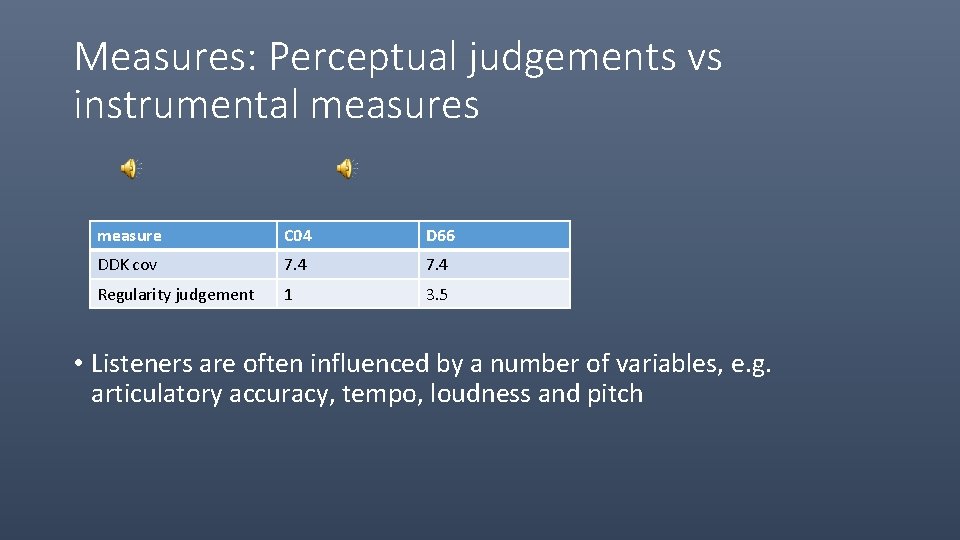
Measures: Perceptual judgements vs instrumental measures measure C 04 D 66 DDK cov 7. 4 Regularity judgement 1 3. 5 • Listeners are often influenced by a number of variables, e. g. articulatory accuracy, tempo, loudness and pitch
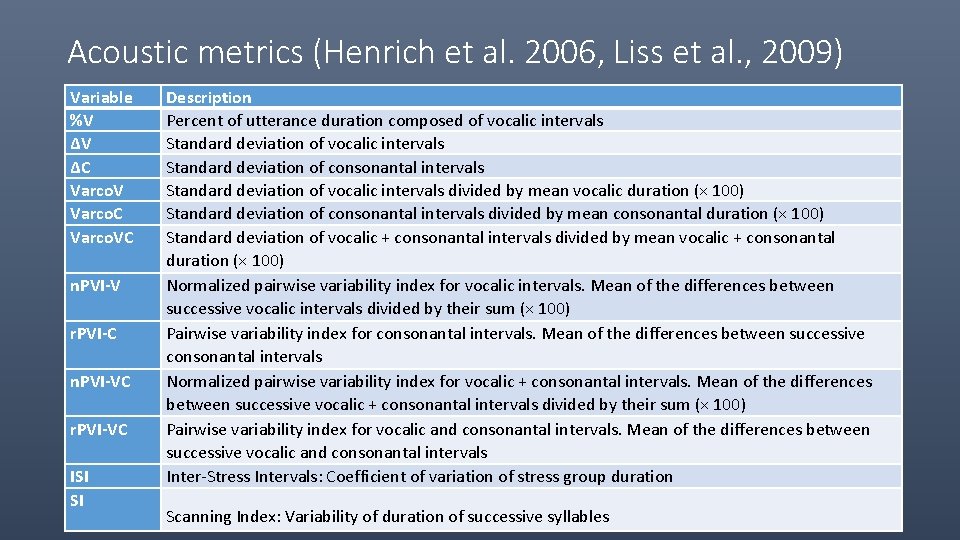
Acoustic metrics (Henrich et al. 2006, Liss et al. , 2009) Variable %V ∆V ∆C Varco. V Varco. C Varco. VC n. PVI-V r. PVI-C n. PVI-VC r. PVI-VC ISI SI Description Percent of utterance duration composed of vocalic intervals Standard deviation of consonantal intervals Standard deviation of vocalic intervals divided by mean vocalic duration (× 100) Standard deviation of consonantal intervals divided by mean consonantal duration (× 100) Standard deviation of vocalic + consonantal intervals divided by mean vocalic + consonantal duration (× 100) Normalized pairwise variability index for vocalic intervals. Mean of the differences between successive vocalic intervals divided by their sum (× 100) Pairwise variability index for consonantal intervals. Mean of the differences between successive consonantal intervals Normalized pairwise variability index for vocalic + consonantal intervals. Mean of the differences between successive vocalic + consonantal intervals divided by their sum (× 100) Pairwise variability index for vocalic and consonantal intervals. Mean of the differences between successive vocalic and consonantal intervals Inter-Stress Intervals: Coefficient of variation of stress group duration Scanning Index: Variability of duration of successive syllables
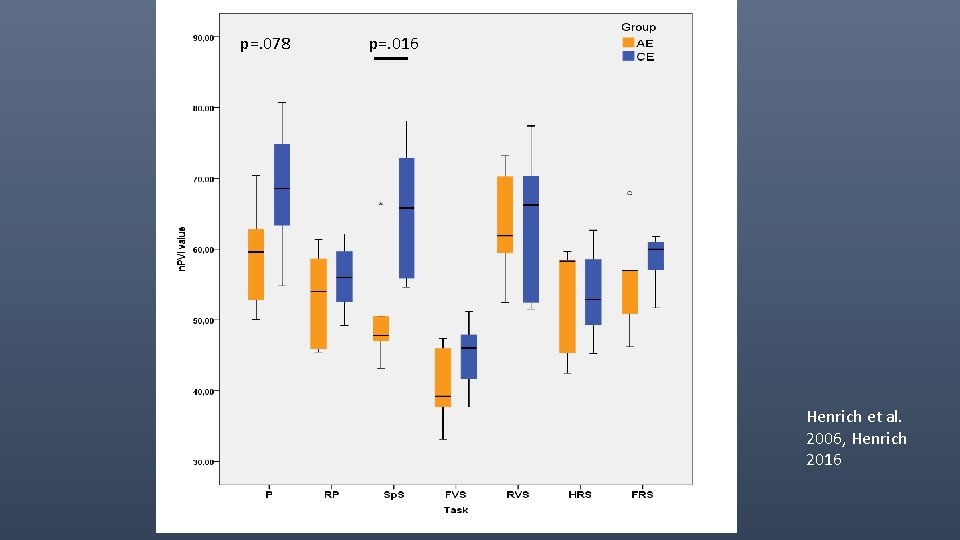
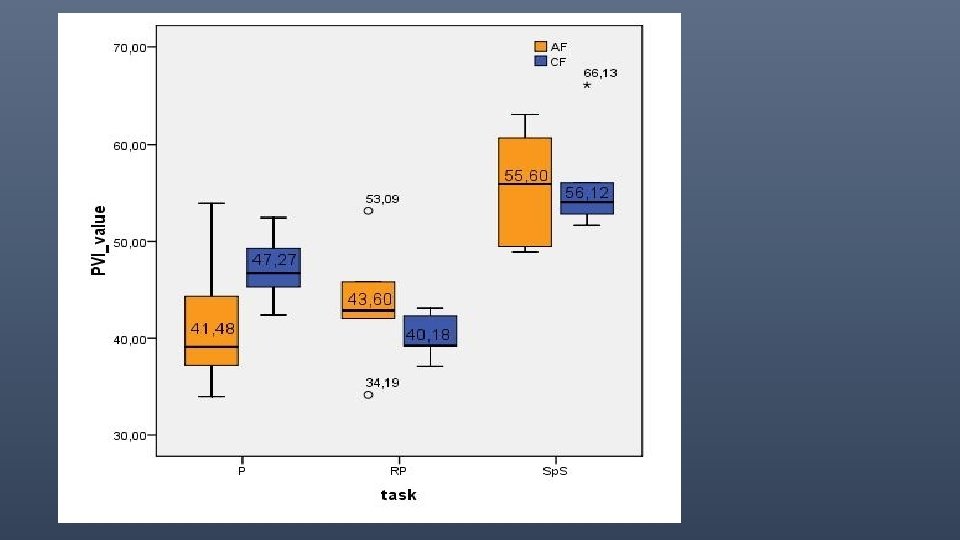
p=. 078 p=. 016 • Henrich 2016 Henrich et al. 2006, Henrich 2016
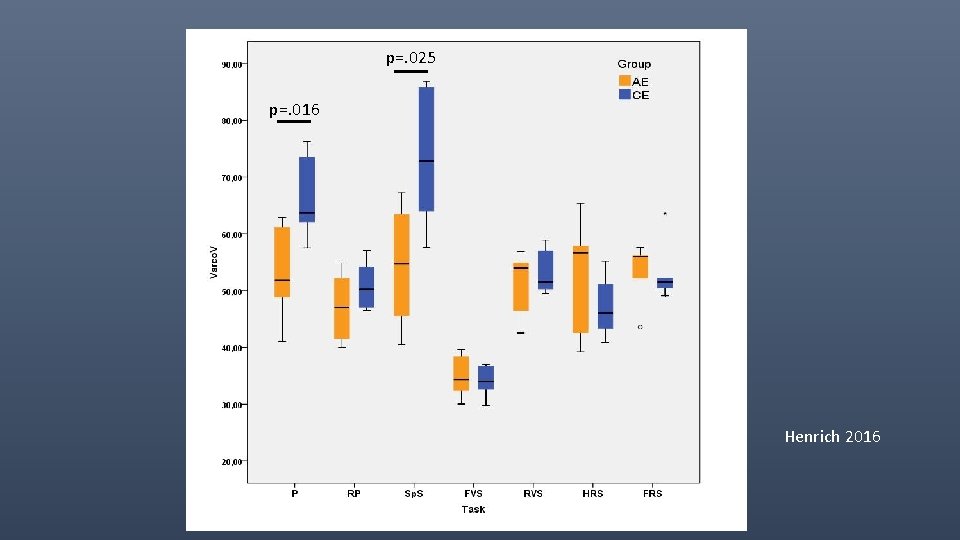
p=. 025 p=. 016 Henrich 2016
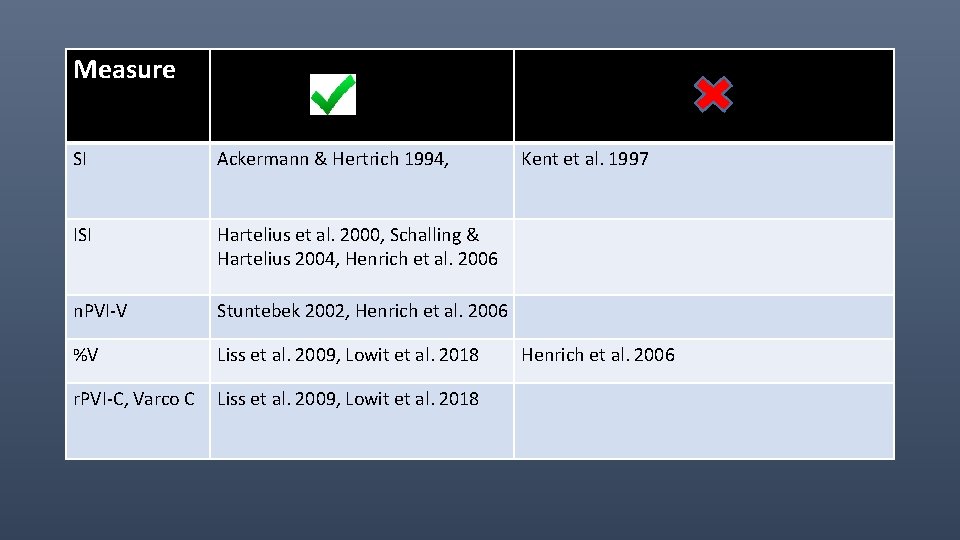
Measure SI Ackermann & Hertrich 1994, ISI Hartelius et al. 2000, Schalling & Hartelius 2004, Henrich et al. 2006 n. PVI-V Stuntebek 2002, Henrich et al. 2006 %V Liss et al. 2009, Lowit et al. 2018 r. PVI-C, Varco C Liss et al. 2009, Lowit et al. 2018 Kent et al. 1997 Henrich et al. 2006
Task: • Sentence/passage reading • Spontaneous speech • DDK sequences • Contrastive stress tasks
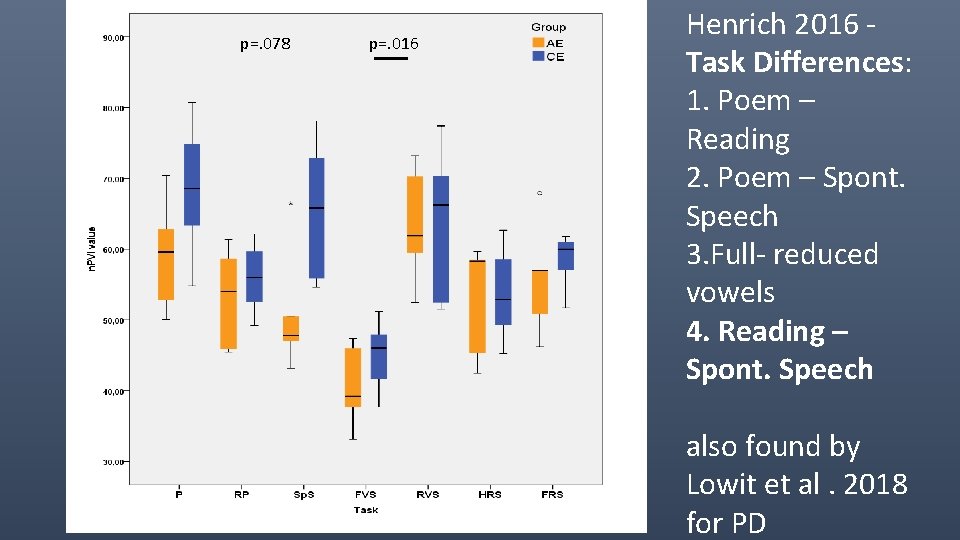
p=. 078 p=. 016 Henrich 2016 Task Differences: 1. Poem – Reading 2. Poem – Spont. Speech 3. Full- reduced vowels 4. Reading – Spont. Speech also found by Lowit et al. 2018 for PD
Summary • Evaluation of rhythm varies across metrics applied • Speaker performance varies across tasks • Objective measurements do not distinguish between primary and secondary rhythmic impairment
So what now? Detailed evaluation of speech patterns
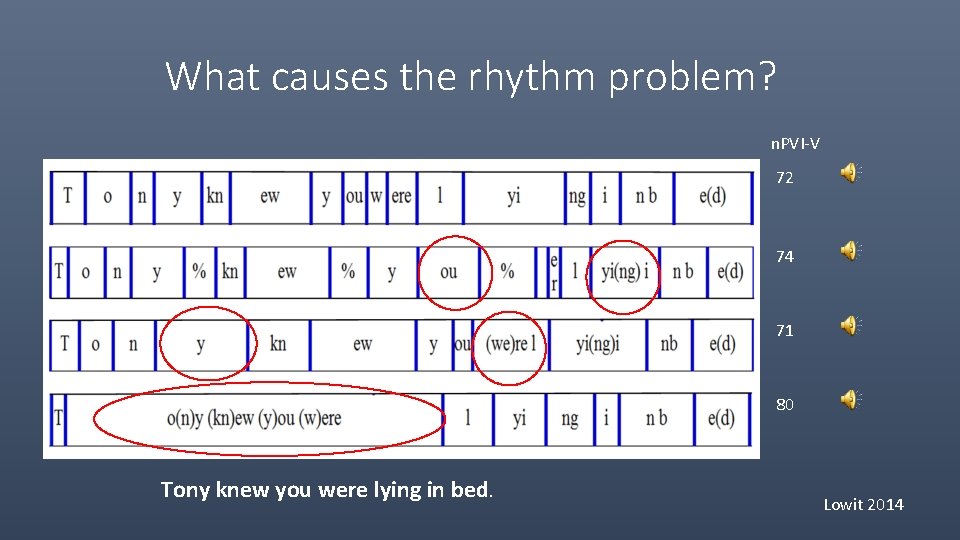
What causes the rhythm problem? n. PVI-V 72 74 71 80 Tony knew you were lying in bed. Lowit 2014
Swimming with dolphins
I prefer ([pfɜr]) the atmosphere
As for accommodation ([komdeiʃ])
tʰ o i u ə l ai ŋ ɪ n bɛ d
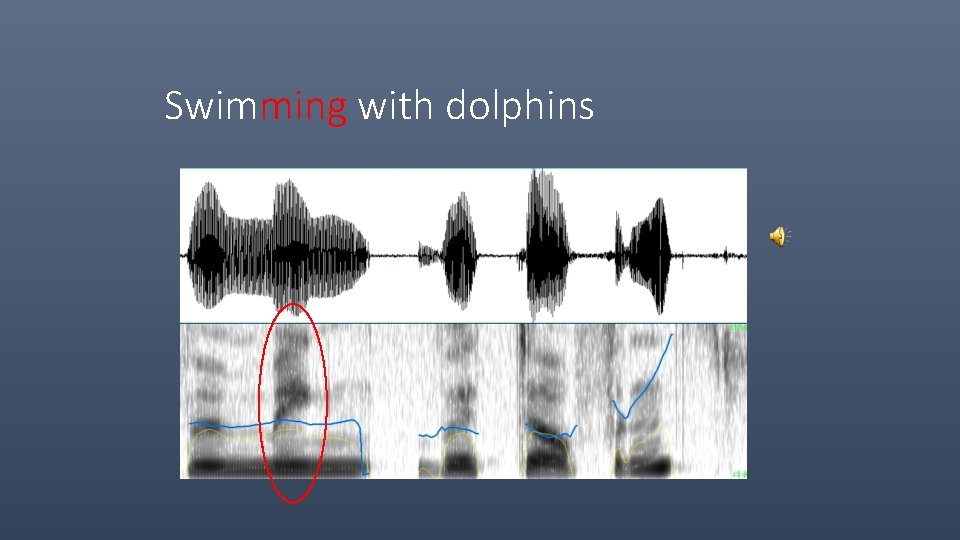
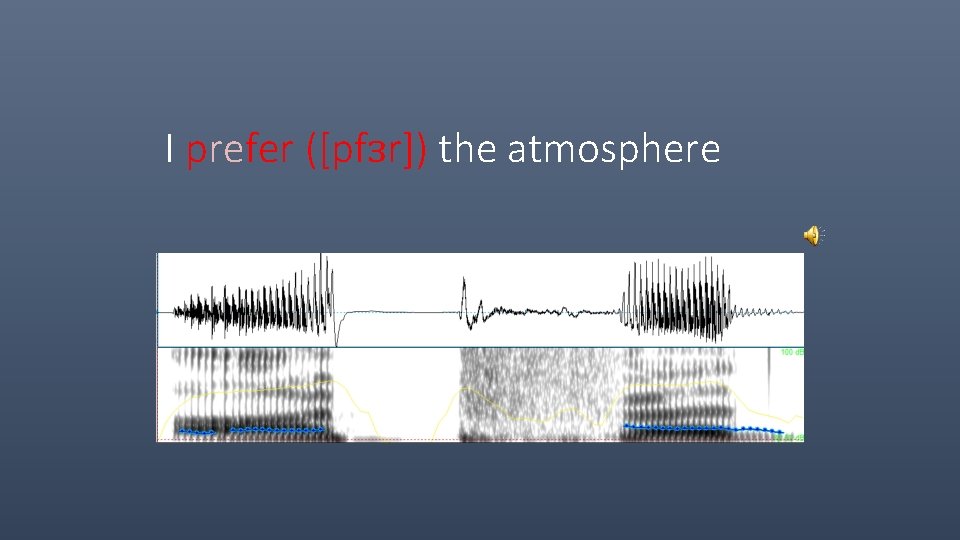
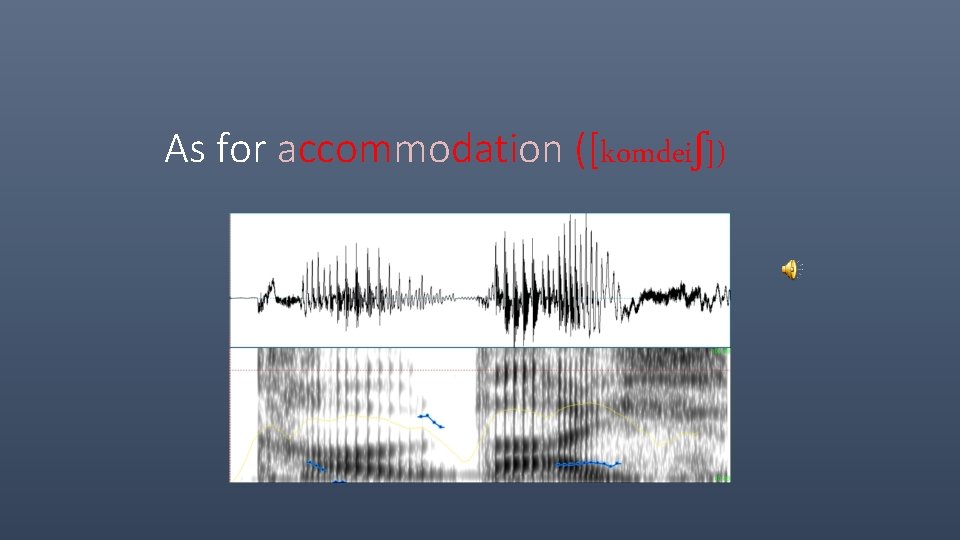
Different speech phenomena impacting on rhythm • Prolongation of unstressed syllables (typical scanning speech presentation) • Elision of unstressed syllables • Stressing inappropriate syllables/lack of stress differentiation • Fusion of several syllables • Problems in phrasing, introducing additional phrase final lengthening • Changes in tempo, intonation, loudness
Treatment of rhythmic problems • Growing research on using rhythmic cueing to facilitate speech/gross motor movements across a number of disorders (see Fujii & Wan 2014 for a review) • No literature available on treatment of speech rhythm disturbance • Need to consider carefully why to treat rhythm
• Potential areas to address: • Altered rate and pausing: • How do speech rate and phrasing impact on rhythm? Is that a problem? Could rate management strategies improve this? • Syllable/Phoneme Elision: • Do rate reduction and/or clear speech strategies address this problem?
Inappropriate stress placement / lack of stress differentiation: • Does slowing down/clear speech improve this? • Work on stress placement, initially in contrastive stress contexts • Contrastive stress exercises mostly focus on sentence stress, but here lexical stress is more relevant
Improving stress production: • Stress is usually produced by modulating pitch, loudness and duration • Focusing on three different speech aspects at the same time can be difficult for speakers with dysarthria • Research across a number of disorders generally indicates that speakers can continue to modulate at least one aspect, e. g. in cerebral palsy (Patel and Campellone 2009), traumatic brain injury (Mc. Henry 1998, Simmons 1983, Wang et al. 2005, Yorkston and Beukelman 1981, Yorkston et al. 1984), Parkinson’s disease (Cheang and Pell 2007, Darkins et al. 1988, Gaviria 2015, Tykalova et al. 2014), multiple sclerosis (Hartelius et al. 1997), different types of ataxia (Liss and Weismer 1994, Lowit et al. 2010, 2014), and Foreign Accent Syndrome (Kuschmann and Lowit 2012).
• Lab based speech manipulations have shown that one feature is sufficient to make a syllable sound more prominent than others, with all others remaining constant • How are these effects translated into real speech and clinical contexts?
• Existing literature often only looked at acoustics without matching the results to the perceptual impression => • Currently no guidance available to clinicians whether some phonetic aspects or combinations are more effective than others. • Very few actual treatment studies, with inconsistent results (Hartelius et al. 1997; Simmons 1983, Yorkston & Beukelman 1981)
Lowit et al. (2018) What Does It Take to Stress a Word? Digital Manipulation of Stress Markers in Ataxic Dysarthria. Research Questions: 1. What is the minimum amount of change in a single stress marker necessary to achieve significant improvement in stress target identification? 2. Can stress be signalled more effectively with a combination of stress markers? 3. Do strategies need to differ according to the underlying reasons for ineffective stress marking?
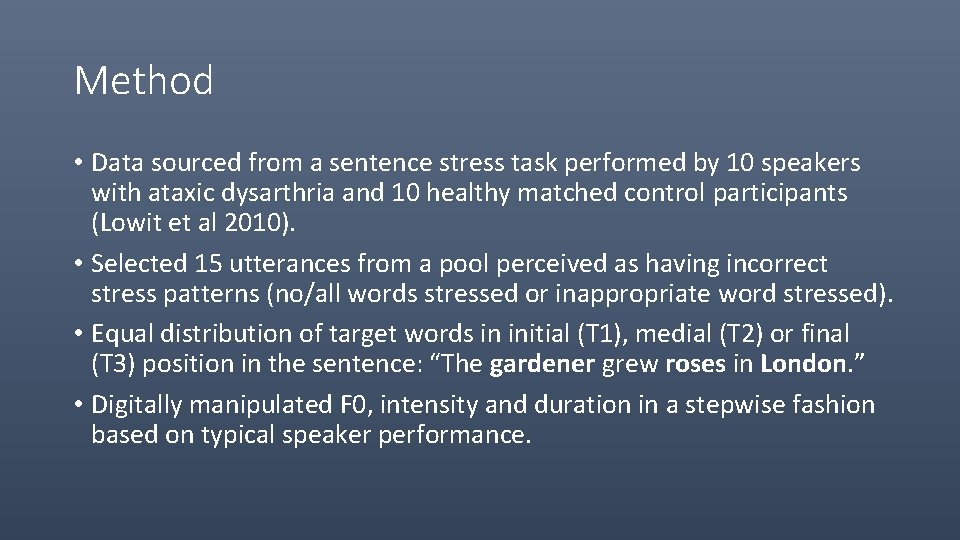
Method • Data sourced from a sentence stress task performed by 10 speakers with ataxic dysarthria and 10 healthy matched control participants (Lowit et al 2010). • Selected 15 utterances from a pool perceived as having incorrect stress patterns (no/all words stressed or inappropriate word stressed). • Equal distribution of target words in initial (T 1), medial (T 2) or final (T 3) position in the sentence: “The gardener grew roses in London. ” • Digitally manipulated F 0, intensity and duration in a stepwise fashion based on typical speaker performance.
Method cont. • Acoustic manipulations either in isolation or combination of 2 or all 3 parameters, and/or modification of pitch contours for utterances with stress on inappropriate targets. • 50 naïve listeners scored which word they perceived as being stressed. • “Test of 2 proportions” to identify at what point the result was significantly different to the baseline
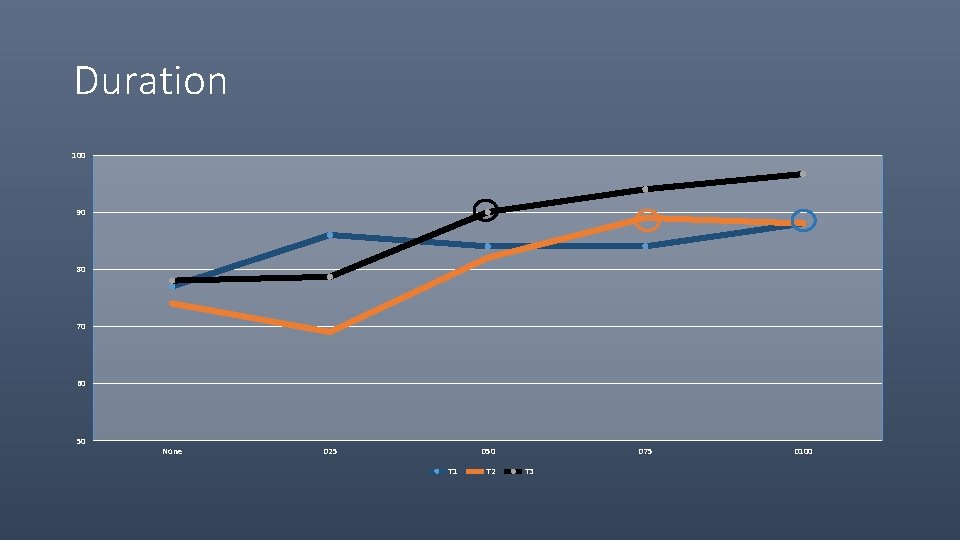
Duration 100 90 80 70 60 50 None D 25 D 50 T 1 T 2 D 75 T 3 D 100
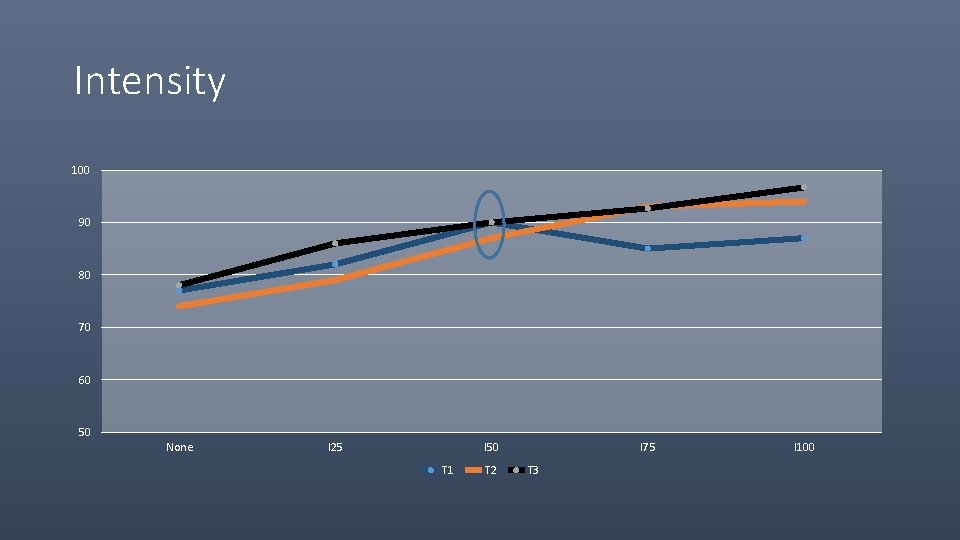
Intensity 100 90 80 70 60 50 None I 25 I 50 T 1 T 2 I 75 T 3 I 100
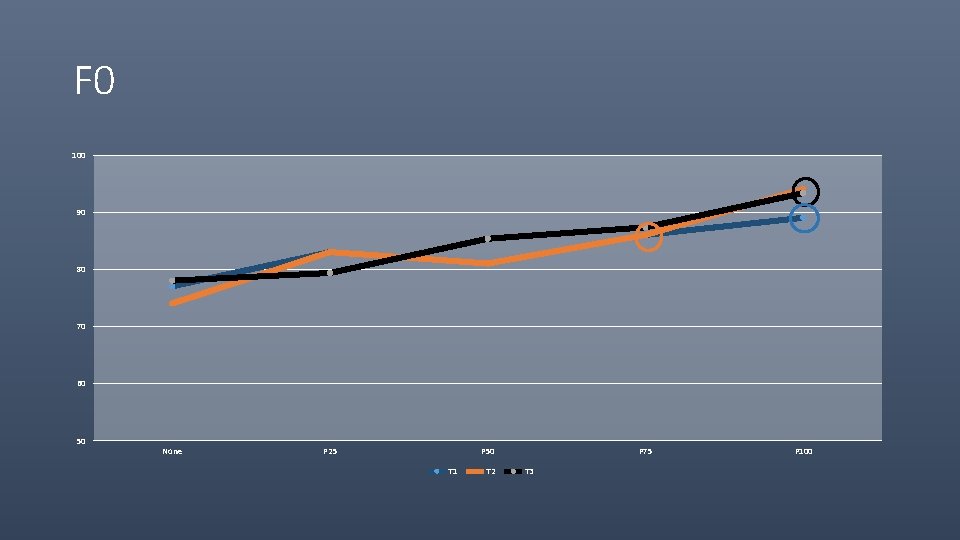
F 0 100 90 80 70 60 50 None P 25 P 50 T 1 T 2 P 75 T 3 P 100
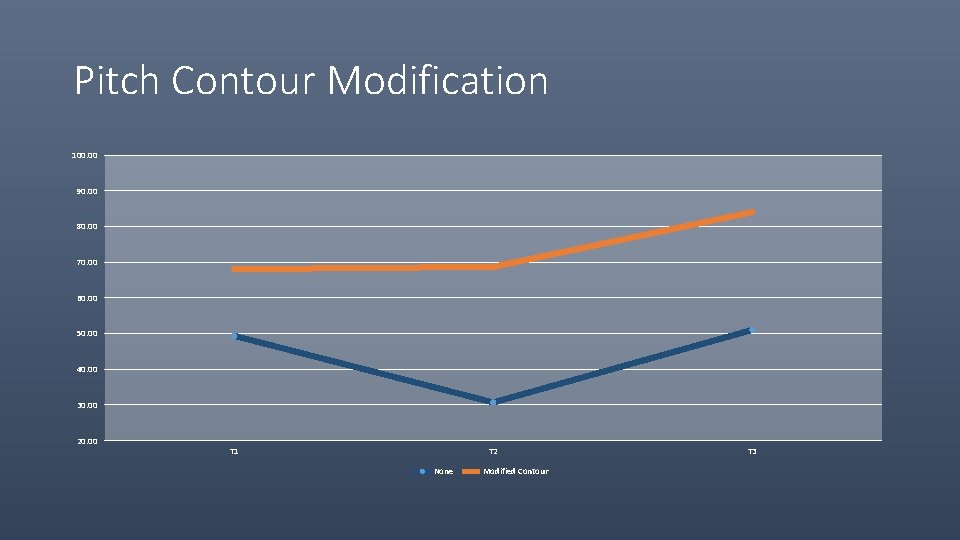
Pitch Contour Modification 100. 00 90. 00 80. 00 70. 00 60. 00 50. 00 40. 00 30. 00 20. 00 T 1 T 2 None Modified Contour T 3
Result Summary • Positional effect, e. g. duration required the least amplification for T 3, and the most for T 1 • Intensity amplification was most consistent across all positions and sentence types, and required the least change. • Sentences with inappropriate pitch contours had lower success rates at baseline but showed more improvement than other sentences with amplification = greater scope for improvement • Pitch modification also improved perception to a similar amount as amplification • Combination of parameters did NOT result in any further improvements
Clinical Implications • Single parameter manipulation was as effective as combinations => sufficient for patients to concentrate on one feature • Amplification of either parameter resulted in positive outcomes => strategies can focus on whichever parameter is most retained in a patient • Most parameters did not have to be amplified to the same degree as performed by healthy controls => even patients with reduced modulation range have a good chance of success • Even utterances with inappropriate pitch contours benefit from parameter amplification => might be easier for patients to achieve
• Effective treatment will depend on clinicians identifying which parameters are impaired and which can still be manipulated and to what degree => stimulability assessment • Nature of stress impairment also needs to be taken into account, i. e. wrong word stressed, no words stressed, all/too many words stressed • Also consider role of de-accentuation in some of the above patterns, might be more effective to work on de-accenting some utterance elements than trying to highlight another – success depends on the abilities of patient though

Summary • Rhythmic problems are prolific amongst motor speech disorders • Important to identify precisely what causes the rhythmic changes to target treatment effectively • Most appropriate treatment strategies for rhythm are probably rate control, clear speech and stress production, but no clinical evidence available to date • Treatment of stress production again requires careful analysis of underlying impairment, but has good potential for improvement

Thank you!
- Slides: 49