
Rhythm Movement Balance Proportion Variety Emphasis Harmony Unity
� � � � Rhythm Movement Balance Proportion Variety Emphasis Harmony Unity
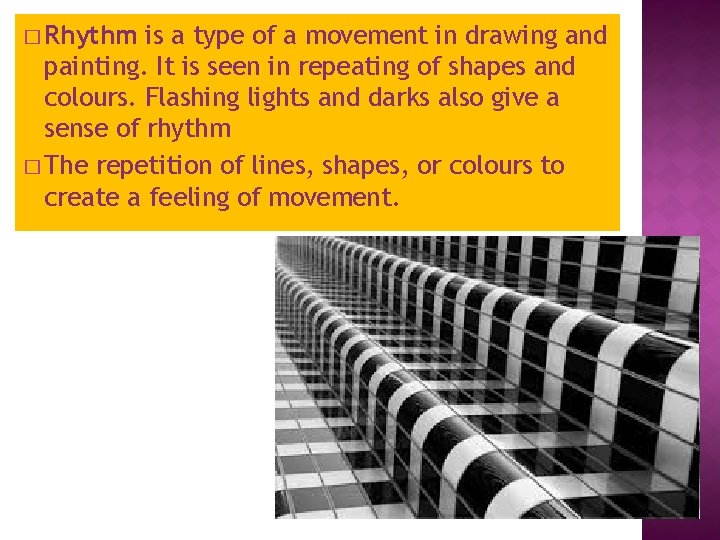
� Rhythm is a type of a movement in drawing and painting. It is seen in repeating of shapes and colours. Flashing lights and darks also give a sense of rhythm � The repetition of lines, shapes, or colours to create a feeling of movement.
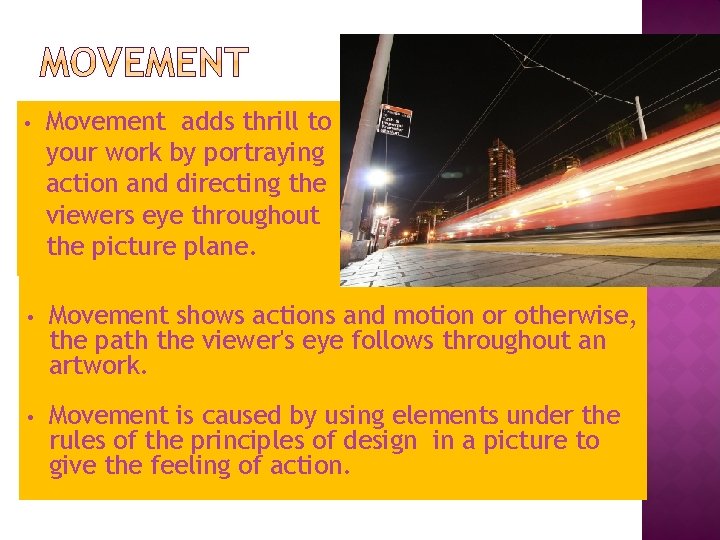
• Movement adds thrill to your work by portraying action and directing the viewers eye throughout the picture plane. • Movement shows actions and motion or otherwise, the path the viewer's eye follows throughout an artwork. • Movement is caused by using elements under the rules of the principles of design in a picture to give the feeling of action.
BALANCE § Balance is arranging elements so that no one part of a work subdues, or seems heavier than any other part. § The three different kinds of balance are symmetrical (or formal) balance is when both sides of an artwork, if split in the half /the middle, appear to be the same. The human body is an example of symmetrical balance.
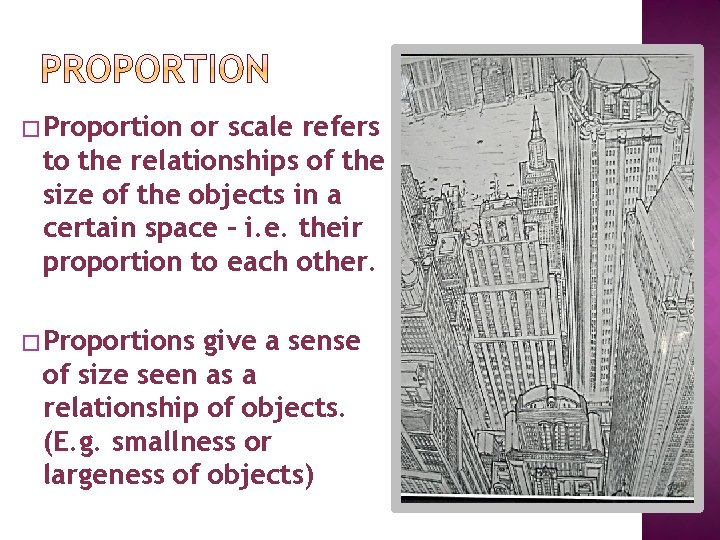
� Proportion or scale refers to the relationships of the size of the objects in a certain space – i. e. their proportion to each other. � Proportions give a sense of size seen as a relationship of objects. (E. g. smallness or largeness of objects)
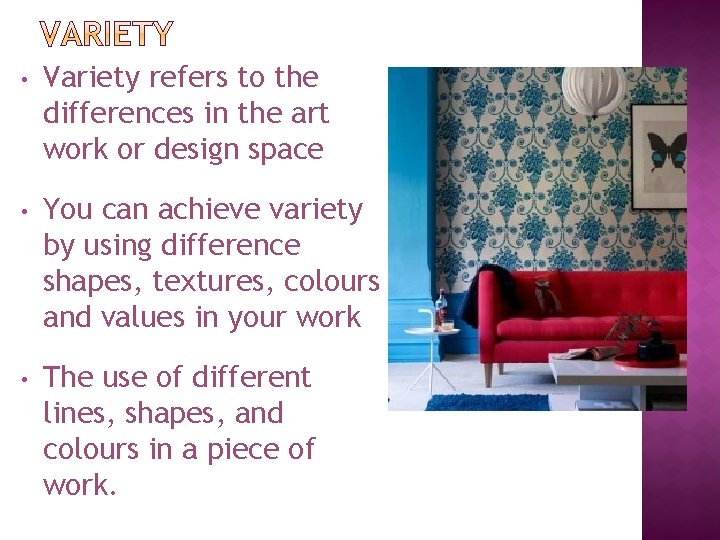
• Variety refers to the differences in the art work or design space • You can achieve variety by using difference shapes, textures, colours and values in your work • The use of different lines, shapes, and colours in a piece of work.
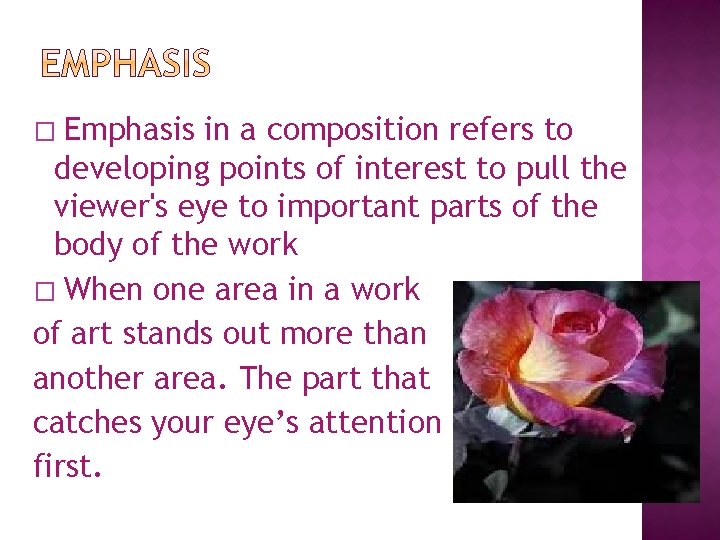
Emphasis in a composition refers to developing points of interest to pull the viewer's eye to important parts of the body of the work � When one area in a work of art stands out more than another area. The part that catches your eye’s attention first. �
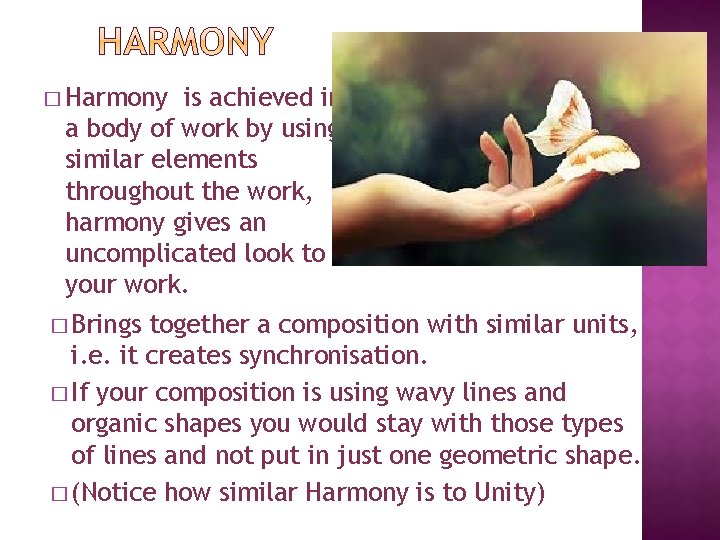
� Harmony is achieved in a body of work by using similar elements throughout the work, harmony gives an uncomplicated look to your work. � Brings together a composition with similar units, i. e. it creates synchronisation. � If your composition is using wavy lines and organic shapes you would stay with those types of lines and not put in just one geometric shape. � (Notice how similar Harmony is to Unity)
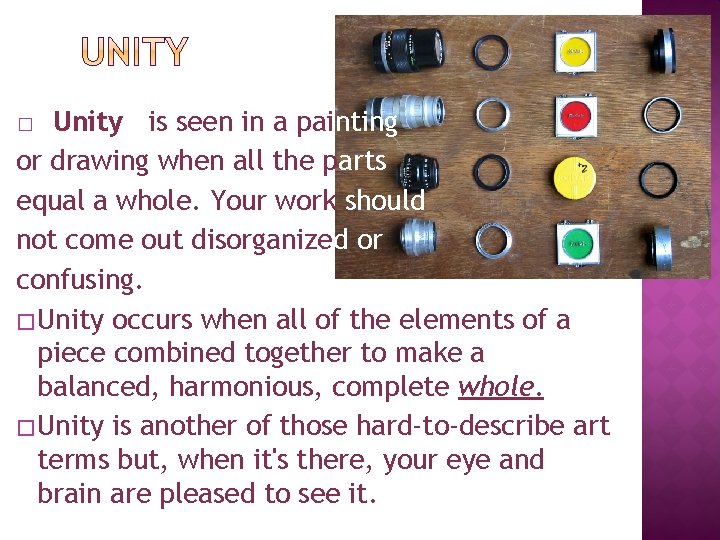
Unity is seen in a painting or drawing when all the parts equal a whole. Your work should not come out disorganized or confusing. � Unity occurs when all of the elements of a piece combined together to make a balanced, harmonious, complete whole. � Unity is another of those hard-to-describe art terms but, when it's there, your eye and brain are pleased to see it. �
- Slides: 11