
Rhode Island State Innovation Model SIM Leveraging Innovation
- Slides: 22
Rhode Island State Innovation Model (SIM) Leveraging Innovation to Transform Health Systems and Improve Population Health Vendor Review Presentation SBIRT Training and Resource Center (Screening, Brief Intervention, and Referral to Treatment) Rhode Island College
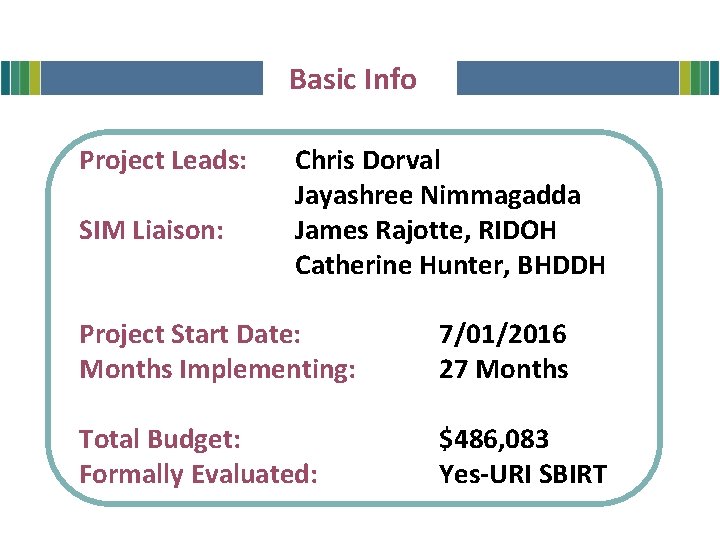
Basic Info Project Leads: SIM Liaison: Chris Dorval Jayashree Nimmagadda James Rajotte, RIDOH Catherine Hunter, BHDDH Project Start Date: Months Implementing: 7/01/2016 27 Months Total Budget: Formally Evaluated: $486, 083 Yes-URI SBIRT
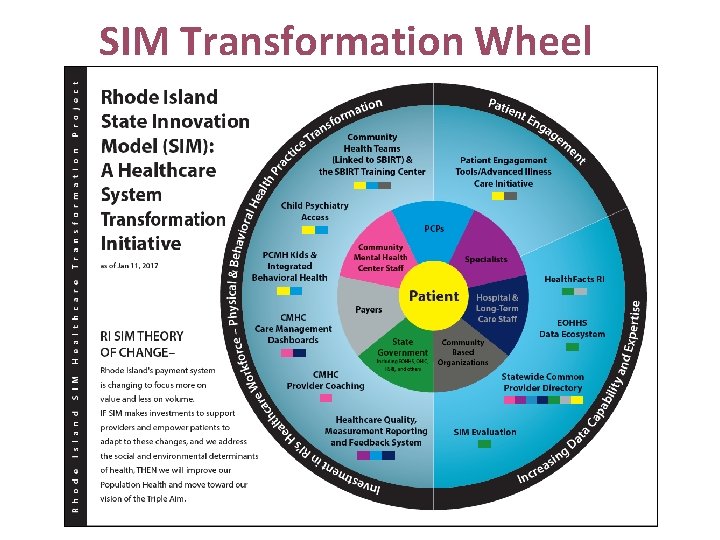
SIM Transformation Wheel
Background on Project Selection Unmet Need Rhode Island is above national average of drug and alcohol use, and above 80% of those people are not getting treatment. How It Works Provides training, resources, and fidelity for healthcare professionals (HCPs) to begin substance use screening and connecting people with treatment in various settings. See Appendix 1 See Appendix 2
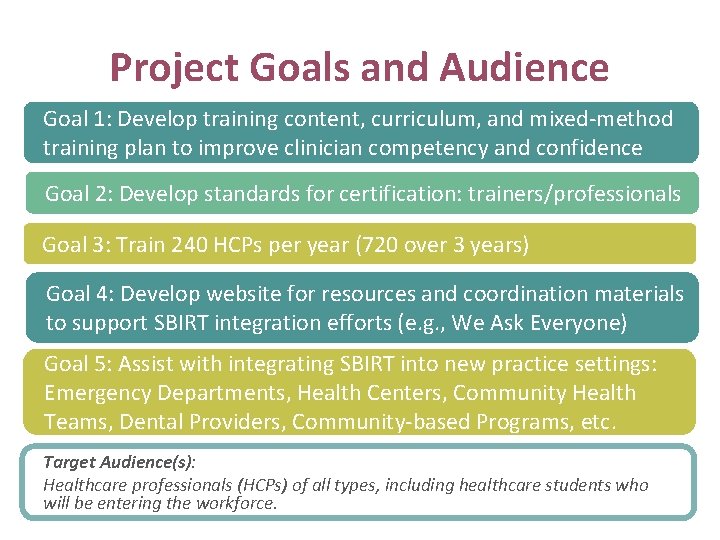
Project Goals and Audience Goal 1: Develop training content, curriculum, and mixed-method training plan to improve clinician competency and confidence Goal 2: Develop standards for certification: trainers/professionals Goal 3: Train 240 HCPs per year (720 over 3 years) Goal 4: Develop website for resources and coordination materials to support SBIRT integration efforts (e. g. , We Ask Everyone) Goal 5: Assist with integrating SBIRT into new practice settings: Emergency Departments, Health Centers, Community Health Teams, Dental Providers, Community-based Programs, etc. Target Audience(s): Healthcare professionals (HCPs) of all types, including healthcare students who will be entering the workforce.
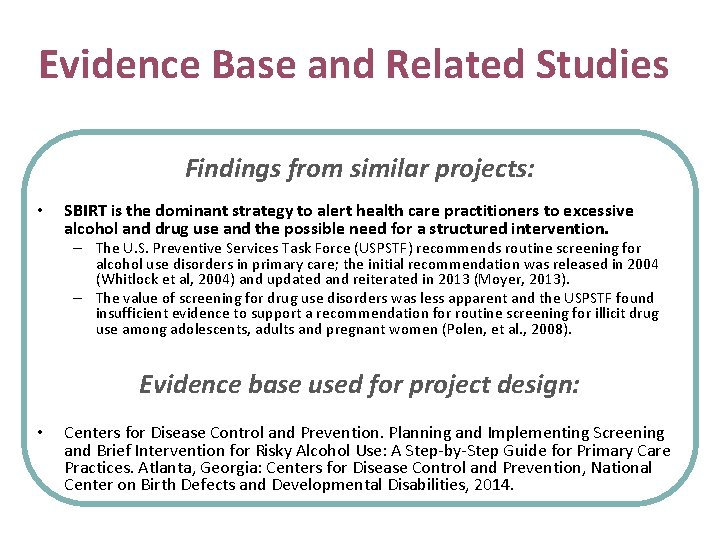
Evidence Base and Related Studies Findings from similar projects: • SBIRT is the dominant strategy to alert health care practitioners to excessive alcohol and drug use and the possible need for a structured intervention. – The U. S. Preventive Services Task Force (USPSTF) recommends routine screening for alcohol use disorders in primary care; the initial recommendation was released in 2004 (Whitlock et al, 2004) and updated and reiterated in 2013 (Moyer, 2013). – The value of screening for drug use disorders was less apparent and the USPSTF found insufficient evidence to support a recommendation for routine screening for illicit drug use among adolescents, adults and pregnant women (Polen, et al. , 2008). Evidence base used for project design: • Centers for Disease Control and Prevention. Planning and Implementing Screening and Brief Intervention for Risky Alcohol Use: A Step-by-Step Guide for Primary Care Practices. Atlanta, Georgia: Centers for Disease Control and Prevention, National Center on Birth Defects and Developmental Disabilities, 2014.
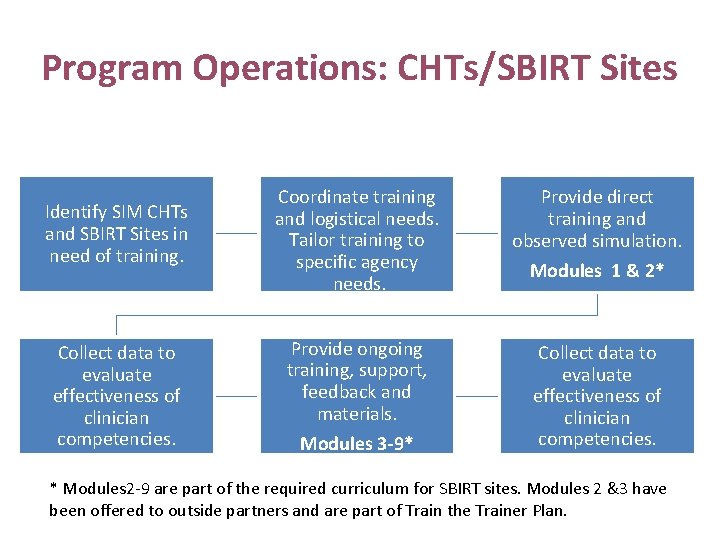
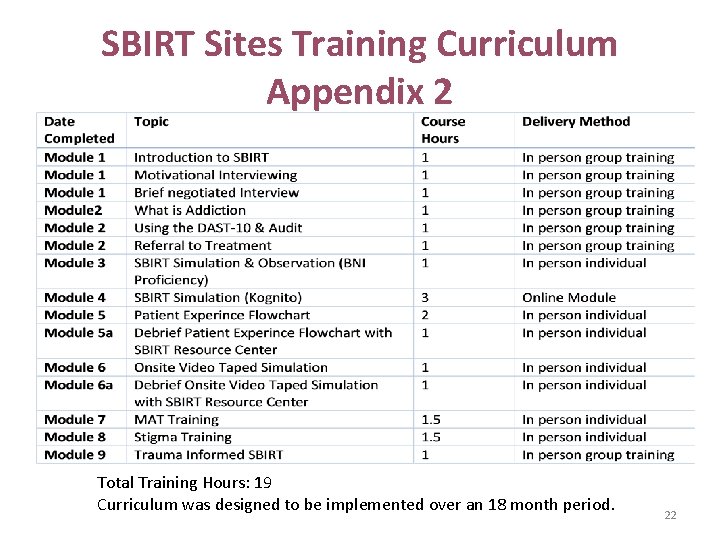
Program Operations: CHTs/SBIRT Sites Identify SIM CHTs and SBIRT Sites in need of training. Collect data to evaluate effectiveness of clinician competencies. Coordinate training and logistical needs. Tailor training to specific agency needs. • Modules 3 -9 Provide direct training and observed simulation. Modules 1 & 2* Provide ongoing training, support, feedback and materials. Modules 3 -9* Collect data to evaluate effectiveness of clinician competencies. * Modules 2 -9 are part of the required curriculum for SBIRT sites. Modules 2 &3 have been offered to outside partners and are part of Train the Trainer Plan.
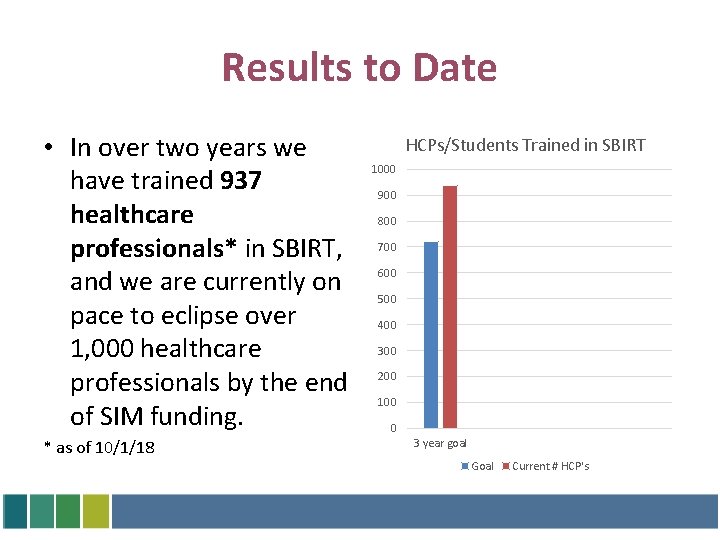
Results to Date • In over two years we have trained 937 healthcare professionals* in SBIRT, and we are currently on pace to eclipse over 1, 000 healthcare professionals by the end of SIM funding. * as of 10/1/18 HCPs/Students Trained in SBIRT 1000 900 800 700 600 500 400 300 200 100 0 3 year goal Goal Current # HCP's
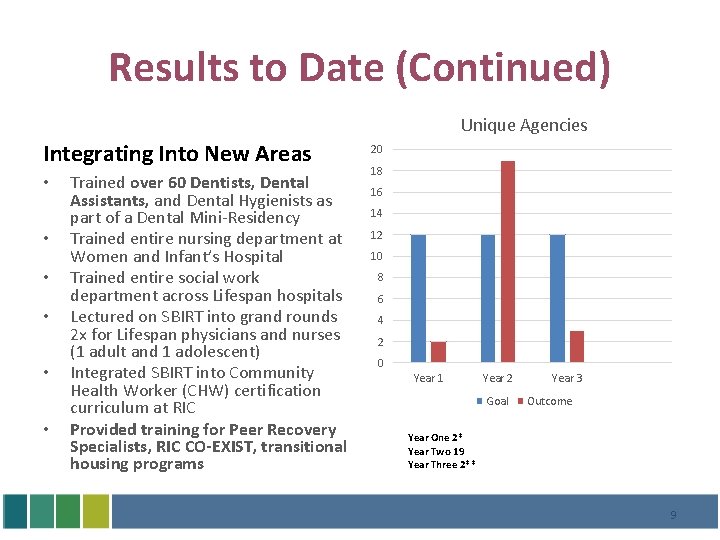
Results to Date (Continued) Unique Agencies Integrating Into New Areas • • • Trained over 60 Dentists, Dental Assistants, and Dental Hygienists as part of a Dental Mini-Residency Trained entire nursing department at Women and Infant’s Hospital Trained entire social work department across Lifespan hospitals Lectured on SBIRT into grand rounds 2 x for Lifespan physicians and nurses (1 adult and 1 adolescent) Integrated SBIRT into Community Health Worker (CHW) certification curriculum at RIC Provided training for Peer Recovery Specialists, RIC CO-EXIST, transitional housing programs 20 18 16 14 12 10 8 6 4 2 0 Year 1 Year 2 Goal Year 3 Outcome Year One 2* Year Two 19 Year Three 2** 9
Question Do you see any partnership opportunities or other unique agencies to partner with us that we haven’t considered? 10
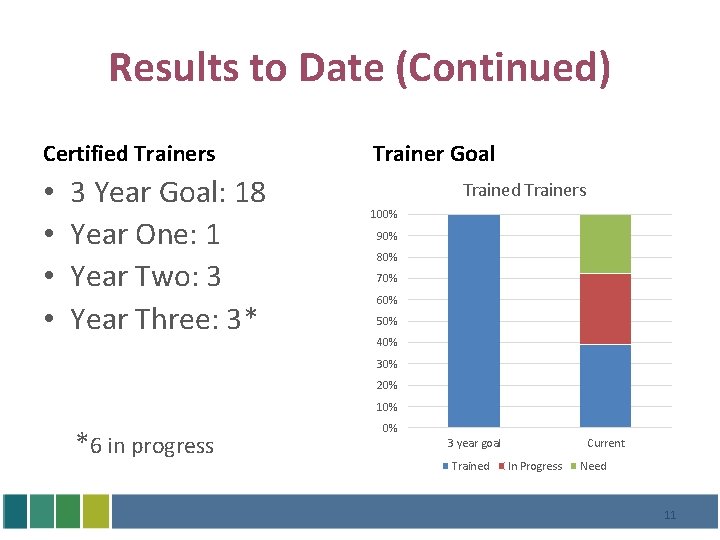
Results to Date (Continued) Certified Trainers • • 3 Year Goal: 18 Year One: 1 Year Two: 3 Year Three: 3* Trainer Goal Trained Trainers 100% 90% 80% 70% 60% 50% 40% 30% 20% 10% *6 in progress 0% 3 year goal Trained Current In Progress Need 11
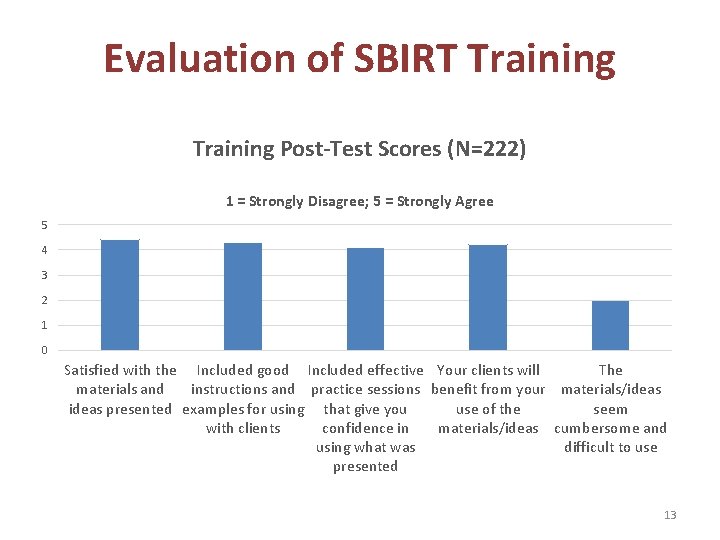
Evaluation of SBIRT Training • Significant changes in attitudes – Stronger agreement that involvement with a patient can make a difference in his/her substance use – Stronger disagreement that patients would be angry if asked questions about their substance use • Significant increase in knowledge – For both general SBIRT knowledge (e. g. , standard drink size, risky drinking levels) and motivational interviewing skills • Significant increase in confidence to perform all aspects of SBIRT 12
Evaluation of SBIRT Training Post-Test Scores (N=222) 1 = Strongly Disagree; 5 = Strongly Agree 5 4 3 2 1 0 Satisfied with the Included good Included effective Your clients will The materials and instructions and practice sessions benefit from your materials/ideas presented examples for using that give you use of the seem with clients confidence in materials/ideas cumbersome and using what was difficult to use presented 13
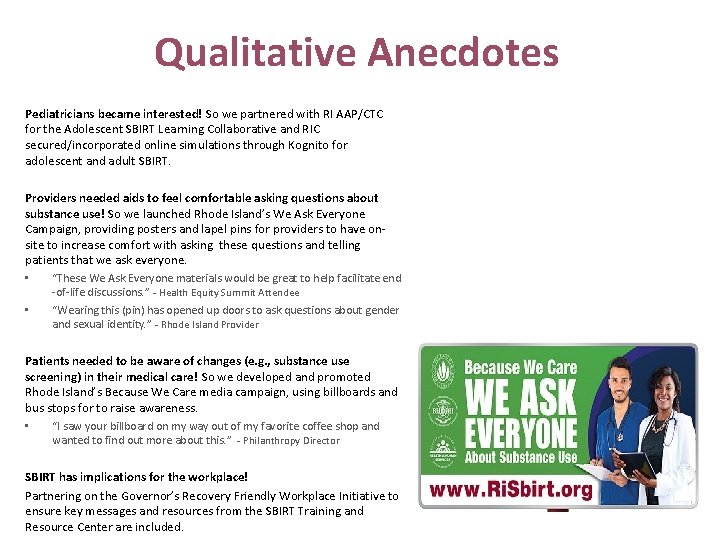
Qualitative Anecdotes Pediatricians became interested! So we partnered with RI AAP/CTC for the Adolescent SBIRT Learning Collaborative and RIC secured/incorporated online simulations through Kognito for adolescent and adult SBIRT. Providers needed aids to feel comfortable asking questions about substance use! So we launched Rhode Island’s We Ask Everyone Campaign, providing posters and lapel pins for providers to have onsite to increase comfort with asking these questions and telling patients that we ask everyone. • “These We Ask Everyone materials would be great to help facilitate end • -of-life discussions. ” - Health Equity Summit Attendee “Wearing this (pin) has opened up doors to ask questions about gender and sexual identity. ” - Rhode Island Provider Patients needed to be aware of changes (e. g. , substance use screening) in their medical care! So we developed and promoted Rhode Island’s Because We Care media campaign, using billboards and bus stops for to raise awareness. • “I saw your billboard on my way out of my favorite coffee shop and wanted to find out more about this. ” - Philanthropy Director SBIRT has implications for the workplace! Partnering on the Governor’s Recovery Friendly Workplace Initiative to ensure key messages and resources from the SBIRT Training and Resource Center are included.
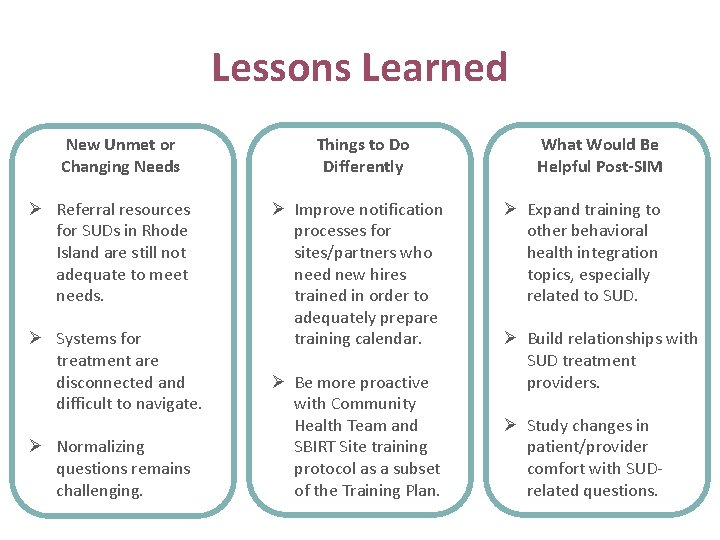
Lessons Learned New Unmet or Changing Needs Ø Referral resources for SUDs in Rhode Island are still not adequate to meet needs. Ø Systems for treatment are disconnected and difficult to navigate. Ø Normalizing questions remains challenging. Things to Do Differently Ø Improve notification processes for sites/partners who need new hires trained in order to adequately prepare training calendar. Ø Be more proactive with Community Health Team and SBIRT Site training protocol as a subset of the Training Plan. What Would Be Helpful Post-SIM Ø Expand training to other behavioral health integration topics, especially related to SUD. Ø Build relationships with SUD treatment providers. Ø Study changes in patient/provider comfort with SUDrelated questions.
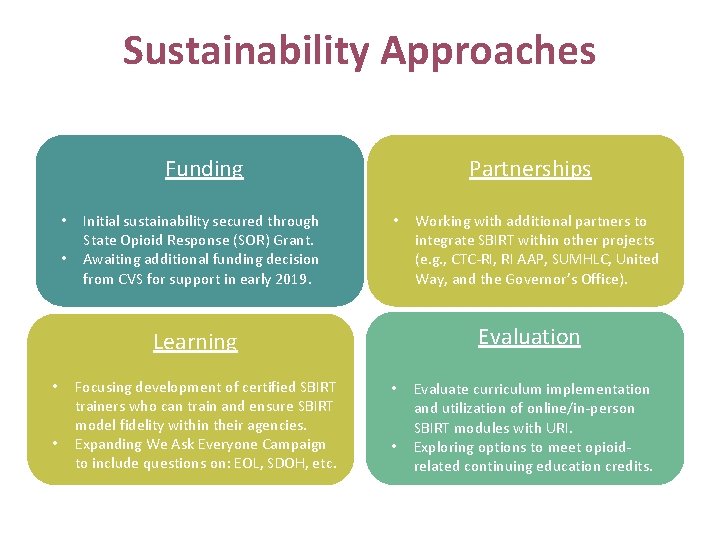
Sustainability Approaches Funding • • Initial sustainability secured through State Opioid Response (SOR) Grant. Awaiting additional funding decision from CVS for support in early 2019. Partnerships • Evaluation Learning • • Focusing development of certified SBIRT trainers who can train and ensure SBIRT model fidelity within their agencies. Expanding We Ask Everyone Campaign to include questions on: EOL, SDOH, etc. Working with additional partners to integrate SBIRT within other projects (e. g. , CTC-RI, RI AAP, SUMHLC, United Way, and the Governor’s Office). • • Evaluate curriculum implementation and utilization of online/in-person SBIRT modules with URI. Exploring options to meet opioidrelated continuing education credits.
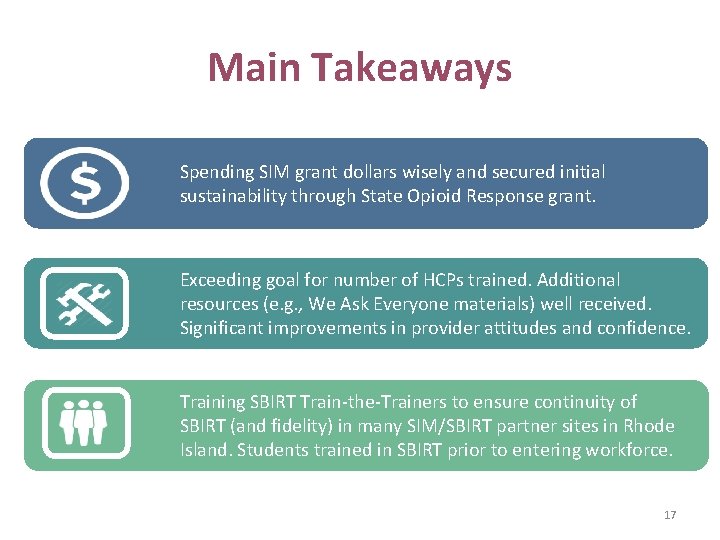
Main Takeaways Spending SIM grant dollars wisely and secured initial sustainability through State Opioid Response grant. Exceeding goal for number of HCPs trained. Additional resources (e. g. , We Ask Everyone materials) well received. Significant improvements in provider attitudes and confidence. Training SBIRT Train-the-Trainers to ensure continuity of SBIRT (and fidelity) in many SIM/SBIRT partner sites in Rhode Island. Students trained in SBIRT prior to entering workforce. 17
Contact Information Chris Dorval cdonovandorval@ric. edu 401 -626 -0169 Project Websites: www. risbirt. org
Final Question Who has an organizational need for SBIRT training and who wants to help us further disseminate the We Ask Everyone message? Any takers? 19
QUESTIONS?
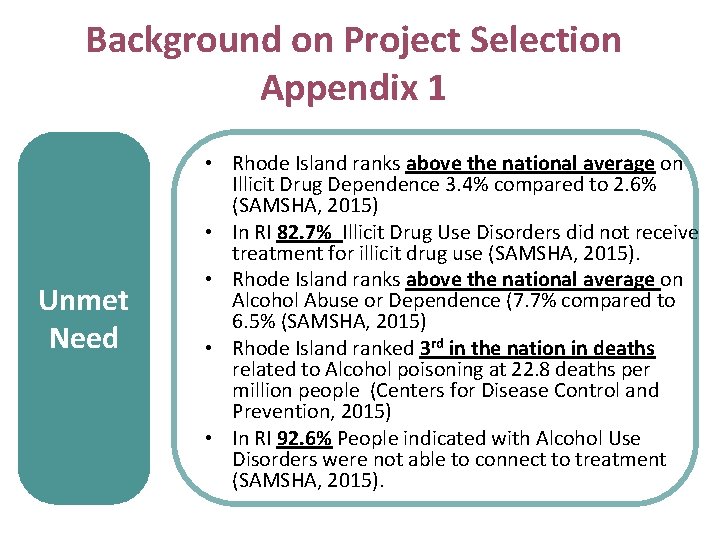
Background on Project Selection Appendix 1 Unmet Need • Rhode Island ranks above the national average on Illicit Drug Dependence 3. 4% compared to 2. 6% (SAMSHA, 2015) • In RI 82. 7% Illicit Drug Use Disorders did not receive treatment for illicit drug use (SAMSHA, 2015). • Rhode Island ranks above the national average on Alcohol Abuse or Dependence (7. 7% compared to 6. 5% (SAMSHA, 2015) • Rhode Island ranked 3 rd in the nation in deaths related to Alcohol poisoning at 22. 8 deaths per million people (Centers for Disease Control and Prevention, 2015) • In RI 92. 6% People indicated with Alcohol Use Disorders were not able to connect to treatment (SAMSHA, 2015).
SBIRT Sites Training Curriculum Appendix 2 Total Training Hours: 19 Curriculum was designed to be implemented over an 18 month period. 22