
Rhizomatic Learning What is Rhizomatic learning First posited
- Slides: 6
Rhizomatic Learning
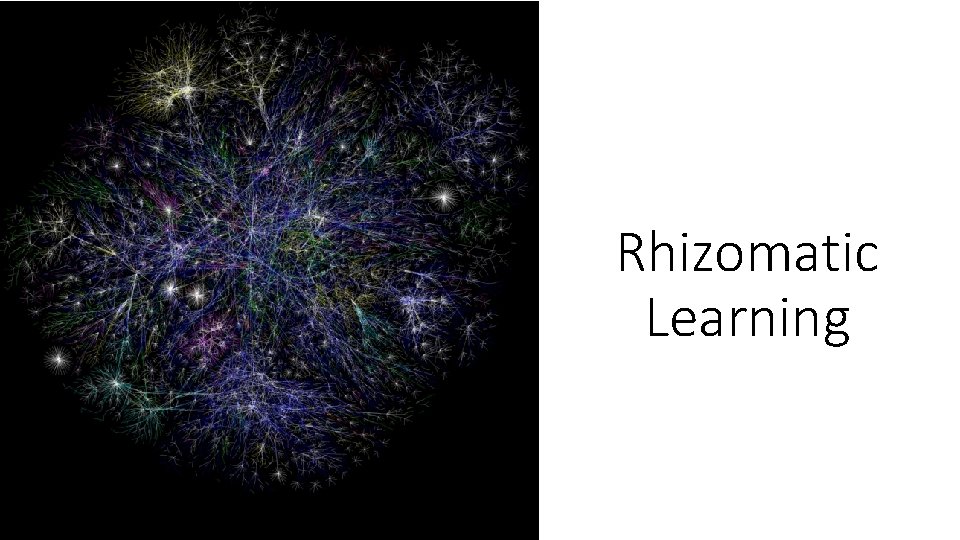
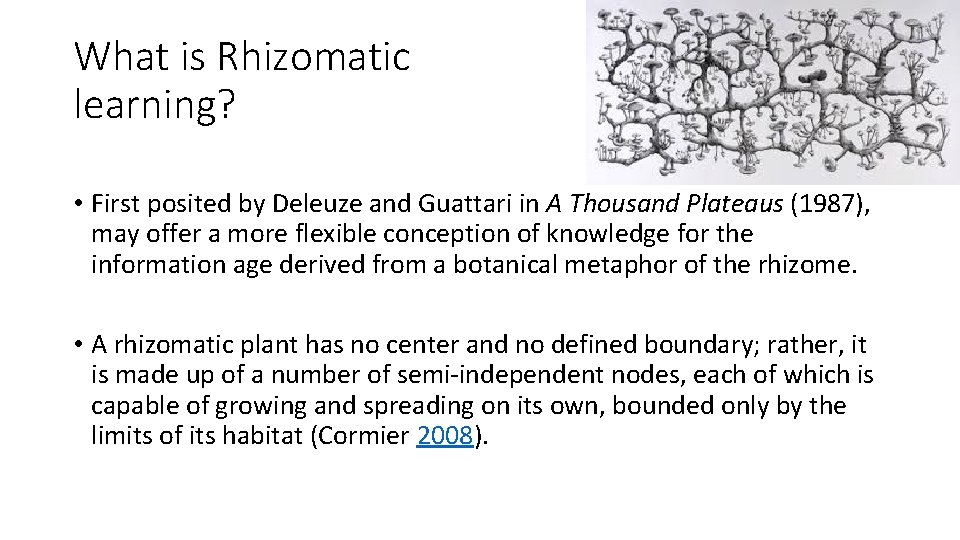
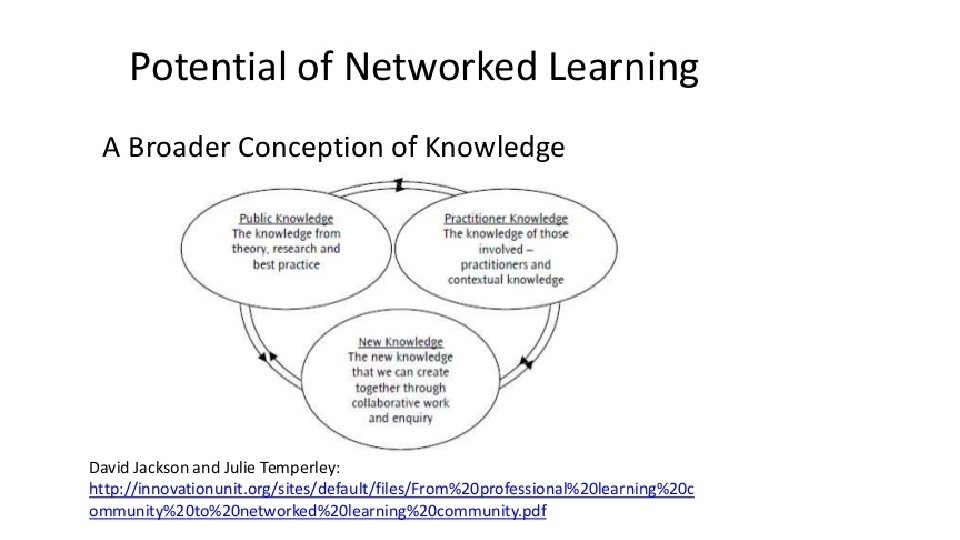
What is Rhizomatic learning? • First posited by Deleuze and Guattari in A Thousand Plateaus (1987), may offer a more flexible conception of knowledge for the information age derived from a botanical metaphor of the rhizome. • A rhizomatic plant has no center and no defined boundary; rather, it is made up of a number of semi-independent nodes, each of which is capable of growing and spreading on its own, bounded only by the limits of its habitat (Cormier 2008).
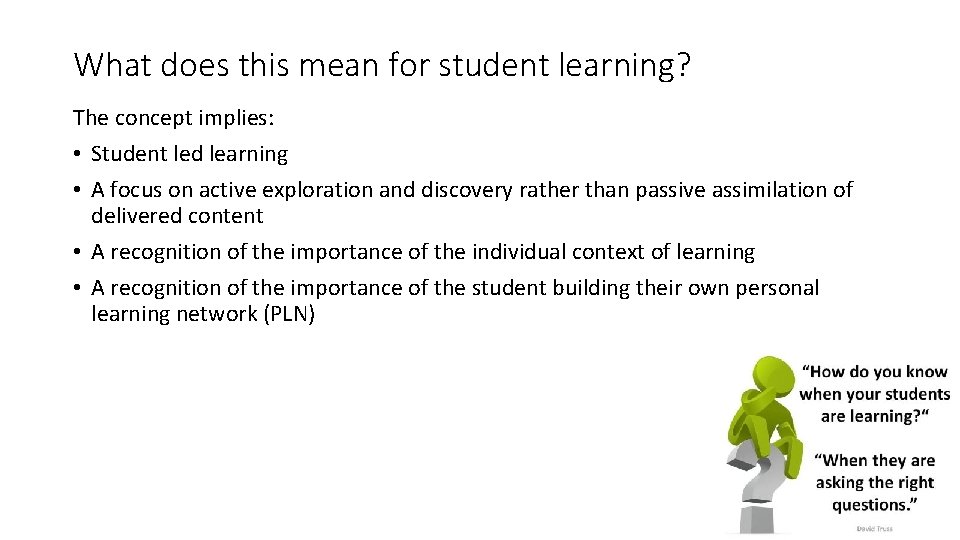
What does this mean for student learning? The concept implies: • Student led learning • A focus on active exploration and discovery rather than passive assimilation of delivered content • A recognition of the importance of the individual context of learning • A recognition of the importance of the student building their own personal learning network (PLN)
What would this mean for our teaching? Learning design enabling: • Less ‘delivered’ content and more student led learning • More interactivity • More collaborative learning with module teams, ALs, peers and wider networks • Self and peer assessment (assessment Policy)
Challenges: Pedagogy of Risk • A cultural shift in the role of ‘teacher’ and ‘student’ • Engaging and motivating students who seem to want to learn alone, learn passively • Systems changes to enable modules to make full use of social networking and direct authoring • Implications for the AL role • Apparently rigid curriculum and requirements of validating bodies e. g. Learning Outcomes