
Rheumatology Approach to a Patient with Joint Pain


- Slides: 29
Rheumatology: Approach to a Patient with Joint Pain
Objectives n n To distinguish between articular (joint) vs periarticular (around a joint) pain To differentiate arthralgia from arthritis To distinguish between inflammatory and noninflammatory joint complaints To develop differential diagnoses of inflammatory , non-inflammatory arthritides, acute monoarthritis and polyarthritis
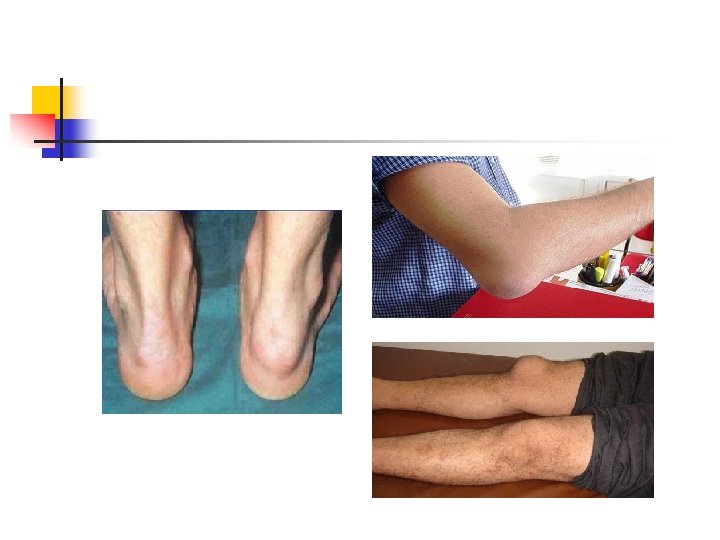
n n n A 65 -year-old female comes to the clinic for evaluation of right elbow pain. On examination, there is no swelling or tenderness of the elbow joint, but the olecranon bursa is noted to be swollen and tender. This is an example of: Artricular pain Periartricular pain Referred pain Neuropathic pain
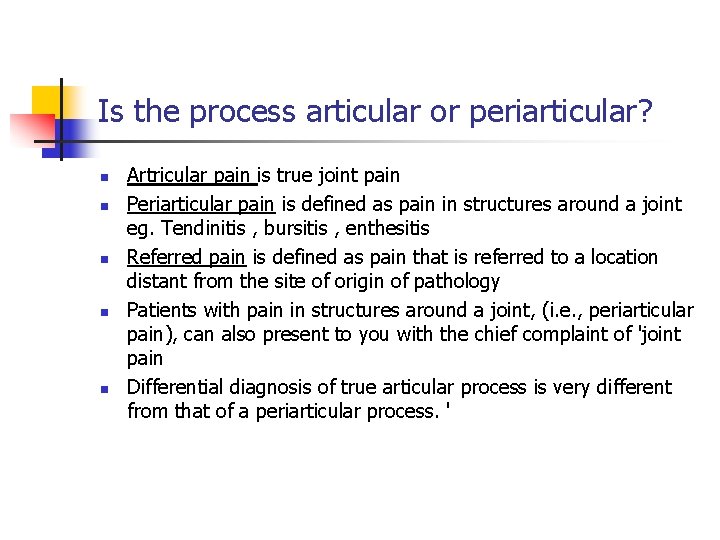
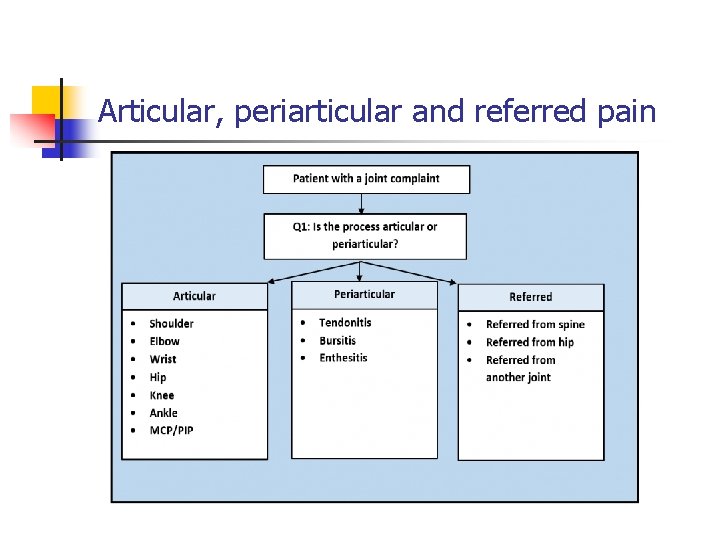
Is the process articular or periarticular? n n n Artricular pain is true joint pain Periarticular pain is defined as pain in structures around a joint eg. Tendinitis , bursitis , enthesitis Referred pain is defined as pain that is referred to a location distant from the site of origin of pathology Patients with pain in structures around a joint, (i. e. , periarticular pain), can also present to you with the chief complaint of 'joint pain Differential diagnosis of true articular process is very different from that of a periarticular process. '
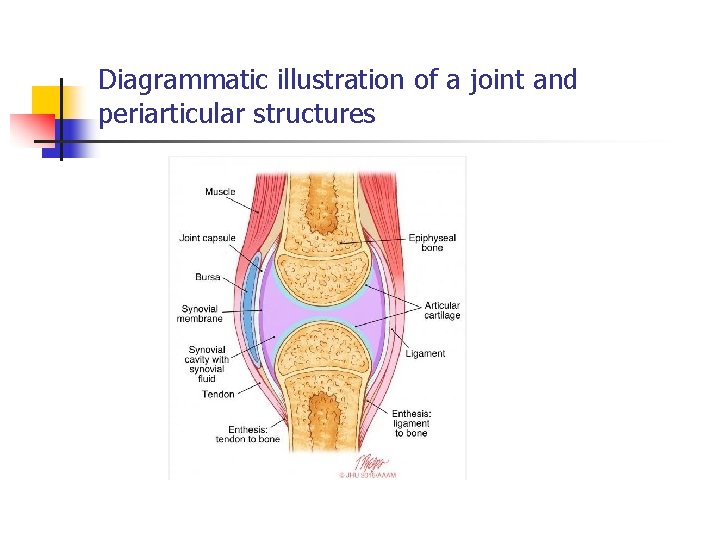
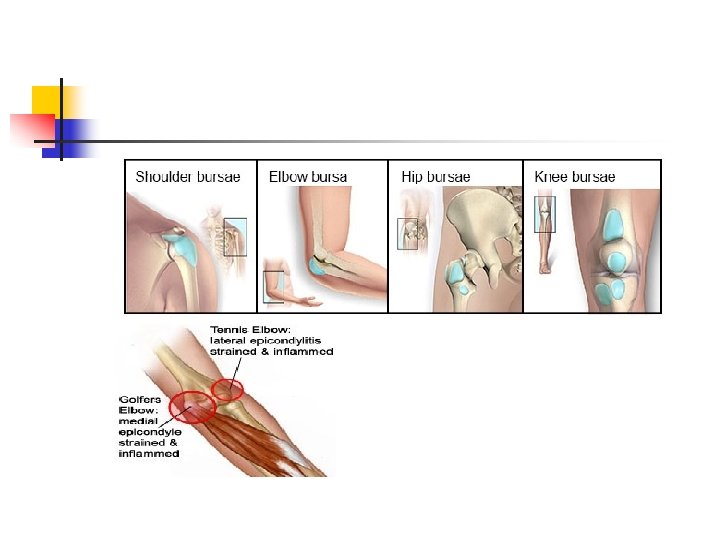
Diagrammatic illustration of a joint and periarticular structures
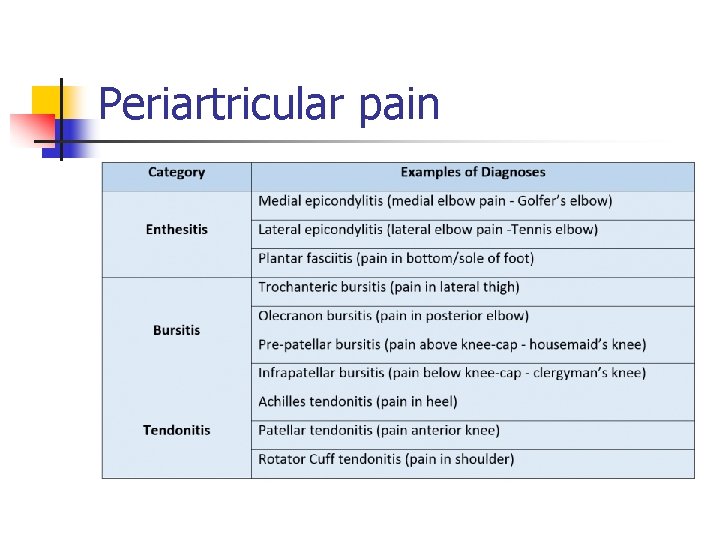
Periartricular pain
Articular, periarticular and referred pain
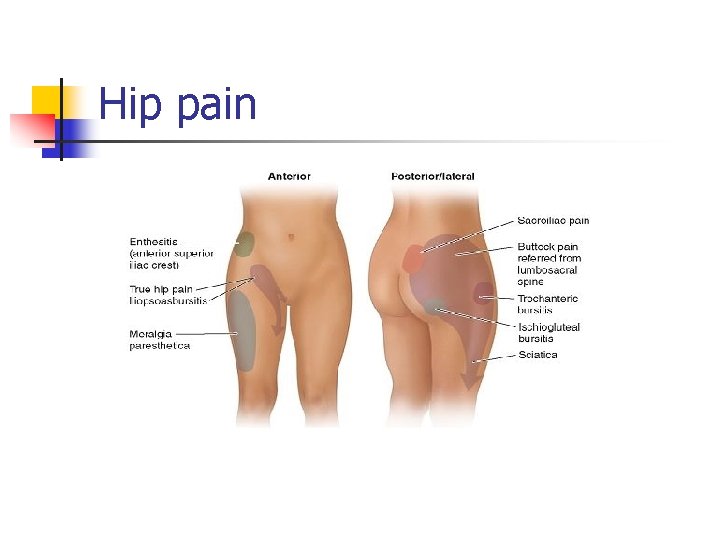
Hip pain
n n n A 25 -year-old female is seen in your clinic for evaluation of fatigue and diffuse joint pains. She reports pain in bilateral wrists, shoulders, MCPs and PIP joints. To diagnose this patient with arthralgia, she must have: Heat in joints Swelling in joints Tenderness in joints Redness in joints
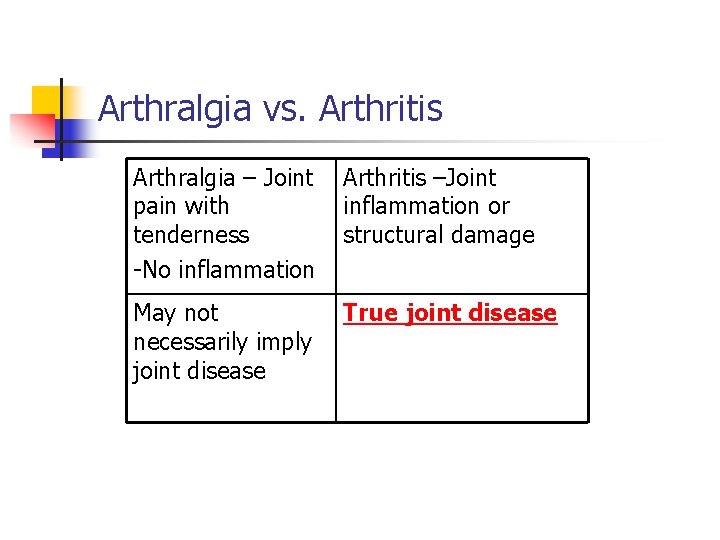
Arthralgia vs. Arthritis Arthralgia – Joint Arthritis –Joint pain with inflammation or tenderness structural damage -No inflammation May not True joint disease necessarily imply joint disease
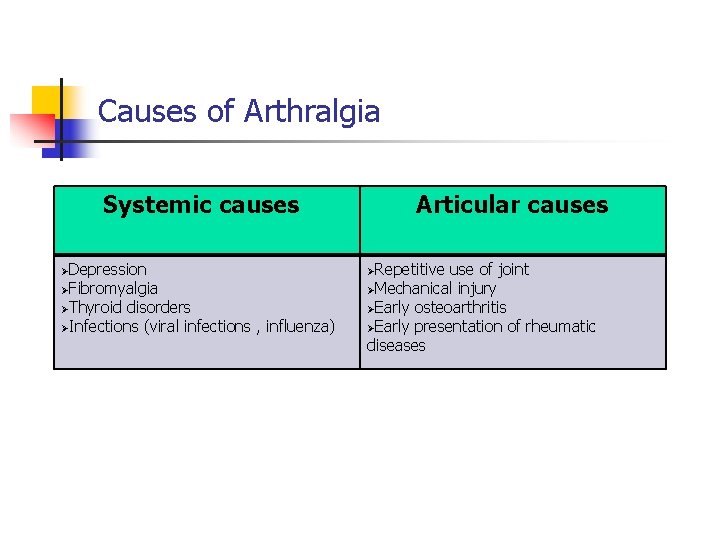
Causes of Arthralgia Systemic causes Articular causes ØDepression ØRepetitive use of joint ØThyroid disorders ØEarly osteoarthritis ØFibromyalgia ØInfections (viral infections , influenza) ØMechanical injury ØEarly presentation of rheumatic diseases
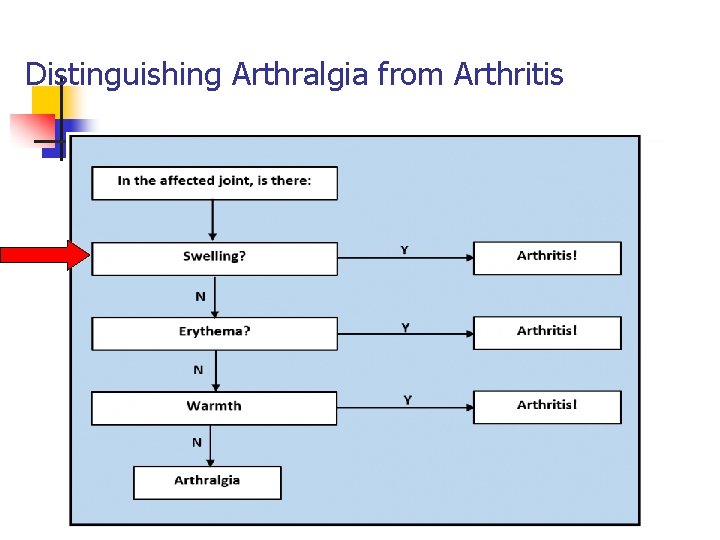
Distinguishing Arthralgia from Arthritis
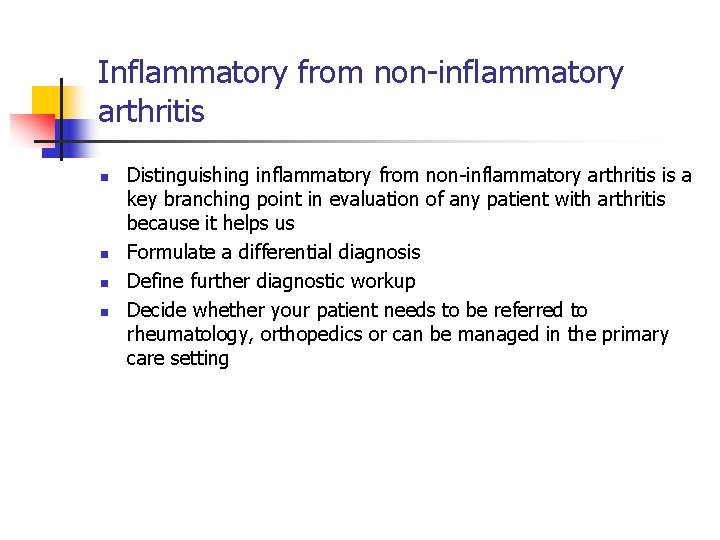
Inflammatory from non-inflammatory arthritis n n Distinguishing inflammatory from non-inflammatory arthritis is a key branching point in evaluation of any patient with arthritis because it helps us Formulate a differential diagnosis Define further diagnostic workup Decide whether your patient needs to be referred to rheumatology, orthopedics or can be managed in the primary care setting
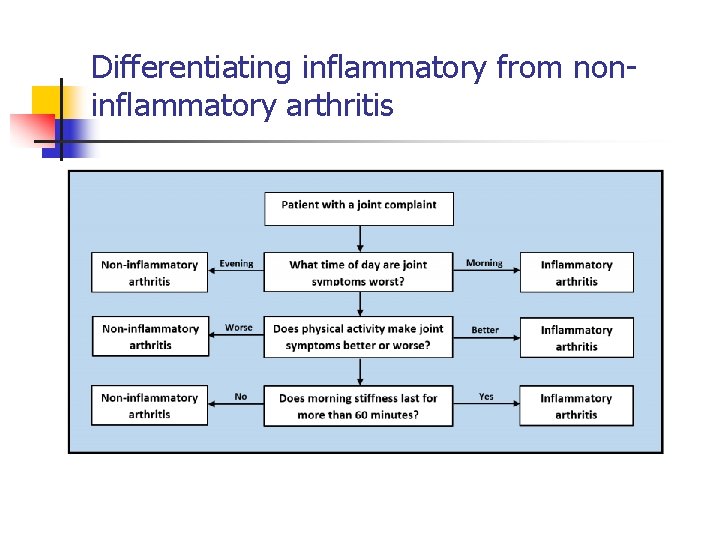
Differentiating inflammatory from noninflammatory arthritis
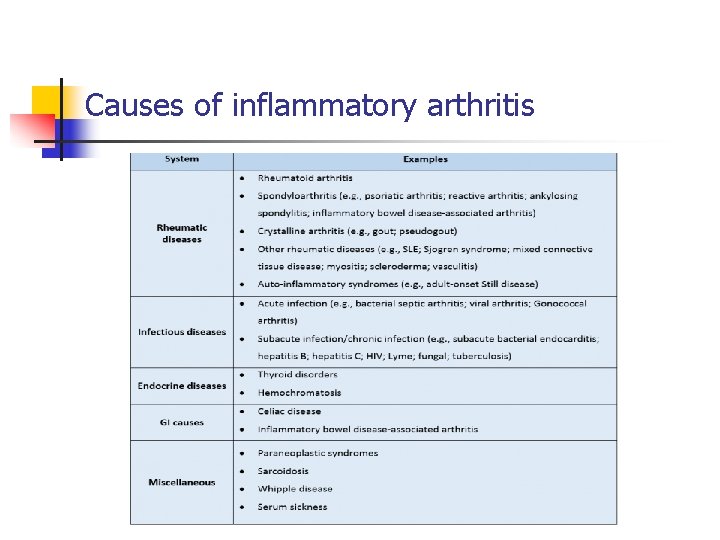
Causes of inflammatory arthritis
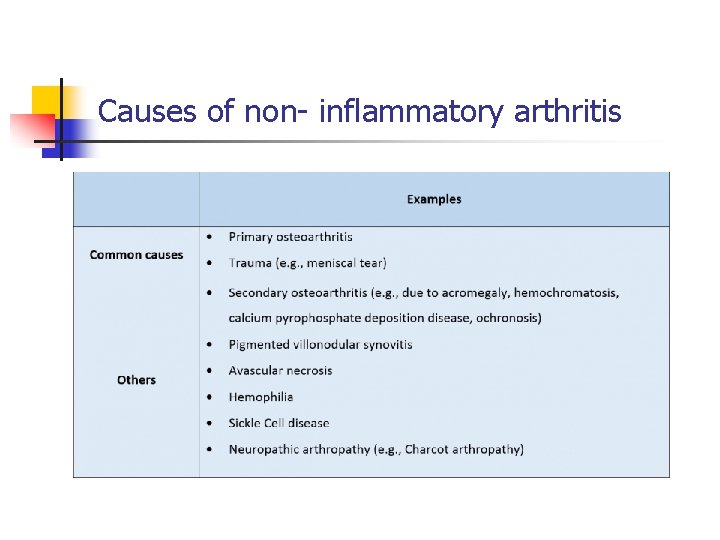
Causes of non- inflammatory arthritis
So far. .
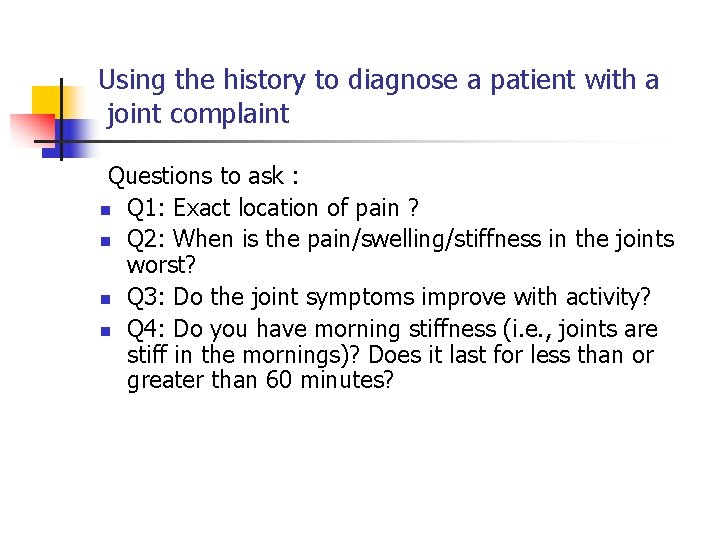
Using the history to diagnose a patient with a joint complaint Questions to ask : n Q 1: Exact location of pain ? n Q 2: When is the pain/swelling/stiffness in the joints worst? n Q 3: Do the joint symptoms improve with activity? n Q 4: Do you have morning stiffness (i. e. , joints are stiff in the mornings)? Does it last for less than or greater than 60 minutes?
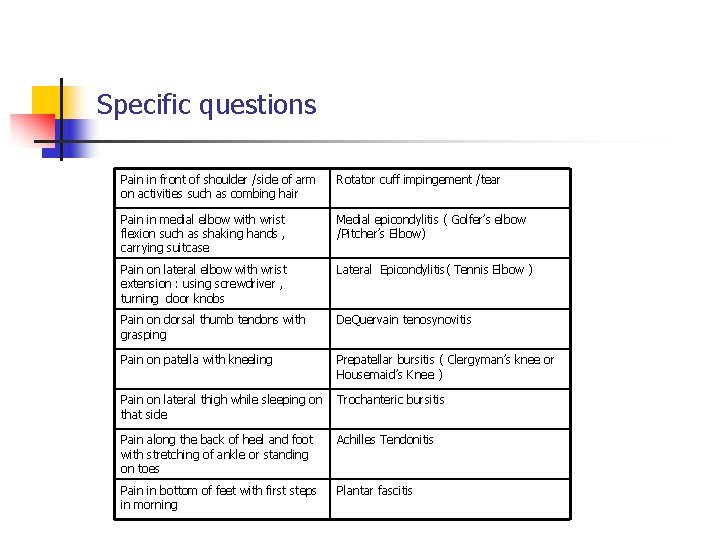
Specific questions Pain in front of shoulder /side of arm on activities such as combing hair Rotator cuff impingement /tear Pain in medial elbow with wrist flexion such as shaking hands , carrying suitcase Medial epicondylitis ( Golfer’s elbow /Pitcher’s Elbow) Pain on lateral elbow with wrist extension : using screwdriver , turning door knobs Lateral Epicondylitis( Tennis Elbow ) Pain on dorsal thumb tendons with grasping De. Quervain tenosynovitis Pain on patella with kneeling Prepatellar bursitis ( Clergyman’s knee or Housemaid’s Knee ) Pain on lateral thigh while sleeping on Trochanteric bursitis that side Pain along the back of heel and foot with stretching of ankle or standing on toes Achilles Tendonitis Pain in bottom of feet with first steps in morning Plantar fascitis
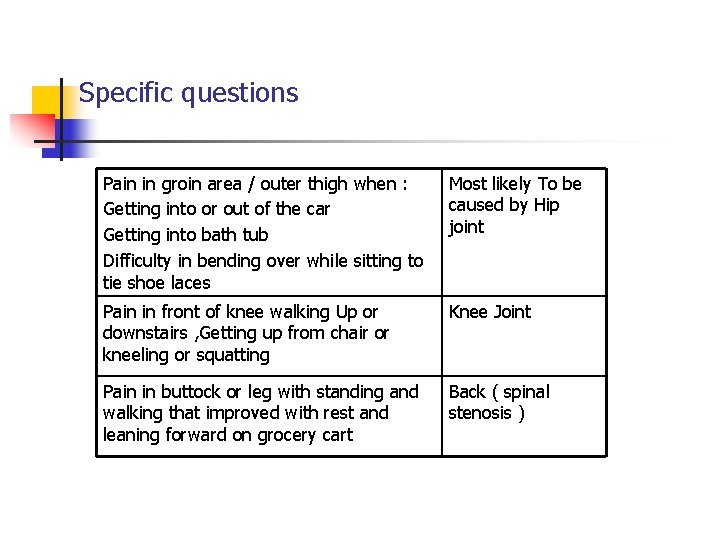
Specific questions Pain in groin area / outer thigh when : Getting into or out of the car Getting into bath tub Difficulty in bending over while sitting to tie shoe laces Most likely To be caused by Hip joint Pain in front of knee walking Up or downstairs , Getting up from chair or kneeling or squatting Knee Joint Pain in buttock or leg with standing and walking that improved with rest and leaning forward on grocery cart Back ( spinal stenosis )
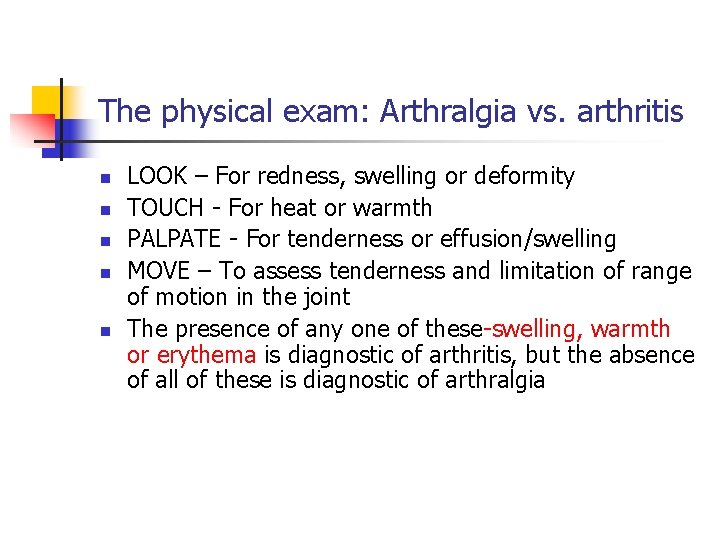
The physical exam: Arthralgia vs. arthritis n n n LOOK – For redness, swelling or deformity TOUCH - For heat or warmth PALPATE - For tenderness or effusion/swelling MOVE – To assess tenderness and limitation of range of motion in the joint The presence of any one of these-swelling, warmth or erythema is diagnostic of arthritis, but the absence of all of these is diagnostic of arthralgia
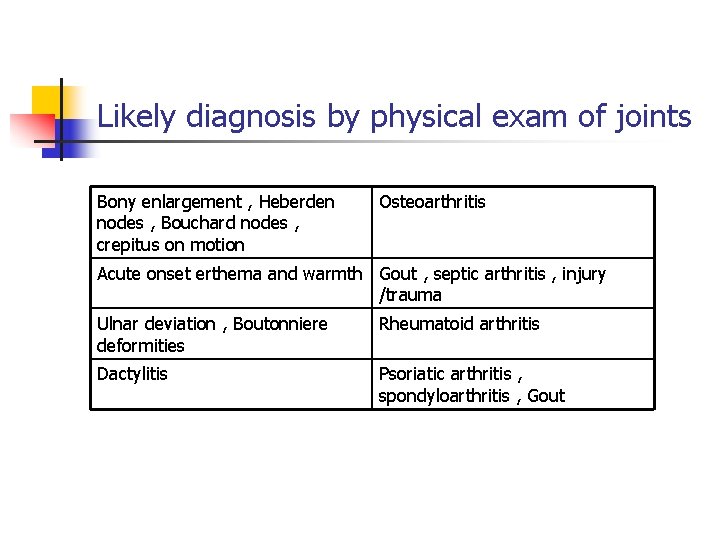
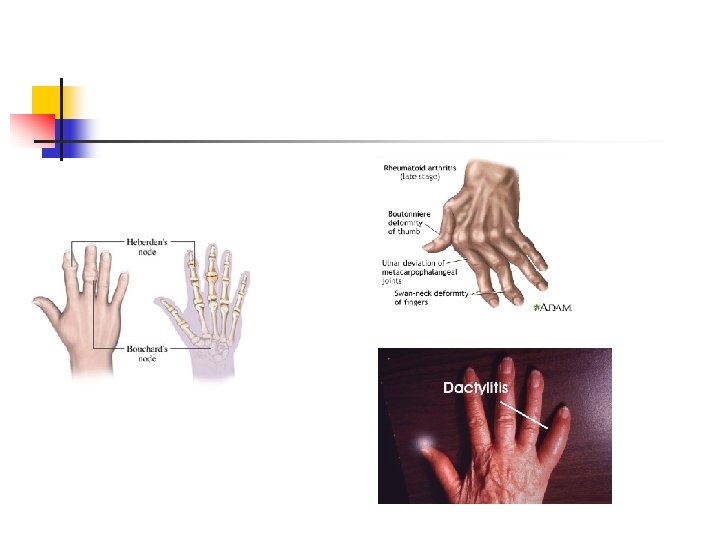
Likely diagnosis by physical exam of joints Bony enlargement , Heberden nodes , Bouchard nodes , crepitus on motion Osteoarthritis Acute onset erthema and warmth Gout , septic arthritis , injury /trauma Ulnar deviation , Boutonniere deformities Rheumatoid arthritis Dactylitis Psoriatic arthritis , spondyloarthritis , Gout
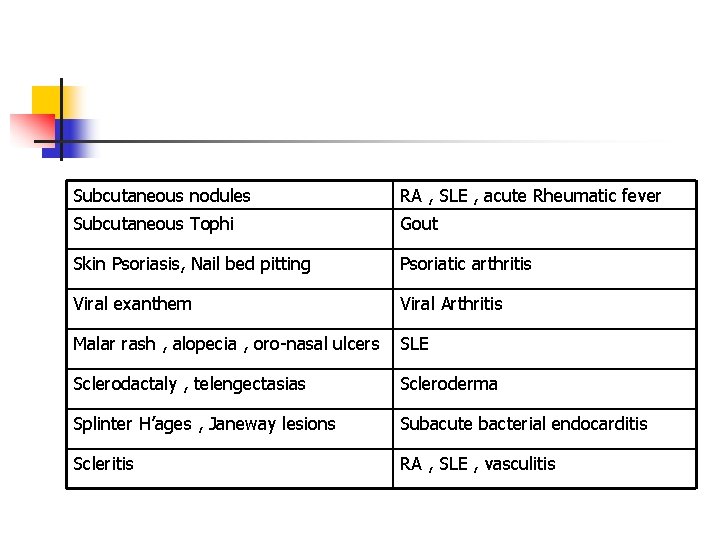
Subcutaneous nodules RA , SLE , acute Rheumatic fever Subcutaneous Tophi Gout Skin Psoriasis, Nail bed pitting Psoriatic arthritis Viral exanthem Viral Arthritis Malar rash , alopecia , oro-nasal ulcers SLE Sclerodactaly , telengectasias Scleroderma Splinter H’ages , Janeway lesions Subacute bacterial endocarditis Scleritis RA , SLE , vasculitis
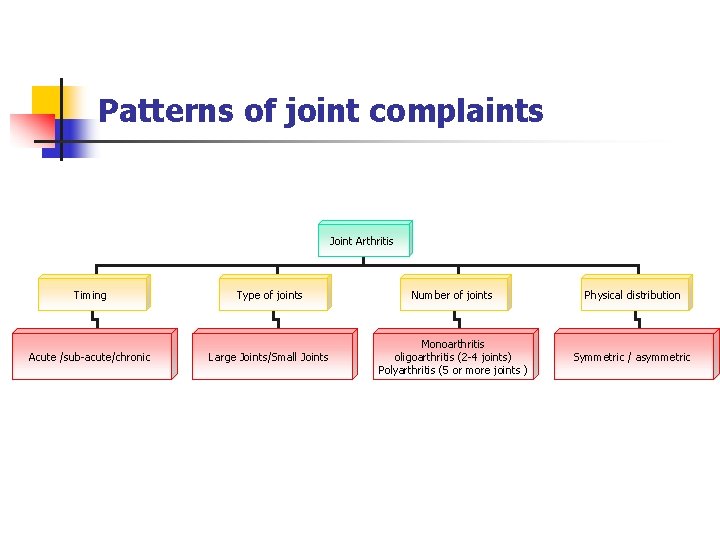
Patterns of joint complaints Joint Arthritis Timing Acute /sub-acute/chronic Type of joints Number of joints Physical distribution Large Joints/Small Joints Monoarthritis oligoarthritis (2 -4 joints) Polyarthritis (5 or more joints ) Symmetric / asymmetric
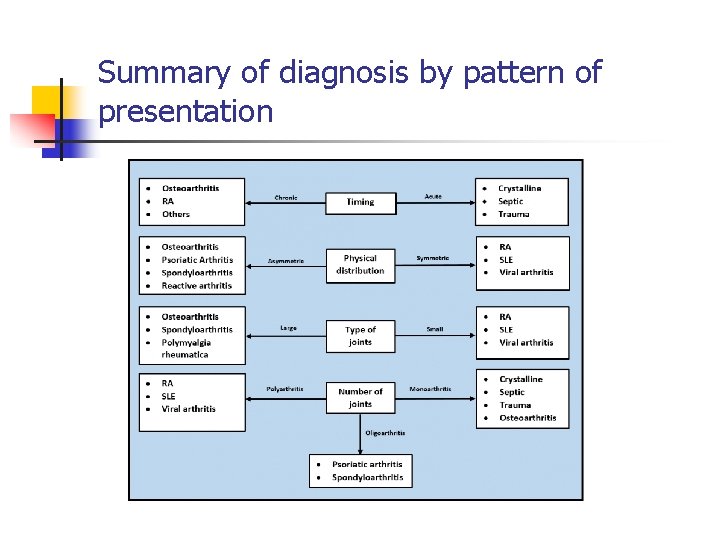
Summary of diagnosis by pattern of presentation
n Thank you