
RHEUMATOID ARTHRITIS Sam R Dalvi MD Associate Professor



- Slides: 44
RHEUMATOID ARTHRITIS Sam R. Dalvi, MD Associate Professor of Medicine Division of Rheumatology, UAB
DISCLOSURES Research Support / P. I. No relevant conflicts of interest to declare Employee No relevant conflicts of interest to declare Consultant No relevant conflicts of interest to declare Major Stockholder No relevant conflicts of interest to declare Speakers Bureau No relevant conflicts of interest to declare Scientific Advisory Board No relevant conflicts of interest to declare
LEARNING OBJECTIVES • Understand the known genetic and environmental risk factors for rheumatoid arthritis • Describe current theories which explain the pathogenesis of this disease • Describe the articular and extra-articular manifestations of rheumatoid arthritis • Understand the diagnostic evaluation of a patient with suspected rheumatoid arthritis • Locate guidelines for medication management among patients with autoimmune rheumatologic disease in the context of COVID
OUTLINE • Epidemiology • Disease mechanisms • Genetics • Environmental factors • Clinical expression • Diagnostic evaluation / When to Refer • Treatment considerations
EPIDEMIOLOGY • Prevalence of 1% in North America • Increases with age • 2. 5 times greater in women than men • Peak incidence between fourth and sixth decades • Genetic predisposition is present • Monozygotic twin studies show concordance rate of 15 -30% (RR 3. 5)
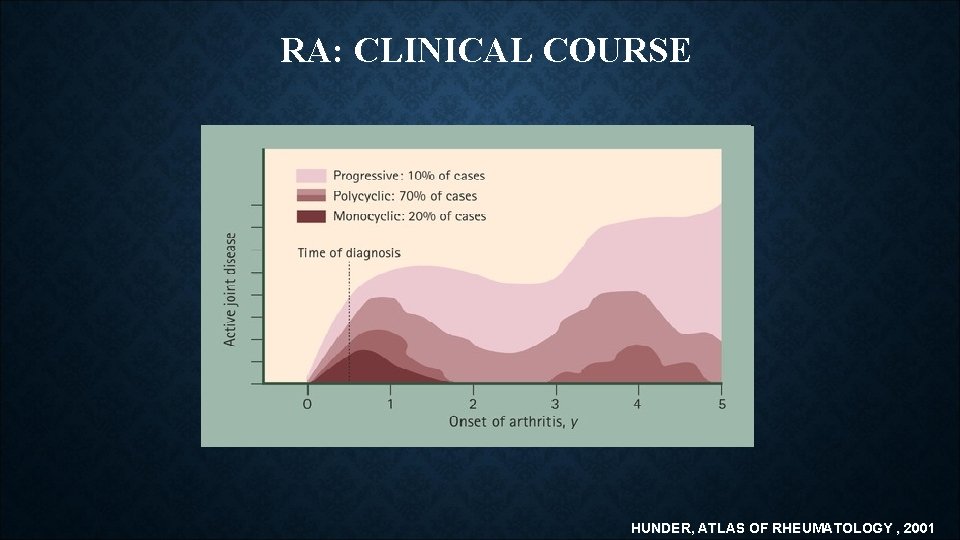
RA: CLINICAL COURSE HUNDER, ATLAS OF RHEUMATOLOGY , 2001
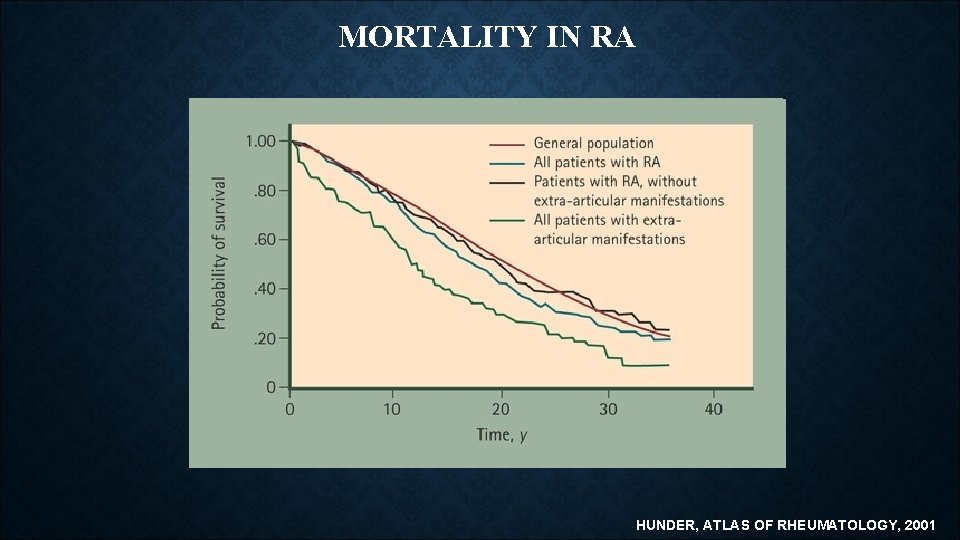
MORTALITY IN RA HUNDER, ATLAS OF RHEUMATOLOGY, 2001
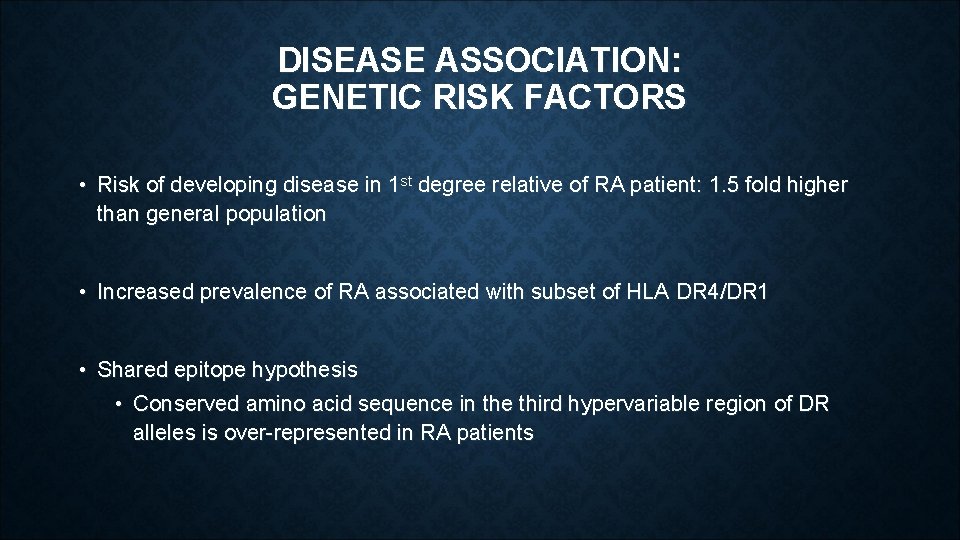
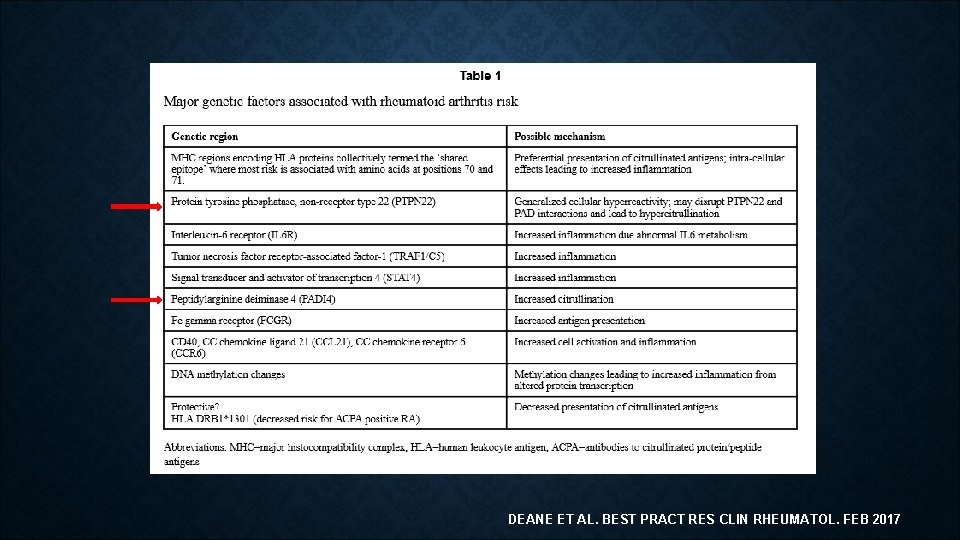
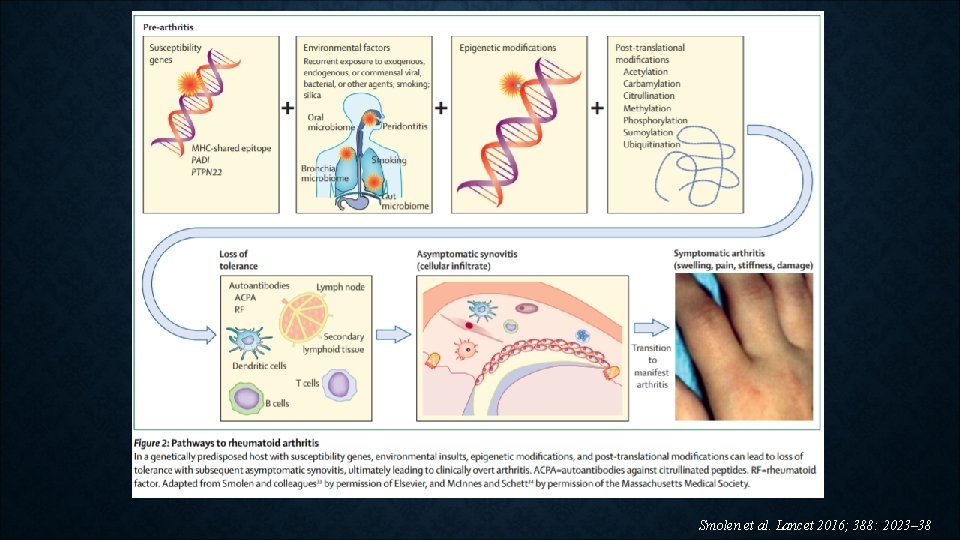
DISEASE ASSOCIATION: GENETIC RISK FACTORS • Risk of developing disease in 1 st degree relative of RA patient: 1. 5 fold higher than general population • Increased prevalence of RA associated with subset of HLA DR 4/DR 1 • Shared epitope hypothesis • Conserved amino acid sequence in the third hypervariable region of DR alleles is over-represented in RA patients
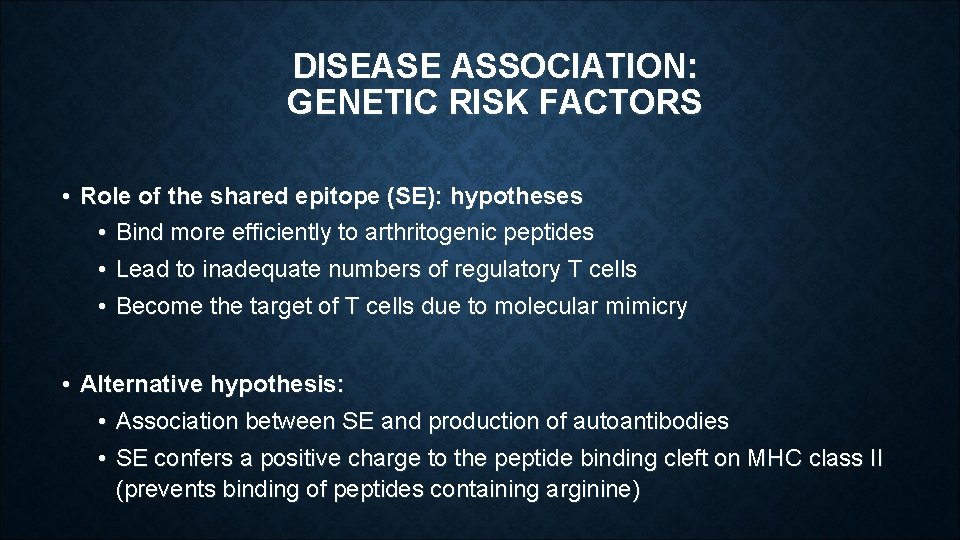
DISEASE ASSOCIATION: GENETIC RISK FACTORS • Role of the shared epitope (SE): hypotheses • Bind more efficiently to arthritogenic peptides • Lead to inadequate numbers of regulatory T cells • Become the target of T cells due to molecular mimicry • Alternative hypothesis: • Association between SE and production of autoantibodies • SE confers a positive charge to the peptide binding cleft on MHC class II (prevents binding of peptides containing arginine)
DEANE ET AL. BEST PRACT RES CLIN RHEUMATOL. FEB 2017
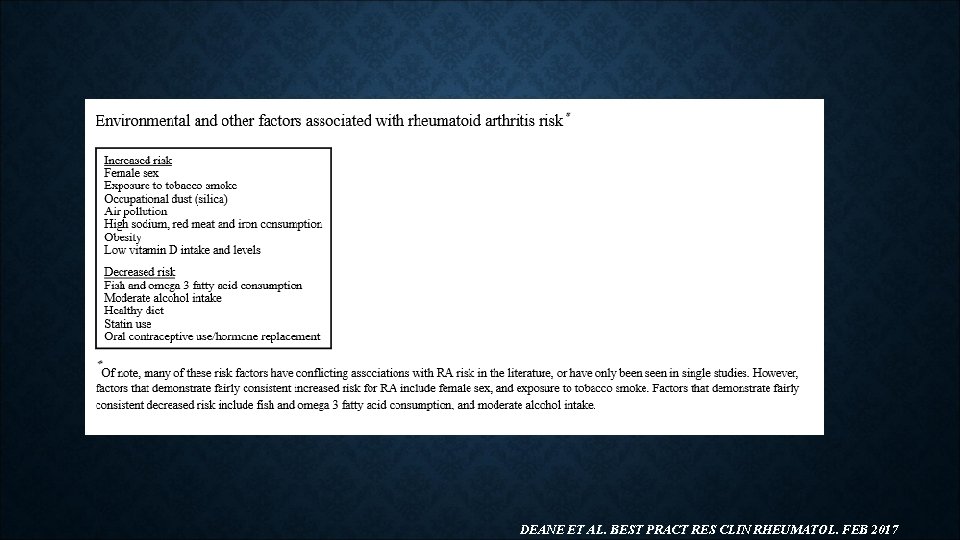
DISEASE ASSOCIATION: ENVIRONMENTAL RISK FACTORS • Tobacco • Bacteria and their Products • Peptidoglycans • Lipopolysaccharide (LPS) • Viruses • EBV • Parvovirus
DEANE ET AL. BEST PRACT RES CLIN RHEUMATOL. FEB 2017
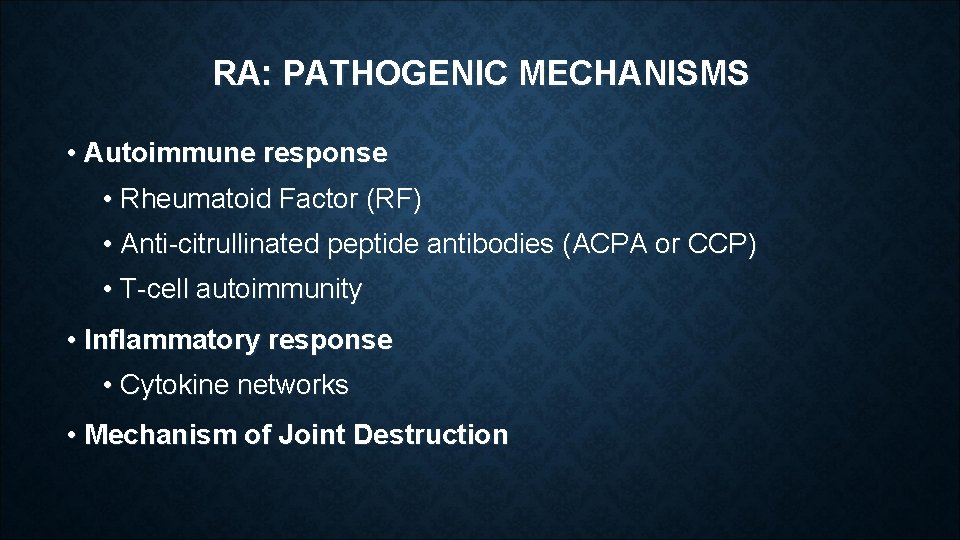
RA: PATHOGENIC MECHANISMS • Autoimmune response • Rheumatoid Factor (RF) • Anti-citrullinated peptide antibodies (ACPA or CCP) • T-cell autoimmunity • Inflammatory response • Cytokine networks • Mechanism of Joint Destruction
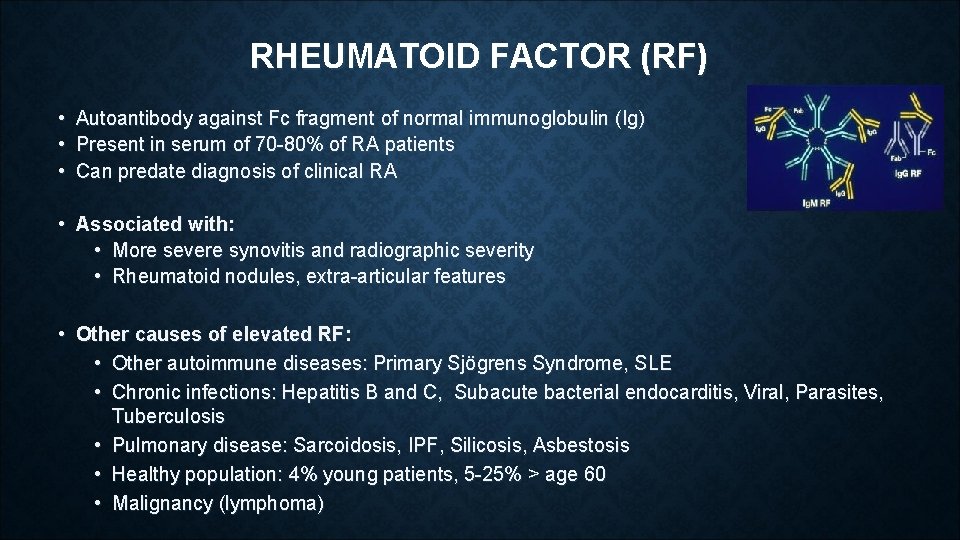
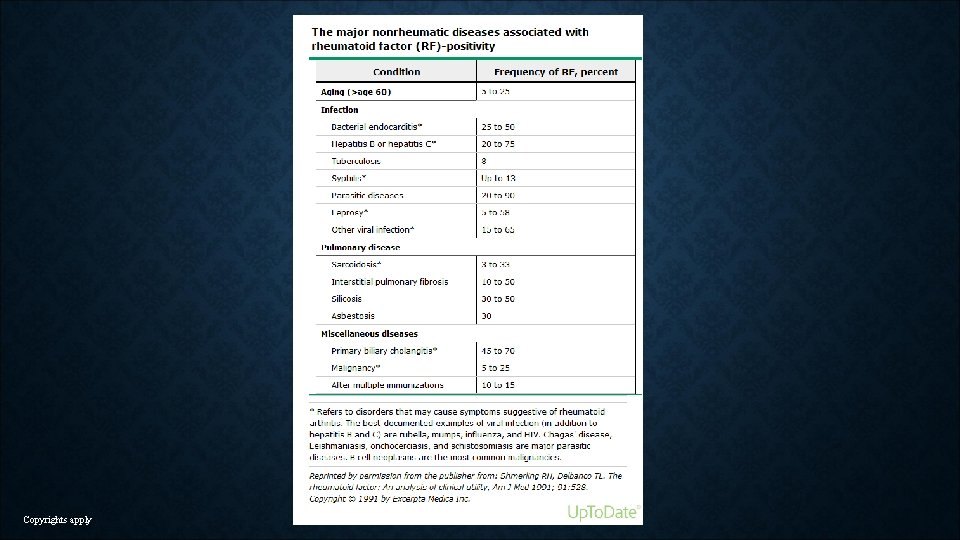
RHEUMATOID FACTOR (RF) • • • Autoantibody against Fc fragment of normal immunoglobulin (Ig) Present in serum of 70 -80% of RA patients Can predate diagnosis of clinical RA • Associated with: • More severe synovitis and radiographic severity • Rheumatoid nodules, extra-articular features • Other causes of elevated RF: • Other autoimmune diseases: Primary Sjögrens Syndrome, SLE • Chronic infections: Hepatitis B and C, Subacute bacterial endocarditis, Viral, Parasites, Tuberculosis • Pulmonary disease: Sarcoidosis, IPF, Silicosis, Asbestosis • Healthy population: 4% young patients, 5 -25% > age 60 • Malignancy (lymphoma)
Copyrights apply
ANTI-CITRULLINATED PEPTIDE ANTIBODIES (ACPA OR CCP ANTIBODIES) • Can predate onset of clinical RA • Associated with more aggressive disease course • Present in serum of 80 -90% of RA patients • Smoking increases risk of developing ACPAs • Relatively specific for RA (~90%) • Occasionally produced in other diseases: • Spondyloarthropathies • Autoimmune hepatitis • Tuberculosis
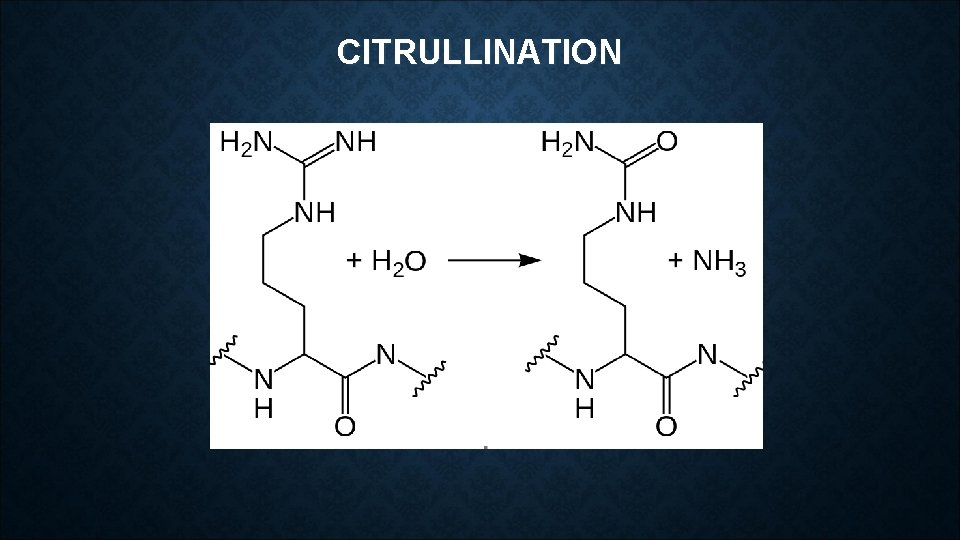
CITRULLINATION
T CELL AUTOIMMUNITY • T cells implicated in RA due to their presence in the synovium • Several animal models highlight role of T cells in the development and progression of experimental arthritis • CD 4 T cells infiltrating the synovium display the Th 1 phenotype
INFLAMMATORY RESPONSE • Macrophages and fibroblasts are the main sources of cytokines in the RA synovial tissue • Main cytokine families: • Tumor Necrosis Factor (TNF) superfamily • IL-6 • IL-1
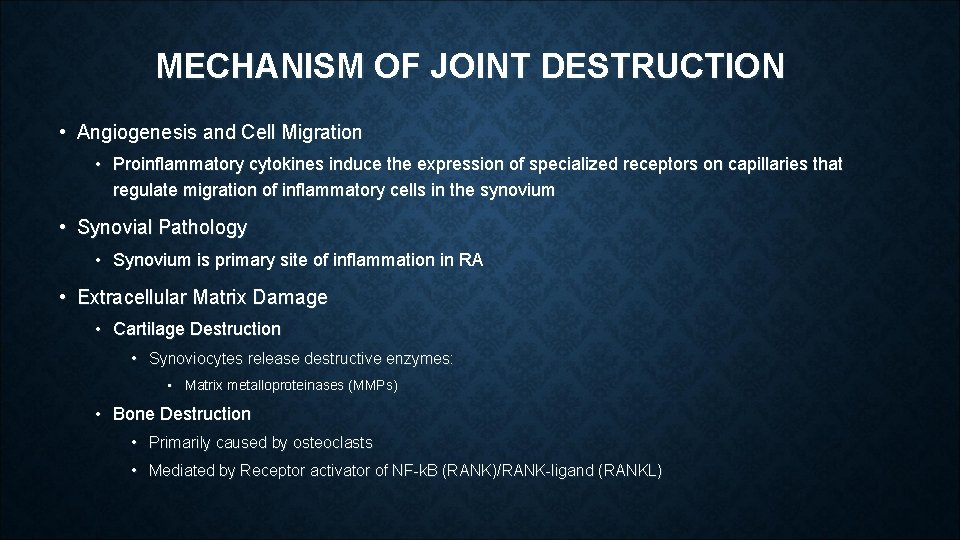
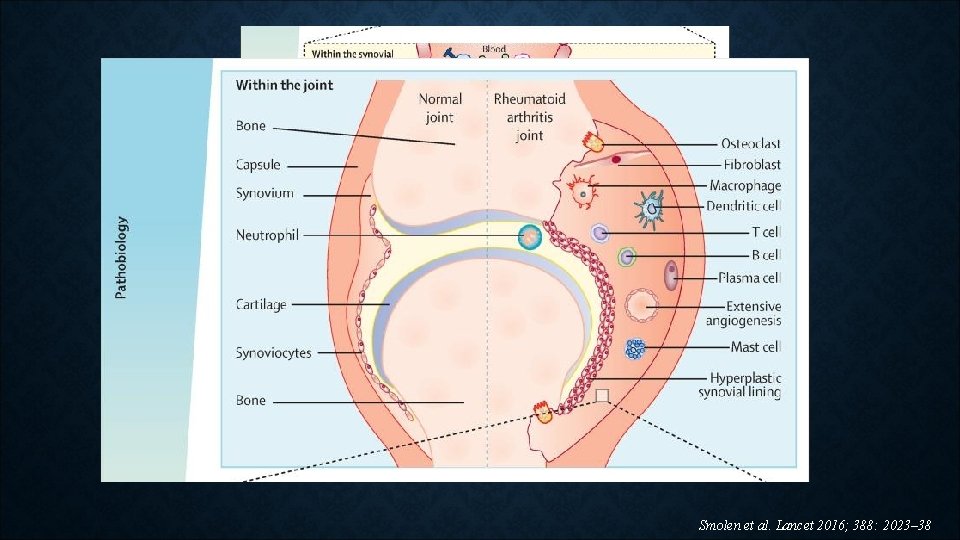
MECHANISM OF JOINT DESTRUCTION • Angiogenesis and Cell Migration • Proinflammatory cytokines induce the expression of specialized receptors on capillaries that regulate migration of inflammatory cells in the synovium • Synovial Pathology • Synovium is primary site of inflammation in RA • Extracellular Matrix Damage • Cartilage Destruction • Synoviocytes release destructive enzymes: • Matrix metalloproteinases (MMPs) • Bone Destruction • Primarily caused by osteoclasts • Mediated by Receptor activator of NF-k. B (RANK)/RANK-ligand (RANKL)
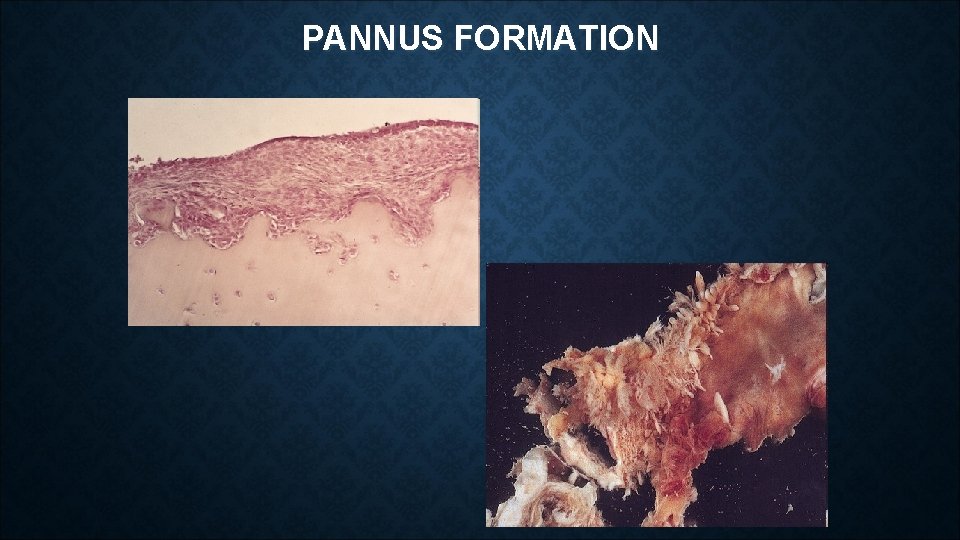
PANNUS FORMATION
Smolen et al. Lancet 2016; 388: 2023– 38
Smolen et al. Lancet 2016; 388: 2023– 38
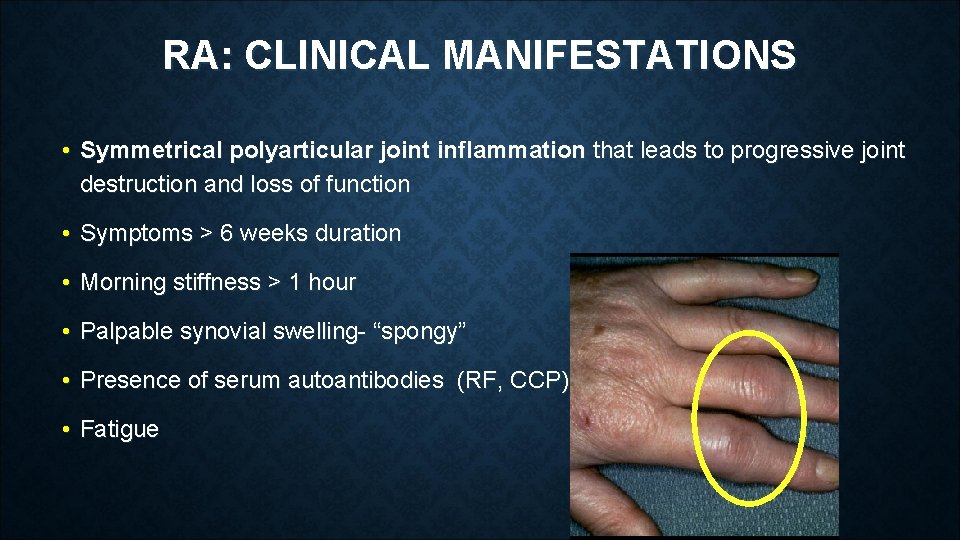
RA: CLINICAL MANIFESTATIONS • Symmetrical polyarticular joint inflammation that leads to progressive joint destruction and loss of function • Symptoms > 6 weeks duration • Morning stiffness > 1 hour • Palpable synovial swelling- “spongy” • Presence of serum autoantibodies (RF, CCP) • Fatigue
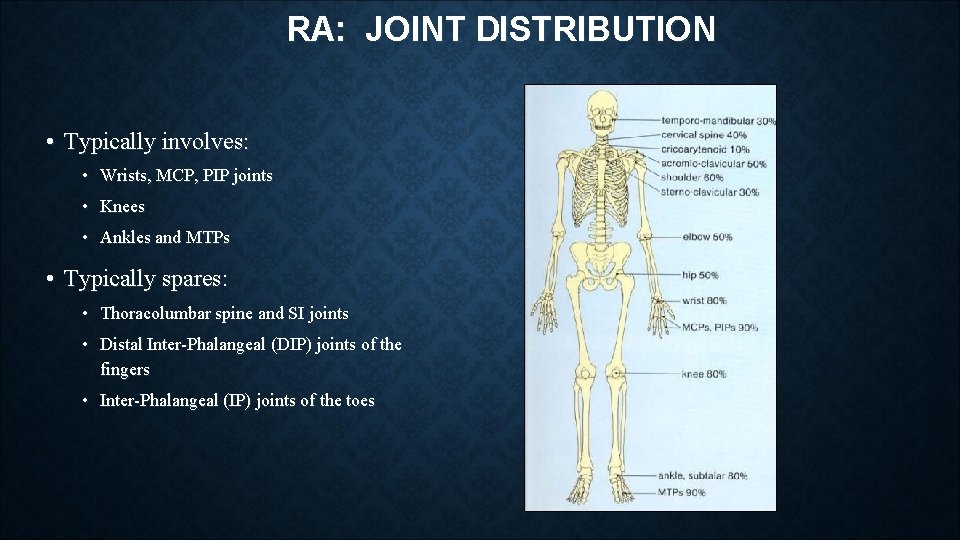
RA: JOINT DISTRIBUTION • Typically involves: • Wrists, MCP, PIP joints • Knees • Ankles and MTPs • Typically spares: • Thoracolumbar spine and SI joints • Distal Inter-Phalangeal (DIP) joints of the fingers • Inter-Phalangeal (IP) joints of the toes
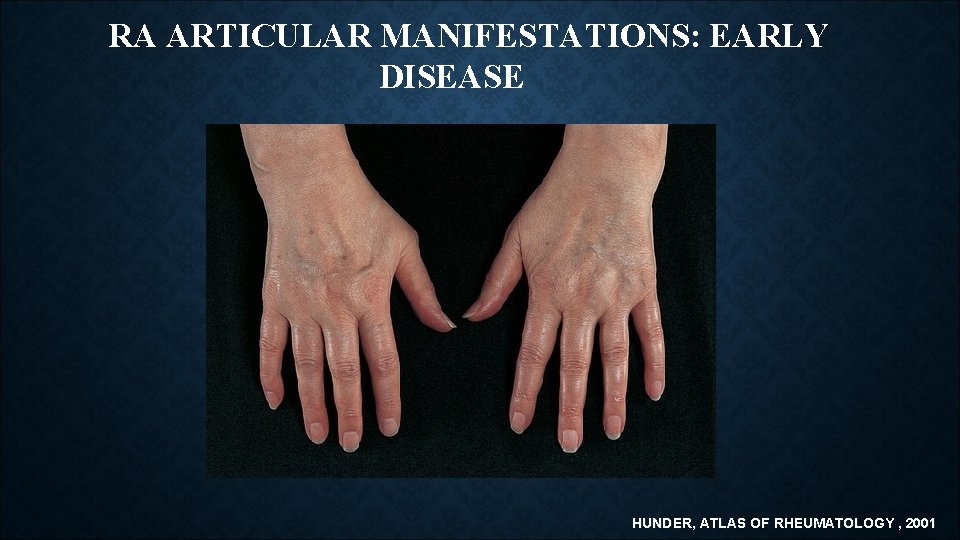
RA ARTICULAR MANIFESTATIONS: EARLY DISEASE HUNDER, ATLAS OF RHEUMATOLOGY , 2001
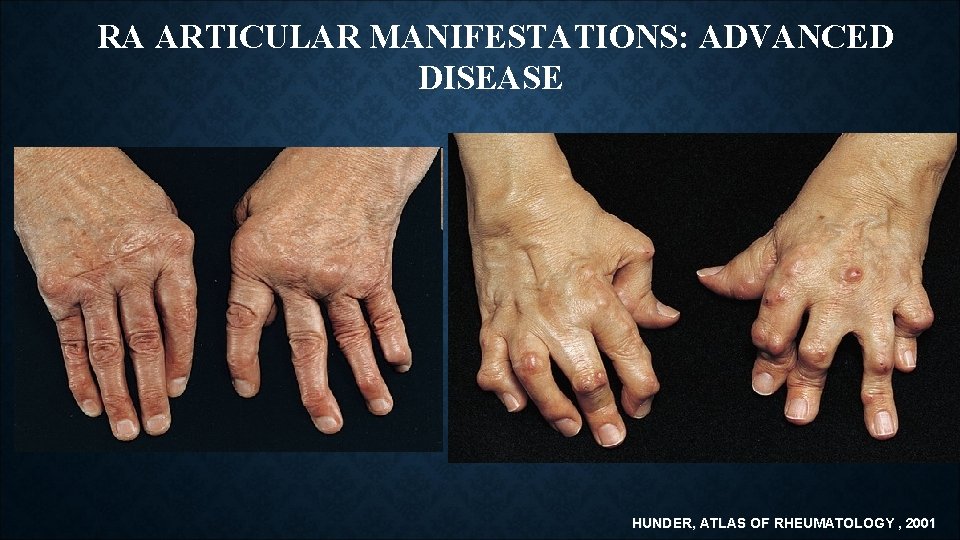
RA ARTICULAR MANIFESTATIONS: ADVANCED DISEASE HUNDER, ATLAS OF RHEUMATOLOGY , 2001
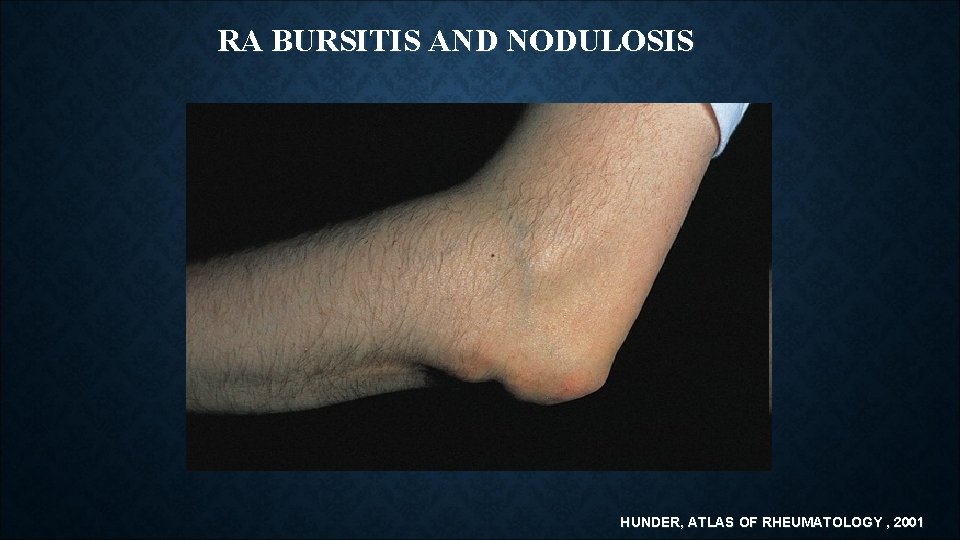
RA BURSITIS AND NODULOSIS HUNDER, ATLAS OF RHEUMATOLOGY , 2001
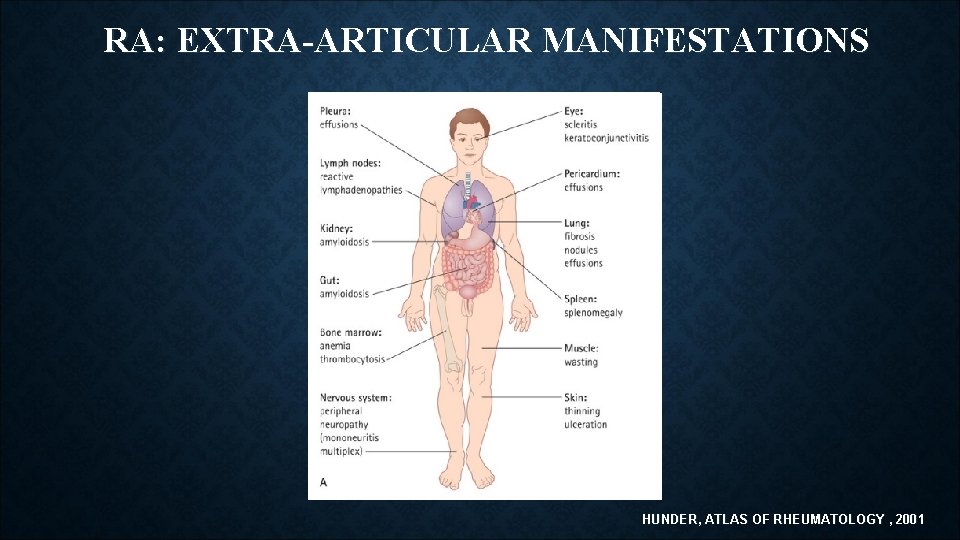
RA: EXTRA-ARTICULAR MANIFESTATIONS HUNDER, ATLAS OF RHEUMATOLOGY , 2001
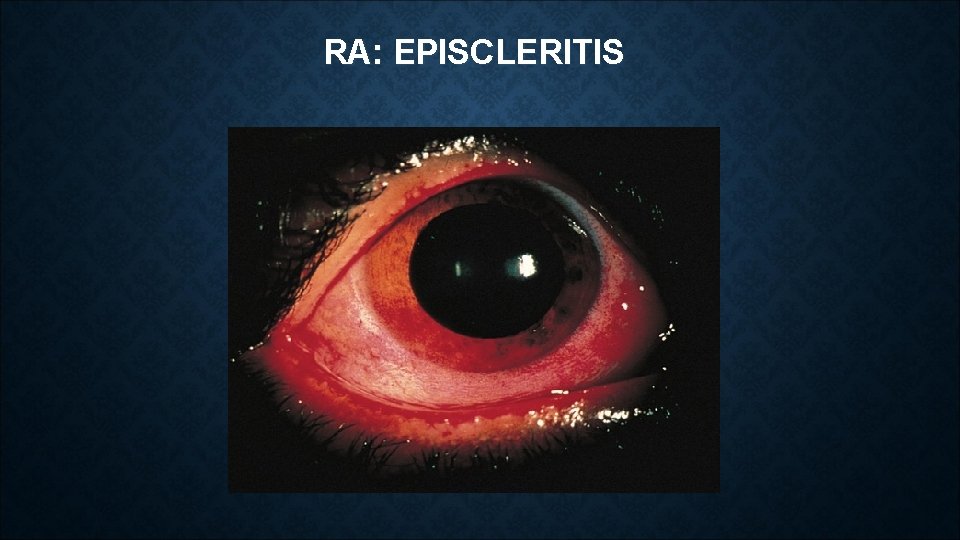
RA: EPISCLERITIS
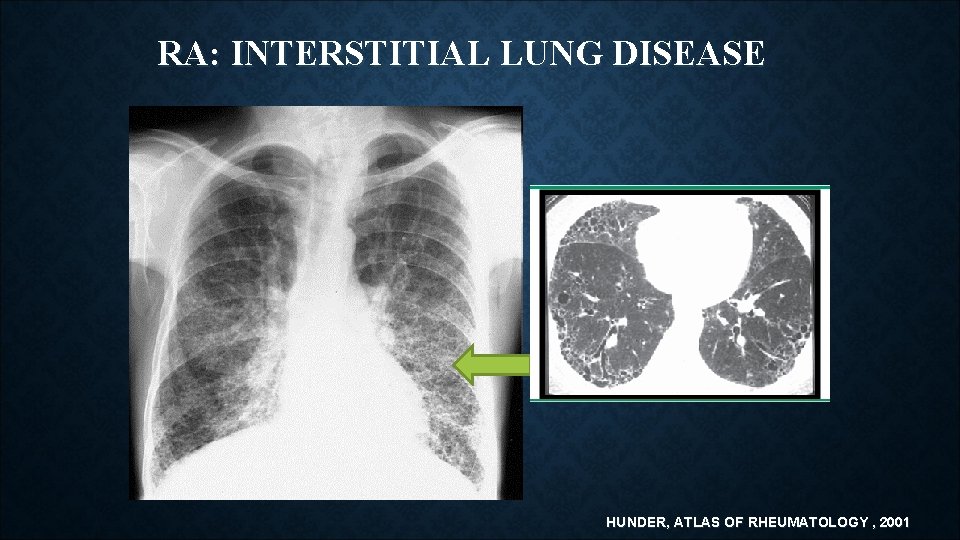
RA: INTERSTITIAL LUNG DISEASE HUNDER, ATLAS OF RHEUMATOLOGY , 2001
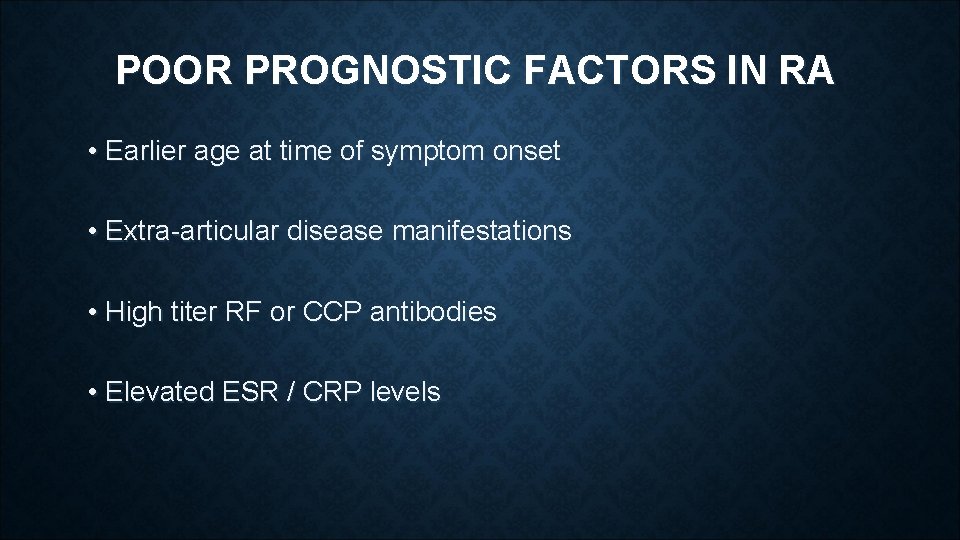
POOR PROGNOSTIC FACTORS IN RA • Earlier age at time of symptom onset • Extra-articular disease manifestations • High titer RF or CCP antibodies • Elevated ESR / CRP levels
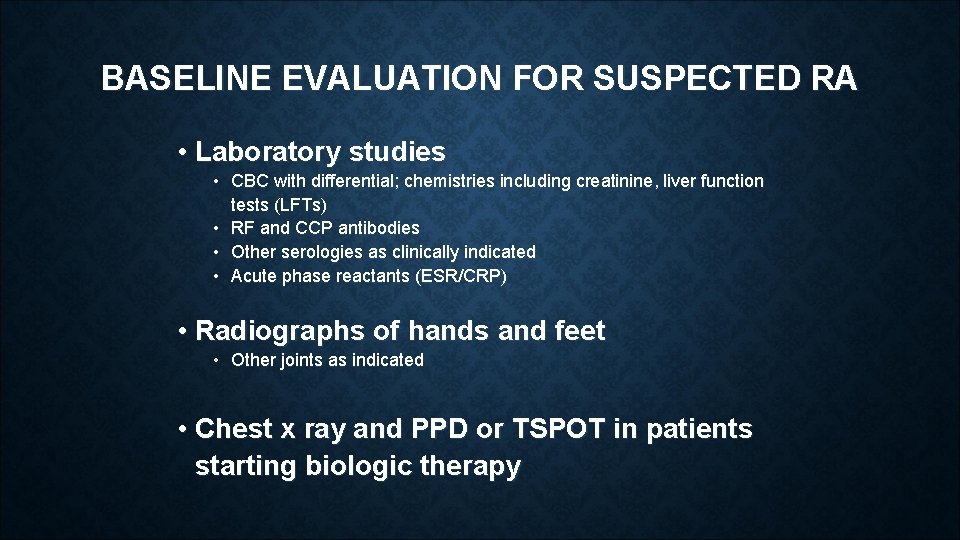
BASELINE EVALUATION FOR SUSPECTED RA • Laboratory studies • CBC with differential; chemistries including creatinine, liver function tests (LFTs) • RF and CCP antibodies • Other serologies as clinically indicated • Acute phase reactants (ESR/CRP) • Radiographs of hands and feet • Other joints as indicated • Chest x ray and PPD or TSPOT in patients starting biologic therapy
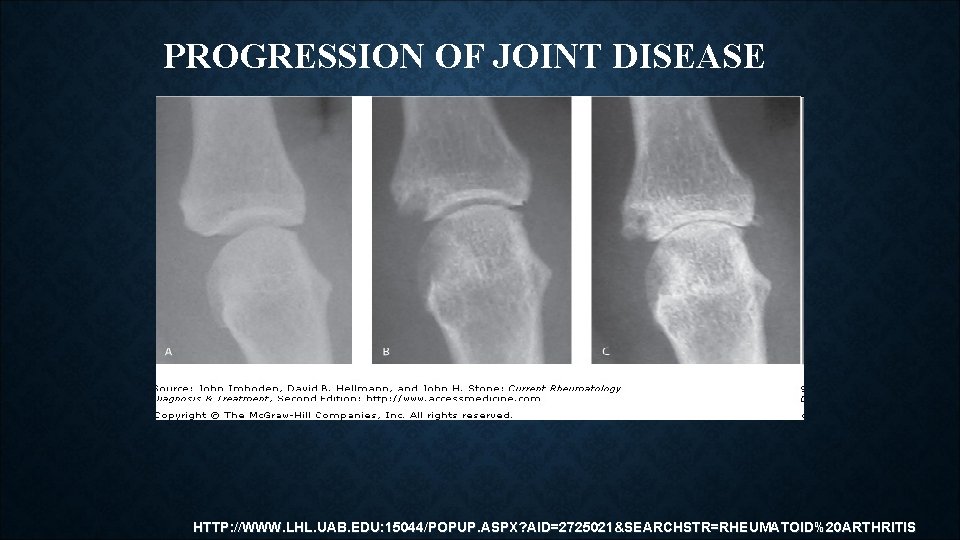
PROGRESSION OF JOINT DISEASE HTTP: //WWW. LHL. UAB. EDU: 15044/POPUP. ASPX? AID=2725021&SEARCHSTR=RHEUMATOID%20 ARTHRITIS
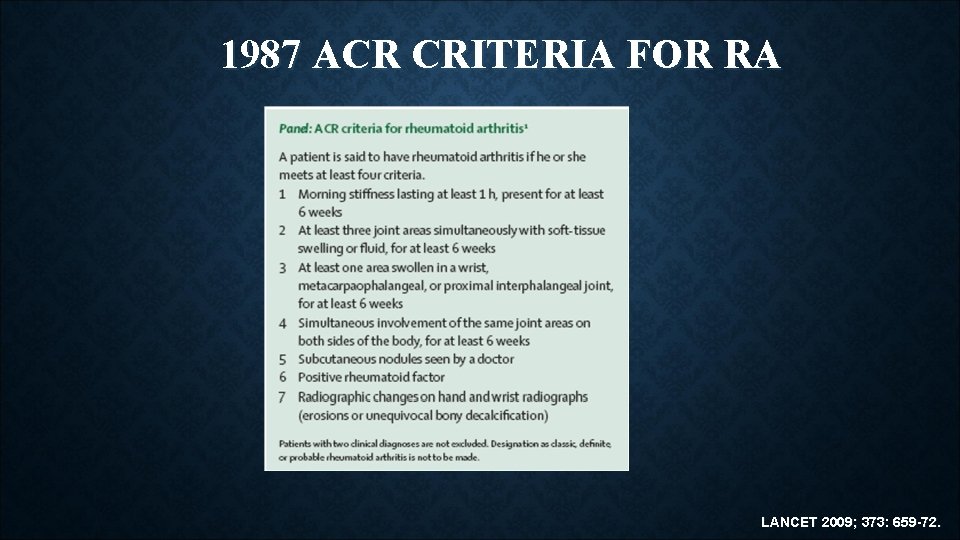
1987 ACR CRITERIA FOR RA LANCET 2009; 373: 659 -72.
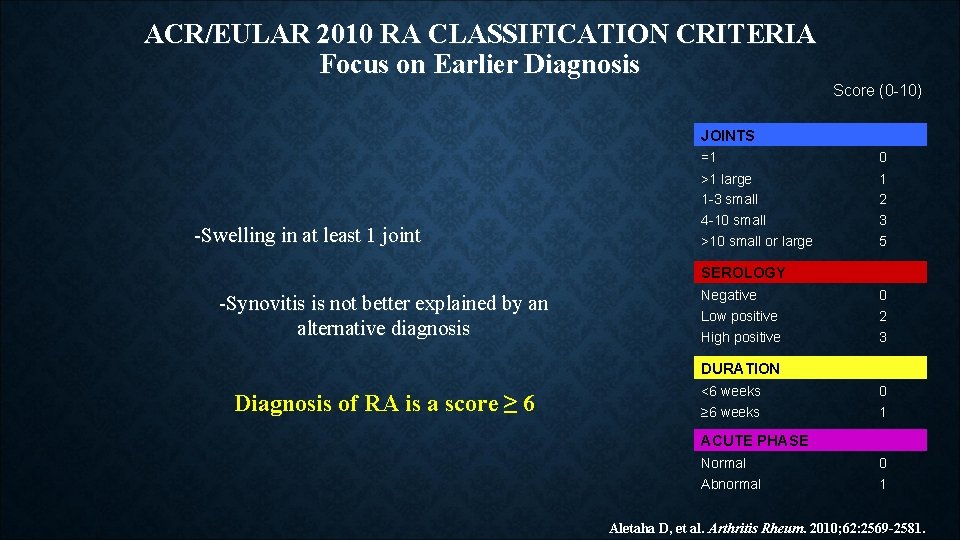
ACR/EULAR 2010 RA CLASSIFICATION CRITERIA Focus on Earlier Diagnosis Score (0 -10) JOINTS -Swelling in at least 1 joint =1 0 >1 large 1 -3 small 4 -10 small >10 small or large 1 2 3 5 SEROLOGY -Synovitis is not better explained by an alternative diagnosis Negative 0 Low positive High positive 2 3 DURATION Diagnosis of RA is a score ≥ 6 <6 weeks 0 ≥ 6 weeks 1 ACUTE PHASE Normal 0 Abnormal 1 Aletaha D, et al. Arthritis Rheum. 2010; 62: 2569 -2581.
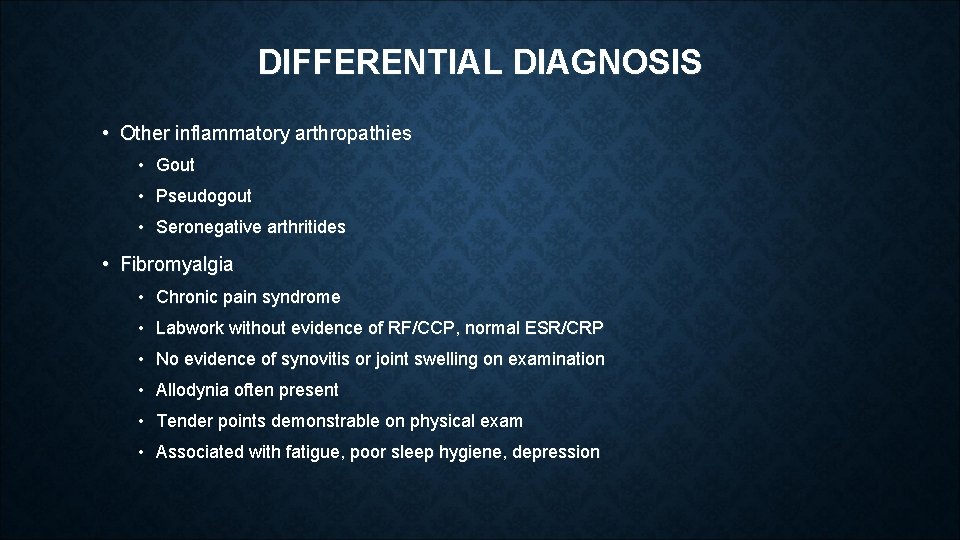
DIFFERENTIAL DIAGNOSIS • Other inflammatory arthropathies • Gout • Pseudogout • Seronegative arthritides • Fibromyalgia • Chronic pain syndrome • Labwork without evidence of RF/CCP, normal ESR/CRP • No evidence of synovitis or joint swelling on examination • Allodynia often present • Tender points demonstrable on physical exam • Associated with fatigue, poor sleep hygiene, depression
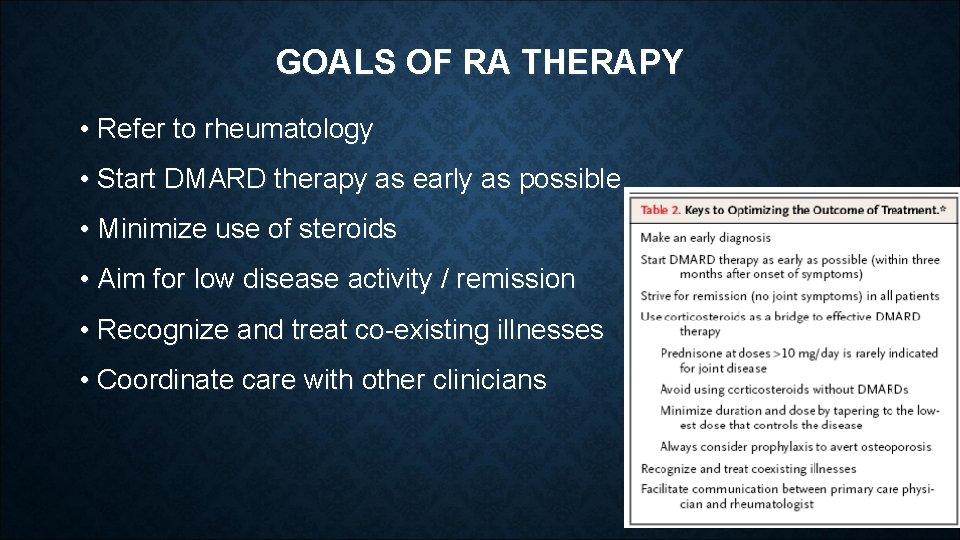
GOALS OF RA THERAPY • Refer to rheumatology • Start DMARD therapy as early as possible • Minimize use of steroids • Aim for low disease activity / remission • Recognize and treat co-existing illnesses • Coordinate care with other clinicians
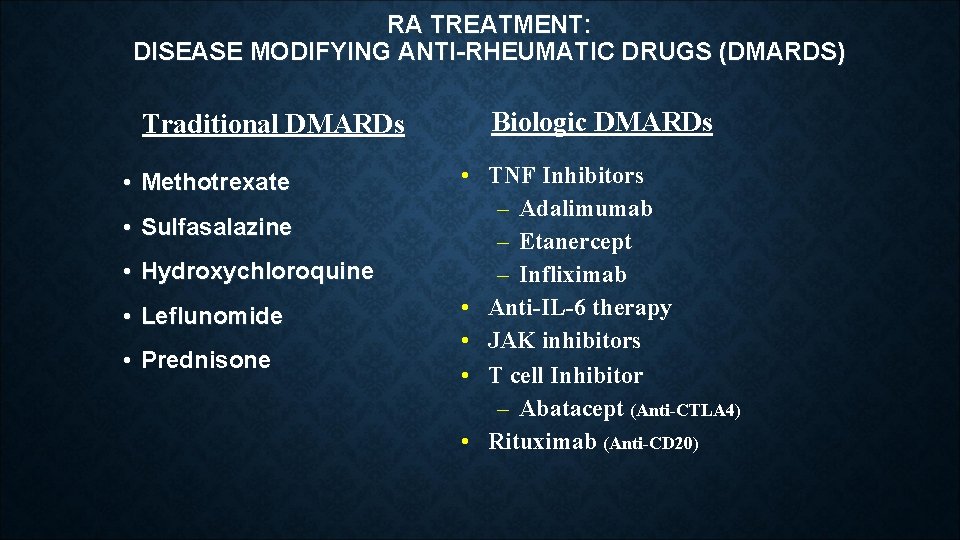
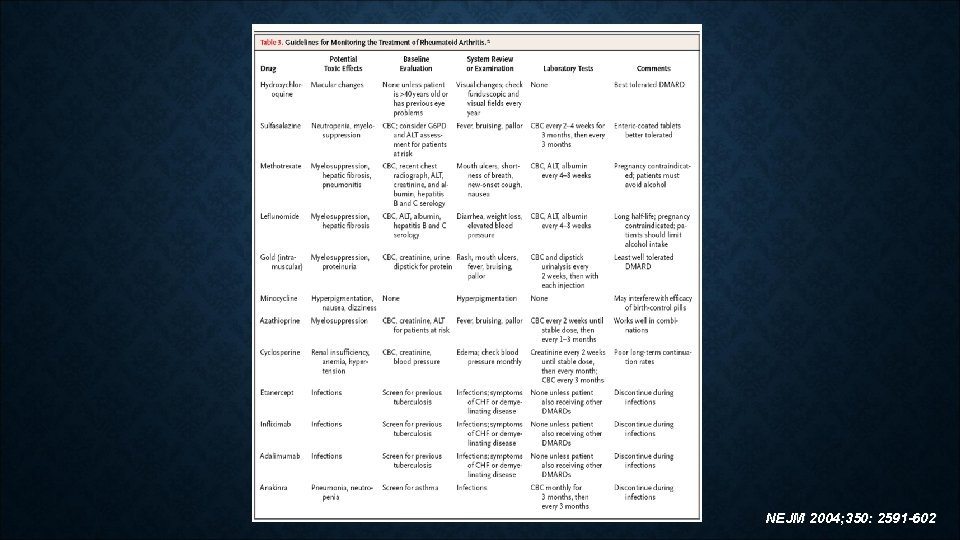
RA TREATMENT: DISEASE MODIFYING ANTI-RHEUMATIC DRUGS (DMARDS) Traditional DMARDs • Methotrexate • Sulfasalazine • Hydroxychloroquine • Leflunomide • Prednisone Biologic DMARDs • TNF Inhibitors – Adalimumab – Etanercept – Infliximab • Anti-IL-6 therapy • JAK inhibitors • T cell Inhibitor – Abatacept (Anti-CTLA 4) • Rituximab (Anti-CD 20)
NEJM 2004; 350: 2591 -602
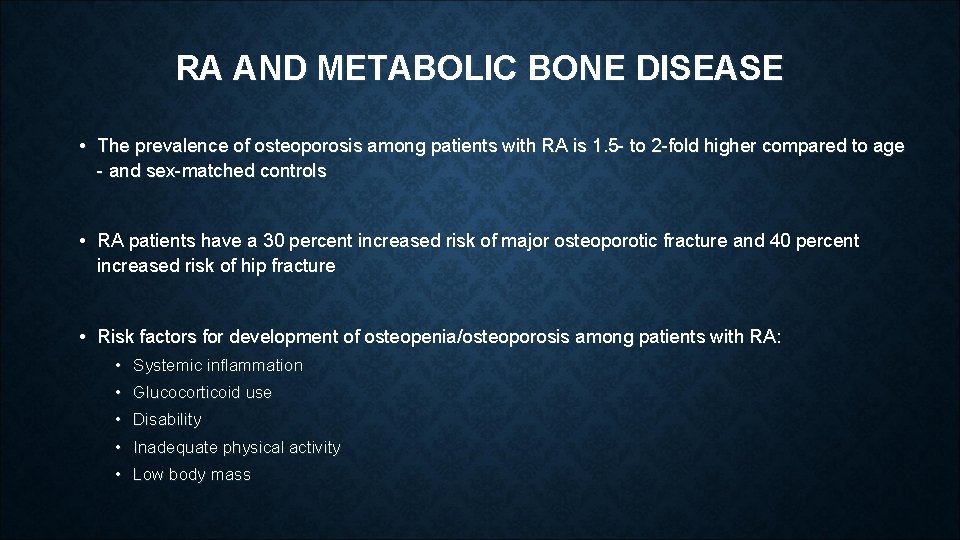
RA AND METABOLIC BONE DISEASE • The prevalence of osteoporosis among patients with RA is 1. 5 - to 2 -fold higher compared to age - and sex-matched controls • RA patients have a 30 percent increased risk of major osteoporotic fracture and 40 percent increased risk of hip fracture • Risk factors for development of osteopenia/osteoporosis among patients with RA: • Systemic inflammation • Glucocorticoid use • Disability • Inadequate physical activity • Low body mass
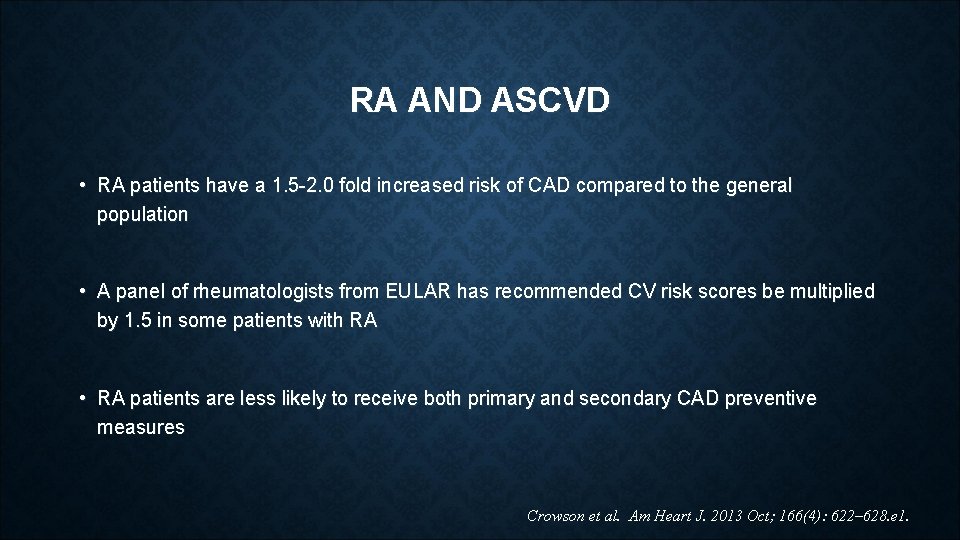
RA AND ASCVD • RA patients have a 1. 5 -2. 0 fold increased risk of CAD compared to the general population • A panel of rheumatologists from EULAR has recommended CV risk scores be multiplied by 1. 5 in some patients with RA • RA patients are less likely to receive both primary and secondary CAD preventive measures Crowson et al. Am Heart J. 2013 Oct; 166(4): 622– 628. e 1.
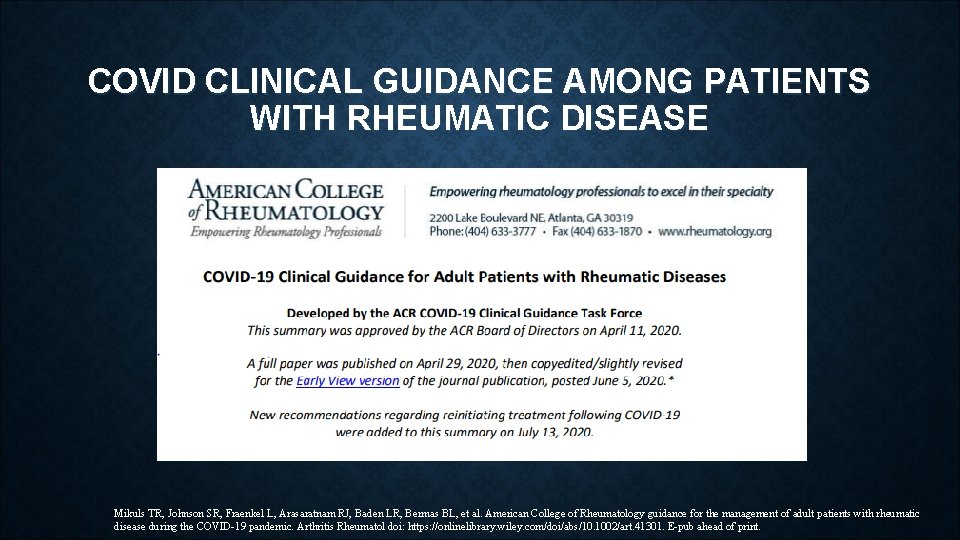
COVID CLINICAL GUIDANCE AMONG PATIENTS WITH RHEUMATIC DISEASE Mikuls TR, Johnson SR, Fraenkel L, Arasaratnam RJ, Baden LR, Bermas BL, et al. American College of Rheumatology guidance for the management of adult patients with rheumatic disease during the COVID-19 pandemic. Arthritis Rheumatol doi: https: //onlinelibrary. wiley. com/doi/abs/10. 1002/art. 41301. E-pub ahead of print.
FINAL THOUGHTS • Future of RA: precision medicine? • Earlier diagnosis, aggressive treatment • Work with patients on dispelling myths about the disease, medications • Address comorbidities • Counseling on exercise and diet