
RHEUMATOID ARTHRITIS RA Epidemiology Genetics Most common inflammatory




- Slides: 33
RHEUMATOID ARTHRITIS
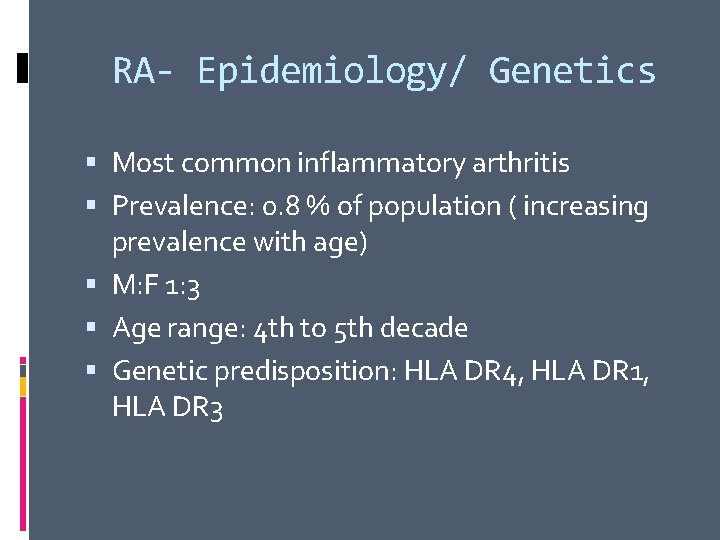
RA- Epidemiology/ Genetics Most common inflammatory arthritis Prevalence: 0. 8 % of population ( increasing prevalence with age) M: F 1: 3 Age range: 4 th to 5 th decade Genetic predisposition: HLA DR 4, HLA DR 1, HLA DR 3
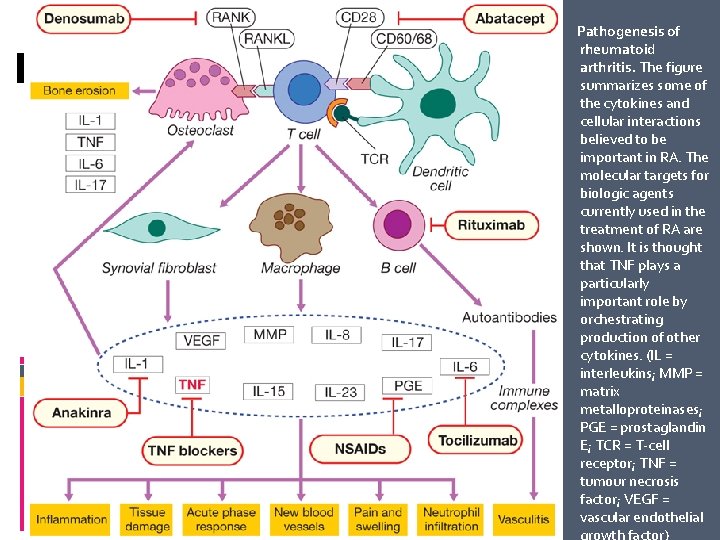
The progression of Rheumatoid Arthritis Pathogenesis of rheumatoid arthritis. The figure summarizes some of the cytokines and cellular interactions believed to be important in RA. The molecular targets for biologic agents currently used in the treatment of RA are shown. It is thought that TNF plays a particularly important role by orchestrating production of other cytokines. (IL = interleukins; MMP = matrix metalloproteinases; PGE = prostaglandin E; TCR = T-cell receptor; TNF = tumour necrosis factor; VEGF = vascular endothelial growth factor)
Clinical Manifestations
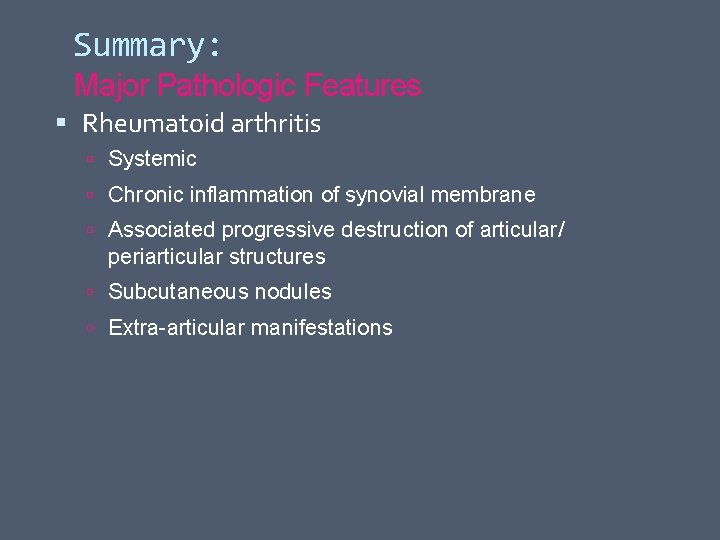
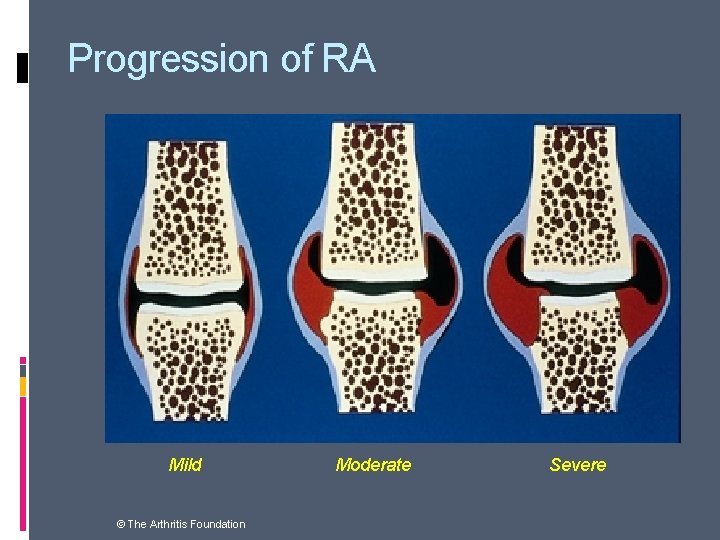
Summary: Major Pathologic Features Rheumatoid arthritis Systemic Chronic inflammation of synovial membrane Associated progressive destruction of articular/ periarticular structures Subcutaneous nodules Extra-articular manifestations
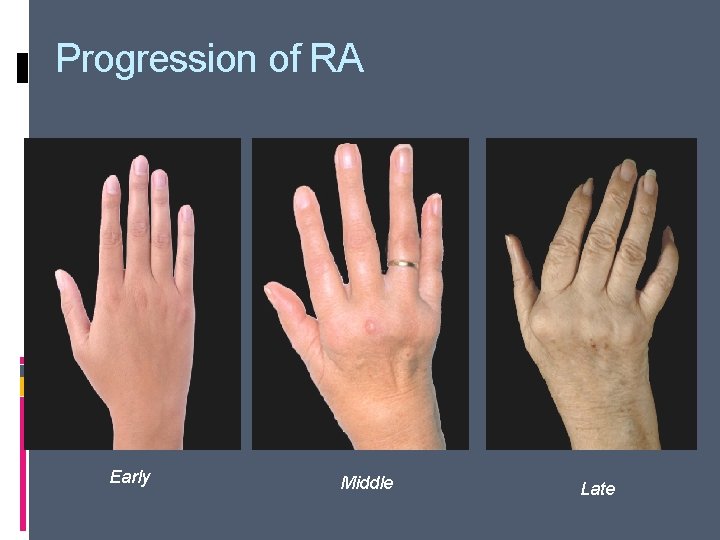
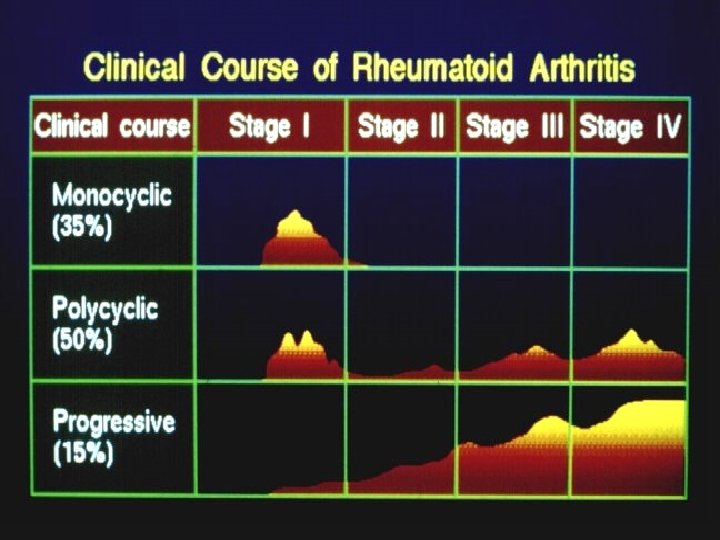
Progression of RA Early Middle Late
Progression of RA Mild © The Arthritis Foundation Moderate Severe
ACR 1987 CLASSIFICATION CRITERIA FOR RHEUMATOID ARTHRITIS Requires four out of the seven criteria: 1. Morning stiffness* 2. Arthritis of three or more joints* 3. Arthritis of hand joints* 4. Symmetric arthritis* 5. Rheumatoid nodules 6. Serum rheumatoid factor 7. Radiographic changes *Must have been present for at least six weeks
Clinical features Presentation is with pain, joint swelling and stiffness affecting the small joints of the hands, feet and wrists. Large joint involvement, systemic symptoms and extra-articular features may also occur. The typical features are symmetrical swelling of the metacarpophalangeal (MCP) joints and proximal IPJs. These and other joints are actively inflamed if they are tender on pressure, and have stress pain on passive movement or effusion/soft tissue swelling.
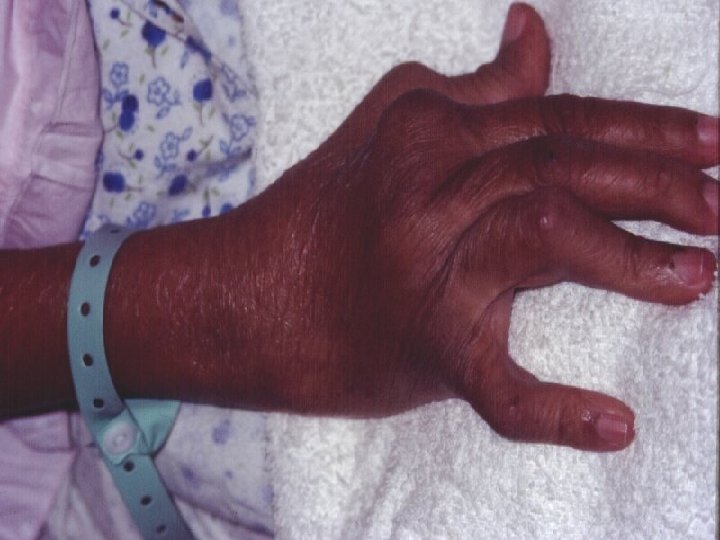
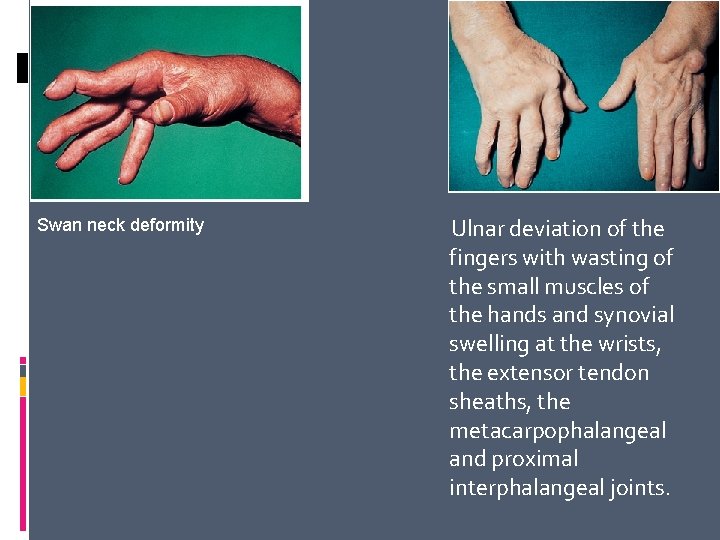
Clinical features Erythema is not usually a feature and its presence implies coexistent sepsis. Characteristic deformities develop with longstanding disease, including 'swan neck' deformity, the boutonnière or 'button hole' deformity, and a Z deformity of the thumb
Swan neck deformity Ulnar deviation of the fingers with wasting of the small muscles of the hands and synovial swelling at the wrists, the extensor tendon sheaths, the metacarpophalangeal and proximal interphalangeal joints.
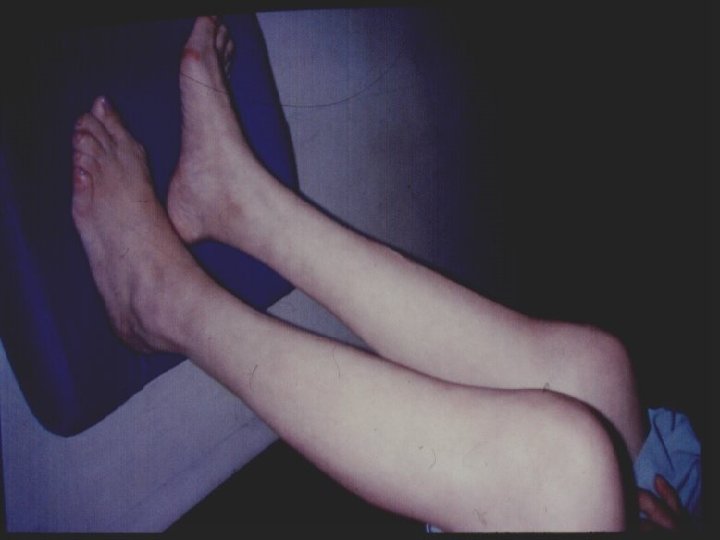
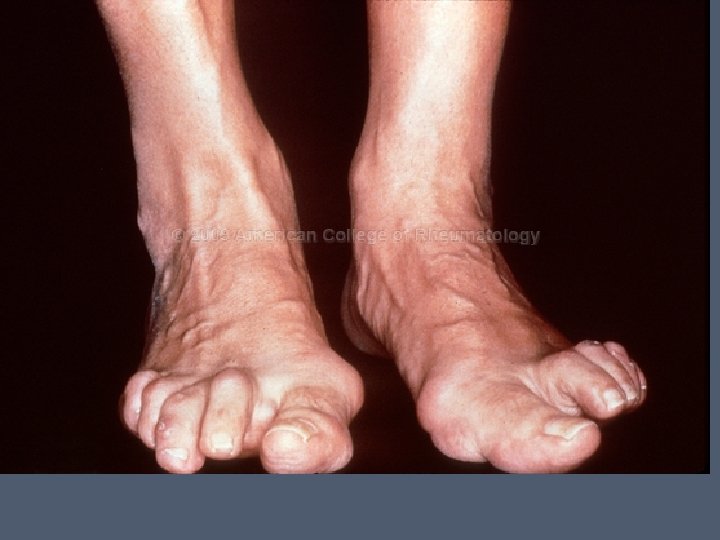
Clinical features In the foot, dorsal subluxation of the MTP joints may result in 'cock-up' toe deformities. This causes pain on weight-bearing on the exposed MTP heads and development of secondary adventitious bursae and callosities. In the hindfoot, calcaneovalgus (eversion) is the most common deformity, reflecting damage to the ankle and subtalar joint. This is often associated with loss of the longitudinal arch (flat foot) due to rupture of the tibialis posterior tendon.
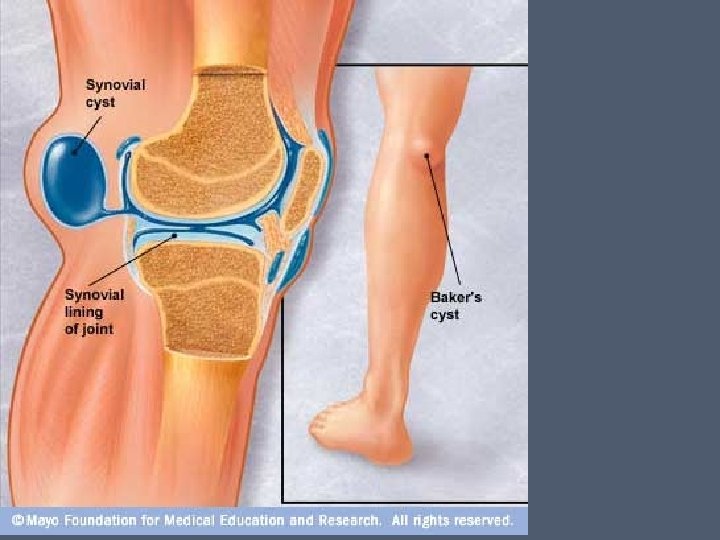
Clinical features Popliteal ('Baker's') cysts usually occur in combination with knee synovitis. Synovial fluid communicates with the cyst but is prevented from returning to the joint by a valve-like mechanism.
Extraarticular Manifestation Rheumatoid Nodules Vaculitis Pleuropulmonary manifestations Peripheral neuropathy Episcleritis, keratoconjunctivitis sicca Felty’s Syndrome : chronic RA, splenomegaly, neutropenia, anemia Osteoporosis
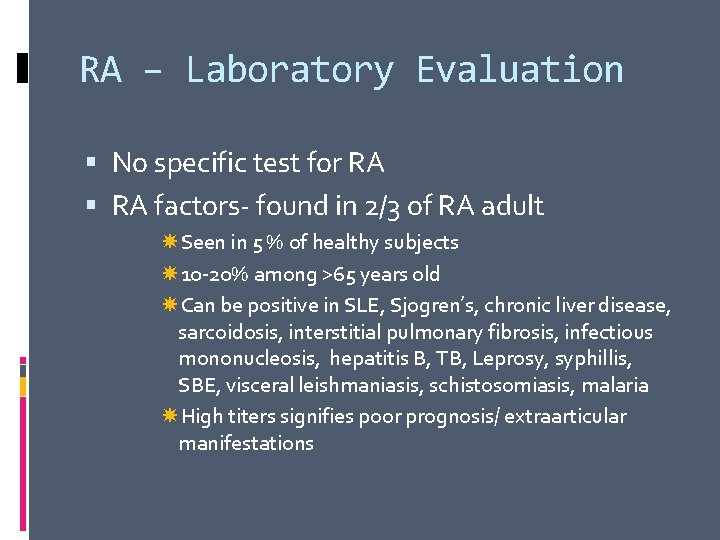
RA – Laboratory Evaluation No specific test for RA factors- found in 2/3 of RA adult Seen in 5 % of healthy subjects 10 -20% among >65 years old Can be positive in SLE, Sjogren’s, chronic liver disease, sarcoidosis, interstitial pulmonary fibrosis, infectious mononucleosis, hepatitis B, TB, Leprosy, syphillis, SBE, visceral leishmaniasis, schistosomiasis, malaria High titers signifies poor prognosis/ extraarticular manifestations
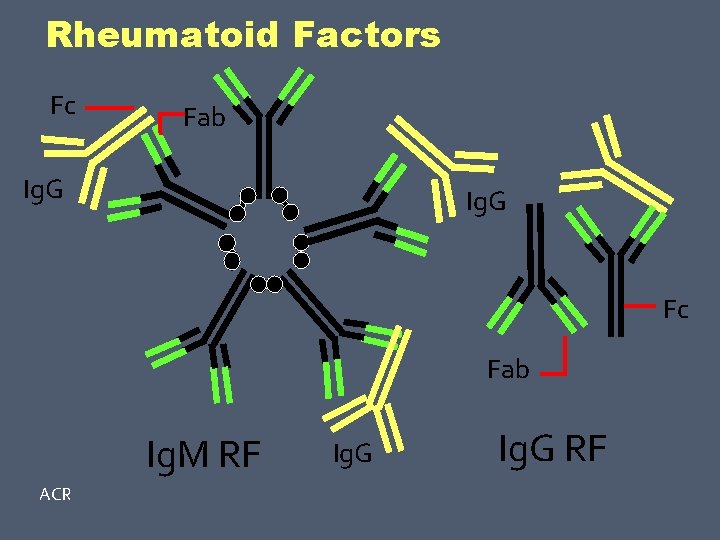
Rheumatoid Factors Fc Fab Ig. G Fc Fab Ig. M RF ACR Ig. G RF
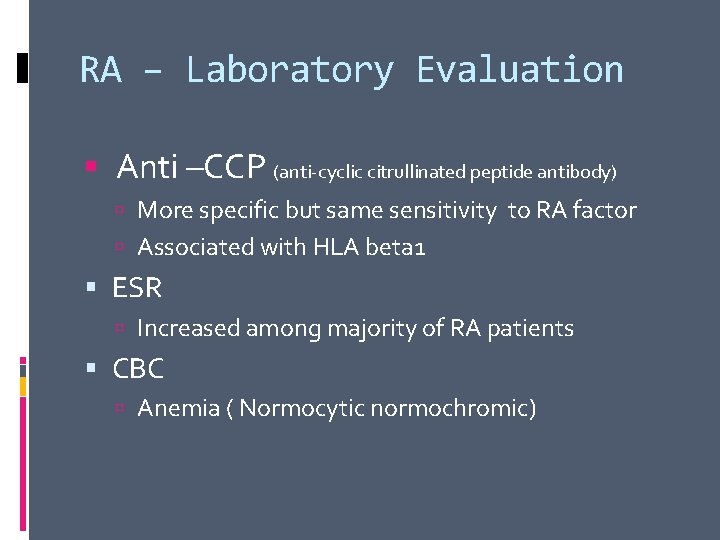
RA – Laboratory Evaluation Anti –CCP (anti-cyclic citrullinated peptide antibody) More specific but same sensitivity to RA factor Associated with HLA beta 1 ESR Increased among majority of RA patients CBC Anemia ( Normocytic normochromic)
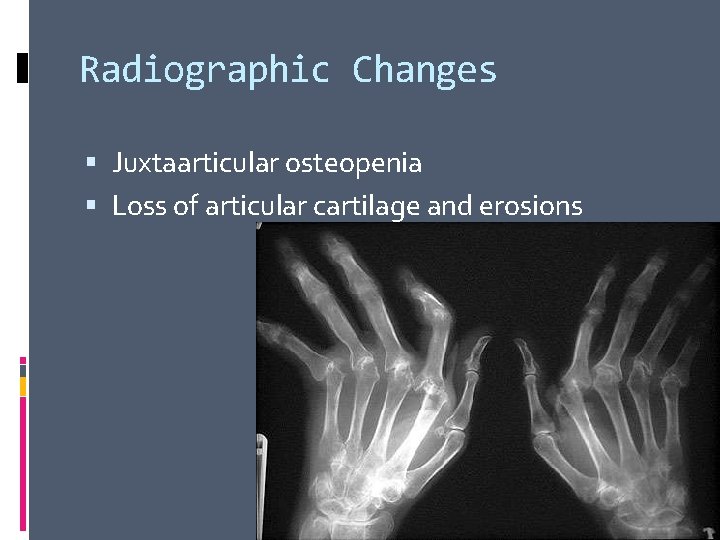
Radiographic Changes Juxtaarticular osteopenia Loss of articular cartilage and erosions
Management Of Rheumatoid arthritis
Objectives of RA Treatment • Relieve pain • Decrease joint inflammation • Prevent joint destruction • Restore function of disabled joints • Correct deformed joints • Maintain quality of life
Management Physical rest, targeted anti-inflammatory therapy and passive exercises are the mainstays, with the aim of relieving symptoms, suppressing inflammation, and conserving and restoring function in affected joints. A multidisciplinary approach is required, including doctors, nurses, physiotherapists and occupational therapists, and patient education and counselling play a key role.
Management During treatment, periodic assessment of disease activity, progression and disability is essential. In the vast majority, management is outpatient-based, but hospital admission can be helpful in patients with very active disease for a period of bed rest, multiple joint injections, splinting, regular hydrotherapy, physiotherapy and education.
Mx- Drug therapy Prompt introduction of DMARD therapy plays a central role. The patient should be advised that this will not improve symptoms immediately, but in the longer term there is a good chance that symptoms will come under control and joint damage will be prevented. If the first-choice drug fails to control disease activity, other DMARDs can be added
Mx-Drug therapy If adverse effects occur, the patient should be switched to another DMARD. If disease activity persists despite an adequate trial of two DMARDs including methotrexate, anti-TNF therapy should be considered. Most patients also require NSAID and other analgesics. Because of the delayed onset of action, corticosteroids are often given when DMARDs are commenced to give symptomatic relief.
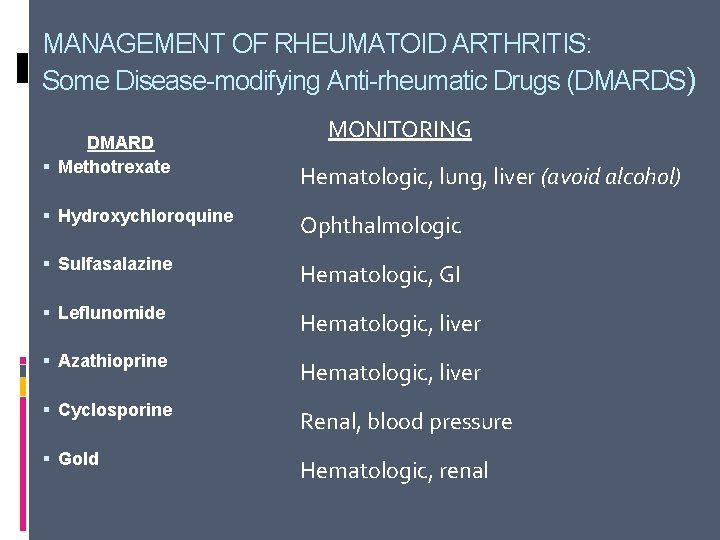
MANAGEMENT OF RHEUMATOID ARTHRITIS: Some Disease-modifying Anti-rheumatic Drugs (DMARDS) DMARD Methotrexate MONITORING Hematologic, lung, liver (avoid alcohol) Hydroxychloroquine Ophthalmologic Sulfasalazine Hematologic, GI Leflunomide Hematologic, liver Azathioprine Hematologic, liver Cyclosporine Renal, blood pressure Gold Hematologic, renal
MANAGEMENT OF RHEUMATOID ARTHRITIS: Symptomatic Medications NSAIDs Analgesics Corticosteroids
Surgery in RA Synovectomy of the wrist or finger tendon sheaths of the hands may be required for pain relief or to prevent tendon rupture when medical interventions have failed. In later stages when joint damage has occurred, osteotomy, arthrodesis or arthroplasty may be required.
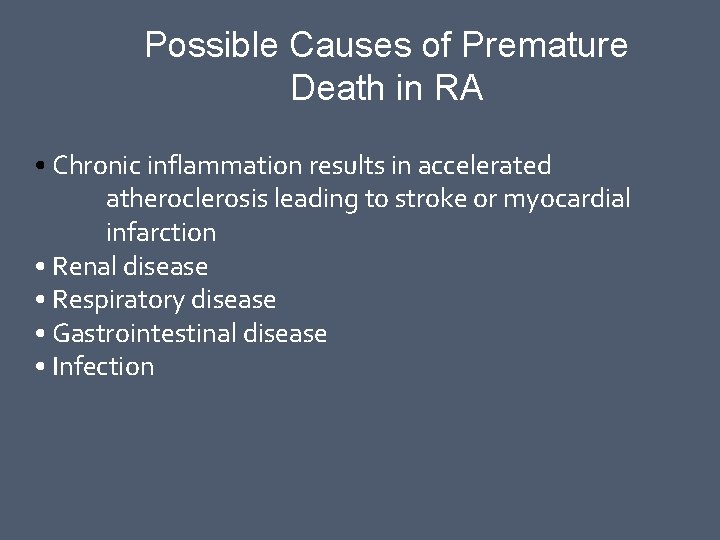
Possible Causes of Premature Death in RA • Chronic inflammation results in accelerated atheroclerosis leading to stroke or myocardial infarction • Renal disease • Respiratory disease • Gastrointestinal disease • Infection