
Rheumatoid Arthritis By Anna Sanchez Rheumatoid Arthritis RA
Rheumatoid Arthritis By Anna Sanchez
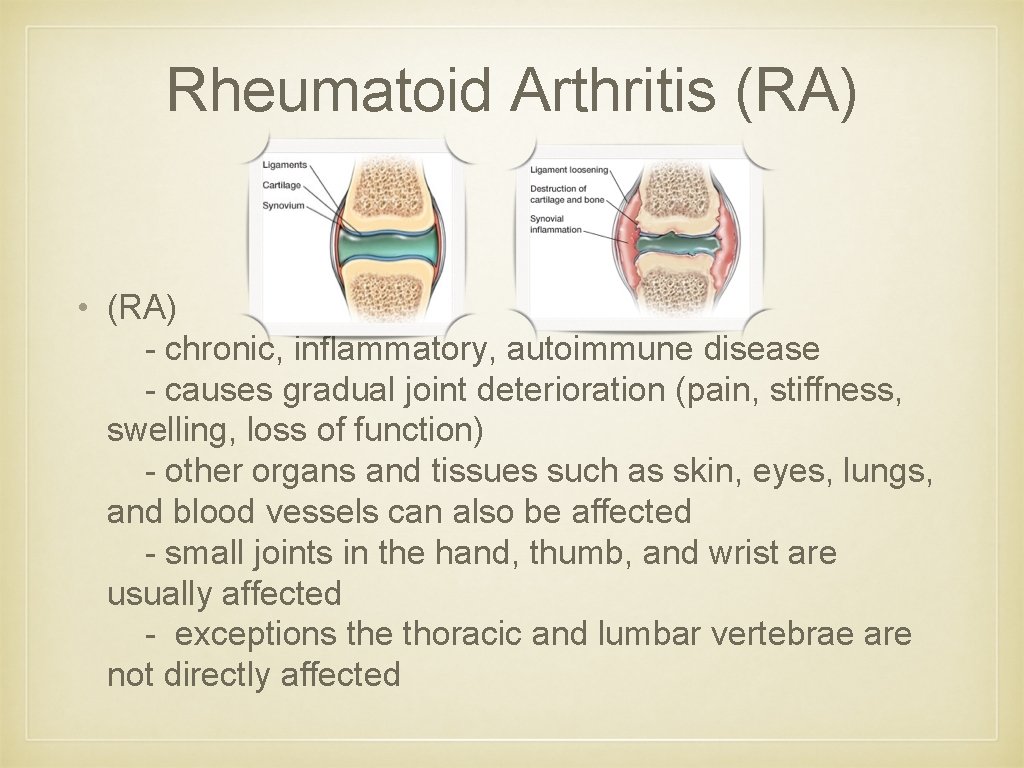
Rheumatoid Arthritis (RA) • (RA) - chronic, inflammatory, autoimmune disease - causes gradual joint deterioration (pain, stiffness, swelling, loss of function) - other organs and tissues such as skin, eyes, lungs, and blood vessels can also be affected - small joints in the hand, thumb, and wrist are usually affected - exceptions the thoracic and lumbar vertebrae are not directly affected
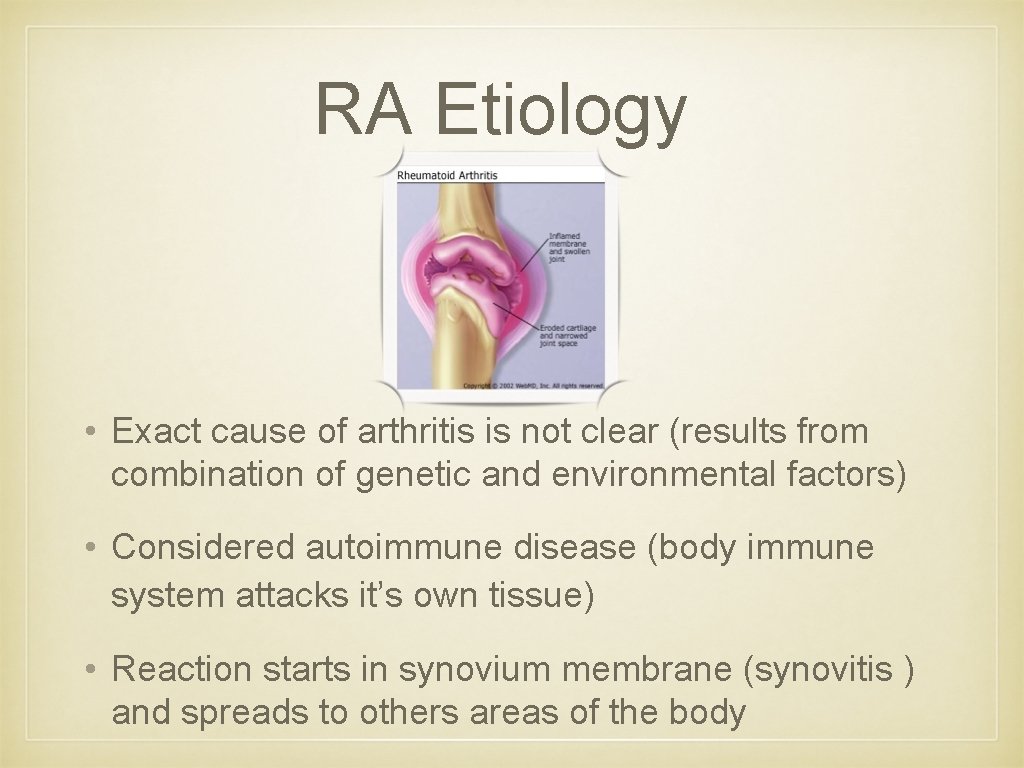
RA Etiology • Exact cause of arthritis is not clear (results from combination of genetic and environmental factors) • Considered autoimmune disease (body immune system attacks it’s own tissue) • Reaction starts in synovium membrane (synovitis ) and spreads to others areas of the body
incidence and prevalence of RA • Arthritis is a leading cause of disability in the United States (52. 5 million americans have some form of arthritis, RA, gout, lupus, or fibromyalgia) • The prevalence increases with age, and the pick incidence is between the fourth and sixth decades (more prevalent among elderly populations ages 65 or older) • Women are affected three times more than men

Signs and Symptoms of RA
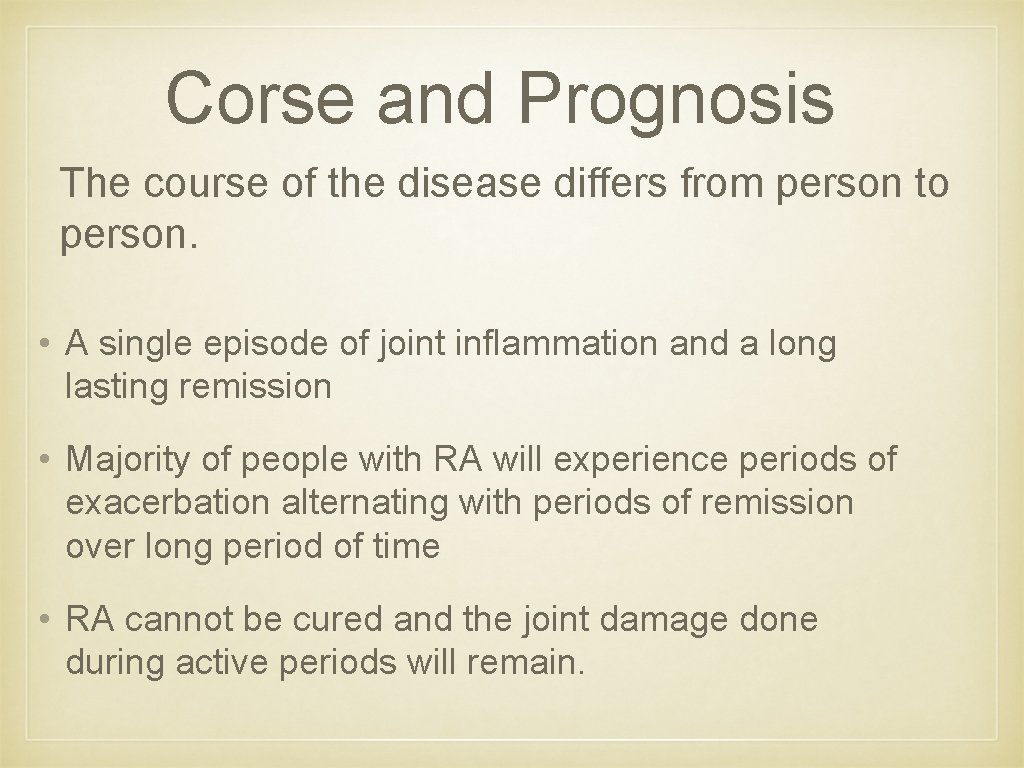
Corse and Prognosis The course of the disease differs from person to person. • A single episode of joint inflammation and a long lasting remission • Majority of people with RA will experience periods of exacerbation alternating with periods of remission over long period of time • RA cannot be cured and the joint damage done during active periods will remain.
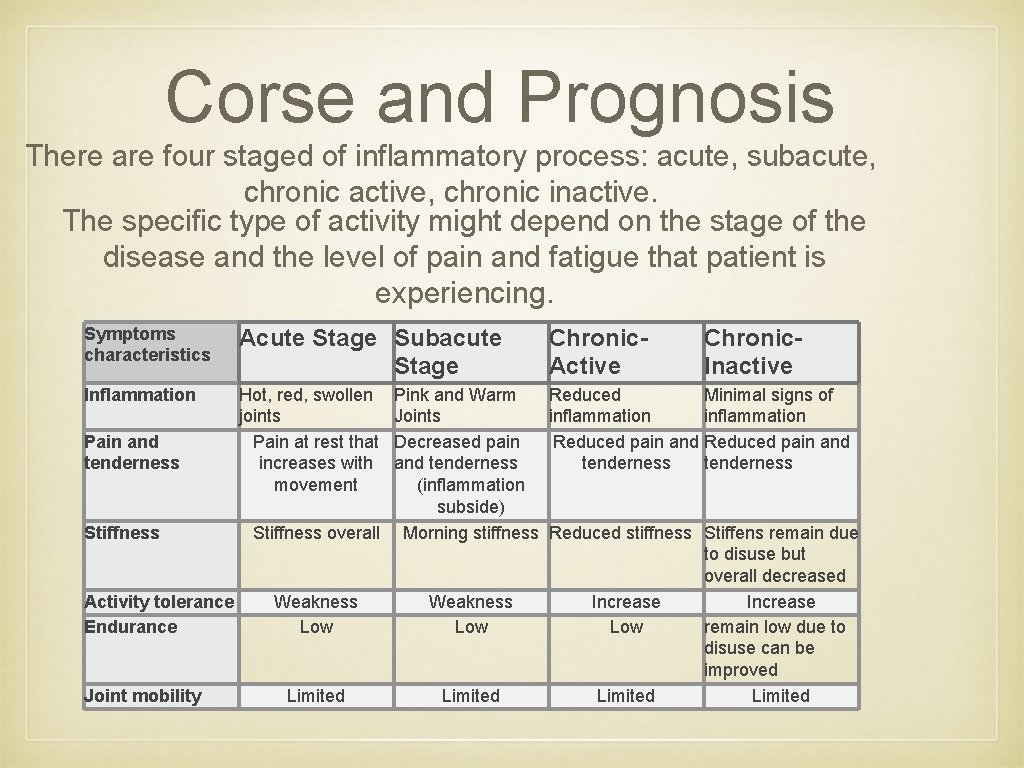
Corse and Prognosis There are four staged of inflammatory process: acute, subacute, chronic active, chronic inactive. The specific type of activity might depend on the stage of the disease and the level of pain and fatigue that patient is experiencing. Symptoms characteristics Acute Stage Subacute Stage Chronic. Active Inflammation Hot, red, swollen joints Pain at rest that increases with movement Reduced Minimal signs of inflammation Reduced pain and tenderness Pain and tenderness Stiffness Activity tolerance Endurance Joint mobility Pink and Warm Joints Decreased pain and tenderness (inflammation subside) Stiffness overall Morning stiffness Weakness Low Limited Chronic. Inactive Reduced stiffness Stiffens remain due to disuse but overall decreased Increase Low remain low due to disuse can be improved Limited
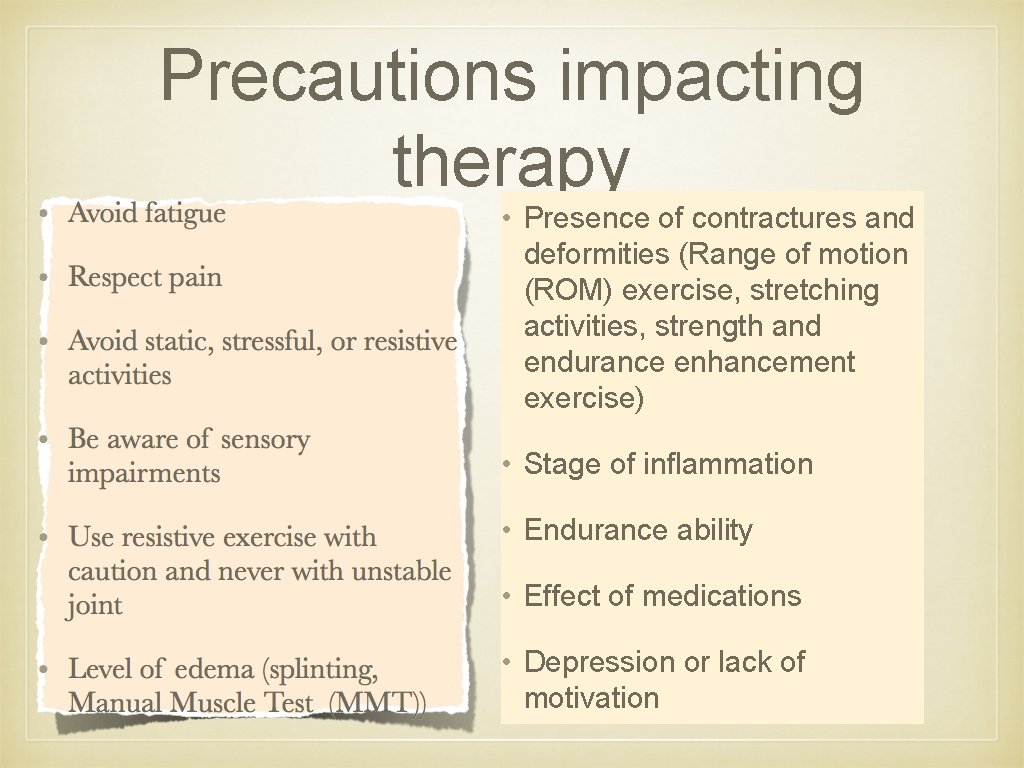
Precautions impacting therapy • Presence of contractures and deformities (Range of motion (ROM) exercise, stretching activities, strength and endurance enhancement exercise) • Stage of inflammation • Endurance ability • Effect of medications • Depression or lack of motivation
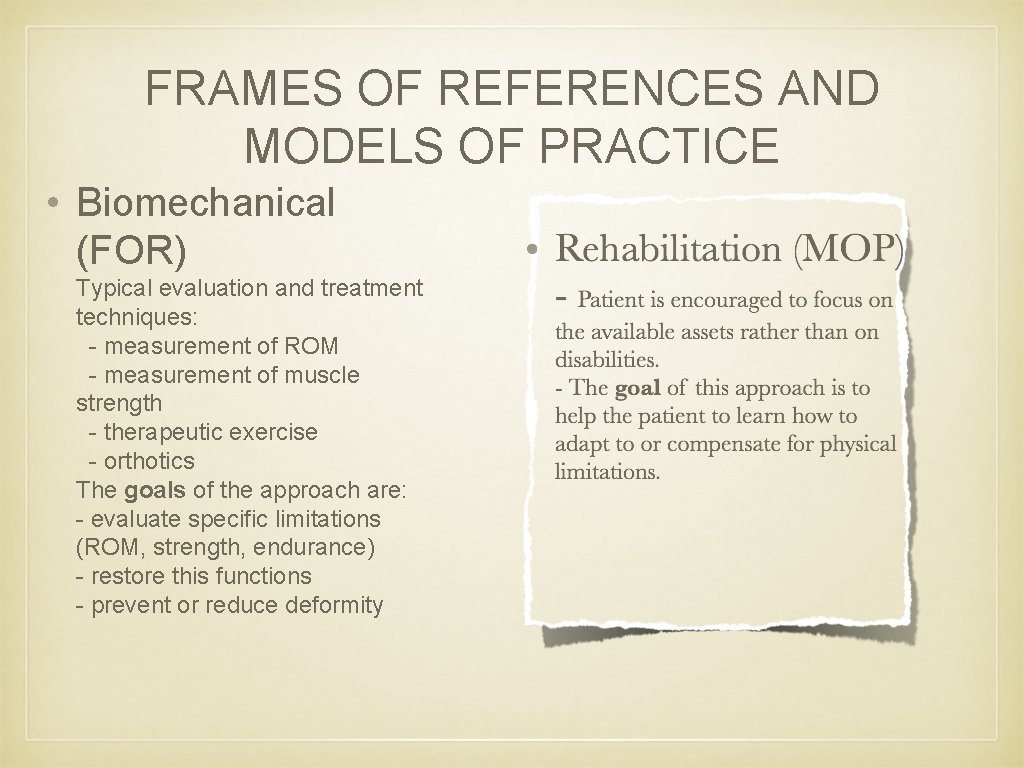
FRAMES OF REFERENCES AND MODELS OF PRACTICE • Biomechanical (FOR) Typical evaluation and treatment techniques: - measurement of ROM - measurement of muscle strength - therapeutic exercise - orthotics The goals of the approach are: - evaluate specific limitations (ROM, strength, endurance) - restore this functions - prevent or reduce deformity
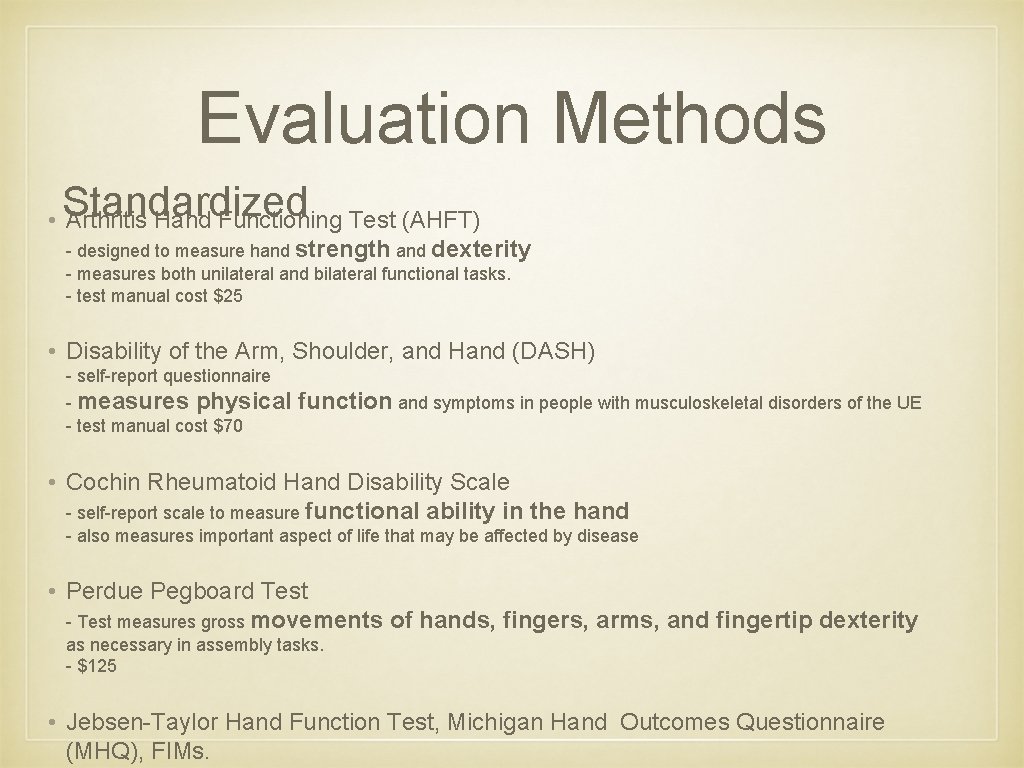
Evaluation Methods Standardized • Arthritis Hand Functioning Test (AHFT) - designed to measure hand strength and dexterity - measures both unilateral and bilateral functional tasks. - test manual cost $25 • Disability of the Arm, Shoulder, and Hand (DASH) - self-report questionnaire - measures physical - test manual cost $70 function and symptoms in people with musculoskeletal disorders of the UE • Cochin Rheumatoid Hand Disability Scale - self-report scale to measure functional ability in the hand - also measures important aspect of life that may be affected by disease • Perdue Pegboard Test - Test measures gross movements of hands, fingers, arms, and fingertip dexterity as necessary in assembly tasks. - $125 • Jebsen-Taylor Hand Function Test, Michigan Hand Outcomes Questionnaire (MHQ), FIMs.
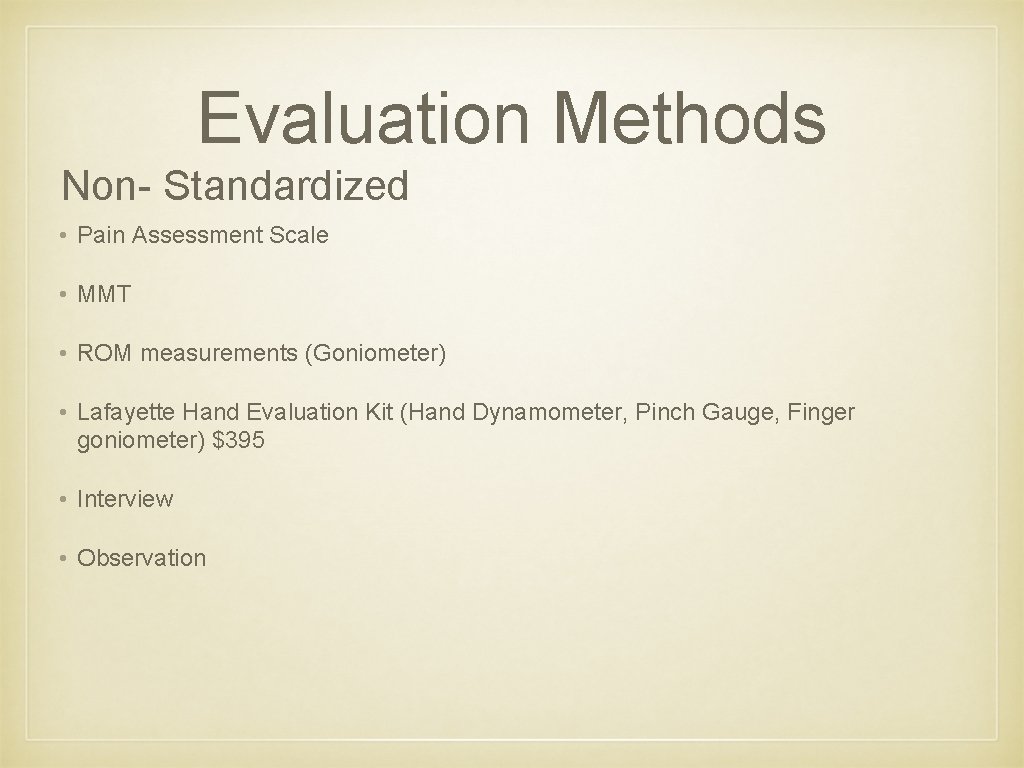
Evaluation Methods Non- Standardized • Pain Assessment Scale • MMT • ROM measurements (Goniometer) • Lafayette Hand Evaluation Kit (Hand Dynamometer, Pinch Gauge, Finger goniometer) $395 • Interview • Observation
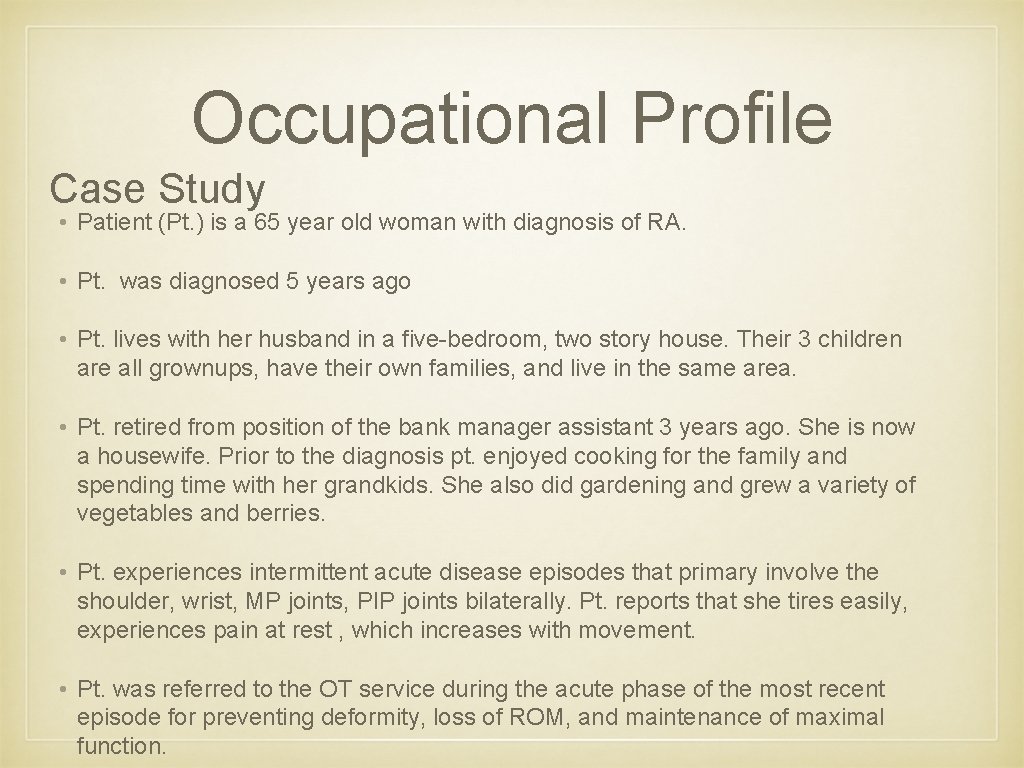
Occupational Profile Case Study • Patient (Pt. ) is a 65 year old woman with diagnosis of RA. • Pt. was diagnosed 5 years ago • Pt. lives with her husband in a five-bedroom, two story house. Their 3 children are all grownups, have their own families, and live in the same area. • Pt. retired from position of the bank manager assistant 3 years ago. She is now a housewife. Prior to the diagnosis pt. enjoyed cooking for the family and spending time with her grandkids. She also did gardening and grew a variety of vegetables and berries. • Pt. experiences intermittent acute disease episodes that primary involve the shoulder, wrist, MP joints, PIP joints bilaterally. Pt. reports that she tires easily, experiences pain at rest , which increases with movement. • Pt. was referred to the OT service during the acute phase of the most recent episode for preventing deformity, loss of ROM, and maintenance of maximal function.
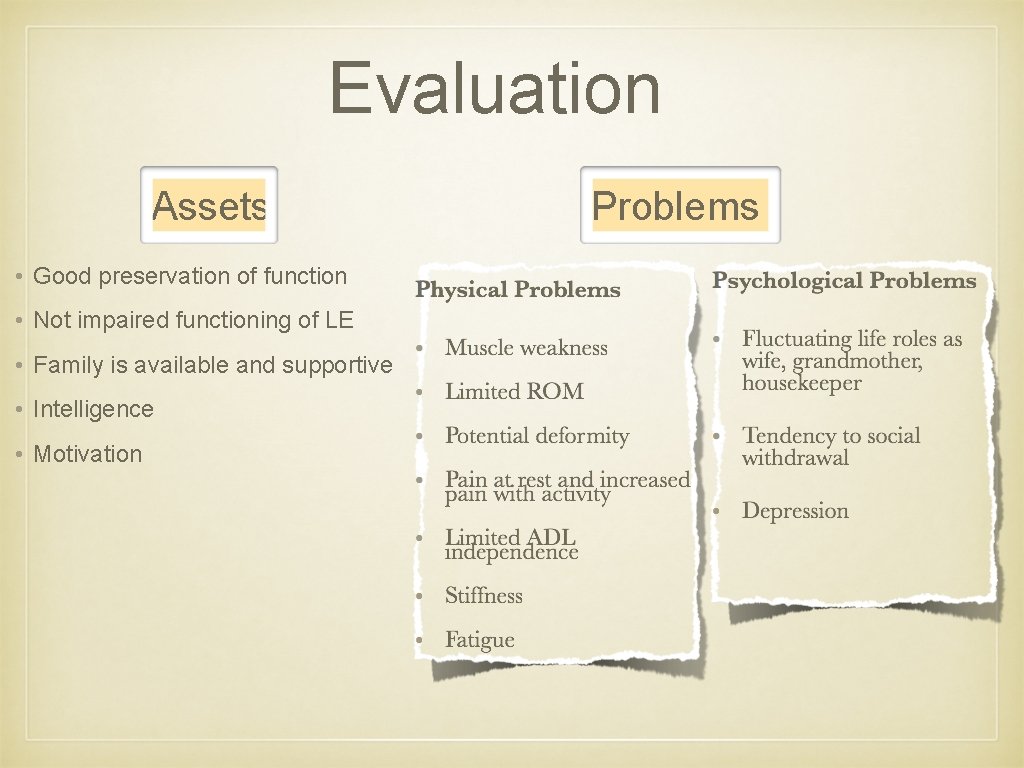
Evaluation Assets • Good preservation of function • Not impaired functioning of LE • Family is available and supportive • Intelligence • Motivation Problems
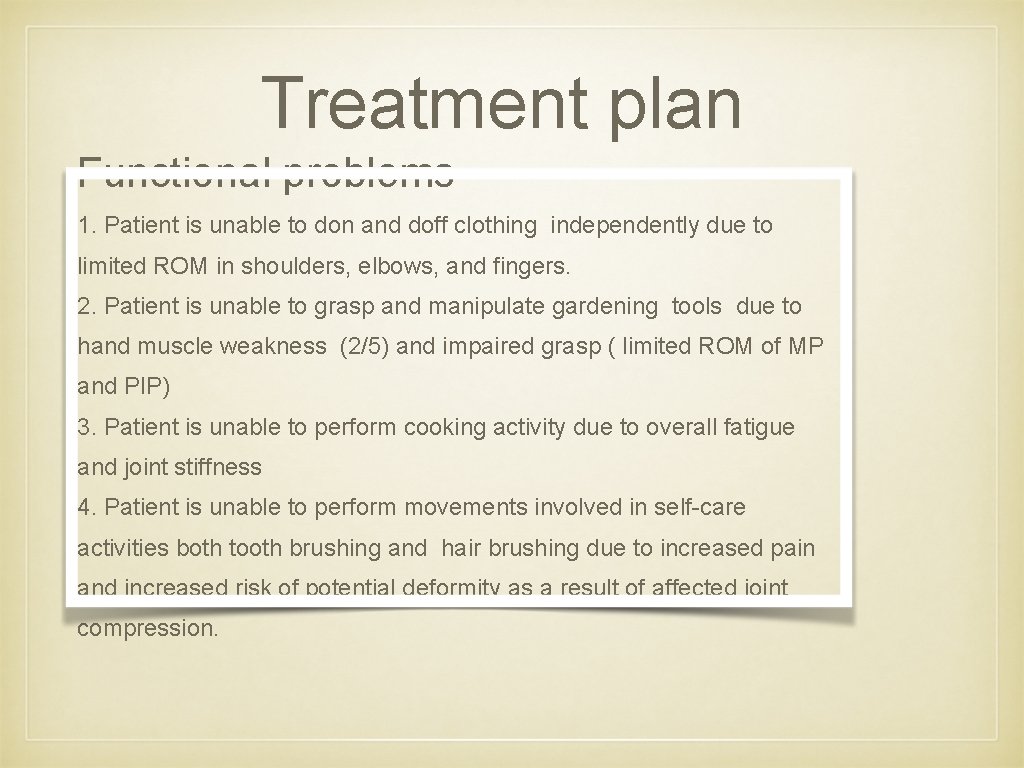
Treatment plan Functional problems 1. Patient is unable to don and doff clothing independently due to limited ROM in shoulders, elbows, and fingers. 2. Patient is unable to grasp and manipulate gardening tools due to hand muscle weakness (2/5) and impaired grasp ( limited ROM of MP and PIP) 3. Patient is unable to perform cooking activity due to overall fatigue and joint stiffness 4. Patient is unable to perform movements involved in self-care activities both tooth brushing and hair brushing due to increased pain and increased risk of potential deformity as a result of affected joint compression.
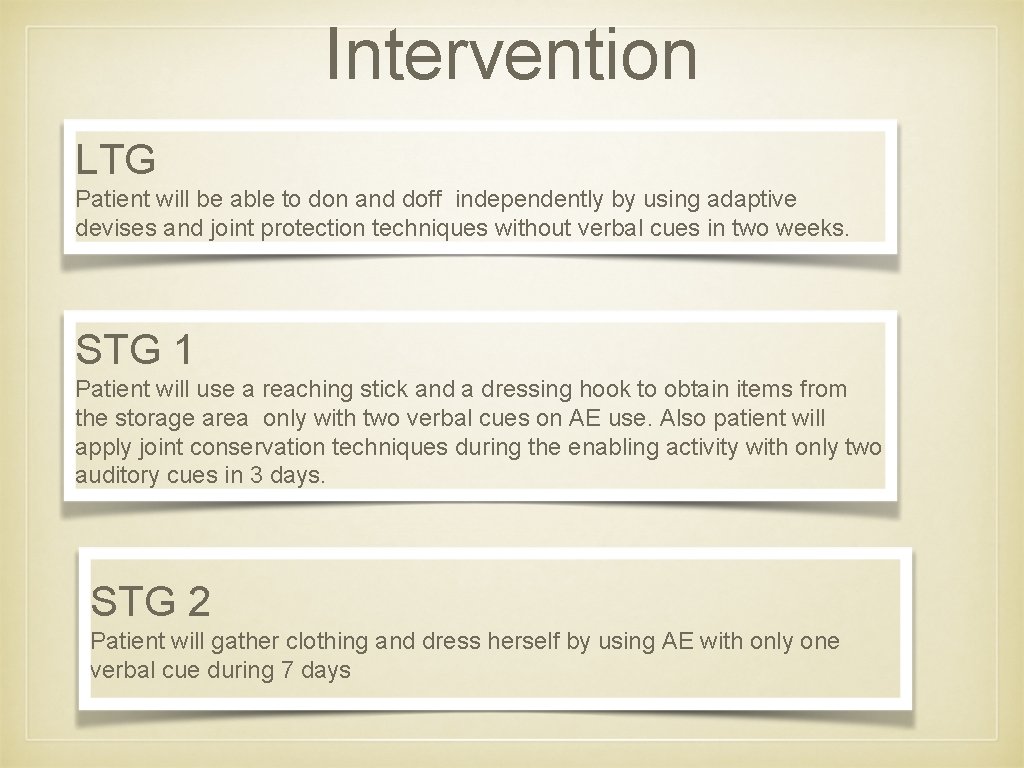
Intervention LTG Patient will be able to don and doff independently by using adaptive devises and joint protection techniques without verbal cues in two weeks. STG 1 Patient will use a reaching stick and a dressing hook to obtain items from the storage area only with two verbal cues on AE use. Also patient will apply joint conservation techniques during the enabling activity with only two auditory cues in 3 days. STG 2 Patient will gather clothing and dress herself by using AE with only one verbal cue during 7 days
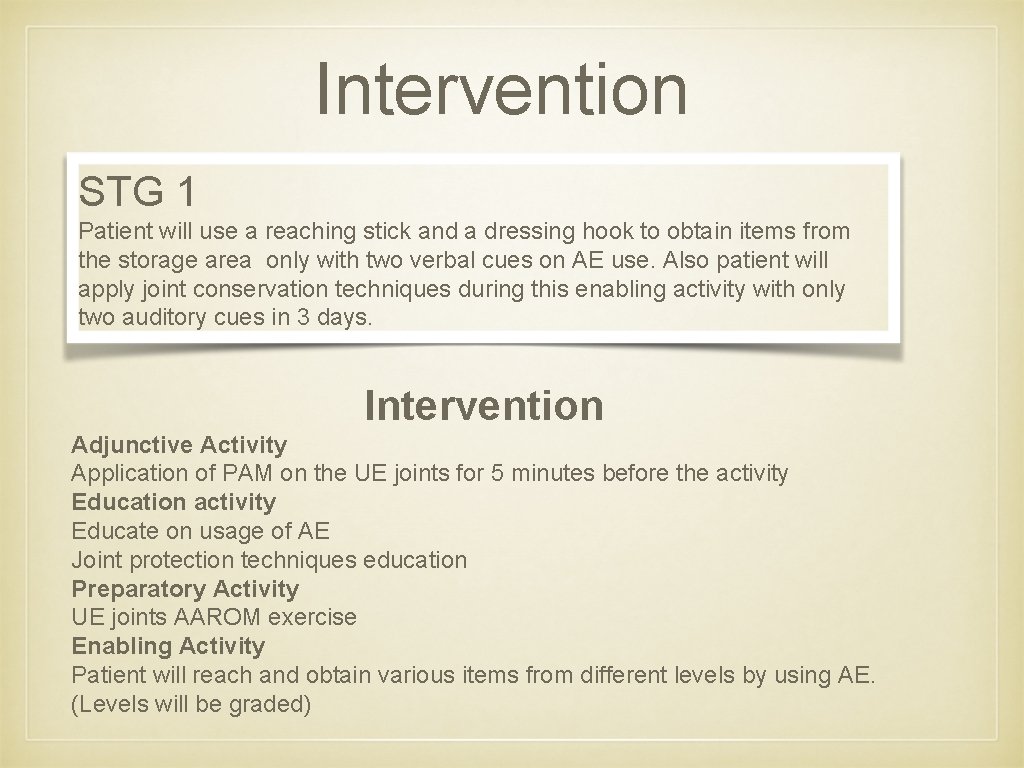
Intervention STG 1 Patient will use a reaching stick and a dressing hook to obtain items from the storage area only with two verbal cues on AE use. Also patient will apply joint conservation techniques during this enabling activity with only two auditory cues in 3 days. Intervention Adjunctive Activity Application of PAM on the UE joints for 5 minutes before the activity Education activity Educate on usage of AE Joint protection techniques education Preparatory Activity UE joints AAROM exercise Enabling Activity Patient will reach and obtain various items from different levels by using AE. (Levels will be graded)
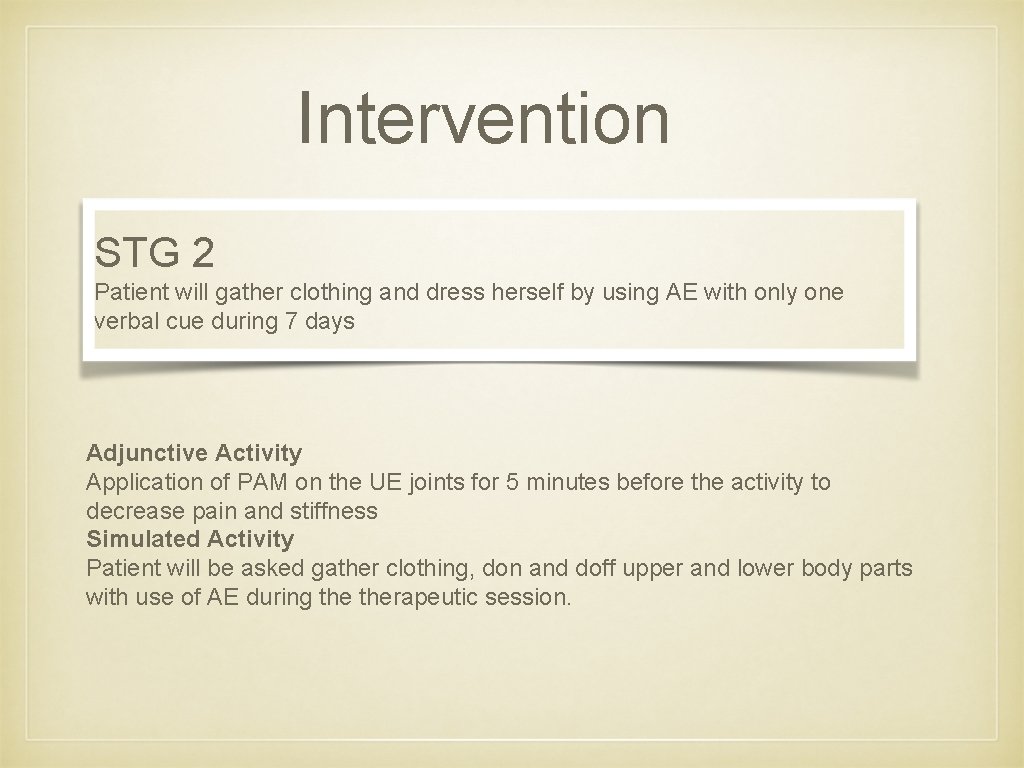
Intervention STG 2 Patient will gather clothing and dress herself by using AE with only one verbal cue during 7 days Adjunctive Activity Application of PAM on the UE joints for 5 minutes before the activity to decrease pain and stiffness Simulated Activity Patient will be asked gather clothing, don and doff upper and lower body parts with use of AE during therapeutic session.
References • Acute rheumatic arthritis. (2014). The Free Dictionary By Raflex. Retrieved from: http: //medical-dictionary. thefreedictionary. com/acute+rheumatic+arthritis • Aby. E. , ( June, 2008). Get Hip to Hip Replacement. Lippincott’s Nursing Center. Retrieved from: http: //www. nursingcenter. com/lnc/CEArticle? an=00152258200805000 -00006&Journal_ID=417221&Issue_ID=787395 • Arthritis-Related Statistics. (March 17, 2014). Centers for Disease COntrol and Prevention. Retreived from: http: //www. cdc. gov/arthritis/data_statistics/arthritis_related_stats. htm • Arthritis. (March 5, 2000). National Academy of an Aging Society. Retrieved from: http: //www. agingsociety. org/agingsociety/pdf/arthritis. pdf • Atchison, B. , Dirette, D. , (2012). Rhematic Diseases. Conditions in Occupational Therapy. Effect on Occupational Performance. , (pp. 225 -249). (4 th ed. ). Baltimor, MD: Squazzo. • DASH. (2014). DASH Manual. The DASH Outcome Measures. Retrieved from: http: //www. dash. iwh. on. ca/ • Early, M. B. (2006). Occupational Therapy and Physical Dysabilities. Physical Dysfunction Practice Skills for the Occupational Therapy Assistant, (pp. 11, 60, 133, 359). (3 d ed. ). St. Louis, MO: Elsevier. • Heredity and Arthritis. (2014). American College of Rheumatology. Retreived from: http: //www. rheumatology. org/Practice/Clinical/Patients/Diseases_And_Conditions/Heredity_and_Arthritis/ • Rheumatoid Arthritis Health Center. (2014) Causes of Rheumatoid Arthritis. Web. MD. Retreived from: http: //www. webmd. com/rheumatoid-arthritis/guide/thecauses-of-rheumatoid-arthritis • William C. Shiel Jr. , (July 3, 29014). Early Symptoms of Rheumatoid Arthritis. Medicin. Net. com. Retrieved from: http: //www. medicinenet. com/rheumatoid_arthritis_early_symptoms/views. htm • Wiley Online Library. (2014). Wiley Online Library. John Wiley & Sons, Inc. Retrieved from: http: //onlinelibrary. wiley. com

Thank you!
- Slides: 19