
RhetoricRhetorical Devices How writers use language to influence
- Slides: 20
Rhetoric/Rhetorical Devices How writers use language to influence the reader
Rhetoric �Rhetoric is a fancy word for using persuasive techniques in writing or speaking. Basically: using language effectively or persuasively
Examples of Rhetorical Devices
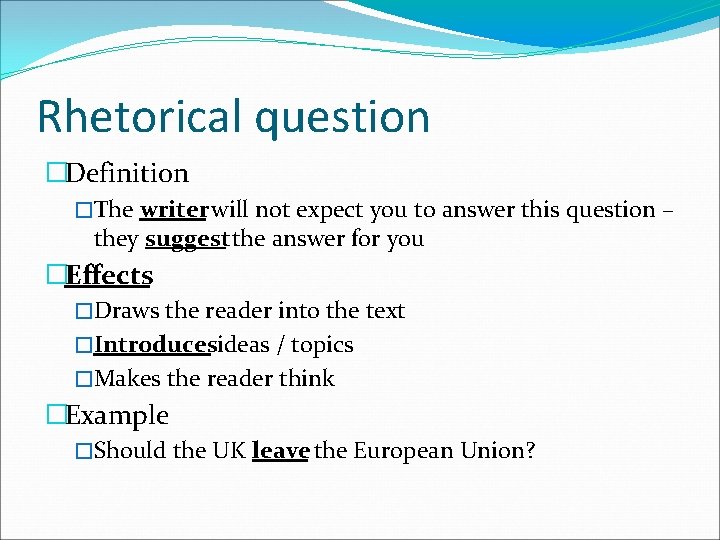
Rhetorical question �Definition �The writer will not expect you to answer this question – they suggest the answer for you �Effects �Draws the reader into the text �Introducesideas / topics �Makes the reader think �Example �Should the UK leave the European Union?
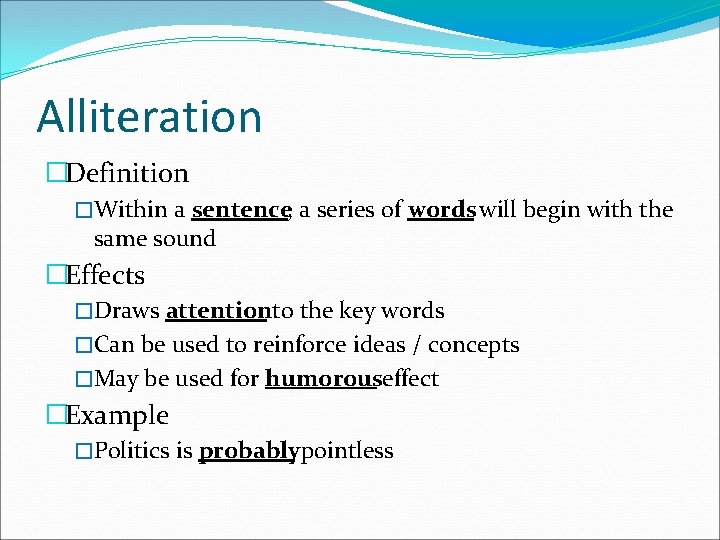
Alliteration �Definition �Within a sentence, a series of words will begin with the same sound �Effects �Draws attentionto the key words �Can be used to reinforce ideas / concepts �May be used for humorouseffect �Example �Politics is probablypointless
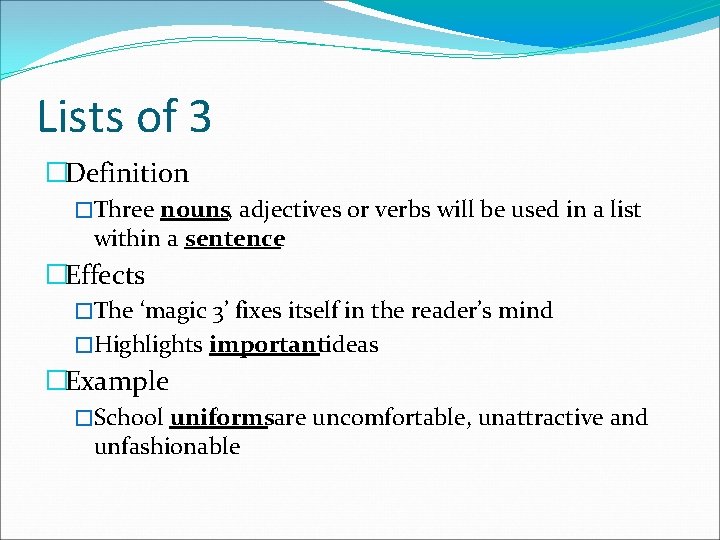
Lists of 3 �Definition �Three nouns, adjectives or verbs will be used in a list within a sentence �Effects �The ‘magic 3’ fixes itself in the reader’s mind �Highlights importantideas �Example �School uniformsare uncomfortable, unattractive and unfashionable
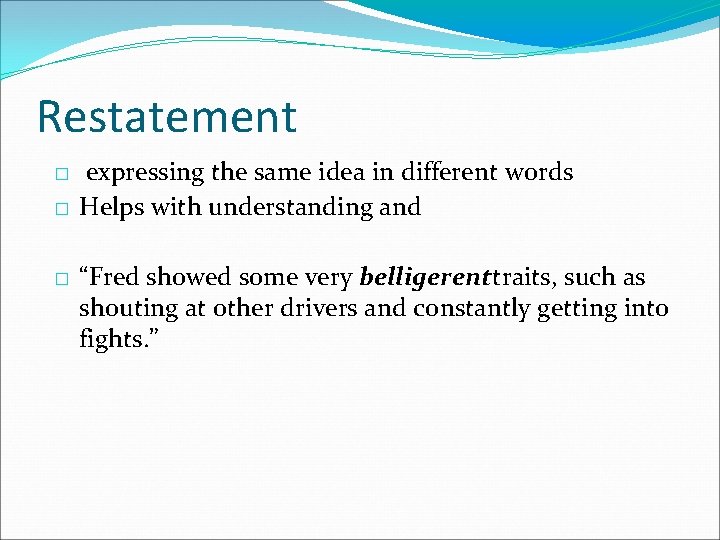
Restatement � � � expressing the same idea in different words Helps with understanding and “Fred showed some very belligerenttraits, such as shouting at other drivers and constantly getting into fights. ”
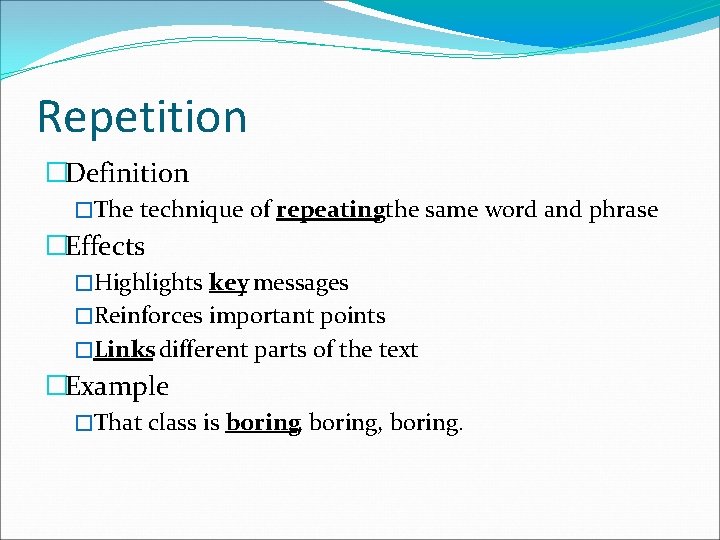
Repetition �Definition �The technique of repeatingthe same word and phrase �Effects �Highlights key messages �Reinforces important points �Links different parts of the text �Example �That class is boring, boring.
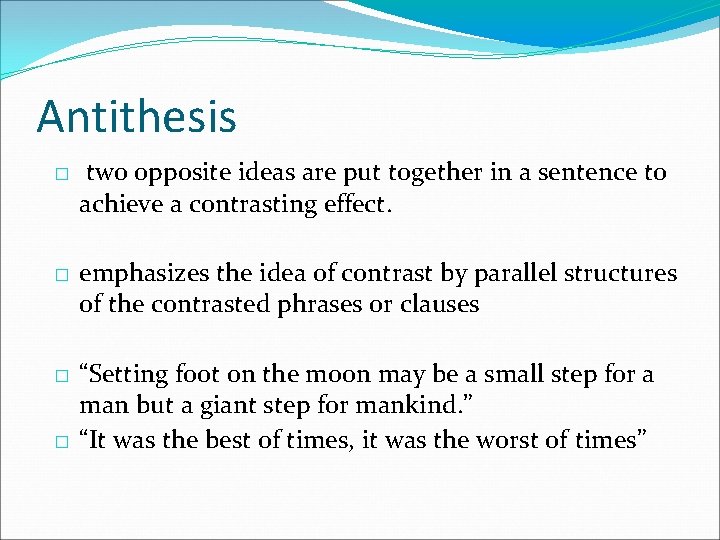
Antithesis � � two opposite ideas are put together in a sentence to achieve a contrasting effect. emphasizes the idea of contrast by parallel structures of the contrasted phrases or clauses “Setting foot on the moon may be a small step for a man but a giant step for mankind. ” “It was the best of times, it was the worst of times”
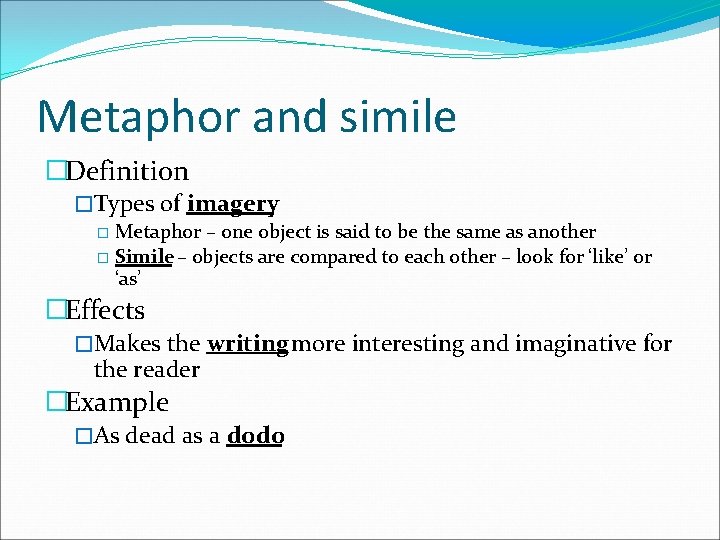
Metaphor and simile �Definition �Types of imagery � Metaphor – one object is said to be the same as another � Simile – objects are compared to each other – look for ‘like’ or ‘as’ �Effects �Makes the writing more interesting and imaginative for the reader �Example �As dead as a dodo
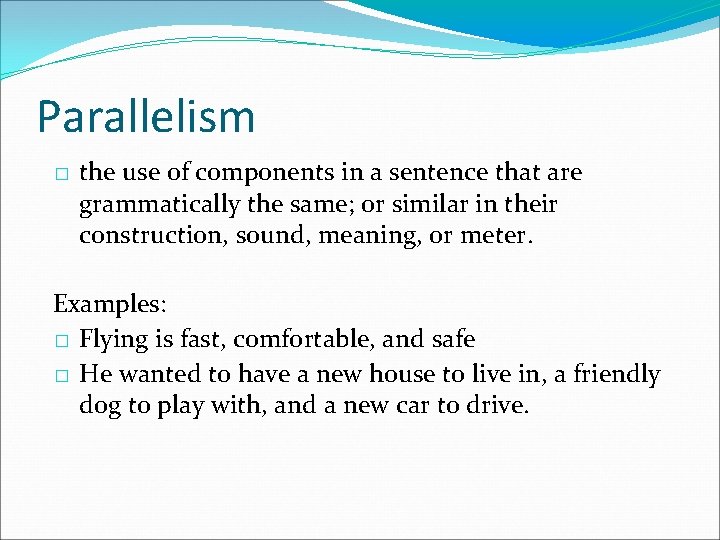
Parallelism � the use of components in a sentence that are grammatically the same; or similar in their construction, sound, meaning, or meter. Examples: � Flying is fast, comfortable, and safe � He wanted to have a new house to live in, a friendly dog to play with, and a new car to drive.
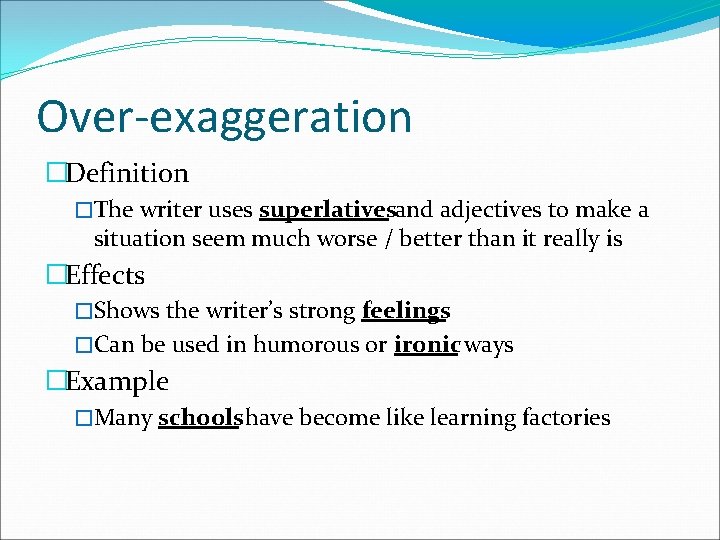
Over-exaggeration �Definition �The writer uses superlativesand adjectives to make a situation seem much worse / better than it really is �Effects �Shows the writer’s strong feelings �Can be used in humorous or ironic ways �Example �Many schools have become like learning factories
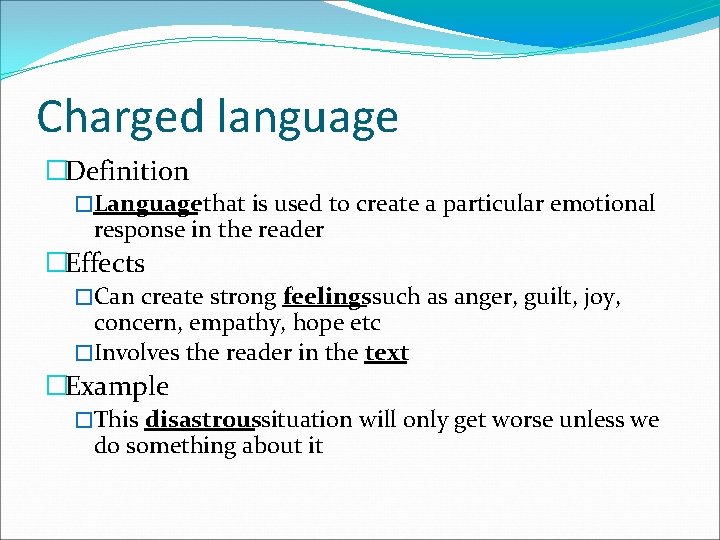
Charged language �Definition �Language that is used to create a particular emotional response in the reader �Effects �Can create strong feelingssuch as anger, guilt, joy, concern, empathy, hope etc �Involves the reader in the text �Example �This disastroussituation will only get worse unless we do something about it
Aristotle’s Triangle Logos, Ethos, Pathos
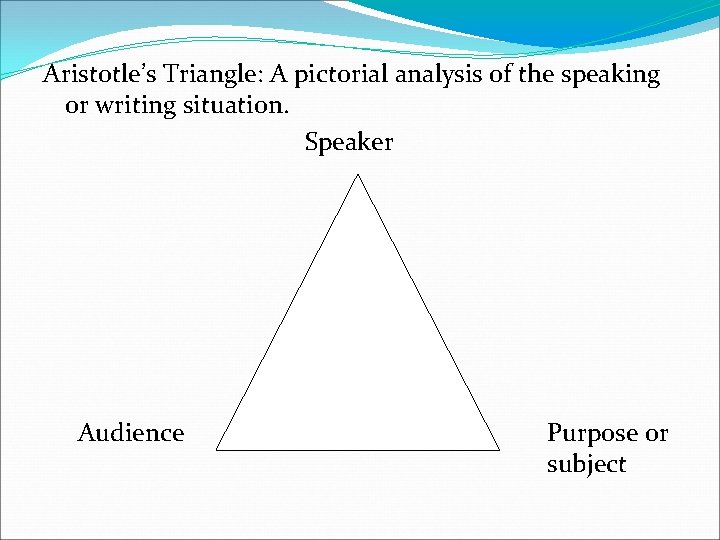
Aristotle’s Triangle: A pictorial analysis of the speaking or writing situation. Speaker Audience Purpose or subject
In order for a speaker or writer to speak or write, he or she MUST consider both the audience and purpose. �For example: If you are talking to an elementary school class, your topic, diction, and tone will be different than if you were speaking to a high school class. �Another example: When you talk to your friends, your topic, diction, and tone are different than when you talk to your parents or teachers.
�The speakeruses different approaches to influence the audience’s attitude toward the subject. These are three ways you can appeal to an audience.
Logos (logic) �Logos refers to any attempt to appeal to the intellect. Everyday arguments rely heavily on ethos and pathos, but academic arguments rely more on logos. �Use clear and reasonable ideas with proof (any statistic) �Effect of appeal: Evokes a cognitive, rational response � For example: Nine out of ten dentists prefer Crest toothpaste. � If you have a good education, you are more likely to find a good job. �
Ethos (ethical or credibility) � Related to the English word “ethics” and refers to the trustworthiness of the speaker/writer. Effective persuasive strategy because when we believe that the speaker does not intend to do us harm, we will more likely listen. � The person must be qualified to give this speech. � You must be credible and knowledgeable about the content about the speech or piece of writing
Pathos (Emotions) �Pathos is related to the words pathetic, sympathy and empathy. Whenever you accept a claim based on how it makes you feel without fully analyzing the rationale behind the claim, you are acting on pathos. �As the writer or speaker, you try to appeal to their emotions �You may want them to feel sympathy or joy �Effect of appeal: Evokes a personal, emotional response � For example: � The commercials about the starving children or dogs use pathos to appeal to your emotions hoping to persuade you to believe in their purpose.