
RHETORICAL TECHNIQUES Also known as Oratorical Techniques THE


- Slides: 8
RHETORICAL TECHNIQUES Also known as Oratorical Techniques
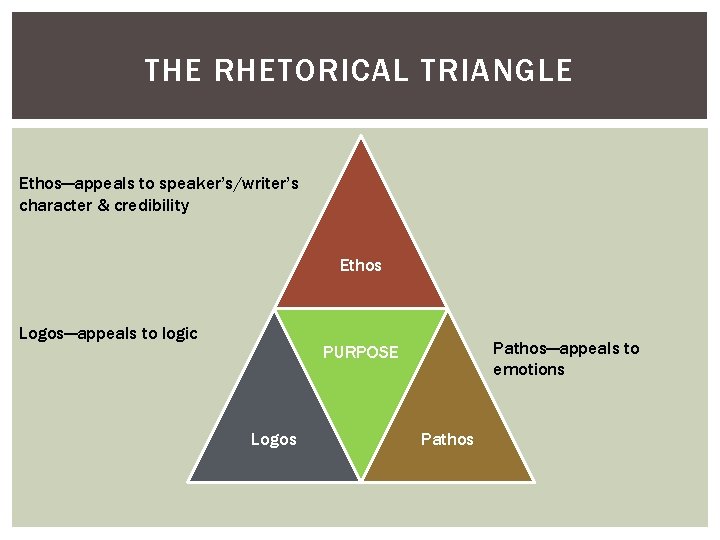
THE RHETORICAL TRIANGLE Ethos—appeals to speaker’s/writer’s character & credibility Ethos Logos—appeals to logic Pathos—appeals to emotions PURPOSE Logos Pathos
ETHOS Ethical Appeals Sense that you (the author/speaker) give as being competent/fair/authoritative Trustworthiness Credibility Reliability Expert testimony Think about how one speaks to an opponent—with manners and respect-- “My honorable opponent. . . ”
LOGOS Rational Appeals Appeal to the logical reasoning ability of audience § Facts § Case studies § Statistics § Experiments § Logical reasoning § Analogies § Authority Voices (quotes from experts)
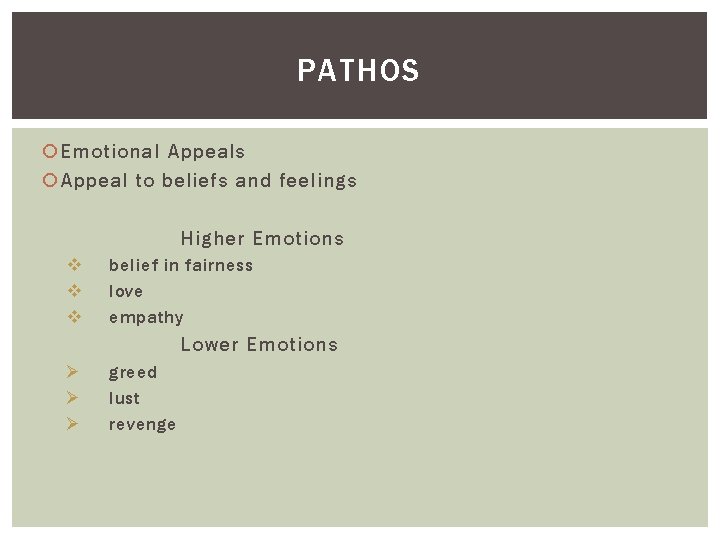
PATHOS Emotional Appeals Appeal to beliefs and feelings Higher Emotions v v v belief in fairness love empathy Lower Emotions Ø Ø Ø greed lust revenge
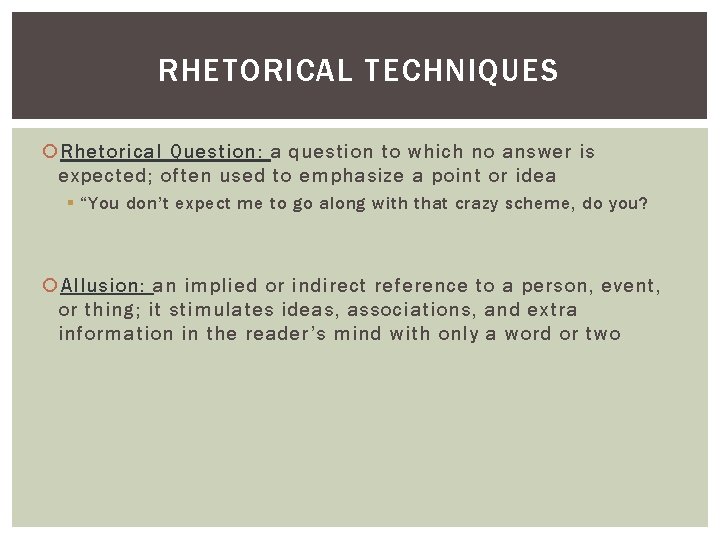
RHETORICAL TECHNIQUES Rhetorical Question: a question to which no answer is expected; often used to emphasize a point or idea § “You don’t expect me to go along with that crazy scheme, do you? Allusion: an implied or indirect reference to a person, event, or thing; it stimulates ideas, associations, and extra information in the reader’s mind with only a word or two
Restatement: to state again a key idea in a different or new way; often used to emphasize an idea § “Tonight is the last chance we have. I say it will be decided tonight. Tomorrow all will be over. ” Repetition: to repeat or say again § “I have a dream that. . . I have a dream. ” (MLK)
Concession and Rebuttal: acknowledging a point from the opposing side, then answering with a better point; demonstrates that the speaker has considered the other side of the argument (gives speaker more credibility)