
Rhetorical Strategies The art of using Logos Pathos

- Slides: 9
Rhetorical Strategies The art of using Logos, Pathos, and Ethos
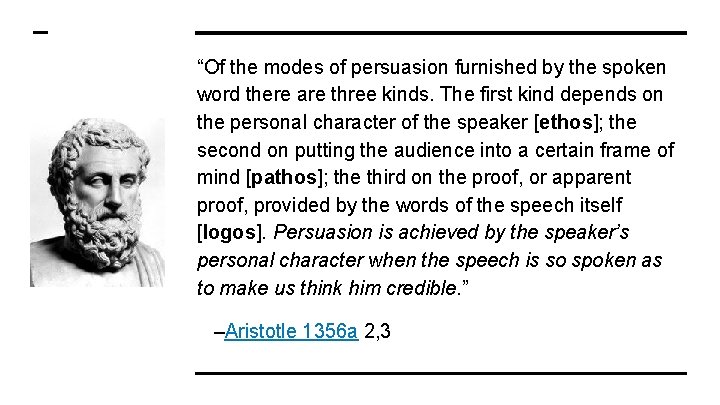
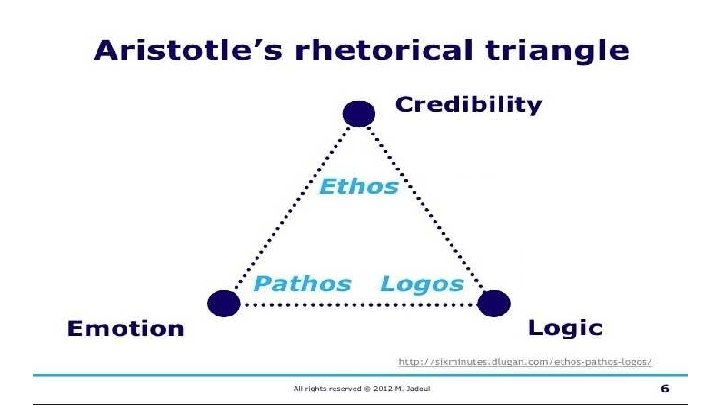
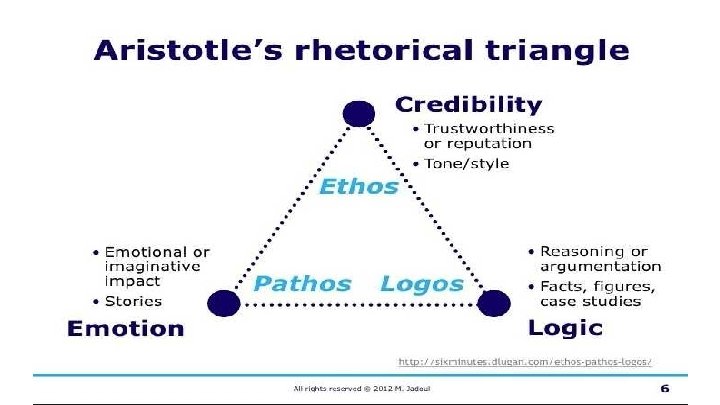
“Of the modes of persuasion furnished by the spoken word there are three kinds. The first kind depends on the personal character of the speaker [ethos]; the second on putting the audience into a certain frame of mind [pathos]; the third on the proof, or apparent proof, provided by the words of the speech itself [logos]. Persuasion is achieved by the speaker’s personal character when the speech is so spoken as to make us think him credible. ” –Aristotle 1356 a 2, 3
Watch this video clip: http: //www. readwritethink. org/vid eos/rhetoric/video-61. html
Logos- does the writer appeal to the rational mind by using logic and evidence? Does she include facts and statistics that support her point? It’s more convincing to tell the reader that “ 80% of students have committed some form of plagiarism, ” than simply saying that “Lots of students have plagiarized. ” Does she walk us through the logical quality of her argument? Does she show us how ideas connect in a rational way? For example: “English students have been able to raise their overall grade by meeting with peer tutors, so it’s safe to assume that math students could also benefit from frequent tutoring sessions. ” This example points out that logically, if the result has been seen in one situation, then it should be seen in a different but similar situation.
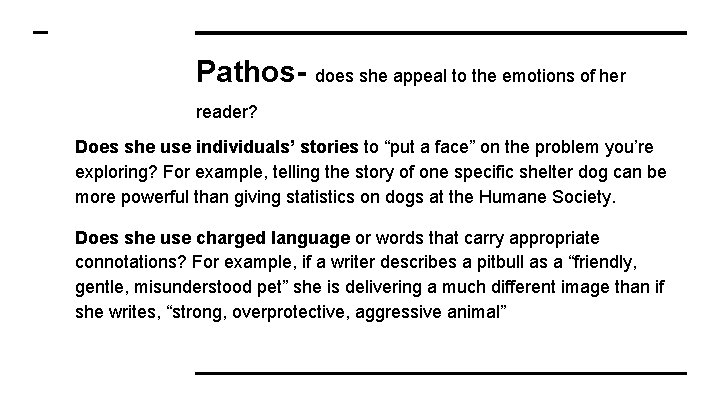
Pathos- does she appeal to the emotions of her reader? Does she use individuals’ stories to “put a face” on the problem you’re exploring? For example, telling the story of one specific shelter dog can be more powerful than giving statistics on dogs at the Humane Society. Does she use charged language or words that carry appropriate connotations? For example, if a writer describes a pitbull as a “friendly, gentle, misunderstood pet” she is delivering a much different image than if she writes, “strong, overprotective, aggressive animal”
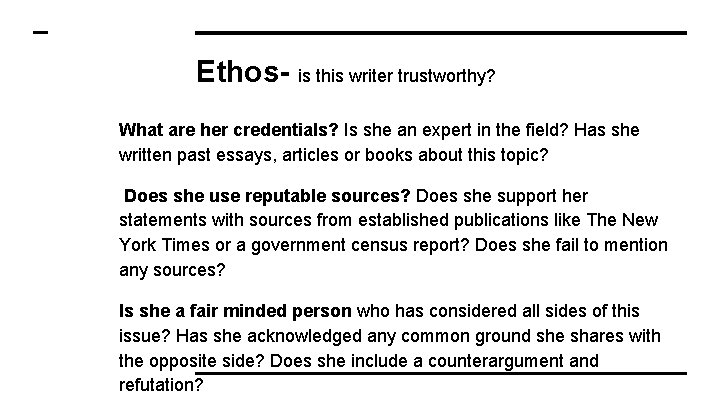
Ethos- is this writer trustworthy? What are her credentials? Is she an expert in the field? Has she written past essays, articles or books about this topic? Does she use reputable sources? Does she support her statements with sources from established publications like The New York Times or a government census report? Does she fail to mention any sources? Is she a fair minded person who has considered all sides of this issue? Has she acknowledged any common ground she shares with the opposite side? Does she include a counterargument and refutation?