
RHETORICAL SITUATION MRS MUNSON AP LANGUAGE AND COMPOSITION
- Slides: 11
RHETORICAL SITUATION MRS. MUNSON AP LANGUAGE AND COMPOSITION 2019 -2020
WHAT IS A RHETORICAL SITUATION? • Rhetoric: Using language effectively to persuade, inform, educate, or entertain. • Rhetorical Situation: The circumstances in which you communicate.
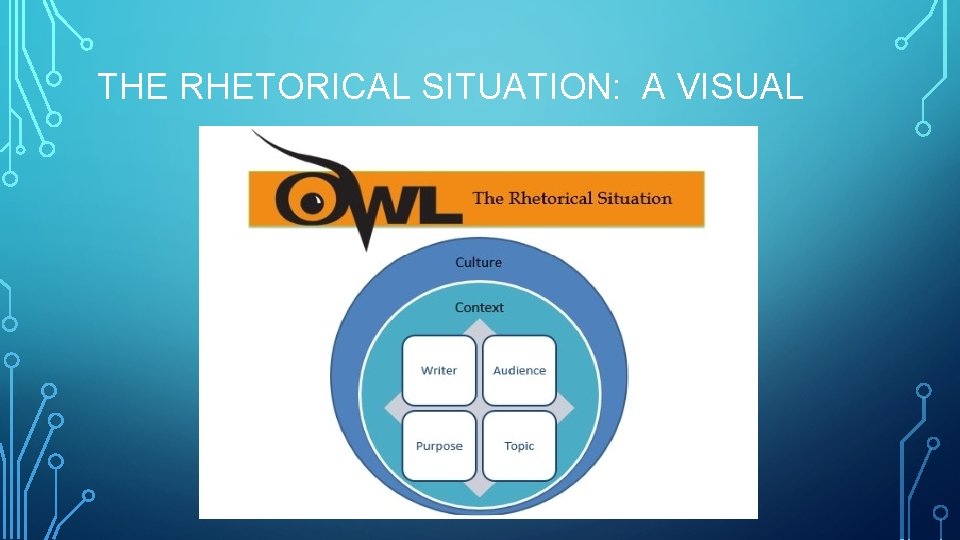
THE RHETORICAL SITUATION: A VISUAL
THE WRITER Your culture, personal characteristics and interests affect what you write about and how you write it.
FACTORS WHICH CAN AFFECT YOUR WRITING: • Your age • Your experiences • Your gender • Your location • Your political beliefs • Your parents and peers • Your education
Entertai n Call for action Inform My Purpos e Educate Shock Persua de
GENRE • A genre is a category or type of writing. • Genres hinge upon purpose and the needs/expectations of the projected audience. • Examples: fiction, autobiographical story, news article, review, letter to the editor/editorial, rhetorical analysis, criticism, persuasive essay.
EXIGENCE • Exigence is an issue, problem, or situation that causes or prompts someone to write or speak. • What is the problem/issue that the writer believes can be resolved or changed by discourse or language? • What is/was happening that created a need for this topic to be addressed? • Why is this topic important? issue? Why should readers care about this
PURPOSE • Purpose is the goal outcome/reaction of the text • What does the speaker want the audience to believe/do/understand/change after reading the text?
AUDIENCE • Your audience is to whom you are writing. Many of the same factors which affect the writer also affect the audience, including: • Age • Social class • Education • Past experience • Culture/subculture
CONTEXT • Context is the time, place, and “climate” in which the text occurs • Context is affected by the: • Time period or timing • Location • Current events • Cultural significance