
Rhetorical Analysis Understanding the intended effects on the



- Slides: 24
Rhetorical Analysis: Understanding the intended effects on the intended audience RHETORIC 1030 IAN FAIT H
Question of the Day: What fashion trend needs to not be a thing?
Last Week: Rhetorical Tenses and their goals ◦ Past (Forensic)= Blame ◦ Present (Demonstrative)= Shared Values ◦ Future (Deliberative)= Mutual Gain/Choices
What is Rhetorical Analysis? If Rhetoric is the use of argumentative strategies to achieve an intended effect on an intended audience, a rhetorical analysis is an investigation of how a given subject attempts to persuade, and an evaluation of its effectiveness. Identifying the basic components of a conversation is an important first step.
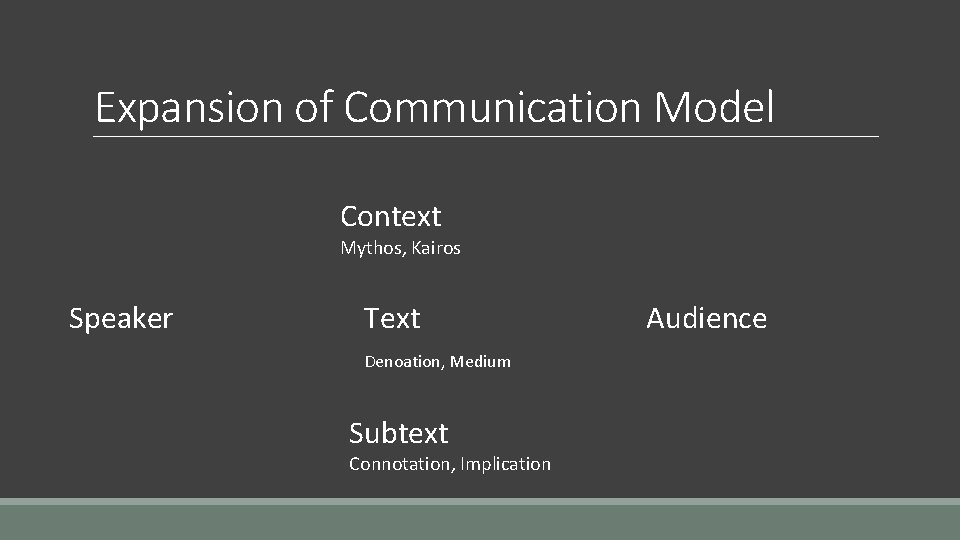
Expansion of Communication Model Context Mythos, Kairos Speaker Text Denoation, Medium Subtext Connotation, Implication Audience
Mythos comes from Aristotle’s Poetics on Drama. For Aristotle, Plot, Character, Language, Thought, Spectacle, and Melody are part of the Dramatic experience, all of which are bound up in Ethos, Pathos, and Logos. Mythos is the organization of all these things, intimating a Completeness—if any element is taken away, the whole thing falls apart. Mythos is often listed as the fourth category among Ethos, Pathos, and Logos.
Mythos Today, Mythos refers more to a set of shared beliefs or understandings about a subject that are prevalent in a particular culture.
Mythos and the Fable Mythos is also characterized by Magnitude, the appropriate levels of each rhetorical category. In other words, Mythos is about Completeness and Balance. If balance is not in play, then Fables arise based on which facet is emphasized.
Fables Logical Fable: Logic overpowers Affect and Credibility. Ex: Faith in technology? Pathetic Fable: Emotion overrides Function and Credibility. Ex: Staying in a toxic relationship? Ethical Fable: Reputation and trust override Function and Emotion. Example: Brand Loyalty.
Manipulating Mythos The shared understandings of a person, group, issue, debate, etc. are not necessarily based on fact, but persuasion. Recall Adichie, “The danger in stereotypes is not that they are inaccurate, but that they are incomplete…. Show a people as being one thing, and only one thing, and that is what they become. ”
John Stewart on Fox News’ Benghazi Coverage—Creating Mythos https: //www. youtube. com/watch? v=0 i 8 -ZNLEeag
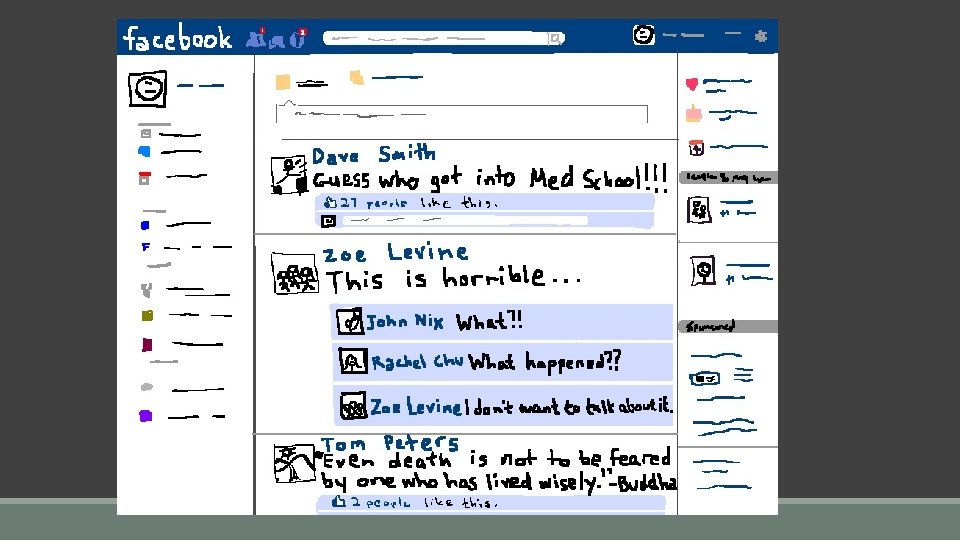
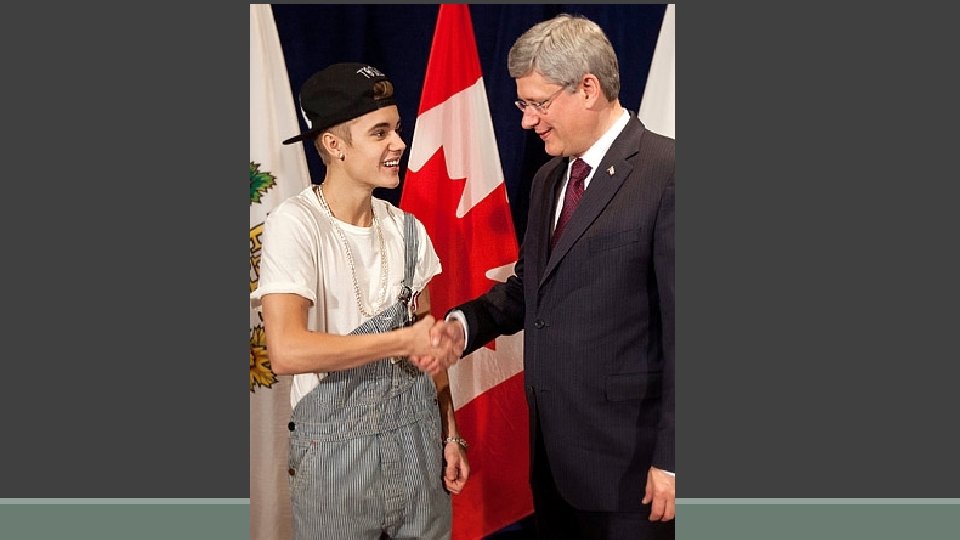
Public Image as Mythos A Public Image is a collection of the ideas and opinions the public has on an individual or group. Note, this is not the same as who the person really is because it is often a conscious representation of themselves.
Public Image and Ethos is really about decorum, what is appropriate for a particular rhetorical situation. In other words, creating ethos is about fitting in with the audience’s expectations. The same tactics won’t work towards different audiences.
Argument by Character Cicero focused on his audience, suggesting that to argue based on one’s credibility, one needed 1) a receptive audience, 2) an attentive audience, and 3) the audience had to like and trust the speaker. 3 qualities of persuasive ethos: 1)Virtue or Cause (Sharing values= commonplace) 2)Practical Wisdom (not idealistic, is feasible) 3)Disinterest (the speaker lacks bias, cares about the audience’s interests)
Selected Tactics: Posturing: Overwhelm the audience with your expertise. Character Reference: Getting others to affirm your credibility for you. Tactical Flaw: Reveal a weakness that elicits sympathy. Switching Sides: Admitting you were wrong and can incorporate new information and listen thoughtfully. Aporia: Admitting ignorance Dialysis: “This, not that” formation. E. g. “This is about human rights, not corporate rights. ” Dubitatio: Feigning stupidity, playing the fool.
Exercise In Groups of 4, do a practice rhetorical analysis of these two websites: www. ragbrai. com http: //www. letour. com/us/ Pay careful attention to the page layout. Try to identify a mission statement, the intended audience, how the message is presented, what the page draws your attention to, and your own reactions. What is each site trying to convince you of and how are they working to convince you? What do their tactics suggest about the values of the organization? How do you think people might respond differently to each?
Ethos and Pathos affects the audience’s judgment. As Cicero suggests, it makes the audience more likely to be persuaded. Personalizing a story for your audience can be an effective tool. Tips: A good pathetic argument is understated. If a speaker is perceived as being overly dramatic, this tactic backfires. Sympathy is powerful, BUT humor improves ethos better because it can calm the audience when discussing difficult matters, lets your audience relate to you, shows you are above squabbling over disagreements. NOTE: Humor often fails to motivate others to action, despite these advantages. Negative emotions are better at motivating action- sorrow, shame, guilt, anger, humility, etc encourage introspection.
The Commonplace Common values or reasoning of an audience. Taking the audience’s perspective, sympathy, and empathy can help identify those values. These are often beliefs or rules, rather than facts. Related closely to self-identity and community. How to engage? Idiomatic phrases, common language, understanding of shared obstacles or challenges. Hint: Look for when this backfires, when a group rejects a speaker who tries to relate to them. Commonplaces are more obvious in those instances.
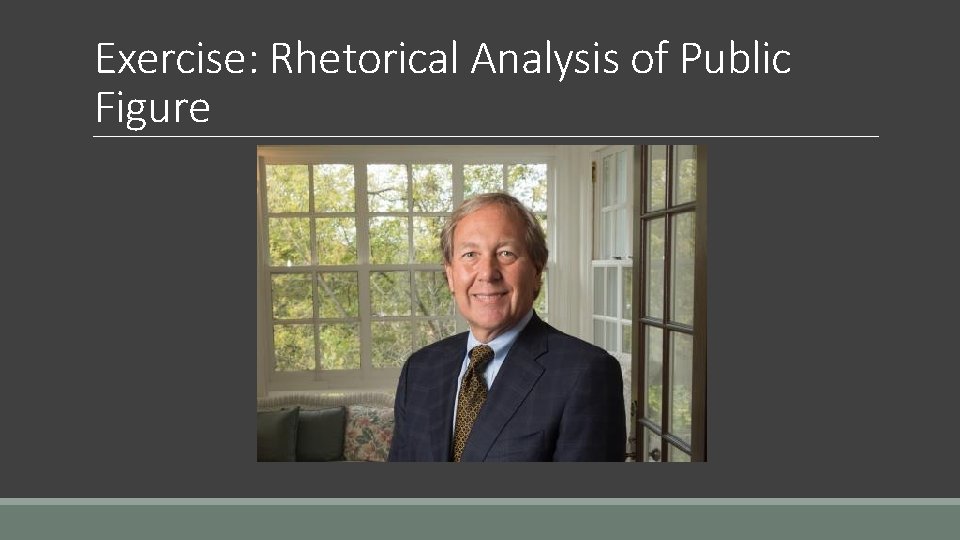
Exercise: Rhetorical Analysis of Public Figure
Writing Tips Strong thesis statements not only identify rhetorical strategies, but suggest their effects, and interpret why they are or are not effective. Weak/Obvious: “Angie uses pathos to appeal to people’s emotions. ” Moderate, but not specific: “Angie often asks others to enact sympathy to convince them that animal testing should be more heavily regulated. ” Stronger: “Angie’s use of family pets, evidence of animal stress and suffering, and her investigation of cultural attitudes about different animal species asks readers to critically evaluate their own attitudes about animal testing and questions the assumed value of some research projects over others. ”
Paragraph Structure Begin paragraphs with an interpretive claim, not a summary. This will force you as a writer towards analysis rather than description. Use evidence strategically, and use it to further the discussion in some way. If you think of a sequence as 1) claim, 2) evidence, 3) interpretation and relation to next point, your writing will flow more logically. Sometimes this is referred to as “sandwiching” a piece of evidence.