
RHETORIC The Tragedy of Julius Caesar What is



- Slides: 11
RHETORIC The Tragedy of Julius Caesar
What is rhetoric? ■ Definition: the art of speaking or writing effectively ■ According to Aristotle, rhetoric is “the ability, in each particular case, to see the available means of persuasion. ” He described three main rhetorical strategies: – Ethos – Pathos – Logos
Ethos ■ Definition: reputation or credibility of the speaker ■ Examples: course of “As a doctor, I am qualified to tell you that this treatment will likely generate the best results. ” “My three decades of experience in public service, my tireless commitment to the people of this community, and my willingness to reach across the aisle and cooperate with the opposition, make me the ideal candidate for your mayor. ”
Pathos ■ Definition: the emotions of the audience ■ Examples: “I’m not just invested in this community – I love every building, every business, every hardworking member of this town. ” something “You’ll make the right decision because you have that not many people do: you have heart. ”
Logos ■ Definition: logic ■ Examples: power “History has shown time and again that absolute corrupts absolutely. ” “It’s a matter of common sense that people deserve to be treated equally. The Constitution calls it ‘selfevident. ’ Why, then, should I have been denied a seat because of my disability? ”
Modes of Argument ■ Definition: The mode of argument is the way in which the argument is presented. It is its organizational pattern. Some arguments use several modes, just as they do blends of rhetorical strategies. These modes include: – Exemplification – Enumeration – Analogy – Cause to Effect AND Effect to Cause – Process
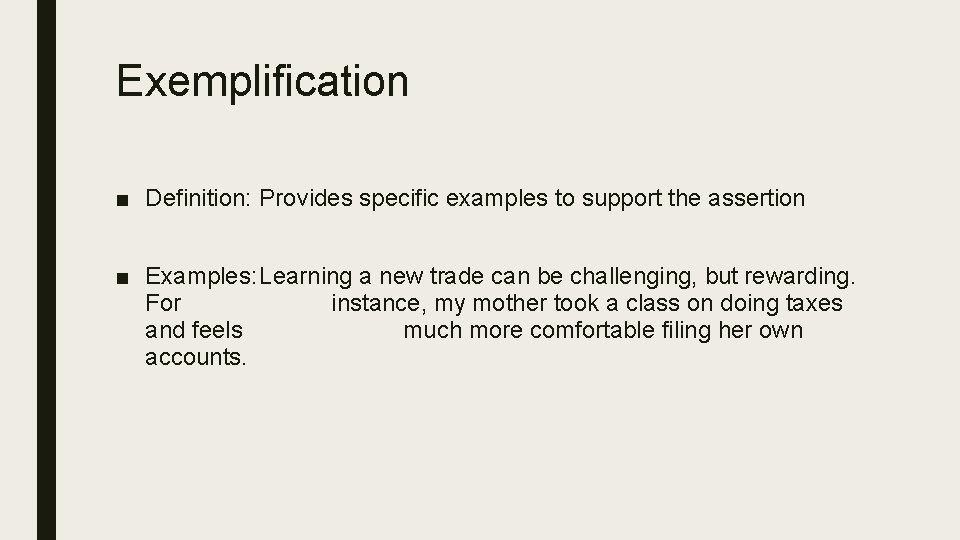
Exemplification ■ Definition: Provides specific examples to support the assertion ■ Examples: Learning a new trade can be challenging, but rewarding. For instance, my mother took a class on doing taxes and feels much more comfortable filing her own accounts.
Enumeration ■ Definition: organizes by listing categories or details ■ Examples: A perfect 5 -paragraph essay must include an intro, three body paragraphs, and a conclusion.
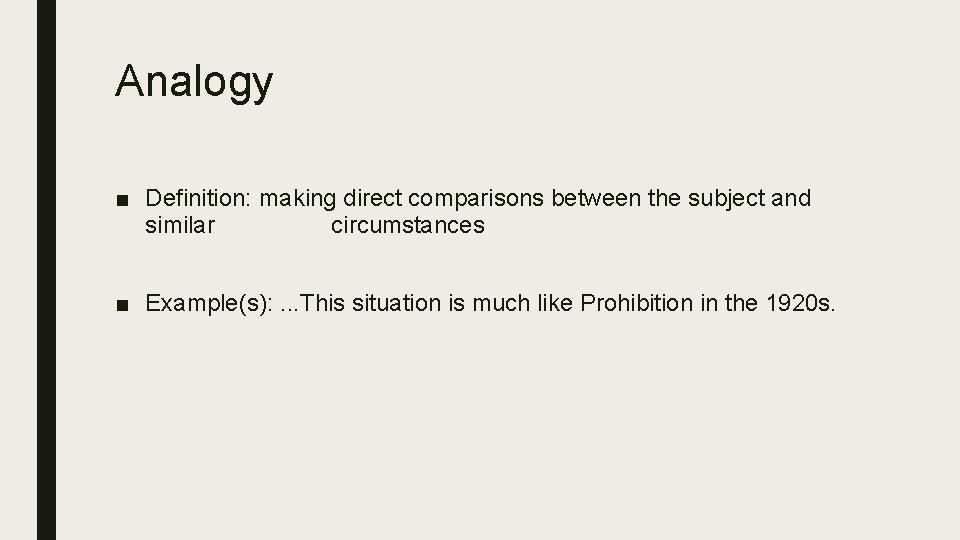
Analogy ■ Definition: making direct comparisons between the subject and similar circumstances ■ Example(s): . . . This situation is much like Prohibition in the 1920 s.
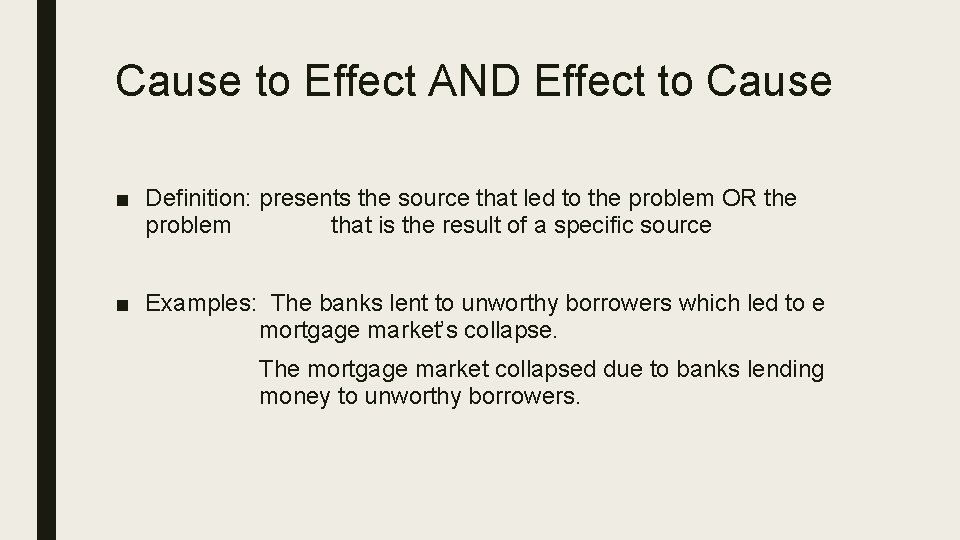
Cause to Effect AND Effect to Cause ■ Definition: presents the source that led to the problem OR the problem that is the result of a specific source ■ Examples: The banks lent to unworthy borrowers which led to e mortgage market’s collapse. The mortgage market collapsed due to banks lending money to unworthy borrowers.
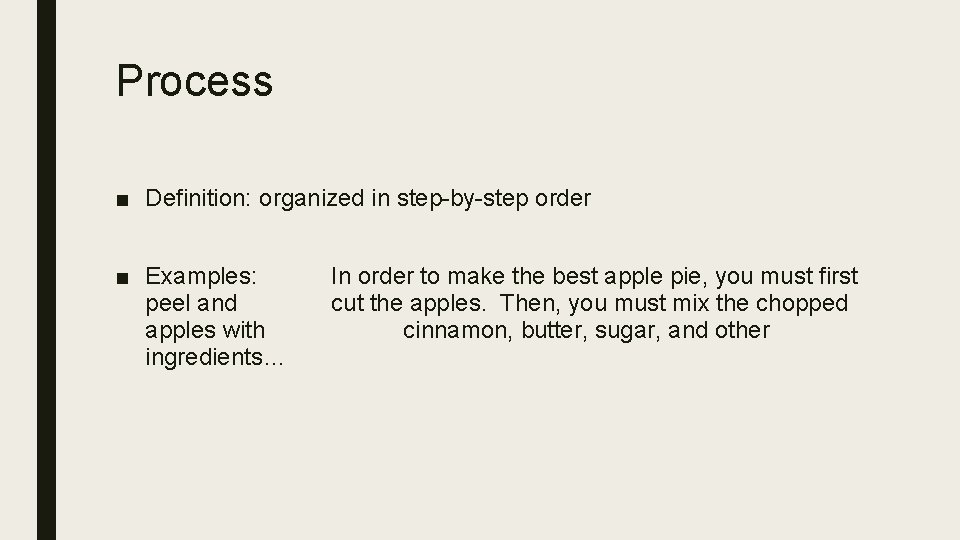
Process ■ Definition: organized in step-by-step order ■ Examples: peel and apples with ingredients… In order to make the best apple pie, you must first cut the apples. Then, you must mix the chopped cinnamon, butter, sugar, and other