
Rhetoric The Art of Using Language to Persuade
- Slides: 7
Rhetoric The Art of Using Language to Persuade
Aristotle’s Rhetorical Triangle
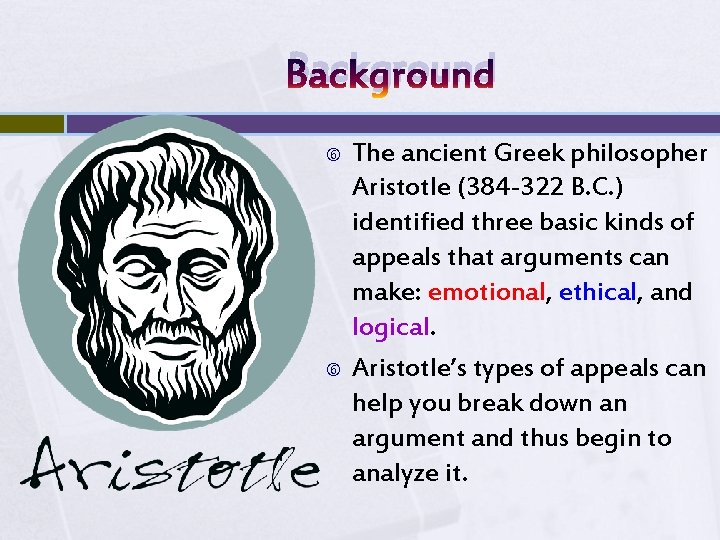
Background The ancient Greek philosopher Aristotle (384 -322 B. C. ) identified three basic kinds of appeals that arguments can make: emotional, ethical, and logical. Aristotle’s types of appeals can help you break down an argument and thus begin to analyze it.
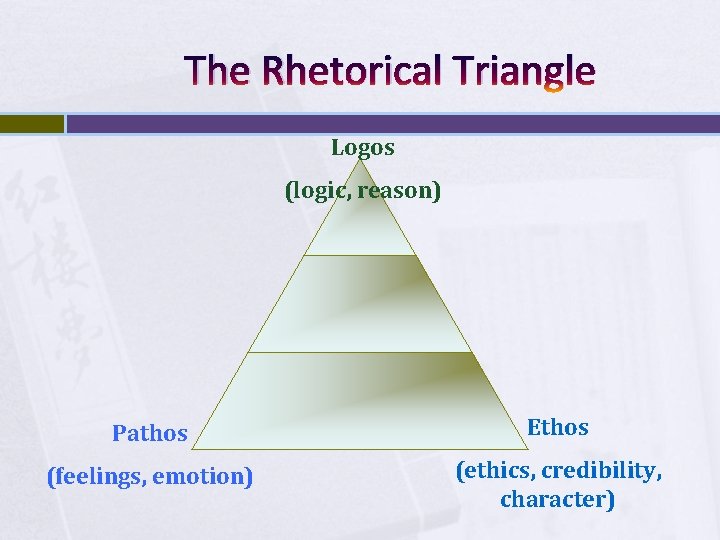
The Rhetorical Triangle Logos (logic, reason) Pathos Ethos (feelings, emotion) (ethics, credibility, character)
ETHOS: Ethical Appeal “Character” in Greek Ethical appeals try to convince you by pointing out credibility, moral character, and goodwill of the creator. In an ethical appeal, the argument’s creator tries to prove that he/she knows the subject well, has a trustworthy character and has the best interests of readers- including YOU- at heart. Warning: When you recognize that an argument is making an ethical appeal, ask yourself whether the creator successfully demonstrates that he/she actually has the knowledge, trustworthiness, and empathy for the reader that he/she claims to have.
PATHOS: Emotional Appeal “Suffering” in Greek Emotional appeals try to convince you by stirring up your feelings and reminding you of your deeply held values. A visual or verbal text that attempts to evoke laughter, sadness, anger, or fear makes an emotional appeal. Most arguments include emotional appeals because such appeals make people care about the argument. CAUTION: Be aware of the difference between appeals that engage your emotions legitimately and appeals that aim to manipulate your feelings.
LOGOS: Logical Appeal “Word” in Greek Logical appeals try to convince you by supplying fact-based evidence such as experimental data, observation, testimony, statistics, and personal experience. Western culture tends to value “facts, ” so logical appeals are often viewed as particularly trustworthy. CUIDADO: But remember, facts can be easily misinterpreted and sources can be unreliable. Thus, even an argument based on apparent facts requires critical investigation.