
Rhabdomyolysis An Elderly Trauma Patient Case Study Christine
Rhabdomyolysis: An Elderly Trauma Patient Case Study Christine Binter RN BSN Alverno College Spring 2010
Rhabdomyolysis Home Page • Definition • Inflammation • Stress Response Click Below for Instructions on Navigation • Aging Patho. Objectives physiology Case Study History and Navigation Signs and Symptoms Laboratory Findings Treatment Quiz 1 Quiz 2 Quiz 3 Quiz 4 Diagnosis • • Virus Drugs Genetics Statins • Falls Prevention Click on underlined words to learn more about them.

Navigation Click on to go to previous slide. Click on to home page. An incorrect answer page will only allow you to return back to the question.
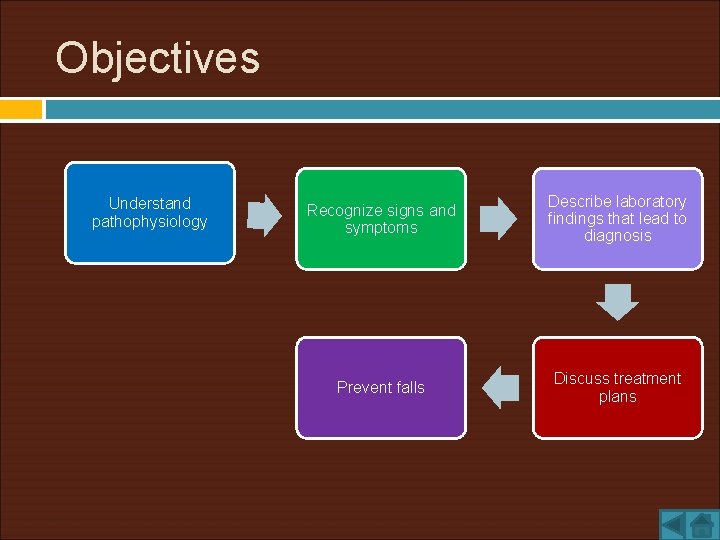
Objectives Understand pathophysiology Recognize signs and symptoms Describe laboratory findings that lead to diagnosis Prevent falls Discuss treatment plans

Definition of Rhabdomyolysis is the rapid breakdown of skeletal muscle due to injury to muscle tissue. Damaged skeletal muscles release products such as myoglobin into the blood stream leading to acute kidney failure. Criddle, L. 2003 With permission skeletalmuscle. jpg
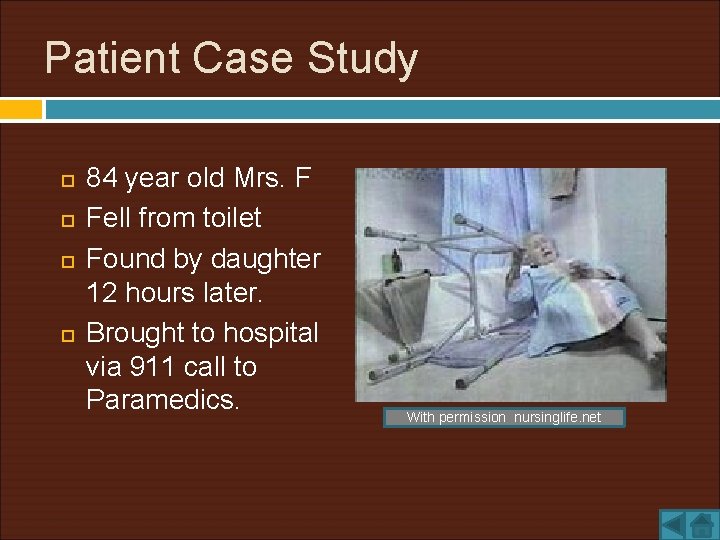
Patient Case Study 84 year old Mrs. F Fell from toilet Found by daughter 12 hours later. Brought to hospital via 911 call to Paramedics. With permission nursinglife. net
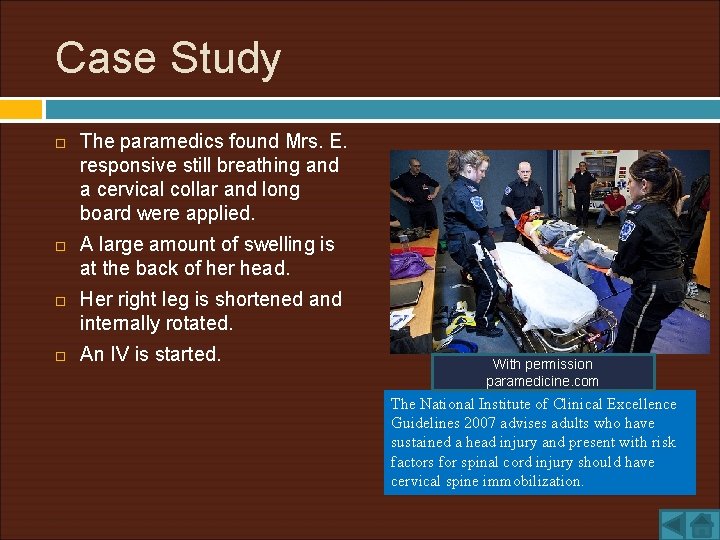
Case Study The paramedics found Mrs. E. responsive still breathing and a cervical collar and long board were applied. A large amount of swelling is at the back of her head. Her right leg is shortened and internally rotated. An IV is started. With permission paramedicine. com The National Institute of Clinical Excellence Guidelines 2007 advises adults who have sustained a head injury and present with risk factors for spinal cord injury should have cervical spine immobilization.
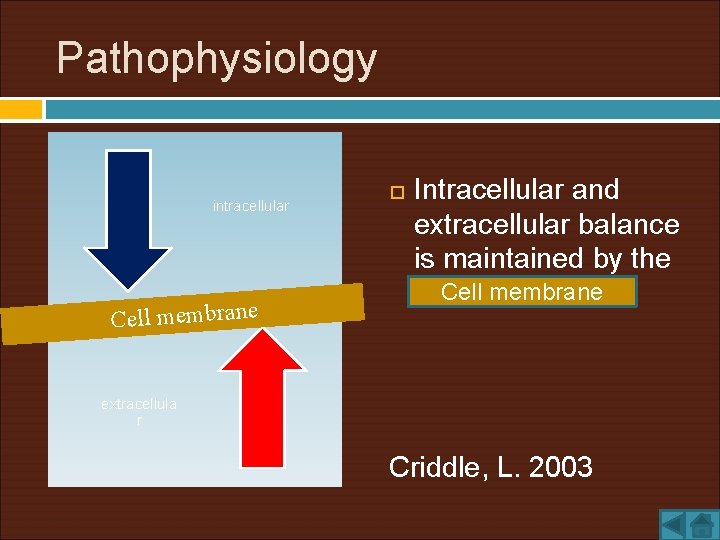
Pathophysiology intracellular Cell membrane Intracellular and extracellular balance is maintained by the Cell membrane extracellula r Criddle, L. 2003
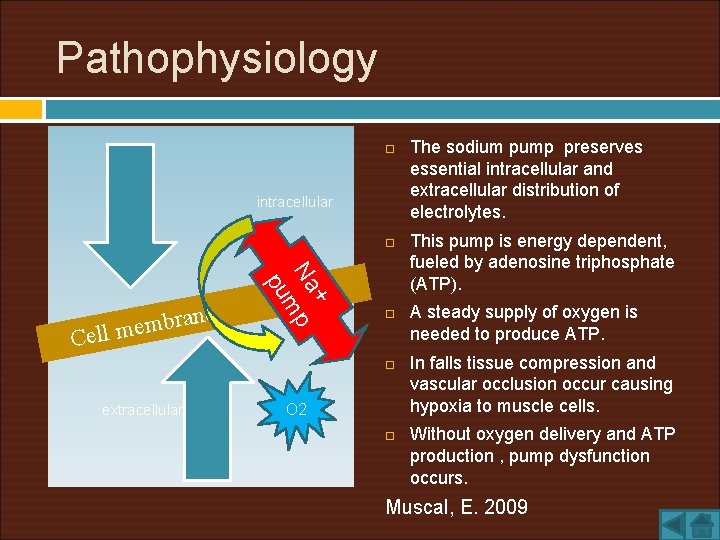
Pathophysiology intracellular Cel + Na p m pu ane r b m e lm extracellular O 2 The sodium pump preserves essential intracellular and extracellular distribution of electrolytes. This pump is energy dependent, fueled by adenosine triphosphate (ATP). A steady supply of oxygen is needed to produce ATP. In falls tissue compression and vascular occlusion occur causing hypoxia to muscle cells. Without oxygen delivery and ATP production , pump dysfunction occurs. Muscal, E. 2009
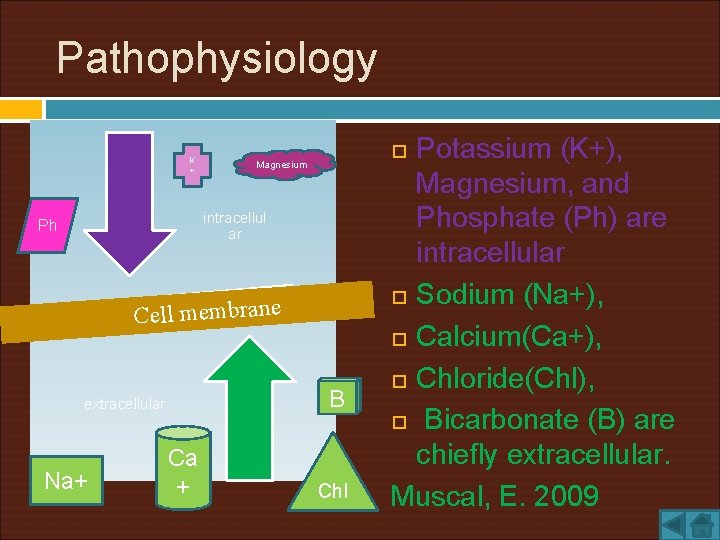
Pathophysiology K + intracellul ar Ph Cell membrane B extracellular Na+ Ca + Potassium (K+), Magnesium, and Phosphate (Ph) are intracellular Sodium (Na+), Calcium(Ca+), Chloride(Chl), Bicarbonate (B) are chiefly extracellular. Muscal, E. 2009 Magnesium Chl
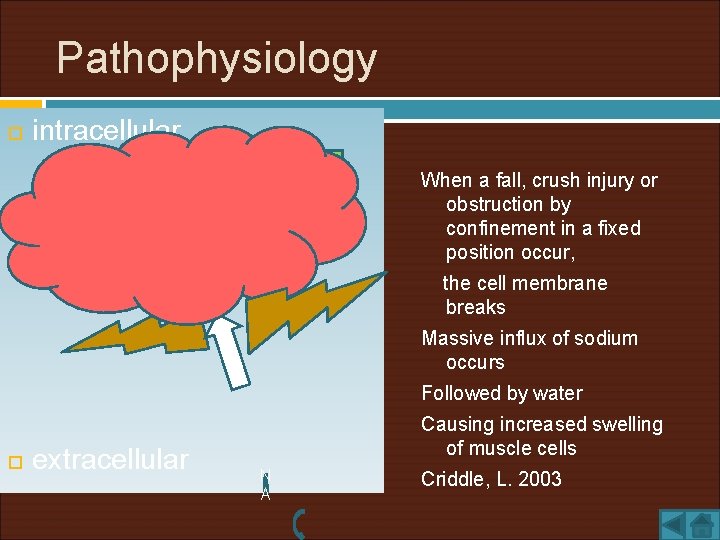
Pathophysiology intracellular Na+ H 2 O Na+ When a fall, crush injury or obstruction by confinement in a fixed position occur, the cell membrane breaks Massive influx of sodium occurs Followed by water extracellular Causing increased swelling of muscle cells N A Criddle, L. 2003
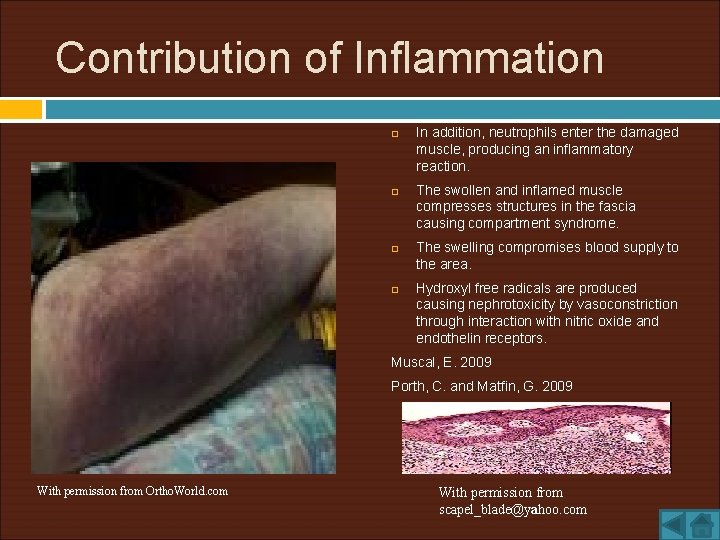
Contribution of Inflammation In addition, neutrophils enter the damaged muscle, producing an inflammatory reaction. The swollen and inflamed muscle compresses structures in the fascia causing compartment syndrome. The swelling compromises blood supply to the area. Hydroxyl free radicals are produced causing nephrotoxicity by vasoconstriction through interaction with nitric oxide and endothelin receptors. Muscal, E. 2009 Porth, C. and Matfin, G. 2009 With permission from Ortho. World. com With permission from scapel_blade@yahoo. com
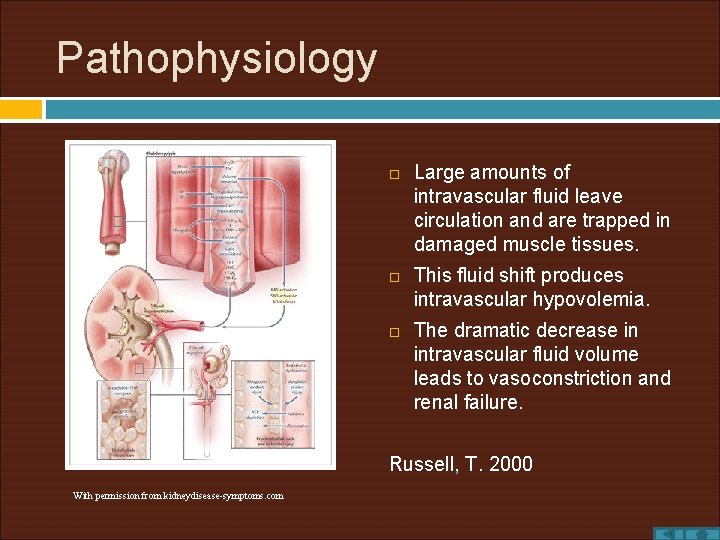
Pathophysiology Large amounts of intravascular fluid leave circulation and are trapped in damaged muscle tissues. This fluid shift produces intravascular hypovolemia. The dramatic decrease in intravascular fluid volume leads to vasoconstriction and renal failure. Russell, T. 2000 With permission from kidneydisease-symptoms. com
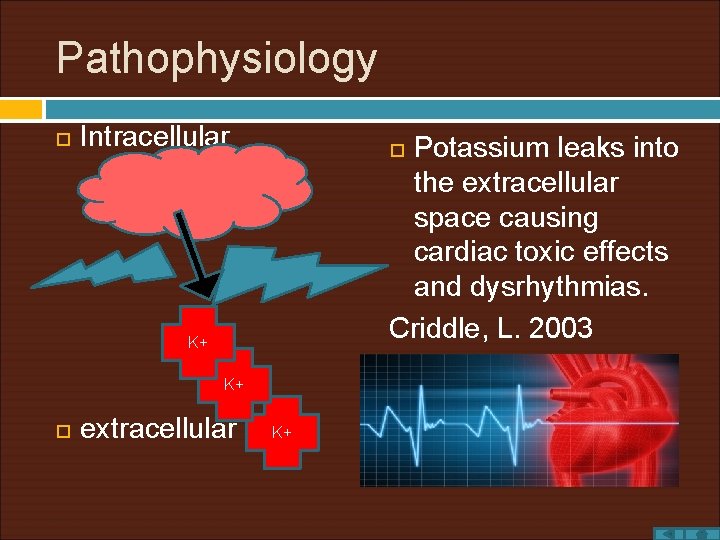
Pathophysiology Intracellular Potassium leaks into the extracellular space causing cardiac toxic effects and dysrhythmias. Criddle, L. 2003 K+ K+ extracellular K+
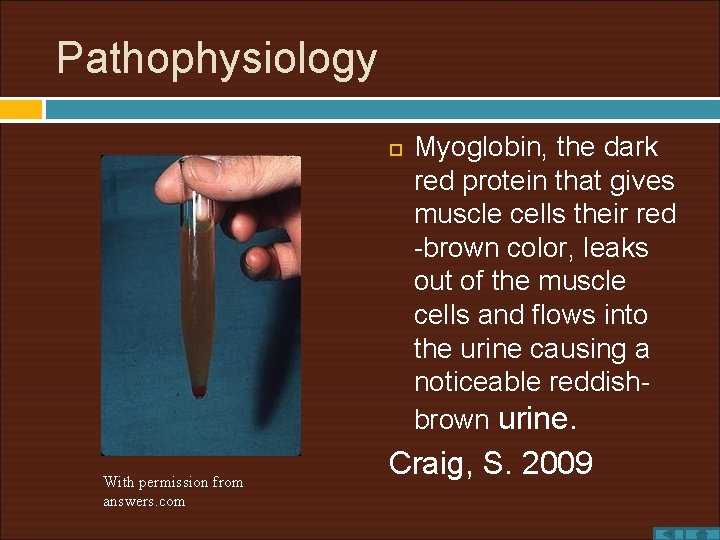
Pathophysiology With permission from answers. com Myoglobin, the dark red protein that gives muscle cells their red -brown color, leaks out of the muscle cells and flows into the urine causing a noticeable reddishbrown urine. Craig, S. 2009
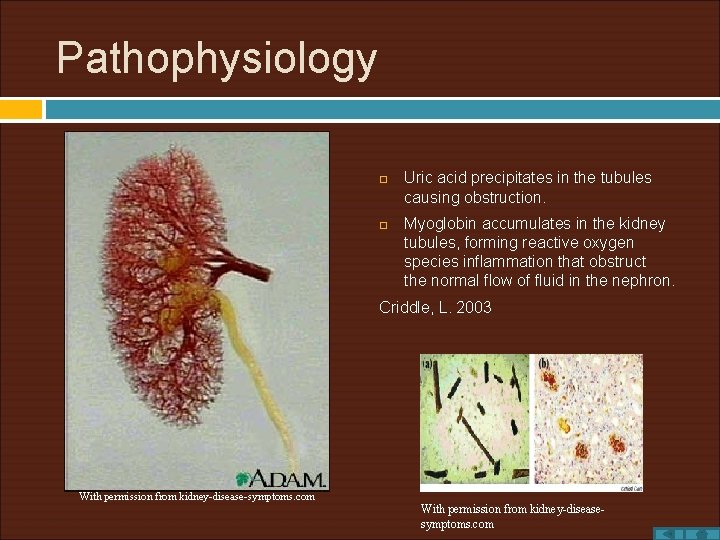
Pathophysiology Uric acid precipitates in the tubules causing obstruction. Myoglobin accumulates in the kidney tubules, forming reactive oxygen species inflammation that obstruct the normal flow of fluid in the nephron. Criddle, L. 2003 With permission from kidney-disease-symptoms. com With permission from kidney-diseasesymptoms. com
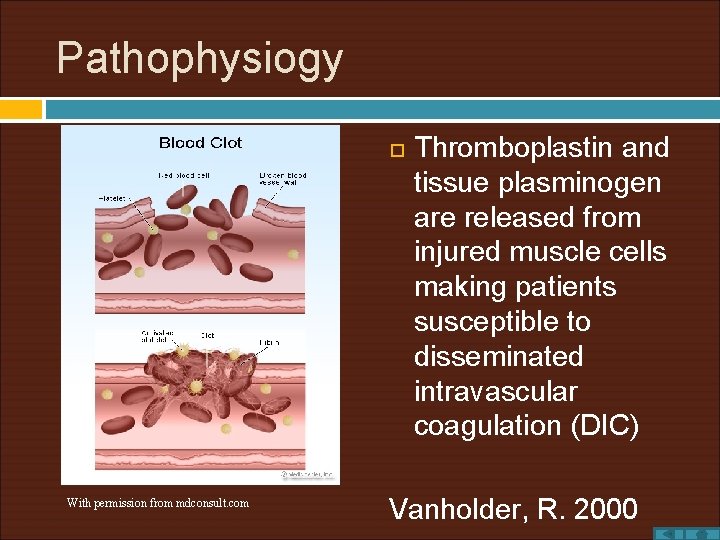
Pathophysiogy With permission from mdconsult. com Thromboplastin and tissue plasminogen are released from injured muscle cells making patients susceptible to disseminated intravascular coagulation (DIC) Vanholder, R. 2000
Pathophysiology Quiz What maintains intracellular and extracellular balance? Tissue compression Cell Membrane Neutrophils

Pathophysiology Quiz Answer Exactly Right!

Pathophysiology Answer Try Again
Pathophysiology Quiz When the cell membrane breaks, massive influx occurs of: Myoglobin Potassium Sodium and Water

Pathophysiology Quiz Answer You are right!

Pathophysiology Answer Try again
Case Study A CT scan is positive for subdural hematoma. X-Ray is positive for right femoral neck fracture. With aging there is a reduction in muscle size and strength related to loss of muscle fibers and reduction in size of existing fibers. With aging there is a loss of bone mass and weakened bone structure. Porth, C. and Matfin, G. 2009
Contribution of Aging Frailty in the elderly is caused by inflammation due to decreased action of anabolic hormones causing loss of muscle strength and frequent falls. Inflammaging is a low grade inflammatory process in elderly caused by a constant low-grade activation of cytokine. Chronic inflammation is due to infiltration of macrophages, lymphocytes and fibroblasts leading to persistent swelling and weakened cell wall membranes. Inflammaging , frailty and weakend, small muscle fibers make Mrs. F a high risk for rhabdomyolysis. Licastro, F. et al. , 2005
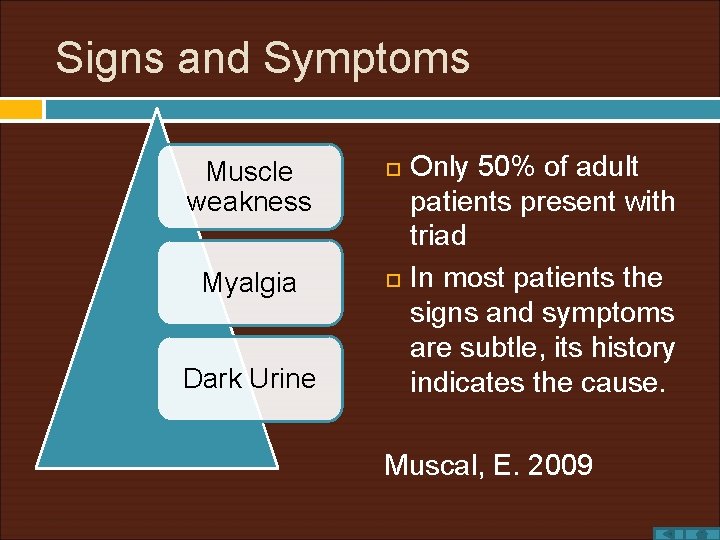
Signs and Symptoms Muscle weakness Myalgia Dark Urine Only 50% of adult patients present with triad In most patients the signs and symptoms are subtle, its history indicates the cause. Muscal, E. 2009
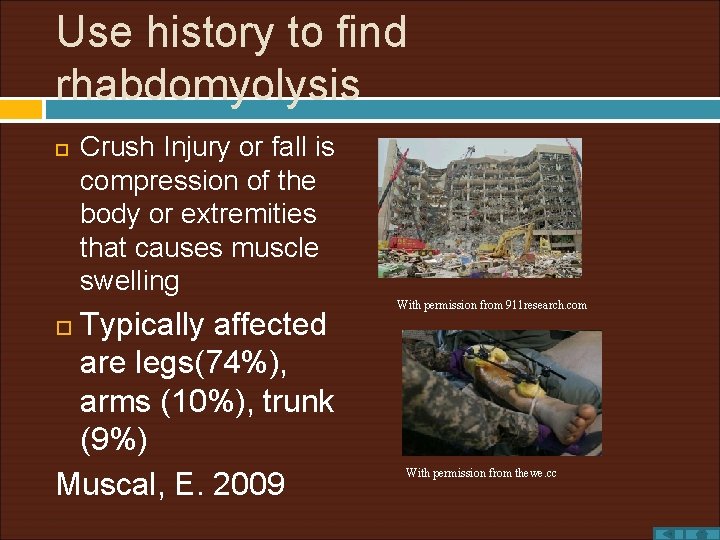
Use history to find rhabdomyolysis Crush Injury or fall is compression of the body or extremities that causes muscle swelling Typically affected are legs(74%), arms (10%), trunk (9%) Muscal, E. 2009 With permission from 911 research. com With permission from thewe. cc
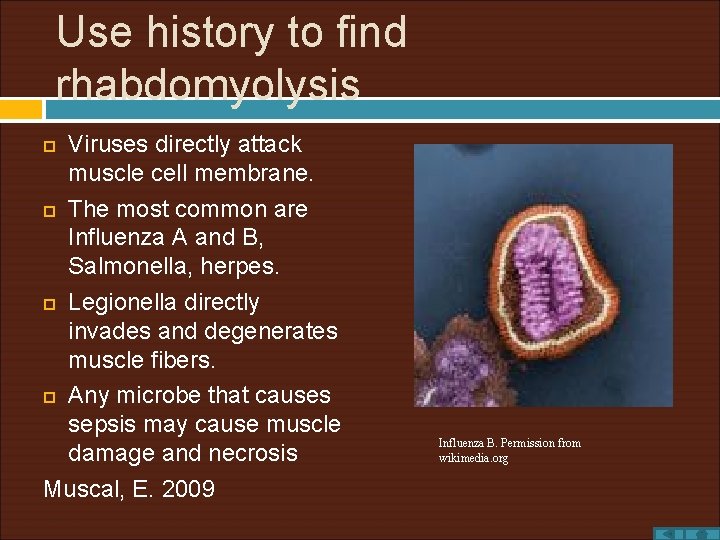
Use history to find rhabdomyolysis Viruses directly attack muscle cell membrane. The most common are Influenza A and B, Salmonella, herpes. Legionella directly invades and degenerates muscle fibers. Any microbe that causes sepsis may cause muscle damage and necrosis Muscal, E. 2009 Influenza B. Permission from wikimedia. org
Use history to find rhabdomyolysis Drugs Alcohol abuse causes metabolic abnormality and immobilization leading to muscle compression and muscle ischemia Narcotic overdose causes altered sensorium and immobilization for long periods. Pressure necrosis develops Cocaine damages muscle tissue by vasoconstriction. Antipsychotics may cause neuroleptic malignant syndrome and muscle rigidity leading to rhabdomyolysis Richards, J. 2009 Permission from floridacrimminalattorneysblog. com
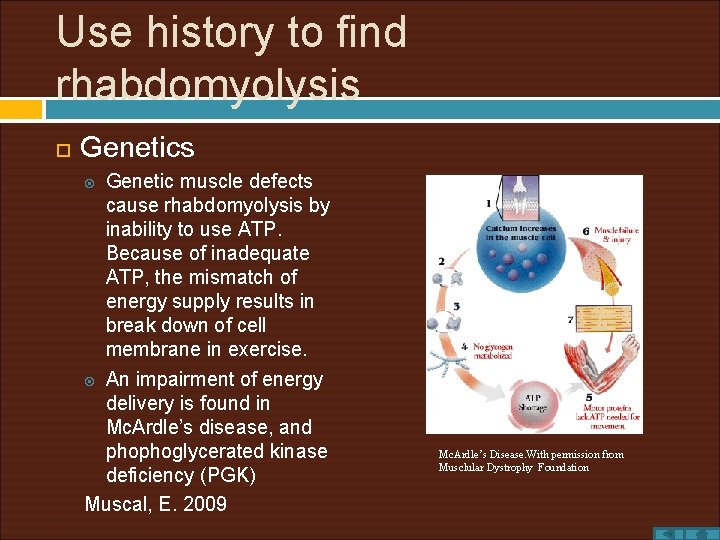
Use history to find rhabdomyolysis Genetics Genetic muscle defects cause rhabdomyolysis by inability to use ATP. Because of inadequate ATP, the mismatch of energy supply results in break down of cell membrane in exercise. An impairment of energy delivery is found in Mc. Ardle’s disease, and phophoglycerated kinase deficiency (PGK) Muscal, E. 2009 Mc. Ardle’s Disease. With permission from Musclular Dystrophy Foundation
Quiz Choose True or False Genetic muscle defects cause rhabdomyolysis by an inability to use ATP? True False

Answer You are right!
Answer Consider with inadequate ATP the mismatch of energy supply results in break down of cell membrane in exercise. Try Again.
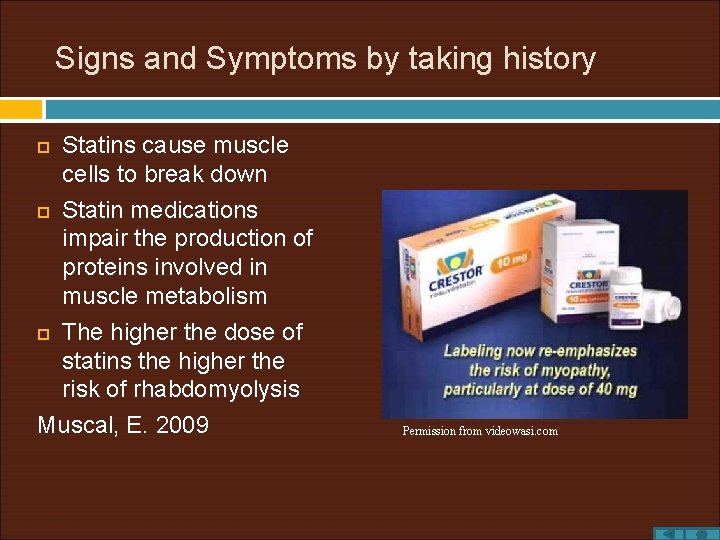
Signs and Symptoms by taking history Statins cause muscle cells to break down Statin medications impair the production of proteins involved in muscle metabolism The higher the dose of statins the higher the risk of rhabdomyolysis Muscal, E. 2009 Permission from videowasi. com
Contribution of Stress Response CNS stress response is increased heart and respiratory rate, hands and feet are moist, pupils are dilated. Endocrine stress response is causing vasconstriction of blood vessels and increased water absorption in the kidney. Porth, C. and Matfin, G. 2009 A stress response is seen in both Mrs. F’s nervous and endocrine system.
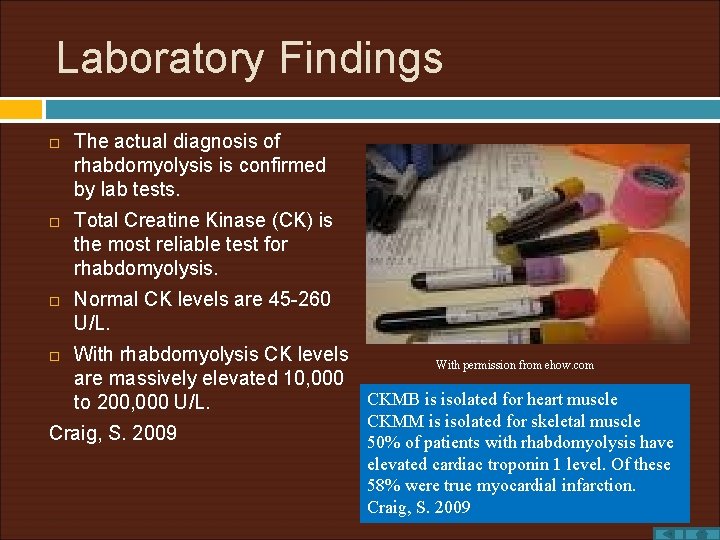
Laboratory Findings The actual diagnosis of rhabdomyolysis is confirmed by lab tests. Total Creatine Kinase (CK) is the most reliable test for rhabdomyolysis. Normal CK levels are 45 -260 U/L. With rhabdomyolysis CK levels With permission from ehow. com are massively elevated 10, 000 CKMB is isolated for heart muscle to 200, 000 U/L. Craig, S. 2009 CKMM is isolated for skeletal muscle 50% of patients with rhabdomyolysis have elevated cardiac troponin 1 level. Of these 58% were true myocardial infarction. Craig, S. 2009
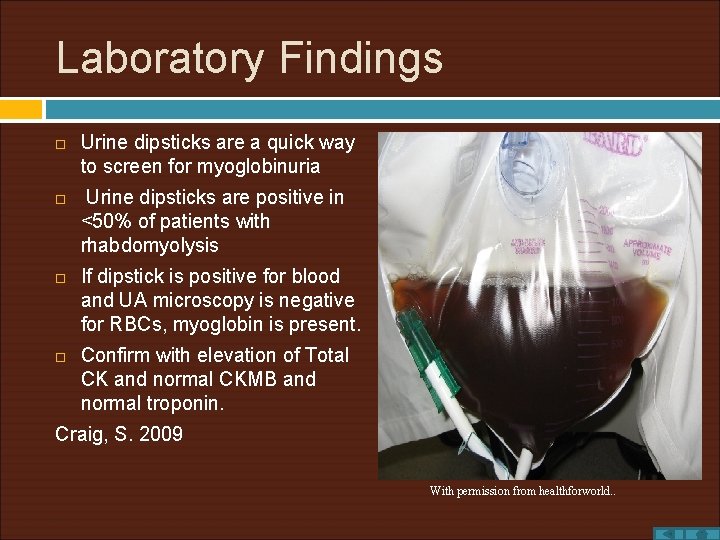
Laboratory Findings Urine dipsticks are a quick way to screen for myoglobinuria Urine dipsticks are positive in <50% of patients with rhabdomyolysis If dipstick is positive for blood and UA microscopy is negative for RBCs, myoglobin is present. Confirm with elevation of Total CK and normal CKMB and normal troponin. Craig, S. 2009 With permission from healthforworld. .
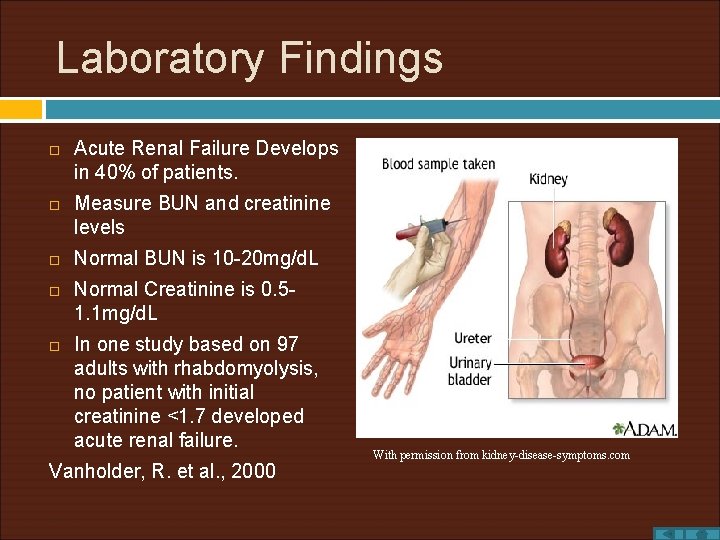
Laboratory Findings Acute Renal Failure Develops in 40% of patients. Measure BUN and creatinine levels Normal BUN is 10 -20 mg/d. L Normal Creatinine is 0. 51. 1 mg/d. L In one study based on 97 adults with rhabdomyolysis, no patient with initial creatinine <1. 7 developed acute renal failure. Vanholder, R. et al. , 2000 With permission from kidney-disease-symptoms. com
Laboratory Findings Clotting studies are useful to detect disseminated intravascular coagulation (DIC) Obtain prothrombin time (pt), partial prothrombin time (ptt), and platelet count Russell, T. 2000 With permission from crossfit. com
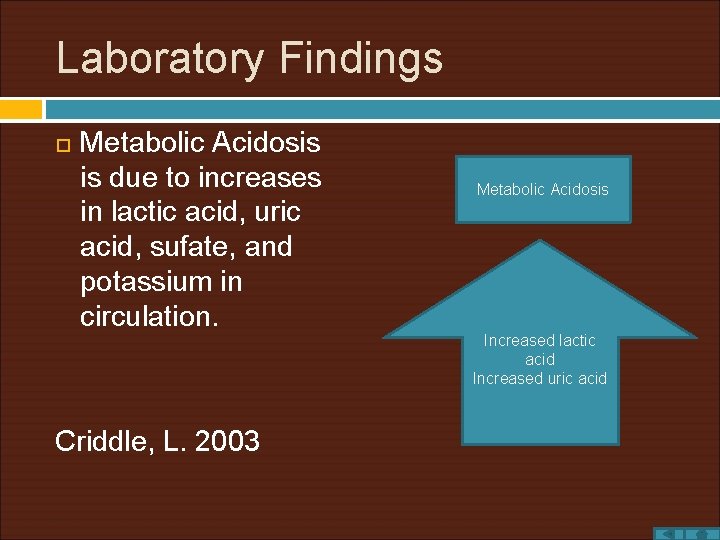
Laboratory Findings Metabolic Acidosis is due to increases in lactic acid, uric acid, sufate, and potassium in circulation. Criddle, L. 2003 Metabolic Acidosis Increased lactic acid Increased uric acid
Quiz What are three complications from rhabdomyolysis? Respiratory Acidosis, Urinary tract infection, Bowel Obstruction Metabolic Acidosis, Acute Renal Failure, Disseminated Intravascular Coagulation Metabolic Alkalosis, Chronic Renal Failure, Diverticulitis. Quiz Answers

Quiz Answers Alright!

Quiz Answers Plenty of cover to try again
Case Study Mrs. F’s initial labs show: Potassium (K) 6. 4 m. EQ/L Blood Urea Nitrogen (BUN) = 36 mg/l Creatinine (CR) =6. 5 mg/l Creatine Kinase= 90, 000 units Mrs. F’s high BUN and Creatinine indicate Kidney Failure Mrs. F’s high Creatine Kinase indicate large amount of skeletal muscle breakdown. Mrs. F. needs treatment for rhabdomyolysis.
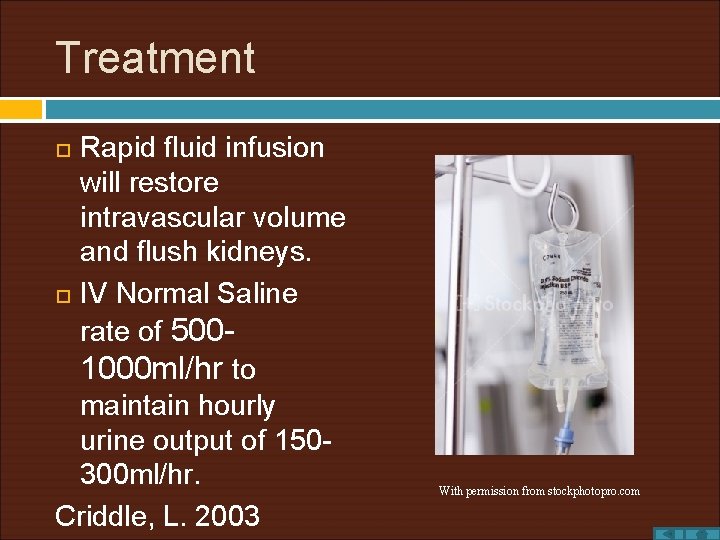
Treatment Rapid fluid infusion will restore intravascular volume and flush kidneys. IV Normal Saline rate of 5001000 ml/hr to maintain hourly urine output of 150300 ml/hr. Criddle, L. 2003 With permission from stockphotopro. com
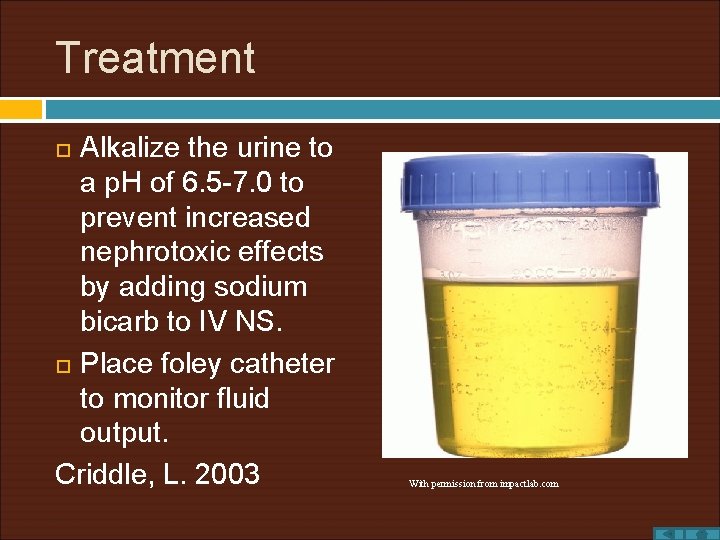
Treatment Alkalize the urine to a p. H of 6. 5 -7. 0 to prevent increased nephrotoxic effects by adding sodium bicarb to IV NS. Place foley catheter to monitor fluid output. Criddle, L. 2003 With permission from impactlab. com
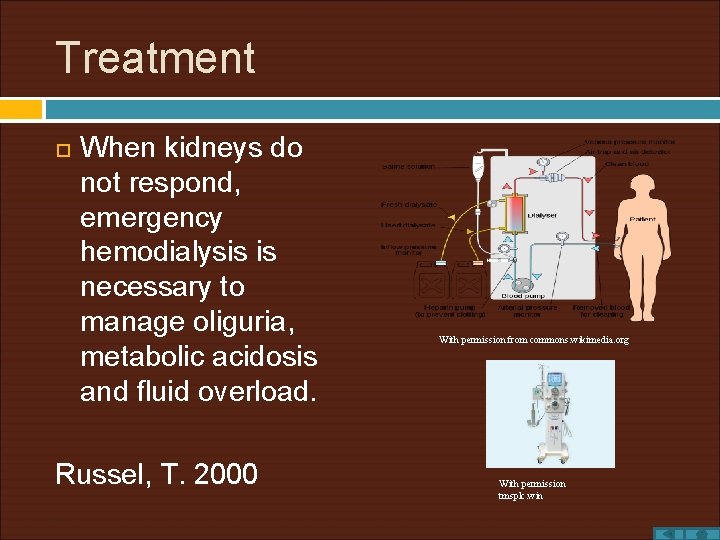
Treatment When kidneys do not respond, emergency hemodialysis is necessary to manage oliguria, metabolic acidosis and fluid overload. Russel, T. 2000 With permission from commons. wikimedia. org With permission tmsplc. win
Case Study Mrs F’ has 5 -10 cc of dark brown urine over the first two hours in ED. Her IV fluids consisted of 1 L of NS with 50 m. Eq of Sodium Bicarb at 250 cc/hr. Low dose Dopamine was started in her central line to improve her renal status. In spite of treatment, Mrs. F. had 50 cc urine output at hour 4 and dialysis was started upon admission to NICU. By the tenth day Mrs. F begins making urine. Plans are made for surgery to repair her fx hip.
Prevent Falls Reducing the risk of harm from patient fall has been a JACHO National Patient Safety Goal since 2005. WHO IS AT RISK to FALL? Consider the following criteria to asses risk: Confusion or disorientation Impaired by sedation, alcohol or drugs Patient age >70 years Dizziness with standing Inability to walk unassisted; uses walker or cane Fall within last 3 months.
Prevention Appropriate Interventions include and are not limited to: Move patient to room within “eye view” Keep curtain open Assess frequently Remind patient not to get up without assistance Place call light within reach and demonstrate how to use it Assure family or caregiver remains with patient Place side rails up for safety KNOW: Severe injuries have been associated with patients that climb over side rails Call for low bed. Transfer patient to low bed when boarded in ED.
Summary “Rhabdomyolysis is a clinical syndrome in which the contents of injured muscle cells leak into circulation. This leakage results in electrolyte abnormalities, acidosis, clotting disorders, hypovolemia, and acute renal failure. Traumatic and nontraumatic conditions lead to rhabdomyolysis. Intervention consists of early detection, volume replacement, and aggressive diuresis or hemodialysis…. Nurses are instrumental in both early detection and management of this life-threatening syndrome. ” Criddle, L. 2003
References Carriere, S. (1998). Found down: compartment syndrome, rhabdomyolysis, and renal failure. Journal of Emergency Nursing. 24: 214 -217. Craig, S. (2009). Rhabdomyolysis: differential diagnosis & workup. e. Medicine Emergency Medicine. Retrieved March 27, 2010 from http: //rhabdomyolysis e-medicine Criddle. L. (2003). Pathophysiology, recognition, and management. Critical Care Nurse. 23(6), 14 -28. Frei, F. (1997). Reactive oxygen species and antioxidant vitamins. The Linus Pauling Institute. Retrieved February 20, 2010 from http: //courses. alverno. edu Licastro, F. et al. , (2005). Innate immunity and inflammation in ageing: a key for understanding age-related diseases. Retrieved February 20, 2010 from http: //www. immunityageing. com Muscal, E. (2009). Rhabdomyolysis. e. Medicine. Retrieved March 27, 2010 from http: emedicine. medscape. com Porth, C. and Matfin, G. (2009). Pathophysiology Concepts of Altered Health States. Philadelphia: Lippincott, Williams & Wilkins. Richards, J. (2009). Rhabdomyolysis and drugs of abuse. Journal of Emergency Medicine. 19: 51 56. Russell, T. (2000). Acute renal failure related to rhabdomyolysis; pathophysiology, diagnosis, and collaborative management. Nephrology Nurse. 27: 567 -577. Vanholder, R. et al. (2000). Rhabdomyolysis. Journal of American Sociology of Nephrology. 11: 1553 -1561.
- Slides: 52