
RF Leakage Investigations Atomic Clock Signal Phase Drift
- Slides: 14
RF Leakage Investigations & Atomic Clock Signal Phase Drift Analysis John Schaefer Mentor: Dick Gustafson
RF Signals and the IFO • LIGO Radio Frequency (RF) roughly ranges from 100 k. Hz to 150 MHz • RF signals used to derive control signals for achieving resonance in our optical cavities • Tells cavities whether they’re too short or too long and steers changes in cavity length accordingly • RF leakages can contaminate signals in other electronics • Suspected to be a reason behind some losses of lock and source of noise
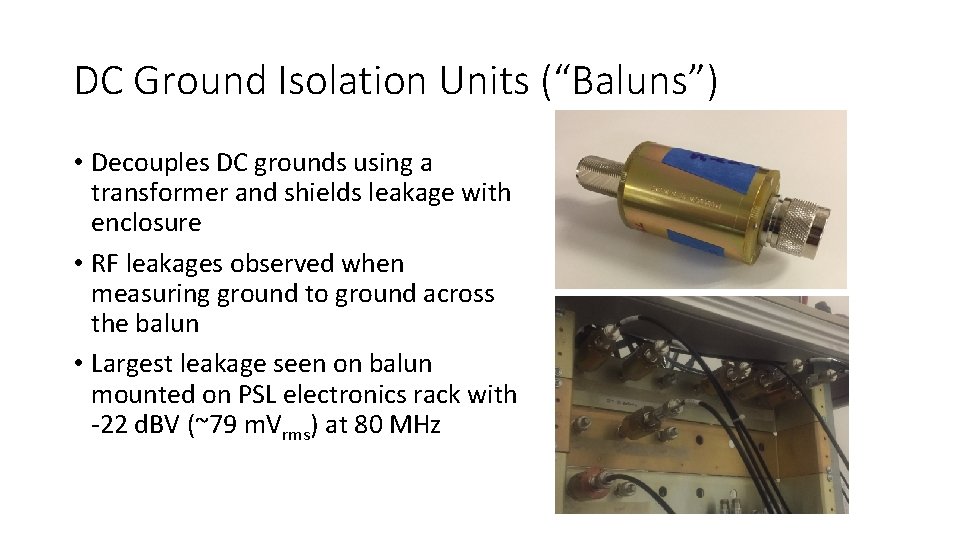
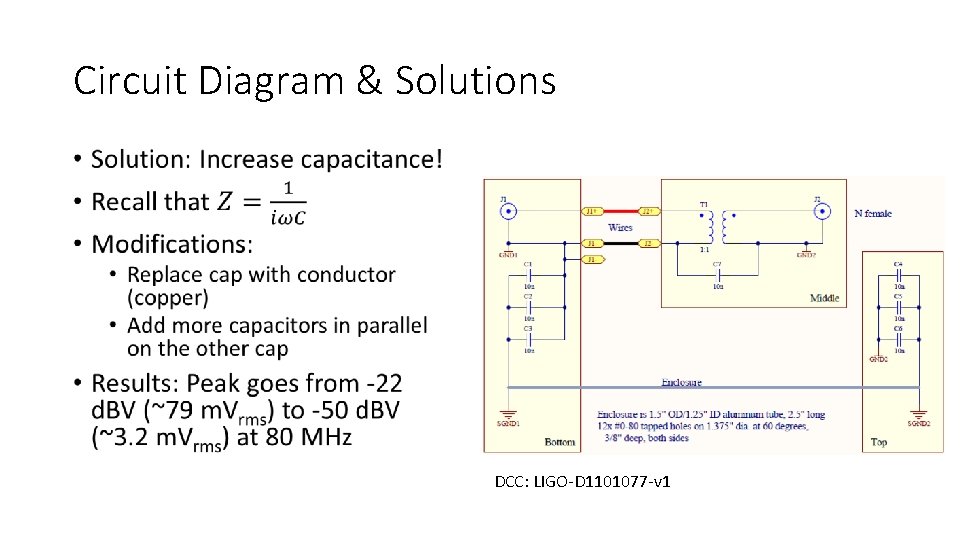
DC Ground Isolation Units (“Baluns”) • Decouples DC grounds using a transformer and shields leakage with enclosure • RF leakages observed when measuring ground to ground across the balun • Largest leakage seen on balun mounted on PSL electronics rack with -22 d. BV (~79 m. Vrms) at 80 MHz
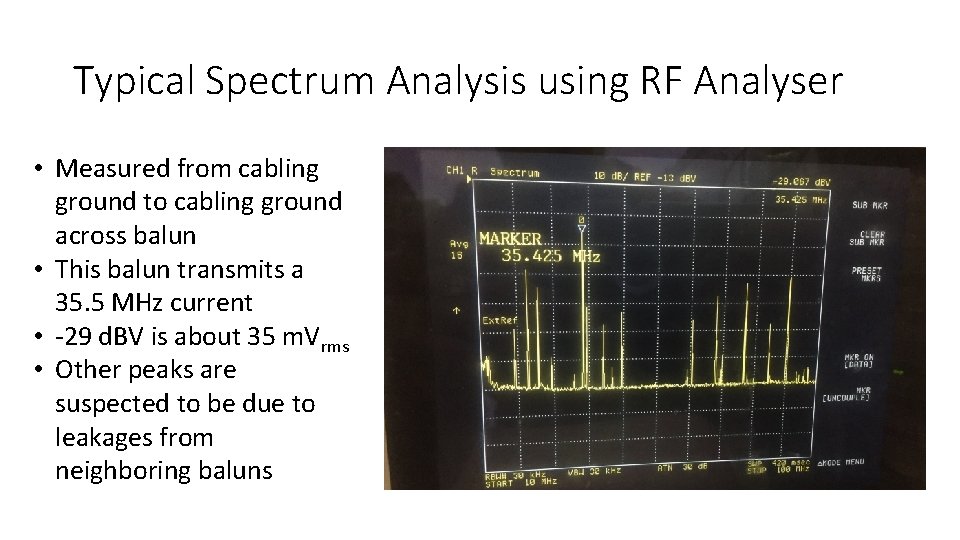
Typical Spectrum Analysis using RF Analyser • Measured from cabling ground to cabling ground across balun • This balun transmits a 35. 5 MHz current • -29 d. BV is about 35 m. Vrms • Other peaks are suspected to be due to leakages from neighboring baluns
Circuit Diagram & Solutions • DCC: LIGO-D 1101077 -v 1
Future Plans • Improve and test further modifications to the baluns (i. e. add more capacitors? ) • Identify other baluns that are candidates for replacement • Investigate “big picture” impact on IFO
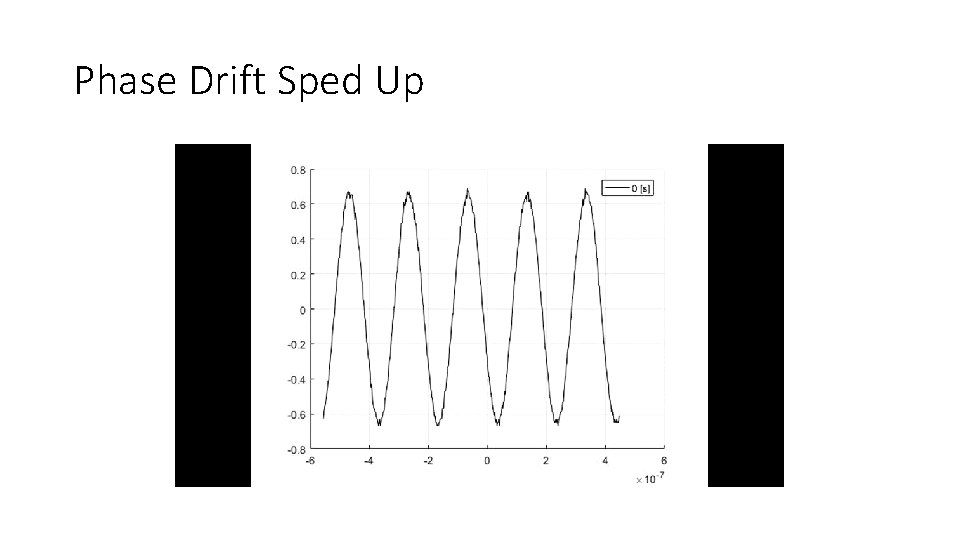
Atomic Clock Phase Drift • We use an atomic clock as well as GPS for timing on the IFO • When triggering a signal from a rubidium clock on a 1 PPS GPS signal, the signal seems to wander in phase • Small phase shifts may not matter in small timescale measurements, but algorithms that use long integration times would see the effect • i. e. Algorithms that perform continuous wave searches
Phase Drift Sped Up
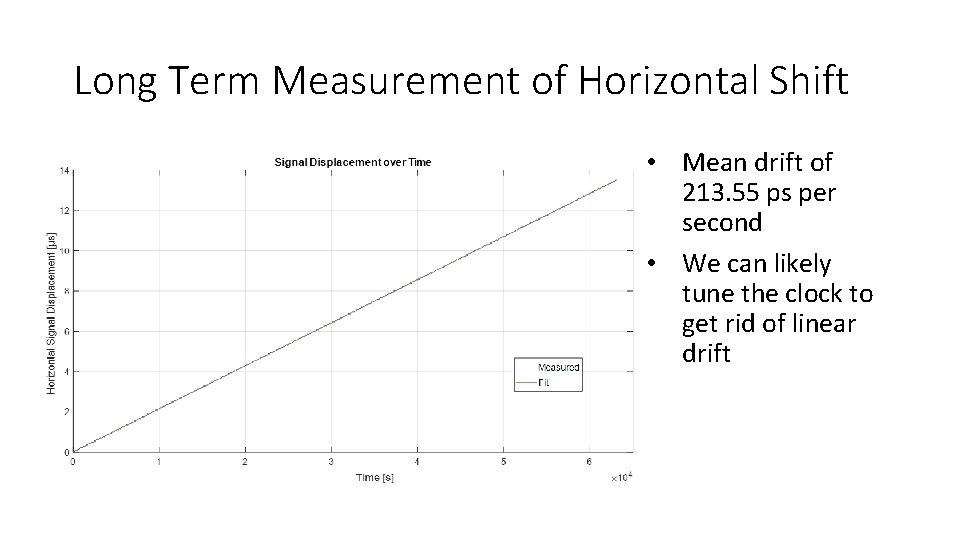
Long Term Measurement of Horizontal Shift • Mean drift of 213. 55 ps per second • We can likely tune the clock to get rid of linear drift
But Not Perfectly Linear…
Observed Periodicity in Residuals
Test for Periodicity • Creating periodogram we find the two most interesting peaks are • 5. 02 m. Hz (~200 s period) • 1. 205 m. Hz (~14 min period)
Future Plans • Tune atomic clock to get rid of linear phase drift • Investigate the sources of these periodicities • Perform same analysis on an atomic clock more identical to the one use on H 1 • Take two identical RF Oscillator Sources and have one disciplined by GPS and the other by an atomic clock and analyze the difference
Questions?