
Rex MoultonBarrett MD Lisa Derita RN Alameda Brentwood
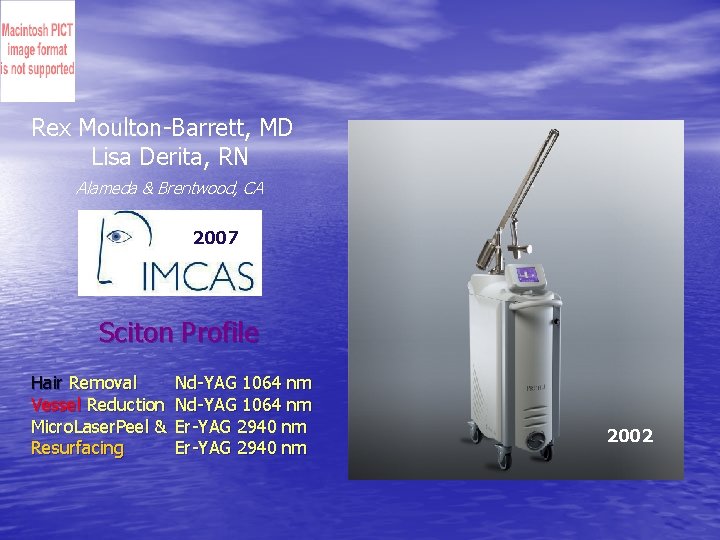
Rex Moulton-Barrett, MD Lisa Derita, RN Alameda & Brentwood, CA 2007 Sciton Profile Hair Removal Vessel Reduction Micro. Laser. Peel & Resurfacing Nd-YAG 1064 nm Er-YAG 2940 nm 2002
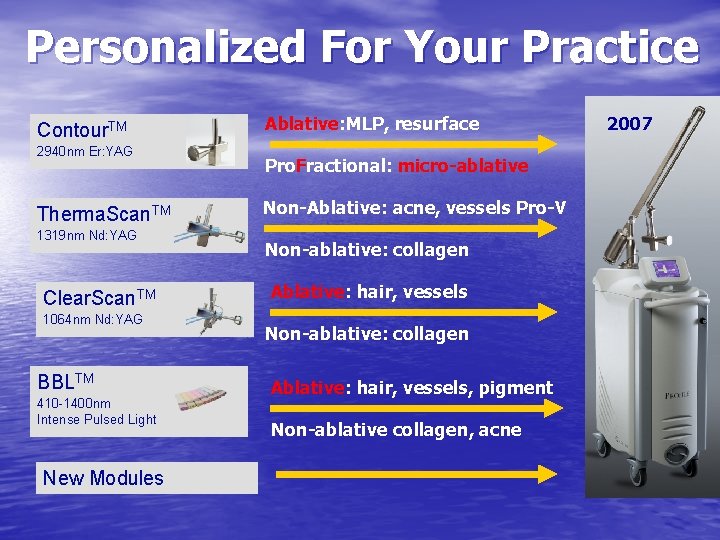
Personalized For Your Practice Contour. TM 2940 nm Er: YAG Therma. Scan. TM 1319 nm Nd: YAG Clear. Scan. TM 1064 nm Nd: YAG BBLTM 410 -1400 nm Intense Pulsed Light New Modules Ablative: MLP, resurface Pro. Fractional: micro-ablative Non-Ablative: acne, vessels Pro-V Non-ablative: collagen Ablative: hair, vessels, pigment Non-ablative collagen, acne 2007
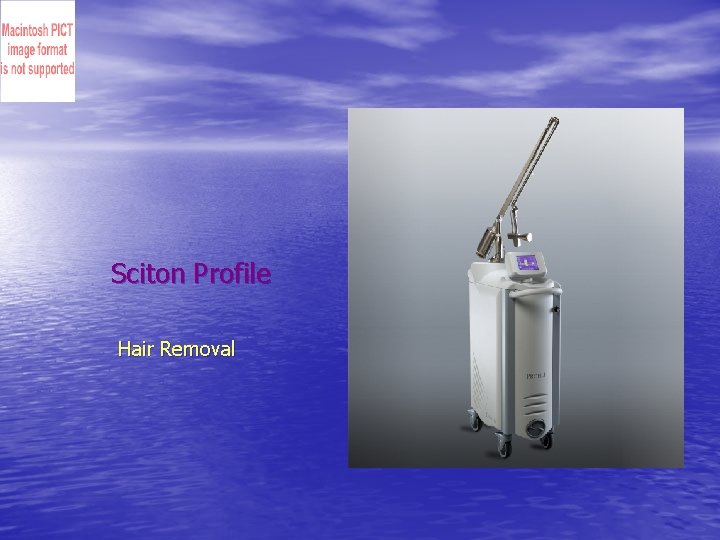
Sciton Profile Hair Removal
Hair Removal • Electrolysis • Creams • Laser • Microwave Ideally only destroys source of keratin in hair-bearing skin
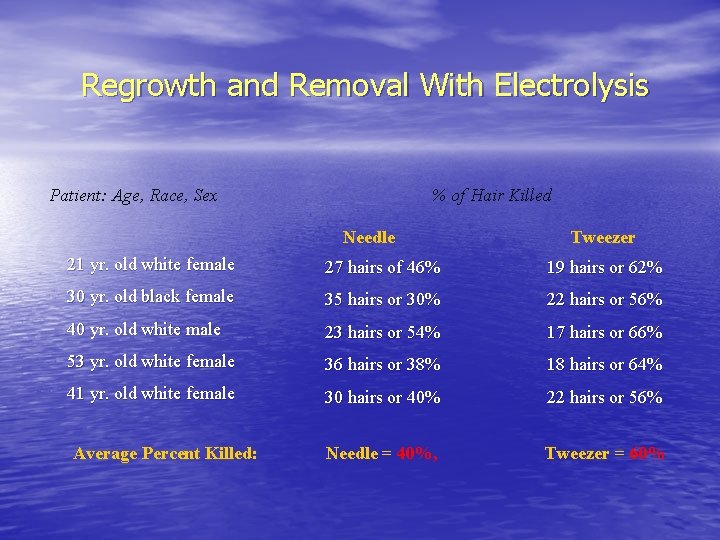
Regrowth and Removal With Electrolysis Patient: Age, Race, Sex % of Hair Killed Needle Tweezer 21 yr. old white female 27 hairs of 46% 19 hairs or 62% 30 yr. old black female 35 hairs or 30% 22 hairs or 56% 40 yr. old white male 23 hairs or 54% 17 hairs or 66% 53 yr. old white female 36 hairs or 38% 18 hairs or 64% 41 yr. old white female 30 hairs or 40% 22 hairs or 56% Needle = 40%, Tweezer = 60% Average Percent Killed:
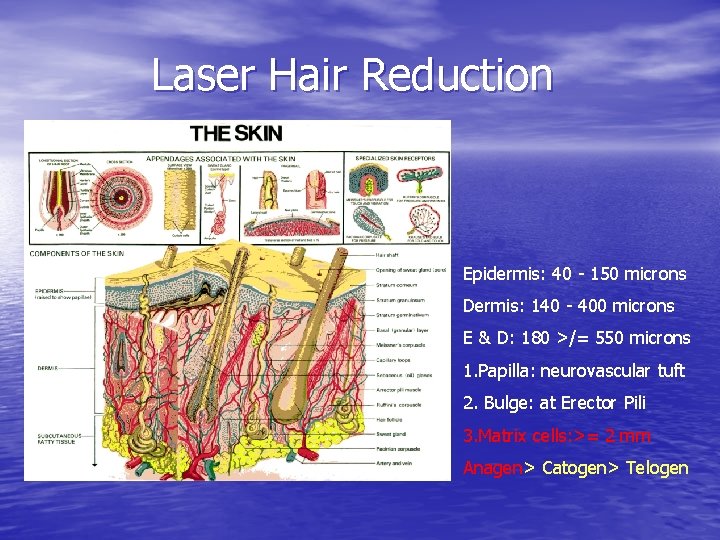
Laser Hair Reduction Epidermis: 40 - 150 microns Dermis: 140 - 400 microns E & D: 180 >/= 550 microns 1. Papilla: neurovascular tuft 2. Bulge: at Erector Pili 3. Matrix cells: >= 2 mm Anagen> Catogen> Telogen
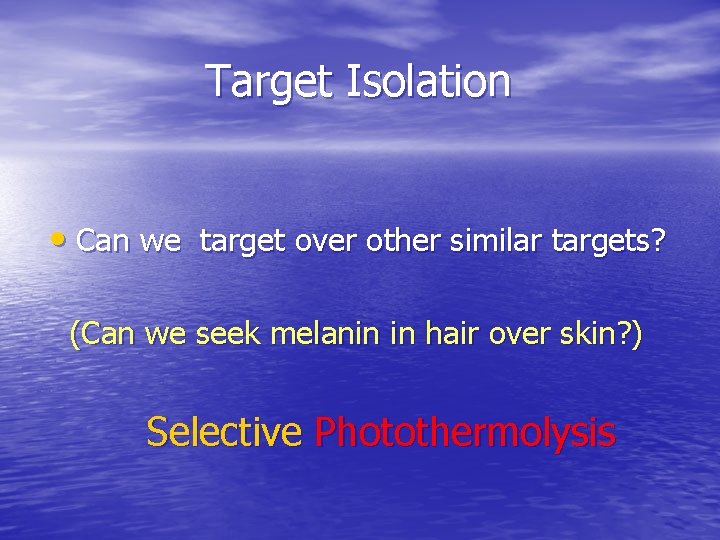
Target Isolation • Can we target over other similar targets? (Can we seek melanin in hair over skin? ) Selective Photothermolysis
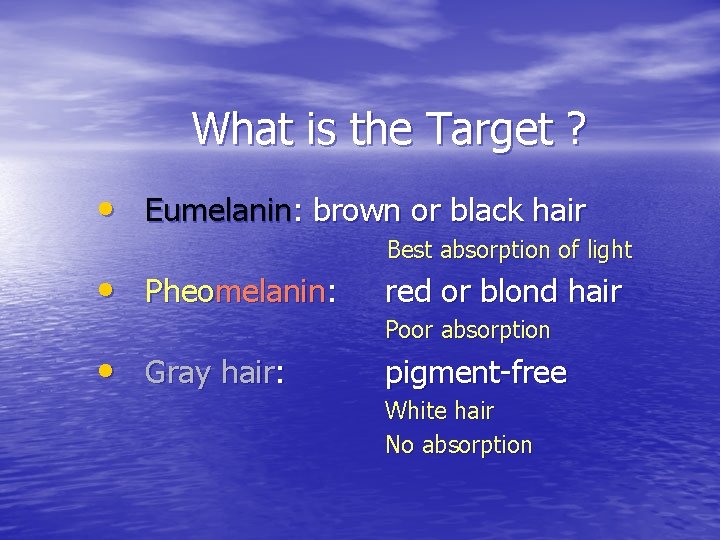
What is the Target ? • Eumelanin: brown or black hair • Pheomelanin: • Gray hair: Best absorption of light red or blond hair Poor absorption pigment-free White hair No absorption
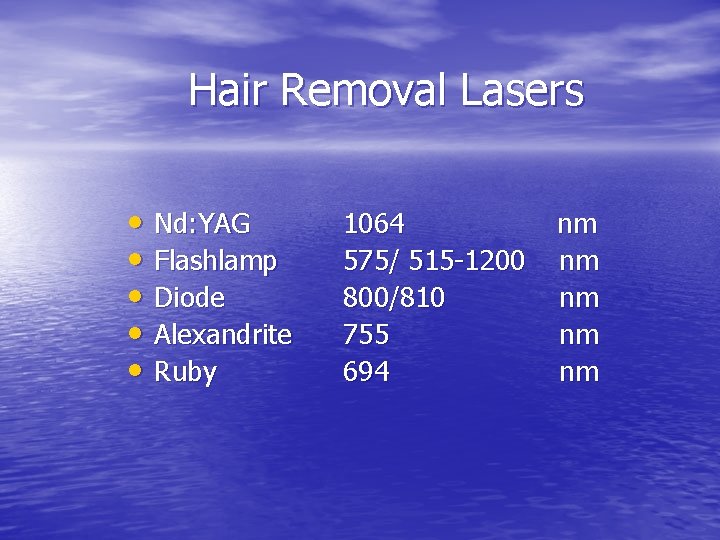
Hair Removal Lasers • Nd: YAG • Flashlamp • Diode • Alexandrite • Ruby 1064 575/ 515 -1200 800/810 755 694 nm nm nm
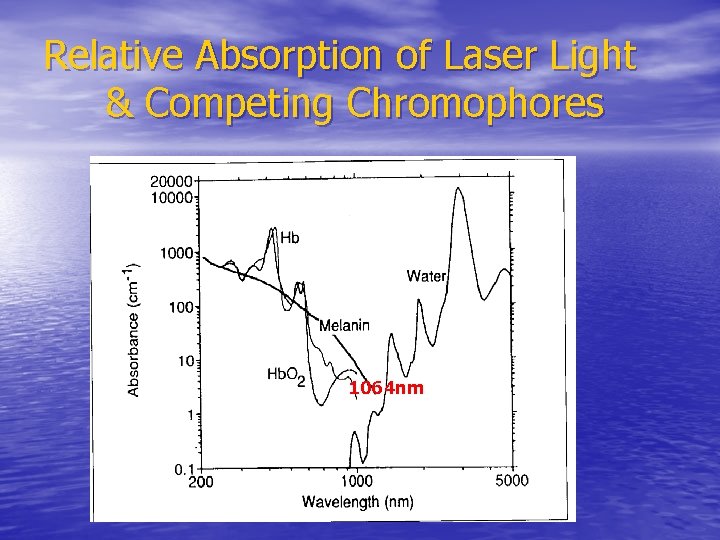
Relative Absorption of Laser Light & Competing Chromophores 1064 nm
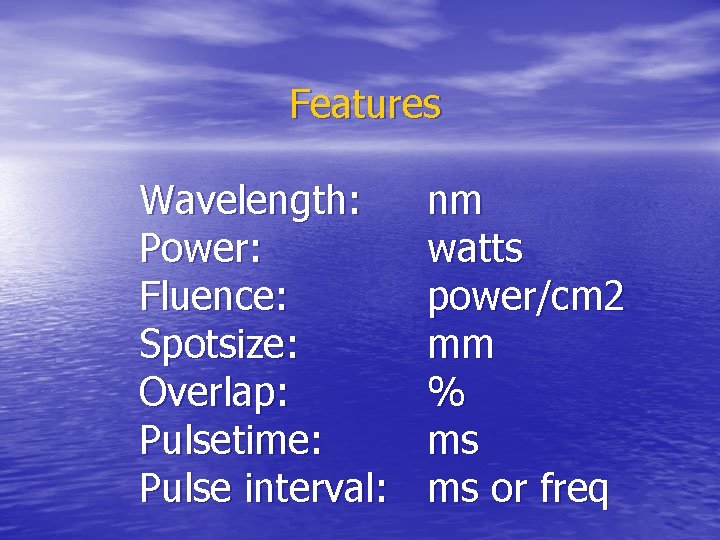
Features Wavelength: Power: Fluence: Spotsize: Overlap: Pulsetime: Pulse interval: nm watts power/cm 2 mm % ms ms or freq
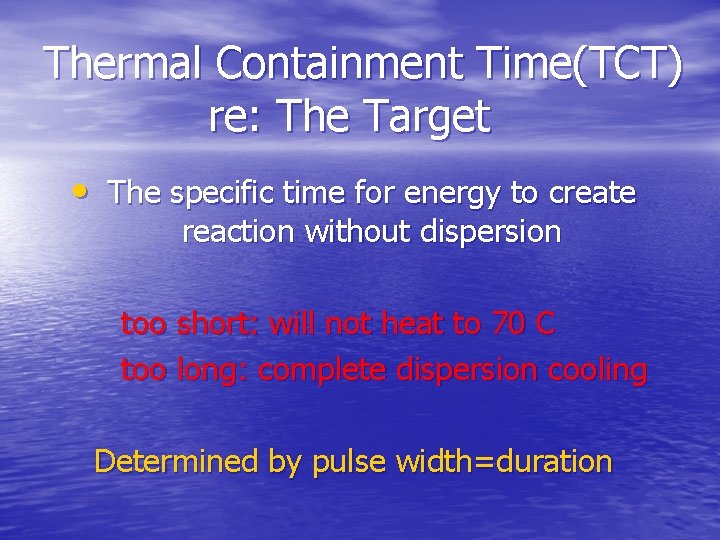
Thermal Containment Time(TCT) re: The Target • The specific time for energy to create reaction without dispersion too short: will not heat to 70 C too long: complete dispersion cooling Determined by pulse width=duration
Thermal Relaxation Time(TRT) RE: avoid injury to competing chromophores • Determines the shortest interval between pulses • The time for 51% of heat reduction by dispersion and cooling • proportional to: 1. the square of spot size 2. pulse duration, providing it is > TCT
Time of the pulse • Pulse duration should be longer than TCT • and Pulse interval longer than TRT • This commonly protects other components with competing chromophores.
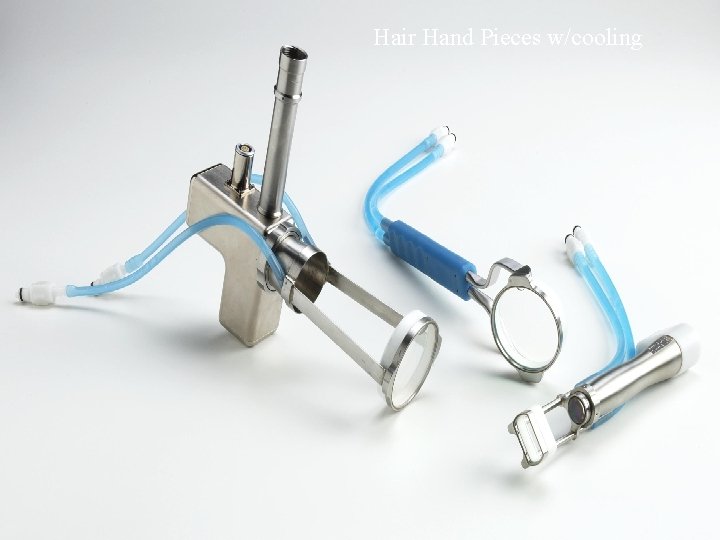
Hair Hand Pieces w/cooling
Temperature in the Region Near the D/E Junction Versus Cooling Time x X Skin Surface D/E Junction
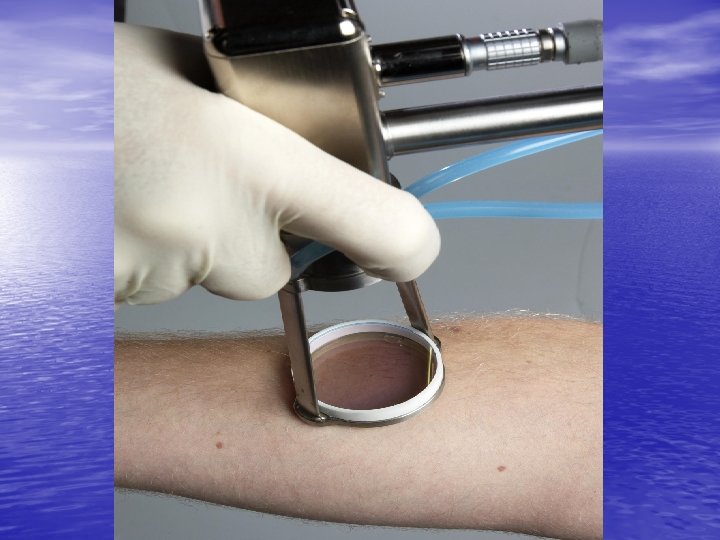
Skin Cool Technology
Energy Distribution Comparison of a 10 mm diameter Gaussian spot with a 6. 4 mm diameter square (Top Hat) spot. The square distribution delivers useful energy to a larger spot.
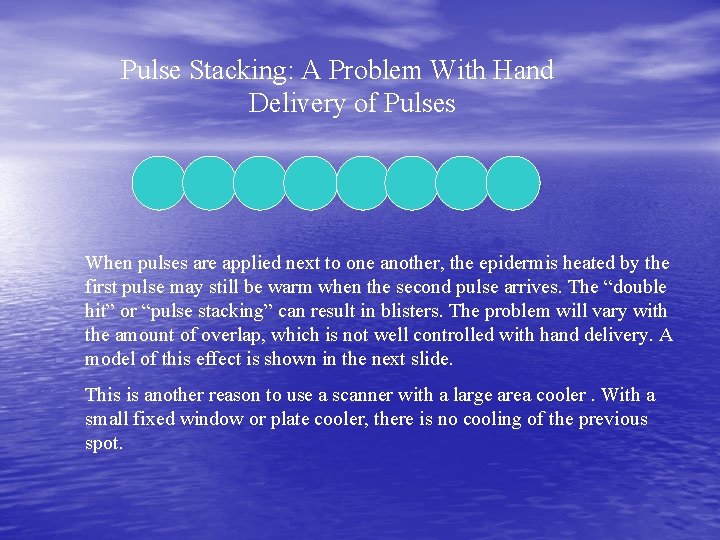
Pulse Stacking: A Problem With Hand Delivery of Pulses When pulses are applied next to one another, the epidermis heated by the first pulse may still be warm when the second pulse arrives. The “double hit” or “pulse stacking” can result in blisters. The problem will vary with the amount of overlap, which is not well controlled with hand delivery. A model of this effect is shown in the next slide. This is another reason to use a scanner with a large area cooler. With a small fixed window or plate cooler, there is no cooling of the previous spot.
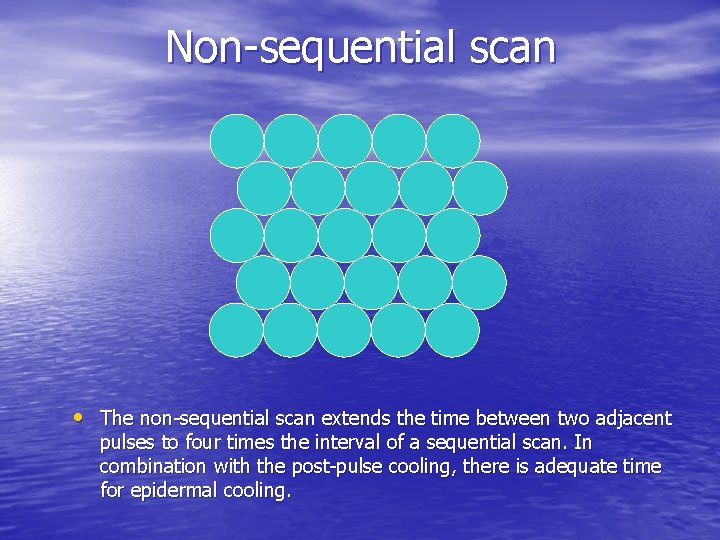
Non-sequential scan • The non-sequential scan extends the time between two adjacent pulses to four times the interval of a sequential scan. In combination with the post-pulse cooling, there is adequate time for epidermal cooling.
Pulse time? • Treat hair shaft – TCT 6 -10 milliseconds • Treat hair follicle – TCT 18 -25 milliseconds, ie > 15 ms – TRT 35 -60 milliseconds, ie > 35 ms
Keys for success • Wavelength: >690 nm (>wavelength=depth) (shorter -> competing chromophores) • Spot size: at least 5 millimeters • Pulse time: 18 or > milliseconds • Pulse interval of 35 or > milliseconds
When do you treat? • During Anagen cycle • Not during telogen • Cycle time determined by Richard-Merhag chart
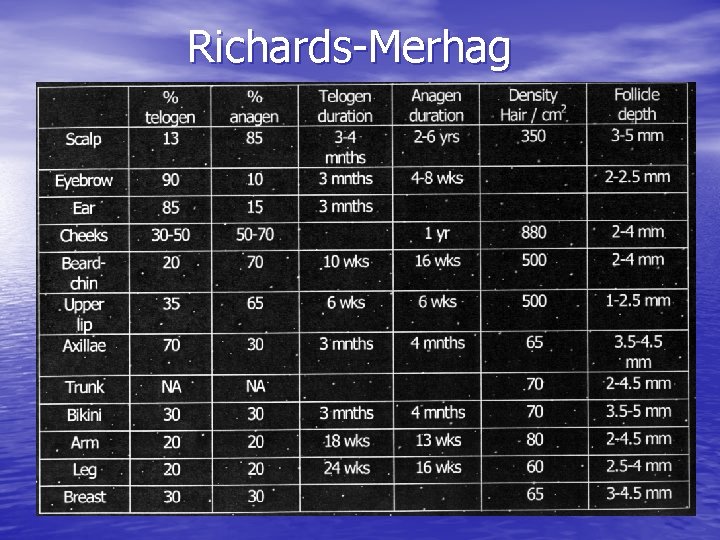
Richards-Merhag
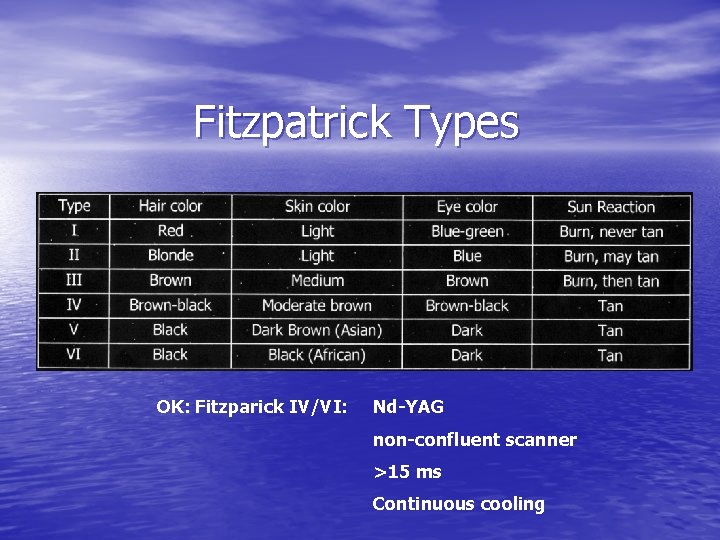
Fitzpatrick Types OK: Fitzparick IV/VI: Nd-YAG non-confluent scanner >15 ms Continuous cooling
Consultation • Patient history • Any previous hair methods • Expectations • Treatment explanation • Photographs • Consent • Periprocedure instructions
Contraindications • Pregnancy • Recent sun exposure • Sun tan • Suspicious lesions What about the orbit?
Before Treatment • Shave 1 -3 days before treatment (stubble) • Avoid other methods for 30 days • SPF 15+ for 4 -6 weeks • Avoid tanning creams • Hydroquinone if necessary
Treatment Safety • Test cooling plate, check < 5 C • Test spot: and wait 4 weeks • No overlap • Mark landmarks with red pen • Protect gums with Al foil if over area
What is the endpoint ? • Small contact spark/flash • Smell of burnt hair • Perifollicular edema • Sensation of light sunburn • One in three hairs extrude
Hair Chronology • Redness: 4 -6 hours after treatment • Hair appears to grow for several days • Hair falls out: day 10 -14 • Hair reappears, next phase: >3 -6 weeks • Treat again: >= 6 weeks later
Complications of Laser Hair Removal • Blistering • Hypopigmentation • Hyperpigmentation • Scarring
Profile System Features • Pulse Length: 0. 1 to 200 milliseconds • Wavelength: 1064 nm • Fluence: 20 to 120 Joules/cm 2 - Hair • • • 30 to 400 Joules/cm 2 - Vascular Contact Cooling: Pre, During, Post Power Capacity: 200 watts Scanning: Computer Controlled, Non-sequential
Profile Clinical Advantages • Maximum Hair Count Reduction Per Treatment • Treats All Skin Types • Minimal Pain • Designed for Safe Operation • Highest Speed • No overlap required: Top hat pattern of injury
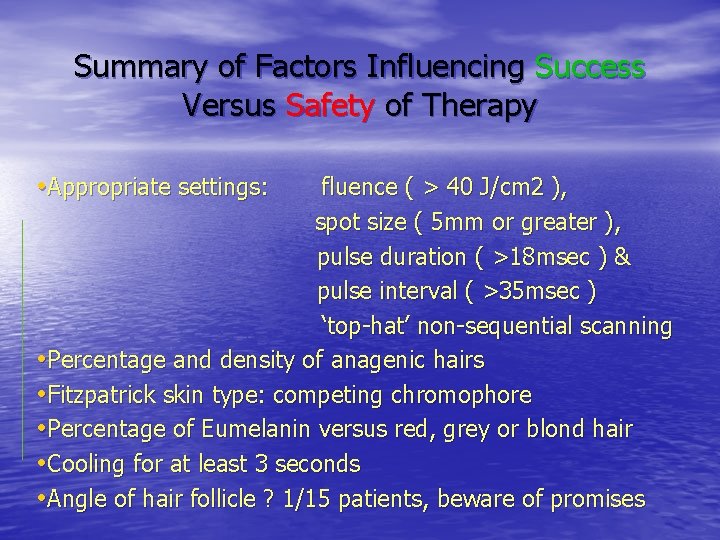
Summary of Factors Influencing Success Versus Safety of Therapy • Appropriate settings: fluence ( > 40 J/cm 2 ), spot size ( 5 mm or greater ), pulse duration ( >18 msec ) & pulse interval ( >35 msec ) ‘top-hat’ non-sequential scanning • Percentage and density of anagenic hairs • Fitzpatrick skin type: competing chromophore • Percentage of Eumelanin versus red, grey or blond hair • Cooling for at least 3 seconds • Angle of hair follicle ? 1/15 patients, beware of promises
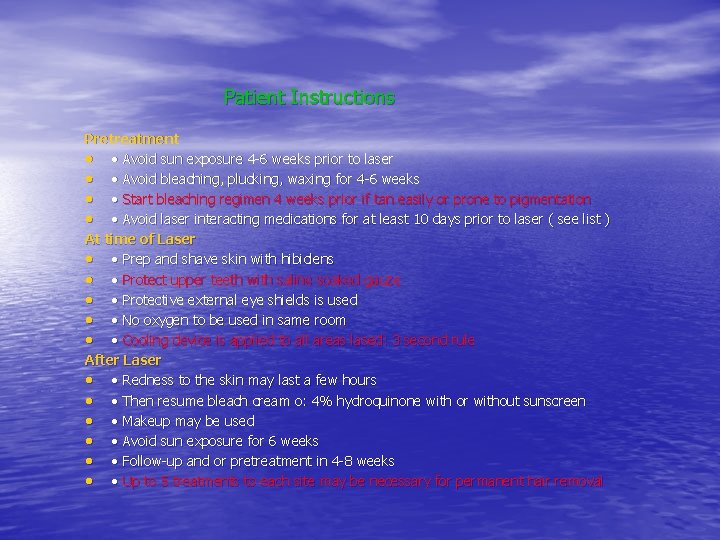
Patient Instructions Pretreatment • • Avoid sun exposure 4 -6 weeks prior to laser • • Avoid bleaching, plucking, waxing for 4 -6 weeks • • Start bleaching regimen 4 weeks prior if tan easily or prone to pigmentation • • Avoid laser interacting medications for at least 10 days prior to laser ( see list ) At time of Laser • • Prep and shave skin with hibiclens • • Protect upper teeth with saline soaked gauze • • Protective external eye shields is used • • No oxygen to be used in same room • • Cooling device is applied to all areas lased: 3 second rule After Laser • • Redness to the skin may last a few hours • • Then resume bleach cream o: 4% hydroquinone with or without sunscreen • • Makeup may be used • • Avoid sun exposure for 6 weeks • • Follow-up and or pretreatment in 4 -8 weeks • • Up to 5 treatments to each site may be necessary for permanent hair removal
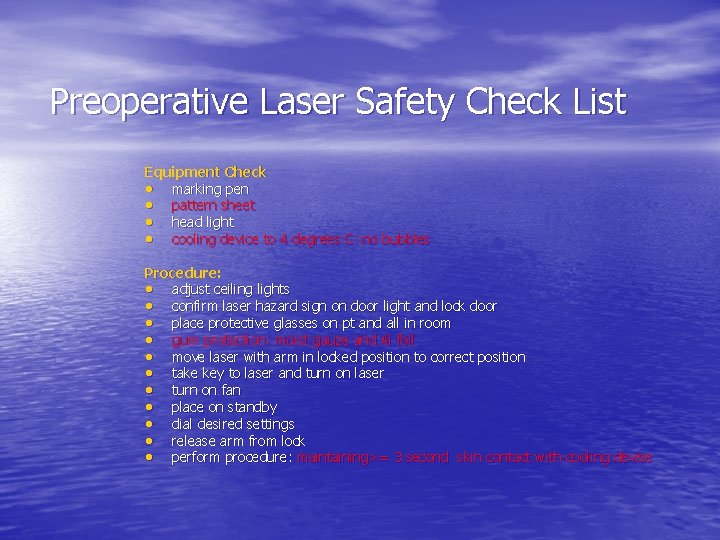
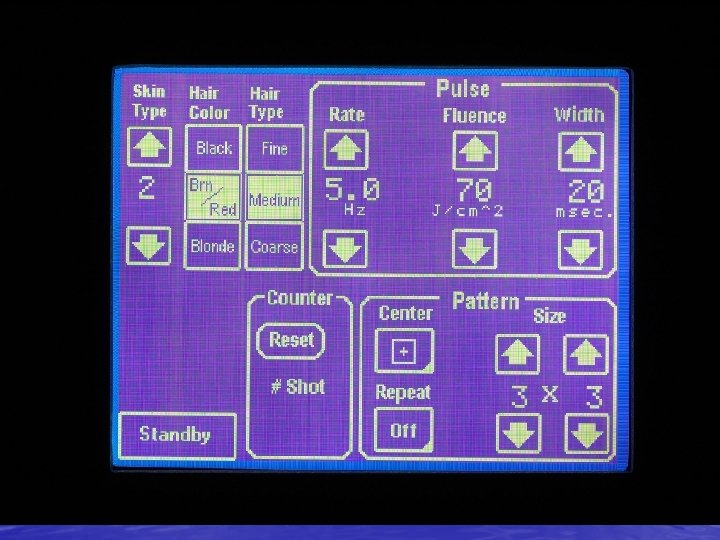
Preoperative Laser Safety Check List Equipment Check • marking pen • pattern sheet • head light • cooling device to 4 degrees C: no bubbles Procedure: • adjust ceiling lights • confirm laser hazard sign on door light and lock door • place protective glasses on pt and all in room • gum protection: moist gauze and Al foil • move laser with arm in locked position to correct position • take key to laser and turn on laser • turn on fan • place on standby • dial desired settings • release arm from lock • perform procedure: maintaining>= 3 second skin contact with cooling devise
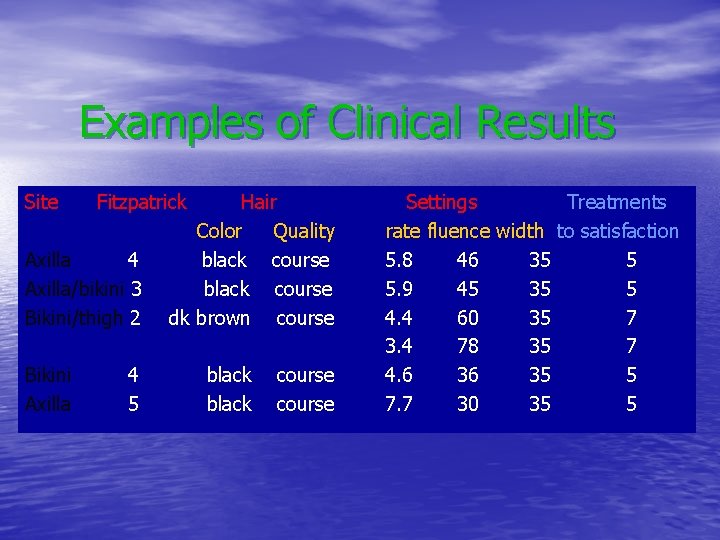
Examples of Clinical Results Site Fitzpatrick Axilla 4 Axilla/bikini 3 Bikini/thigh 2 Bikini Axilla 4 5 Hair Color Quality black course dk brown course black course Settings Treatments rate fluence width to satisfaction 5. 8 46 35 5 5. 9 45 35 5 4. 4 60 35 7 3. 4 78 35 7 4. 6 36 35 5 7. 7 30 35 5

Sample Advertisements 400 % variation in local pricing
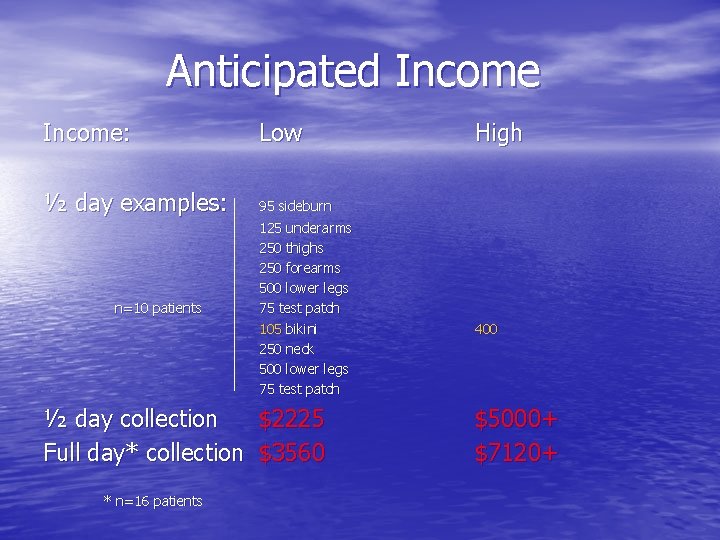
Anticipated Income: Low ½ day examples: 95 sideburn n=10 patients 125 underarms 250 thighs 250 forearms 500 lower legs 75 test patch 105 bikini 250 neck 500 lower legs 75 test patch ½ day collection $2225 Full day* collection $3560 * n=16 patients High 400 $5000+ $7120+
- Slides: 42