
Rewiring Decision Making for Innovation and a More
- Slides: 30
Rewiring Decision Making for Innovation and a More Empowered Workforce An Application of the Circle Sigma System through the Sociocratic Circle-Organization Method ODF 2014 Conference Concurrent Session 4, April 30
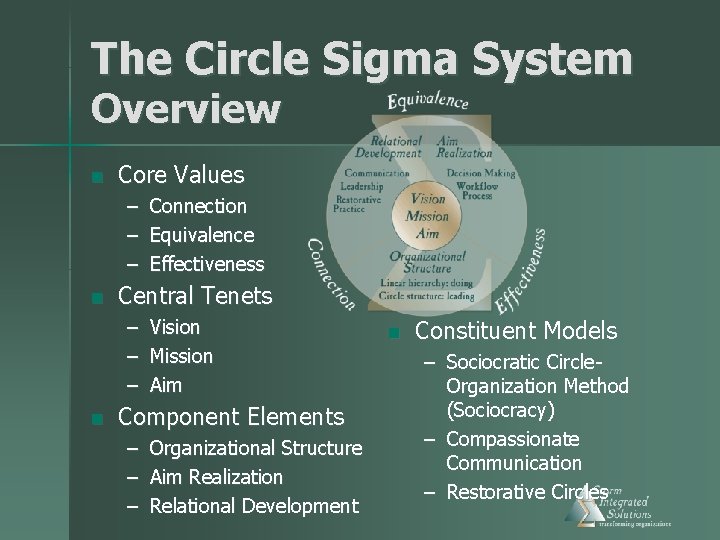
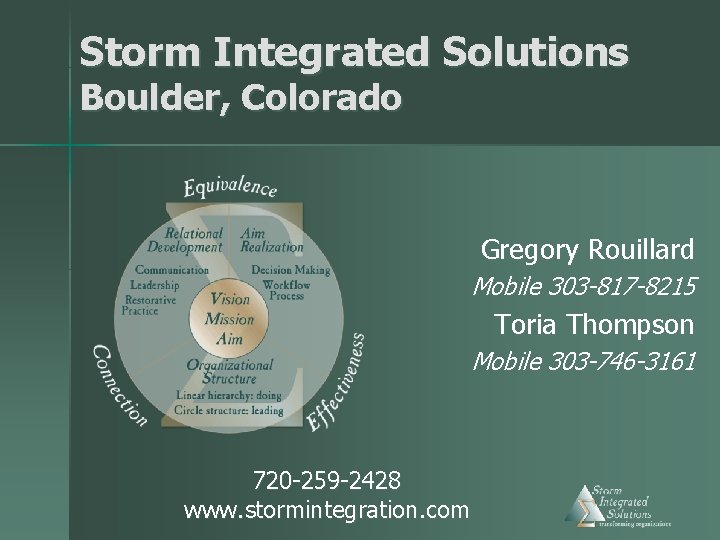
The Circle Sigma System Overview n Core Values – Connection – Equivalence – Effectiveness n Central Tenets – – – n Vision Mission Aim Component Elements – – – Organizational Structure Aim Realization Relational Development n Constituent Models – Sociocratic Circle. Organization Method (Sociocracy) – Compassionate Communication – Restorative Circles
The Sociocratic Circle. Organization Method n n n AKA “Sociocracy” or “Dynamic Governance” Developed by Gerard Endenburg, a Dutch engineer, using analogy to physical systems Integrated governance and management system – – n Organizational structure Decision making Workflow management Leadership and development John Buck: first native English speaker certified as Sociocratic consultant and co-author of We the People…
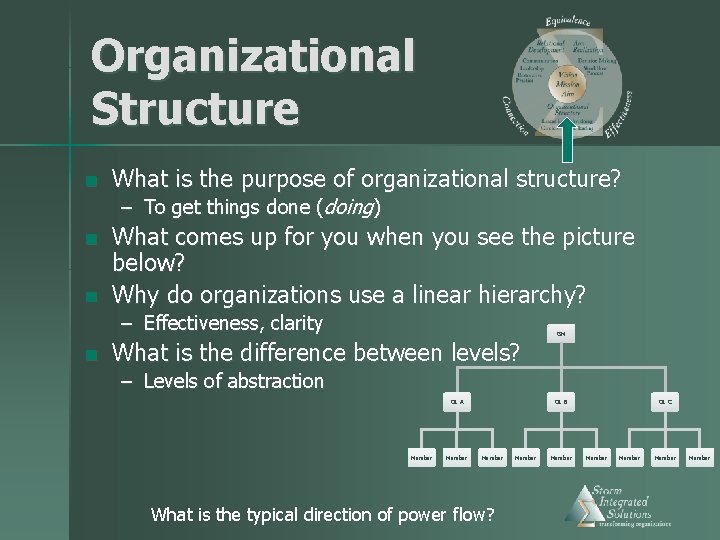
Organizational Structure n What is the purpose of organizational structure? – To get things done (doing) n n What comes up for you when you see the picture below? Why do organizations use a linear hierarchy? – Effectiveness, clarity n What is the difference between levels? GM – Levels of abstraction OL A Member OL B Member What is the typical direction of power flow? Member OL C Member
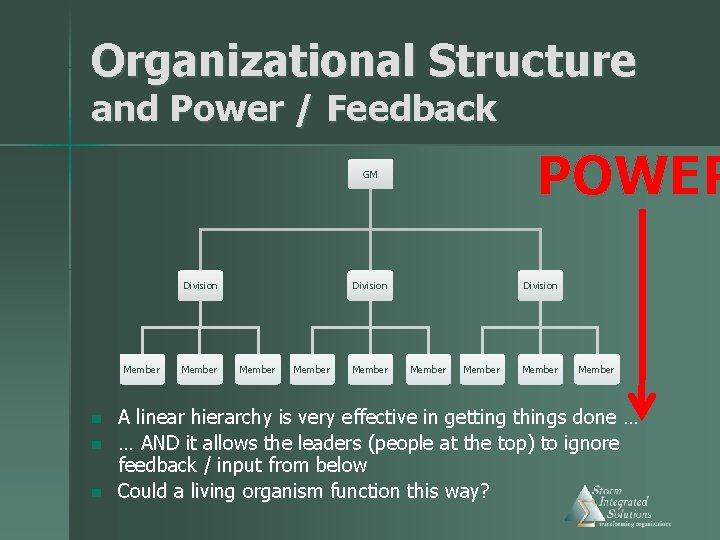
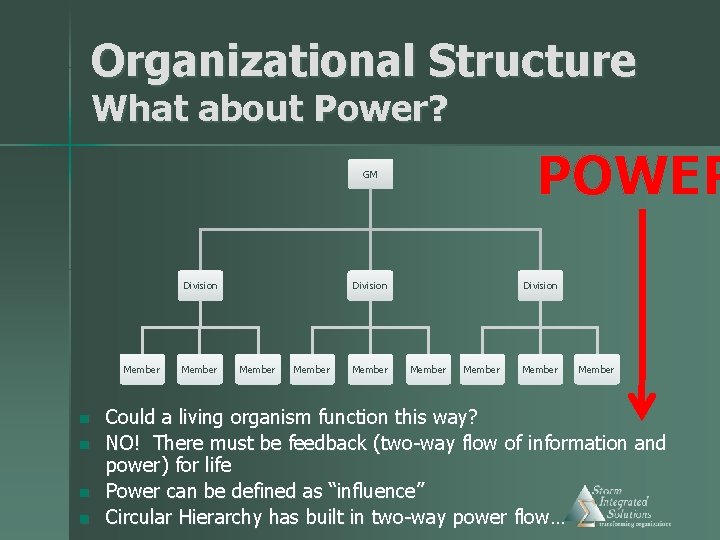
Organizational Structure and Power / Feedback POWER GM Division Member n n n Member Division Member Member A linear hierarchy is very effective in getting things done … … AND it allows the leaders (people at the top) to ignore feedback / input from below Could a living organism function this way?
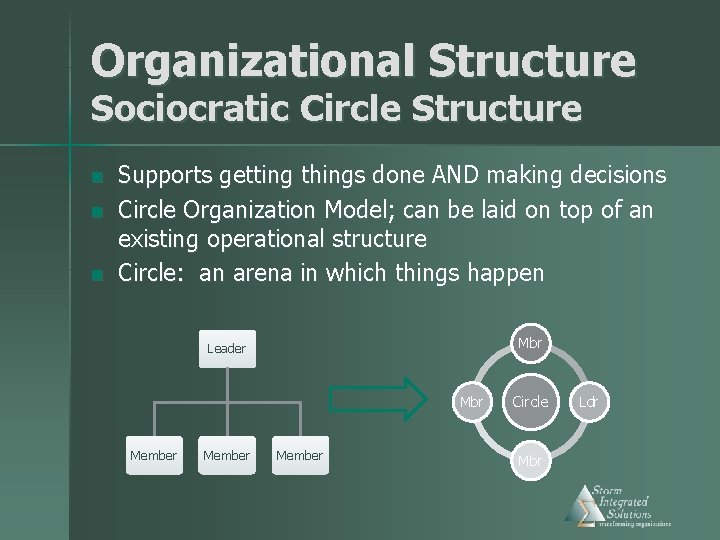
Organizational Structure Sociocratic Circle Structure n n n Supports getting things done AND making decisions Circle Organization Model; can be laid on top of an existing operational structure Circle: an arena in which things happen Mbr Leader Mbr Member Circle Mbr Ldr
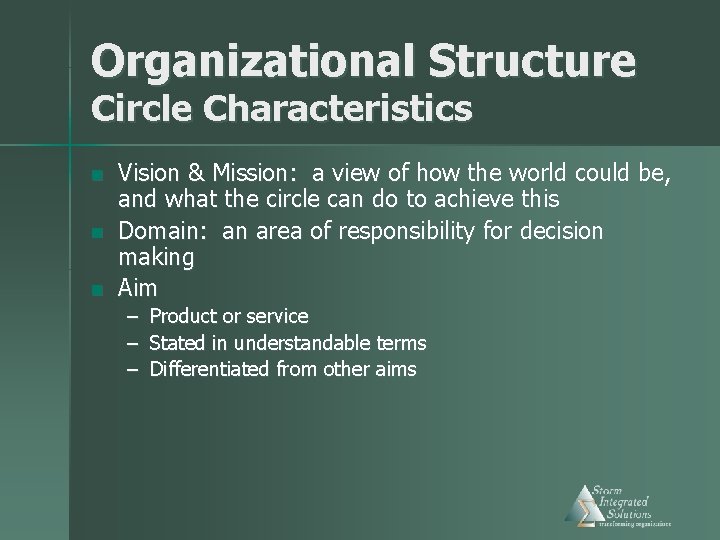
Organizational Structure Circle Characteristics n n n Vision & Mission: a view of how the world could be, and what the circle can do to achieve this Domain: an area of responsibility for decision making Aim – – – Product or service Stated in understandable terms Differentiated from other aims
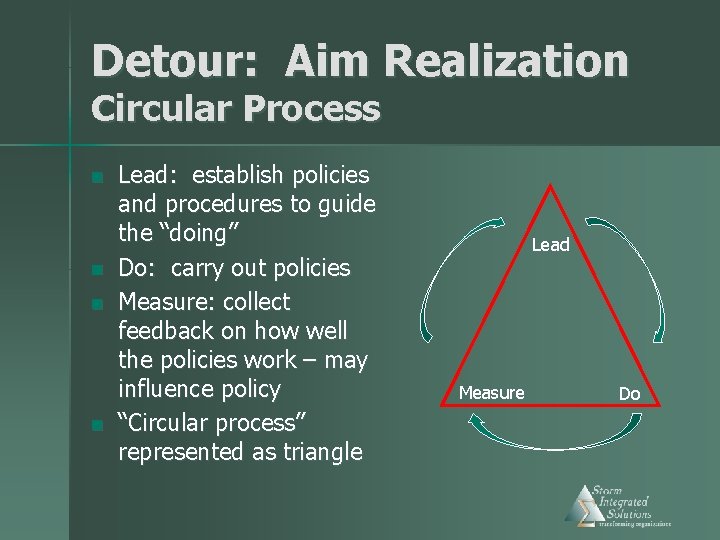
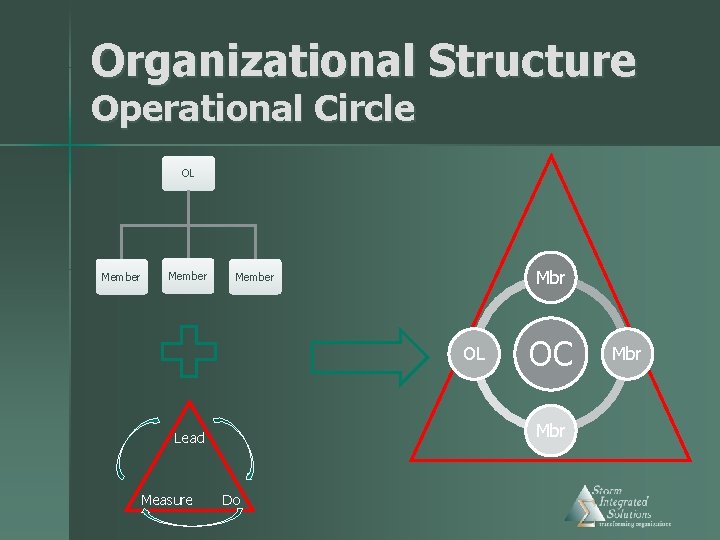
Detour: Aim Realization Circular Process n n Lead: establish policies and procedures to guide the “doing” Do: carry out policies Measure: collect feedback on how well the policies work – may influence policy “Circular process” represented as triangle Lead Measure Do
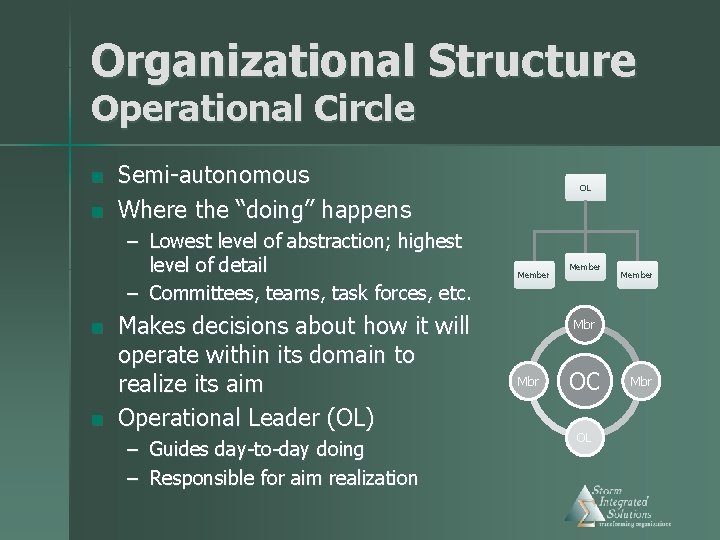
Organizational Structure Operational Circle n n Semi-autonomous Where the “doing” happens – Lowest level of abstraction; highest level of detail – Committees, teams, task forces, etc. n n Makes decisions about how it will operate within its domain to realize its aim Operational Leader (OL) – Guides day-to-day doing – Responsible for aim realization OL Member Mbr OC OL Mbr
Organizational Structure Operational Circle OL Member Mbr Member OL Mbr Lead Measure OC Do Mbr
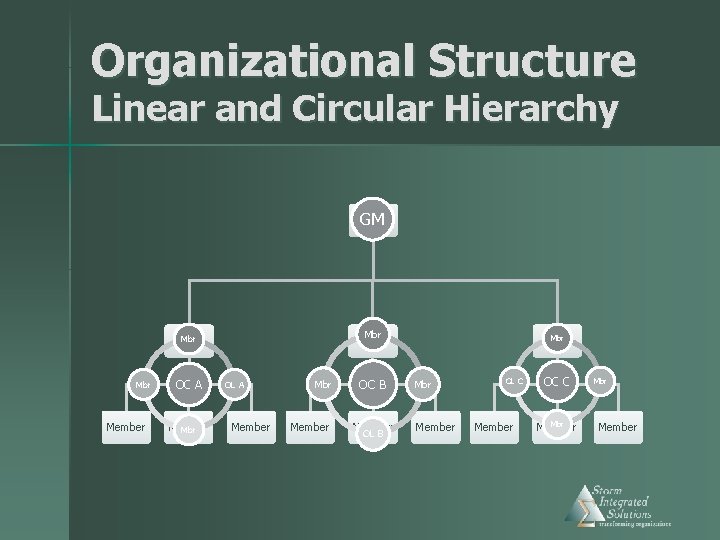
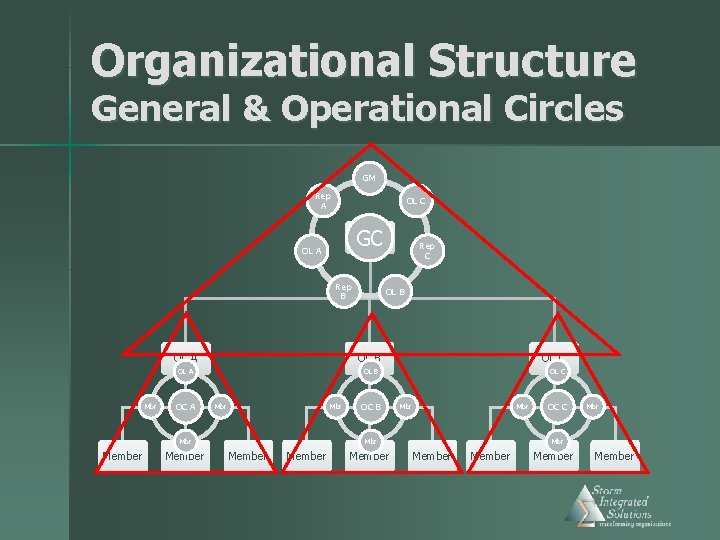
Organizational Structure Linear and Circular Hierarchy GM GM Mbr OL A Mbr Member OC A Member Mbr OL C OL B OL A Member Mbr Member OC B Member OL B Mbr Member OL C Member OC C Mbr Member
Organizational Structure General Manager GM n What about the General Manager (GM)?
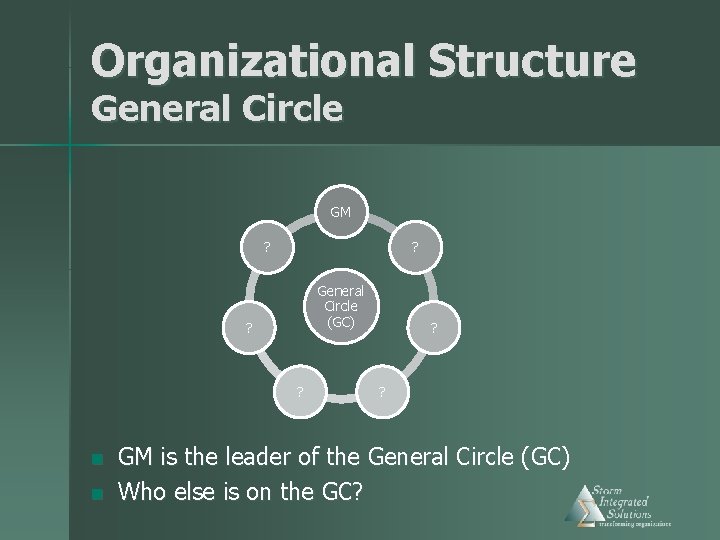
Organizational Structure General Circle GM ? ? General Circle (GC) ? ? n n ? ? GM is the leader of the General Circle (GC) Who else is on the GC?
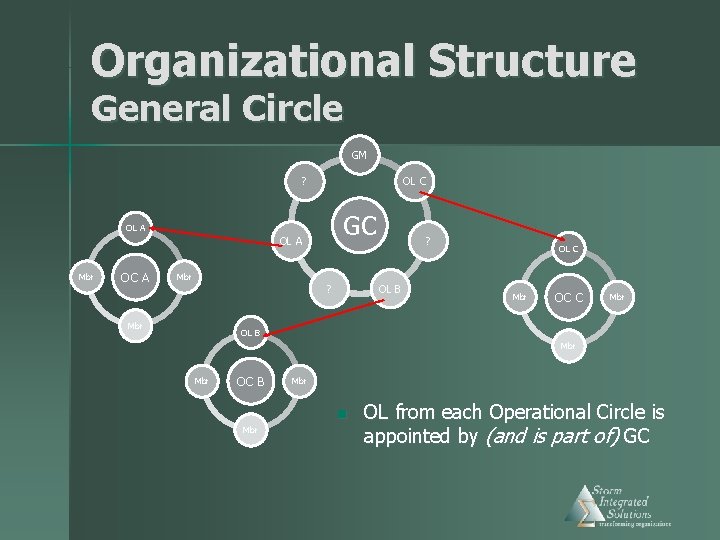
Organizational Structure General Circle GM ? OL C GC OL A Mbr OC A Mbr ? OL B OL C Mbr OC C Mbr OL B Mbr OC B Mbr n Mbr OL from each Operational Circle is appointed by (and is part of) GC
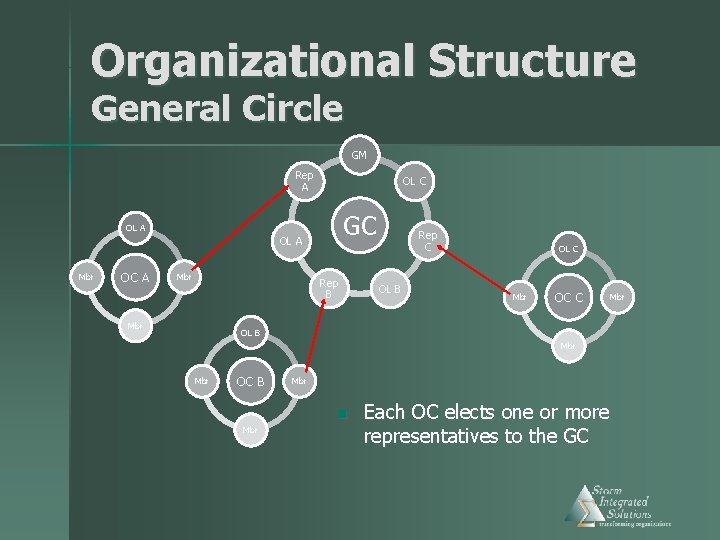
Organizational Structure General Circle GM Rep A OL C GC OL A Mbr OC A Mbr Rep B Mbr Rep C OL B OL C Mbr OC C Mbr OL B Mbr OC B Mbr n Mbr Each OC elects one or more representatives to the GC
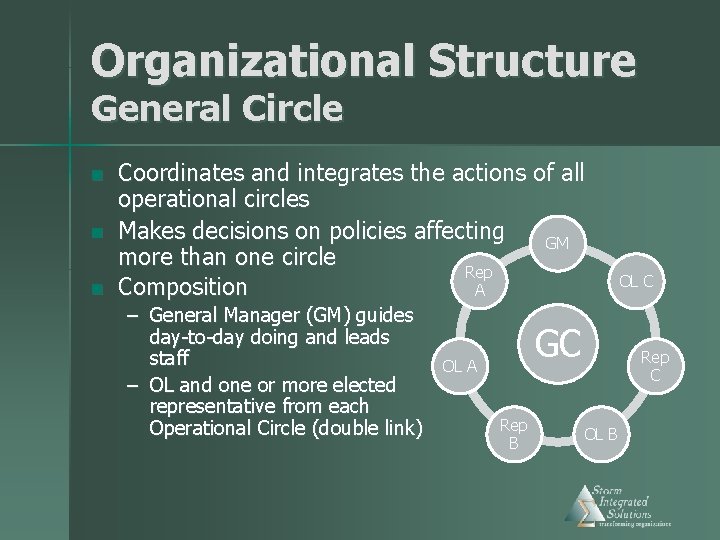
Organizational Structure General Circle n n n Coordinates and integrates the actions of all operational circles Makes decisions on policies affecting GM more than one circle Rep OL C Composition A – General Manager (GM) guides day-to-day doing and leads staff – OL and one or more elected representative from each Operational Circle (double link) GC OL A Rep B Rep C OL B
Organizational Structure General & Operational Circles GM Rep A OL C GM GC OL A Rep B Mbr OL B OL A OL B Mbr Mbr Member OL B OL A OC A Member Rep C OC B OL C Mbr Mbr Member OC C Mbr Member
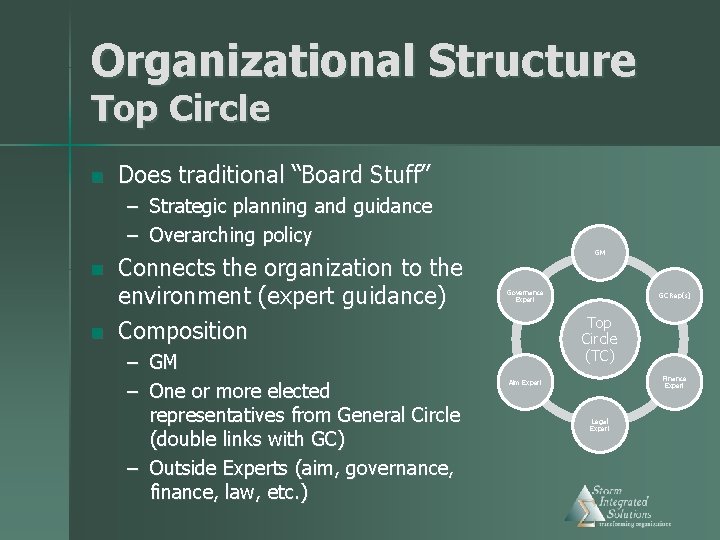
Organizational Structure Top Circle n Does traditional “Board Stuff” – Strategic planning and guidance – Overarching policy n n Connects the organization to the environment (expert guidance) Composition – GM – One or more elected representatives from General Circle (double links with GC) – Outside Experts (aim, governance, finance, law, etc. ) GM Governance Expert GC Rep(s) Top Circle (TC) Finance Expert Aim Expert Legal Expert
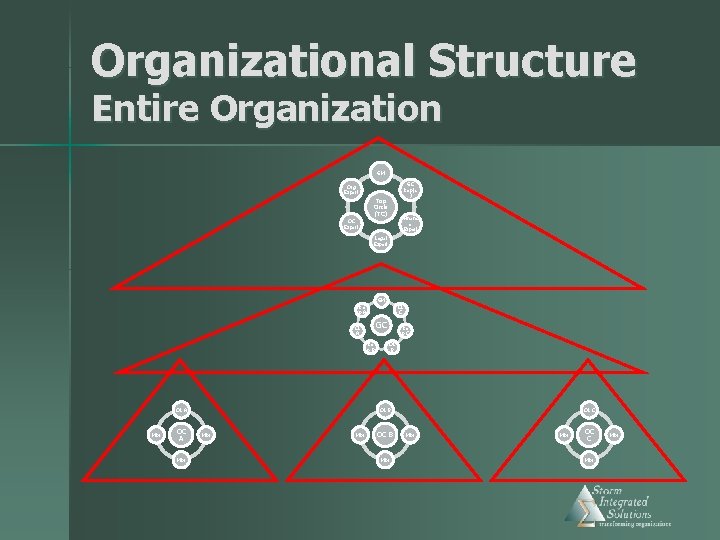
Organizational Structure Entire Organization GM Org Expert Top Circle (TC) OC Expert GC Rep(s ) Financ e Expert Legal Expert GM Re p A OL C GC OL A Re p B OL A Mbr OC A Mbr Re p C OL B Mbr OC B Mbr OL C Mbr OC C Mbr
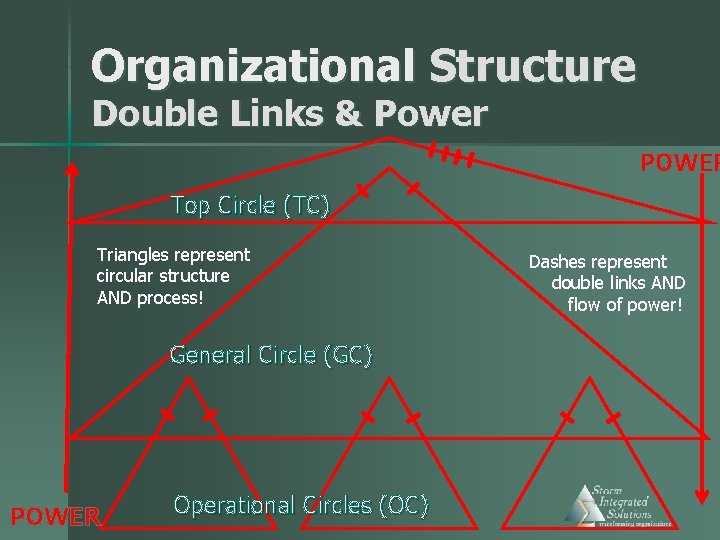
Organizational Structure What about Power? POWER GM Division Member n n Member Division Member Member Could a living organism function this way? NO! There must be feedback (two-way flow of information and power) for life Power can be defined as “influence” Circular Hierarchy has built in two-way power flow…
Organizational Structure Double Links & Power POWER Top Circle (TC) Triangles represent circular structure AND process! General Circle (GC) POWER Operational Circles (OC) Dashes represent double links AND flow of power!
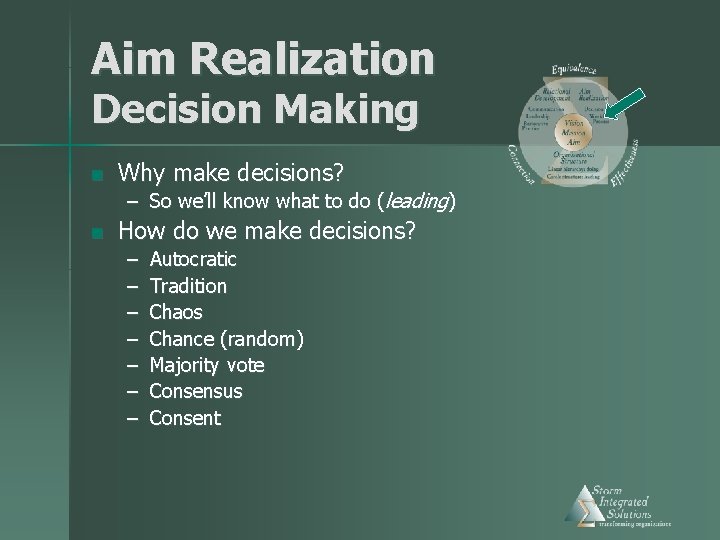
Aim Realization Decision Making n Why make decisions? – So we’ll know what to do (leading) n How do we make decisions? – – – – Autocratic Tradition Chaos Chance (random) Majority vote Consensus Consent
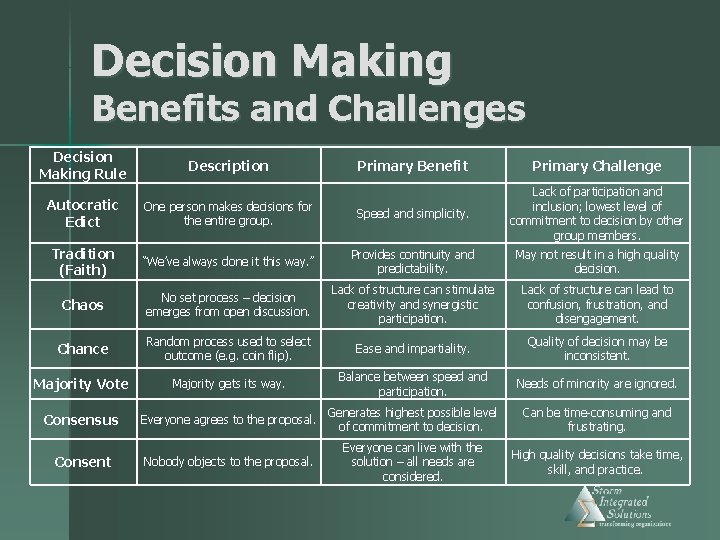
Decision Making Benefits and Challenges Decision Making Rule Description Autocratic Edict Primary Benefit Primary Challenge One person makes decisions for the entire group. Speed and simplicity. Lack of participation and inclusion; lowest level of commitment to decision by other group members. Tradition (Faith) “We’ve always done it this way. ” Provides continuity and predictability. May not result in a high quality decision. Chaos No set process – decision emerges from open discussion. Lack of structure can stimulate creativity and synergistic participation. Lack of structure can lead to confusion, frustration, and disengagement. Chance Random process used to select outcome (e. g. coin flip). Ease and impartiality. Quality of decision may be inconsistent. Majority Vote Majority gets its way. Balance between speed and participation. Needs of minority are ignored. Consensus Everyone agrees to the proposal. Generates highest possible level of commitment to decision. Can be time-consuming and frustrating. Consent Nobody objects to the proposal. Everyone can live with the solution – all needs are considered. High quality decisions take time, skill, and practice.
Aim Realization Consent Decision Making n n n Decisions made using principle of “no objection” (consent) All circle members are equivalent, and “rounds” are used to help achieve this Types of consent DM processes: – – – Shaping (long format) Tuning up (short format) Selection (special case)
Consent Decision Making Range of Tolerance n Personal range of tolerance: what I can live with as an individual – Example: food I’ll order at a restaurant n Organizational range of tolerance: what the group can live with – relates to the aim – Example: food we’ll serve at a formal event n Personal range of tolerance informs, and does not necessarily define, organizational range of tolerance
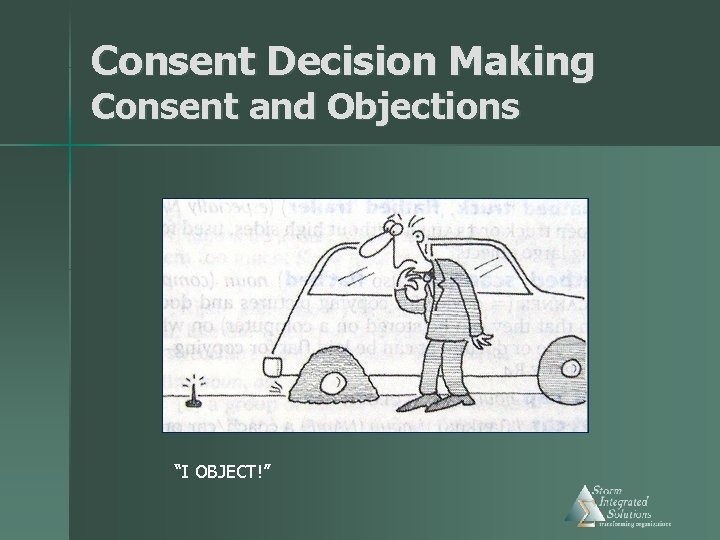
Consent Decision Making Consent and Objections n Objection – a member cannot live with the proposal (outside his / her group range of tolerance) – Paramount: takes member or group outside definable limits (group range of tolerance relative to aim) – Reasoned (argued): has identifiable and measurable characteristics – A “niggle” or “twinge” might be the first sign of an objection n An objection points out parts of a proposal that might be problematic if ignored – – Can damage the system (the organization) Example: car with a flat tire
Consent Decision Making Consent and Objections “I OBJECT!”
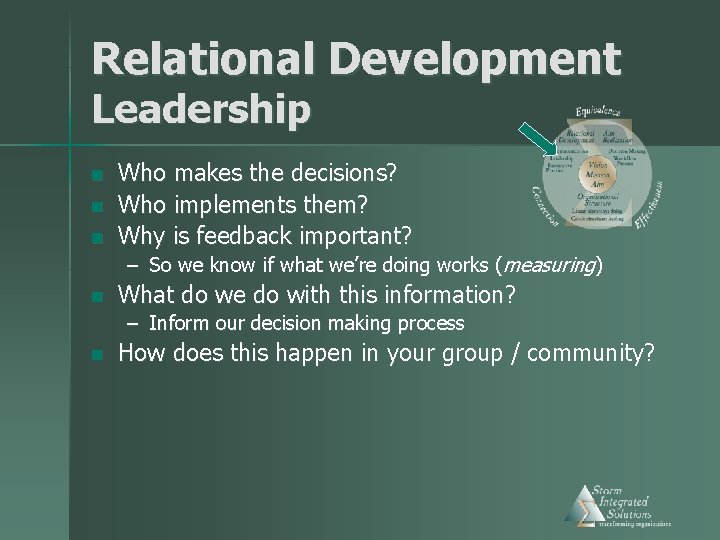
Relational Development Leadership n n n Who makes the decisions? Who implements them? Why is feedback important? – So we know if what we’re doing works (measuring) n What do we do with this information? – Inform our decision making process n How does this happen in your group / community?
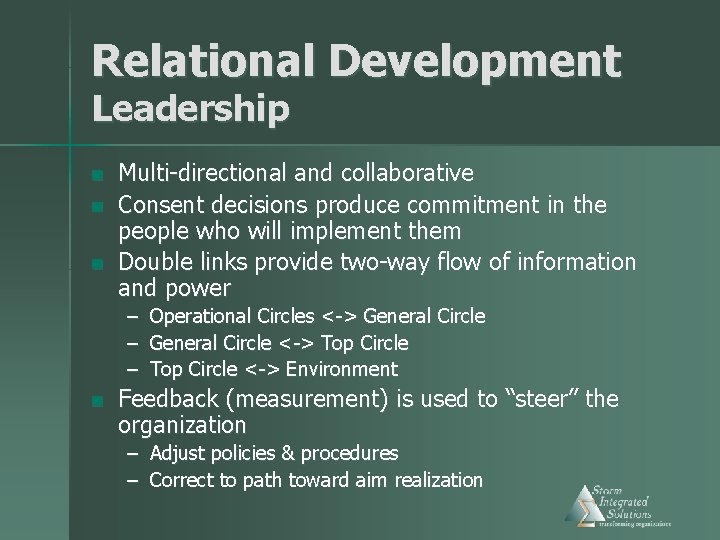
Relational Development Leadership n n n Multi-directional and collaborative Consent decisions produce commitment in the people who will implement them Double links provide two-way flow of information and power – – – n Operational Circles <-> General Circle <-> Top Circle <-> Environment Feedback (measurement) is used to “steer” the organization – Adjust policies & procedures – Correct to path toward aim realization
Storm Integrated Solutions Boulder, Colorado Gregory Rouillard Mobile 303 -817 -8215 Toria Thompson Mobile 303 -746 -3161 720 -259 -2428 www. stormintegration. com