
Revolutions of 1989 and openings towards democracy A

- Slides: 27
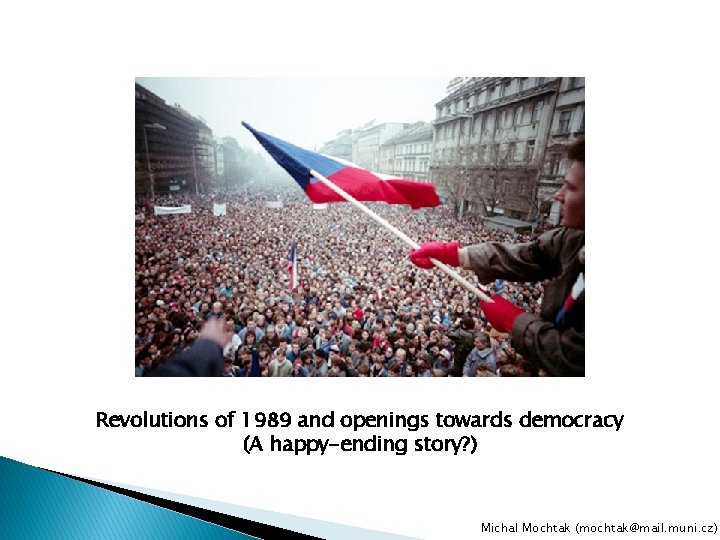
Revolutions of 1989 and openings towards democracy (A happy-ending story? ) Michal Mochtak (mochtak@mail. muni. cz)
Revolutionary change in the region of Central Europe � General patterns in the region of CE � Revolutions of 1989 ◦ Poland ◦ Hungary ◦ Czechoslovakia: Velvet revolution � Discussion
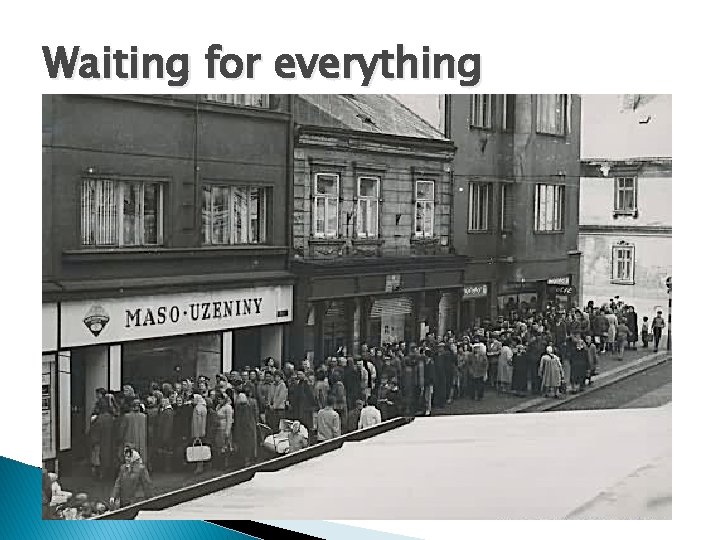
Communism in Crisis I. Longstanding crisis in Communist block. General dissatisfaction with the living conditions. Rotten political system; corruption; gray and black economy. Withdraw of Soviet support from local communist parties (Gorbachev’s change of foreign policy) and policies of Glasnost and Perestroika. Rise of nationalism. HOWEVER, the fall of communism was totally unexpected.
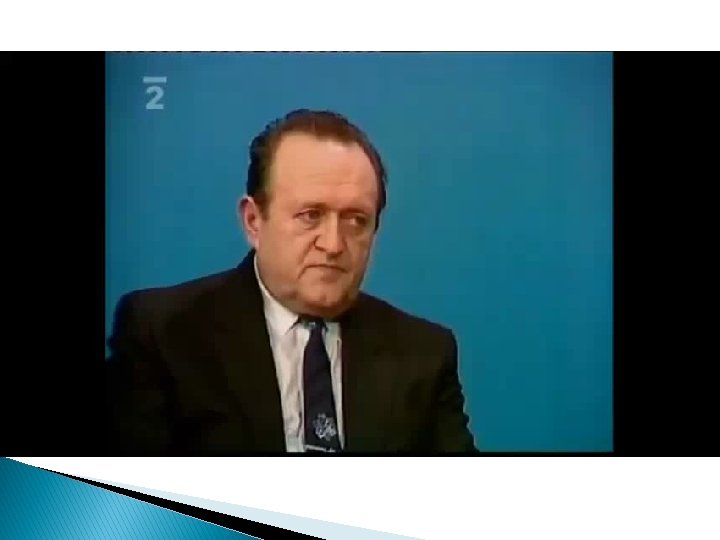
Waiting for everything
Communism in Crisis II. � Different models of dissatisfaction: ◦ Poland, Germany, Hungary – open criticism of the regime (performance). ◦ Rest of the region (Soviet Union, Czechoslovakia) – more or less inchoate and barely noticeable (on the level of masses); however, parallel structures existed (underground). Reform was discussed inside the communist parties but not the change of the regime as a whole. � Dissidents and opposition groups criticized mainly the communist monopoly; liberal democracy was not the first choice; third way – best features of capitalist and socialist economies. � Important: most actors unprepared! �
Collapse of Communism I. � As a reaction to reform ‘initiatives’ in Soviet Union, similar efforts occurred at the end of 1980 s in Poland Hungary. ◦ Solidarity movement in Poland survived the military suppression from 1981 and started to demand basic political and civil rights (again). ◦ Followers of reform-oriented Hungarian communist Janos Kadar called for genuine transformation and political liberalization. � The rest of the region stood more or less still (Czechoslovakia, Romania, Bulgaria, Albania, East Germany).
Example: Solidarity Movement
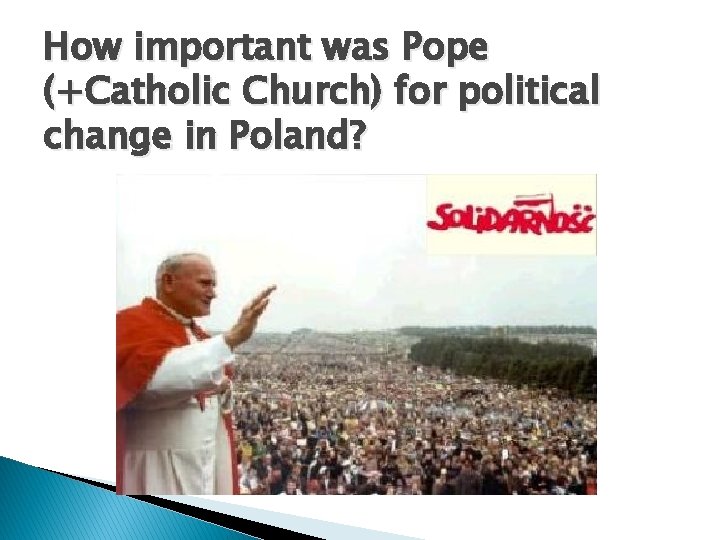
How important was Pope (+Catholic Church) for political change in Poland?
Collapse of Communism II. � Following collapse was sequential ◦ February 1989, Hungarian Communist party invited the opposition to form political parties. ◦ April 1989, Solidarity leaders and Poland’s Communist leaders negotiated constitutional changes that created space for political participation by the opposition. � It sent a clear signal to the rest of the region ◦ It took two months to German opposition to organize and subsequently depose communist leaders (October 1989). ◦ In Czechoslovakia and Bulgaria only few weeks were needed (November 1989).
How important was the legacy of suppressed reform movements in the past for the actual transformation in the region?
Collapse of Communism III. � Mostly peaceful; violence did occur only in Romania where the harassment of a Hungarian pastor in Transylvania ignited a popular revolt and conflict between Securitate and the army that led to execution of Nicolae and Elena Ceausescu (communist leaders) (December 1989). � Less successful story was Yugoslavia with its ethnic division and postponed transformation that has (truly) started only in the late 1990 s.
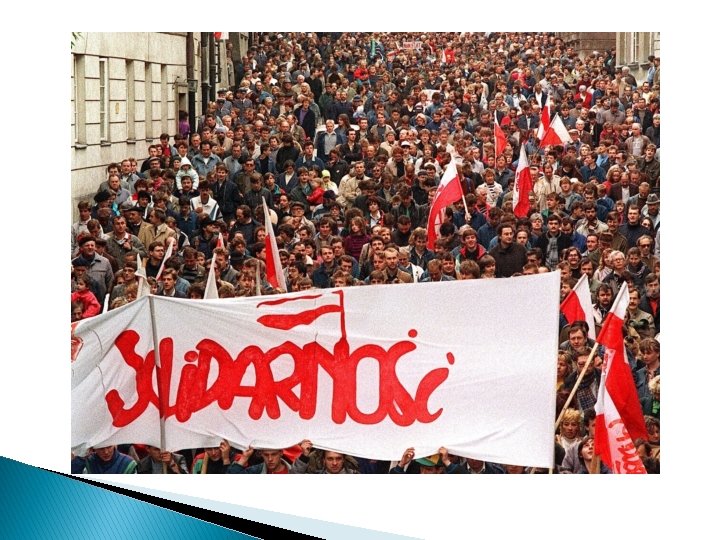
Poland I. �A wave of strikes hit Poland in April, May and August 1988. � Workers demanded the re-legalisation of Solidarity. � Number of factories and mines went on strike. The country was paralyzed. � Communist leaders finally agreed to meet Lech Walesa and Solidarity to ease the situation. � Major breakthrough in January 1989: Communist party supported formal negotiations with Solidarity leading to its future legalisation.
Poland II. � April 1989: signing of Round Table Agreement – legalisation of Solidarity and plans for partly free parliamentary election later that year. � June 1989: Solidarity sensationally won the election. Its candidates got all the allocated seats in Sejm (lower house) and 99 out of 100 seats in Senate (upper house). � Many communist candidates failed to pass the minimum votes threshold required to take the reserved seats. � August 1989: Long time coalition partners (United People's Party and Democratic Party), broke their ties with Communists and announced their support for Solidarity.
Hungary I. � Hungary had achieved some lasting economic reforms and limited political liberalization during the 1980 s. � Following the changes, the process was further accelerated in the 1988 and 1989. � January 1989: so-called "democracy package“ was adopted (e. g. freedom of association, assembly, and press; trade union pluralism; new electoral law). � Reinterpretation of history: 1956 rebellion was a popular uprising not a foreign-initiated counterrevolution.
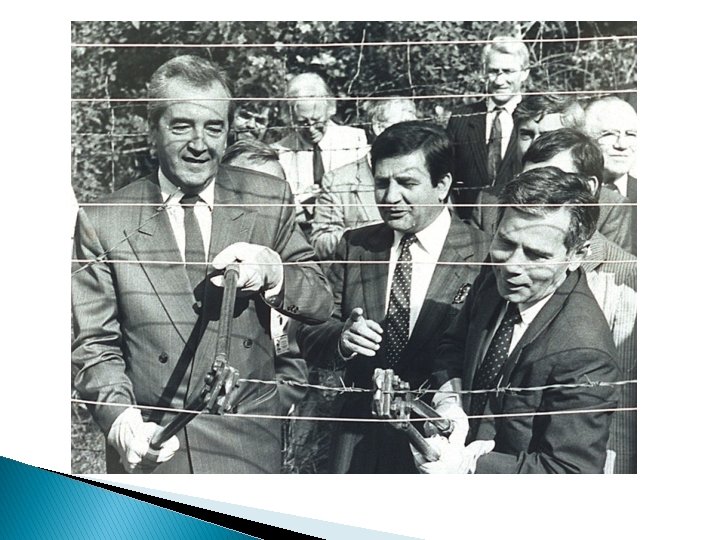
Hungary II. � March 1989: demonstrations during the National Day pushed the regimes to negotiations with non-Communist parties. � April 1989: Round Table talks. � May 1989: Hungary began dismantling its 150 mile long border fence with Austria. � June 1989: rehabilitation of Prime Minister Imre Nagy (hanged for treason; revolution in 1956). � September 1989: New constitution; call for free election.
Czechoslovakia: Velvet Revolution I. � Opposition was not organized; however, galvanized by the events in the neighbourhood (Poland; Hungary; GDR) and worldwide (Tiananmen Square, China). � un-readiness of all actors and strategies � Change: features of pact and reform � liberalization and democratization was parallel
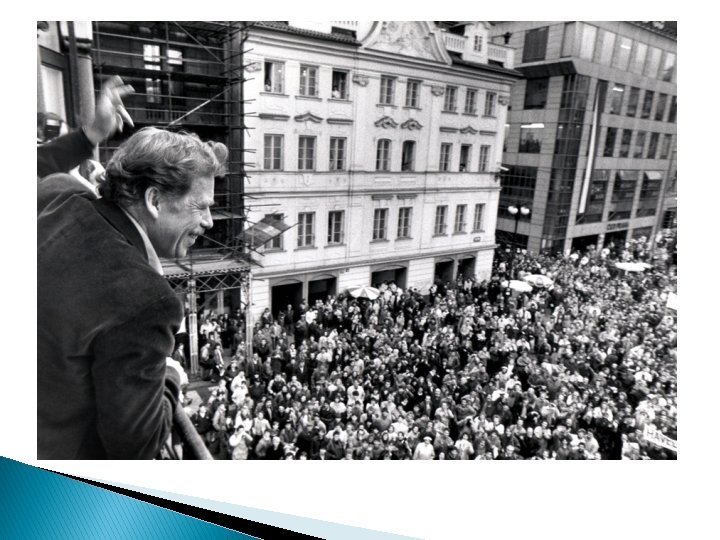
Czechoslovakia: Velvet Revolution II. � The trigger was the student demonstration on November 17, 1989; police violently struck against the peaceful protesters (50 th anniversary of the death of a student, Jan Opletal, at the hands of the Nazis). � Rumour: death of student � Students initiated protest strike (later joined by actors and artists) � November 19, 1989 – founded Civic forum (broad civic movement); Slovakia: Public against violence. � Demonstrations and protests in Prague and other cities all around the country.
Czechoslovakia: Velvet Revolution III. � Call for the step down of communist leaders. � Civic Forum did not envision taking power. � However, no partner for the dialogue; CP was paralyzed (no leadership at all). � CP lost support of its militia; media; satellite parties. � Army was subordinated to CP; did not initiate move on its own (Minister of defense advised to use army in a Chinese Scenario).
Czechoslovakia: Velvet Revolution IV. � First step made by PM of federal government – beginning of talks with CF � CF did not want to govern rather wished legal and constitutional continuity – oversaw the process of change (committees; cancelation of the leading role of CP in the society). � New (transitional) government of ’National understanding’ (formerly 15+5; then CP did not have majority and CF nominated its own executives). The main goal: leadership for the country until the first democratic election in 1990. � New president: Vaclav Havel (elected by acclamation)
Important Patterns � Transformation in the CEE belongs to the same historical democratization wave as Latin America and South Europe – the main contextual features were however different. ◦ Most of the regimes belonged to (post)totalitarian branch of non-democratic regimes (LA and Iberia – mostly authoritative regimes). ◦ Economies were predominantly state-controlled (contrast: economic freedoms in Latina America a Iberia). ◦ Ethnic division and multi-national states.
What are the differences between Poland, Hungary and Czechoslovakia?
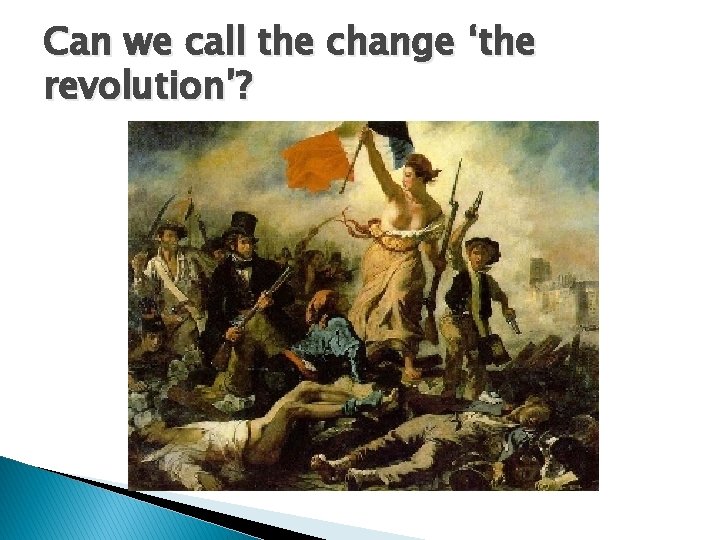
Can we call the change ‘the revolution’?