
Revival Architecture Theory of Architecture Fourth Stage Assis

- Slides: 22
Revival Architecture Theory of Architecture Fourth Stage Assis. Lecturer Raghad Ahmed Fadhil Architecture Engineering Department College of Engineering/ Mustansiriyah University
Revivalism in architecture is the use of visual styles that consciously echo the style of a previous architectural era. primarily classified as Historicist architecture. (Historicism) Revivalism evokes principles and styles from an earlier period of architectural history and traditions — of the same cultural place or from other cultures.
Renaissance Architecture is the European architecture of the period between the early 14 th and early 17 th centuries in different regions, demonstrating a conscious revival and development of certain elements of ancient Greek and Roman thought and material culture. Renaissance means Re-Birth in Italic.
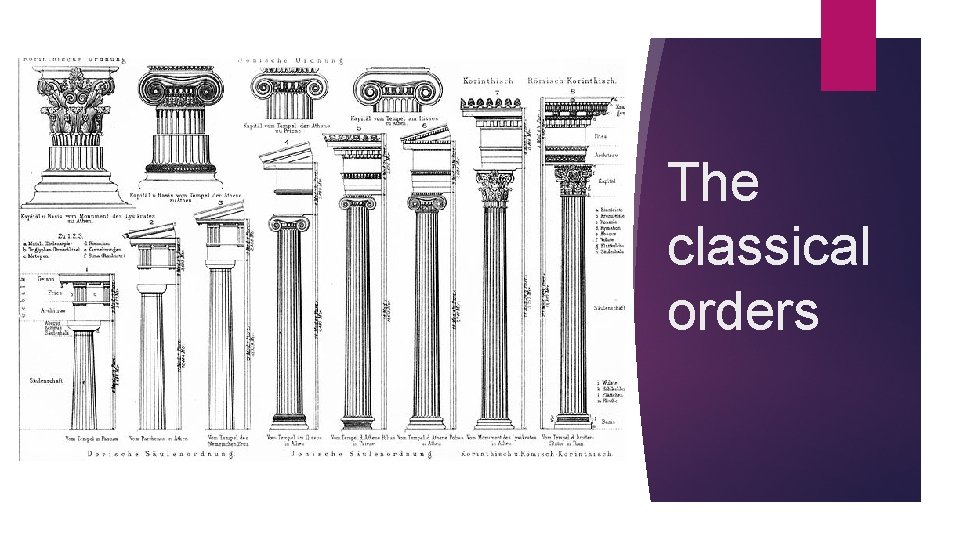
The classical orders
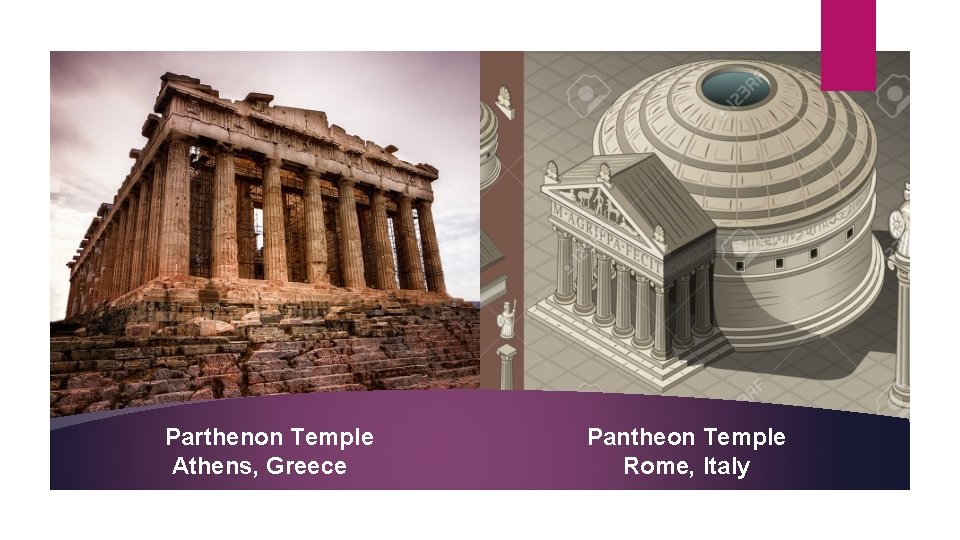
Parthenon Temple Athens, Greece Pantheon Temple Rome, Italy
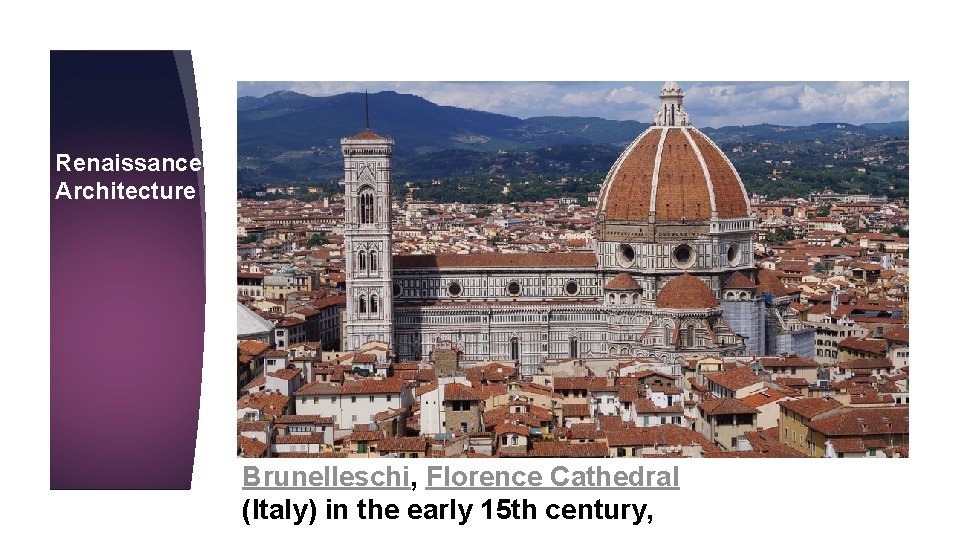
Renaissance Architecture Brunelleschi, Florence Cathedral (Italy) in the early 15 th century,
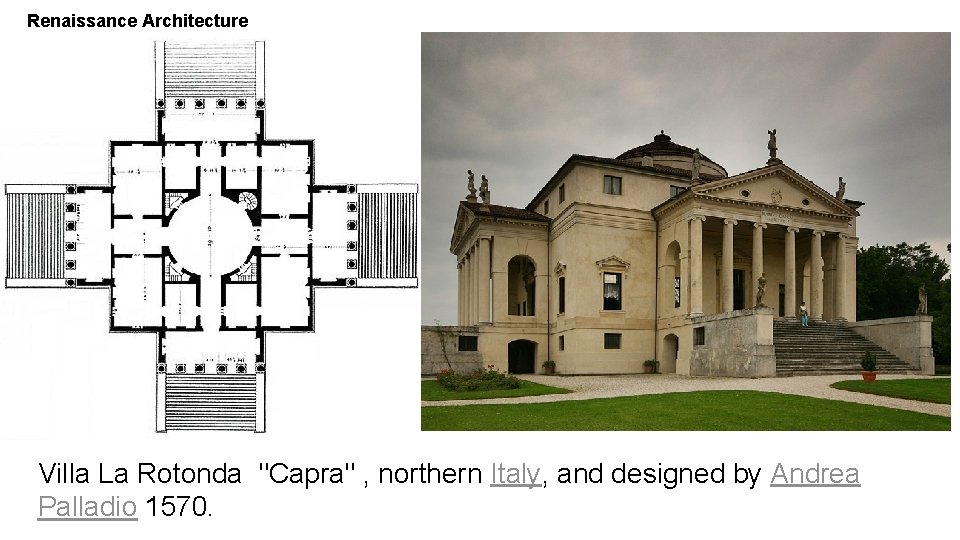
Renaissance Architecture Villa La Rotonda "Capra" , northern Italy, and designed by Andrea Palladio 1570.
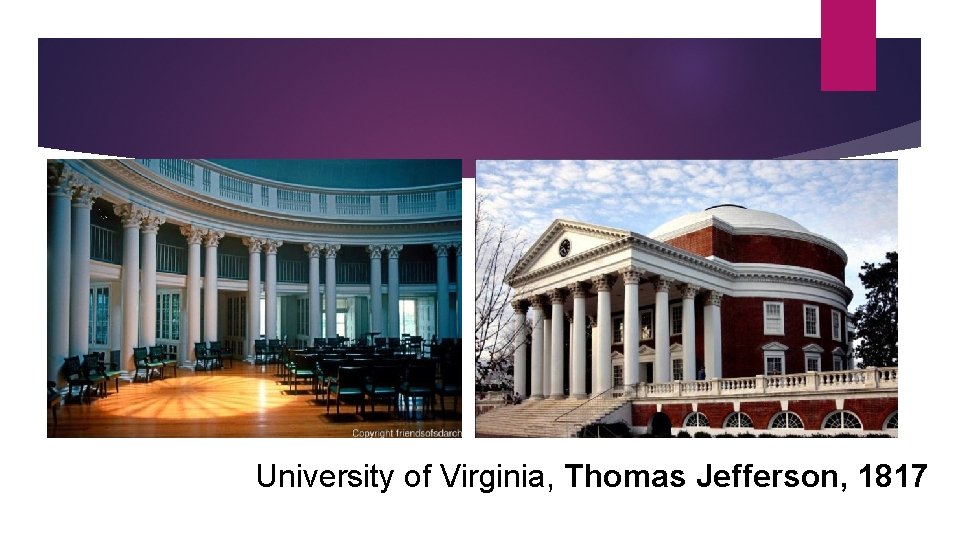
Neo-Classicism architecture Classical Revival (Neo Classical) This is architecture that looks back to a Classical past. The roots of Classicism are in ancient Greek and Roman architecture began in France in the mid 18 th century when architects began to study classical buildings rather than later derivatives or Renaissance examples. there was a great interest in archaeology and antiquarianism What to look for in a Classical building Use of classical orders (especially Doric, Ionic and Corinthian). Proportion Symmetry Repetition of elements
University of Virginia, Thomas Jefferson, 1817
Eclecticism is a 19 th and 20 th century architectural style in which a single piece of work incorporates a mixture of elements from previous historical styles to create something that is new and original. According to the designer or the clients wishes. these elements may include structural features, decorative motives, historical ornament, traditional cultural motifs or styles from other countries, with the mixture usually chosen based on its suitability to the project and overall aesthetic value.
Argentina parliament
Gothic Revival Architecture Gothic Revival, is the architectural style that drew its inspiration from medieval architecture is the architecture that appeared after 12 th century till the Industrial Revolution
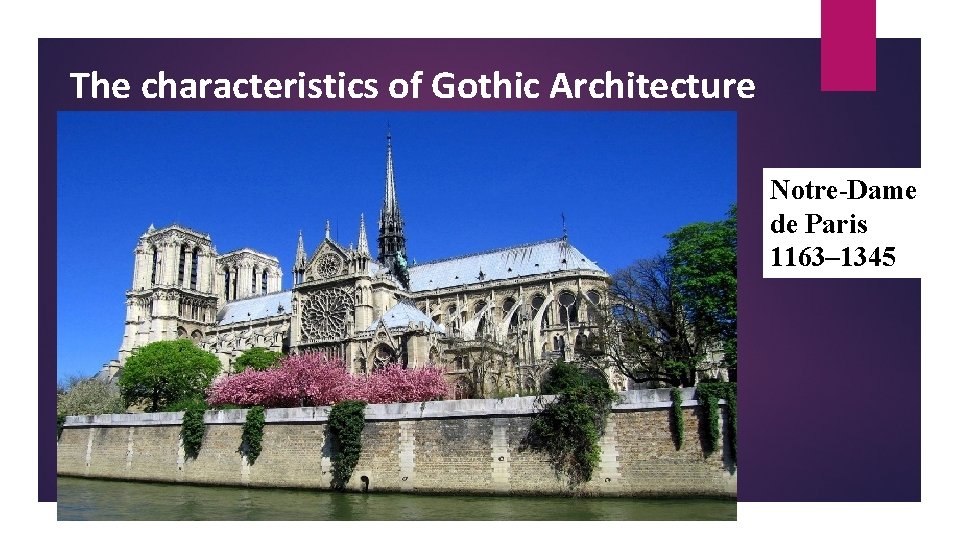
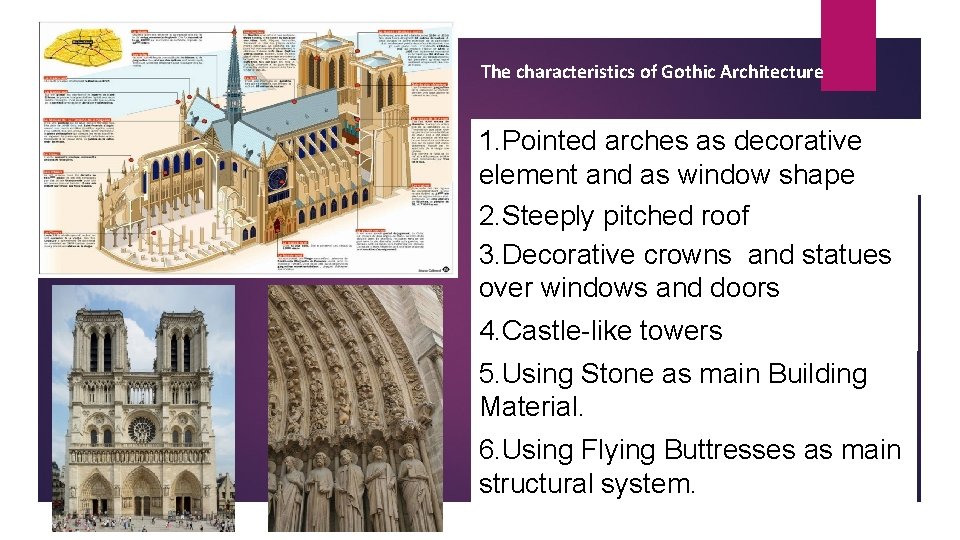
The characteristics of Gothic Architecture Notre-Dame de Paris 1163– 1345
The characteristics of Gothic Architecture 1. Pointed arches as decorative element and as window shape 2. Steeply pitched roof 3. Decorative crowns and statues over windows and doors 4. Castle-like towers 5. Using Stone as main Building Material. 6. Using Flying Buttresses as main structural system.
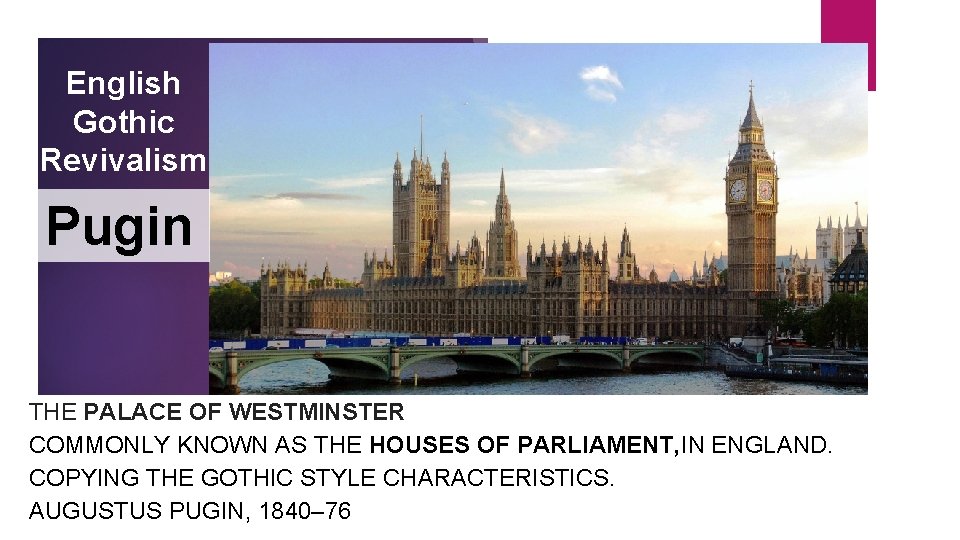
English Gothic Revivalism Pugin THE PALACE OF WESTMINSTER COMMONLY KNOWN AS THE HOUSES OF PARLIAMENT, IN ENGLAND. COPYING THE GOTHIC STYLE CHARACTERISTICS. AUGUSTUS PUGIN, 1840– 76
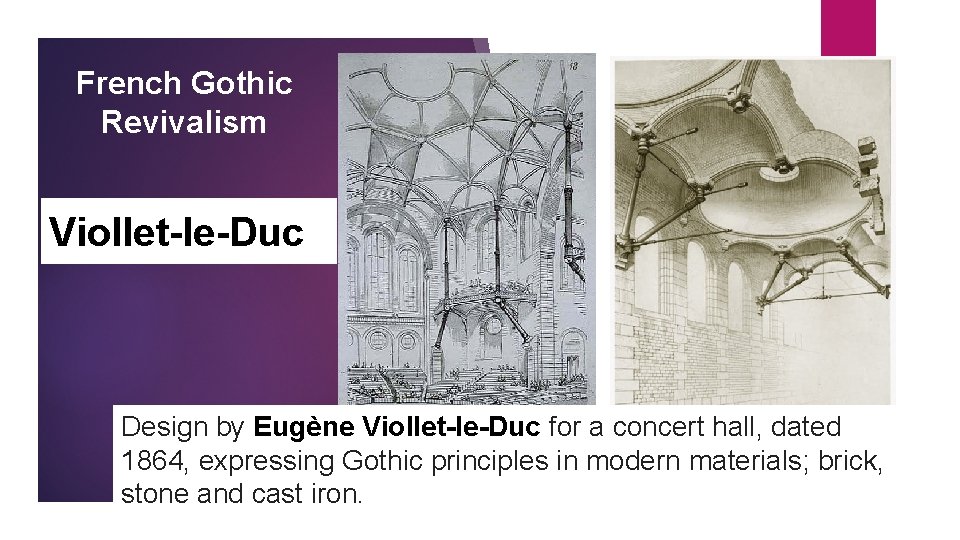
French Gothic Revivalism Viollet-le-Duc Design by Eugène Viollet-le-Duc for a concert hall, dated 1864, expressing Gothic principles in modern materials; brick, stone and cast iron.
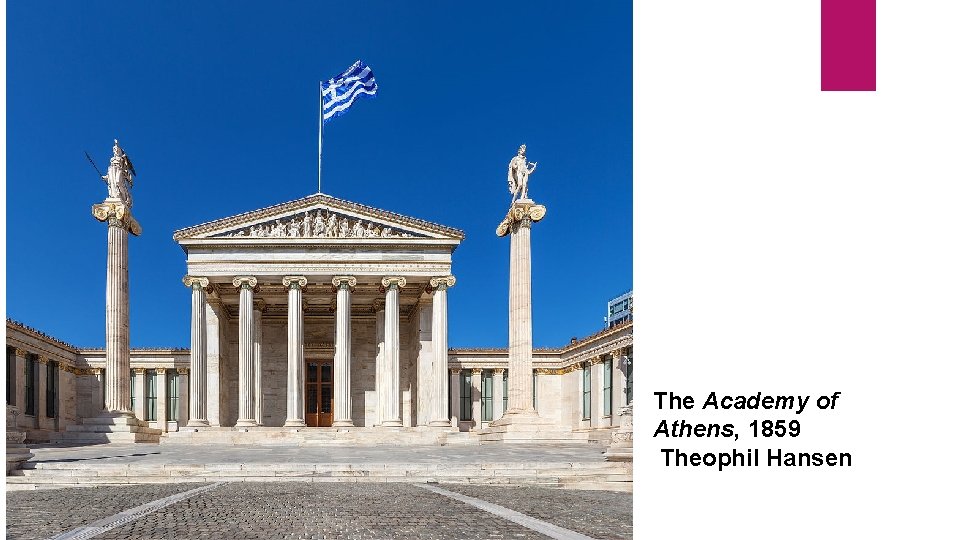
The Academy of Athens, 1859 Theophil Hansen
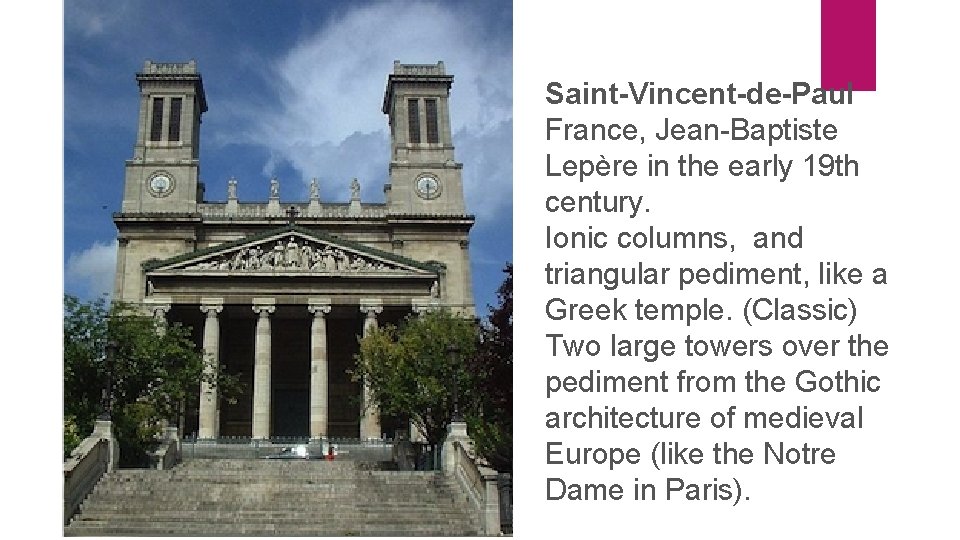
Saint-Vincent-de-Paul France, Jean-Baptiste Lepère in the early 19 th century. Ionic columns, and triangular pediment, like a Greek temple. (Classic) Two large towers over the pediment from the Gothic architecture of medieval Europe (like the Notre Dame in Paris).
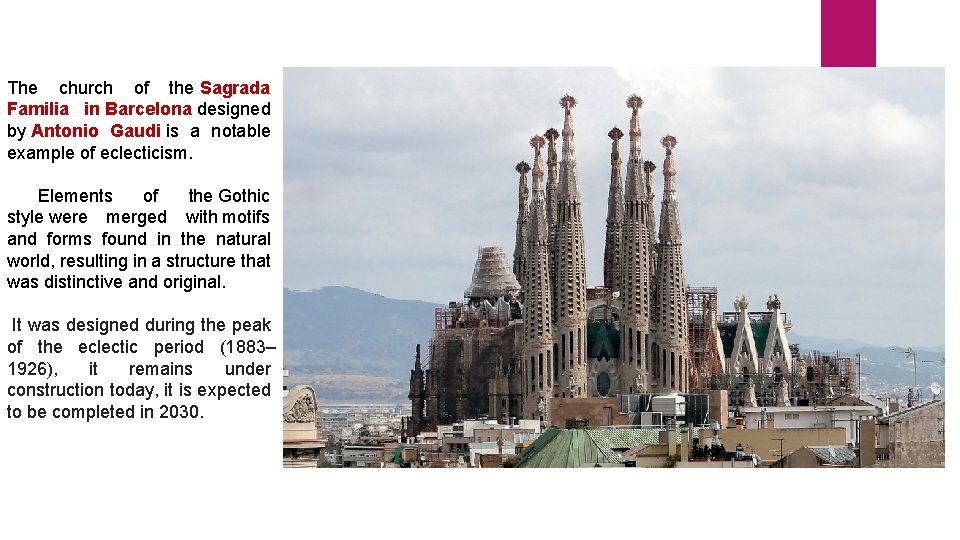
The church of the Sagrada Familia in Barcelona designed by Antonio Gaudi is a notable example of eclecticism. Elements of the Gothic style were merged with motifs and forms found in the natural world, resulting in a structure that was distinctive and original. It was designed during the peak of the eclectic period (1883– 1926), it remains under construction today, it is expected to be completed in 2030.
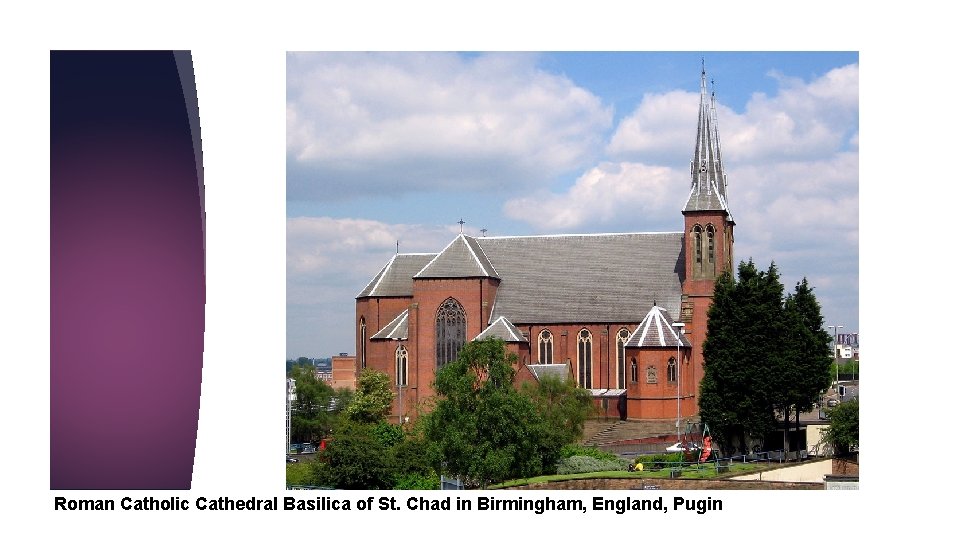
Roman Catholic Cathedral Basilica of St. Chad in Birmingham, England, Pugin
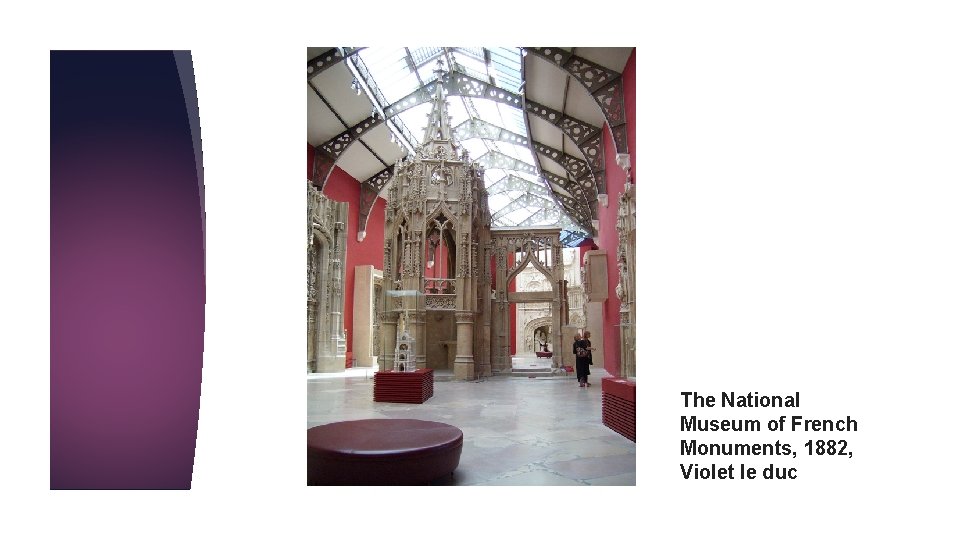
The National Museum of French Monuments, 1882, Violet le duc
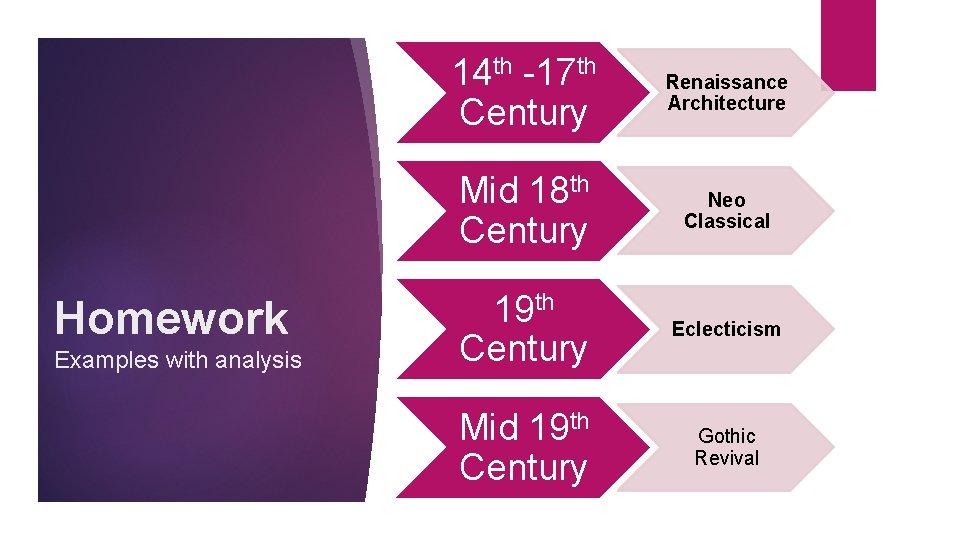
Homework Examples with analysis 14 th -17 th Century Renaissance Architecture Mid 18 th Century Neo Classical 19 th Century Eclecticism Mid 19 th Century Gothic Revival