
Revisiting the Guiding Principles of a Trauma Informed




- Slides: 43
Revisiting the Guiding Principles of a Trauma. Informed Approach in 2021 Michele Luc, Trainer ACT for Youth Center for Community Action
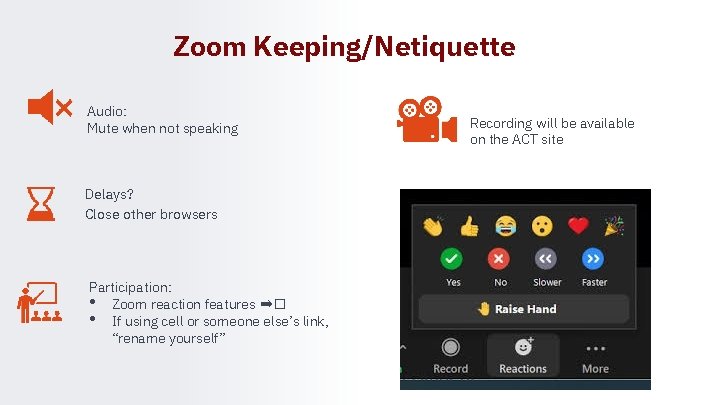
Zoom Keeping/Netiquette Audio: Mute when not speaking Delays? Close other browsers Participation: • Zoom reaction features ➡� • If using cell or someone else’s link, “rename yourself” Recording will be available on the ACT site
AGENDA ▸ Welcome/Check-in ▸ Overview of guiding principles of a ▸ ▸ 3 trauma-informed approach Trauma related to current events Incorporating TIA in work with youth
Group Agreements/Rules of Engagement Be willing to share while being mindful of what is shared Make space, take space Chat responsibly Values-neutral statements Self-care
Trigger Warning – Today’s content can bring up a lot for people, including traumatic experiences--past or present. 5
SELF CARE NOTE: Do what you need to do to take care of yourself During the session ▸ Take a quick break from the session ▸ Get up/stretch ▸ Eat or drink something ▸ Leave the session----it will be available later After the session ▸ Talk to someone (personal, professional) ▸ Reflection & Journaling ▸ Get moving---Exercise, dance, go for a walk ▸ Rest 6
Need to talk to someone immediately? ▸ NYS/OMH Mental Health Support Hotline: 1 -844 -863 -9314 ▸ NYC Well (Talk. Text. Chat 24/7): 1 -888 -NYC-WELL / https: //nycwell. cityofnewyork. us/en/ ▸ National Suicide Prevention Lifeline (Lifeline) at 1 -800 -273 -TALK (8255), or text the Crisis Text Line (text HELLO to 741741). ▸ Are you experiencing anxiety due to the coronavirus emergency? https: //omh. ny. gov/omhweb/covid-19 -resources. html ▸ Coping with Traumatic Events (National Institute of Mental Health): https: //www. nimh. nih. gov/health/topics/coping-with-traumatic-events/index. shtml 7
QOTD In the chat box, what is one thing that brings you comfort or makes you feel safe 8
What is Trauma? Trauma results from an event, series of events, or set of circumstances that is experienced by an individual as physically or emotionally harmful or life threatening and that has lasting adverse effects on the individual’s functioning and mental, physical, social, emotional or spiritual well-being. 9
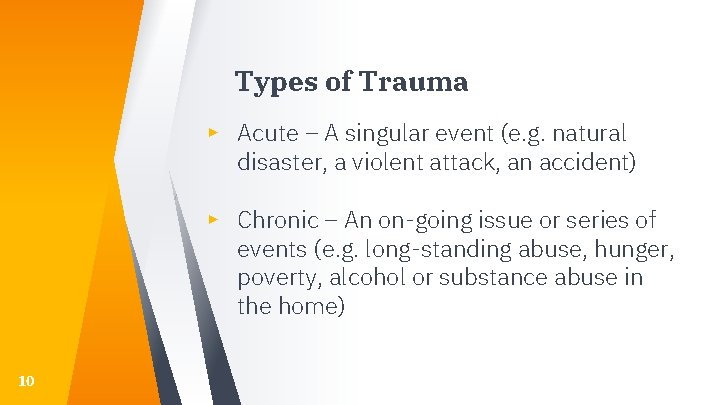
Types of Trauma ▸ Acute – A singular event (e. g. natural disaster, a violent attack, an accident) ▸ Chronic – An on-going issue or series of events (e. g. long-standing abuse, hunger, poverty, alcohol or substance abuse in the home) 10
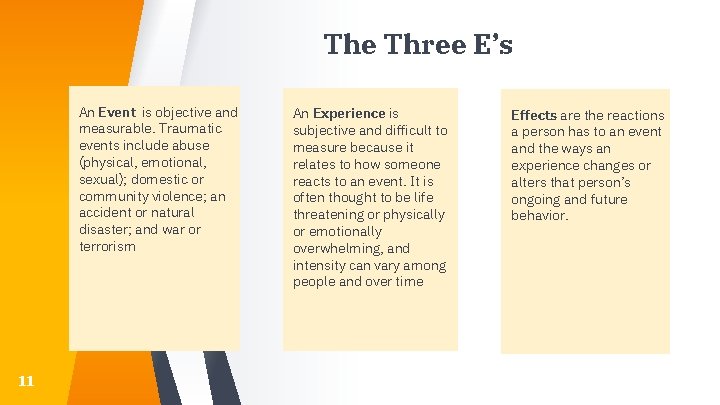
The Three E’s An Event is objective and measurable. Traumatic events include abuse (physical, emotional, sexual); domestic or community violence; an accident or natural disaster; and war or terrorism 11 An Experience is subjective and difficult to measure because it relates to how someone reacts to an event. It is often thought to be life threatening or physically or emotionally overwhelming, and intensity can vary among people and over time Effects are the reactions a person has to an event and the ways an experience changes or alters that person’s ongoing and future behavior.
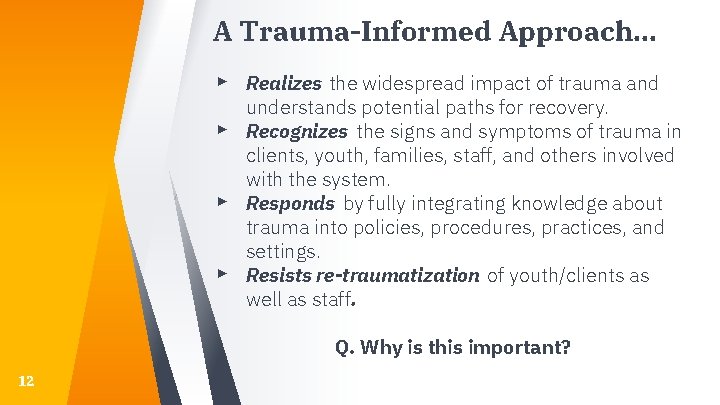
A Trauma-Informed Approach… ▸ Realizes the widespread impact of trauma and ▸ ▸ ▸ understands potential paths for recovery. Recognizes the signs and symptoms of trauma in clients, youth, families, staff, and others involved with the system. Responds by fully integrating knowledge about trauma into policies, procedures, practices, and settings. Resists re-traumatization of youth/clients as well as staff. Q. Why is this important? 12
6 Guiding Principals of a Trauma-Informed Approach 13
There are six guiding principles to consider when looking through a trauma-informed lens: • • • Safety Trustworthiness Choice Collaboration Empowerment Cultural, Historical & Gender Considerations
SAFETY Throughout an organization & program, the staff and the people they serve feel physically and psychologically safe; the physical setting is safe and interpersonal interactions promote a sense of safety.
TRUSTWORTHINESS Organizational & program operations and decisions are conducted with transparency and with the goal of building and maintaining trust among youth, family members, staff, and others involved with the organization/program.
CHOICE The program aims to strengthen the experience of choice for youth and recognizes that every person’s experience is unique and requires an individualized approach.
COLLABORATION ▸ There is true leveling of power differences between youth and staff inc. programmatic & administrative staff. ▸ Collaboration recognizes that growth & healing happens in the meaningful sharing of power and decision making
EMPOWERMENT Throughout the program/organization, the strengths of youth are recognized, built on, and validated, and new skills are developed as needed.
CULTURAL, HISTORICAL & GENDER CONSIDERATIONS The program/organization incorporates policies, protocols, and processes that are responsive to the racial, ethnic and cultural needs of individuals served; are genderresponsive; and incorporate a focus on historical trauma.
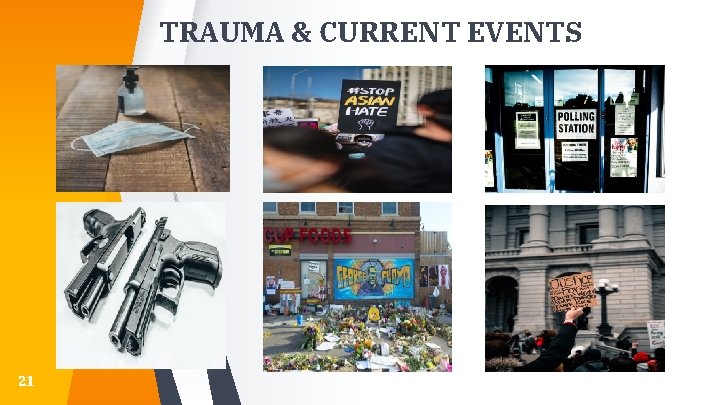
TRAUMA & CURRENT EVENTS 21
CORONAVIRUS/COVID-19 22 Illness/hospitalization inc. lingering symptoms Loss of life Isolation / limited or no contact with loved ones Loss of jobs Working & learning remotely Closing of businesses Financial uncertainty & distress Social distancing Postponement &/or cancellation of major events (concerts, weddings, conferences, graduations, funerals)
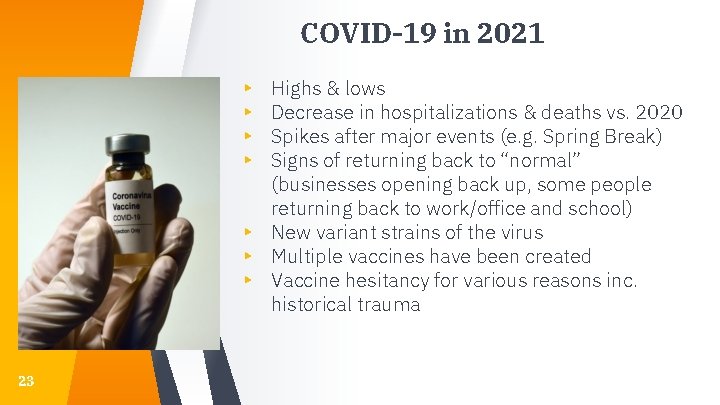
COVID-19 in 2021 Highs & lows Decrease in hospitalizations & deaths vs. 2020 Spikes after major events (e. g. Spring Break) Signs of returning back to “normal” (businesses opening back up, some people returning back to work/office and school) ▸ New variant strains of the virus ▸ Multiple vaccines have been created ▸ Vaccine hesitancy for various reasons inc. historical trauma ▸ ▸ 23
HISTORICAL TRAUMA ▸ The cumulative emotional and psychological wound-ing, as a result of group traumatic experiences, transmitted across generations within a community. ▸ Often associated with racial & ethnic population groups in the US who have suffered major intergenerational losses/trauma and assaults on their culture and well-being. ▸ E. g. Tuskegee Syphilis Experiment (often linked to vaccine hesitancy) 24 -SAMHSA, 2016; Yehuda et al. , 2016
RACIAL TRAUMA ▸ Traumatic events that occur as a result of witnessing or experiencing racism, discrimination, or structural prejudice (also known as institutional racism) can have a profound impact on the mental health of individuals exposed to these events. ▸ Racial trauma (also known as race-based traumatic stress) refers to the stressful impact or emotional pain of one’s experience with racism and discrimination (Carter, 2007). 25 ▸ E. g. Recent spate of attacks against Asians
26
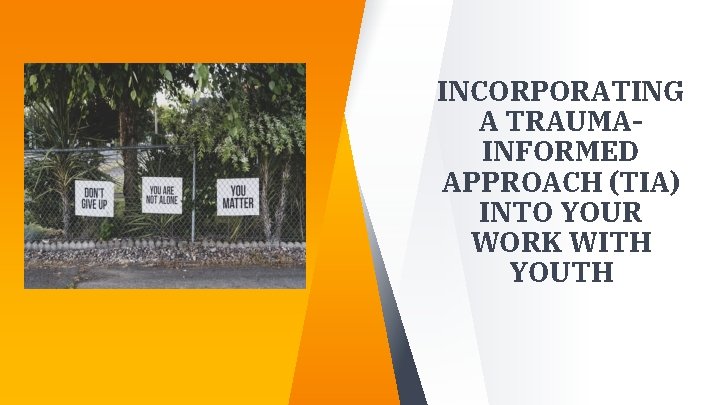
INCORPORATING A TRAUMAINFORMED APPROACH (TIA) INTO YOUR WORK WITH YOUTH
As we know now, many young people have experienced or live with trauma. In particular, LGBTQ youth, youth in the foster care or juvenile justice system, young people of color and young people living in poverty are more likely to experience trauma. 28
A trauma-informed approach can help create a greater sense of safety and empowerment among participants, allowing them to be more open to learning the information you are there to share, and avoid possible retraumatization. 29
Incorporating a TIA in In-Person EBPs ▸ Make sure you discuss with the teacher or site coordinator what the process is for students who need to excuse themselves. ▸ Prior to starting the program, know what support services are available to students. ▸ If going into a school, let the guidance/counseling office know you’re starting programming soon, in case they see an increase in visits to their offices.
Incorporating a TIA in In-Person EBPs ▸ Is the space itself welcoming? What is the “emotional temperature” in the room? Does it feel open or confined? ▸ If school policy allows, explain that if someone gets uncomfortable, they can leave the room to take care of their needs. 31
Incorporating TIA in In-Person & Virtual Programs ▸ Mention at the start of the program that this can be sensitive information, or even stressful for some people. ▸ Give participants to option to participate or opt-out, that includes whether to show their video or not. ▸ Does the language being used feel safe & empowering for all participants? Is it inclusive? 32
Incorporating TIA in Virtual Programs ▸ Re-establishing/re-creating group agreements developed by the youth (safety, empowerment) ▸ Start sessions with a light check-in e. g. 1 -10 check-in (safety, empowerment) ▸ Routines – Provide consistent programs that youth can participate in to create a sense of normalcy. (Trustworthiness) ▸ Give youth the option to participate or opt-out of an activity or a full session (choice) 33
Incorporating TIA in Virtual Programs ▸ Ask youth what topics they would like to discuss & how they’d like to cover it (choice, empowerment) ▸ Provide opportunities for youth to work together e. g. sharing their feelings about a topic or developing online content. Breakout rooms, if allowed, can be helpful to do this (collaboration, empowerment) ▸ Discuss current events and how it’s impacting them, their peers and their families e. g. racial injustice, COVID-19, etc. (cultural, historical, gender considerations, empowerment) ▸ Allow participants to self-identify e. g. pronouns & name used during the session (choice, cultural/gender considerations, empowerment) 34
Anything Else? ▸ How can or have you incorporated a TIA in your work with youth ---either in person or in your virtual programs?
Light Within the Darkness
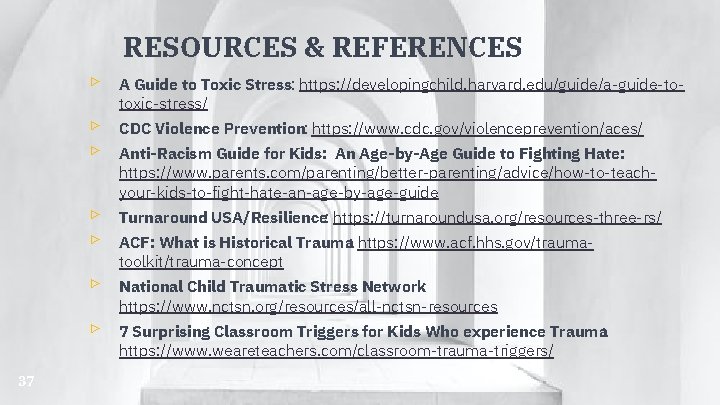
RESOURCES & REFERENCES 37 ▹ A Guide to Toxic Stress: https: //developingchild. harvard. edu/guide/a-guide-totoxic-stress/ ▹ ▹ CDC Violence Prevention: https: //www. cdc. gov/violenceprevention/aces/ ▹ ▹ Turnaround USA/Resilience: https: //turnaroundusa. org/resources-three-rs/ ▹ National Child Traumatic Stress Network: https: //www. nctsn. org/resources/all-nctsn-resources ▹ 7 Surprising Classroom Triggers for Kids Who experience Trauma: https: //www. weareteachers. com/classroom-trauma-triggers/ Anti-Racism Guide for Kids: An Age-by-Age Guide to Fighting Hate: https: //www. parents. com/parenting/better-parenting/advice/how-to-teachyour-kids-to-fight-hate-an-age-by-age-guide ACF: What is Historical Trauma: https: //www. acf. hhs. gov/traumatoolkit/trauma-concept
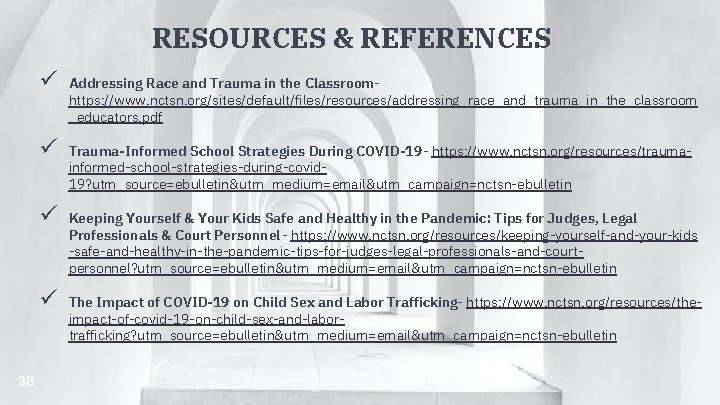
RESOURCES & REFERENCES ü ü 38 Addressing Race and Trauma in the Classroomhttps: //www. nctsn. org/sites/default/files/resources/addressing_race_and_trauma_in_the_classroom _educators. pdf Trauma-Informed School Strategies During COVID-19 - https: //www. nctsn. org/resources/traumainformed-school-strategies-during-covid 19? utm_source=ebulletin&utm_medium=email&utm_campaign=nctsn-ebulletin Keeping Yourself & Your Kids Safe and Healthy in the Pandemic: Tips for Judges, Legal Professionals & Court Personnel - https: //www. nctsn. org/resources/keeping-yourself-and-your-kids -safe-and-healthy-in-the-pandemic-tips-for-judges-legal-professionals-and-courtpersonnel? utm_source=ebulletin&utm_medium=email&utm_campaign=nctsn-ebulletin The Impact of COVID-19 on Child Sex and Labor Trafficking- https: //www. nctsn. org/resources/theimpact-of-covid-19 -on-child-sex-and-labortrafficking? utm_source=ebulletin&utm_medium=email&utm_campaign=nctsn-ebulletin
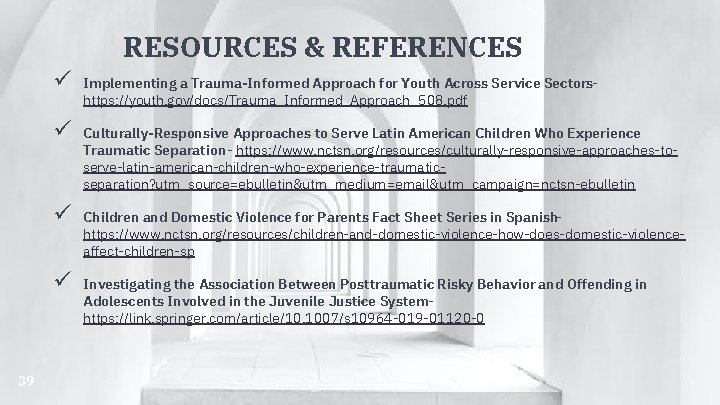
RESOURCES & REFERENCES ü ü 39 Implementing a Trauma-Informed Approach for Youth Across Service Sectorshttps: //youth. gov/docs/Trauma_Informed_Approach_508. pdf Culturally-Responsive Approaches to Serve Latin American Children Who Experience Traumatic Separation - https: //www. nctsn. org/resources/culturally-responsive-approaches-toserve-latin-american-children-who-experience-traumaticseparation? utm_source=ebulletin&utm_medium=email&utm_campaign=nctsn-ebulletin Children and Domestic Violence for Parents Fact Sheet Series in Spanishhttps: //www. nctsn. org/resources/children-and-domestic-violence-how-does-domestic-violenceaffect-children-sp Investigating the Association Between Posttraumatic Risky Behavior and Offending in Adolescents Involved in the Juvenile Justice Systemhttps: //link. springer. com/article/10. 1007/s 10964 -019 -01120 -0
RESOURCES & REFERENCES ▸ https: //www. ihollaback. org/harassmenttraining dates for future trainings ▸ https: //www. ihollaback. org/resources ▸ https: //www. advancingjustice-aajc. org ▸ https: //www. standagainsthatred. org ▸ https: //iheartmob. org 40
After the Harvest: A Story about saying goodbye (ebook for children) http: //fsustress. or g/After. The. Harvest. html 41 The Germ That Wears a Crown: A Story about the Coronavirus (e-book for children in English, Creole & Spanish) http: //fsustress. org/ Germ. Crown/Germ. Cr own. html
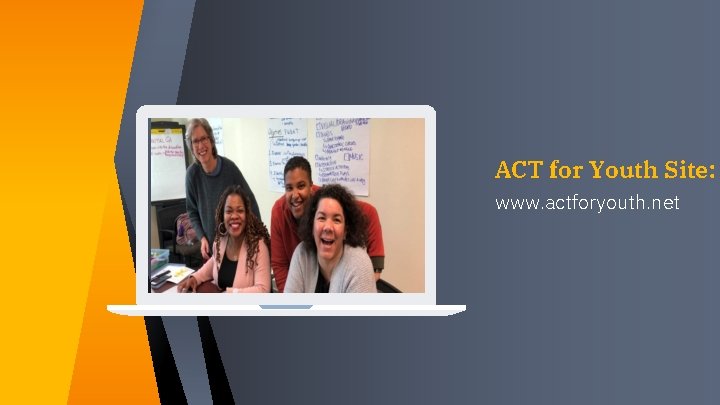
ACT for Youth Site: www. actforyouth. net 42
43 Any questions? You can reach me at: ML 782@cornell. edu Michele Luc