
Revisiting Mantles Griffith Stadium Home Run April 17

















- Slides: 43
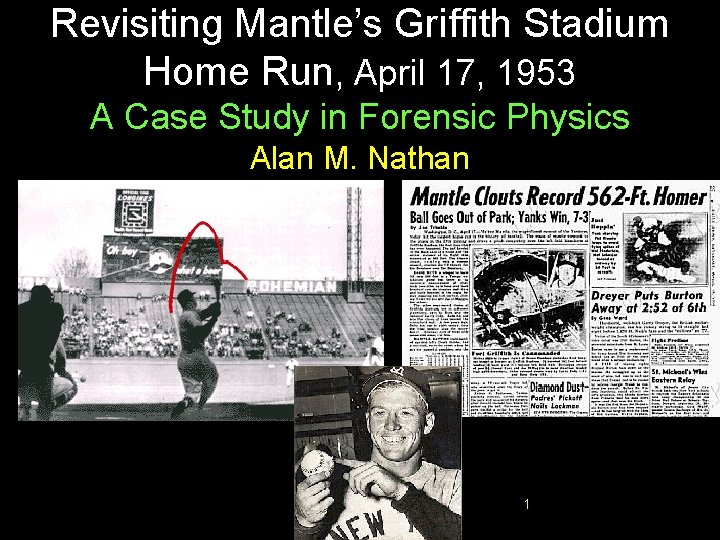
Revisiting Mantle’s Griffith Stadium Home Run, April 17, 1953 A Case Study in Forensic Physics Alan M. Nathan 1
An Overview: This is a story about …. • baseball’s fascination with tape-measure home runs • the Mickey Mantle legend • one woman’s determination to separate fact from legend – with help from a physicist
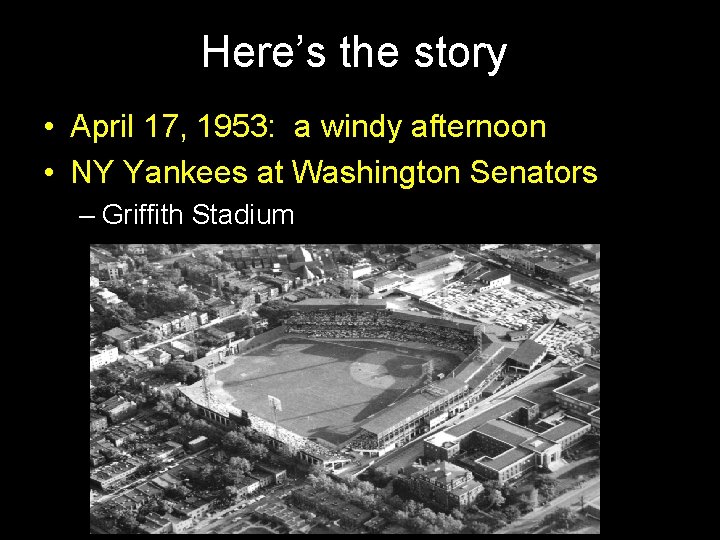
Here’s the story • April 17, 1953: a windy afternoon • NY Yankees at Washington Senators – Griffith Stadium
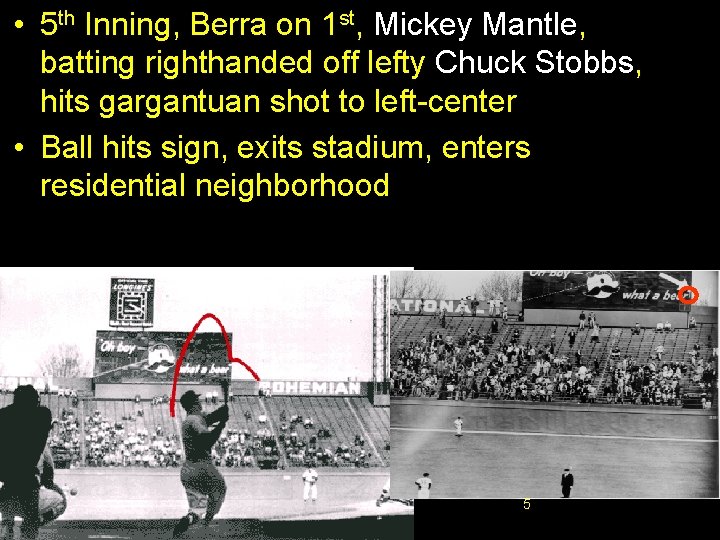
• 5 th Inning, Berra on 1 st, Mickey Mantle, batting righthanded off lefty Chuck Stobbs, hits gargantuan shot to left-center 4
• 5 th Inning, Berra on 1 st, Mickey Mantle, batting righthanded off lefty Chuck Stobbs, hits gargantuan shot to left-center • Ball hits sign, exits stadium, enters residential neighborhood 5
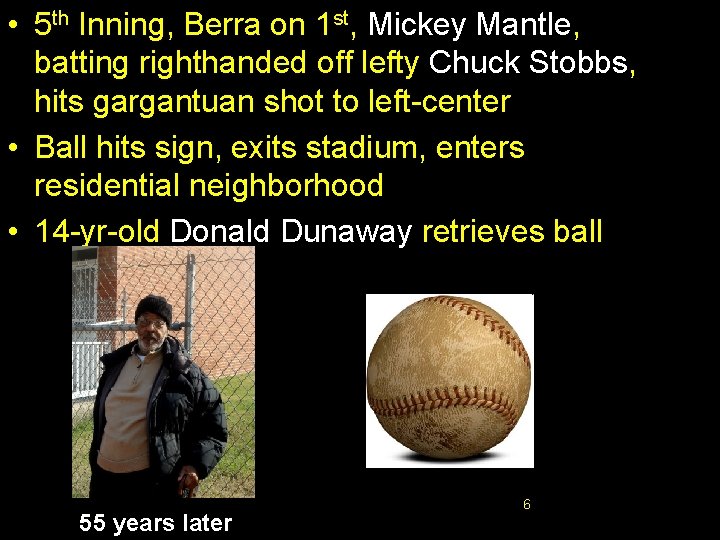
• 5 th Inning, Berra on 1 st, Mickey Mantle, batting righthanded off lefty Chuck Stobbs, hits gargantuan shot to left-center • Ball hits sign, exits stadium, enters residential neighborhood • 14 -yr-old Donald Dunaway retrieves ball 55 years later 6
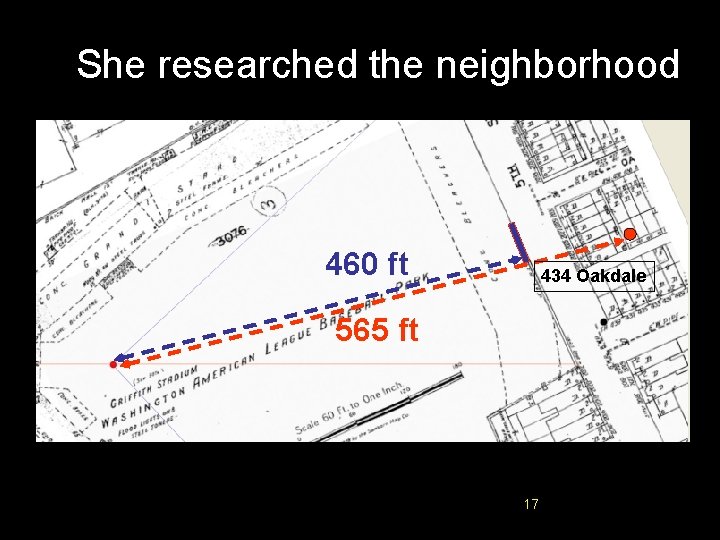
• NYY publicist Red Patterson finds Dunaway, who shows him where he found ball behind 434 Oakwood Pl. 7
• Patterson paces off distance to sign; concludes ball traveled 565 ft • The Mantle legend and “tape measure home run” are born 8
What really happened? How far did the ball go “on the fly”?
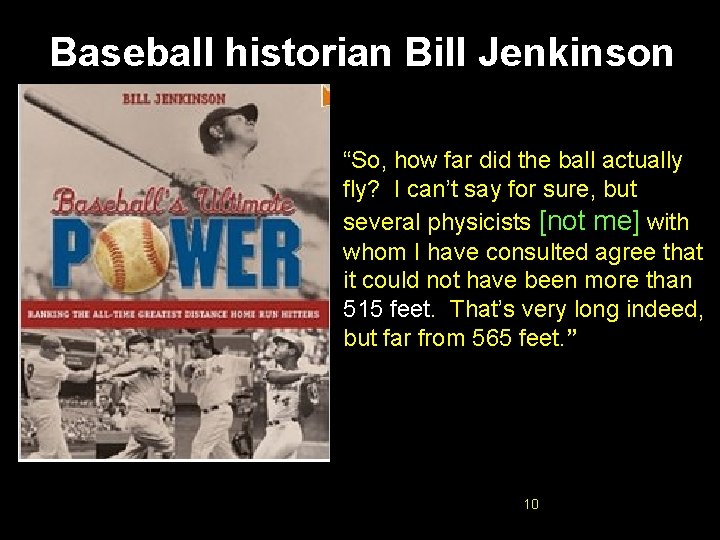
Baseball historian Bill Jenkinson “So, how far did the ball actually fly? I can’t say for sure, but several physicists [not me] with whom I have consulted agree that it could not have been more than 515 feet. That’s very long indeed, but far from 565 feet. ” 10
Baseball Physicist Bob Adair Page 103: “…a more precise calculation gives… 11 506 ft, with an uncertainy … no more than 5 ft” (!)
Some people really feel strongly about this event • Jeff Passan, Yahoo Sports, commenting on Jenkinson’s account: The longest home run ever hit did not go 565 feet. Not even close…. To think the Mick hit that ball 565 feet is to think that Santa Claus exists. • Randall Swearingen, mickeymantle. com, commenting on Passan Fifty-five years after the fact, Jeff Passan of Yahoo Sports smugly presented a stunning indictment, with help from his expert witness, author Bill Jenkinson, that the 565’ blast by Mickey Mantle on April 17 th, 1953 at Griffith Stadium is merely a myth and could not possibly have traveled that far.
Status as of 2008: • The legend (Red Patterson): 565 ft • The physicists: 505 -515 ft
Enter Jane Leavy www. janeleavy. com Published, October 2010 #16 NYT nonfiction Chapter 6: One Big Day 14
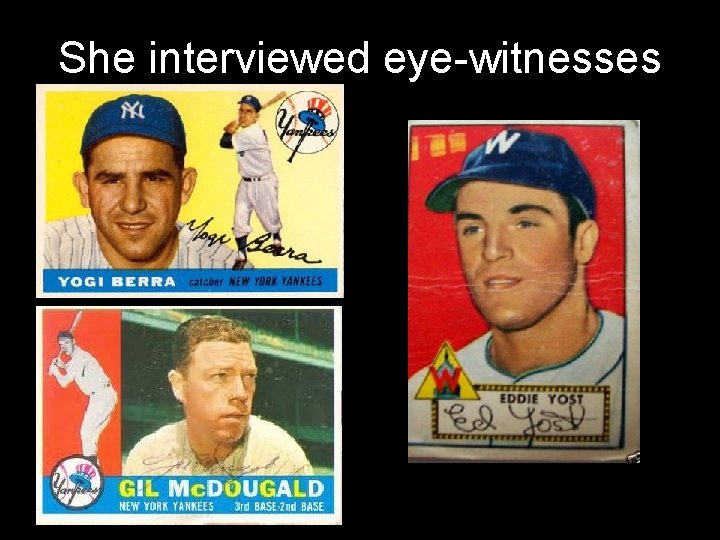
She interviewed eye-witnesses
some with contradictory stories The ball exited the stadium so fast that Nats broadcaster Bob Wolff did not have time to raise his voice in narrative exclamation. It was hit so high, infielder Wayne Terwilliger said that “Mantle was at second base by the time it came down. ”
She researched the neighborhood 460 ft 434 Oakdale 565 ft 17
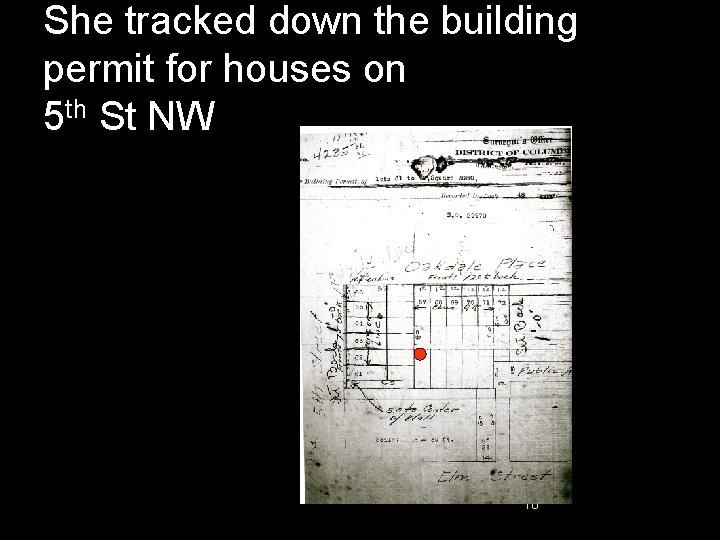
She tracked down the building permit for houses on 5 th St NW 18
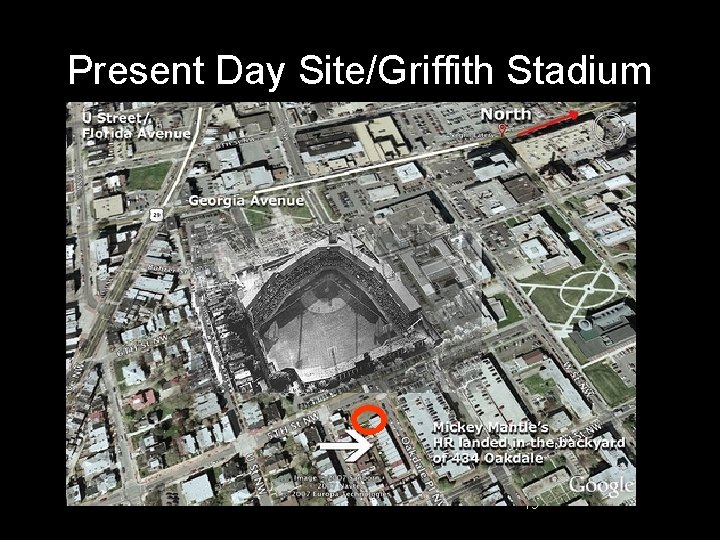
Present Day Site/Griffith Stadium 19
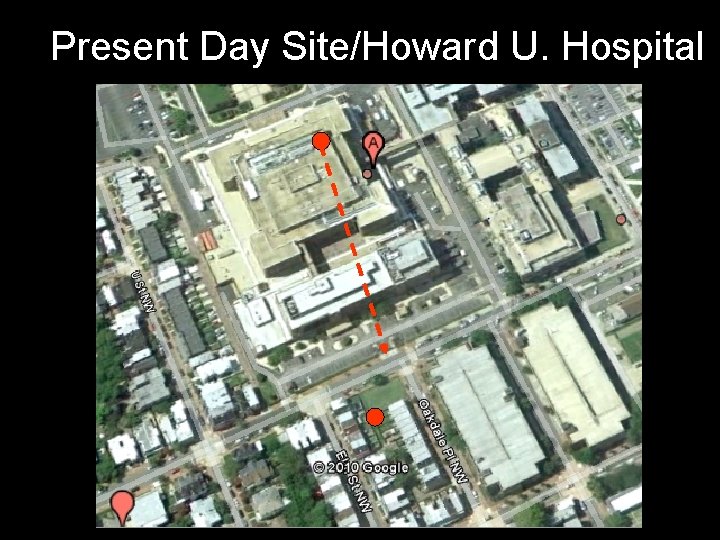
Present Day Site/Howard U. Hospital 20
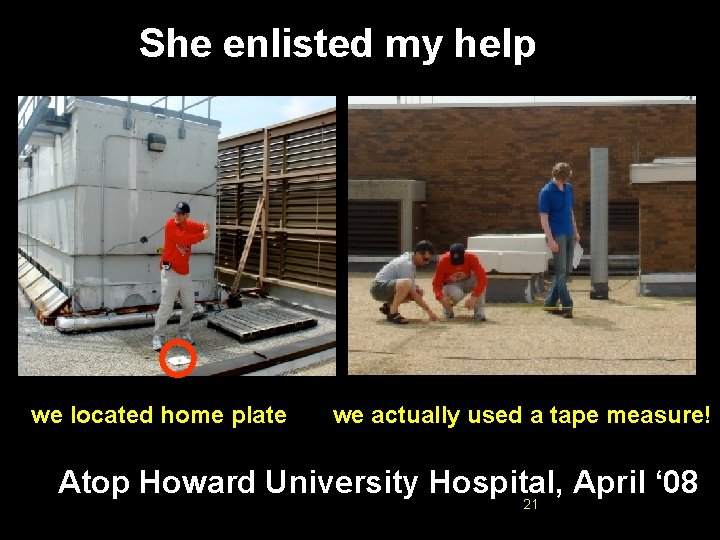
She enlisted my help we located home plate we actually used a tape measure! Atop Howard University Hospital, April ‘ 08 21
…and the coup d’etat: she found the elusive Donald Dunaway (1939 -2010) 22
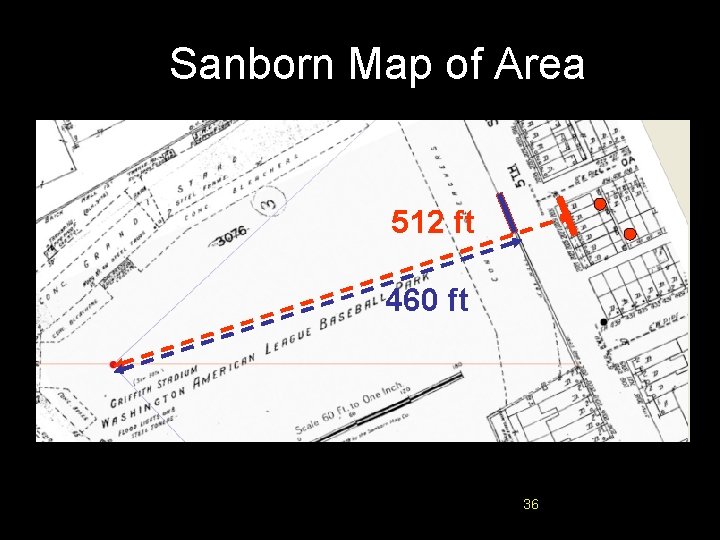
What We Know (at least approximately) • Ball hit glancing blow on sign and exited the stadium – 460 ft horizontal ft from home plate – 55 -60 ft above ground level • Donald Dunaway retrieved ball behind row houses that face 5 th St. NW – at a distance of ~565 ft from home plate • Wind was blowing out steadily at ~20 mph – with gusts up to 40 mph 23
What We Don’t Know • Batted ball parameters – speed, launch angle, and spin • How long it took batted ball to reach sign • Precise wind speed and direction at time of hit • Precise height where ball hit sign • Where the ball landed 24
What We’d Like to Know • Is there a plausible set of conditions consistent with the known facts? – Answer: yes, as we shall see • Given all the uncertainties, what constraints can we place on the distance the ball would have carried unobstructed? – I’ll tell you later 25
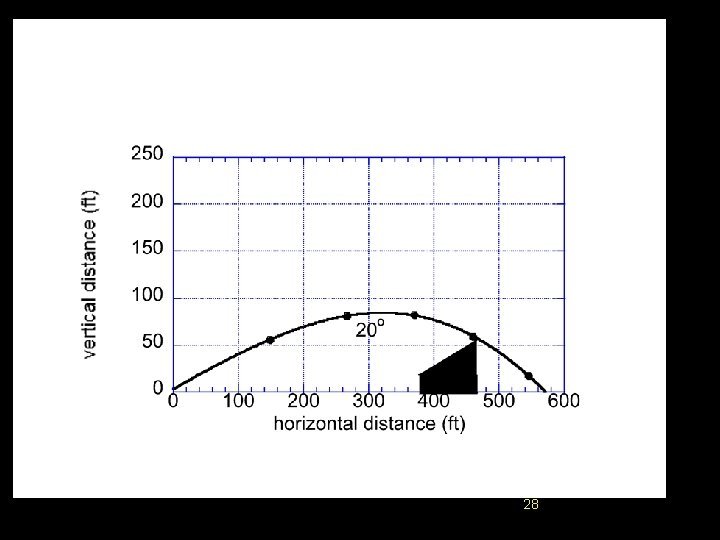
How to Constrain the Trajectory? • Ball hit beer sign – 460 horizontal and 60 vertical ft. from home plate • Is that enough information to determine landing point – NO! 26
Caution: Physics Alert! But fear not: If you understand the next few slides, you understand everything
28
29
30
31
32
• We have a dilemma: – Different combinations of batted ball speed and vertical launch angle are possible. Need more info to remove ambiguity • speed, angle, flight time, … • An aside: it is not obvious how previous analyses avoided this dilemma • But we have one additional piece of information… – Ball was retrieved behind row houses • …a fact seemingly ignored in previous analyses • …and one leading to considerably longer distance 33
. . but not ignored in contempory accounts From Louis Effrat, NYT April 19, 1953 Louis Effrat. "Mantle Homer Hit Into Hall of Fame; Cooperstown Shrine Will Get Ball and Bat Used by Yanks in Wallop at Capital. ” New York Times. 19 April 1953, p. S 1. 34
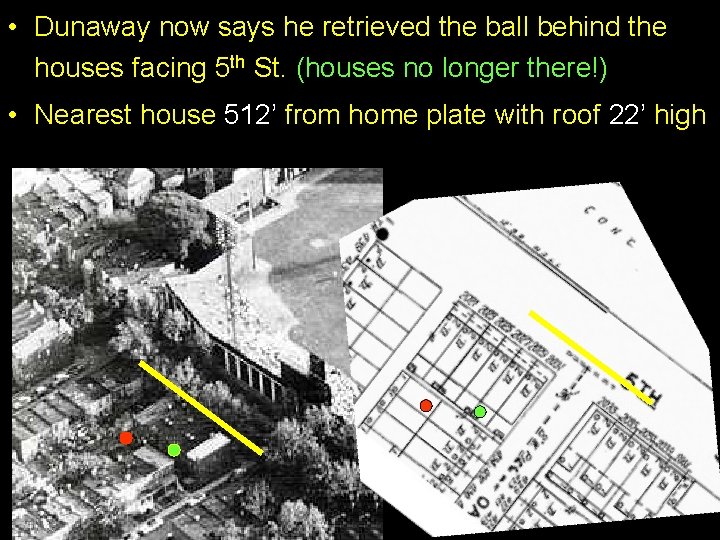
• Dunaway now says he retrieved the ball behind the houses facing 5 th St. (houses no longer there!) • Nearest house 512’ from home plate with roof 22’ high 35
Sanborn Map of Area 512 ft 460 ft 36
nearest house 37
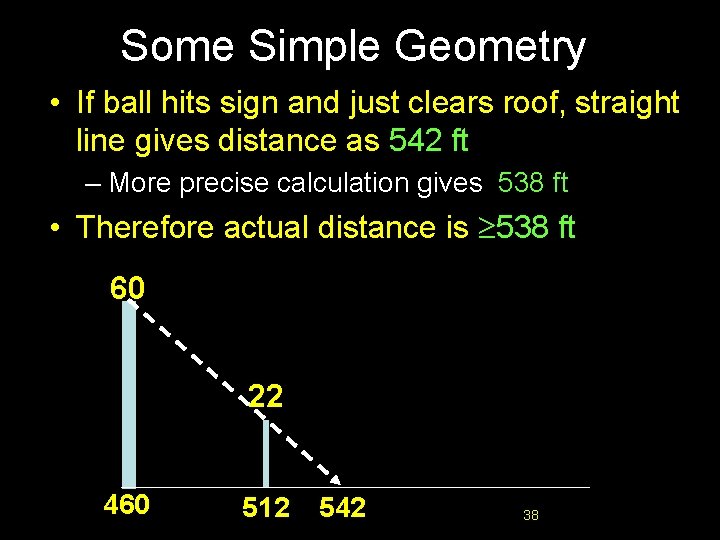
Some Simple Geometry • If ball hits sign and just clears roof, straight line gives distance as 542 ft – More precise calculation gives 538 ft • Therefore actual distance is 538 ft 60 22 460 512 542 38
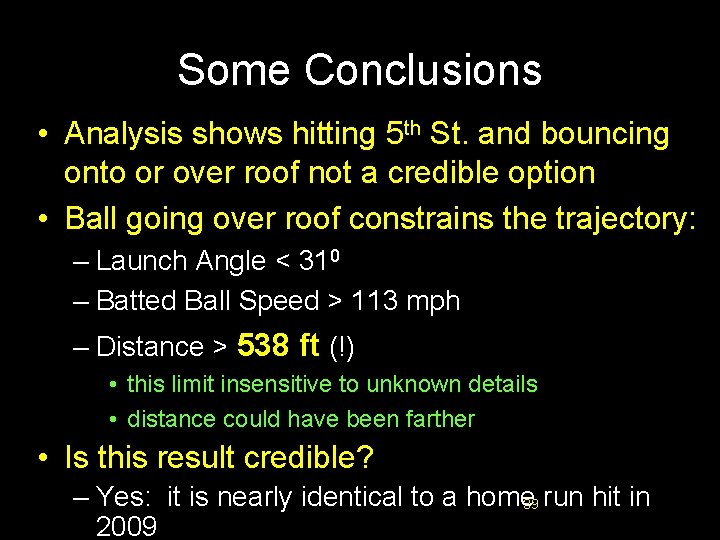
Some Conclusions • Analysis shows hitting 5 th St. and bouncing onto or over roof not a credible option • Ball going over roof constrains the trajectory: – Launch Angle < 310 – Batted Ball Speed > 113 mph – Distance > 538 ft (!) • this limit insensitive to unknown details • distance could have been farther • Is this result credible? – Yes: it is nearly identical to a home 39 run hit in 2009
Vladimir Balentien vs. Mickey Mantle speed Angle D H Wind Distance Balentien 112. 5 mph 290 442 ft 62 ft 15 mph 517 ft Mantle 113. 3 mph 310 460 ft 20 mph 538 ft very similar trajectories! 40
Balentien vs. Mantle 41
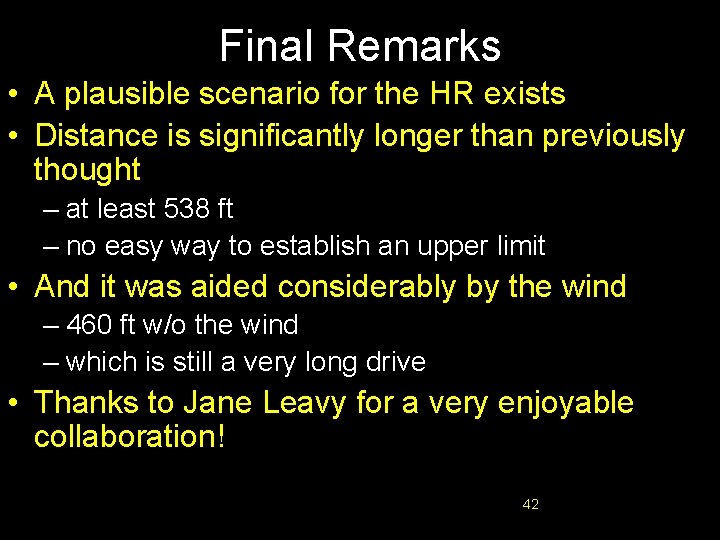
Final Remarks • A plausible scenario for the HR exists • Distance is significantly longer than previously thought – at least 538 ft – no easy way to establish an upper limit • And it was aided considerably by the wind – 460 ft w/o the wind – which is still a very long drive • Thanks to Jane Leavy for a very enjoyable collaboration! 42
• Thanks for your attention • Questions & Comments: – a-nathan@illinois. edu – go. illinois. edu/physicsofbaseball 43