
Revisiting Mantles Griffith Stadium Home Run April 17


- Slides: 27
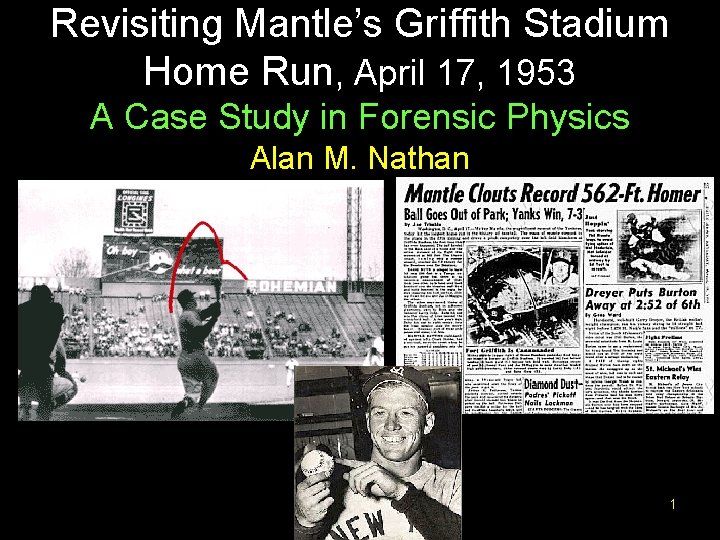
Revisiting Mantle’s Griffith Stadium Home Run, April 17, 1953 A Case Study in Forensic Physics Alan M. Nathan 1
Lots has been written…. Good introduction to the cast of characters and the story: Mickey Mantle Donald Dunaway 434 Oakdale Pl. Red Patterson 2
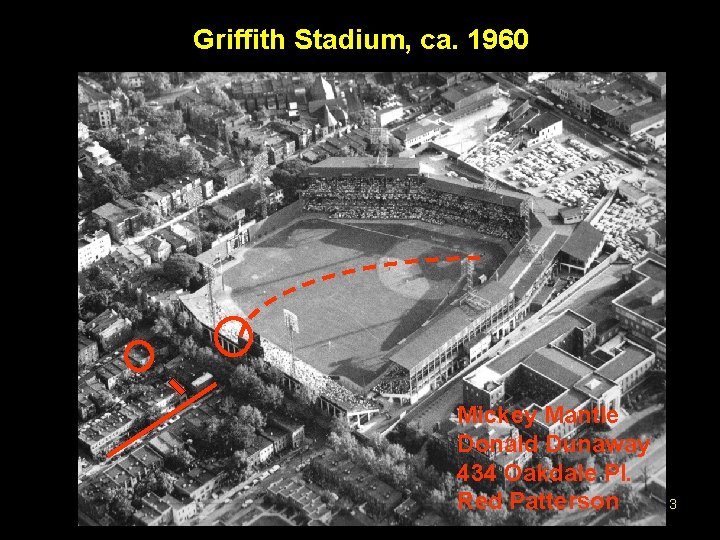
Griffith Stadium, ca. 1960 Mickey Mantle Donald Dunaway 434 Oakdale Pl. Red Patterson 3
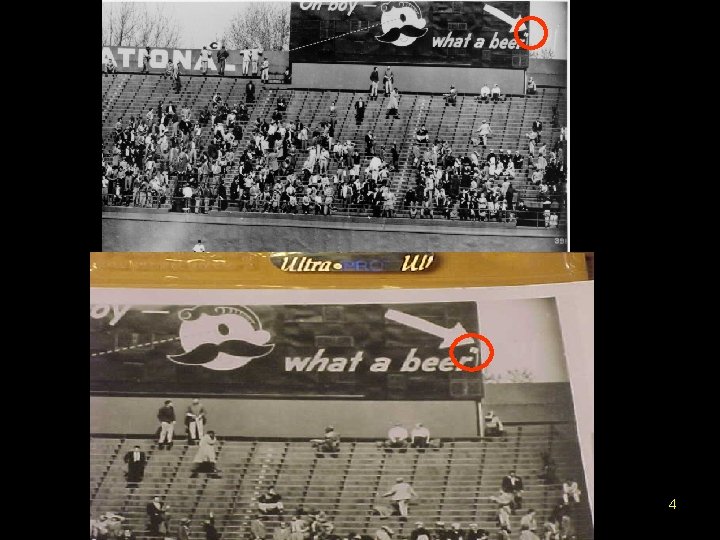
4
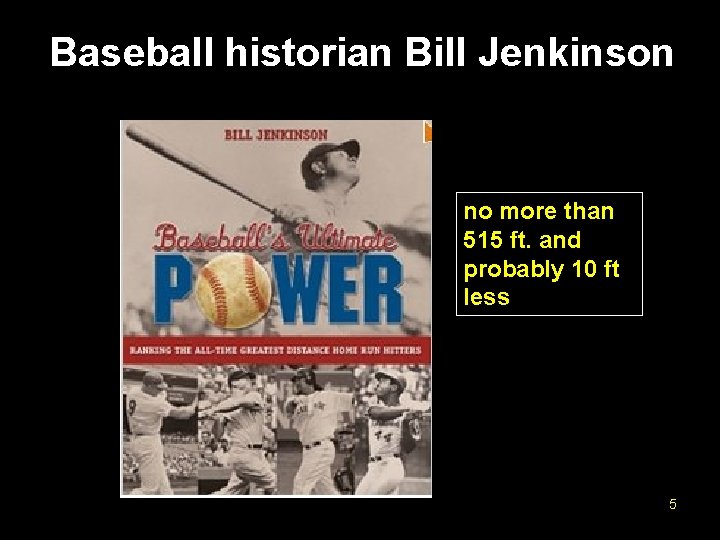
Baseball historian Bill Jenkinson no more than 515 ft. and probably 10 ft less 5
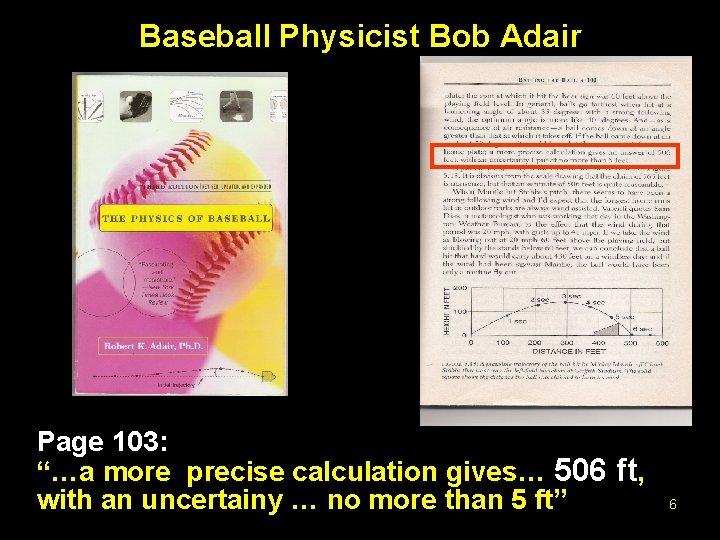
Baseball Physicist Bob Adair Page 103: “…a more precise calculation gives… 506 ft, with an uncertainy … no more than 5 ft” 6
Chapter 6: One Big Day (includes my analysis) Due out October 2010 7
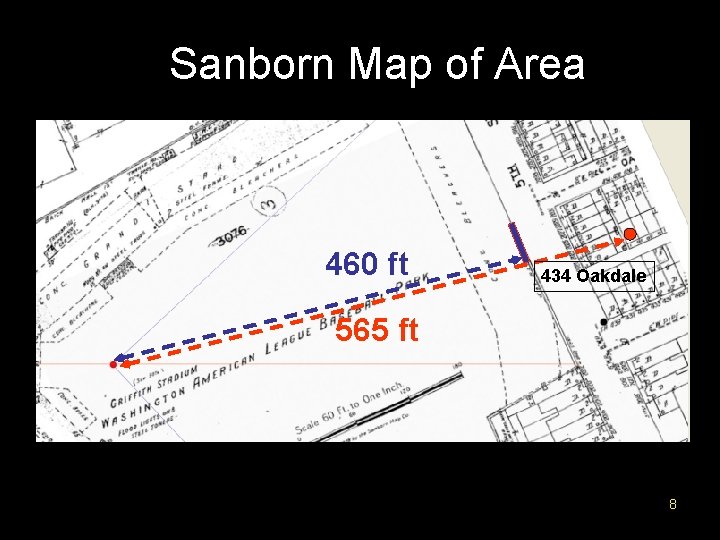
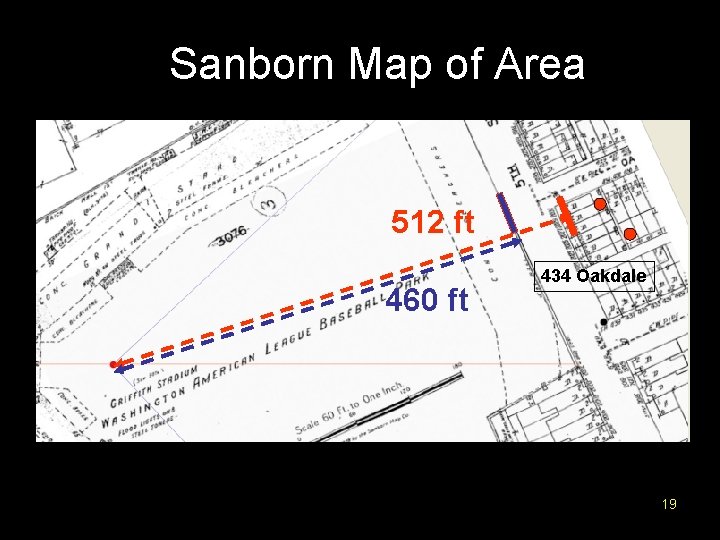
Sanborn Map of Area 460 ft 434 Oakdale 565 ft 8
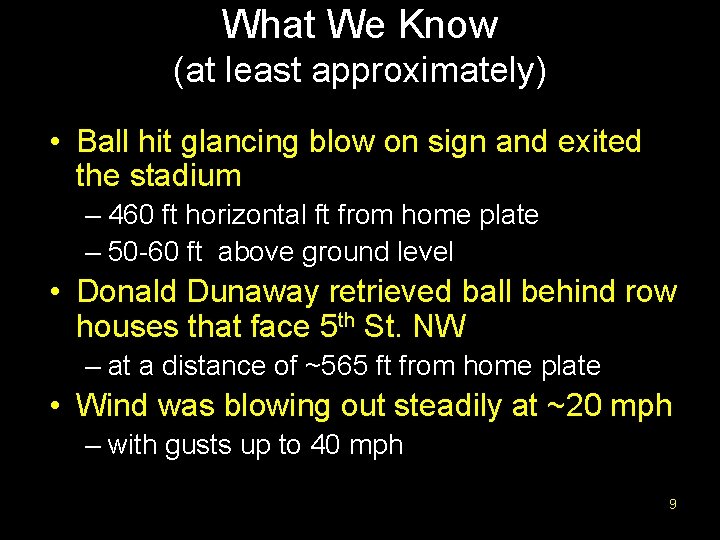
What We Know (at least approximately) • Ball hit glancing blow on sign and exited the stadium – 460 ft horizontal ft from home plate – 50 -60 ft above ground level • Donald Dunaway retrieved ball behind row houses that face 5 th St. NW – at a distance of ~565 ft from home plate • Wind was blowing out steadily at ~20 mph – with gusts up to 40 mph 9
What We Don’t Know • Batted ball parameters – speed, launch angle, and spin • How long it took batted ball to reach sign • Precise wind speed and direction at time of hit • Precise height where ball hit sign 10
The Big Questions: • Is there a plausible set of conditions consistent with the known facts? – Answer: yes, as we shall see • Given all the uncertainties, what constraints can we place on the distance the ball would have carried unobstructed? – I’ll tell you later 11
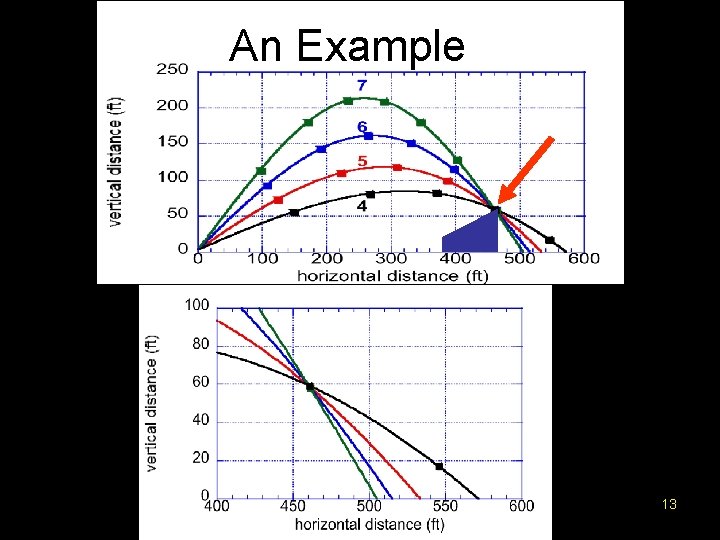
How to Constrain the Trajectory? • Ball hit beer sign – 460 horizontal and 60 vertical ft. from home plate • Not enough to determine landing point – Different combinations of batted ball speed (BBS) and vertical launch angle (VLA) will hit the sign – Ambiguity nearly removed by knowing flight time (T) • Technique used by hittrackeronline. com – But we don’t know any of those things 12
An Example 13
• We have a dilemma… Need more info to remove ambiguity – e. g, BBS, VLA, T, … – An aside: I don’t know how previous analyses avoided this dilemma • But we have one additional piece of information… – Ball was retrieved behind row houses • …a fact seemingly ignored in previous analyses • …and one leading to considerably longer distance 15
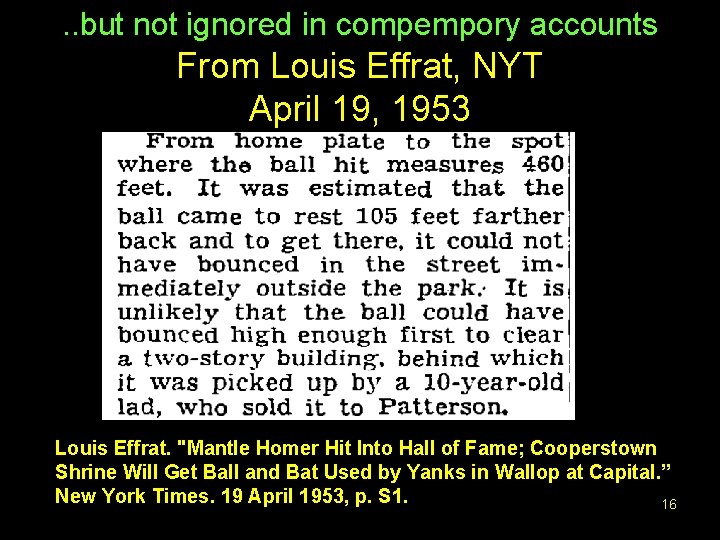
. . but not ignored in compempory accounts From Louis Effrat, NYT April 19, 1953 Louis Effrat. "Mantle Homer Hit Into Hall of Fame; Cooperstown Shrine Will Get Ball and Bat Used by Yanks in Wallop at Capital. ” New York Times. 19 April 1953, p. S 1. 16
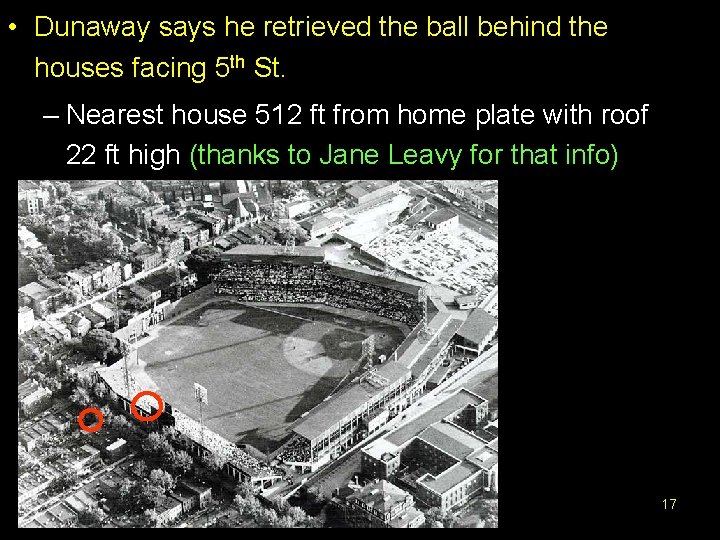
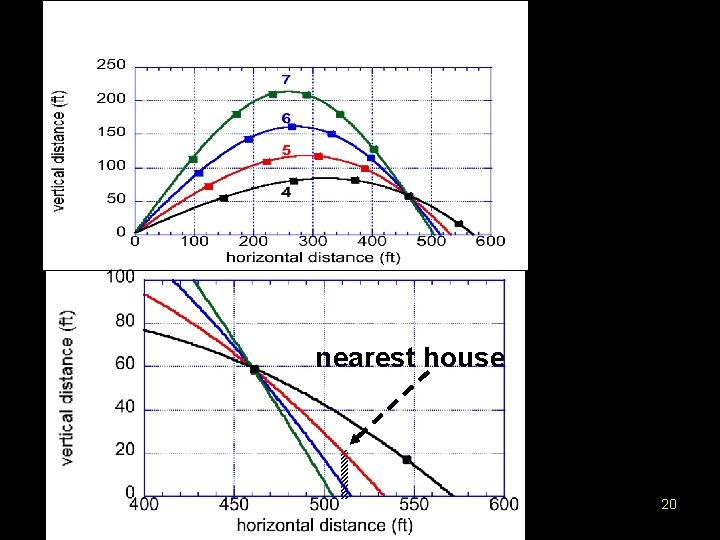
• Dunaway says he retrieved the ball behind the houses facing 5 th St. – Nearest house 512 ft from home plate with roof 22 ft high (thanks to Jane Leavy for that info) 17
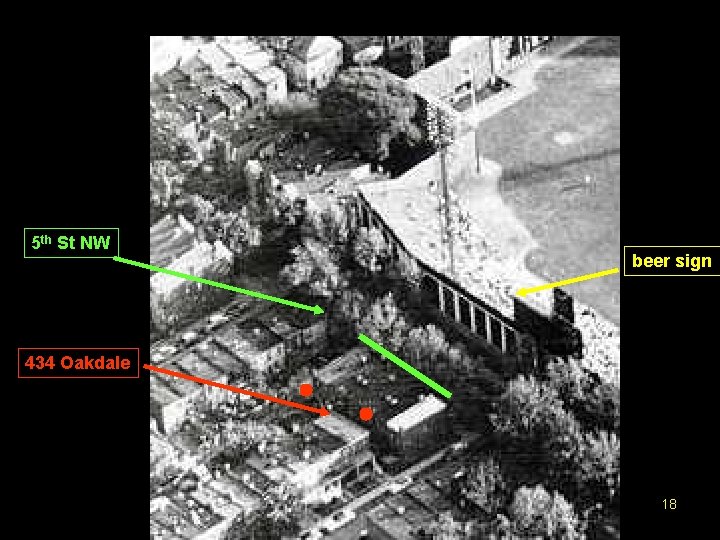
5 th St NW beer sign 434 Oakdale 18
Sanborn Map of Area 512 ft 460 ft 434 Oakdale 19
nearest house 20
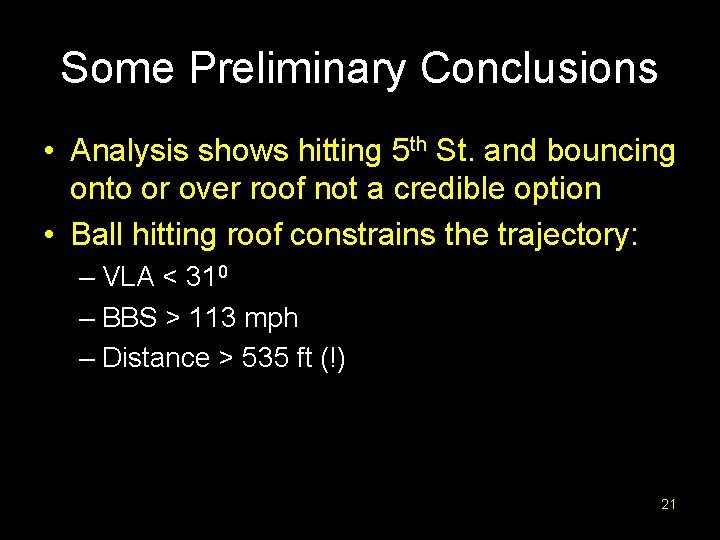
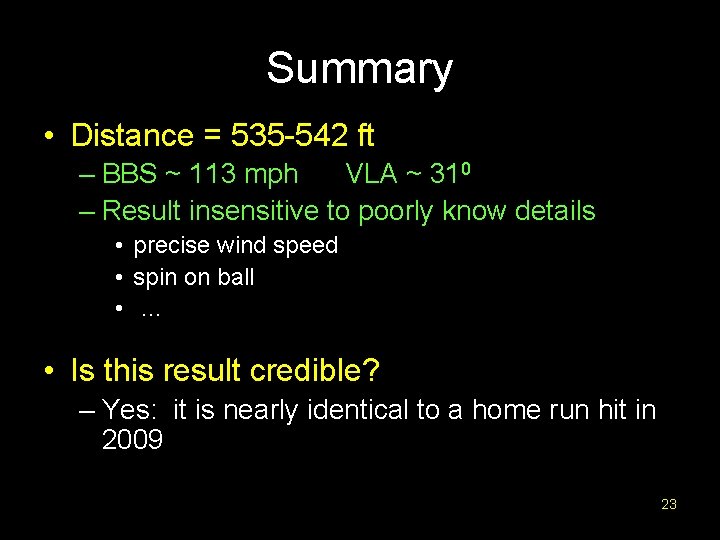
Some Preliminary Conclusions • Analysis shows hitting 5 th St. and bouncing onto or over roof not a credible option • Ball hitting roof constrains the trajectory: – VLA < 310 – BBS > 113 mph – Distance > 535 ft (!) 21
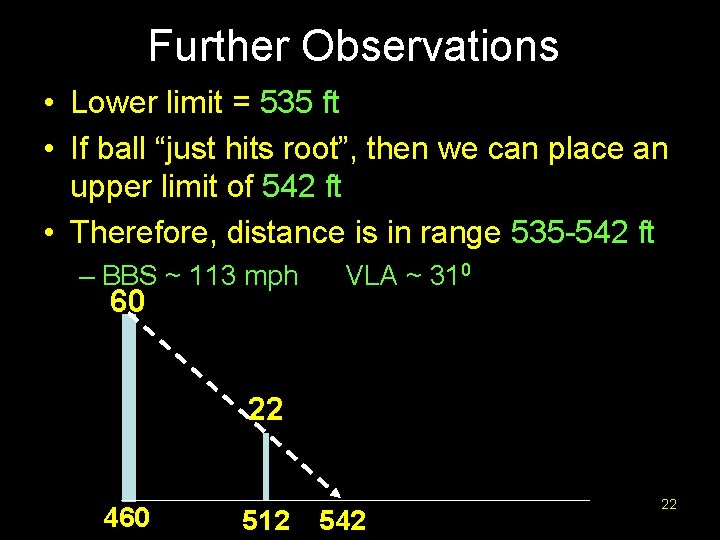
Further Observations • Lower limit = 535 ft • If ball “just hits root”, then we can place an upper limit of 542 ft • Therefore, distance is in range 535 -542 ft – BBS ~ 113 mph 60 VLA ~ 310 22 460 512 542 22
Summary • Distance = 535 -542 ft – BBS ~ 113 mph VLA ~ 310 – Result insensitive to poorly know details • precise wind speed • spin on ball • … • Is this result credible? – Yes: it is nearly identical to a home run hit in 2009 23
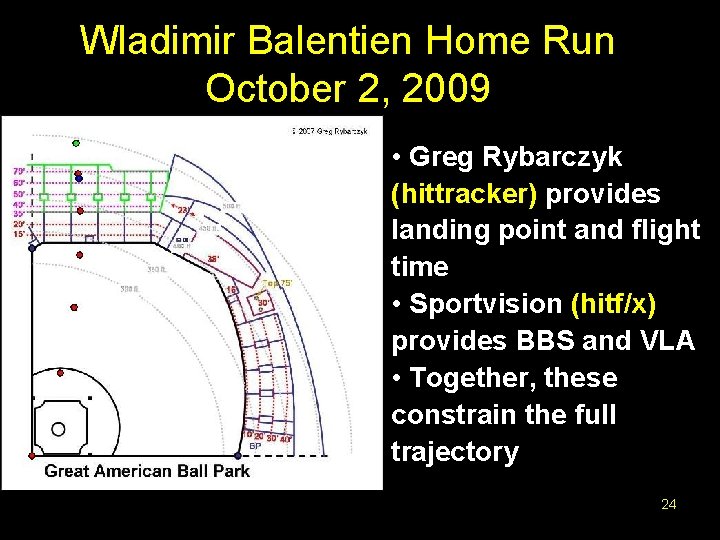
Wladimir Balentien Home Run October 2, 2009 • Greg Rybarczyk (hittracker) provides landing point and flight time • Sportvision (hitf/x) provides BBS and VLA • Together, these constrain the full trajectory 24
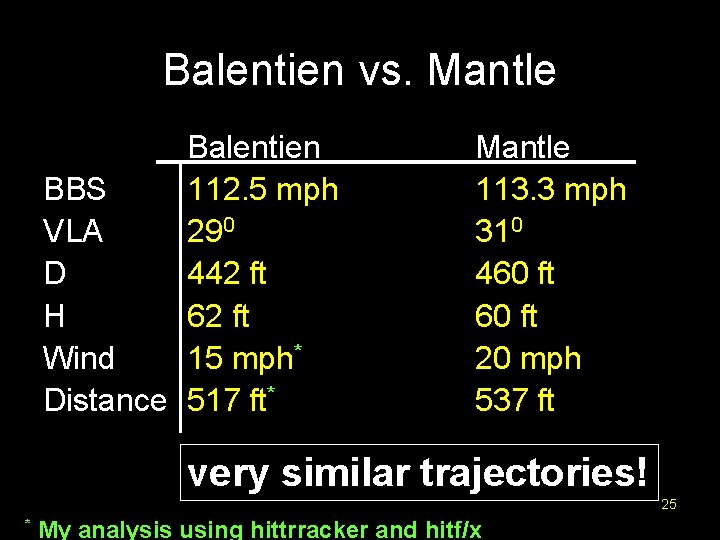
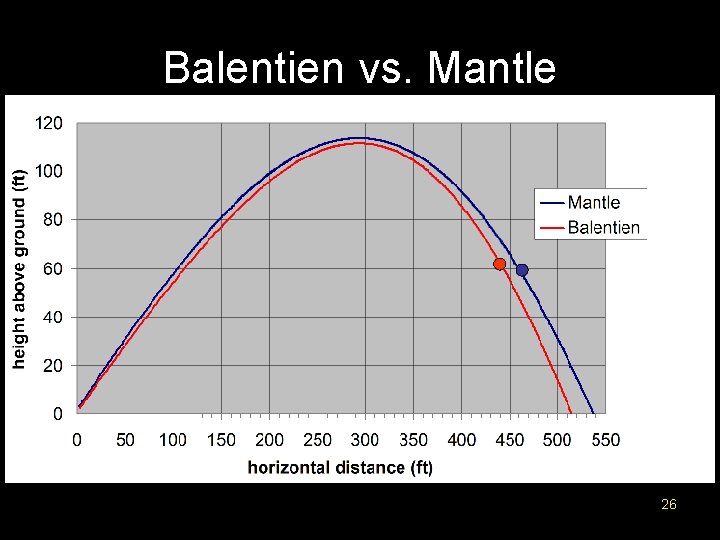
Balentien vs. Mantle Balentien BBS 112. 5 mph VLA 290 D 442 ft H 62 ft Wind 15 mph* Distance 517 ft* Mantle 113. 3 mph 310 460 ft 20 mph 537 ft very similar trajectories! 25 * My analysis using hittrracker and hitf/x
Balentien vs. Mantle 26
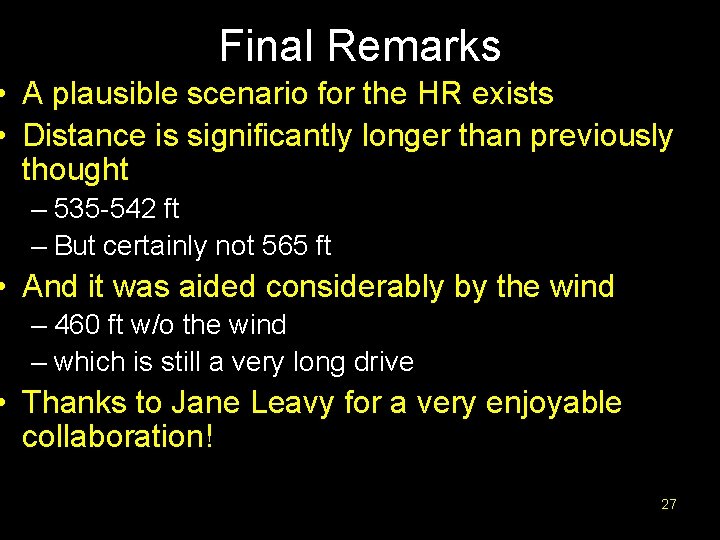
Final Remarks • A plausible scenario for the HR exists • Distance is significantly longer than previously thought – 535 -542 ft – But certainly not 565 ft • And it was aided considerably by the wind – 460 ft w/o the wind – which is still a very long drive • Thanks to Jane Leavy for a very enjoyable collaboration! 27
• Thanks for your attention! • Questions & Comments: – a-nathan@illinois. edu – go. illinois. edu/physicsofbaseball 28