
Revisions to the Guideline on Air Quality Models



- Slides: 34
Revisions to the Guideline on Air Quality Models (GAQM)
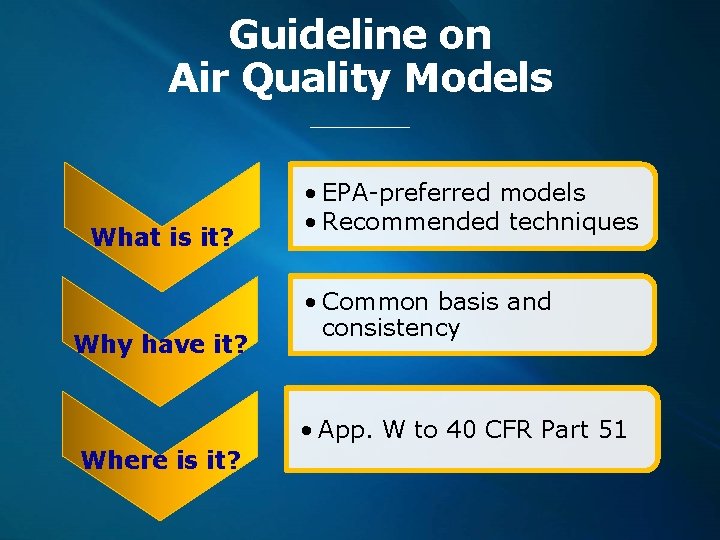
Guideline on Air Quality Models What is it? Why have it? • EPA-preferred models • Recommended techniques • Common basis and consistency • App. W to 40 CFR Part 51 Where is it?
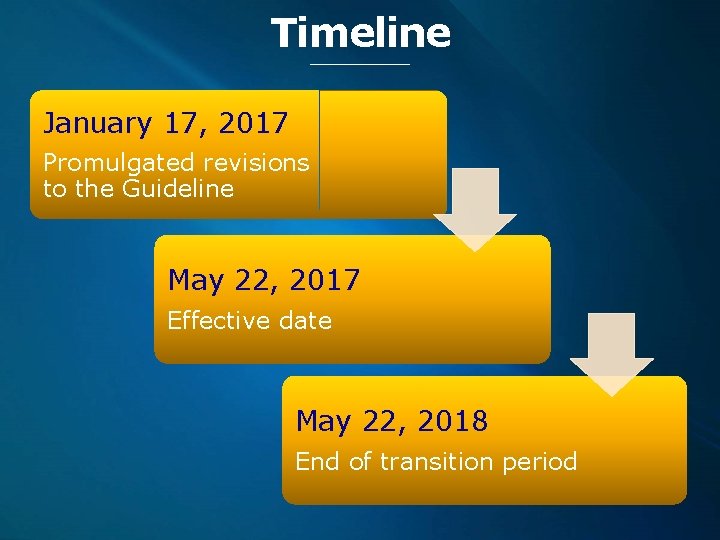
Timeline January 17, 2017 Promulgated revisions to the Guideline May 22, 2017 Effective date May 22, 2018 End of transition period
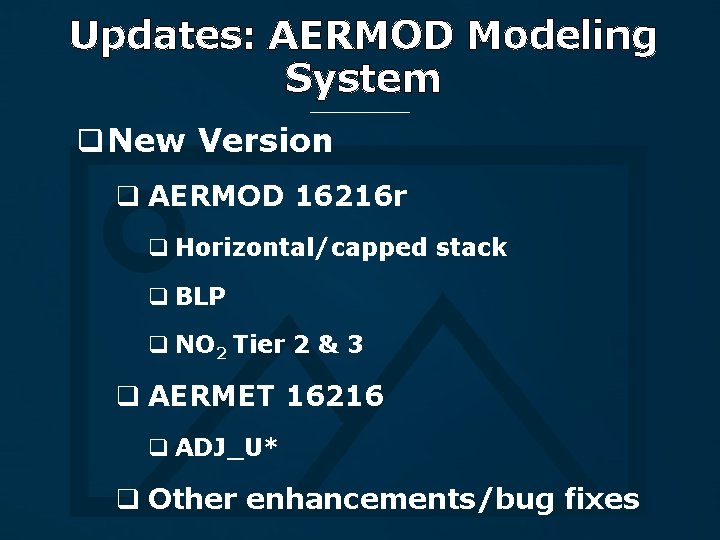
Updates: AERMOD Modeling System q New Version q AERMOD 16216 r q Horizontal/capped stack q BLP q NO 2 Tier 2 & 3 q AERMET 16216 q ADJ_U* q Other enhancements/bug fixes
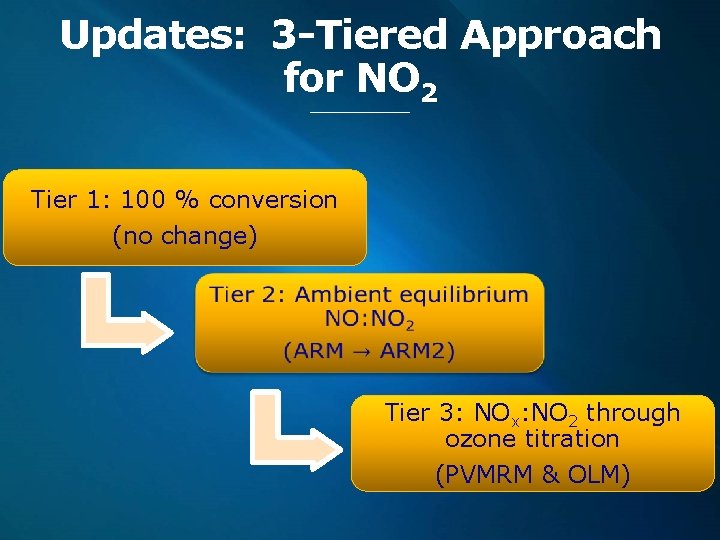
Updates: 3 -Tiered Approach for NO 2 Tier 1: 100 % conversion (no change) Tier 2: Ambient equilibrium NO: NO 2 (ARM to ARM 2) Tier 3: NOx: NO 2 through ozone titration (PVMRM & OLM)
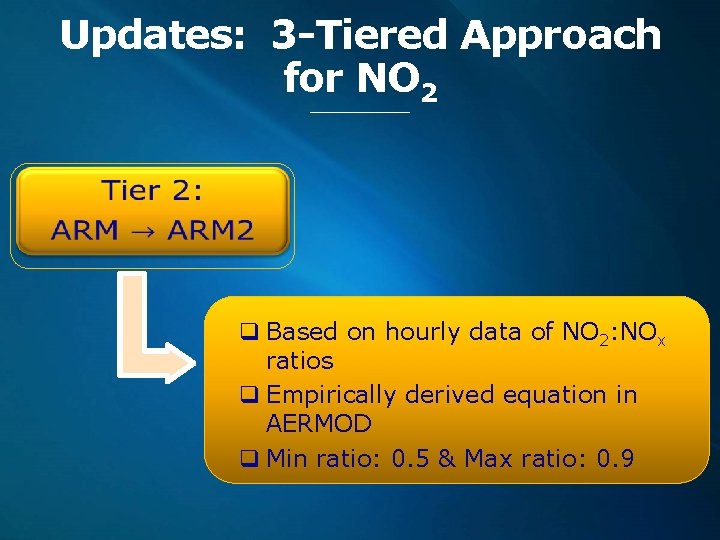
Updates: 3 -Tiered Approach for NO 2 Based on hourly data of NO 2: NOx, q Based on hourly data of NO 2: NO Empirically derived equation in x ratios min ratio: 0. 5 & max ratio: AERMOD, 0. 9 equation in q Empirically derived AERMOD q Min ratio: 0. 5 & Max ratio: 0. 9
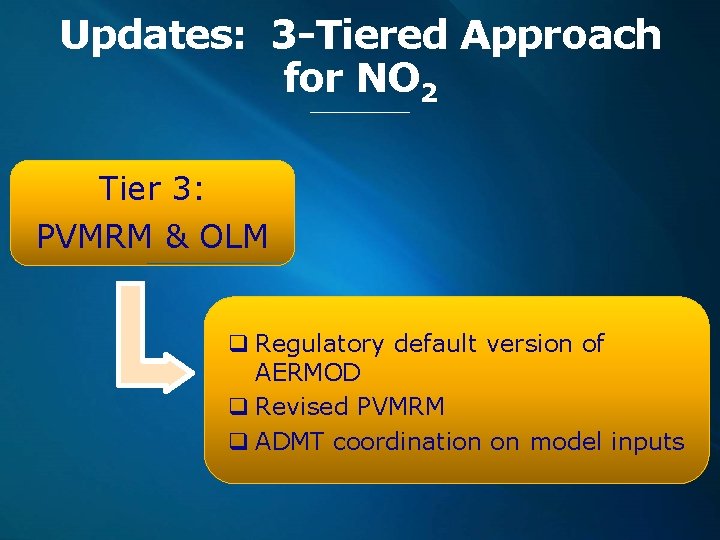
Updates: 3 -Tiered Approach for NO 2 Tier 3: PVMRM & OLM q Regulatory default version of AERMOD, AERMOD Revised PVMRM, still need to with us on model inputs qcoordinate Revised PVMRM q ADMT coordination on model inputs
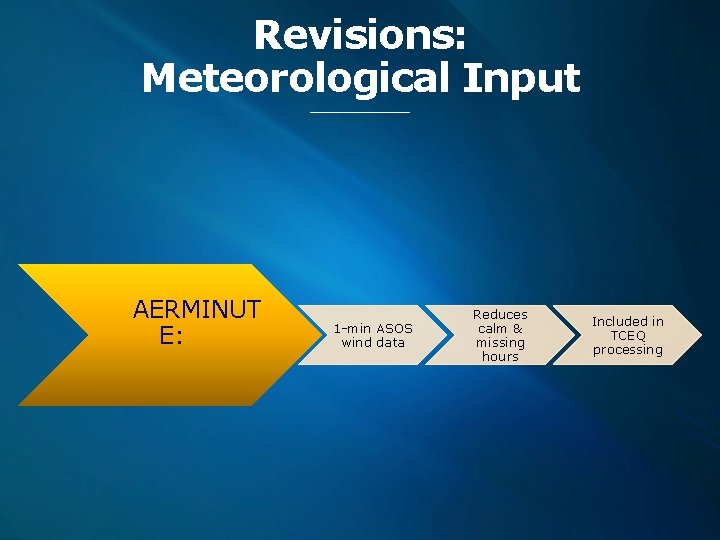
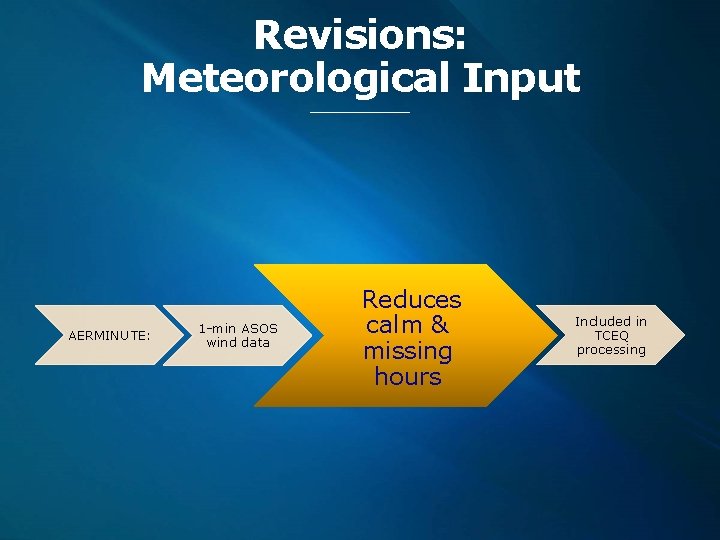
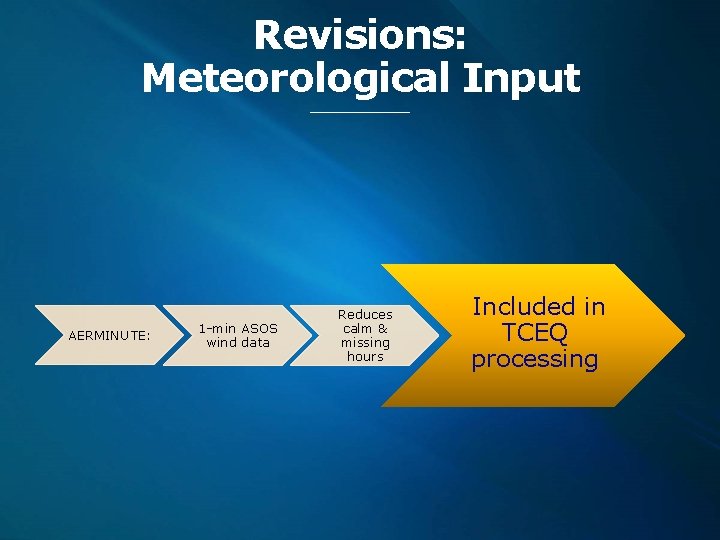
Revisions: Meteorological Input AERMINUT E: 1 -min ASOS wind data Reduces calm & missing hours Included in TCEQ processing
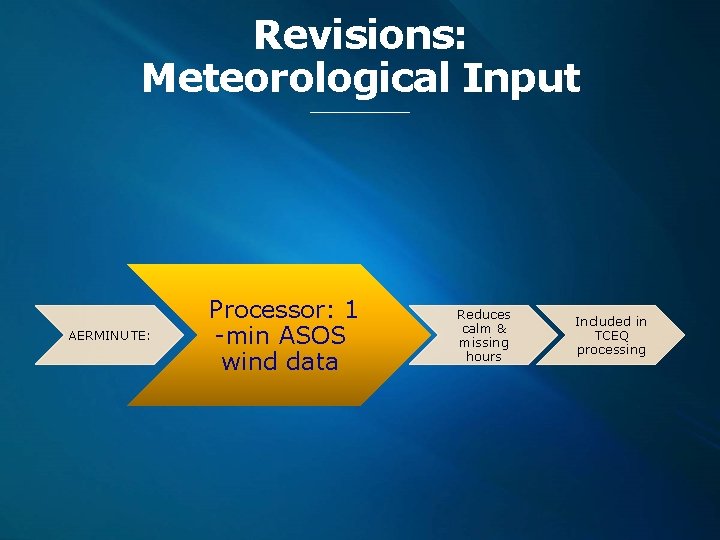
Revisions: Meteorological Input AERMINUTE: Processor: 1 -min ASOS wind data Reduces calm & missing hours Included in TCEQ processing
Revisions: Meteorological Input AERMINUTE: 1 -min ASOS wind data Reduces calm & missing hours Included in TCEQ processing
Revisions: Meteorological Input AERMINUTE: 1 -min ASOS wind data Reduces calm & missing hours Included in TCEQ processing
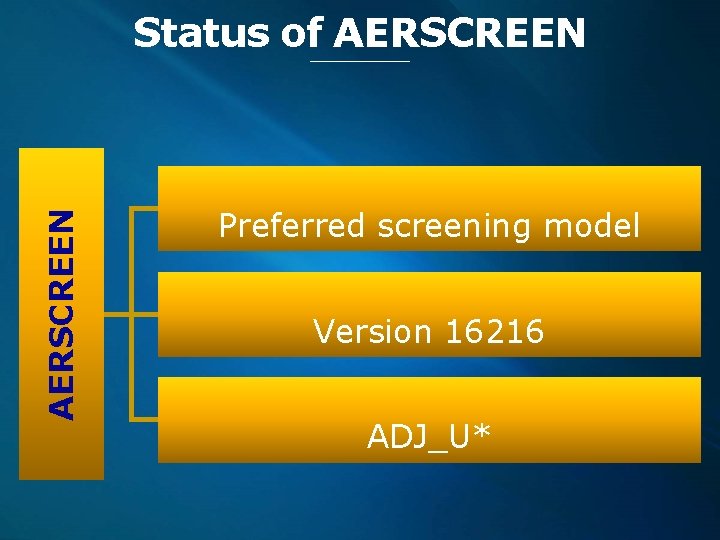
AERSCREEN Status of AERSCREEN Preferred screening model Version 16216 ADJ_U*
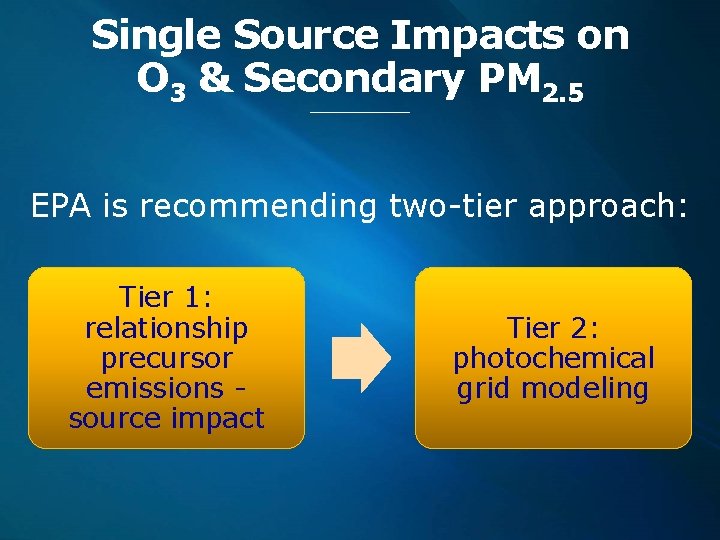
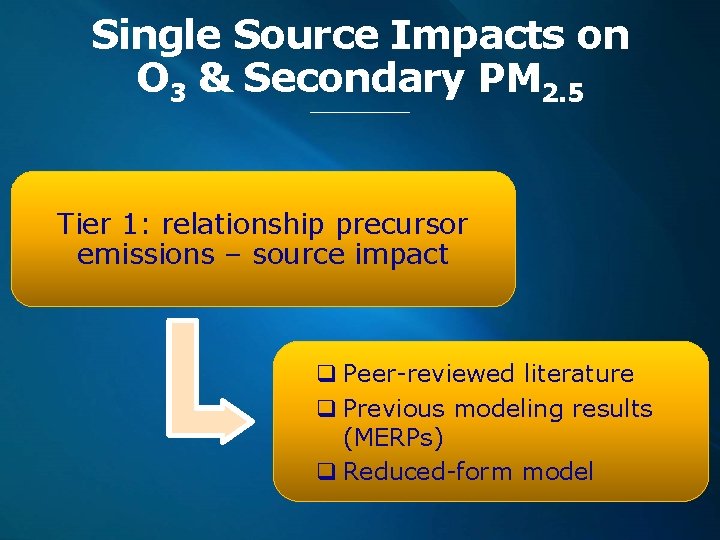
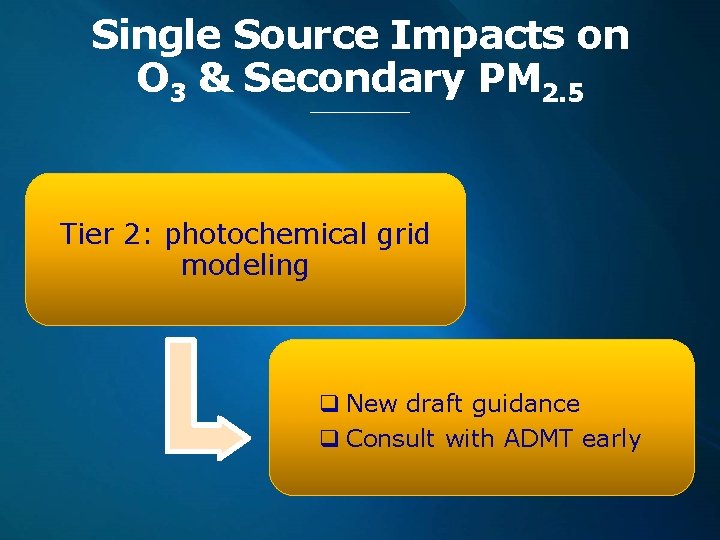
Single Source Impacts on O 3 & Secondary PM 2. 5 EPA is recommending two-tier approach: Tier 1: relationship precursor emissions source impact Tier 2: photochemical grid modeling
Single Source Impacts on O 3 & Secondary PM 2. 5 Tier 1: relationship precursor emissions – source impact q. Peer-reviewed –reviewed literature, q. Previous modeling results (MERPs), Reduced-form model (MERPs) q Reduced-form model
Single Source Impacts on O 3 & Secondary PM 2. 5 Tier 2: photochemical grid modeling New draft guidance, consult with q New draft guidance us early q Consult with ADMT early
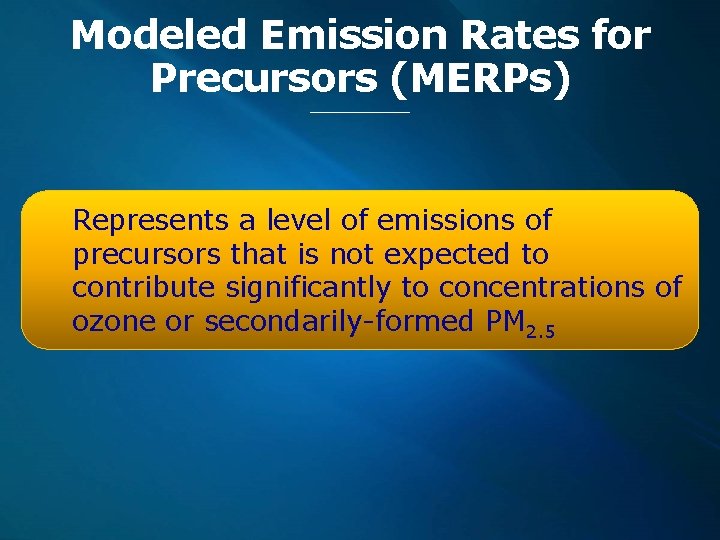
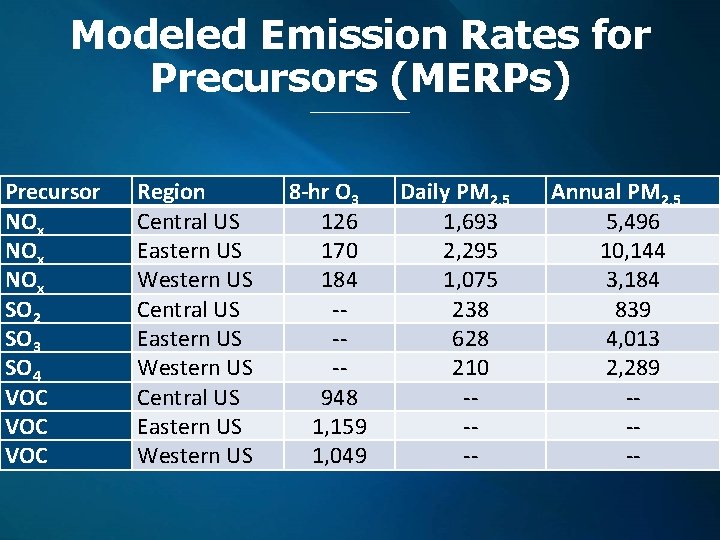
Modeled Emission Rates for Precursors (MERPs) Represents a level of emissions of precursors that is not expected to contribute significantly to concentrations of ozone or secondarily-formed PM 2. 5
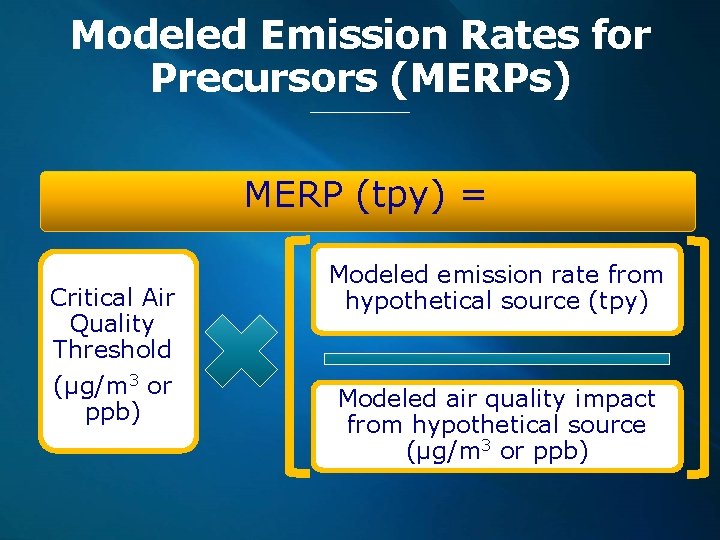
Modeled Emission Rates for Precursors (MERPs) MERP (tpy) = Critical Air Quality Threshold (µg/m 3 or ppb) Modeled emission rate from hypothetical source (tpy) Modeled air quality impact from hypothetical source (µg/m 3 or ppb)
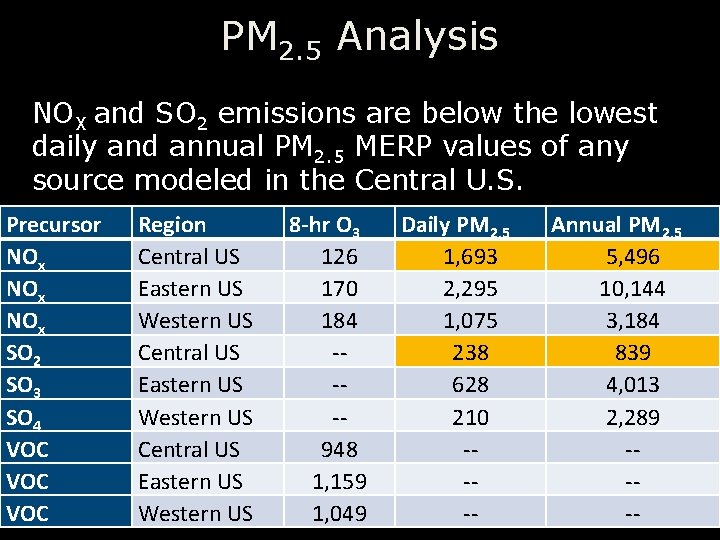
Modeled Emission Rates for Precursors (MERPs) Precursor NOx NOx SO 2 SO 3 SO 4 VOC VOC Region Central US Eastern US Western US 8 -hr O 3 126 170 184 ---948 1, 159 1, 049 Daily PM 2. 5 1, 693 2, 295 1, 075 238 628 210 ---- Annual PM 2. 5 5, 496 10, 144 3, 184 839 4, 013 2, 289 ----
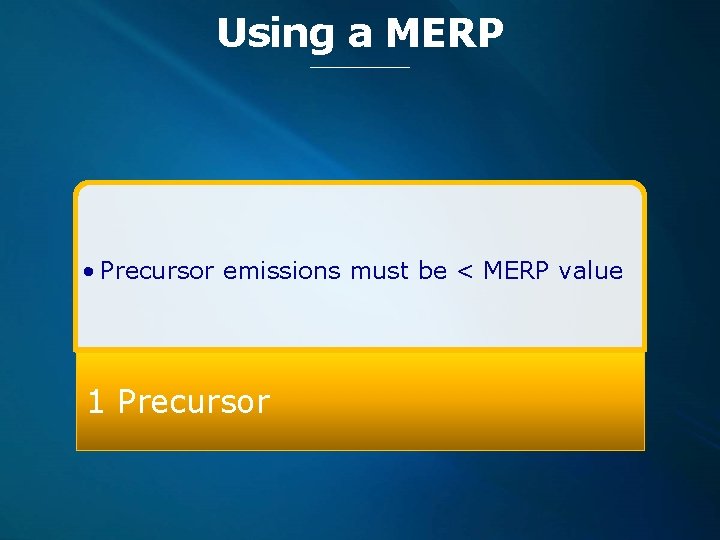
Using a MERP • Precursor emissions must be < MERP value 1 Precursor
Using a MERP • Both precursors’ emissions must be < MERP value • Additive impacts analysis • PM 2. 5 must also consider primary impact 2 Precursors
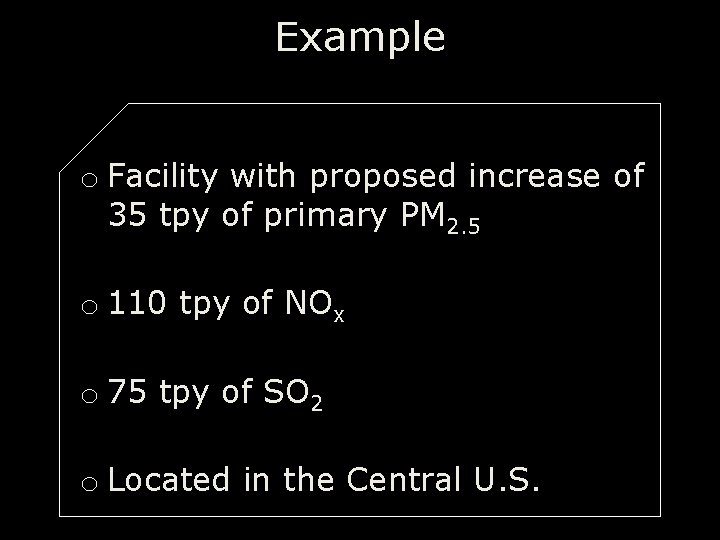
Example o Facility with proposed increase of 35 tpy of primary PM 2. 5 o 110 tpy of NOx o 75 tpy of SO 2 o Located in the Central U. S.
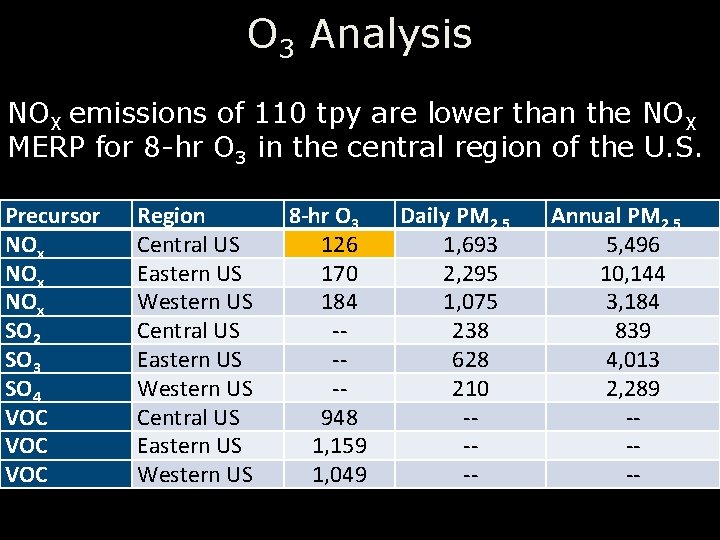
O 3 Analysis NOX emissions of 110 tpy are lower than the NOX MERP for 8 -hr O 3 in the central region of the U. S. Precursor NOx NOx SO 2 SO 3 SO 4 VOC VOC Region Central US Eastern US Western US 8 -hr O 3 126 170 184 ---948 1, 159 1, 049 Daily PM 2. 5 1, 693 2, 295 1, 075 238 628 210 ---- Annual PM 2. 5 5, 496 10, 144 3, 184 839 4, 013 2, 289 ----
PM 2. 5 Analysis NOX and SO 2 emissions are below the lowest daily and annual PM 2. 5 MERP values of any source modeled in the Central U. S. Precursor NOx NOx SO 2 SO 3 SO 4 VOC VOC Region Central US Eastern US Western US 8 -hr O 3 126 170 184 ---948 1, 159 1, 049 Daily PM 2. 5 1, 693 2, 295 1, 075 238 628 210 ---- Annual PM 2. 5 5, 496 10, 144 3, 184 839 4, 013 2, 289 ----
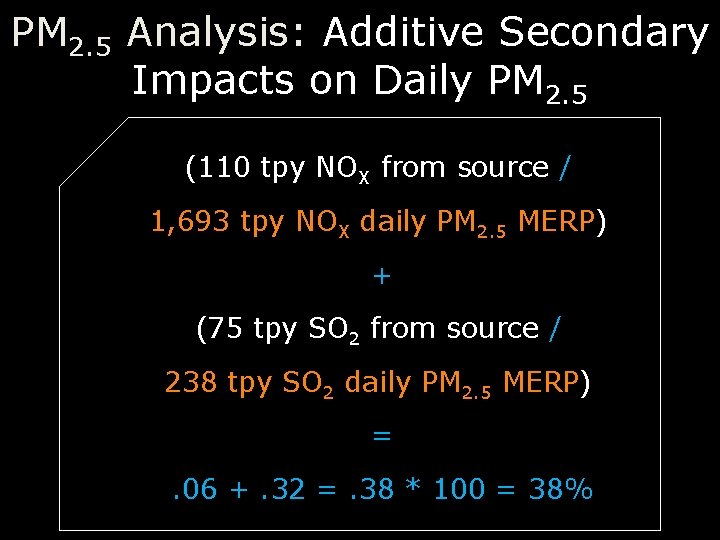
PM 2. 5 Analysis: Additive Secondary Impacts on Daily PM 2. 5 (110 tpy NOX from source / 1, 693 tpy NOX daily PM 2. 5 MERP) + (75 tpy SO 2 from source / 238 tpy SO 2 daily PM 2. 5 MERP) =. 06 +. 32 =. 38 * 100 = 38%
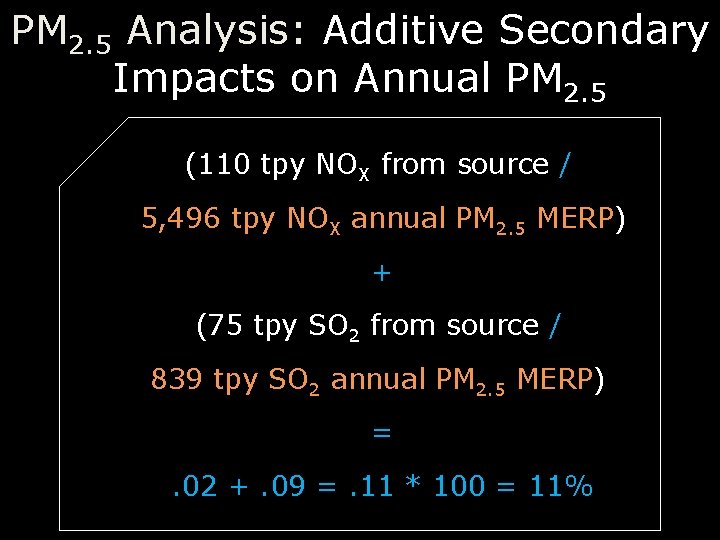
PM 2. 5 Analysis: Additive Secondary Impacts on Annual PM 2. 5 (110 tpy NOX from source / 5, 496 tpy NOX annual PM 2. 5 MERP) + (75 tpy SO 2 from source / 839 tpy SO 2 annual PM 2. 5 MERP) =. 02 +. 09 =. 11 * 100 = 11%
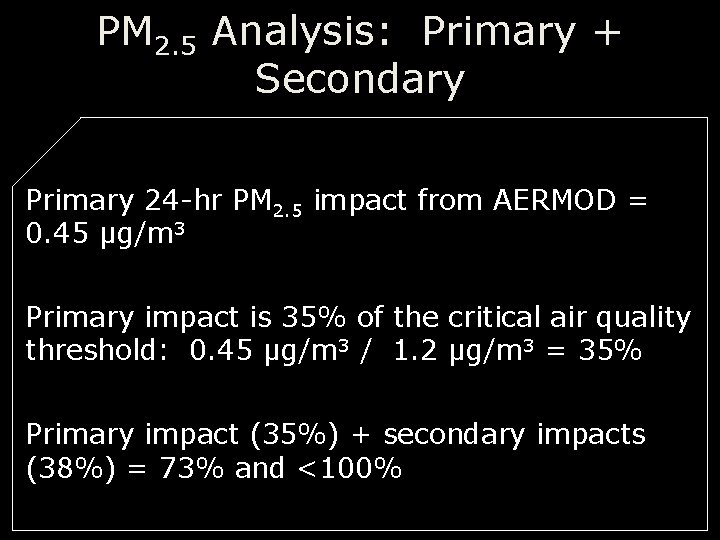
PM 2. 5 Analysis: Primary + Secondary Primary 24 -hr PM 2. 5 impact from AERMOD = 0. 45 µg/m 3 Primary impact is 35% of the critical air quality threshold: 0. 45 µg/m 3 / 1. 2 µg/m 3 = 35% Primary impact (35%) + secondary impacts (38%) = 73% and <100%
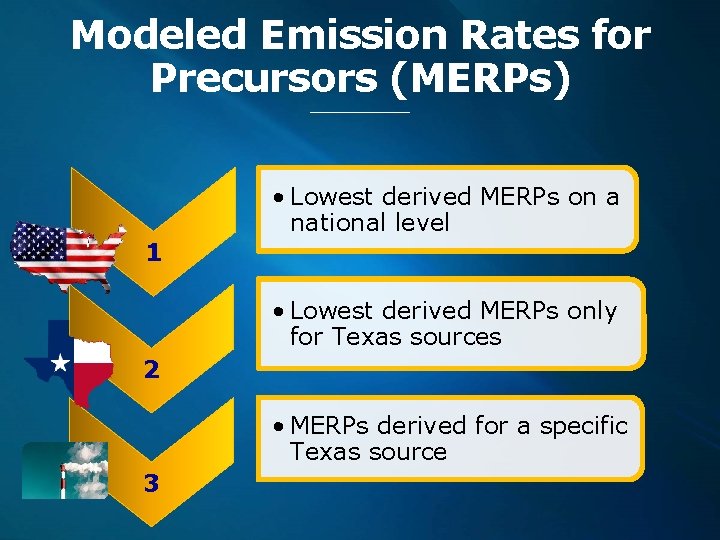
Modeled Emission Rates for Precursors (MERPs) • Lowest derived MERPs on a national level 1 • Lowest derived MERPs only for Texas sources 2 • MERPs derived for a specific Texas source 3
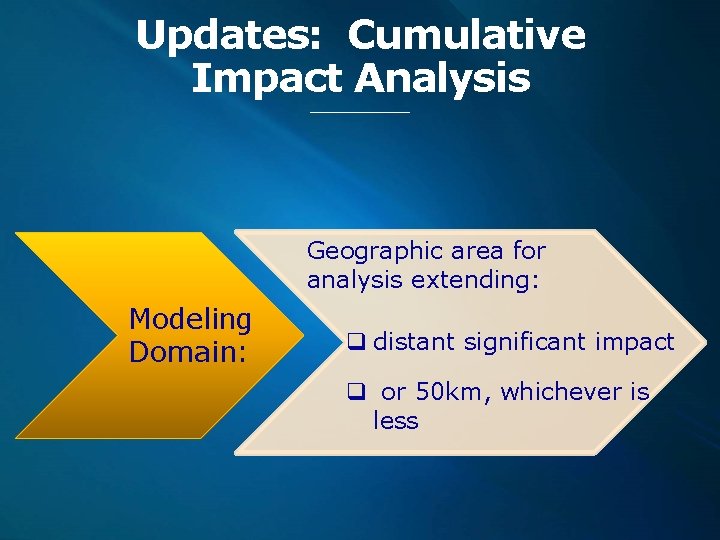
Updates: Cumulative Impact Analysis Modeling Dom Domain: Geographic area for analysis extending: Includes area extending: q distant significant impact • distant significant qimpact or 50 km, whichever is less • 50 kilometers, whichever is less
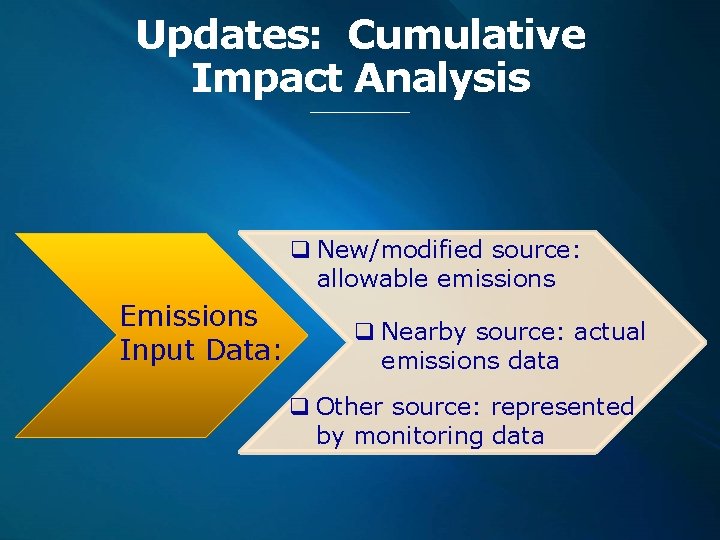
Updates: Cumulative Impact Analysis New/Modified q New/modified source: emissions allowable Emiss emissions Emissions Nearbysource: actual • q. Nearby Input Data: emissions data actual emissions Data: data q Other source: represented • Other source: by monitoring data represented by monitoring data
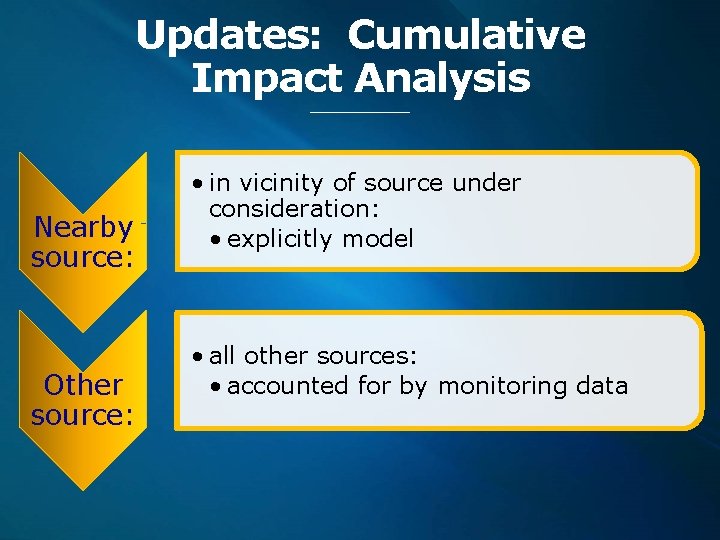
Updates: Cumulative Impact Analysis Nearby source: Other source: • in vicinity of source under consideration: • explicitly model • all other sources: • accounted for by monitoring data
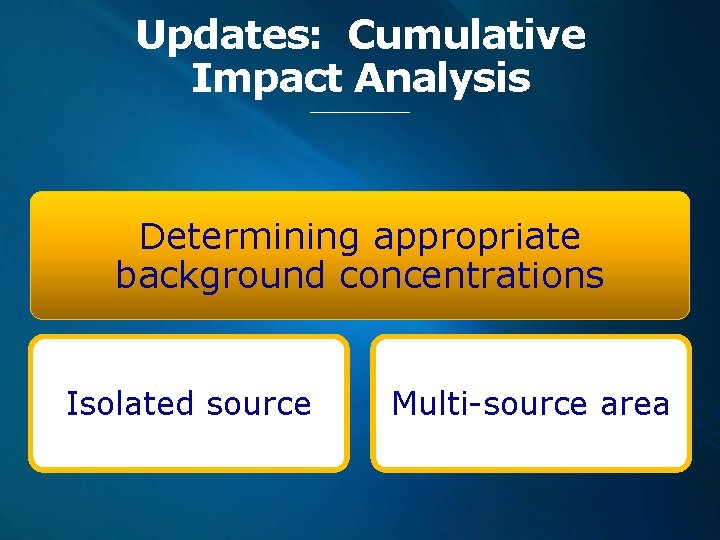
Updates: Cumulative Impact Analysis Determining appropriate background concentrations Isolated source Multi-source area
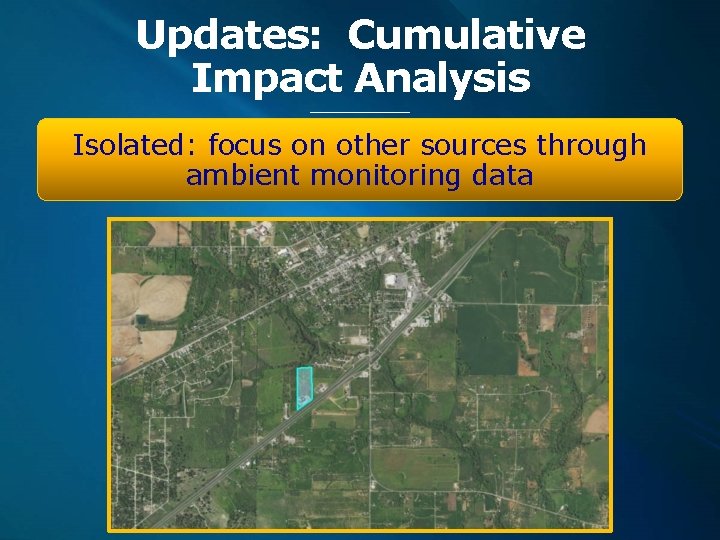
Updates: Cumulative Impact Analysis Isolated: focus on other sources through ambient monitoring data
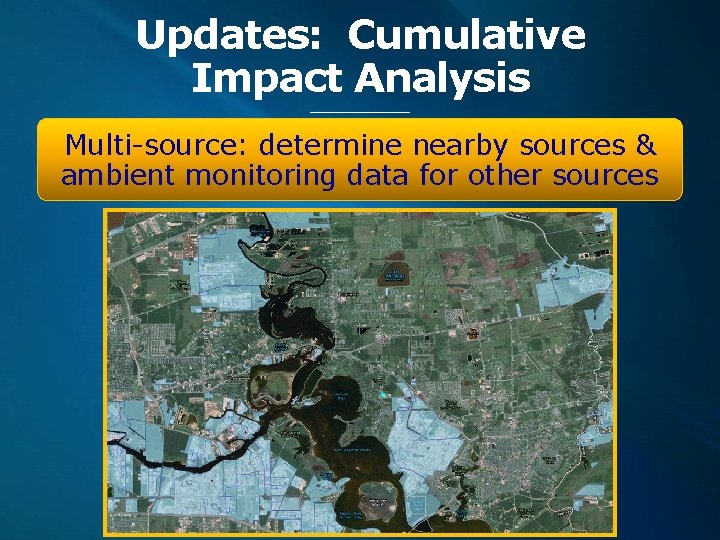
Updates: Cumulative Impact Analysis Multi-source: determine nearby sources & ambient monitoring data for other sources
Thank You! • Amanda Jones (512) 239 -1229 Amanda. Jones@tceq. texas. gov • Rachel Melton (512) 239 -2358 Rachel. Melton@tceq. texas. gov • Dianne Anderson Team Leader – Air Dispersion Modeling Team (512) 239 -5761 Dianne. Anderson@tceq. texas. gov