
Revision of the Internal Control Framework in the
- Slides: 14
Revision of the Internal Control Framework in the European Commission PEMPAL Internal Audit Community of Practice (IACOP) Brussels, 27 th February 2017
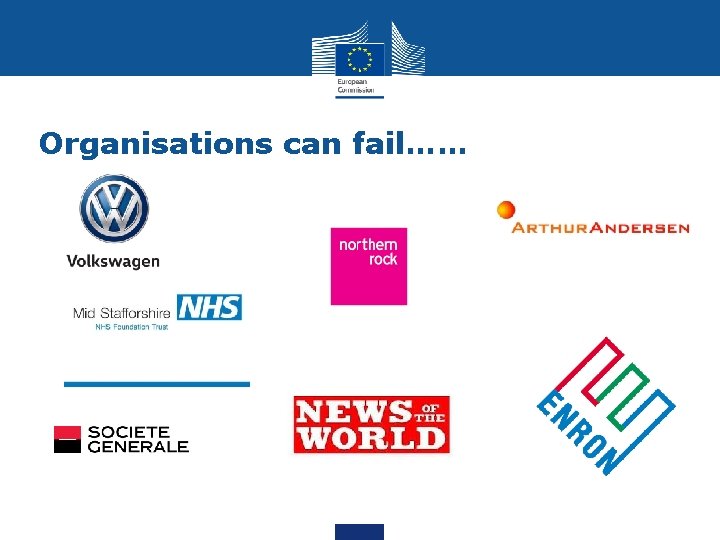
Organisations can fail…… •
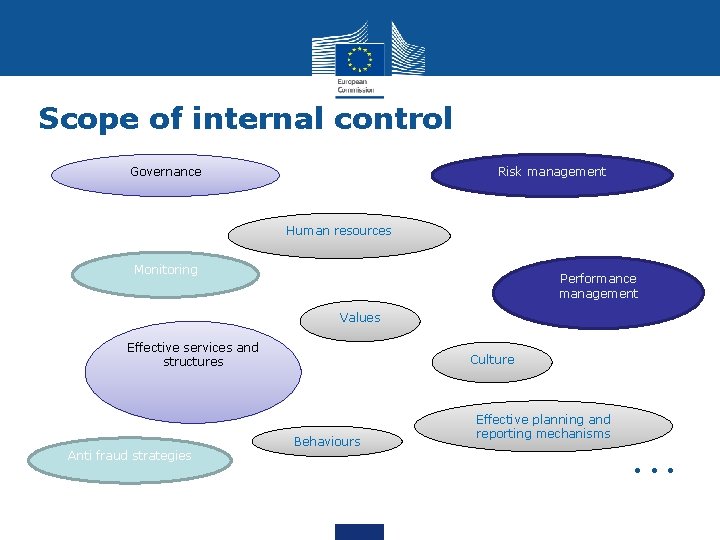
Scope of internal control Governance Risk management Human resources Monitoring Performance management Values Effective services and structures Anti fraud strategies Culture Behaviours Effective planning and reporting mechanisms . . .
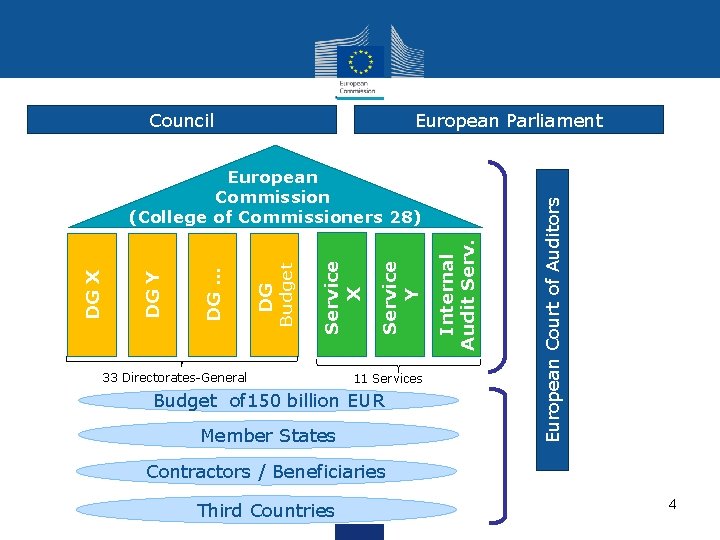
European Parliament 33 Directorates-General 11 Services Budget of 150 billion EUR Member States Internal Audit Service Y Service X Budget DG DG … DG Y DG X European Commission (College of Commissioners 28) European Court of Auditors Council Contractors / Beneficiaries Third Countries 4
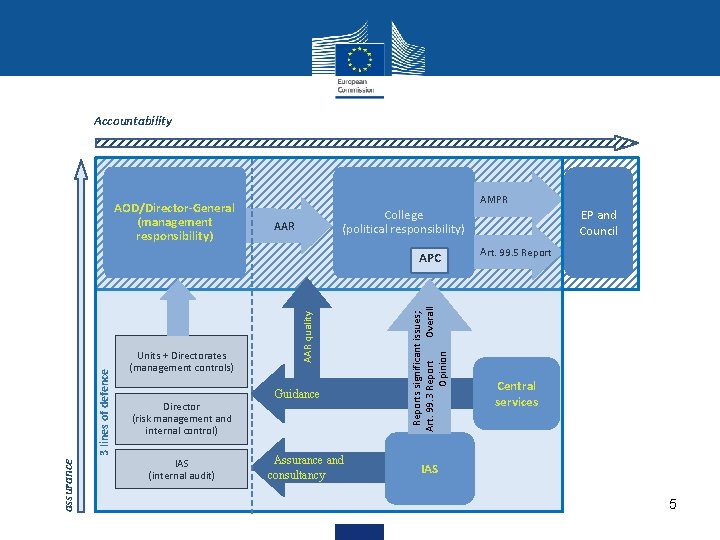
Accountability AOD/Director-General (management responsibility) AMPR assurance Director (risk management and internal control) IAS (internal audit) AAR quality Guidance Assurance and consultancy Reports significant issues; Art. 99. 3 Report Overall Opinion 3 lines of defence APC Units + Directorates (management controls) EP and Council College (political responsibility) AAR Art. 99. 5 Report Central services IAS 5
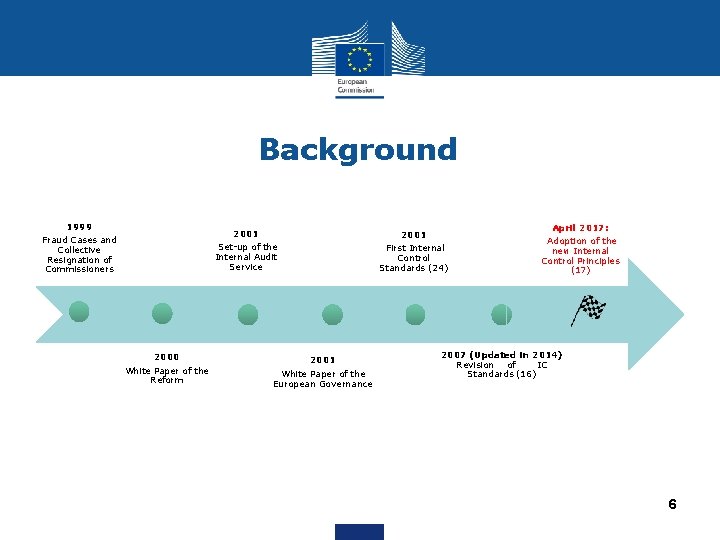
Background 1999 2001 Fraud Cases and Collective Resignation of Commissioners 2001 First Internal Control Standards (24) Set-up of the Internal Audit Service 2000 White Paper of the Reform 2001 White Paper of the European Governance April 2017: Adoption of the new Internal Control Principles (17) 2007 (Updated in 2014) Revision of IC Standards (16) 6
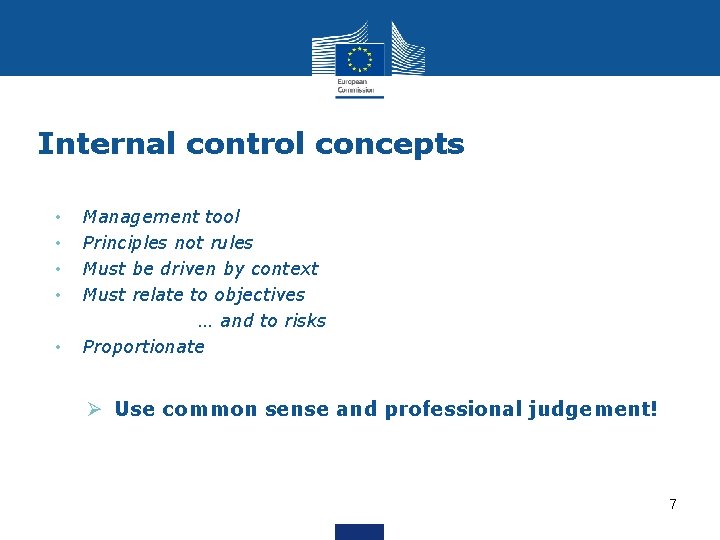
Internal control concepts • • • Management tool Principles not rules Must be driven by context Must relate to objectives … and to risks Proportionate Ø Use common sense and professional judgement! 7
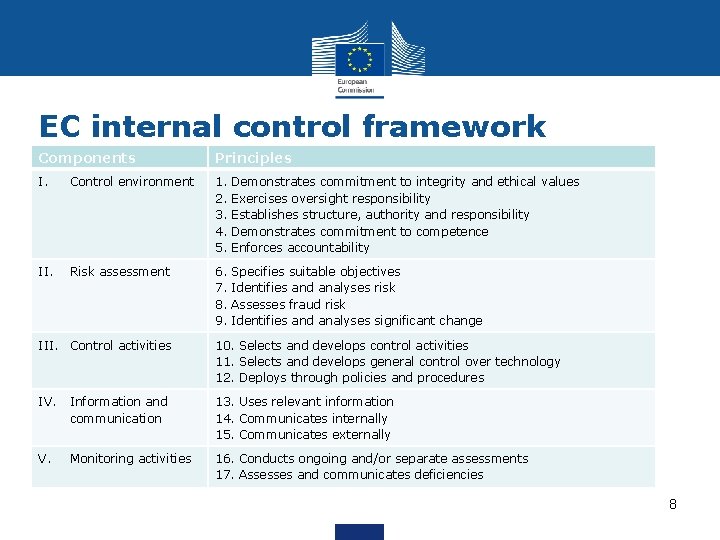
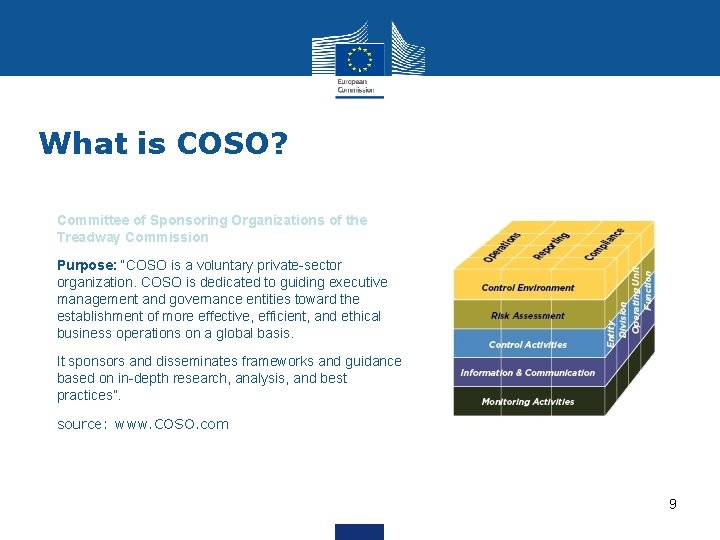
EC internal control framework Components Principles I. Control environment 1. 2. 3. 4. 5. Demonstrates commitment to integrity and ethical values Exercises oversight responsibility Establishes structure, authority and responsibility Demonstrates commitment to competence Enforces accountability II. Risk assessment 6. 7. 8. 9. Specifies suitable objectives Identifies and analyses risk Assesses fraud risk Identifies and analyses significant change III. Control activities 10. Selects and develops control activities 11. Selects and develops general control over technology 12. Deploys through policies and procedures IV. Information and communication 13. Uses relevant information 14. Communicates internally 15. Communicates externally V. Monitoring activities 16. Conducts ongoing and/or separate assessments 17. Assesses and communicates deficiencies 8
What is COSO? Committee of Sponsoring Organizations of the Treadway Commission Purpose: “COSO is a voluntary private-sector organization. COSO is dedicated to guiding executive management and governance entities toward the establishment of more effective, efficient, and ethical business operations on a global basis. It sponsors and disseminates frameworks and guidance based on in-depth research, analysis, and best practices”. source: www. COSO. com 9
The aim of the revision Ø Ensure robust internal control, with a more flexible framework. Ø Clarifying and reinforcing responsibilities. Ø Facilitate efficient and effective Commission departments. implementation in all 10
More robust and flexible internal control • Moving from a compliance to a principle-based system. • DGs to adapt the framework to their specific characteristics and circumstances. 11
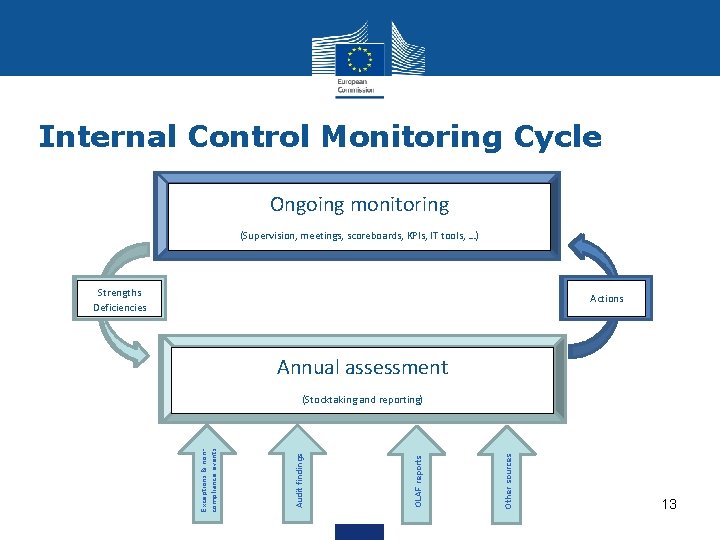
Efficient and effective implementation across the Commission Ongoing vs Specific assessments • Ongoing assessments consist of continous monitoring at all levels of the organisation by formal and informal means. • Specific assessment through a consistent methodology and reporting. • Both are linked and mutually feed each-other. 12
Internal Control Monitoring Cycle Ongoing monitoring (Supervision, meetings, scoreboards, KPIs, IT tools, …) Strengths Deficiencies Actions Annual assessment Other sources OLAF reports Audit findings Exceptions & noncompliance events (Stocktaking and reporting) 13
Questions? Thank you for your attention ! 14