
REVISION OF THE ENGLISH TENSES 1 PRESENT SIMPLE

- Slides: 20
REVISION OF THE ENGLISH TENSES
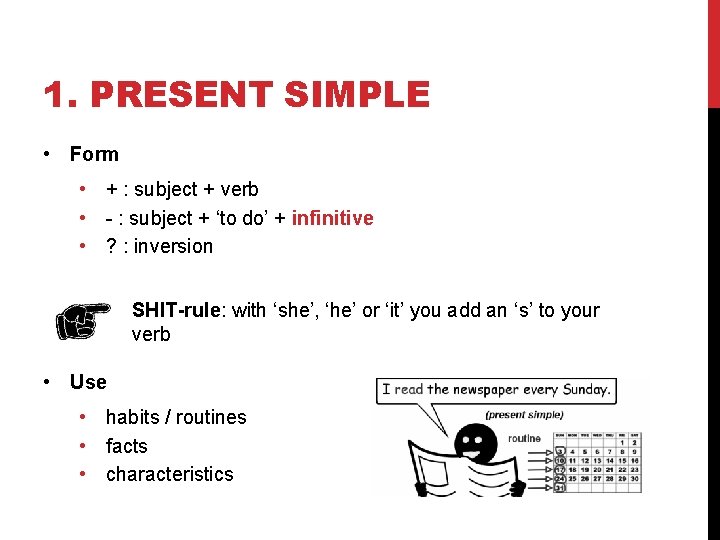
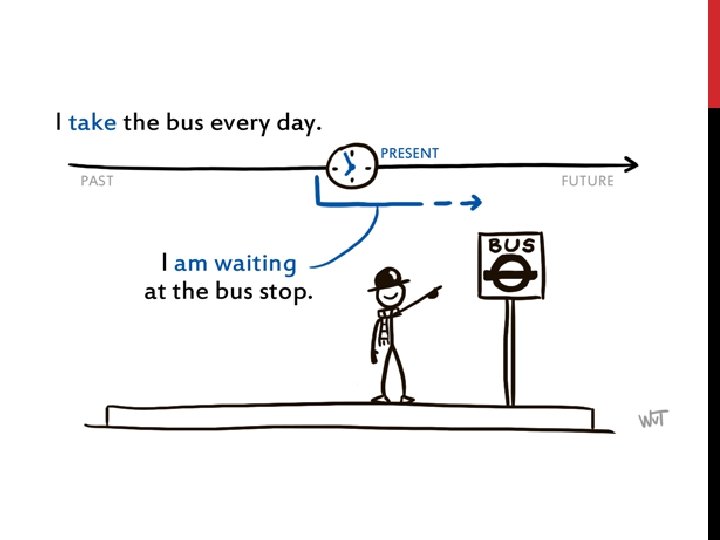
1. PRESENT SIMPLE • Form • + : subject + verb • - : subject + ‘to do’ + infinitive • ? : inversion SHIT-rule: with ‘she’, ‘he’ or ‘it’ you add an ‘s’ to your verb • Use • habits / routines • facts • characteristics
1. PRESENT SIMPLE • Signal words (adverbs of frequency) • • always every normally often seldom sometimes usually
2. PRESENT CONTINUOUS • Form • subject + ‘to be’ + present participle (ing-form of the verb) • Use • actions going on now • repeated actions • complaining (irritation) • Signal words • (right) now • at the moment • just now
3. PRESENT PERFECT
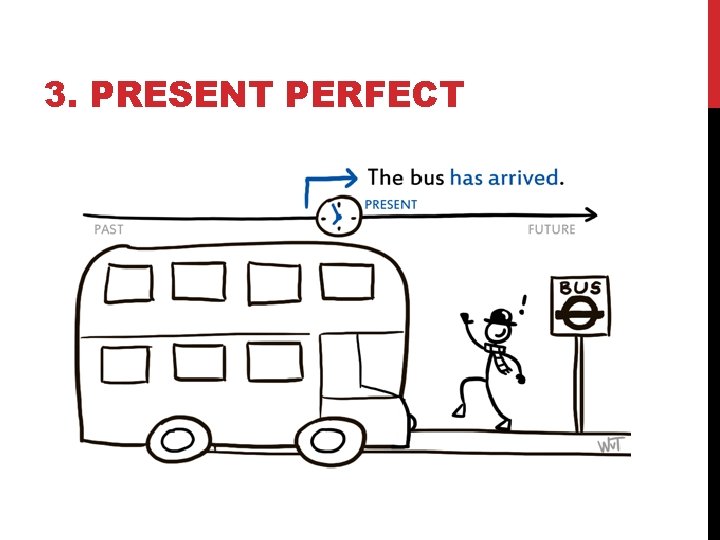
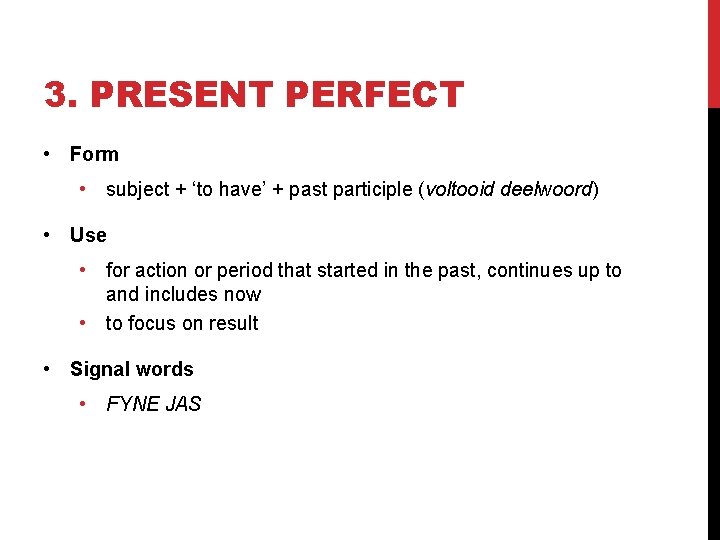
3. PRESENT PERFECT • Form • subject + ‘to have’ + past participle (voltooid deelwoord) • Use • for action or period that started in the past, continues up to and includes now • to focus on result • Signal words • FYNE JAS
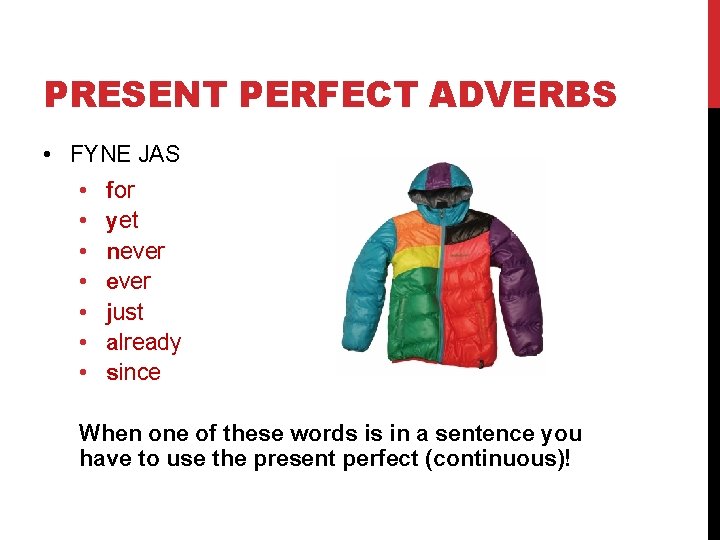
PRESENT PERFECT ADVERBS • FYNE JAS • • for yet never just already since When one of these words is in a sentence you have to use the present perfect (continuous)!
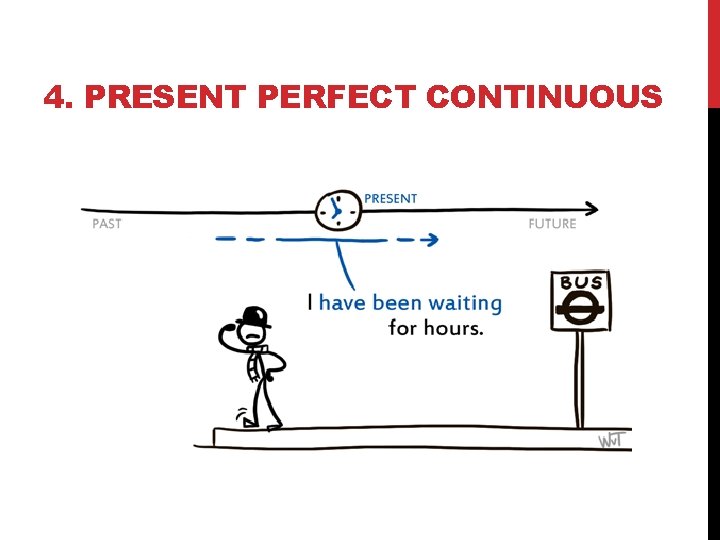
4. PRESENT PERFECT CONTINUOUS
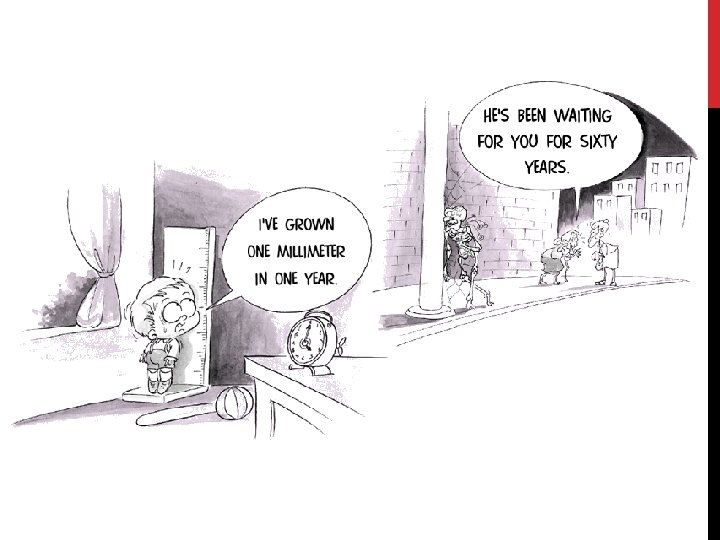
4. PRESENT PERFECT CONTINUOUS • Form • subject + ‘to have’ + been + present participle • Use • when we want to emphasize the duration of an action • Signal words • FYNE JAS
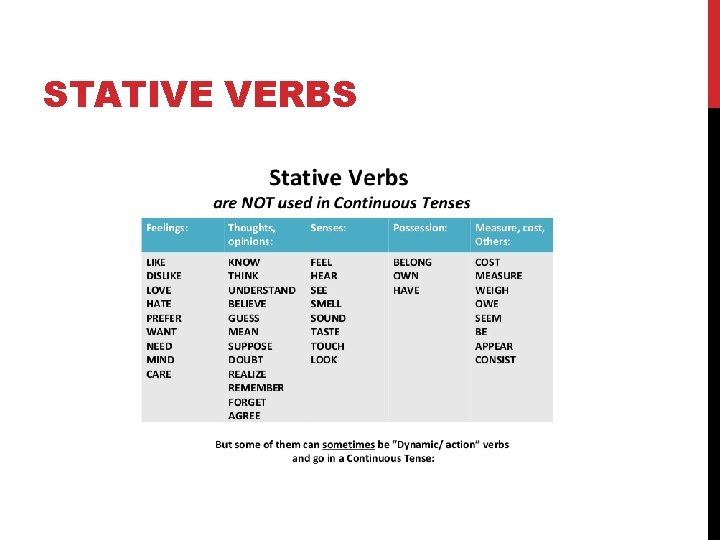
STATIVE VERBS
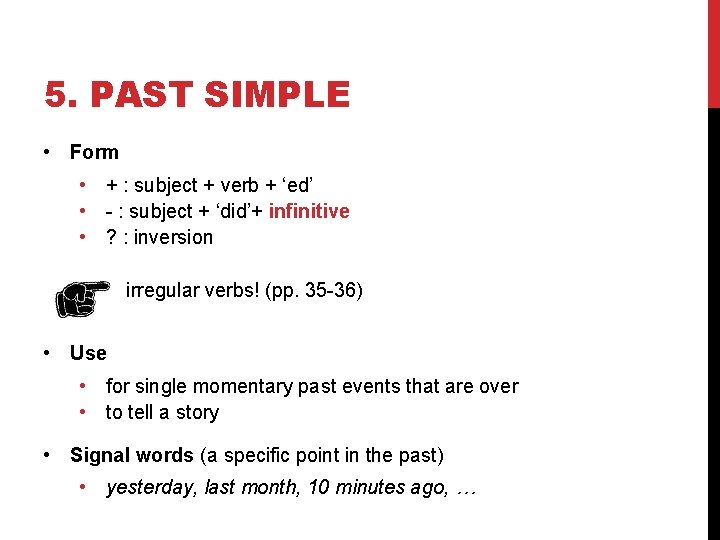
5. PAST SIMPLE • Form • + : subject + verb + ‘ed’ • - : subject + ‘did’+ infinitive • ? : inversion irregular verbs! (pp. 35 -36) • Use • for single momentary past events that are over • to tell a story • Signal words (a specific point in the past) • yesterday, last month, 10 minutes ago, …
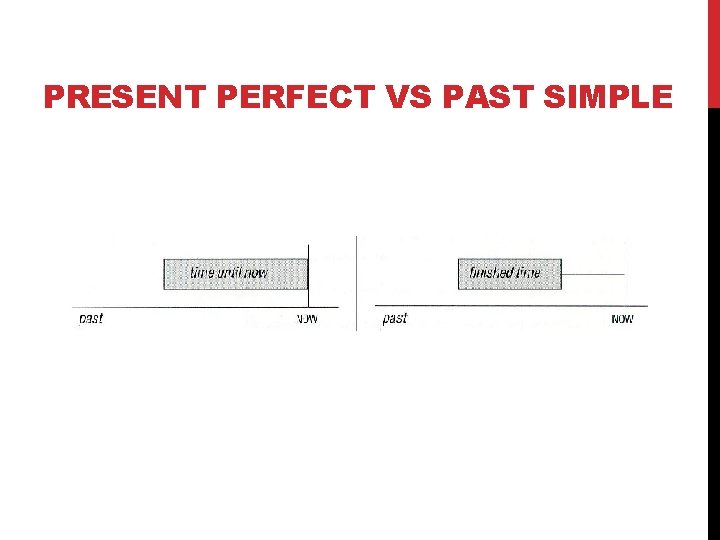
PRESENT PERFECT VS PAST SIMPLE
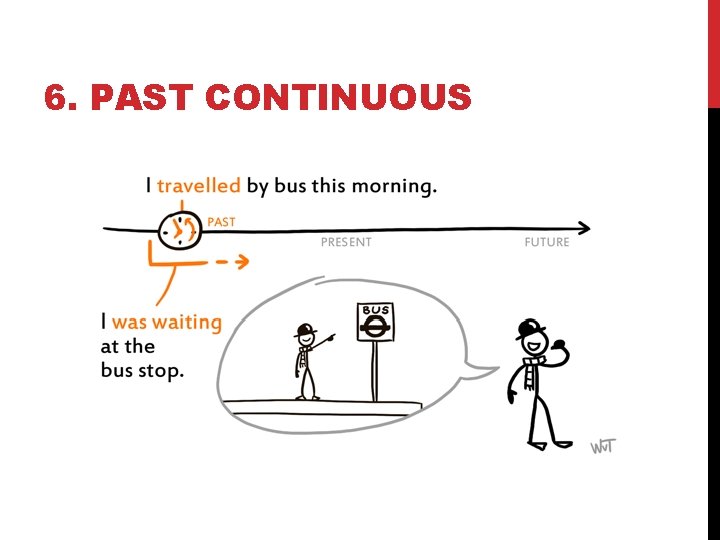
6. PAST CONTINUOUS
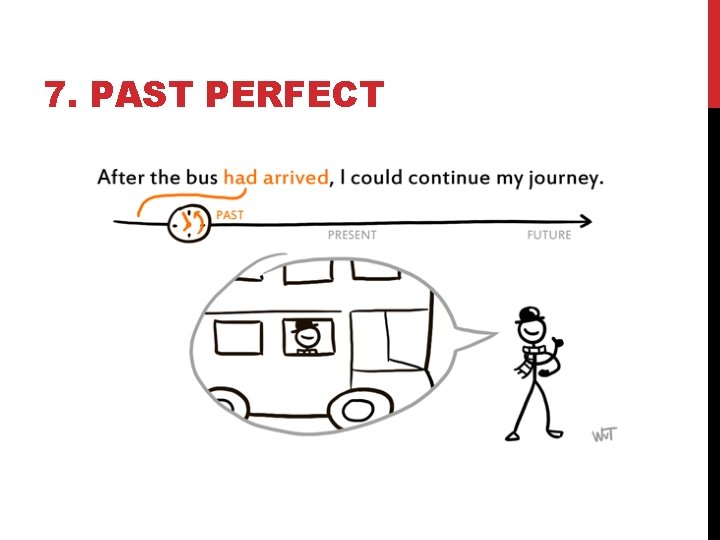
7. PAST PERFECT
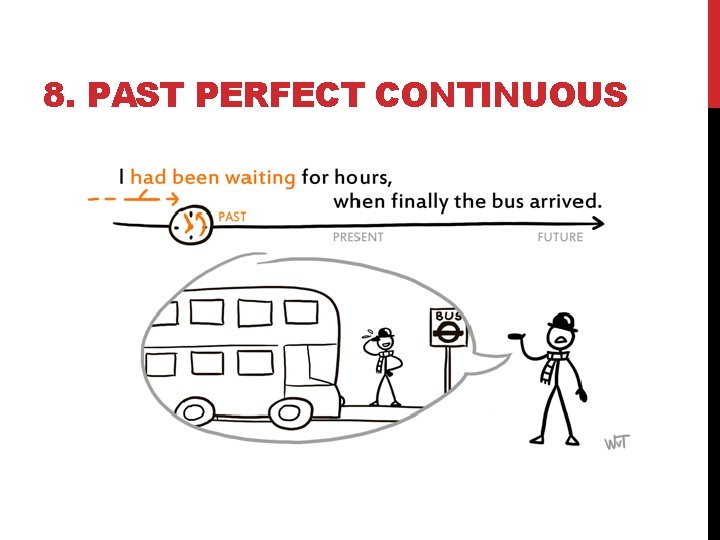
8. PAST PERFECT CONTINUOUS
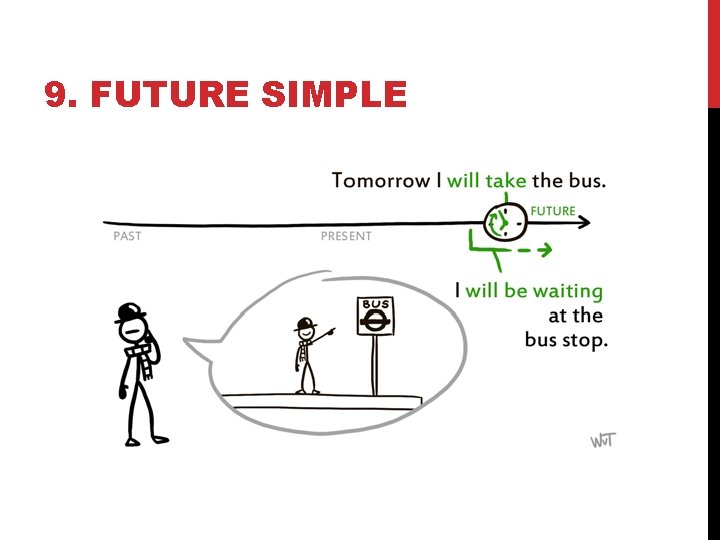
9. FUTURE SIMPLE
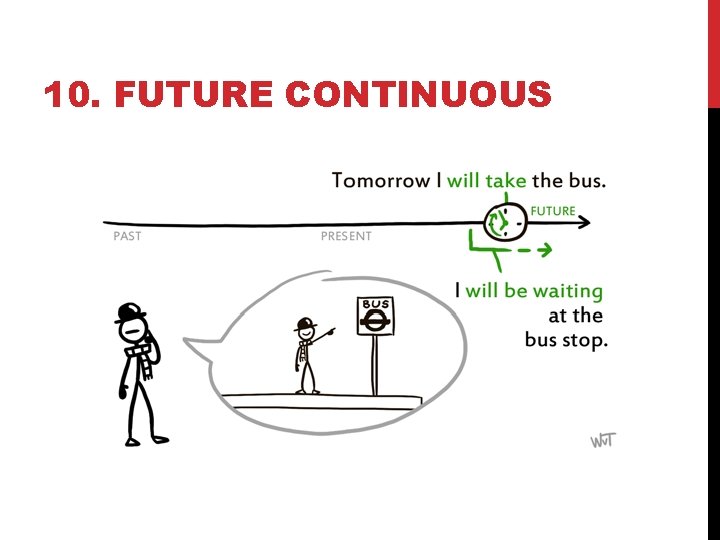
10. FUTURE CONTINUOUS